Tag: IPO

  • SpaceX Stock Price Target Set at $300 by Morgan Stanley Amid AI and Starlink Growth Prospects

    SpaceX Stock Price Target Set at $300 by Morgan Stanley Amid AI and Starlink Growth Prospects

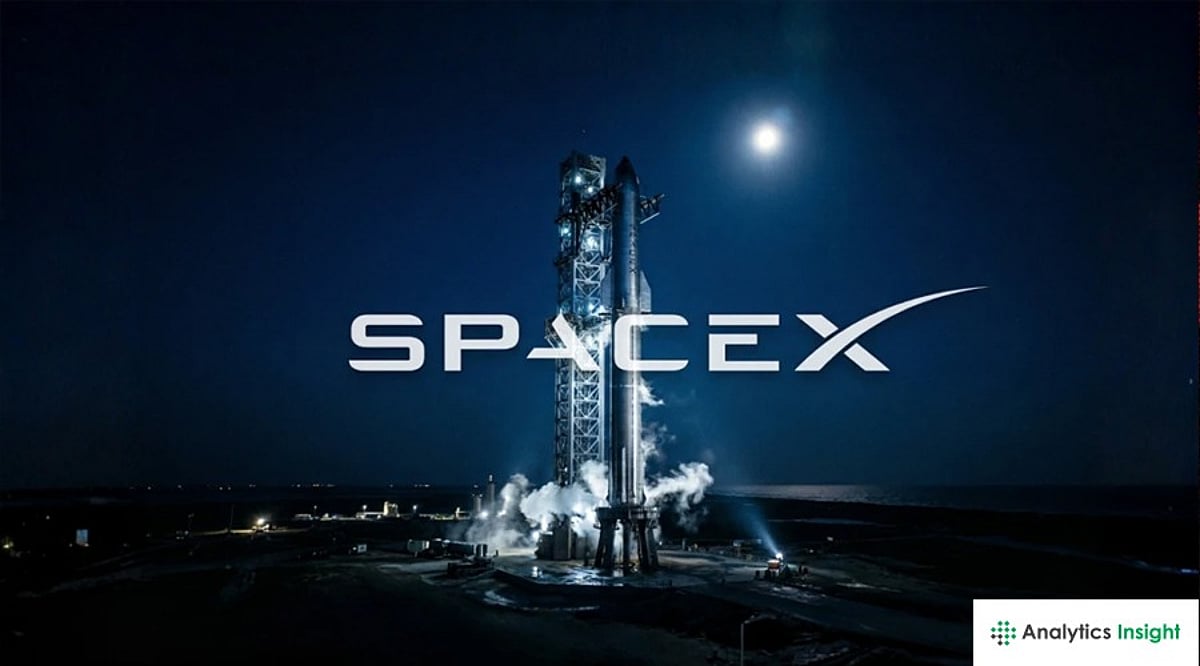
    Morgan Stanley has issued a $300 price target for SpaceX stock, marking one of Wall Street’s highest valuations for the newly public company. Analyst Adam Jonas initiated coverage with an ‘Overweight’ rating, describing $300 as the firm’s base case. As of July 20, SpaceX shares traded at $123.99, below the $135 IPO price set on June 12.

    The target implies approximately 142% upside from the current market price. However, Morgan Stanley employed an ‘intentionally wide’ valuation range, with a bear case of $75 and a bull case of $600. This wide spread reflects the numerous projects that must meet growth and cost targets over many years.

    AI Growth Drives Morgan Stanley’s Optimism

    Morgan Stanley projects SpaceX revenue will surge from $18.7 billion in 2025 to $319 billion by 2030—growth of about 17 times within five years. The bank forecasts revenue could reach $3.3 trillion by 2040, with AI services contributing a significant share.

    The forecast extends beyond rocket launches and Starlink internet services. Morgan Stanley’s model includes terrestrial data centers, enterprise AI services, satellite connectivity, and orbital computing. SpaceX’s acquisition of xAI in February integrated the Grok developer and its computing assets into the wider company.

    In its IPO filing, SpaceX presented a $28.5 trillion total addressable market, with approximately $26.5 trillion coming from AI-related markets and the remaining $2 trillion from space and connectivity. These figures represent the full market SpaceX could serve, not company revenue forecasts.

    Orbital Data Centers Underpin Long-Term Case

    SpaceX plans to leverage Starship and large satellite networks to support computing infrastructure in orbit. The company has discussed placing AI data centers above Earth, where satellites could use solar power and avoid land, power, and cooling constraints faced by ground facilities.

    However, this plan depends on Starship achieving regular and lower-cost operations. SpaceX postponed its 13th Starship test on July 16 after an engine issue triggered an automatic abort, causing shares to extend their decline and close below the IPO price for a second session.

    Starship also supports future Starlink launches. Larger satellites and higher launch capacity could expand broadband coverage and carry more computing equipment. Morgan Stanley treats launch reliability, satellite deployment, and AI demand as interconnected components of the $300 valuation.

    Valuation and Supply Risks Loom

    SpaceX reported a $4.9 billion net loss on $18.7 billion of revenue in 2025. The stock climbed as high as $225.64 after the IPO before losing more than 40% from that peak. The current market price values the company near $1.63 trillion.

    The stock faces potential selling pressure from share lockup expirations after the company reports second-quarter results. Reports indicate approximately 1.37 billion shares could become eligible for sale. While eligible shares do not always enter the market, a larger tradable supply can add volatility.

    Morgan Stanley’s $300 target rests on long-range estimates rather than current earnings. The $75 to $600 range illustrates how the valuation changes under different launch, AI, and cash-flow assumptions. SpaceX’s earnings reports, Starship tests, and AI contracts will provide fresh data for these forecasts. The stock remains sensitive to launch updates.

  • Apple Trade Secrets Case Escalates Legal Pressure on OpenAI’s Hardware Ambitions and Potential IPO

    Apple Trade Secrets Case Escalates Legal Pressure on OpenAI’s Hardware Ambitions and Potential IPO

    Apple has intensified its trade secrets lawsuit against OpenAI by sending preservation letters to approximately 40 former employees who now work at the AI company. The letters instruct recipients to retain all relevant documents and communications, and request meetings with Apple’s legal team. This move follows Apple’s initial lawsuit filed on July 10 in the Northern District of California, which accuses OpenAI, io Products, and two former Apple employees of using confidential hardware information. OpenAI has denied any interest in rivals’ trade secrets, and the claims remain untested in court.

    Apple Widens Its Search for Evidence

    Apple named former employees Chang Liu and Tang Yew Tan in the complaint. Tan serves as OpenAI’s chief hardware officer after years at Apple, while Liu worked as a senior electrical engineer at Apple. The complaint alleges Liu kept a company laptop and later accessed Apple’s network through an authentication flaw, downloading many confidential internal Apple hardware files. It also claims Tan emailed himself supplier details and internal reports before leaving Apple. Both claims remain allegations. Apple further says Tan encouraged Apple employees interviewing at OpenAI to bring physical parts for “show and tell” sessions. One candidate allegedly said, “I didn’t even know we could take those from the office.” OpenAI has not publicly answered each claim. The preservation letters show Apple wants records from a wider group than the two employees named in court. More than 400 former Apple workers now work at OpenAI, according to Apple’s filing. Employee movement alone does not prove trade secret theft under California law.

    Hardware Plans Face Court Scrutiny

    OpenAI moved deeper into consumer hardware after buying io Products, a company linked to former Apple design chief Jony Ive. Reuters valued the transaction at $6.5 billion. Apple says OpenAI used hiring practices and supplier contacts to speed up its hardware work. Apple also alleges OpenAI approached Apple suppliers for confidential production information. One claim involves a metal-finishing method that Apple describes as secret. Apple says a supplier believed OpenAI had permission to use the process. OpenAI disputes the accusation. The court could examine emails, interview records, product files, and supplier communications during discovery. Apple may seek limits on technology that a judge finds connected to protected information. No court has ruled that OpenAI used Apple trade secrets. OpenAI said, “We have no interest in other companies’ trade secrets.” It added that the company focuses on building technology for users. The statement does not address the separate claims against Tan, Liu, or io Products.

    OpenAI IPO Plans Meet New Legal Risk

    Reports say OpenAI has considered a public listing in late 2026 or 2027. The company has not announced an IPO date. Previous statements from OpenAI said a listing was not its main focus. The Apple OpenAI lawsuit adds another item for banks and investors to review before any share sale. An IPO filing must describe material lawsuits, business risks, management matters, and possible costs. The case may also require OpenAI to explain whether its hardware plans rely on disputed information. A long discovery process could overlap with IPO preparations. It could expose internal messages, hiring records, and product development documents. However, the lawsuit does not automatically stop a listing, and Apple has not proved its claims. The dispute comes after Apple and OpenAI worked together to add ChatGPT access to Apple devices in 2024. Their relationship now includes cooperation and competition. The legal case will proceed separately from any reported IPO timetable.

  • SpaceX Stock Dips Below IPO Price as Lockup Expirations Loom

    SpaceX Stock Dips Below IPO Price as Lockup Expirations Loom

    SpaceX (SPCX) closed at $135.27 on Wednesday, barely above its $135 initial public offering price after touching an intraday low of $132.28. This marks the first time the stock has closed below its IPO price since its Nasdaq debut on June 12.

    Investors are now bracing for a series of scheduled share unlocks and the company’s inaugural quarterly earnings report, both of which are expected to significantly influence trading activity in the weeks ahead. Currently, only about 5% of SpaceX shares are available for public trading, with the vast majority of insider holdings still under lockup restrictions.

    Limited Share Supply Faces Major Change

    SpaceX entered public markets with nearly 95% of its shares locked, leaving a thin float that supported an early rally and pushed the company’s valuation beyond $2.6 trillion shortly after its debut.

    That structure is about to shift. SpaceX plans to release additional 7% tranches during August and September, followed by a larger release after the third-quarter earnings report later this year.

    Elon Musk’s holdings, however, are subject to separate restrictions. His 6.4 billion shares remain locked until June 2027, exempting his stake from the early-release schedule.

    Earnings Report Will Trigger the First Unlock

    Analysts expect SpaceX to publish its first quarterly earnings during the first week of August. That reporting period will activate the first major lockup expiration, allowing insiders to sell roughly 20% of previously restricted shares. An additional 10% becomes eligible if the stock meets a performance requirement: closing at least 30% above the $135 IPO price, or $175.50, during five of the ten trading days before the earnings release. Currently, SPCX trades well below that threshold, so the extra early release has not yet qualified.

    More Shares Will Enter the Market Through December

    SpaceX’s IPO filings outline additional unlock dates after the first earnings release. The company will release another 7% of locked shares after 70, 90, 105, 120, and 135 days following the IPO. After third-quarter earnings, another 28% of pre-IPO shares will become eligible for sale.

    The standard 180-day lockup expires on December 8. Some investors follow extended schedules that continue into 2027. Elon Musk controls about 40% of the company’s equity and roughly 85% of its voting power, and his holdings remain locked until mid-June 2027.

    The stock has failed to regain momentum after joining the Nasdaq-100, and shares remain well below earlier highs. Even so, some technical analysts continue to watch for a possible move toward $158.

    What’s Next?

    SpaceX stock closed below its IPO price for the first time since listing, as upcoming earnings and scheduled share unlocks move into focus. Several lockup expirations will increase the available share float, while Elon Musk’s holdings remain locked until 2027. Investors will closely monitor the next earnings report for further market direction.

  • SpaceX Stock Plunges 33% From Peak, Nears $135 IPO Price Amid Valuation Worries

    SpaceX Stock Plunges 33% From Peak, Nears $135 IPO Price Amid Valuation Worries

    SpaceX shares closed at $136.08 on Tuesday, July 14, marking a third consecutive daily decline and putting the stock just $1.08 above its initial public offering price of $135. The drop represents a 33% fall from the post-listing peak of $225.64, erasing nearly $850 billion in market value according to Bloomberg estimates.

    SpaceX Stock Tests Key IPO Level

    The stock’s slide has brought the $135 IPO price back into focus. A move below that level would put early buyers in a losing position, particularly concerning given that retail investors received roughly 20% of the IPO allocation. The stock already trades below its opening price of $150 and its first-day close of $160.95, despite being added to the NASDAQ-100 through fast-entry rules last week.

    High Valuation and New Supply Add Pressure

    SpaceX trades at an estimated forward price-to-sales ratio above 30 times, among the highest in the NASDAQ-100. The valuation has drawn increased scrutiny as technology shares face broader questions about growth expectations. Additionally, a staggered lock-up schedule will release insider shares over the coming months, potentially adding supply. Ken Mahoney, CEO of Mahoney Asset Management, noted, “We still don’t think SpaceX has found its low,” citing the need for sufficient market demand to absorb new shares.

    Wall Street Targets Stay Well Above the Price

    Despite the recent decline, Wall Street analysts remain broadly supportive. Over 80% of analysts covering SpaceX recommend buying, with an average price target of $236.25—more than 70% above Tuesday’s close. However, early volatility is common among large tech listings; a Truist Wealth review of 30 major technology IPOs over 15 years found an average maximum first-year decline of 55%. Some investors may view the $135 area as an attractive entry point after missing the IPO allocation. Talley Leger, chief market strategist at Wealth Consulting Group, said he may consider buying if the decline continues. The coming sessions will test whether demand holds near the offer price as insider supply approaches.

  • Kusumgar Shares Surge 37% in Market Debut After 128-Times Oversubscribed IPO

    Kusumgar Shares Surge 37% in Market Debut After 128-Times Oversubscribed IPO

    Kusumgar Ltd., an engineered fabrics manufacturer, made a strong stock market debut on Wednesday, with shares listing up to 37% above the initial public offering (IPO) price. The stock opened at ₹578.45 on the BSE, a gain of nearly 37% from the issue price of ₹419, while on the NSE it listed at ₹569, up about 36%. This stellar opening reflects the intense investor demand seen during the IPO subscription period.

    IPO Sees Robust Investor Participation

    The ₹650-crore IPO was oversubscribed an impressive 128.85 times, according to NSE data. Bids were placed for more than 147.76 crore shares against the 1.14 crore shares on offer. Institutional investors drove much of the demand: the Qualified Institutional Buyer (QIB) portion was subscribed 284.10 times, the Non-Institutional Investor (NII) segment saw 165.46 times subscription, and the retail category was subscribed 26.47 times, indicating broad participation across investor groups.

    Offer Comprised Entirely of OFS

    The IPO was priced in a band of ₹398 to ₹419 per share and was structured entirely as an Offer for Sale (OFS). Since no fresh shares were issued, the company will not receive any proceeds from the public issue; instead, the funds will go to the existing shareholders selling their stakes. Ahead of the IPO, Kusumgar had raised ₹193.9 crore from anchor investors.

    Company Focuses on Engineered Fabrics

    Mumbai-based Kusumgar Ltd., founded in 1990, manufactures woven fabrics as well as coated and laminated synthetic varieties. These products are used across sectors such as aerospace and defense, automotive, industrial applications, and outdoor/lifestyle products. The IPO was managed by Axis Capital, IIFL Capital Services, and Motilal Oswal Investment Advisors, who served as the book-running lead managers.

  • Indian Stock Market Slides as Rising Oil Prices Weigh on Sentiment; Nifty50 Hits 24,124, Sensex at 77,279

    Indian Stock Market Slides as Rising Oil Prices Weigh on Sentiment; Nifty50 Hits 24,124, Sensex at 77,279

    The Indian stock market experienced a cautious trading session on July 13, with both benchmark indices declining as escalating US-Iran tensions pushed crude oil prices higher. The Nifty50 slipped 8.95 points (0.34%) to 24,124.95, while the Sensex dropped 290 points (0.37%) to 77,279.48. Investor sentiment turned risk-averse, with selling pressure spanning multiple sectors.

    Key Takeaways

    • Nifty50 and Sensex trade lower as crude oil prices rise on renewed US-Iran tension.
    • Metal, financial, auto, and banking stocks underperform, while IT and pharma show relative strength.
    • Laser Power & Infra, Devson Catalyst, and Happy Steels IPOs enter their final day of subscription.

    Rising Oil Prices Weigh on Market Mood

    The latest surge in crude oil prices stems from renewed geopolitical tension between the United States and Iran, raising fears of potential supply disruptions. As India is a major importer of crude oil, higher prices typically increase transportation, manufacturing, and production costs, fueling inflationary pressures and potentially squeezing corporate earnings. This has prompted investors to reduce exposure to sectors sensitive to rising operational expenses.

    Heavyweight Stocks Drag Indices Lower

    Major stocks such as InterGlobe Aviation, Tata Steel, and Maruti Suzuki India were the top losers in the Nifty50. InterGlobe Aviation faced headwinds from higher fuel costs, while Tata Steel suffered from broad selling in the metal sector. Maruti Suzuki India declined amid concerns over rising input costs affecting the automobile industry.

    Broader Market Also Under Pressure

    The weakness extended beyond large-cap stocks. The Nifty MidCap fell 0.29%, and the Nifty SmallCap slipped 0.13%, indicating that selling pressure was widespread across market segments.

    Sectoral Performance: Metal Stocks Hit Hardest

    The Nifty Metal index posted the worst performance, driven by global economic uncertainties. Nifty Financial Services and Nifty Auto also remained under strain, with the latter particularly impacted by rising crude prices affecting production costs and consumer demand. The Nifty Bank index faced similar selling pressure.

    In contrast, Nifty IT and Nifty Pharma outperformed. Investors typically pivot to defensive sectors like IT and pharma during periods of uncertainty, as their earnings are less sensitive to commodity price fluctuations.

    IPO Market Remains Active

    Despite the volatile market, the primary market is buzzing. The Laser Power & Infra IPO, aiming to raise Rs. 742 crore, enters its final subscription day. Devson Catalyst (Rs. 42.32 crore) and Happy Steels (Rs. 25 crore) IPOs also conclude their subscription period today, attracting investor interest.

    Market Outlook

    The Indian stock market is trading with a negative bias, driven by escalating US-Iran tensions and higher crude oil prices. Weakness in metal, financial, auto, and banking sectors adds to the pressure, while IT and pharma provide limited support. The broader market reflects cautious sentiment. The next direction will depend on global developments, crude oil price movements, and investor confidence.

    Frequently Asked Questions

    1. Why are crude oil prices dragging down the Indian stock market?

    India is a major oil importer. Rising crude prices increase operational costs for businesses—particularly in aviation, logistics, and manufacturing—while fueling inflationary concerns that can squeeze corporate profit margins.

    2. Which sectors are being hit hardest today?

    The Nifty Metal index is seeing the sharpest declines amid global economic jitters. The Auto, Financial Services, and Banking sectors are also under significant selling pressure.

    3. Why are IT and Pharma stocks performing relatively better?

    Investors often pivot to IT and Pharma during periods of geopolitical uncertainty. These sectors are considered ‘defensive’ since their earnings are typically less sensitive to fluctuating commodity and energy prices.

    4. What is the current status of the IPO market?

    Despite broader market volatility, the primary market remains active. The Laser Power & Infra, Devson Catalyst, and Happy Steels IPOs are all in their final day of subscription, drawing continued investor interest.

    5. How should investors navigate this period of uncertainty?

    Market participants are currently practicing caution by avoiding aggressive bets. Most are closely monitoring US-Iran developments, as any further escalation in crude prices will likely dictate whether the market finds stability or faces further downside.

  • A Complete Guide to Investing in Unlisted Shares (2026)

    A Complete Guide to Investing in Unlisted Shares (2026)

    Unlisted shares are gaining popularity among investors seeking early exposure to companies before they launch an IPO. These are stocks of companies that are not traded on major exchanges like NSE or BSE but can be bought through authorized platforms and brokers.

    Before investing, it is crucial to research the company’s financials, business model, valuation, management, and future IPO plans. Choose a trusted intermediary or regulated platform that facilitates transactions in unlisted shares and ensures proper share transfers. Complete KYC, transfer funds securely, and receive shares directly into your demat account after the transaction is processed.

    Popular unlisted companies attracting investor interest include firms from fintech, insurance, technology, and infrastructure sectors preparing for future listings. However, it is important to understand the risks, including lower liquidity, limited financial disclosures, valuation uncertainty, and delayed IPO timelines.

    Taxation differs from listed shares. Capital gains depend on the holding period and prevailing tax regulations, making professional advice valuable. Diversifying across listed and unlisted investments can help balance growth opportunities with portfolio risk over the long term.

  • Indian Stock Market Surges: Sensex Gains 805 Points, Nifty50 Crosses 24,200 Led by IT Rally

    Indian Stock Market Surges: Sensex Gains 805 Points, Nifty50 Crosses 24,200 Led by IT Rally

    The Indian stock market traded higher on July 10, 2026, as global market strength lifted investor confidence. IT stocks led gains, while pharma declined. Several IPOs also remained open for subscription.

    Key Takeaways

    • Nifty50 gained 250 points to 24,212.40, while Sensex rose 804.59 points to 77,546.41.
    • IT stocks led the rally, with Tech Mahindra, HCLTech, and Tata Consultancy Services as the top gainers.
    • Laser Power & Infra, Devson Catalyst, Happy Steels, and Kusumgar IPOs remained in focus.

    The Indian stock market traded higher on Friday, July 10, 2026, as positive signals from global markets helped investor confidence. A strong rally in chip stocks across international markets created a better mood among investors. This support helped both benchmark indices move higher during the trading session.

    At the time of writing, the Nifty50 traded at 24,212.40. The index gained 250 points, which means a rise of 1.04 percent. The Sensex also moved up sharply. It added 804.59 points, or 1.05 percent, and reached 77,546.41. The strong rise in both indices showed healthy buying across several sectors.

    Global Market Support Helps Indian Shares

    Global equity markets gave strong support to Indian stocks on Friday. A rally in chip stocks across major international markets improved investor confidence. This positive trend spread across different markets and helped Indian equities trade with strength.

    Investors also showed interest in sectors that usually perform well when global technology stocks move higher. As a result, buying remained strong in technology shares throughout the session. The positive trend in overseas markets also reduced concerns about short-term market pressure.

    IT Stocks Lead the Market Rally

    Information technology stocks became the biggest drivers of the day’s market gains. The Nifty IT index rose 3 percent and emerged as the best-performing sector during the session. Strong buying in leading IT companies pushed the sector much higher than the rest of the market.

    Tech Mahindra became one of the top gainers in the Nifty50 index. HCLTech also traded with solid gains, while Tata Consultancy Services joined the list of top performers. The rise in these large technology companies gave strong support to the benchmark indices and helped the market stay in positive territory.

    Mid and Small-Cap Stocks Stay Positive

    The positive mood was not limited to large-cap stocks. The broader market also remained in the green during the session. This showed that buying interest spread across different company sizes.

    The Nifty MidCap index rose 0.7 percent, while the Nifty SmallCap index gained 0.6 percent. These gains suggested that investors also looked at companies beyond the benchmark indices. A healthy rise in the broader market often reflects wider participation and better overall market sentiment.

    Metal and Consumer Durable Shares Perform Well

    Apart from information technology, a few other sectors also posted healthy gains. The Nifty Metal index traded higher as investors showed interest in metal companies. Better global sentiment supported buying in this space.

    The Nifty Consumer Durables index also performed well during the trading session. Demand for stocks from this sector remained healthy and helped the index move higher. Strong performance across several sectors added strength to the overall market and supported the gains in the benchmark indices.

    Pharma and Healthcare Stocks Face Pressure

    While many sectors traded with gains, not every part of the market performed well. The Nifty Pharma index remained under pressure and became one of the weakest sectoral indices during the session.

    The Nifty Healthcare index also traded lower. Selling in these sectors limited gains in some parts of the market. Even with this weakness, the strong performance in IT, metal, and consumer durable stocks kept the overall market firmly in positive territory.

    IPO Market Remains Active

    The primary market also stayed busy on Friday, with several public issues open for subscription.

    The Laser Power & Infra initial public offer (IPO) entered its second day of subscription. The company aims to raise Rs. 742 crore from the primary market. Investors continued to watch the issue closely as the subscription process moved ahead.

    Devson Catalyst IPO also entered its second day of subscription. This is a book-built issue worth Rs. 42.32 crore. Happy Steels IPO reached its second day as well. It is another book-built issue with a total size of Rs. 25 crore.

    Meanwhile, Kusumgar IPO entered the final day of subscription. The company seeks to raise Rs. 650 crore from the primary market. The public issue consists only of an offer for sale (OFS), which means existing shareholders plan to sell their shares through the IPO instead of the company issuing new shares.

    Market Outlook

    Friday’s trading session reflected strong optimism across the Indian stock market. Positive global cues, especially the rally in chip stocks, lifted investor confidence and supported buying in key sectors. The Nifty50 and the Sensex both posted gains of more than 1 percent, with technology stocks leading the advance.

    At the same time, gains in the Nifty MidCap and the Nifty SmallCap indices showed that buying spread across the broader market. Although pharma and healthcare stocks traded lower, strong performance in IT, metal, and consumer durable shares kept the overall market on a positive path. Investors also kept a close watch on the active IPO market, where several public issues remained open for subscription.

  • SpaceX Stock Slips Below IPO Price as Blue Origin Raises $10 Billion to Expand Space Operations

    SpaceX Stock Slips Below IPO Price as Blue Origin Raises $10 Billion to Expand Space Operations

    SpaceX shares dropped below their IPO opening price this week, closing at $148 on Wednesday after a two-day decline following the company’s inclusion in the NASDAQ-100 index. The stock touched an intraday low of $145.20 before recovering some losses. The decline came as rival Blue Origin moved to raise $10 billion in outside capital at a reported $130 billion valuation, intensifying competition in the space launch and satellite connectivity markets.

    SpaceX’s IPO opened at $150 per share in June after the company raised $85.7 billion, including the greenshoe option. The stock reached a closing high of $201.80 on June 16 but has since pulled back. Analysts attribute the decline to a post-IPO adjustment phase, where early demand cools and investors test valuation support. Despite the drop, most analysts remain bullish, with price targets above $200. Morgan Stanley rates the stock overweight with a $300 target, while Bernstein, RBC, and UBS initiated coverage with positive ratings.

    Analysts point to SpaceX’s leadership in reusable rockets, launch services, and Starlink satellite internet, as well as potential growth from AI tools, orbital data centers, and broader space infrastructure. Morgan Stanley’s Adam Jonas described SpaceX as more than a rocket company, noting its ability to connect launch economics, satellite networks, and AI infrastructure into a single business model.

    Meanwhile, Blue Origin is seeking outside funding for the first time in its 25-year history. The Jeff Bezos-backed company is raising $10 billion, including $4 billion from Coatue Management, $4 billion from other large investors, and $2 billion from Bezos himself. The raise follows a difficult period that included a New Glenn rocket explosion during a static engine test that damaged its only launch pad. Bezos told CNBC in May that the company has enough visibility into its future to bring in outside investors. Blue Origin also plans to operate TeraWave, an enterprise satellite connectivity service, using New Glenn rockets to launch satellites into medium and low Earth orbit.

    Amazon is preparing its own satellite internet service, Amazon LEO, which would compete with Starlink in consumer connectivity, but TeraWave targets large business customers. The funding signals Blue Origin’s push to strengthen its capital base as competition in launch services and satellite internet intensifies. SpaceX still leads in satellites in orbit, but Blue Origin is working to build a stronger position across rockets and connectivity.

  • SBI Funds Management IPO Opens July 14: Shareholder Quota Details and Key Dates

    SBI Funds Management IPO Opens July 14: Shareholder Quota Details and Key Dates

    SBI Funds Management, one of India’s largest asset management companies, is set to launch its Rs 11,693-crore initial public offering (IPO) next week, with shares expected to list on the BSE and NSE on July 21. The issue opens for subscription on July 14 and closes on July 16, with a price band of Rs 545–574 per share, valuing the company at approximately Rs 1.17 lakh crore post-listing.

    IPO Structure and Key Dates

    The entire offering is structured as an offer for sale, meaning no fresh shares are being issued. Existing promoters State Bank of India (SBI) and Amundi India Holding are offloading up to 20.39 crore shares, representing a combined 10% stake. Anchor investor bidding begins a day earlier, on July 13. Allotment is expected to be finalized on July 17–18, with refunds and share credits scheduled for July 20, just ahead of the listing.

    Shareholder Quota and Eligibility

    Existing SBI shareholders have a unique reservation category. The bank has reserved about 1.3 crore shares, valued at nearly Rs 750 crore, for its shareholders. This represents approximately 6.41% of the entire offering. To be eligible, investors must hold SBI shares in their demat accounts up to the IPO’s record date. Shares purchased after that date will not qualify for this category.

    Unlike many IPOs, there is no price discount for SBI shareholders. However, eligible SBI employees have been allotted shares worth about Rs 170 crore at a discount of Rs 54 per share. The allotment breakdown is: 50% for qualified institutional buyers, 35% for retail investors, and 15% for non-institutional investors.

    Company Financials and Backing

    SBI Funds Management held a 15.4% market share in mutual funds as of December 2025, with quarterly average assets under management of Rs 12,49,970 crore. The company’s income rose from Rs 3,426 crore in FY24 to Rs 4,236 crore in FY25, while profit after tax increased from Rs 2,073 crore to Rs 2,540 crore—representing an approximate 17% increase in income and 21% in profit after tax. The IPO has received backing from prominent investors such as ADIA and GIC.

    This listing represents a substantial gain for SBI from an investment made decades ago. SBI acquired a 61.73% equity stake in SBI Funds Management at a weighted average cost of just Rs 0.15 per share, which is now valued at about Rs 68,670 crore.

    With strong institutional interest and the company’s market leadership, the listing will be closely watched as a key indicator of investor confidence in India’s asset management sector.