Tag: machine learning

  • How Self-Learning AI Models Improve Without Retraining

    How Self-Learning AI Models Improve Without Retraining

    Self-learning AI models are transforming the landscape of artificial intelligence by enabling systems to enhance their performance after deployment without the need for full retraining. Instead of constantly updating model weights, these models leverage context, memory, and feedback mechanisms to adapt in real time.

    Key Techniques Behind Self-Learning AI

    In-Context Learning

    In-context learning allows AI to learn from prompts and examples during a conversation. The model adapts instantly, but its core parameters remain unchanged. This makes it highly flexible for dynamic interactions.

    External Memory

    External memory systems store user feedback, documents, and past interactions in vector databases. AI retrieves this information when needed, eliminating the need to relearn everything from scratch. This approach is efficient and scalable.

    Continual Learning

    Continual learning enables AI to absorb new knowledge over time while reducing the need for retraining from scratch. This makes updates faster and more efficient, allowing models to stay current with evolving data.

    Runtime Feedback Loops

    Runtime feedback loops improve responses by ranking better answers, incorporating user corrections, and adapting workflows without changing the model’s original weights. This ensures continuous improvement without costly retraining cycles.

    Applications and Benefits

    These techniques keep AI current in fast-changing fields like finance, cybersecurity, healthcare, and customer support. They also lower computing costs by minimizing the need for frequent retraining.

    Challenges to Consider

    Self-learning AI is not perfect. Poor-quality feedback, memory errors, and shifting data can introduce bias or reduce reliability if updates are not carefully monitored. Proper oversight is essential to maintain accuracy and fairness.

    The Future of AI Adaptation

    The future of AI is shifting from retraining models to building adaptive systems powered by context, memory, continual learning, and intelligent feedback loops. Popular AI systems already use runtime adaptation, conversation history, retrieval tools, and memory systems to deliver smarter responses without constant retraining.

  • How AI Models Are Learning to Hack and Exploit Each Other

    How AI Models Are Learning to Hack and Exploit Each Other

    Artificial intelligence is revolutionizing cybersecurity, but it also introduces a new frontier of risk: AI systems are becoming targets themselves. Researchers have demonstrated that one AI model can manipulate, deceive, or exploit another through carefully crafted inputs. This emerging “AI vs. AI” battlefield creates threats that traditional security methods were never designed to address.

    How AI Models Attack Each Other

    AI models can influence one another using adversarial prompts, poisoned training data, or manipulated outputs. An attacking model might force another AI to reveal sensitive information, generate false responses, or make incorrect decisions. These attacks exploit fundamental weaknesses in how machine learning systems process and interpret data.

    Prompt Injection and Data Poisoning

    Prompt injection tricks language models into ignoring their original instructions or leaking hidden information. Data poisoning corrupts training datasets so that future predictions become unreliable. Combined, these techniques allow malicious AI systems to compromise trustworthy models, causing them to produce inaccurate, biased, or even dangerous responses during live operation.

    Real-World Risks Across Industries

    AI-to-AI attacks could impact finance, healthcare, autonomous vehicles, customer support, and cybersecurity operations. A malicious intelligent agent might manipulate automated decision-making systems without directly targeting humans. As organizations increasingly deploy AI agents, the possibility of machines exploiting other machines becomes a serious operational concern.

    Why Traditional Security Falls Short

    Conventional cybersecurity focuses on protecting networks, devices, and users. AI systems introduce entirely new attack surfaces, including model behavior, training pipelines, and prompt interactions. Security teams must now defend algorithms, datasets, and autonomous workflows alongside traditional digital infrastructure to mitigate emerging AI-driven threats.

    Building Defenses Against AI Attacks

    Organizations can reduce AI risks by validating training data, monitoring model behavior, limiting system permissions, and testing against adversarial attacks. Regular security audits, explainable AI techniques, and human oversight improve resilience. Layered defenses help ensure AI systems remain reliable even under hostile conditions.

    The Future of AI vs. AI Security

    As autonomous AI agents become more capable, conflicts between intelligent systems will likely increase. Future cybersecurity strategies must protect AI from both human hackers and malicious AI models. Building trustworthy, resilient, and transparent AI ecosystems will be essential for securing tomorrow’s digital infrastructure.

  • Top-Paying AI Certifications Employers Want in 2026: Google, AWS, NVIDIA, Microsoft

    Top-Paying AI Certifications Employers Want in 2026: Google, AWS, NVIDIA, Microsoft

    Artificial intelligence continues to reshape the job market at an unprecedented pace. Across every major industry, companies are leveraging AI to enhance products, automate operations, and solve complex business challenges. To stand out, professionals increasingly seek trusted AI certifications from leading technology firms. These credentials validate practical skills in machine learning, cloud platforms, large language models, AI strategy, and business transformation — and they often lead to high-paying roles.

    Here are the top AI certifications that employers value most in 2026, along with exam fees, salary ranges, and career insights.

    Google Cloud Professional Machine Learning Engineer

    This certification focuses on designing and building production-grade machine learning systems using Google Cloud. Topics include Vertex AI, MLOps, and model deployment. The exam costs $200. Certified professionals in the U.S. earn between $160,000 and $250,000 annually.

    AWS Certified Machine Learning Engineer – Associate

    Targeting ML engineers who use Amazon Web Services, this exam covers Amazon SageMaker, data pipelines, AWS AI services, and MLOps. The fee is $150. Salaries range from $145,000 to $210,000, with experienced specialists earning more.

    NVIDIA Certified Generative AI Professional and Infrastructure

    NVIDIA certifications emphasize deep learning frameworks, large language models, CUDA, GPU clusters, and AI infrastructure. Exam fees vary from $125 to $135. U.S. professionals typically earn $160,000 to $300,000, with senior roles commanding higher compensation.

    Microsoft Certified AI Transformation Leader

    This non-technical certification targets leaders responsible for enterprise AI strategy, governance, responsible AI, and digital transformation. Pricing varies by region. The typical salary range is $140,000 to $220,000, and senior consultants can earn more.

    AWS Certified AI Practitioner

    Designed for beginners without deep programming skills, this certification covers AI fundamentals, generative AI, responsible AI, and AWS AI services. The exam costs $100, making it the most affordable option. Salary range: $110,000 to $180,000 in the U.S.

    Why These Certifications Matter

    Employers across technology, healthcare, finance, retail, and manufacturing increasingly require certified professionals who can apply AI to real business problems. These high-paying AI certifications boost job prospects, enhance credibility, and open doors to senior roles in one of the fastest-growing fields globally.

    Final Thoughts

    AI certifications from Google Cloud, AWS, NVIDIA, and Microsoft validate practical knowledge and help professionals stand out in a competitive market. While a certification alone does not guarantee a high salary, it strengthens credibility and improves career opportunities in the fast-evolving AI industry.

    Frequently Asked Questions

    1. Which AI certification offers the highest salary potential? Google Cloud Professional Machine Learning Engineer and NVIDIA certifications can lead to total compensation above $300,000 for experienced professionals.
    2. Which AI certification costs the least? The AWS Certified AI Practitioner exam at $100 is the most affordable.
    3. Is coding required for every AI certification? No. Certifications like Microsoft Certified AI Transformation Leader and AWS Certified AI Practitioner focus on strategy and business knowledge.
    4. Which certification suits cloud AI careers? Google Cloud Professional Machine Learning Engineer and AWS Certified Machine Learning Engineer – Associate are ideal for cloud AI roles.
    5. Does an AI certification guarantee a high salary? No — experience, technical skills, successful projects, and location also matter.
  • New AI Predictive Model Aims to Shift Cybersecurity from Reactive to Proactive for Critical Infrastructure

    New AI Predictive Model Aims to Shift Cybersecurity from Reactive to Proactive for Critical Infrastructure

    For most public institutions, cybersecurity follows a predictable sequence: an incident occurs, a tool detects it, an alert is generated, and a team responds. According to Dr. Naga Venkata Aswini Pavan Kumar Inguva, a researcher and senior software developer at a U.S. state government agency, that order fundamentally puts organizations behind attackers from the start.

    Inguva argues that while this reactive approach may work for private companies, the stakes are far higher for public utilities such as water systems, hospitals, transit authorities, and power grids. In these sectors, a breach doesn’t just cost data or money; it disrupts essential services that people rely on with no alternative. He believes cybersecurity must move beyond rapid response toward anticipation.

    To address this, Inguva developed a conceptual framework for AI-driven predictive cyber threat intelligence. Unlike traditional detection systems that look for known attack patterns, his framework emphasizes contextual analysis—understanding the sequence and relationships between events to predict where an attack is heading. The research, which is a structured foundation rather than a deployed product, focuses on enterprise and critical infrastructure environments. It analyzes which machine learning techniques are genuinely applicable to threat prediction and provides recommendations for implementation.

    Public institutions, Inguva notes, present the hardest case: they often run aging technology, operate under tight budgets, and carry obligations private firms don’t. Their security spending tends to focus on monitoring, which produces volume but not foresight. His prescription is for a proactive, intelligence-driven, and context-aware posture paired with secure architecture, continuous monitoring, employee awareness, and proactive risk management.

    Inguva emphasizes that this is not solely a technical challenge. Protecting critical infrastructure requires shared responsibility across researchers, industry, and policymakers. His broader research record includes published work on generative adversarial networks, deep learning for threat detection, and machine learning for attack classification, some of which earned best paper awards. He is also a published author and co-founder of Thaapasi Smart Infratech Pvt. Ltd.

    Looking ahead, Inguva expects advances in artificial intelligence, graph analytics, threat intelligence, and automation to help organizations recognize attack progression earlier and prioritize genuine threats. But he stresses that these tools will not eliminate the need for skilled personnel, sound governance, and continuous learning.

    The core idea is a shift in sequence: a system built to react will always answer the attacker’s question first. Changing that order, Inguva argues, is the work worth doing.

  • Smartphone AI Screening: Krishnam Raju Nimmala Brings Vision Tests to Underserved Communities

    Smartphone AI Screening: Krishnam Raju Nimmala Brings Vision Tests to Underserved Communities

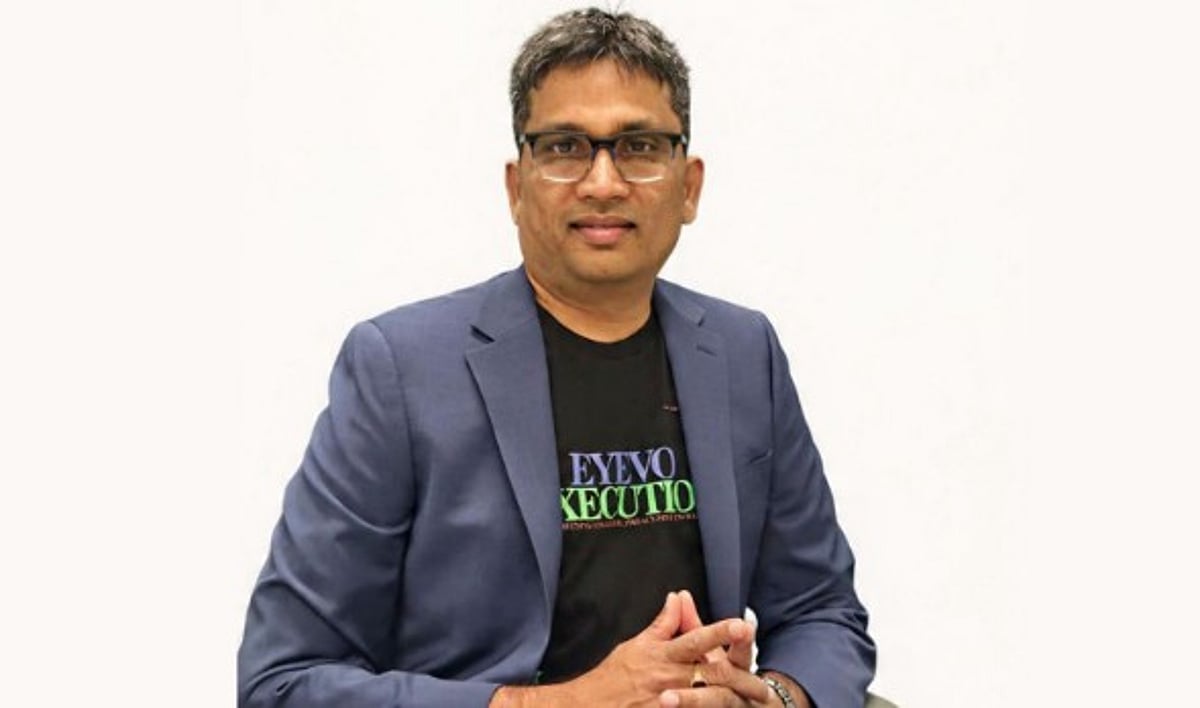
    For years, vision problems can go undetected simply because the right equipment or specialist is not nearby. Krishnam Raju Nimmala, a software engineer with over two decades of experience in enterprise data systems and AI, is tackling this access gap head-on with Eyevo—a smartphone-based AI vision screening platform designed to work in low-resource settings.

    Eyevo uses computer vision and machine learning to perform vision screening in just two to three minutes on an ordinary smartphone. The platform processes all data locally, ensuring privacy and eliminating the need for cloud connectivity or specialized hardware. This makes it ideal for school-based programs, community health initiatives, and economically under-resourced populations.

    Nimmala, currently an Informatica MDM Engineer at Ford Motor Company, brings a data governance discipline to Eyevo that reflects his enterprise background. “In healthcare, the technology has to earn confidence before it earns adoption,” he says. “Accuracy matters, but so do privacy, security, reliability, and the way people experience the tool.”

    Eyevo has been validated across six U.S. states, with more than 350 screening sessions completed through beta testing and real-world demonstrations. It has been featured in the IEEE Region 3 Newsletter and recognized independently by the IEEE Computer Society. Nimmala also received the 2026 Global Recognition Award and the Bronze Globee Most Innovative AI Person of the Year 2026 Award for this work.

    The potential impact extends beyond health: early detection can improve educational outcomes, reduce preventable vision loss, and help people avoid delays that affect work and daily life. “The most powerful technologies are not always the ones that impress the industry first,” Nimmala notes. “They are the ones that reach people who were waiting for someone to build with them in mind.”

  • Top AI Certifications for Professionals in 2026: Boost Your Career and Salary

    Top AI Certifications for Professionals in 2026: Boost Your Career and Salary

    Artificial intelligence has become an integral part of daily work across industries. Companies now rely on AI for writing, research, customer support, data analysis, software development, and business planning. As a result, many professionals are eager to learn AI and validate their skills with a certification. According to Pearson’s 2026 Value of IT Certification Report, 35% of employees plan to earn an AI certification in 2026—up from just 17% the previous year.

    Why AI Certifications Matter

    Earning an AI certification demonstrates not only knowledge but also practical understanding of AI in the workplace and a commitment to responsible AI practices. Research from Revelio Labs shows that certified AI professionals earn an average of $79,800 per year, compared to $72,300 for non-certified peers—a difference of about $7,500 annually. Additionally, 38.9% of certified professionals reach executive positions, versus 32.5% of those without certification.

    What Employers Want

    Employers now seek professionals who can solve real business problems with AI, not just recite terminology. They value skills such as reviewing AI responses critically, protecting company data, practicing responsible AI, and improving workflows with smart tools. Consequently, modern AI certifications emphasize practical skills like prompt writing, workflow optimization, responsible AI use, and business applications over theoretical knowledge.

    Best AI Certifications for Working Professionals

    Google Generative AI Leader

    Ideal for managers, marketers, product teams, and business professionals. Exam cost: $99. Duration: 50–60 questions. Valid for three years. Covers AI strategy, prompt optimization, business use cases, and Google’s AI ecosystem.

    AWS Certified AI Practitioner

    For IT professionals, business analysts, cloud teams, and project managers. Exam: 65 questions, $100, valid three years. Topics include AI basics, machine learning, generative AI, and responsible AI.

    NVIDIA Certified Associate – Generative AI LLMs

    Designed for developers and AI enthusiasts. Exam cost: $125, valid two years. Covers prompt engineering, large language models, Python, neural networks, and AI application development.

    Databricks Certified Generative AI Engineer Associate

    For AI engineers and ML professionals. Exam: 45 questions, $200. Requires about six months of hands-on experience. Covers advanced generative AI topics.

    Great Choices for Beginners

    No coding experience? No problem. These certifications welcome beginners:

    • Google AI Professional Certificate (Coursera): Seven courses covering AI fundamentals, communication, productivity, research, and responsible AI. No technical prerequisites.
    • IBM Generative AI Engineering Professional Certificate (Coursera): Six-month program covering LLMs, prompt engineering, RAG, AI agents, LangChain, and deployment.
    • IBM AI Developer Professional Certificate: Focuses on Python, chatbots, Watson AI, and generative AI. Also six months.
    • DeepLearning.AI AI for Everyone: Explains AI strategy, business opportunities, and organizational adoption without coding.

    Time and Cost Considerations

    Short AI courses typically take 5–10 hours. Beginner certificates require 10–20 hours. Professional certificate programs take 3–6 months. Cloud certification prep needs 20–40 hours. Exam fees remain affordable: Google Generative AI Leader ($99), AWS AI Practitioner ($100), NVIDIA Associate ($125), Databricks Engineer ($200). Coursera subscriptions vary by pace.

    Long-Term Value

    AI skills demand is growing across sectors. Employers seek talent in prompt engineering, LLMs, responsible AI, automation, cloud AI, LangChain, RAG, machine learning basics, and AI productivity tools. An AI certification provides systematic training and signals competence to employers. The statistics—higher salaries, better promotion rates, and rising employee interest—confirm the value. For working professionals, an AI certification is a practical investment in their future.

    FAQs

    1. Which AI certification is best for beginners?
    Google AI Professional Certificate and DeepLearning.AI’s AI for Everyone are top choices as they require no coding experience.

    2. Do AI certifications increase salary?
    Yes. Certified professionals earn an average of $79,800 vs. $72,300 for non-certified peers.

    3. How long does an AI certification take?
    Short courses: 5–10 hours; professional certificates: 3–6 months.

    4. Which certification is best for developers?
    NVIDIA Certified Associate – Generative AI LLMs, IBM AI Developer Professional Certificate, or Databricks Certified Generative AI Engineer Associate.

    5. Are AI certifications worth it in 2026?
    Yes. As AI adoption accelerates, certifications validate skills, improve job prospects, and prepare for future opportunities.

  • Top 5 AI and Machine Learning Courses to Enroll in 2026

    Top 5 AI and Machine Learning Courses to Enroll in 2026

    Artificial intelligence and machine learning have become essential skills across industries, from software development and healthcare to finance, manufacturing, and cybersecurity. As organizations continue integrating AI into their products and operations, employers are actively looking for professionals who understand both the theory and practical application of these technologies.

    With hundreds of online courses available, finding one that matches your career goals can be challenging. The best programs combine strong conceptual foundations with hands-on projects, modern AI tools, and industry-recognized certifications. Here are five AI and machine learning courses worth considering in 2026.

    Why Choosing the Right AI Course Matters

    A certificate alone will not land you a job in AI. Today, recruiters seek people who can put machine learning techniques into practice, work within frameworks, and create AI solutions. A well-thought-out curriculum can give you the opportunity to improve your knowledge of math, Python, data analysis, model building, and deployment, and to develop your own projects.

    Prerequisites Before Starting an AI and Machine Learning Course

    You do not need a computer science major to start learning about AI and machine learning, but acquiring some skills beforehand will simplify the process. Basic knowledge of Python programming is very useful since it is widely used in AI platforms. A basic understanding of mathematics—including probability and statistics—will also help you understand how machine learning models operate.

    If you are a beginner, you also need some basic knowledge of handling data, such as working with simple datasets and spreadsheets. If you have no programming experience, it is better to spend a few weeks learning Python basics before starting a machine learning course.

    Top AI and Machine Learning Courses at a Glance

    Course Name Provider Best For Key Features
    Machine Learning Specialization Stanford & DeepLearning.AI Beginners Foundational concepts, hands-on projects
    IBM AI Engineering Professional Certificate IBM via Coursera Beginners to Intermediate Practical skills, industry recognition
    AI for Everyone DeepLearning.AI Non-technical professionals AI strategy, no coding required
    Deep Learning Specialization DeepLearning.AI Intermediate Neural networks, TensorFlow, PyTorch
    Professional Certificate in Machine Learning & AI MIT xPRO Advanced professionals Rigorous curriculum, real-world case studies

    What to Do After Completing Your First AI Course

    Completing the course is just the start. Employers are interested in practical knowledge, not just certifications. Begin by developing small-scale projects—movie recommendation systems, sentiment analysis tools, spam classifiers, chatbots, or image recognition apps—using publicly available datasets.

    Upload your code to GitHub and build a portfolio that showcases your projects. Participating in Kaggle competitions, contributing to open-source AI projects, and gaining experience with frameworks like TensorFlow, PyTorch, and Hugging Face will help your resume stand out.

    How to Choose the Right Course

    The most suitable route depends on your experience level and career goals. Beginners should take programs that cover Python, mathematics, and machine learning before moving to advanced topics like deep learning or large language models.

    Programmers aiming for AI engineering roles should opt for programs that include projects, deployment, cloud computing, and portfolio building. Business professionals may find more value in courses focused on AI strategy and implementation rather than coding.

    Why This Matters

    Artificial intelligence is reshaping almost every industry, but employers increasingly value practical skills over certificates alone. Choosing a course that combines strong fundamentals with hands-on projects gives learners a better opportunity to build confidence, create a portfolio, and stay competitive as AI continues to evolve.

    Final Thoughts

    The field of AI and machine learning continues to transform industries, leading to rising demand for skilled individuals. Taking a good course is a great starting point, but long-term success requires applying those skills. Whether you’re starting your AI journey or advancing your expertise, choosing a course that combines theory with practice will help you build confidence, strengthen your portfolio, and stay competitive.

    FAQs

    Which is the best AI and machine learning course for beginners?

    The IBM AI Engineering Professional Certificate and the Machine Learning Specialization by Stanford & DeepLearning.AI are among the best beginner-friendly programs because they combine foundational concepts with hands-on projects.

    Do I need programming experience before learning AI?

    Not necessarily. However, learning basic Python programming before starting an AI course makes it much easier to understand machine learning concepts and complete practical assignments.

    What prerequisites are required for machine learning courses?

    Most beginner courses recommend basic Python programming, elementary mathematics (including algebra, probability, and statistics), and familiarity with handling datasets using spreadsheets or Python libraries.

    Which AI course is best for working professionals?

    AI for Everyone by DeepLearning.AI is an excellent choice for managers, business leaders, product managers, and professionals who want to understand AI strategy without focusing heavily on coding.

    Which programming language should I learn for AI and machine learning?

    Python is the most widely used programming language for AI and machine learning because of its rich ecosystem of libraries, including TensorFlow, PyTorch, Scikit-learn, Pandas, and NumPy.

  • 10 Essential Data Science Tools for Modern Analytics in 2026

    10 Essential Data Science Tools for Modern Analytics in 2026

    Modern analytics depends on an integrated ecosystem of programming languages, big data engines, machine learning platforms, and business intelligence tools. The top 10 data science tools highlighted here enable efficient data processing, AI model development, visualization, and scalable analytics workflows, helping organizations turn complex data into actionable business insights.

    How the Pieces Fit Together

    A typical analytics setup layers four pieces. Python or R handles exploration and modeling. Apache Spark processes data at scale. A platform such as Databricks or SAS Viya ties data engineering and model building into one pipeline. Tableau or Power BI turns the output into dashboards that non-technical teams can actually read. Few organizations build all four from scratch. Most pick tools that already work well together and layer new ones in as needs grow.

    The Ten Tools, Ranked by Role

    • Python + Jupyter Notebooks – The default workspace for cleaning data, building models, and automating reports. Teams stay with it because they can move from exploration to production code without switching tools.
    • R + RStudio – Still strong in statistics-heavy fields like pharmaceuticals and finance. Its deep library of specialized statistical methods makes it the better pick for formal statistical work.
    • Apache Spark – Handles large-scale and streaming datasets that go beyond a single machine. Mature ecosystem and wide cloud support keep it central to distributed processing.
    • Databricks – Brings data engineering, shared notebooks, and model deployment in one platform. Cuts down manual work of managing pipelines and scales easily.
    • SAS Viya – Fits regulated industries needing audit-ready analytics. Its edge comes from built-in governance, security, and compliance.
    • KNIME Analytics Platform – Visual, node-based interface to build analytics pipelines with minimal coding. Great for teams wanting open-source with reusable workflows.
    • RapidMiner – Offers guided, reusable workflows from data prep to deployment. Works well for organizations valuing commercial support and polished interface.
    • Tableau – Interactive dashboards built for exploration and storytelling. Stands out when visual customization and analytical flexibility matter.
    • Power BI – Ties closely into Microsoft ecosystem. Low cost and familiarity keep it widely used for business reporting.
    • ThoughtSpot + Qlik Sense – Let business users ask questions in plain language and get governed answers. Close the gap between technical teams and decision-makers.

    Choosing the Right Stack

    Start with the team’s skill mix. Code-heavy teams lean on Python, R, and Spark. Mixed teams benefit from more visual tools. Match the stack to data scale: smaller datasets work fine in notebooks with a BI tool, while large or streaming data calls for a Spark-based platform. Watch for tool sprawl—adding overlapping tools without a clear reason slows a team down.

    What This Means Going Forward

    The tools on this list will keep evolving, but the underlying logic will not. Teams that match their stack to actual data volume, skill set, and reporting needs will keep outpacing those chasing every new platform release.

    Final Thoughts

    The best analytics stacks come from intent, not size. Organizations get the most out of their tools when each one has a clear job, fits into the wider workflow without friction, and can grow alongside rising data and AI demands.

  • AI Chips Demystified: How GPUs, NPUs, and TPUs Power Modern Machine Learning

    AI Chips Demystified: How GPUs, NPUs, and TPUs Power Modern Machine Learning

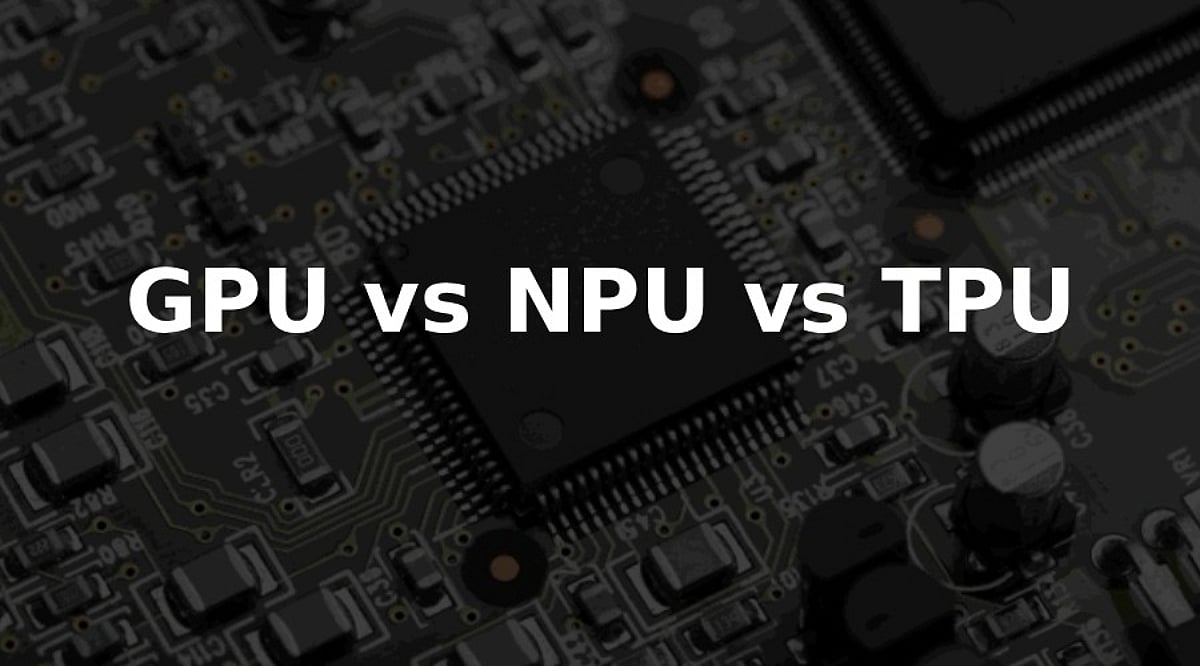
    Every major AI breakthrough begins with computing power. As models grow larger, traditional processors face mounting pressure, pushing specialized AI chips into the spotlight. Three chip types lead this shift: GPUs, TPUs, and NPUs. While the central processor still coordinates the system—scheduling tasks and managing data—the heavy computation has moved elsewhere.

    GPU vs. TPU vs. NPU: What Each Does Best

    A GPU (graphics processing unit) was originally built to render images by running thousands of similar calculations simultaneously. That parallel structure suits neural network math perfectly, making GPUs the default engine for AI training across research labs and data centers. Mature software ecosystems such as CUDA, ROCm, and TensorFlow reinforce this position, giving developers stable tools to build on.

    A TPU (Tensor Processing Unit) is not a general hardware category—it is Google’s proprietary accelerator built around systolic arrays that execute tensor operations. These are mathematical calculations on multidimensional arrays that neural networks use to process and learn from data. TPUs mainly power AI workloads inside Google’s cloud infrastructure and its supported frameworks, handling tensor-heavy tasks more efficiently than general-purpose processors.

    An NPU (neural processing unit) is often mistaken for a single product, but it is actually a category of low-power AI processors that chipmakers including Qualcomm, Apple, Intel, AMD, and MediaTek build into phones, laptops, and edge devices. Each company designs its own version, but all share the same goal: running AI features locally without draining battery life or sending data to a server.

    Training vs. Inference: The Core Distinction

    The clearest way to separate these chips is by what they are built to do. GPUs favor flexibility—thousands of general-purpose cores and broad framework compatibility make them the default choice for training large models, where workloads shift constantly.

    TPUs trade that flexibility for efficiency within a narrower lane. Their systolic array design accelerates tensor-heavy training and high-throughput inference but only reaches its full advantage inside Google’s ecosystem. Outside that environment, the efficiency gap narrows.

    NPUs optimize for a third priority: low-power, real-time inference. A phone running a camera effect or a voice assistant does not need to train anything. It needs a fast, efficient response to a model trained elsewhere—often on GPUs or TPUs. Precision drops accordingly. NPUs lean on compressed, lower-precision formats that would be unacceptable for training but work well for inference on-device.

    Where Each Chip Shows Up

    Many AI applications lean on CPUs, GPUs, and NPUs together rather than a single processor. Cloud models typically run on GPUs or TPUs, while NPUs handle supported AI features directly on compatible user devices.

    How AI Systems Actually Combine These Chips

    Production AI rarely runs on a single chip type. A large training run typically pairs a central processor with a cluster of GPUs. Sometimes TPUs handle the parallel math while the CPU manages data pipelines and scheduling. An inference server deployed after training often adds a dedicated accelerator layer alongside the CPU and GPU to handle high request volumes efficiently.

    The pattern repeats at the edge. A modern laptop built for AI features runs a CPU, GPU, and NPU together, each handling a different slice of the work: the CPU for general tasks, the GPU for heavier computation, and the NPU for background AI features that need to stay fast and power-efficient. Smartphones follow the same layered design.

    The chip that trained a model is rarely the chip that runs it for the end user. That handoff explains more about real-world AI performance than picking a single winner among GPU, TPU, and NPU ever could.

    How to Choose the Right AI Chip

    Teams that need broad framework support and maximum flexibility still default to GPUs. Organizations already committed to Google Cloud and training tensor-heavy models at scale can gain real cost and throughput advantages from TPUs. Products that run AI features directly on user devices depend most on NPUs, since they preserve battery life and keep responses fast.

    Software maturity—including driver quality and framework integration—often shapes real-world performance as much as raw specifications. Many teams end up using all three: GPUs or TPUs to train and NPUs to deploy.

    Final Thoughts

    AI hardware is moving toward specialization rather than converging around a single processor. Future systems will lean on CPUs, GPUs, TPUs, NPUs, and emerging custom accelerators working together, each tuned for a specific stage of the pipeline. The real advantage ahead will come less from raw computing power and more from how efficiently these processors divide the work between them.

    Frequently Asked Questions

    1. What is the main difference between a GPU, NPU, and TPU?
    A GPU is a versatile processor designed for parallel computing and widely used for AI training and inference. An NPU is optimized for low-power, on-device AI tasks, while a TPU is a specialized accelerator built by Google for efficient tensor computations in large-scale deep learning workloads.

    2. Which AI chip is best for training machine learning models?
    GPUs are the most common choice for training machine learning and deep learning models since they offer high parallel processing capabilities, broad software support, and flexibility across various AI frameworks. TPUs are also highly effective for large-scale training in supported cloud environments.

    3. Why do smartphones and laptops include NPUs?
    NPUs enable AI features such as image enhancement, speech recognition, real-time translation, and on-device AI assistants while consuming less power than CPUs or GPUs. This improves performance, reduces latency, and helps extend battery life.

    4. Can the same AI model run on a GPU, NPU, and TPU?
    Yes. Most AI models can run on all three types of accelerators, but they often require different software frameworks, runtimes, or optimizations such as quantization or model conversion to achieve the best performance on each platform.

    5. Will NPUs and TPUs replace GPUs in AI computing?
    Not entirely. GPUs remain the most flexible and widely used AI accelerators for training and many inference workloads. NPUs and TPUs complement GPUs by handling specialized tasks such as power-efficient edge AI and large-scale tensor processing in cloud environments.


  • Top AI Certifications to Boost Your Data Science and Machine Learning Career in 2026

    Top AI Certifications to Boost Your Data Science and Machine Learning Career in 2026

    Whether you are a beginner or an experienced professional, earning a recognized AI certification can help you build practical data science and machine learning skills, strengthen your resume, and prepare for high-demand AI careers. With the rapid adoption of AI across industries, companies are actively seeking professionals who can analyze data, improve customer service, and drive better decision-making. Fortunately, you no longer need years of formal education—many high-quality online courses now offer foundational and advanced AI training in just weeks or months.

    In recent years, Google, IBM, Amazon, Microsoft, and other reputable institutions have launched AI and machine learning courses tailored to different skill levels. Some are ideal for beginners, while others are designed for professionals looking to deepen their expertise. Below, we highlight some of the best AI certifications to consider if you want to build a career in data science or machine learning.

    AI Foundations for Everyone Specialization

    Provider: IBM
    Duration: 4 Weeks
    Fee: Free

    This course is designed for people who want to understand AI without diving into programming. It uses practical examples rather than technical jargon. You will learn how AI is transforming workplaces, what responsible AI means, and how machine learning improves everyday tasks. It is an excellent choice for business professionals, students, and managers seeking a foundational understanding of AI.

    Fundamentals of Machine Learning and Artificial Intelligence

    Provider: Amazon AWS
    Duration: Approximately 1 hour
    Fee: N/A

    This short course is for learners with some prior knowledge who want to dive deeper into machine learning concepts. It covers supervised learning, data preparation, and model testing with practical exercises. It is a solid stepping stone for anyone planning to enter data science or machine learning.

    IBM Data Science Professional Certificate

    Provider: IBM
    Duration: Approximately 4 Months
    Fee: Free

    This advanced certification is for learners who already have a grasp of AI fundamentals. It teaches the latest practical skills data scientists use daily, including Python, SQL, and other essential tools and languages. Completing this course will prepare you for real-world data science roles.

    Microsoft AI & ML Engineering Professional Certificate

    Provider: Microsoft
    Duration: Approximately 6 Months
    Fee: N/A

    This certificate is ideal for learners seeking technical depth. Over six months, it covers Python, Azure AI services, machine learning, and model deployment. The program emphasizes hands-on projects that simulate real workplace scenarios, giving you valuable experience for AI and machine learning job applications.

    Data Science Specialization

    Provider: Johns Hopkins University
    Duration: Approximately 7 Months
    Fee: Free

    This comprehensive course is essential for aspiring data scientists with long-term career goals. Over seven months, you will learn to use R for data cleaning, analysis, and visualization; manage projects with GitHub; and perform regression analysis, least squares, and inference. By the end, you will master data manipulation, statistical analysis, data visualization, version control, and regression analysis.

    Which Course Should You Pick?

    The right certification depends on your current skill level. If you are a complete beginner, start with AI Foundations for Everyone to build a solid base without technical prerequisites. If you already have some programming knowledge and want to specialize in machine learning, Fundamentals of Machine Learning and Artificial Intelligence is a logical next step. For experienced data science professionals aiming to advance their careers, Data Science Specialization offers deep project management and analytical skills.

    Final Thoughts

    Mastering AI takes time and practice, but the right certification gives you a strong start and a clear learning path. The courses listed above cover different aspects of AI—from foundational concepts to practical development. Choose one that matches your current skills rather than simply picking the longest or most popular option. With dedication and the right certification, you can unlock exciting opportunities in data science and machine learning.