
Tag: Microsoft

  • Mozilla Report Reveals Microsoft’s Unequal Browser Rules: India and US Face Deceptive Practices While EU Benefits from Regulation

    Mozilla Report Reveals Microsoft’s Unequal Browser Rules: India and US Face Deceptive Practices While EU Benefits from Regulation

    Two years after Mozilla first commissioned experts to examine Microsoft’s browser behavior, a new report titled Over The Edge 2.0 finds that the tech giant continues to steer users toward its Edge browser through deceptive design patterns—except in regions where strict regulation forces fairer treatment. The study, led by Dr. Harry Brignull and Cennydd Bowles, tested Windows 10 and Windows 11 in the USA, India, the UK, and Germany, and found a stark regulatory divide.

    Key Findings

    • Windows Search and Widgets still ignore users’ default browser preferences and open links in Edge.
    • Edge injects a banner directly into the Chrome download page on google.com, regardless of the user’s chosen browser.
    • Windows Backup fails to consistently preserve browser preferences when migrating from Windows 10 to Windows 11.
    • In the European Economic Area (EEA), the Digital Markets Act (DMA) has forced Microsoft to remove many harmful patterns, creating a relatively fairer user experience for browser choice. Outside the EEA—especially in India, Brazil, and the US—nearly every documented harmful pattern remains in force.

    Mozilla argues that the default browser experience should not depend on jurisdiction. “Microsoft has shown that it can respect user choice. When regulators are watching, they make some changes. We would ask them to do it globally, rather than relying on competition regulation to force their hand,” said Kush Amlani, Global Competition and Regulatory Lead at Mozilla.

    Why This Matters

    Windows powers roughly 65% of desktop devices worldwide, affecting more than 1.4 billion users. In India, nearly 43% of Windows users were still on Windows 10 as of Q1 2026—the highest share among tested regions. Browser defaults are increasingly shaping how people access information and encounter emerging AI services. The report highlights that Copilot, Microsoft’s AI assistant, forces web links to open in a side panel rendered by Edge, regardless of the user’s default browser. If such AI-driven self-preferencing goes unchecked, the choices made today could shape the digital landscape for the next decade.

    Closing the Gap in India

    India is one of the world’s largest Windows markets and is developing its own approach to digital-market regulation, including potential ex ante obligations for large gatekeepers. The report’s findings are directly relevant to this conversation: regulatory pressure has already improved user choice in the EU, while the persistence of harmful designs elsewhere shows the need for stronger safeguards. Mozilla is calling on Microsoft to ship the fairer designs it already builds in the EEA to all regions worldwide.

  • Master Dynamic Programming in 2026: Top Patterns and Interview Questions

    Master Dynamic Programming in 2026: Top Patterns and Interview Questions

    Dynamic programming remains one of the most important coding interview topics in 2026. Mastering common DP patterns, understanding company-specific expectations, and practicing representative problems can significantly improve problem-solving skills and increase success in technical interviews at top technology companies.

    Why Pattern Recognition Beats Memorization

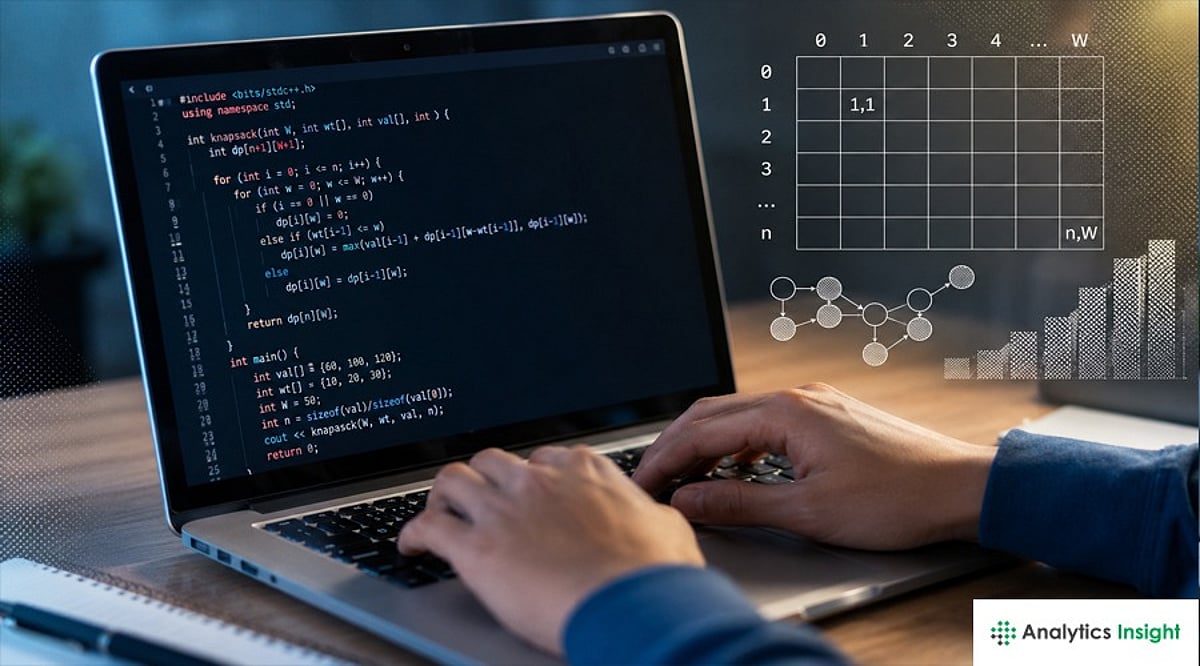
    Interview data from recent hiring cycles suggests that around 87% of coding questions at Google, Meta, Apple, Netflix, and Amazon are built around just 10 to 12 core problem-solving patterns, with dynamic programming forming one of the most versatile among them. The core idea behind DP is simple even when the problems aren’t: break a larger problem into smaller, overlapping subproblems, solve each one exactly once, and store the results, typically through memoization or a tabulation array, so the same subproblem is never recomputed. Any time a question asks for a maximum, minimum, or count of ways to do something under constraints, there’s a strong chance dynamic programming applies.

    The Core Patterns Worth Mastering

    DP breaks down into a manageable number of recognizable categories rather than one giant, undifferentiated topic. Knapsack-style problems (0/1 and unbounded variants) cover resource allocation and optimization questions. Grid-based 2D DP tests a candidate’s ability to reason across two-dimensional state spaces with multiple transition directions. String DP handles text-processing challenges like edit distance and longest common subsequence, patterns with direct application in areas like version control and bioinformatics. Interval DP applies to scheduling and matrix chain multiplication-style problems, while state-machine DP models transitions governed by specific rules, useful in problems involving buy/sell timing or step-based decisions.

    Frequently Asked DP Problems in 2026

    Company-Specific Differences Worth Knowing: Every organization does not follow the same approach toward DP problems. The first difference between companies is that Google requires higher DP expertise compared to other organizations, not only in 1D problems such as staircase problems but 2D Grid, String DP and even DP on Trees/Graphs problems and an overall preference for harder problems in general. The next two organizations, Meta and Amazon, have more focus on array and string DP problems with medium-level difficulty. Microsoft avoids going into hard problems related to DP and prefers medium-level difficult problems along with good explanations. This shows that preparation according to the requirements of a particular company pays off in a bigger way.

    How to Actually Prepare for DP Interviews

    The most optimal form of preparation is no different from the tried and tested methods of pattern-based preparation. The method is to select a canonical example for each pattern, practice solving it until the logic of the solution takes under two minutes to describe and then use that logic for other variations. Interviewers are much more concerned about the ability of candidates to recognize the structure of subproblems, verbally derive a recurrence relation for the same and explain their trade-offs on time and space than knowing whether the candidate has seen the problem or not. Considering the frequent appearance of DP questions on arrays, strings, trees and grids, spending the effort to really comprehend a few basic patterns goes a long way.

    Why This Matters

    Dynamic programming is one of the most frequently tested problem-solving techniques in software engineering interviews. Understanding its recurring patterns helps candidates solve complex coding challenges efficiently, improve algorithmic thinking, and perform better in technical interviews across leading technology companies.

    FAQs

    What is dynamic programming in programming?

    Dynamic programming (DP) is an algorithmic technique used to solve complex problems by breaking them into smaller overlapping subproblems. Instead of solving the same subproblem repeatedly, DP stores previously computed results using memoization or tabulation, significantly improving time efficiency.

    Why is dynamic programming important for coding interviews?

    Dynamic programming tests a candidate’s problem-solving ability, optimization skills, and understanding of algorithms. Many leading technology companies include DP questions because they evaluate logical thinking, recurrence formulation, state transitions, and the ability to optimize brute-force solutions into efficient algorithms.

    Which companies frequently ask dynamic programming questions?

    Dynamic programming questions commonly appear in interviews at Google, Meta, Amazon, Microsoft, Apple, Netflix, Adobe, Uber, and many other technology companies. Google generally asks more advanced DP problems, while Amazon and Meta often focus on medium-difficulty array and string-based DP questions.

    What are the most common dynamic programming patterns?

    The most frequently tested DP patterns include 0/1 Knapsack, Unbounded Knapsack, Grid DP, String DP, Interval DP, State Machine DP, Tree DP, and Bitmask DP. Learning these core patterns enables candidates to solve a wide variety of interview problems efficiently.

    How should beginners start learning dynamic programming?

    Beginners should first understand recursion before learning memoization and tabulation. They should then practice simple problems like Fibonacci, Climbing Stairs, and House Robber before progressing to Knapsack, Longest Common Subsequence, Coin Change, and more advanced DP patterns.

  • AI Aids Earthquake Rescue: NASA, Microsoft, and EU Technologies Deployed in Venezuela

    AI Aids Earthquake Rescue: NASA, Microsoft, and EU Technologies Deployed in Venezuela

    In the wake of devastating earthquakes, rapid and coordinated rescue efforts are critical. Now, artificial intelligence is playing a pivotal role in improving disaster response. NASA, Microsoft, and the European Union (EU) have deployed advanced AI-powered technologies to enhance earthquake rescue operations in Venezuela, demonstrating how cutting-edge tools can save lives and accelerate recovery.

    NASA Disaster Mapping

    NASA uses satellite imagery combined with AI to quickly identify damaged areas, blocked roads, and priority rescue zones after an earthquake. This technology enables responders to pinpoint where help is needed most, reducing time spent on manual assessment.

    Microsoft AI Cloud and Copilot for Relief Teams

    Microsoft AI Cloud offers cloud-powered analytics that rapidly process disaster data, helping rescue coordinators manage teams and allocate resources efficiently. Additionally, AI assistants called Copilot summarize incoming reports, organize emergency information, and cut response times during critical operations.

    EU Copernicus Programme

    The EU’s Copernicus Programme delivers satellite-based emergency mapping, providing authorities with accurate assessments of earthquake-affected communities and infrastructure damage. This supports informed decision-making for both immediate rescue and long-term rebuilding.

    AI Damage Assessment

    Computer vision algorithms analyze aerial imagery to estimate structural destruction and identify buildings requiring immediate search and rescue operations. This allows teams to prioritize the most dangerous sites first.

    Predictive Risk Models

    Machine learning models forecast aftershock risks and potential hazard zones, improving responder safety and evacuation planning during emergencies. By predicting where the next threat may emerge, teams can act proactively.

    Drone Surveillance Systems

    AI-powered drones capture real-time visuals, locate survivors, and inspect areas inaccessible to ground rescue personnel. These drones extend the reach of rescue teams, covering dangerous terrain without putting more lives at risk.

    Multilingual Communication Tools

    AI translation tools enable faster communication between international rescue agencies, volunteers, and affected local communities. Breaking language barriers ensures that critical information flows smoothly across all parties involved in the response.

    Future Emergency Collaboration

    Partnerships between governments, technology firms, and humanitarian agencies are expanding AI-powered disaster preparedness and rescue capabilities. The collaboration between NASA, Microsoft, and the EU in Venezuela serves as a model for future joint efforts to use AI for global good.

  • Anthropic Unveils Claude Sonnet 5 and Cloud Tasks, Paving the Way for an AI Super App

    Anthropic Unveils Claude Sonnet 5 and Cloud Tasks, Paving the Way for an AI Super App

    Anthropic has taken a significant step toward building an all-in-one AI platform with the launch of Claude Sonnet 5 and the integration of cloud-based task execution. The update merges chat, coding, and task management into a single interface, allowing users to run lengthy projects in the cloud even after closing their laptops.

    Available now for Claude Max subscribers on desktop, web, and mobile, the new features eliminate the need to keep devices powered on for long-running tasks. This shift gives users greater flexibility and simplifies complex workflows, marking a move beyond the traditional chatbot model.

    Claude Evolves into a Full Work Platform

    Anthropic is transforming Claude from a simple conversational agent into a comprehensive work environment. Instead of switching between separate apps for coding, research, writing, and planning, users can now handle multiple tasks within Claude. The company believes this unified approach will benefit both developers and everyday users.

    Earlier this year, Anthropic hinted at the vision of remote AI work that doesn’t require constant device activity. The latest update realizes that vision, bringing Claude closer to becoming a true super app. The platform now includes Claude Code, Claude Science, and Claude Design, along with integrations with popular tools like Slack, Chrome, and Microsoft 365.

    New AI Model and Enterprise Focus

    Central to the update is Claude Sonnet 5, which Anthropic describes as its most powerful model yet for coding and professional tasks. It supports smarter AI agents that can tackle larger projects with less manual intervention.

    Anthropic is also deepening its enterprise push, partnering with companies like TCS and engaging with government organizations. The company aims to deliver safe, accurate AI for industries such as healthcare, finance, cybersecurity, and public services.

    The competitive landscape remains intense: OpenAI continues to expand ChatGPT, while Microsoft broadens Copilot across its ecosystem. Anthropic differentiates itself by emphasizing safety and business-friendly features rather than consumer-focused gimmicks.

    Room for Improvement

    Despite the advances, Claude still has gaps. Cowork conversations do not fully sync between desktop and mobile devices yet. Anthropic has promised better cross-device integration in future updates, which will smooth the user experience.

    This release underscores a broader industry trend: AI companies are moving away from simple chatbots and toward complete work platforms. A single AI service may soon handle coding, research, writing, planning, and collaboration, helping businesses reduce tool sprawl and save time.

  • Microsoft Unveils Severance Plan Offering Up to 39 Weeks of Pay for Laid-Off Staff

    Microsoft Unveils Severance Plan Offering Up to 39 Weeks of Pay for Laid-Off Staff

    Microsoft has detailed the severance benefits for employees impacted by its latest round of job cuts, with eligible U.S. workers receiving up to 39 weeks of base salary along with continued stock vesting and healthcare coverage. The announcement follows the tech giant’s confirmation that it will eliminate roughly 4,800 positions, or about 2.1% of its global workforce, as part of a broader restructuring effort.

    The layoffs primarily affect Microsoft’s commercial sales division and Xbox business, as the company realigns operations and increases investments in artificial intelligence. According to documents reviewed by Business Insider, affected employees will remain on the payroll for at least 60 days. Severance compensation beyond that period depends on tenure and job level:

    • Levels 64 and below: One week of base pay for every six months of service.
    • Levels 65 to 67: Two weeks of base pay for every six months worked, capped at 39 weeks.
    • Executives at higher levels: Receive a separate severance package.

    In addition to salary, Microsoft allows eligible employees to continue receiving stock vesting for six to 12 months, based on years of service. The company will also provide six months of employer-paid health insurance, followed by an option to extend coverage for another year under COBRA at the employee’s expense. These benefits align with Microsoft’s earlier voluntary retirement program, though the healthcare coverage period is shorter.

    Microsoft has stated these layoffs are part of organizational changes, not a direct replacement of roles with AI. The company has redeployed thousands of employees into new positions when possible but says restructuring remains necessary to reshape teams around long-term priorities. The reduction follows Microsoft’s ongoing push to streamline operations while committing billions to AI infrastructure and next-generation technologies.

  • Top 9 Long-Term Growth Stocks to Buy in July 2026

    Top 9 Long-Term Growth Stocks to Buy in July 2026

    Investors seeking stable, long-term growth should consider these nine stocks that are well-positioned for sustained performance across technology, healthcare, and financial services. Each company benefits from strong fundamentals, recurring revenue streams, and exposure to secular trends such as AI, cloud computing, digital payments, and advanced manufacturing.

    1. NVIDIA

    NVIDIA maintains its leadership in AI hardware innovation through advanced GPUs that power data centers, autonomous vehicles, enterprise computing, and AI applications worldwide.

    2. Microsoft

    Microsoft continues to expand its cloud computing and AI software offerings while maintaining robust recurring revenues from enterprise services, supporting long-term shareholder value and consistent growth.

    3. Amazon

    Amazon benefits from e-commerce dominance, AWS cloud leadership, and growing investments in AI, driving sustained revenue and profitability across global markets.

    4. Alphabet

    Alphabet strengthens its digital advertising, cloud computing, and AI platforms while investing aggressively in future technologies, supporting diversified long-term business expansion globally.

    5. Meta Platforms

    Meta Platforms continues to grow advertising revenue while advancing AI infrastructure, smart devices, and immersive technologies for future digital experiences.

    6. Taiwan Semiconductor Manufacturing Company (TSMC)

    TSMC manufactures advanced semiconductor chips that power smartphones, AI servers, automotive technologies, and next-generation computing platforms worldwide.

    7. Eli Lilly

    Eli Lilly strengthens its pharmaceutical leadership through innovative treatments for diabetes, obesity, and neuroscience, supported by expanding global healthcare demand and robust research pipelines.

    8. Visa

    Visa benefits from increasing digital payment adoption and cross-border transactions, along with resilient financial services that support dependable long-term earnings growth across international markets.

    9. Broadcom

    Broadcom delivers semiconductor and infrastructure software solutions while benefiting from accelerating AI networking demand and enterprise digital transformation investments globally.

  • Microsoft Lays Off 4,800 Workers, Xbox Faces Major Studio Overhaul as AI Investments Intensify

    Microsoft Lays Off 4,800 Workers, Xbox Faces Major Studio Overhaul as AI Investments Intensify

    Microsoft has announced a fresh round of layoffs, reducing its global workforce by approximately 4,800 positions—about 2.1% of its total staff—as the company restructures operations and doubles down on efficiency. The largest impact falls on the Xbox gaming division, which will shed around 3,200 roles during the current fiscal year as part of a sweeping reorganization.

    These cuts come as Microsoft balances heavy spending on artificial intelligence infrastructure with underperformance in parts of its gaming business. The company is rethinking its gaming strategy, moving away from aggressive acquisitions and toward operational discipline.

    Xbox Spins Off Studios

    As part of the restructuring, several Xbox game development studios are being separated from the parent organization. Compulsion Games and Double Fine Productions are expected to become independent companies, while Ninja Theory and Undead Labs will move under new ownership. Microsoft is also reviewing strategic options for Arkane Studios.

    Xbox head Asha Sharma explained that the moves are intended to create a more sustainable business model. The restructuring is expected to continue throughout the year, reducing management layers and focusing resources on high-performing game franchises.

    AI Spending Reshapes Priorities

    Microsoft emphasized that these layoffs are not a direct replacement of workers with AI. Instead, the company cited changing market conditions and rising operating costs as the primary drivers. Like other tech giants, Microsoft is investing billions in AI infrastructure—data centers and supercomputing resources—which has increased pressure to improve profitability across other divisions.

    The gaming unit also faces intensified competition from Sony and Nintendo, along with sluggish hardware and subscription sales, prompting a complete strategic review.

    This is Microsoft’s second large-scale layoff in a year, signaling ongoing reorganization amid industry-wide shifts accelerated by artificial intelligence.

  • Microsoft Layoffs Drive Bethesda to Prioritize Major Franchises Over New IPs

    Microsoft Layoffs Drive Bethesda to Prioritize Major Franchises Over New IPs

    Microsoft has announced another significant round of job cuts, impacting approximately 3,200 employees across the company. The gaming division is expected to be among the hardest hit, with reports indicating that many acquired studios may be sold or returned to independent status.

    While Bethesda has not been singled out in the layoffs, its parent company ZeniMax Media is reportedly undergoing a strategic shift. According to Bloomberg reporter Jason Schreier, ZeniMax is restructuring toward a “franchise-first model,” concentrating resources on its most successful game series.

    Schreier noted that Bethesda will likely focus on franchises like Fallout, The Elder Scrolls, Quake, Wolfenstein, and DOOM. These titles already boast large, loyal communities and a history of strong sales, offering a more stable revenue stream during uncertain times.

    This marks a departure from Bethesda’s historical approach. Prior to Microsoft’s acquisition in 2021, the studio balanced new IPs with established franchises—Starfield being a prime example of that creative freedom. Now, original projects may take a backseat as the company prioritizes expansion of existing worlds.

    Neither Microsoft nor Bethesda has officially confirmed these plans, but the reports underscore a broader industry trend: major publishers increasingly lean on proven franchises to weather financial pressures. For Xbox, trusted brands appear to be the guiding strategy as the company adapts to a new business reality.

  • Report: Microsoft Could Hand Halo Franchise to Activision

    Report: Microsoft Could Hand Halo Franchise to Activision

    Microsoft is reportedly considering a major shift for the iconic Halo franchise, potentially placing it under the leadership of Activision. While nothing is official, the rumor has sparked widespread discussion among Xbox fans and industry observers.

    Halo has long been a flagship series for Xbox, with Halo Studios (formerly 343 Industries) at its core. However, recent changes within Microsoft’s gaming division have led to speculation that the company may be ready to hand over creative control to Activision, known for its success with large-scale franchises like Call of Duty.

    The timing of the rumor coincides with the upcoming launch of Halo Campaign Evolved. A prominent industry analyst revealed on the Xbox Two Podcast that Microsoft is exploring the idea of giving Activision the reins to accelerate Halo’s “franchise potential.” The source emphasized that the plan is still under discussion and not yet finalized.

    One likely motivation is Activision’s proven ability to manage major game series, releasing titles on a regular schedule and providing long-term post-launch support. Halo Infinite, while praised for its gameplay, suffered from delays, content gaps, and slow updates after release. Microsoft may believe that Activision’s expertise could help Halo regain its competitive edge.

    What Could Happen to Halo Studios?

    If the rumor proves true, Halo Studios could see its role diminish. Instead of leading development, it might become a support studio focused on narrative and supplemental content. Alternatively, the franchise could be split between multiple studios, with one team handling new ideas and another managing main releases. This model is common in the industry, allowing for more frequent updates and sustained development.

    Could Halo Follow the Call of Duty Model?

    Adopting Activision’s approach could mean Halo becomes a franchise built by several studios. One team might develop the campaign, another the multiplayer, and a third handle live updates and seasonal content. This strategy has worked well for Call of Duty, but Halo has a distinct identity that fans cherish. Any shift would need to preserve that essence.

    Until Microsoft makes an official statement, this remains a rumor. But the possibility of Activision taking the lead signals a potential new era for one of gaming’s most beloved series.

  • How Leading Companies Are Redefining Leadership Development in 2026

    How Leading Companies Are Redefining Leadership Development in 2026

    The definition of corporate leadership is rapidly evolving. By 2026, organizations are no longer grooming executives simply to deliver quarterly results. Instead, they are cultivating leaders who can drive digital transformation, navigate uncertainty, harness artificial intelligence, and build resilient teams. As technology reshapes every industry, leadership development now revolves around lifelong learning, mentorship, global exposure, and data-driven decision-making.

    Companies that excel in this arena create work environments that encourage experimentation, collaboration, and strategic thinking. Below, we explore how nine of the world’s most influential organizations are setting the benchmark for next-generation leadership.

    Leadership Development Moves Beyond Traditional Training

    The era of classroom-only leadership training is over. Today’s best employers embed learning into daily operations through AI-powered learning platforms, executive coaching, cross-functional projects, and international assignments. Employees gain hands-on experience solving real business problems rather than working through theoretical case studies. Equally important is the renewed emphasis on soft skills: emotional intelligence, adaptability, communication, ethical judgment, and resilience are now as critical as technical expertise.

    Companies Setting the Benchmark

    Microsoft

    Microsoft continues to position itself as a leadership powerhouse by fostering an AI-first workplace culture. Employees have access to advanced learning resources, leadership coaching, and opportunities to collaborate with global teams. The company’s relentless focus on innovation allows individuals to deepen their technical skills while sharpening strategic thinking.

    Amazon

    Amazon’s famous Leadership Principles remain central to employee development. Team members are expected to take ownership, think long term, and make customer-centric decisions. Internal mobility and challenging business assignments help professionals gain the experience needed before stepping into senior leadership roles.

    Alphabet

    Alphabet encourages leadership growth by giving employees autonomy to innovate, experiment, and learn from outcomes. A collaborative culture sparks creative thinking and cross-functional teamwork, even when projects are complex. Exposure to cutting-edge tools and technologies prepares emerging leaders to tackle tough business problems with confidence.

    NVIDIA

    With the rapid rise of AI, NVIDIA has become a hub for technological innovation. Employees work in a fast-paced environment where agility, technical rigor, and continuous learning are paramount. This exposure helps future leaders build strategic decision-making skills in highly competitive markets.

    JPMorgan Chase

    As banking embraces AI and digital modernization, JPMorgan Chase has broadened its leadership development beyond traditional finance. Employees now lead technology-driven initiatives while reinforcing strong risk controls, innovative thinking, and customer-centric judgment.

    Deloitte

    Deloitte’s consulting ecosystem offers professionals ongoing exposure to diverse industries, clients, and real-world business challenges. This breadth sharpens strategic thinking, communication, and problem-solving abilities, making employees well-suited for leadership roles in a changing sector.

    PwC

    PwC invests heavily in structured learning tracks focusing on digital skills, sustainability, and responsible leadership. Employees receive mentoring, certifications, and team-based projects that build the ability to lead transformation efforts effectively.

    EY

    EY emphasizes inclusive leadership and future-ready capabilities. Employees participate in leadership academies, global mobility programs, and innovation-driven assignments, equipping them to manage diverse teams and navigate shifting business environments.

    IBM

    IBM remains a strong supporter of technology leaders. Combining decades of enterprise expertise with ongoing investment in AI, cloud computing, and digital skills, IBM enables employees to develop leadership strengths alongside technical excellence.

    Common Traits Behind Their Success

    Despite operating in different industries, these organizations share several characteristics: a commitment to continuous learning, mentorship, cross-functional collaboration, and real-world problem-solving. They prioritize emotional intelligence and adaptability as much as technical prowess.

    Why This Matters

    For professionals planning long-term careers, choosing the right employer is akin to choosing the right learning environment. Organizations that invest in leadership development offer smoother career progression, stronger mentoring relationships, and more opportunities to lead high-impact initiatives. As AI continues to reshape industries, leadership will depend less on hierarchy and more on adaptability, shared thinking, and a commitment to growth.

    By building these strengths now, companies are not only preparing their teams for the future—they are shaping the next generation of executives who will define the global business landscape.