Tag: NVIDIA

  • Nvidia CEO Jensen Huang Rejects 2030 AI Doomsday Predictions, Urges Speed With Safety

    Nvidia CEO Jensen Huang Rejects 2030 AI Doomsday Predictions, Urges Speed With Safety

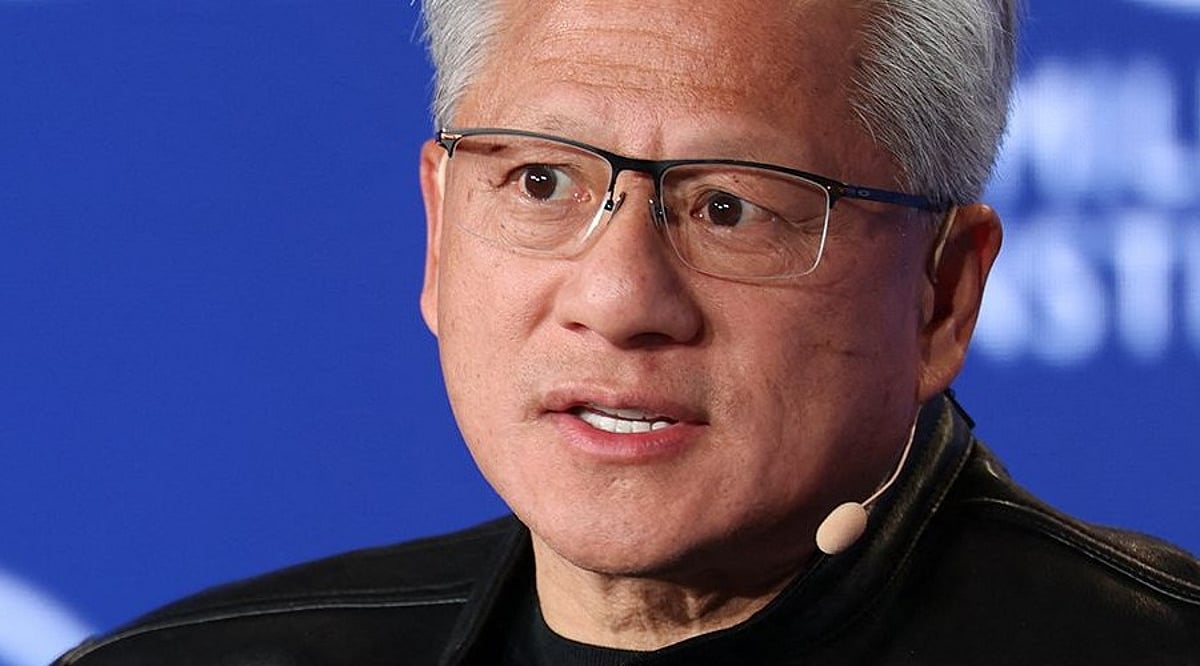
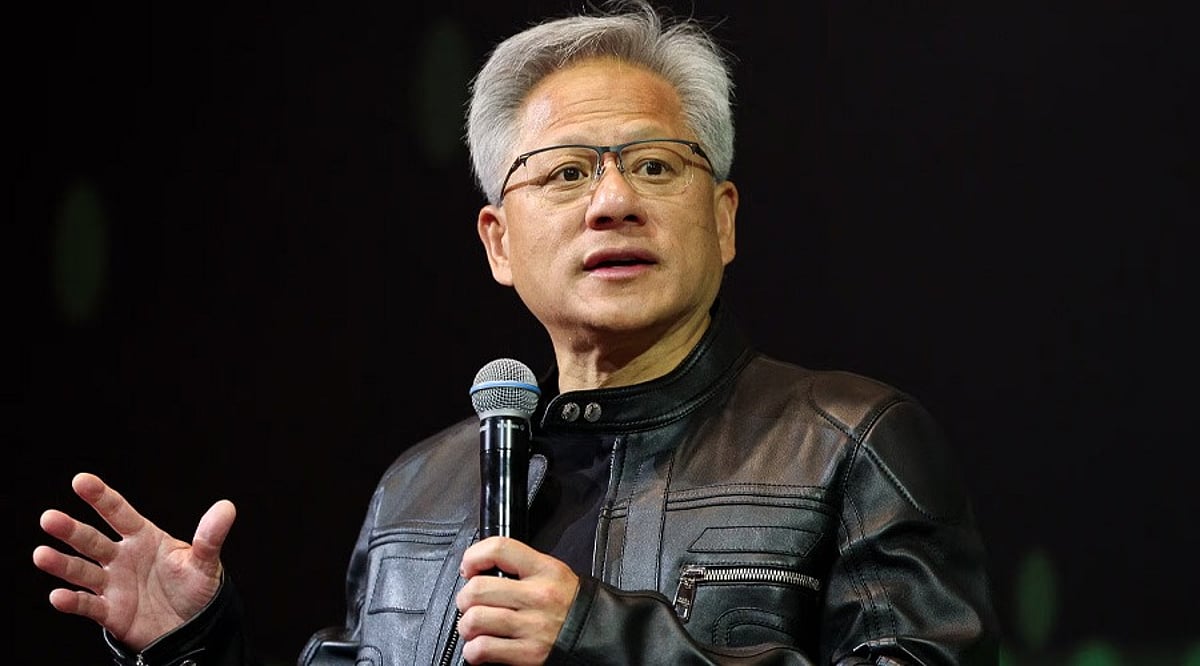
    Nvidia CEO Jensen Huang has firmly rejected claims that artificial intelligence could end humanity by 2030, calling the scenario unrealistic and urging the industry to keep advancing while prioritizing safety.

    Huang Dismisses AI Extinction Fears

    During an interview with CBS News, Huang pushed back on alarming AI predictions. “I believe the claims, The end of the world, [are] stirring fear across America. The people who are doing it make no sense to me. So they must be doing it for ulterior reasons – maybe it’s political, maybe it’s otherwise, maybe just attention grabbing,” he said.

    AI Development Should Move Fast, But Not Recklessly

    Huang rejected calls to slow AI research. “We should go as fast as we can, irrespective of anyone else. But we would never ever, and never should, ship products before they’re ready and deliver products that are unsafe,” he said.

    The Nvidia chief has repeated this position at recent industry events, arguing that AI can be managed safely and questioning the need for additional regulation. Nvidia is the leading supplier of processors used to develop and run AI systems.

    AI Safety Debate Gains Momentum

    Huang’s comments come amid growing warnings from researchers. Former Anthropic researcher Jacob Coxon recently raised concerns that advanced AI could cause catastrophic harm within the decade. Anthropic CEO Dario Amodei has called for stronger safety measures, while OpenAI CEO Sam Altman has supported greater coordination around AI safeguards.

    Huang’s remarks add another major voice to the debate over how fast AI should advance and what safeguards should accompany future systems. The full CBS interview is scheduled to air on Sunday.

  • NVIDIA Stock at $219: Key Drivers Behind Its $5.3 Trillion Market Cap and AI Spending Outlook

    NVIDIA Stock at $219: Key Drivers Behind Its $5.3 Trillion Market Cap and AI Spending Outlook

    NVIDIA (NVDA) closed near USD 219.34 on September 17, 2026, giving the company a market capitalization of roughly USD 5.30 trillion. The chipmaker became the first in history to cross the USD 5 trillion mark in October 2025, and it has stayed above that level ever since.

    Record Revenue and Data Center Growth

    NVIDIA’s fiscal Q2 2027 results showed record revenue of USD 96.2 billion, up 106% year-over-year. Data Center revenue reached USD 89.0 billion, up 117%, driven primarily by Blackwell systems and early production shipments of the next-generation Vera Rubin platform. GAAP gross margin came in at 75.0%, with diluted EPS of USD 2.46. The company guided Q3 revenue to USD 108.0 billion, plus or minus 2%, and noted that figure assumes no Data Center compute revenue from China.

    Trillion-Dollar Demand Outlook

    CEO Jensen Huang stated at NVIDIA’s GTC event that the company expects at least USD 1 trillion in demand and purchase orders for its Blackwell and Vera Rubin chips through 2027. This forward-looking outlook is not a signed order book, and analysts will watch actual shipments against that projection. NVIDIA’s disclosed purchase and supply commitments had climbed to about USD 279 billion by the end of fiscal Q2, reflecting the company’s efforts to lock in capacity.

    AI Spending Durability Under Scrutiny

    While demand for AI computing is evident, the key question is whether hyperscalers, AI labs, and enterprises can sustain the pace of capital spending. This uncertainty came into focus on September 14, when the Philadelphia Semiconductor index fell 5.9% and NVIDIA shares dropped about 3.4%. The selloff followed warnings from AI industry executives about the pace and economics of AI infrastructure spending, marking one of several sector-wide declines this year tied to debt-funded data center buildouts. NVIDIA’s future growth depends heavily on that spending pace holding up.

    China, Competition, and Valuation

    NVIDIA’s current guidance excludes Data Center compute revenue from China due to ongoing US export restrictions. Any policy shift could affect revenue, product mix, and margins. The company’s competitive edge rests on its CUDA software ecosystem, combined hardware and networking lineup, and deep ties with major cloud and AI customers. Custom chips from cloud providers, including Google’s TPU line, and AMD’s accelerators pose longer-term threats, though neither has slowed NVIDIA’s momentum so far. The stock’s low dividend yield reflects a focus on growth over shareholder payouts.

    Final Thought

    NVIDIA’s stock price reflects a company posting real, verified growth while carrying a demand outlook that assumes years of heavy AI infrastructure spending. The September selloff was a reminder that markets are pricing confidence in that spending pace, not just the chips themselves. The next earnings report, scheduled for November 25, will provide fresh evidence on whether Data Center growth holds its current speed and whether customer AI budgets remain strong.

  • Apple’s M8 Ultra AI Server Plans Signal a Comeback Years After Xserve

    Apple’s M8 Ultra AI Server Plans Signal a Comeback Years After Xserve

    Apple is reportedly preparing to re-enter the server market with a new line of AI-focused systems built around its upcoming M8 Ultra chips. The move would mark the company’s return to enterprise hardware nearly 15 years after it discontinued the Xserve line.

    According to people familiar with the plans, Apple is developing AI servers in two configurations: one powered by two M8 Ultra chips and a larger variant with four. The company is also said to be evaluating NVIDIA’s NVLink Fusion interconnect technology to link the processors. A launch could happen around 2029, though the project is still in flux and Apple may alter or abandon it.

    The reported effort comes as AI companies increasingly turn to Mac mini and Mac Studio systems for local AI workloads. Apple already operates servers for Private Cloud Compute, which handles some Apple Intelligence tasks off-device, and it has been working with Google and NVIDIA to expand that infrastructure. A dedicated server line would give Apple another channel to deploy its own silicon in enterprise AI environments.

    Can Apple Succeed Where Xserve Failed?

    Selling servers to large organizations is a different challenge from selling iPhones and Macs. Enterprise buyers expect long-term support, robust systems management, strong security, and compatibility with existing business software—areas where Apple has limited experience in the data center since ending Xserve in 2011.

    The reported M8 Ultra server plan highlights how quickly AI is reshaping Apple’s hardware roadmap. The bigger test is whether Apple can translate its consumer-chip strengths into a credible enterprise server business.

  • Microsoft’s October 7 Event to Spotlight Local AI and Surface Laptop Ultra

    Microsoft’s October 7 Event to Spotlight Local AI and Surface Laptop Ultra

    Microsoft has confirmed a major Windows and Surface event scheduled for October 7 in San Francisco, with a focus on local artificial intelligence, AI-powered PCs, Surface hardware, and Windows 11. The keynote will be headlined by Microsoft CEO Satya Nadella, Windows and Surface chief Pavan Davuluri, and NVIDIA CEO Jensen Huang. The event kicks off at 10 a.m. PT / 1 p.m. ET and will be streamed online.

    According to Microsoft, the event will explore “how local AI will shape the next chapter of the PC,” signaling a push toward hardware capable of processing advanced AI workloads directly on devices. The company also plans to align Windows improvements with next-generation AI hardware, potentially detailing how AI will become more deeply integrated into everyday computing.

    The biggest hardware reveal could be the Surface Laptop Ultra, which Microsoft has previously linked with NVIDIA RTX Spark technology. This platform combines powerful computing with local AI capabilities to handle demanding workloads. Attendees can expect pricing, configurations, availability, and Windows-specific optimizations for the new machine.

    NVIDIA’s involvement highlights the RTX Spark initiative, which targets computers that can run large AI models locally without constant cloud processing. Microsoft has already showcased a Surface RTX Spark Dev Box featuring 128GB of unified memory and up to one petaflop of AI compute, aimed at developer workloads.

    Windows 11 will also be a key topic, with potential enhancements for local AI support, improved performance, and deeper Copilot integration. Current reports do not suggest a Windows 12 announcement; instead, Microsoft appears focused on extending Windows 11’s capabilities around emerging AI features.

    The October showcase may also introduce refreshed Surface hardware and broader ecosystem updates. Microsoft is expected to outline how future Windows PCs will balance local processing with cloud services, emphasizing faster response times, stronger privacy, and reduced reliance on cloud infrastructure—key advantages of on-device AI.

    This event marks Microsoft’s first dedicated Windows and Surface showcase since May 2024. With both Microsoft and NVIDIA leadership on stage, local AI is positioned as the central theme for the next chapter of personal computing.

  • Anthropic Targets Record $100B IPO With Potential $10B NVIDIA Investment

    Anthropic Targets Record $100B IPO With Potential $10B NVIDIA Investment

    Anthropic is reportedly planning the largest initial public offering in history, aiming to raise up to $100 billion at a valuation of approximately $2 trillion. The move has already generated significant buzz in the market, and NVIDIA is reportedly considering a $10 billion investment as part of the deal. The plan is not yet final and could change.

    The potential investment underscores the deepening relationship between NVIDIA and Anthropic. Over recent years, Anthropic has become one of NVIDIA’s biggest customers for chips, making NVIDIA a natural early investor in the IPO. The two companies are also expanding their broader partnership: Anthropic has agreed to purchase $30 billion in Microsoft Azure computing capacity powered by NVIDIA chips. Additionally, Amazon and Google are backing Anthropic with substantial resources. The company plans to spend more than $100 billion on Amazon’s AWS over a decade and has secured additional computing capacity through Google.

    Anthropic’s need for computing power is growing rapidly as demand for its Claude AI models surges. The company raised $65 billion in May at a valuation of $965 billion, and by July its annual revenue run rate had already crossed $65 billion. These deepening ties highlight how AI firms now depend on chips and cloud services to scale, and NVIDIA stands to benefit as Anthropic requires more computing power to train and run its models.

    Anthropic’s possible $100 billion fundraising could set a new benchmark for IPOs, and a $2 trillion valuation would demonstrate sustained investor enthusiasm for AI. NVIDIA’s potential $10 billion investment could provide a major boost to the offering, further cementing the link between the company building advanced AI models and the company supplying the hardware to run them. Anthropic’s market debut will serve as a critical test for the AI boom, revealing how much investors are willing to pay for next-generation AI companies.

  • How Jensen Huang Built NVIDIA Into the AI Infrastructure Powerhouse

    How Jensen Huang Built NVIDIA Into the AI Infrastructure Powerhouse

    Jensen Huang, NVIDIA’s founder and CEO, saw early that the AI boom would depend not just on chatbots but on massive data centers packed with chips, memory, networks, and power systems. His strategy turned NVIDIA from a graphics chip company into a foundational supplier for the entire AI economy.

    The GPU Became the Start of a Much Bigger System

    Huang’s key bet was that a graphics processor could do far more than graphics. NVIDIA built CUDA, a software platform that lets developers use its GPUs for advanced computing. That choice gave the company a strong base when AI models began demanding huge amounts of compute.

    For the quarter ended July 26, 2026, NVIDIA posted $96.2 billion in revenue, up 106% year-over-year. Data Center revenue reached $89.0 billion, up 117%. Net income hit $59.7 billion, with a gross margin of 75%. NVIDIA expects $108 billion in revenue for the next quarter and about 70% revenue growth for fiscal 2028, though supply limits still affect that outlook.

    Vera Rubin Turns the Rack into One AI Computer

    NVIDIA’s latest move takes the strategy further. The Vera Rubin platform combines Rubin GPUs, Vera CPUs, NVLink 6, ConnectX-9 network chips, BlueField-4 DPUs, Spectrum-6 systems, and Groq 3 LPX. Several racks can act as one large AI computer.

    NVIDIA says Vera Rubin can deliver 10 times the agent throughput of the Grace Blackwell platform at scale. The platform is designed for AI agents that call tools, search data, write code, and take many steps before completing a task. Such workloads need fast chips, fast memory, and fast links between every part of the system.

    A data center can no longer rely on raw GPU speed alone. Memory, storage, network systems, security, and power all affect the final cost of each AI response. NVIDIA now sells an architecture that connects these pieces.

    Power, Capital and Cloud Capacity Join the Strategy

    Huang has also moved closer to the physical side of AI infrastructure. NVIDIA now treats land, power, and data center space as key resources. In August, the company partnered with SB Energy to secure land, power, and shell capacity at the PORTS-Pike Technology Campus in Ohio. OpenAI will serve as the tenant.

    Capital has become another part of the plan. NVIDIA announced partnerships with Apollo, BlackRock, Blackstone, Brookfield, Goldman Sachs, and KKR. These platforms aim to mobilize more than $500 billion in third-party capital for AI infrastructure over time. The capital does not count as NVIDIA revenue; the goal is to give AI companies and cloud providers access to large pools of long-term infrastructure money.

    AWS and NVIDIA plan to deploy 2 million additional NVIDIA GPUs across AWS infrastructure in 2027–2028. The deal also covers Vera CPUs, network systems, open models, data tools, and robotics.

    NVIDIA has also expanded its reach into software. On September 3, the company agreed to acquire Hugging Face for $12.93 billion. The deal would give NVIDIA a deeper role in the open AI software ecosystem and help expand access to models, tools, and AI infrastructure.

    Huang’s Real Advantage is the Full Stack

    The central idea behind Huang’s strategy is not a single GPU. It is control of the system around the GPU. NVIDIA supplies compute, software, network systems, and rack architecture. It now has a role in power access, infrastructure finance, and developer software as well.

    That model helps explain why the company can grow as AI hardware becomes more complex. Every new AI workload creates demand across several layers at once.

    The next test will come from agentic AI, where one request can trigger hundreds or thousands of steps. That workload can create far more demand for compute than a simple chatbot response. NVIDIA has built Vera Rubin around that shift.

    Huang’s long bet has reached a new stage. NVIDIA no longer sells only the engine for AI. It sets the factory around it, from the first line of code to the data center floor.

  • AI Demand Drives These Semiconductor Stocks: NVIDIA, TSMC, and More

    AI Demand Drives These Semiconductor Stocks: NVIDIA, TSMC, and More

    Artificial intelligence continues to reshape the semiconductor landscape, creating opportunities for investors across the chip supply chain. From GPU leaders to memory manufacturers and equipment providers, several stocks are positioned to benefit from surging AI demand. Below, we analyze the key players and the risks that accompany their growth.

    Key Takeaways

    • NVIDIA remains the dominant AI chip supplier, while Broadcom provides exposure to custom silicon and networking.
    • TSMC and Micron gain from advanced manufacturing and high-bandwidth memory demand.
    • Equipment firms like ASML, Lam Research, Applied Materials, and KLA offer indirect AI growth avenues.

    NVIDIA and Broadcom Lead the AI Chip Race

    NVIDIA’s position as the premier AI chipmaker is unshaken. With its stock near $218.36 and a market capitalization approaching $5.30 trillion, the company supplies GPUs and networking solutions for AI data centers. A 2.26% dip on September 10 reflected broader tech pressure from rising Treasury yields, but its long-term trajectory remains tied to AI deployment.

    Broadcom offers a complementary play. Trading around $360.83, it designs custom AI chips and networking hardware for large tech firms. This diversification allows investors to tap AI growth beyond the GPU market.

    AMD adds a third option. At roughly $521.10, it has gained over 143% year-to-date, competing with NVIDIA through its AI accelerators and EPYC server processors. However, such sharp gains introduce higher valuation risk.

    TSMC and Micron: Supply Chain Pillars

    TSMC is the linchpin of advanced chip fabrication. Its U.S.-listed shares trade near $435.36, valuing the company at $1.58 trillion. The foundry posted record August revenue of NT$514.806 billion, up 53.3% year-over-year, with July revenue also strong at NT$467.580 billion. TSMC forecasts Q3 revenue between $44.6 billion and $45.8 billion, and plans capital expenditure of $60–$64 billion in 2026.

    Micron focuses on high-bandwidth memory (HBM), essential for AI workloads. With shares around $1,028, the company aims to boost HBM output to 100,000 wafers per month by year-end. HBM shortages are raising chip costs, but new entrants and rapidly shifting memory markets add risk. Micron’s fiscal Q4 results on September 30 will be a key catalyst.

    Equipment Stocks Provide Alternative Exposure

    Lam Research, Applied Materials, and KLA supply tools for chip manufacturing. Lam Research trades near $301.06, Applied Materials at $469, and KLA at $177.18—each fell over 3% on September 10. Their fortunes rise with fab expansions, not AI chips directly, making them a different risk-reward proposition.

    Marvell sits at the intersection of custom silicon and connectivity, with a stock price of $235.01 and a 176.55% year-to-date gain. Its high valuation amplifies downside risk.

    ASML stands out as the sole supplier of EUV lithography systems, crucial for shrinking process nodes. Closing near $1,698 on September 10, ASML’s technology monopoly gives it a long-term edge, though its stock can swing with capital spending cycles.

    The AI Chip Trade Faces New Tests

    Strong AI demand does not immunity from broader market forces. Higher oil prices and rising Treasury yields pressured tech stocks, and the broader U.S. market fell on September 10. Yet TSMC’s sales and HBM demand underscore robust chip demand, providing a solid business foundation amid stock volatility.

    NVIDIA, Broadcom, and TSMC offer the widest AI exposure. Micron and AMD provide targeted plays on memory and GPU alternatives. Lam Research, Applied Materials, KLA, and ASML serve the equipment segment. Marvell carries higher potential but also higher risk.

    Investors should monitor chip sales, HBM supply, AI data center budgets, and capital expenditure plans. The critical question is whether supply, capacity, and profits can keep up with the lofty expectations already baked into these stocks.

    FAQs

    Which semiconductor stock has the strongest AI exposure?

    NVIDIA has the most direct AI exposure through its GPUs and data center products.

    Why is TSMC important to AI growth?

    TSMC manufactures advanced chips for major tech firms, forming the backbone of AI processor supply.

    Why has Micron gained attention?

    Micron is a key supplier of high-bandwidth memory, critical for AI data center performance.

    Which semiconductor stocks offer equipment exposure?

    ASML, Lam Research, Applied Materials, and KLA provide exposure to chip manufacturing equipment.

    Are semiconductor stocks low-risk investments?

    No. Even with strong chip demand, share prices can decline due to high valuations, market conditions, and changing expectations.

    Disclaimer: This article is for informational purposes only and does not constitute financial advice. Investing in stocks involves risk, including potential loss of principal. Always conduct your own research before making investment decisions.

  • Top Tech Companies by Revenue for 2026: Amazon Tops $742B, NVIDIA Surges on AI

    Top Tech Companies by Revenue for 2026: Amazon Tops $742B, NVIDIA Surges on AI

    Amazon leads the 2026 ranking of the world’s largest technology companies by trailing-12-month (TTM) revenue with $742.77 billion, followed by Apple and Alphabet. The list highlights how artificial intelligence, cloud computing, e-commerce, and semiconductors drive massive scale. NVIDIA’s exceptional rise underscores AI’s commercial impact, while Chinese giants JD.com and Alibaba hold strong positions.

    Key Takeaways

    • Amazon tops the 2026 ranking with $742.77 billion in TTM revenue.
    • AI is reshaping tech: NVIDIA’s surge highlights the growing commercial impact of artificial intelligence and data-center demand.
    • Diverse markets drive scale: Retail, cloud, advertising, semiconductors, e-commerce, software, and consumer electronics power the world’s largest technology companies.

    Amazon

    Amazon ranks first with TTM revenue of $742.77 billion. Its business covers online retail, cloud services, ads, devices, and digital products. Fortune also placed Amazon at No. 1 in its 2026 Global 500, with $716.9 billion in fiscal-year 2025 revenue. That reach gives the company unusual scale across several major technology markets.

    Apple

    Apple ranks second with $451.44 billion in TTM revenue. The iPhone remains a central part of its business, while Mac, iPad, services, and other devices add more sales. Fortune placed Apple at No. 6 on the 2026 Global 500, with $416.2 billion in fiscal-year 2025 revenue.

    Alphabet

    Alphabet ranks third with $422.49 billion in TTM revenue. Google Search remains a major source of sales, while YouTube, cloud services, and other digital products add more value. Alphabet also has a major role in artificial intelligence through its products and research. Fortune placed Alphabet at No. 8, with $402.8 billion in fiscal-year 2025 revenue.

    Microsoft

    Microsoft ranks fourth with $318.27 billion in TTM revenue. Its business covers software, cloud services, enterprise tools, games, and artificial intelligence products. Azure produced $101.9 billion in revenue for the fiscal year ended June 2026. Microsoft also reported $281.7 billion in latest fiscal-year revenue. Cloud and AI now hold a major place in its business.

    Samsung Electronics

    Samsung Electronics ranks fifth with $270.94 billion in TTM revenue. Its product range covers smartphones, televisions, home appliances, displays, and semiconductors. This mix gives Samsung several major sources of sales. Fortune placed Samsung Electronics at No. 26 on its 2026 Global 500, with $234.7 billion in fiscal-year 2025 revenue.

    Foxconn

    Foxconn ranks sixth with $261.93 billion in TTM revenue. The company follows a different model from Apple or Microsoft. Foxconn serves as a major electronics manufacturer and supports global brands across the hardware supply chain.

    NVIDIA

    NVIDIA ranks seventh with $253.49 billion in TTM revenue. The company has seen an exceptional rise in sales from artificial intelligence hardware. Its graphics processors and data-center products support large AI systems. Fortune reported $215.9 billion in fiscal-year 2025 revenue, with a 65.5% rise. NVIDIA now holds a much larger place in the semiconductor market.

    Meta Platforms

    Meta Platforms ranks eighth with $214.96 billion in TTM revenue. The company owns Facebook, Instagram, and WhatsApp. Digital ads provide most of its revenue, while artificial intelligence and virtual reality shape its product strategy.

    JD.com

    JD.com ranks ninth with $187.94 billion in TTM revenue. The Chinese company has a major position in online retail and related digital services. Its scale places it ahead of many well-known US and European technology firms.

    Alibaba

    Alibaba ranks tenth with $145.39 billion in TTM revenue. Its business covers e-commerce, cloud services, digital platforms, and other internet products. Alibaba remains one of China’s most important technology companies.

    What the 2026 Data Shows

    The top ten list shows several major sources of technology revenue. Amazon leads with a huge retail and cloud base, while Apple and Alphabet stay above $400 billion. Microsoft sits above $300 billion, while Samsung Electronics and Foxconn each exceed $260 billion. NVIDIA now exceeds $250 billion, while Meta Platforms, JD.com, and Alibaba each exceed $100 billion.

    TTM revenue offers the most current view, while Fortune’s 2026 Global 500 uses fiscal-year 2025 revenue. The two measures should remain separate in a direct comparison. The data also shows how artificial intelligence, cloud services, semiconductors, e-commerce, and consumer devices contribute to the scale of the world’s largest technology companies.

    FAQs

    Which is the largest technology company by revenue in 2026?

    Amazon ranks first, with $742.77 billion in trailing-12-month (TTM) revenue.

    Which technology companies have more than $400 billion in TTM revenue?

    Amazon, Apple, and Alphabet all exceed $400 billion in TTM revenue.

    Why has NVIDIA’s revenue grown so rapidly?

    NVIDIA has benefited from exceptional demand for AI-focused GPUs, data-center hardware, and infrastructure supporting large-scale artificial intelligence systems.

    What is TTM revenue?

    TTM, or trailing-12-month revenue, measures a company’s revenue over its most recent 12-month period, providing a more current view than an older fiscal year.

    Is TTM revenue directly comparable with Fortune’s Global 500 figures?

    Not exactly. TTM figures reflect the latest 12 months, while Fortune’s 2026 Global 500 ranking uses fiscal-year 2025 revenue, so the measures should be kept separate.

  • Qualcomm Secures Potential $60 Billion AI Chip Deal with Amazon for AWS

    Qualcomm Secures Potential $60 Billion AI Chip Deal with Amazon for AWS

    Qualcomm and Amazon have entered into a long-term agreement to develop custom chips for Amazon Web Services (AWS), a deal that could be worth up to $60 billion depending on future orders. While the exact financial terms have not been officially disclosed, reports indicate that Amazon has not yet placed an order for that full amount. As part of the agreement, Qualcomm issued an Amazon affiliate a warrant to acquire up to 25 million Qualcomm shares at an exercise price of $161.26 per share. The warrant expires on September 3, 2036, and can be exercised without cash.

    The partnership will focus on chips designed for large-scale AI systems and high-speed optical connections. This move marks a strategic shift for Qualcomm, which is looking to reduce its reliance on the smartphone chip market. In the June 2026 quarter, Qualcomm’s handset revenue fell 19.6% year over year. The company aims for its data center business to exceed $15 billion in revenue by fiscal 2029. Meanwhile, Amazon will continue to use its own Graviton, Trainium, and Nitro chips alongside Qualcomm’s technology.

    Can Qualcomm Challenge NVIDIA?

    Qualcomm is entering a market dominated by NVIDIA, which reported $89 billion in data center revenue in its most recent quarter and has built a massive business around AI chips. Amazon also has its own AI chips, which could make the competitive landscape even tougher for Qualcomm. The Amazon deal gives Qualcomm a major customer and a platform to demonstrate its chip capabilities in a broader market. However, a single deal is unlikely to be enough to rival NVIDIA’s entrenched position. While this partnership may help Qualcomm reduce its dependence on smartphone chips, early data center deals may yield lower profit margins than its phone business.

    The $60 billion figure is not guaranteed revenue; future orders will determine how much business Qualcomm actually receives from Amazon. For now, the deal provides Qualcomm with a strong entry into the rapidly growing AI chip market.

  • Top 8 AI Developments You Missed This Week: OpenAI, Anthropic, and More

    Top 8 AI Developments You Missed This Week: OpenAI, Anthropic, and More

    Top 8 AI Developments You Missed This Week

    The artificial intelligence landscape is evolving at a breakneck pace, with major players and emerging trends shaping the future of technology. Here are the eight most significant AI updates you might have missed this week.

    1. OpenAI’s Accelerating Race

    OpenAI continues to push the boundaries of what’s possible, intensifying competition in the AI arena. The company is aggressively advancing its models, capabilities, and infrastructure, while also focusing on enterprise adoption and product innovation.

    2. Anthropic’s Focus on Safety and Reasoning

    Anthropic is doubling down on its Claude model, prioritizing AI safety, reliability, and advanced reasoning. The company is targeting coding, enterprise applications, and knowledge work, ensuring that its systems are both powerful and trustworthy.

    3. Google’s Gemini Ecosystem Expansion

    Google’s Gemini ecosystem is growing, with a strong emphasis on multimodal AI, reasoning, and cybersecurity applications. The tech giant is also enhancing its AI-powered productivity tools, intensifying competition in the consumer and enterprise markets.

    4. NVIDIA’s Expanding Influence

    NVIDIA’s impact now extends well beyond semiconductors. The company is heavily investing in AI infrastructure, software ecosystems, and model-development technologies, solidifying its position as a cornerstone of the AI industry.

    5. AI Outages Highlight Dependence

    Recent disruptions affecting major AI platforms have underscored our growing reliance on artificial intelligence services. These outages raise critical questions about reliability, resilience, and the robustness of AI infrastructure.

    6. AI-Powered Cybersecurity Takes Center Stage

    AI-driven cybersecurity is emerging as a critical battleground. Leading companies are developing systems that can identify vulnerabilities, strengthen defenses, and support security researchers in an increasingly hostile digital landscape.

    7. Anthropic’s Potential IPO Signals Market Confidence

    Anthropic’s possible public listing reflects enormous investor interest in frontier AI companies. This move also highlights the growing financial pressures and opportunities as the industry continues its rapid expansion.

    8. Global AI Safety and Risk Debates Intensify

    Governments, researchers, and tech companies are increasingly debating AI safeguards as systems become more capable and autonomous. International officials are urging stronger cooperation, warning that advanced AI could create significant societal, economic, and security challenges.

    Stay tuned for more updates as the AI landscape continues to evolve. Follow our WhatsApp channel for the latest news, exclusives, and videos on artificial intelligence.