Tag: NVIDIA

  • Silicon Valley Divided: US Tech Giants Disagree Over Access to Chinese AI Models

    Silicon Valley Divided: US Tech Giants Disagree Over Access to Chinese AI Models

    Chinese AI models are creating a policy split across Silicon Valley as their cost, access, and technical ability improve. OpenAI and Anthropic want tighter controls on some Chinese systems, while Nvidia, Microsoft, Meta, and other companies support continued access to open models.

    The dispute has grown after Z.ai and Moonshot AI released new systems that compete with leading American products. The debate now covers national security, intellectual property, software access, and competition within the US technology sector.

    Chinese AI Models Raise Security Concerns

    Anthropic has accused DeepSeek, Moonshot AI, and MiniMax of using Claude outputs to improve competing systems. The company said the firms created about 24,000 false accounts and generated more than 16 million exchanges with Claude. Anthropic described the activity as “industrial-scale” extraction. The Chinese companies have not publicly accepted those claims, and the allegations have not been independently proven. Beijing has also rejected similar accusations as “groundless.”

    OpenAI and Anthropic have reportedly urged US officials to consider tighter controls on Chinese open-weight models. Their position treats advanced model files and training methods as valuable technology that needs stronger protection.

    Treasury Secretary Scott Bessent has said the administration may consider sanctions against companies that steal American AI property. White House technology adviser Michael Kratsios has also raised concerns about large-scale copying from US models. Officials have not announced a broad ban.

    Tech Leaders Defend Open Model Access

    Nvidia chief executive Jensen Huang has called for both closed and open frontier models. Microsoft chief executive Satya Nadella has also said open software supports a healthy AI market. Executives from Meta, IBM, and Palantir joined a letter backing open access.

    Their companies benefit when developers can test and deploy many models. Cloud providers gain more computing demand, while chipmakers sell hardware used to run the systems. Startups also use lower-cost models to avoid high fees from closed platforms.

    Supporters say open-weight systems allow developers to inspect, adapt, and host software on their own servers. They also argue that broad restrictions could reduce competition and give large closed-model companies more control over the market.

    Nearly 200 companies linked to the Little Tech Association reportedly asked Washington to avoid blanket restrictions. They supported action against proven intellectual property theft but opposed blocking models already available across global platforms.

    OpenAI appears to support open-weight AI in general while seeking targeted controls on Chinese systems. That position separates wider software access from concerns linked to specific companies and alleged data misuse.

    Chinese Providers Expand Through Lower Costs

    Chinese AI models have gained users through lower prices and open access. Developers can download some models, adjust them, and run them without relying on a single provider. That approach can reduce costs for coding, research, and automated tasks.

    Moonshot AI’s Kimi K3 and Z.ai’s GLM-5.2 have drawn attention after strong benchmark results. Users have also adopted DeepSeek and other Chinese systems for business tasks. Some American companies are testing them to cut operating expenses.

    The models still face limits, as independent evaluators say leading US systems offer stronger performance across a wider range of tasks. Chinese providers also face capacity pressure, financial losses, and export controls on advanced chips.

    Washington now appears to be considering targeted measures instead of a full ban. Such action could focus on companies accused of data theft or security risks. Meanwhile, open-model supporters want the government to protect US technology without limiting lawful access.
  • Jensen Huang: AI Boom Driven by Infrastructure Demand, Not Speculation

    Jensen Huang: AI Boom Driven by Infrastructure Demand, Not Speculation

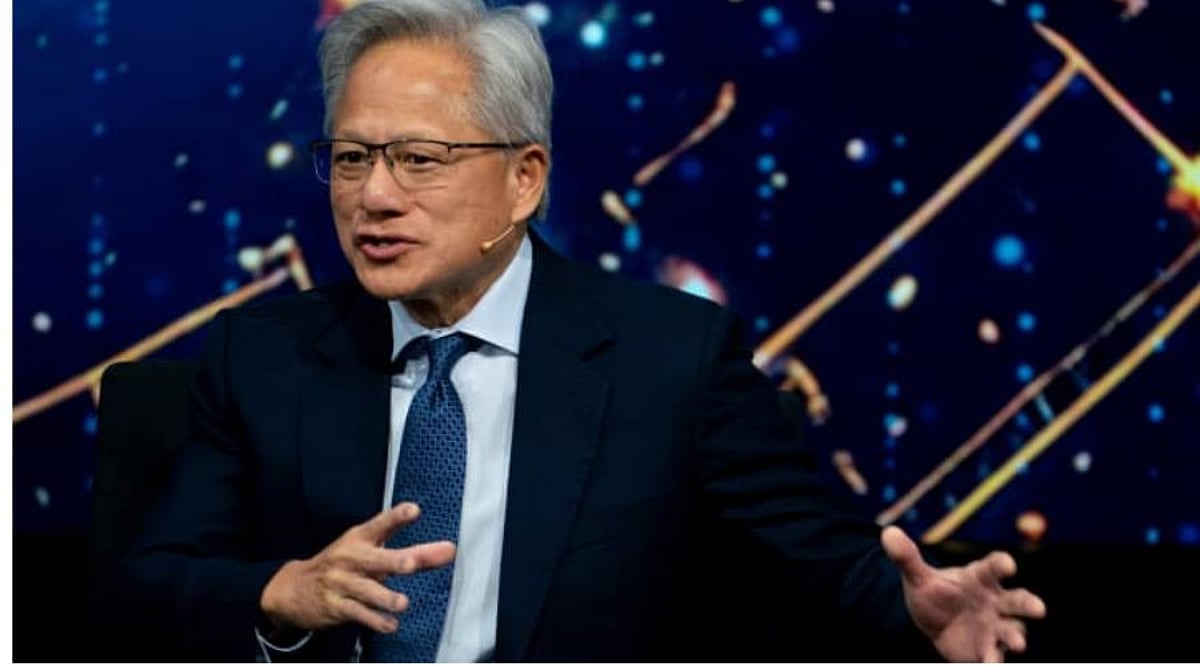
    Artificial intelligence is unlikely to experience a bubble burst anytime soon, according to NVIDIA CEO Jensen Huang, who believes the current AI boom is driven by a fundamental shift in computing rather than short-term market hype. His remarks come as investors continue to debate whether massive spending on AI infrastructure can be sustained.

    Infrastructure Shift Backs AI Demand

    Speaking during an interview with Axios co-founder Mike Allen, Huang argued that the semiconductor industry’s current growth cycle differs from previous booms. He said that the demand is not being driven by seasonal buying patterns or temporary trends but by a structural transformation in computing.

    According to Huang, AI requires an entirely new computing infrastructure, with businesses, governments, and developers investing heavily in data centers and advanced processors. He believes the industry will need to expand several times over the next decade to meet rising AI requirements.

    No Signs of a Slowdown Yet

    The NVIDIA chief highlighted that he does not expect a downturn in AI chip demand ‘for a while,’ despite concerns over rising capital expenditure by technology companies. His comments arrive after semiconductor stocks experienced volatility amid questions about whether spending on AI hardware can continue at its current pace.

    Huang maintained that customers are investing because AI infrastructure is becoming an essential part of modern computing rather than an optional technology upgrade. In his view, the industry’s growth is tied to long-term technological change instead of speculative buying.

    Bullish View from AI Chip Leader

    NVIDIA has emerged as the biggest beneficiary of the AI boom, with its graphics processors powering many of the world’s leading AI models. As the company’s chief executive, Huang has consistently defended the long-term outlook for AI investments.

    His latest comments also reinforce his broader position that AI adoption is still in its early stages. He has repeatedly argued that wider use of AI will create new opportunities across industries and continue driving demand for computing infrastructure, rather than triggering a rapid market correction.

    While some analysts remain cautious about the pace of AI spending, Huang believes the industry’s trajectory is supported by real technological needs rather than speculative enthusiasm. For NVIDIA, that translates into continued demand for AI chips as businesses build the infrastructure needed for the next generation of computing.

  • Daily Tech Digest: Japan Chip Rally, SBI’s $200M Fund, AMD’s NVIDIA Challenge, and Trump’s Crypto Windfall

    Daily Tech Digest: Japan Chip Rally, SBI’s $200M Fund, AMD’s NVIDIA Challenge, and Trump’s Crypto Windfall

    Good morning! Here’s your quick roundup of today’s biggest developments across semiconductors, technology investments, hiring, crypto, and AI infrastructure.

    Fast-Track Insights

    • Japan’s chip stocks rise on AI infrastructure optimism.
    • SBI Funds plans a $200 million tech fund.
    • Cost controls slow graduate hiring more than AI.
    • Trump reports over $1.4 billion crypto income.
    • AMD expands its full-stack AI infrastructure challenge.

    Japan’s Chip Stocks Rise as AI Spending Fuels Rally

    Japanese markets closed higher, with technology and semiconductor stocks tracking global gains linked to rising AI infrastructure investment. The Nikkei 225 advanced 0.46%, while the Topix gained 0.51%. Advantest, Lasertec, SoftBank Group, and Murata Manufacturing led the gains. However, potential Bank of Japan rate hikes limited broader market optimism.

    SBI Funds Plans $200 Million Fund for Technology Investments

    According to reports, SBI Funds Management is set to launch an alternative investment fund of about $200 million, which will be technology-centric. This funding will make investments in private technology firms and is dependent on regulatory clearance for its launch. It demonstrates the rising interest in the Indian alternative investment sector.

    Cost Controls, Not AI, Drive Graduate Hiring Slowdown

    Businesses are slowing graduate recruitment primarily due to cost-control pressures rather than artificial intelligence, according to a report shared by Personnel Today. Chief financial officers are prioritizing spending discipline amid economic uncertainty. The trend could delay entry-level opportunities as companies reassess workforce budgets, hiring plans, and broader talent strategies.

    Trump Reports Over $1.4 Billion From Crypto Ventures

    US President Donald Trump reported more than $1.4 billion in income from family-linked crypto ventures in 2025, according to financial disclosures. World Liberty Financial generated nearly $800 million. Trump meme coin sales contributed another $635 million. The new reports highlight crypto’s growing role in his financial portfolio and renewed conflict-of-interest concerns.

    AMD Builds Full-Stack AI Infrastructure Challenge Against NVIDIA

    AMD is developing its Helios rack-scale AI platform using MI450-series and Venice processors as it begins its battle against NVIDIA. In addition, AMD has partnered with Anthropic, under which AMD will supply up to 2 gigawatts of its processors to Anthropic, and has planned an investment of up to $5 billion.

  • AMD Challenges NVIDIA with New Helios AI Platform, MI450 GPUs, and Anthropic Partnership

    AMD Challenges NVIDIA with New Helios AI Platform, MI450 GPUs, and Anthropic Partnership

    AMD is preparing to launch a comprehensive new AI infrastructure lineup, including the Helios server rack, Instinct MI450 GPUs, and EPYC Venice processors, directly challenging NVIDIA’s dominance in data center AI. The company also announced a major partnership with Anthropic, the developer of the Claude AI model, to deploy up to two gigawatts of AMD chips starting in 2027.

    Helios is AMD’s first full server rack designed for AI workloads, combining MI455X graphics processors, EPYC Venice CPUs, and Pensando networking technology. It targets both AI training and inference, competing with NVIDIA’s integrated systems like the upcoming Rubin-Vera platform. AMD has already demonstrated Helios at the Moscone West convention center, with cloud providers Vultr and TensorWave showing systems using AMD hardware.

    Under the Anthropic agreement, the first gigawatt of AMD chips is scheduled to begin operating in the first half of 2027, using Helios systems with MI455X processors. The companies will also collaborate on software development, with Claude optimizing workloads on AMD graphics processors and aiding development of the ROCm software platform. AMD has committed to an equity investment of up to $5 billion in Anthropic.

    AMD is expanding its position in the AI chip market as demand for AI computing grows. While NVIDIA still controls a large share of the data center accelerator market, AI developers are seeking more supplier options. AMD previously signed a multiyear agreement with OpenAI that could generate tens of billions of dollars in yearly revenue, and OpenAI received an option to acquire a roughly 10% stake in AMD. The Anthropic partnership follows a similar strategy, combining hardware supply with closer access to a major AI model developer.

    Thursday’s launch will provide more details on Helios and the Venice processor, showcasing AMD’s full-system approach to compete with NVIDIA across processors, accelerators, networking, and software.

  • Utho Cloud Commits to 10,000 GPU Deployment to Power India’s Sovereign AI Compute Backbone

    Utho Cloud Commits to 10,000 GPU Deployment to Power India’s Sovereign AI Compute Backbone

    Utho Cloud, India’s sovereign cloud and AI infrastructure platform, has announced a landmark commitment to deploy 10,000 GPUs over the next 7–8 quarters. The investment is part of a long-term vision to build India’s sovereign AI compute backbone, enabling businesses, startups, researchers, and public sector organizations to access high-performance AI infrastructure hosted entirely within the country.

    The GPU portfolio will span NVIDIA’s enterprise-grade offerings, including the H200, H100, A100, RTX PRO 6000 Blackwell, and L4 models. This expansion guarantees GPU availability without long waitlists or auction-based pricing, a significant advantage in a market often plagued by shortages and unpredictable costs.

    Key features of the infrastructure include:

    • Sovereign AI compute: Customer data and model training remain within their chosen jurisdiction, with full ownership of intellectual property.
    • Transparent and predictable pricing: Up to 60% lower than traditional hyperscaler GPU rates, with billing in Indian Rupees.
    • Flexibility: Supports workloads from single-model inference to large-scale distributed AI training.
    • 24/7 human support: Dedicated assistance for mission-critical production AI workloads.

    With over 51,000 users, Utho Cloud already offers cloud infrastructure with data residency in India and compliance with the Digital Personal Data Protection (DPDP) Act.

    “We have spent years building a cloud platform designed around India’s data sovereignty and regulatory requirements. With this expansion, we will offer guaranteed GPU availability without extended wait times, sovereign AI compute with data and model training hosted within customer jurisdictions, transparent and predictable pricing, and the flexibility to support workloads ranging from AI inference to large-scale model training. By combining 100% data residency, compliance with the DPDP Act, and cost-efficient AI infrastructure, we aim to remove the barriers that have long limited access to high-performance AI computing and accelerate India’s journey towards becoming a global AI powerhouse.”

    — Manoj Dhanda, Founder and CEO of Utho Cloud

    The announcement comes amid growing concerns over AI compute availability, with GPU shortages, rising costs, and extended procurement timelines emerging as key challenges for enterprises worldwide. Unlike conventional cloud models that often expose businesses to foreign currency billing, unpredictable GPU costs, and infrastructure dependencies outside India, Utho’s sovereign AI platform is designed to provide organizations with predictable pricing in Indian Rupees, complete data residency, and enterprise-grade AI infrastructure deployed within Indian jurisdiction.

    Utho Cloud positions itself as “Bharat ka Cloud” — proudly Indian and sharply attuned to the needs of domestic enterprises. Today, 70% of India’s cloud telephony runs on Utho. Enterprises like FIITJEE, Jindal Steel & Power, and APL Apollo trust the platform, and over 51,000 businesses — from solo developers to unicorn startups — deploy production workloads on infrastructure that Utho owns, operates, and supports 24/7.

  • Top 7 Companies Offering Massive Manager Salaries in 2026: AI, Equity, and More

    Top 7 Companies Offering Massive Manager Salaries in 2026: AI, Equity, and More

    Overview

    AI is reshaping compensation: Managers with artificial intelligence, machine learning, and advanced computing expertise command premium salaries across leading technology companies. Equity drives earnings: Stock grants and performance incentives significantly increase total compensation beyond base salaries at major global technology firms. Leadership demand is rising: Companies increasingly reward managers who can lead large teams, deliver complex products, and manage high-impact technology programs.

    Management roles in technology have become some of the most lucrative positions in the global job market. In this tech-powered world, compensation at leading companies increasingly reflects the value of AI expertise, technical leadership, and the ability to manage large-scale engineering organizations.

    Companies Offering Highest Salary Packages to Managers

    These companies offer some of the strongest salaries across tech, finance, consulting, e-commerce, and product roles. Their pay ranges, bonuses, and stock options set them apart. You get high-value roles, fast growth, and exposure to global projects. Here are the best companies paying high salary packages to managers in 2026.

    Meta

    Meta has one of the best compensation structures for managers of software engineers. Reported compensation packages in US dollars range from ₹5.14 crore to ₹34.06 crore per year, depending on experience. The median compensation is around ₹7.30 crore per year. Equity constitutes a major portion of total compensation packages. Managers involved in artificial intelligence, machine learning, infrastructure, and large-scale engineering earn the best packages.

    Google

    Software engineers at Google earn roughly ₹3.66 crore to ₹18.91 crore per year on average in total compensation. The median package is nearly ₹6.22 crore. Google compensates employees through a combination of base salary, annual bonuses, and stocks. Engineers who manage important AI, cloud, and engineering projects get hefty compensation packages.

    Nvidia

    Nvidia’s technical expertise in AI leadership has increased its importance. Software engineering managers are earning approximately ₹3.59 crore to ₹6.66 crore per year, with a median salary of around ₹5.50 crore. Senior managers receive approximately ₹5.86 crore, while directors earn about ₹6.66 crore.

    Microsoft

    Microsoft continues to provide premium pay for managers working in artificial intelligence, cloud computing, cybersecurity, and enterprise software. Reported packages for engineering managers start from ₹3.38 crore, with top positions earning more. Base pay, year-end bonuses, and RSUs form the basic components of the package.

    Amazon

    Amazon’s Engineering Management salary packages depend on the size of its cloud and technology business. Salary for software engineering managers in the United States starts from about ₹2.95 crore and goes up to nearly ₹18.26 crore, with a median of roughly ₹4.95 crore. Cloud, AI, and infrastructure are among the most lucrative domains. Amazon also pays well in India, where software development managers earn an annual salary range between ₹86.2 lakh and ₹5.49 crore, median around ₹1.42 crore.

    Apple

    Apple offers substantial compensation to software engineering managers, especially those working on strategic products, platforms, and advanced technologies. In India, software engineering manager compensation ranges from approximately ₹1.49 crore to ₹2.56 crore annually, with a median total compensation of nearly ₹1.68 crore. Equity represents a significant portion of the overall package.

    HCLTech

    HCLTech focuses on exceptional remuneration at the pinnacle of the tech industry in India. For FY26, HCLTech’s CEO C Vijayakumar received about ₹176.47 crore in total compensation, including salary, bonuses, stock-based rewards, and other components. While not a manager-level figure, it shows the earning potential for tech industry leaders.

    Compensation Comparison Table

    Company Low (₹ crore/year) Median (₹ crore/year) High (₹ crore/year)
    Meta 5.14 7.30 34.06
    Google 3.66 6.22 18.91
    Nvidia 3.59 5.50 6.66
    Microsoft 3.38 — —
    Amazon (US) 2.95 4.95 18.26
    Apple (India) 1.49 1.68 2.56
    HCLTech (CEO) — — 176.47

    Note: US compensation figures converted at approximately ₹96.5 per US dollar; total compensation includes salary, stock, and bonuses where reported.

    Why Managerial Pay Is Rising

    The most generous bonuses go to positions related to AI, cloud computing, and advanced computing. The demand for leaders capable of assembling teams, managing complex infrastructure, and delivering products globally is intense.

    Stock-based compensation also plays a central role. At companies such as Meta, Google, and Nvidia, equity can represent a substantial share of total annual earnings. As a result, headline salary figures often understate the value of senior management packages. Looking ahead, technical managers responsible for high-value AI projects and infrastructure will get the most attractive compensation packages.

    Frequently Asked Questions

    1. Which company pays managers the highest salaries in 2026? Meta offers among the highest reported compensation packages, with senior software engineering managers potentially earning millions through salary, bonuses, and equity.
    2. Why are technology managers earning such high salaries? Technology managers combine leadership expertise with technical knowledge, enabling companies to execute complex AI, cloud, infrastructure, and software projects at global scale.
    3. Does total compensation include only the manager’s salary? No. Total compensation typically includes base salary, annual bonuses, stock awards, and other incentives, which can significantly increase a manager’s overall earnings.
    4. Which skills can help managers secure higher compensation? Artificial intelligence, machine learning, cloud computing, cybersecurity, infrastructure management, and large-scale engineering leadership remain among the most valuable skills for managers.
    5. Are these salary packages available to managers worldwide? Compensation varies by country, role, and seniority. The highest figures generally come from US-based technology roles and executive positions at global companies.
  • Leading US Tech Giants: Apple, Microsoft, NVIDIA, and More Dominate 2025

    Leading US Tech Giants: Apple, Microsoft, NVIDIA, and More Dominate 2025

    The United States continues to be the global epicenter of technological innovation, housing some of the most influential companies that shape industries ranging from consumer electronics to enterprise software and artificial intelligence. Here is an overview of the top 10 tech companies in the US, highlighting their core strengths and market impact.

    1. Apple

    Apple leads consumer technology with premium iPhones, Macs, and wearables. The company is expanding its AI capabilities, developing powerful silicon chips, and maintaining a thriving global ecosystem that keeps users engaged across devices.

    2. Microsoft

    Microsoft dominates enterprise software with Azure cloud services, AI innovation, productivity tools like Office 365, gaming through Xbox, cybersecurity solutions, and business applications used by millions worldwide.

    3. NVIDIA

    NVIDIA powers the AI revolution through advanced GPUs, data center technologies, autonomous driving platforms, and high-performance computing infrastructure that are critical for modern AI workloads.

    4. Amazon

    Amazon combines global e-commerce leadership with AWS cloud services, AI innovations, logistics expertise, and smart consumer devices like Alexa and Echo, reaching consumers and businesses across markets.

    5. Alphabet (Google)

    Alphabet, the parent company of Google, drives internet search, AI breakthroughs, cloud services, the Android ecosystem, and cutting-edge digital advertising technologies that underpin much of the web.

    6. Meta

    Meta connects billions through Facebook, Instagram, and WhatsApp, while investing heavily in AI research, virtual reality, and metaverse initiatives that aim to shape future digital interactions.

    7. Oracle

    Oracle specializes in enterprise databases, cloud infrastructure, AI-powered business applications, and mission-critical software that serve governments and multinational corporations worldwide.

    8. IBM

    IBM focuses on hybrid cloud, artificial intelligence, quantum computing, consulting services, and enterprise technology solutions tailored for regulated industries such as finance and healthcare.

    9. Intel

    Intel develops advanced processors, semiconductor technologies, AI accelerators, networking solutions, and manufacturing innovations that support global computing infrastructure from PCs to data centers.

    10. Cisco

    Cisco provides networking hardware, cybersecurity solutions, collaboration platforms like Webex, and enterprise connectivity that power businesses, governments, and digital transformation initiatives around the world.

    These ten companies not only drive technological progress but also create millions of jobs and generate trillions of dollars in market value, solidifying the US position as a leader in the global tech landscape.

  • Daily Tech Roundup: Nvidia Unveils Vera CPU, Balance Coin Crashes 99%, and Climate Tech Funding Rebounds

    Daily Tech Roundup: Nvidia Unveils Vera CPU, Balance Coin Crashes 99%, and Climate Tech Funding Rebounds

    Welcome to today’s tech roundup! From AI breakthroughs and semiconductor innovation to climate tech funding, crypto shocks, graduate hiring, and social media trends, here’s everything making headlines today.

    Nvidia Details Vera CPU, Takes Aim at AMD and Intel

    Nvidia has revealed more details about its next-generation Vera CPU, which will power heavy AI workloads alongside its Rubin GPUs. The chip is designed for high speed, energy efficiency, and increased memory bandwidth, giving Nvidia a competitive edge over AMD and Intel in AI data centers.

    US Climate Tech Investment Grows, But Only for Strong Players

    Funding for climate technology startups in the US is rising again, but investors are becoming far more selective. Capital is flowing into companies with proven business models and scalable clean energy solutions, while early-stage startups struggle to secure fresh funding in a cautious investment environment.

    Balance Coin Crashes 99% After Alleged $915K Hack

    Balance Coin lost almost all its value after reports of a security breach that allegedly drained $915,000 from the protocol. The sharp sell-off sparked panic among investors and highlighted the ongoing risks of smart contract vulnerabilities and security lapses in the crypto ecosystem.

    Graduate Hiring Sparks Debate: Promised Rs. 35 LPA Ends with Rs. 6.5 LPA Offer

    A graduate went viral after claiming a promised Rs. 35 lakh per annum opportunity disappeared when the company shifted its hiring strategy toward AI. The student eventually received a Rs. 6.5 LPA offer, reigniting conversations around shrinking campus placements and changing recruitment priorities.

    LinkedIn Becomes the Internet’s Biggest Hub for AI-Generated Posts

    A new study suggests LinkedIn has overtaken other social platforms as the biggest hub for AI-generated content—generic, repetitive posts created using artificial intelligence. Researchers warn that the growing flood of automated content could hurt authentic conversations and reduce the quality of professional networking online.

  • Dan Moore on AI, Robotics, and the New Frontier of Creative Expression

    Dan Moore on AI, Robotics, and the New Frontier of Creative Expression

    Introduction

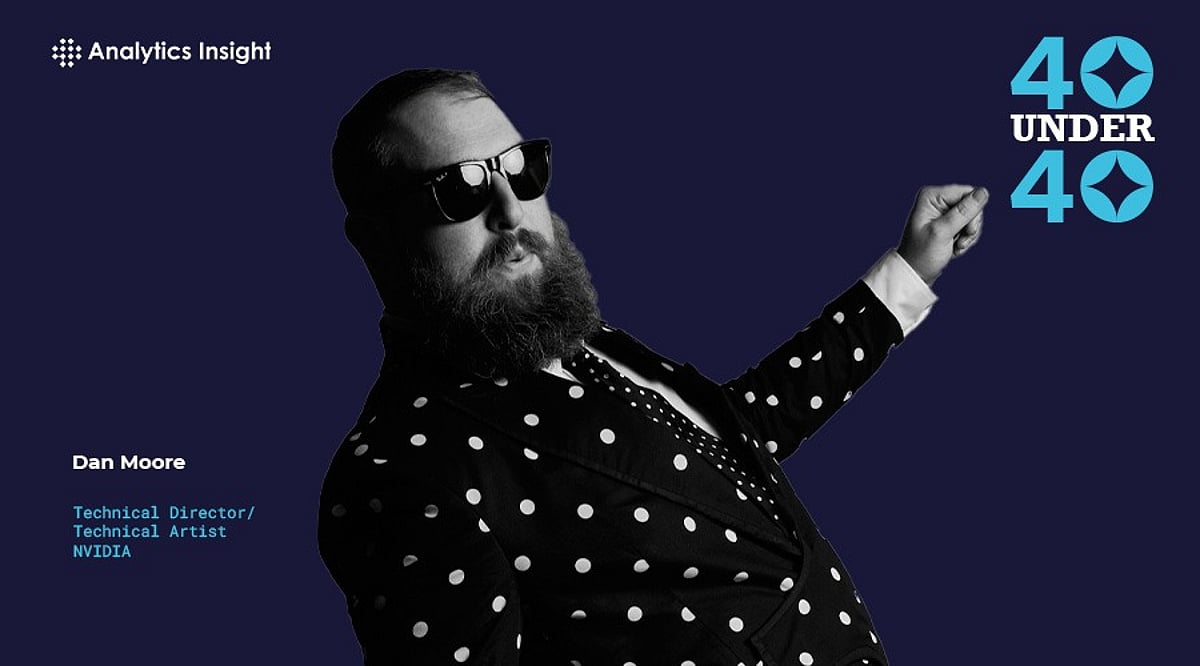
    Dan Moore is an artist, designer, technologist, and educator working at the intersection of art, technology, and culture. His practice explores what it means to create alongside machines, treating AI not simply as a tool, but as a collaborator in the production of images, objects, performances, and systems.

    Moore is a Senior Technical Artist at NVIDIA, where he works with real-time graphics, generative AI, robotics, simulation, and creative production technologies. In this role, he bridges artistic practice and advanced technical systems, helping translate emerging tools into workflows for artists, designers, and creative teams.

    Moore’s independent work spans painting, textiles, time-based media, robotics, and interactive installations. His projects examine distributed authorship, machine agency, and the shifting relationship between human intuition and computational process. Among his notable works are AI-generated painting series, live generative fashion through GLITCHWEAR, robotic performance works, and The Great American Pastime: Berra and the Bronx Legends, an AI-driven infinite baseball broadcast commissioned by the Yogi Berra Museum.

    Moore also teaches creative technology at The New School, helping students understand code, AI, and digital systems as expressive materials.

    The Interview

    Q: Please introduce yourself and tell us about your journey.

    A: I am Dan Moore, an artist, technologist, and educator working with AI, robotics, and generative systems. I am also a Senior Technical Artist at NVIDIA. My journey has always moved between engineering and art. Early in my career, I became fascinated by tangible interaction and computational media, leading to projects involving robot arms, large-scale interactive installations, real-time graphics, and later generative AI. My practice has expanded from building tools into making cultural works that question authorship, agency, and collaboration between humans and machines. I also teach at The New School, where I work with students to think critically about software, AI, and the social impact of technology.

    Q: What inspired you to pursue a career in creative technology?

    A: I’m bored by technology that’s just functional. I’m drawn to the expressive, the strange, and the emotionally resonant. Creative technology lets me smash engineering discipline into artistic curiosity. The most interesting moment is when a machine does something I didn’t predict. In most fields, that’s an error; in mine, it’s the point. That discovery keeps me moving. Whether at NVIDIA, in my studio, or in the classroom, I treat creative technology as a way for artists to hijack the future of tools and culture before they’re handed to us as finished products.

    Q: What achievement are you most proud of?

    A: I’m proud of building a practice that refuses to sit still. The Great American Pastime series is a highlight. It won the 2025 AI Creative Future Award for turning fictional baseball into an infinite, AI-generated radio broadcast. I also value my time as an educator. Teaching students that code and AI are raw, expressive materials is as vital to me as the work I hang on a gallery wall.

    Q: What has been the most exciting project you’ve worked on so far, and why does it stand out?

    A: GLITCHWEAR. It’s a live generative system that knits one-of-one garments from a visual stream that never repeats. The project stands out because it rethinks fashion as a time-based medium. A garment is no longer just designed, selected, and reproduced—it is encountered, coming from a specific moment in a system that will never repeat in the same way. GLITCHWEAR brings together generative art, real-time graphics, textile production, e-commerce, and physical craft.

    Q: How do you see AI and real-time technologies changing the future of creative industries?

    A: AI and real-time technologies are shifting the role of the creator from someone who only makes final artifacts to someone who designs systems, behaviors, prompts, constraints, and relationships. The future of creative work will involve building living systems that can generate, respond, adapt, and evolve. At NVIDIA, I see how real-time tools, simulation, and generative AI are already changing creative production, making it more immediate, iterative, and performative. AI will not replace creativity, but it will change where creativity happens.

    Q: What advice would you give to aspiring innovators?

    A: Do not wait for permission. The best way to understand emerging technology is to use it, break it, misuse it, and push it into places it was not designed to go. Don’t define yourself too narrowly—learn enough engineering to build your ideas, enough art to question them, and enough culture to understand why they matter. Innovation is not just using the newest tool; it’s asking a better question. Protect your curiosity and stay open to surprise.

    Q: What emerging technology excites you the most?

    A: I’m most excited by the convergence of AI, robotics, and real-time simulation. The next major shift will happen when intelligent systems move more directly into physical space. Robotics forces AI to deal with the material world—movement, balance, force, timing, and failure. Combined with real-time simulation and generative models, we can create machines that improvise behaviors, not just execute instructions. This convergence opens incredible possibilities for performance, installation, manufacturing, fashion, and public art.

    Q: What is one challenge you’ve faced in your career, and how did you overcome it?

    A: One challenge has been learning to work in fields that do not always share the same language—art, engineering, fashion, education, and technology all have different expectations. I overcame that by treating translation as part of the practice. Innovation is not only about making something new; it’s also about helping people understand why the new thing matters. Communication, framing, and storytelling are as important as the technical execution.

    Additional Insight

    One thing I would add is that the future of creative technology depends on artists being deeply involved in the development of emerging tools. AI and robotics should not only be shaped by efficiency and automation—they should also be shaped by questions of meaning, authorship, beauty, culture, and human experience. Artists reveal what a technology is really doing beneath its surface, exposing assumptions and turning failures into new forms of expression. As AI becomes more embedded in daily life, creative practitioners will be essential in helping society understand not only what machines can do, but what we want them to become.

  • Top 10 Semiconductor Companies Driving the AI Revolution

    Top 10 Semiconductor Companies Driving the AI Revolution

    The rapid advancement of artificial intelligence is heavily reliant on cutting-edge semiconductor technology. From high-performance GPUs to specialized memory and fabrication, these ten companies are at the forefront of powering AI workloads across data centers, edge devices, and consumer electronics.

    • Nvidia: Leads AI computing with powerful GPUs that accelerate machine learning, generative AI, scientific research, and enterprise data center workloads globally.
    • AMD: Develops high-performance CPUs and GPUs supporting AI workloads, cloud computing, gaming, and enterprise applications with competitive processing capabilities.
    • Intel: Expands AI hardware through advanced processors, AI accelerators, and data center solutions supporting enterprise computing and intelligent automation.
    • TSMC: Manufactures cutting-edge semiconductor chips for leading technology companies, enabling advanced AI processors through world-class fabrication technologies.
    • Samsung Electronics: Produces advanced memory chips and semiconductor technologies powering AI devices, smartphones, servers, and high-performance computing systems worldwide.
    • Qualcomm: Designs AI-enabled mobile processors delivering intelligent photography, voice assistants, efficient performance, and edge AI capabilities across connected devices.
    • Broadcom: Develops networking chips, AI infrastructure components, and connectivity solutions supporting large-scale cloud computing and enterprise artificial intelligence deployments.
    • MediaTek: Builds AI-capable smartphone processors with efficient performance, intelligent imaging, and advanced connectivity for affordable consumer electronics worldwide.
    • Micron Technology: Supplies high-performance memory and storage solutions essential for AI training, inference workloads, and modern data center infrastructure.