Tag: regulation

  • Ethereum Surges Past $1,850 as Regulatory Hopes and ETF Inflows Fuel Rally

    Ethereum Surges Past $1,850 as Regulatory Hopes and ETF Inflows Fuel Rally

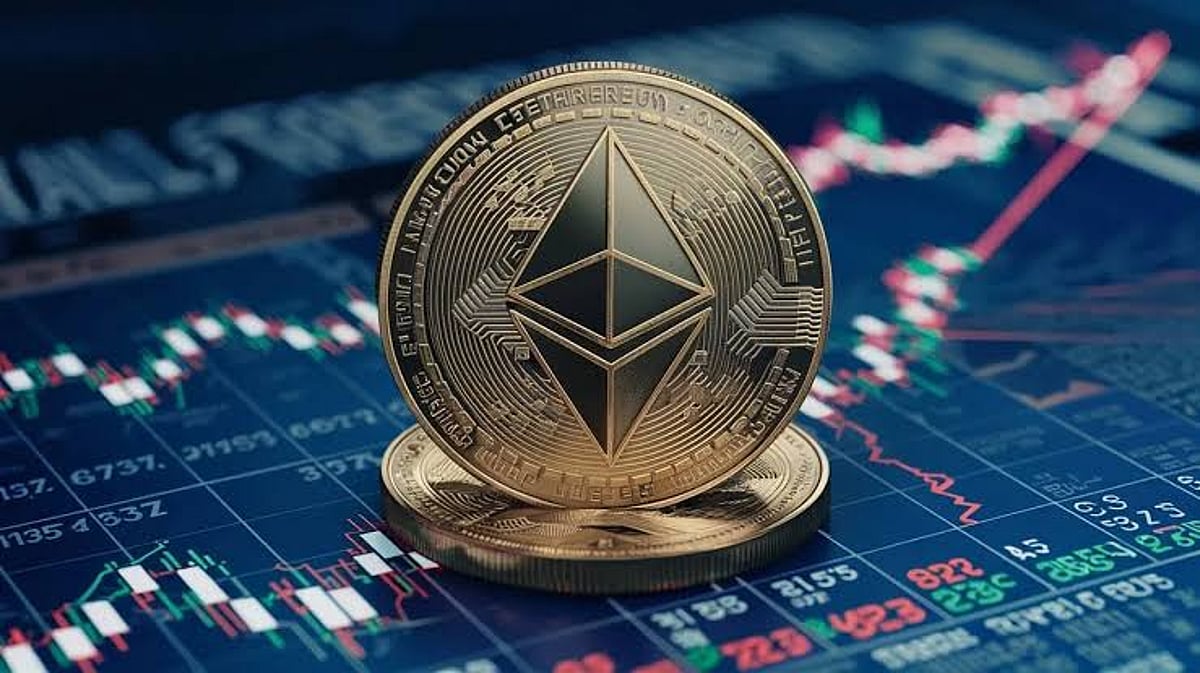
    Ethereum (ETH) has climbed above $1,850, reaching $1,873.56 with a 1.61% gain in the last 24 hours, outperforming the broader cryptocurrency market. The upward move is driven by renewed optimism around U.S. crypto regulations, consistent inflows into spot Ethereum exchange-traded funds (ETFs), and a technical breakout from a double-bottom pattern.

    The broader market posted modest gains, but Ethereum stood out among large-cap tokens. Despite being about 62% below its all-time high, the current rally has traders watching key support at $1,812 and resistance near $1,947. The week ahead may bring further catalysts, including potential Senate action on the CLARITY Act.

    CLARITY Act Optimism Supports Ethereum Price

    U.S. Representative Bryan Steil indicated that the Senate could vote on the CLARITY Act during the week of July 20–24. The proposed legislation would classify Ethereum as a digital commodity, providing a clearer legal framework for digital assets. Markets reacted positively to the timeline, though the final schedule and bill text remain unconfirmed.

    The regulatory update lifted sentiment across the crypto space. Ethereum gained more than Bitcoin in the session, reflecting stronger demand. However, the rally remains contingent on political progress. A delay or failed vote could push Ethereum back toward the $1,780 support zone.

    ETF Inflows Confirm Renewed Institutional Demand

    Spot Ethereum ETFs recorded approximately $105 million in net inflows from July 13 to July 17, according to SoSoValue. That marks the strongest weekly result since April, following a period of mixed flows including a $36.3 million daily outflow and a reported $22.3 million sale linked to BlackRock’s Ethereum fund.

    The return of weekly inflows signals that institutional interest remains intact, adding credibility to the price move beyond short-term speculation. However, sustained trading volume is essential for Ethereum to hold above the breakout level.

    Whale activity has also drawn attention. Two newly created wallets sold 72 Bitcoin for about $4.66 million and opened 20x leveraged long positions on 12,000 ETH, valued near $22.4 million. These trades suggest large accounts anticipate further upside, though high leverage raises liquidation risk if the market turns downward.

    Double-Bottom Breakout Puts $1,947 in View

    Ethereum confirmed a breakout from a double-bottom pattern with a neckline near $1,847. The price also moved above the $1,854 level, which coincides with the 0.786 Fibonacci retracement. The daily relative strength index (RSI) stands near 58.71, indicating positive momentum without overbought conditions.

    The next resistance zone is around $1,947. To maintain the bullish setup, Ethereum must hold above $1,854 and keep support at the 50-day exponential moving average near $1,812. A drop below $1,812 would weaken the breakout and increase the likelihood of a decline toward $1,780.

    Market participants are closely monitoring whether ETF inflows stay positive and whether the Senate confirms action on the CLARITY Act. These factors could determine whether Ethereum extends its rebound or returns to its earlier trading range. For now, ETH remains above the key support zone as traders test the strength of the breakout.

  • XRP Price Today: Breakout Setup Strengthens as SEC and CFTC Classify It as a Digital Commodity

    XRP Price Today: Breakout Setup Strengthens as SEC and CFTC Classify It as a Digital Commodity

    XRP traded near $1.08 after a difficult first half of 2026, while technical indicators pointed to a possible breakout and U.S. regulators formally classified the token as a digital commodity. The token lost 27.1% in the first quarter and another 22.4% in the second quarter, yet analysts now identify a rare alignment of chart signals and seasonal trends that could support a recovery. At the same time, a joint SEC-CFTC interpretive release removed long-running uncertainty over XRP’s status under U.S. law.

    Technical Setup Points to a Breakout Attempt

    On the daily TradingView chart, XRP remains inside a descending broadening wedge. Traders often view that pattern as a late-stage accumulation formation. The Relative Strength Index has also formed a bullish divergence. Meanwhile, buyers continue to defend the local bottom near $1.05.

    Historical data from CryptoRank shows that XRP has not posted a negative third-quarter close in the past seven years. July has gained 4.19% so far, and previous summer reversals produced sharp rebounds after weak June performance. In July 2023, XRP rallied 47.6% after an early-summer decline. Likewise, a similar reversal in July 2025 produced a 35% return.

    To confirm a breakout from the wedge, buyers must push the price above the $1.12-$1.18 resistance zone. A successful move could open a path toward medium-term targets between $1.45 and $1.60, representing a projected upside of about 50%.

    Nevertheless, broader market weakness and slower inflows into U.S. spot XRP ETFs could limit short-term gains. Even so, the current consolidation continues to build a base ahead of the next directional move.

    The SEC and CFTC Formally Classify XRP as a Commodity

    On March 17, 2026, the Securities and Exchange Commission and the Commodity Futures Trading Commission published a joint interpretive release that named XRP as a digital commodity. The agencies issued the document under Release Numbers 33-11412 and 34-105020.

    The 68-page release divides crypto assets into five categories: digital commodities, digital collectibles, digital tools, payment stablecoins, and digital securities. Only digital securities fall fully under SEC jurisdiction, while the CFTC oversees digital commodities.

    The release also listed Bitcoin, Ether, Solana, Dogecoin, Cardano, Avalanche, Chainlink, Polkadot, Hedera, Litecoin, Bitcoin Cash, Shiba Inu, Stellar, Tezos, and Aptos in the digital commodity category. Reports counted either 16 or 18 named assets, depending on how examples in the document were interpreted.

    According to the release, a digital commodity derives its value from the programmatic operation of a functional crypto system and from supply and demand dynamics rather than from expectations tied to managerial efforts. The agencies applied that standard to XRP since the XRP Ledger operates independently of Ripple’s managerial control.

    Read More: XRP Slips to $1.10 Despite XRPL Crossing 8 Million Accounts

    A Broader Policy Shift Takes Shape

    The release also addressed when a non-security crypto asset may become part of an investment contract and when that status may end. In addition, it discussed airdrops, protocol mining, protocol staking, and wrapped versions of non-security assets.

    The guidance followed the SEC’s creation of the Crypto Task Force in January 2025 and the launch of Project Crypto as a joint SEC-CFTC initiative in January 2026. The agencies also announced a memorandum of understanding shortly before issuing the release.

    SEC Chair Atkins stated at the DC Blockchain Summit that the agency is not the ‘securities and everything commission anymore.’ CFTC Chair Selig said the wait was over and pledged to establish rules that would allow the crypto industry to operate onshore.

    What’s Next?

    XRP continues to trade within a key technical pattern as buyers target a breakout above the $1.12–$1.18 resistance zone. At the same time, the SEC and CFTC have officially classified XRP as a digital commodity, removing a major regulatory uncertainty while market participants watch for the next price move.

    Join our WhatsApp Channel to get the latest news, exclusives and videos on WhatsApp

  • Google Opens Android to Rival App Stores Starting July 22 in Landmark Policy Change

    Google Opens Android to Rival App Stores Starting July 22 in Landmark Policy Change

    Google is set to allow third-party app stores on Android in the United States beginning July 22, marking one of the most significant changes to the Play Store since its launch. The move follows the company’s decision to abandon its proposed settlement with Epic Games and comply with a federal court injunction, aiming to increase competition in Android app distribution.

    Google Play Store Opens to Competitors

    The change introduces Google’s new Play Catalog Access Program, which allows eligible third-party app stores to access the Play Store’s app catalog. Developers’ apps and games will automatically appear on participating third-party marketplaces unless they choose to opt out.

    This development stems from the ongoing court case between Google and Epic Games. In 2024, a U.S. federal court found that Google had unlawfully maintained monopoly power in Android app distribution and billing services. The ruling required Google to open its platform to competing app stores and distribution systems.

    Google had initially negotiated a settlement with Epic Games that would have allowed smaller registered app store systems instead of permitting competing app stores within the Google Play Store. However, both parties abandoned the proposed settlement after concluding that court approval was unlikely.

    What Changes for Developers and Users

    Under the new program, eligible app store providers can join Google’s Play Catalog Access Program. Google will audit participating stores’ adherence to policies and security standards, levying an annual fee of $5,000 to conduct these audits.

    For developers, the transition will be largely automated. Their listings on the Play Store will automatically be made accessible to third-party stores unless they opt out.

    The changes currently apply only to the United States, where the court injunction is in force. Google will continue using its existing Play Store model in other markets unless local regulations require similar reforms.

  • 5 Key Downside Risks Every Bitcoin Investor Must Watch in 2026

    5 Key Downside Risks Every Bitcoin Investor Must Watch in 2026

    Bitcoin trades near $64,700–$65,000 in mid-July 2026 after a recovery fueled by better-than-expected US inflation data and strong institutional interest. Yet several downside risks continue to hover over the market. Understanding these factors helps investors prepare for sudden volatility.

    1. Global Economic Pressure

    Macroeconomic conditions heavily influence Bitcoin. Lower inflation expectations recently boosted prices, but any reversal—such as renewed inflation or the Federal Reserve maintaining high interest rates—could drive investors toward safer assets, pulling capital out of crypto.

    2. ETF Money Flows

    Spot Bitcoin ETFs have become a major short-term price driver. Inflows push prices up; outflows pull them down. Recent sessions saw $143 million in inflows after outflows, demonstrating how institutional fund movements can swing the market within hours.

    3. Geopolitical Tensions

    Events in the Middle East have caused temporary sell-offs, pushing Bitcoin to near $62,000. Geopolitical uncertainty often drives investors into traditional safe havens, triggering volatility in cryptocurrencies.

    4. Options Expiry and Profit Booking

    The derivatives market has grown rapidly. A recent $1.4 billion options expiry created sharp price swings as traders adjusted positions. Additionally, profit booking after strong rallies increases selling pressure and can slow upward momentum.

    5. Regulatory Uncertainty

    Governments worldwide continue to develop new rules for taxes, exchanges, stablecoins, and anti-money laundering. Unexpected announcements can quickly shift market sentiment, keeping investors cautious despite improved clarity in some regions.

    Why It Matters: Bitcoin remains an emotional market. Positive catalysts attract buyers; negative headlines spark panic. Institutional adoption and a fixed supply support long-term optimism, but short-term risks demand vigilance.

    Disclaimer: This article is for informational purposes only and does not constitute financial advice. Always conduct your own research before investing.

  • XRP Crash Risk: Key Factors That Could Trigger a 50% Drop

    XRP Crash Risk: Key Factors That Could Trigger a 50% Drop

    XRP has always been one of the most talked-about cryptocurrencies. Its price often moves faster than many other digital coins as traders closely follow every update related to Ripple, regulation, and the overall crypto market.

    As of mid-July 2026, XRP trades between $1.00 and $1.18, almost 48% below its earlier 2026 high. This sharp fall has once again raised an important question: could XRP lose another 50% of its value?

    The answer is not simple. XRP still has strong supporters since Ripple continues to expand its payment business around the world. At the same time, several risks could push the price much lower if market conditions become worse. A closer look at these risks helps explain why many investors remain cautious.

    XRP Price Has Already Faced Strong Pressure

    XRP enjoyed a solid rally earlier in 2026 after positive news around Ripple and better confidence in the crypto market. That excitement pushed the token much higher. However, the rally did not last forever. Selling pressure soon returned, and the price started to fall.

    Today, XRP trades around $1.00 to $1.18, which is nearly 48% lower than its 2026 peak. The area between $1.15 and $1.20 has become a strong resistance zone where buyers struggle to push the price higher. On the downside, the $1.00 level has become an important support. If this support breaks, market sentiment could become much more negative.

    The Overall Crypto Market Remains the Biggest Risk

    XRP seldom experiences extended independent movement. Bitcoin largely dictates the direction of the broader cryptocurrency market. When Bitcoin tumbles down steeply, it appears that almost every altcoin loses some value—XRP does the same.

    Global economic conditions may worsen the situation. Periods of economic uncertainty often bring higher interest rates, weaker investor confidence, and broader market declines, reducing demand for high-risk assets such as cryptocurrencies. A sharp decline in Bitcoin could push XRP back into a prolonged bear market.

    Profit Booking Could Increase Selling Pressure

    After a large price increase, many traders decide to sell part of their holdings instead of waiting for even higher prices. This creates extra supply in the market. If buyers fail to absorb that supply, prices usually move lower.

    This pattern has appeared several times in XRP’s history. Large rallies often attract heavy selling from long-term holders, which makes it difficult for the token to maintain upward momentum for a long period.

    Regulation Still Creates Uncertainty

    Ripple has achieved important legal victories over the past few years, but regulation remains one of the biggest factors that could affect XRP.

    Many countries still work on new cryptocurrency laws. Governments continue to study digital assets, stablecoins, and cross-border payment systems. Future rules could either help or slow the adoption of XRP.

    Competition Has Become Much Stronger

    Ripple no longer operates in a market with only a few competitors. Today, many blockchain projects offer fast payment networks and digital asset solutions for banks and financial institutions.

    Several companies also focus on tokenized assets, while stablecoins have become a popular option for cross-border payments. At the same time, many traditional financial firms now build their own blockchain systems instead of depending on public cryptocurrencies.

    Technical Levels Could Trigger a Bigger Drop

    The $1.00 price level has become one of the strongest support areas for XRP. If sellers push the token below this level, many automatic trading systems could activate sell orders at the same time.

    Leverage adds another layer of risk. Many crypto traders borrow money to increase their positions. When prices fall quickly, exchanges force these traders to close their positions. This creates additional selling pressure and can turn a normal decline into a much larger crash within a short period.

    Reasons XRP May Avoid a 50% Crash

    Ripple continues to expand its global payment network and works with businesses that want faster international transactions. The company has also joined projects that explore AI-powered payment standards, which shows its interest in future financial technology.

    Activity on the XRP Ledger has also increased, with a noticeable rise in transaction volume. Strong network usage often reflects healthy ecosystem growth.

    Institutional interest also remains an important factor. More professional investors now pay attention to blockchain payment systems than they did during earlier crypto cycles. If this trend continues, XRP could receive stronger long-term support.

    High Volatility is Normal for XRP

    Large price swings have always been part of the cryptocurrency market. A move of 10% to 20% within a single week is not unusual, especially during periods of uncertainty.

    Fear and excitement often control investor decisions. Good news can push prices higher very quickly, while negative headlines can produce equally sharp declines. XRP has experienced both situations many times over the years.

    Can XRP Really Fall Another 50%?

    A deep Bitcoin correction, weaker global markets, lower crypto investment, unexpected regulatory action, and a break below the important $1.00 support level could together create enough pressure for another major decline.

    However, the opposite scenario also deserves attention. Better regulation, continued business expansion by Ripple, higher institutional interest, and stronger demand across the crypto market could help XRP recover instead of falling further.

    Why This Matters

    With XRP hovering near its make-or-break $1.00 support level, understanding these risks is critical. A potential 50% crash isn’t just about Ripple—it’s a warning sign of how macroeconomic pressure and intense institutional competition can impact your portfolio.

    Final Thoughts

    XRP remains one of the best-known cryptocurrencies given Ripple’s focus on global payments and financial technology. Even after the recent correction, the project continues to attract attention from both retail and institutional investors.

    The current price between $1.00 and $1.18 shows that the market remains cautious after a 48% drop from the 2026 high. Another 50% decline cannot be ignored, especially if several negative market events occur together. At the same time, Ripple’s business growth, higher network activity, and steady institutional interest could provide support over the long term.

    The next few months may prove critical. The strength of the $1.00 support level, the direction of Bitcoin, global economic conditions, and Ripple’s future progress will likely decide whether XRP enters another sharp correction or begins its next recovery phase.

    FAQs

    1. What is XRP’s current price?
    As of mid-July 2026, XRP actively trades between $1.00 and $1.18. The price fluctuates dynamically in real time based on active crypto market conditions.

    2. Can XRP really fall another 50%?
    Yes. A combination of a Bitcoin crash, weak market sentiment, regulatory setbacks, and a break below key support could trigger a major decline.

    3. Why is the $1.00 level important?
    It is a major support zone. If XRP falls below this level, selling pressure could increase significantly.

    4. What could help XRP recover?
    Better crypto market sentiment, stronger institutional demand, Ripple’s business expansion, and positive regulatory developments could support higher prices.

    5. Is XRP still a long-term investment?
    Many investors still see long-term potential for Ripple’s payment technology and growing enterprise adoption, although price volatility remains high.

  • Mozilla Report Reveals Microsoft’s Unequal Browser Rules: India and US Face Deceptive Practices While EU Benefits from Regulation

    Mozilla Report Reveals Microsoft’s Unequal Browser Rules: India and US Face Deceptive Practices While EU Benefits from Regulation

    Two years after Mozilla first commissioned experts to examine Microsoft’s browser behavior, a new report titled Over The Edge 2.0 finds that the tech giant continues to steer users toward its Edge browser through deceptive design patterns—except in regions where strict regulation forces fairer treatment. The study, led by Dr. Harry Brignull and Cennydd Bowles, tested Windows 10 and Windows 11 in the USA, India, the UK, and Germany, and found a stark regulatory divide.

    Key Findings

    • Windows Search and Widgets still ignore users’ default browser preferences and open links in Edge.
    • Edge injects a banner directly into the Chrome download page on google.com, regardless of the user’s chosen browser.
    • Windows Backup fails to consistently preserve browser preferences when migrating from Windows 10 to Windows 11.
    • In the European Economic Area (EEA), the Digital Markets Act (DMA) has forced Microsoft to remove many harmful patterns, creating a relatively fairer user experience for browser choice. Outside the EEA—especially in India, Brazil, and the US—nearly every documented harmful pattern remains in force.

    Mozilla argues that the default browser experience should not depend on jurisdiction. “Microsoft has shown that it can respect user choice. When regulators are watching, they make some changes. We would ask them to do it globally, rather than relying on competition regulation to force their hand,” said Kush Amlani, Global Competition and Regulatory Lead at Mozilla.

    Why This Matters

    Windows powers roughly 65% of desktop devices worldwide, affecting more than 1.4 billion users. In India, nearly 43% of Windows users were still on Windows 10 as of Q1 2026—the highest share among tested regions. Browser defaults are increasingly shaping how people access information and encounter emerging AI services. The report highlights that Copilot, Microsoft’s AI assistant, forces web links to open in a side panel rendered by Edge, regardless of the user’s default browser. If such AI-driven self-preferencing goes unchecked, the choices made today could shape the digital landscape for the next decade.

    Closing the Gap in India

    India is one of the world’s largest Windows markets and is developing its own approach to digital-market regulation, including potential ex ante obligations for large gatekeepers. The report’s findings are directly relevant to this conversation: regulatory pressure has already improved user choice in the EU, while the persistence of harmful designs elsewhere shows the need for stronger safeguards. Mozilla is calling on Microsoft to ship the fairer designs it already builds in the EEA to all regions worldwide.

  • Bitcoin Volatility Spikes: 9 Key Factors Driving the Renewed Price Swings

    Bitcoin Volatility Spikes: 9 Key Factors Driving the Renewed Price Swings

    Bitcoin volatility is on the rise again, with prices swinging more sharply than in recent months. Traders and investors are watching closely as a combination of institutional moves, macroeconomic shifts, and market mechanics create repeated bouts of turbulence. Below are the nine primary drivers behind Bitcoin’s renewed price instability.

    • Institutional Trading: Large institutional investors deploy significant capital in a short time, causing rapid price swings as major buy or sell orders affect market liquidity on exchanges.
    • Macroeconomic Uncertainty: Interest rates, inflation data, and global economic concerns influence investor sentiment, increasing Bitcoin’s price fluctuations across financial markets worldwide.
    • Leveraged Trading: High leverage in crypto futures amplifies both gains and losses, triggering cascading liquidations that accelerate short-term Bitcoin price volatility during market moves.
    • ETF Fund Flows: Inflows and outflows from Bitcoin ETFs create buying and selling pressure, contributing to sudden price movements and heightened daily volatility.
    • Regulatory Developments: Government regulations, policy announcements, and legal actions affect investor confidence, often leading to sharp Bitcoin price reactions across global markets.
    • Whale Activity: Large Bitcoin holders buying or selling substantial amounts can significantly influence market prices, creating sudden volatility on cryptocurrency exchanges.
    • Market Sentiment: Fear, optimism, and speculative trading quickly shift investor behavior, causing rapid Bitcoin price changes during uncertain market conditions.
    • Global News Events: Geopolitical tensions, financial crises, and major economic announcements increase risk sentiment, often resulting in stronger Bitcoin market volatility.
    • Lower Market Liquidity: Reduced trading liquidity during certain periods allows relatively smaller trades to create larger Bitcoin price movements and wider market fluctuations.

    Understanding these factors can help investors navigate the current environment of heightened volatility. As the crypto market matures, such price swings are likely to remain a key characteristic of Bitcoin trading.

  • Google DeepMind CEO Demis Hassabis Urges Global AGI Safety Regulations Before It’s Too Late

    Google DeepMind CEO Demis Hassabis Urges Global AGI Safety Regulations Before It’s Too Late

    Google DeepMind CEO Demis Hassabis has issued a stark warning to world leaders: the window to prepare for Artificial General Intelligence (AGI) is closing fast, and robust safety rules must be established before more powerful systems are deployed.

    In a recent essay, Hassabis emphasized that AGI—an AI capable of performing any intellectual task that a human can—may become a reality within just a few years. He called for an international body to test advanced AI models before release, arguing that proactive regulation is essential to mitigate risks.

    What Is AGI and Why Does Hassabis Want Caution?

    Unlike today’s narrow AI, which excels at specific tasks like writing or coding, AGI would handle diverse challenges, learn autonomously, and solve problems much like a human. Hassabis wrote that AGI is “just a few short years away” and urged governments, researchers, and companies to collaborate rather than compete without safeguards.

    “We’ve already seen the challenges frontier models pose for cybersecurity, and other threats, including nuclear and bio risks, may soon emerge as capabilities continue to advance,” he said.

    Why AI Safety Matters More Than the Race for Better Models

    The AI industry has prioritized speed and capability, but Hassabis argues that safety deserves equal attention. As AI grows smarter, the potential damage from mistakes or misuse escalates. He advocates for global safety standards, independent testing, and regular reviews to ensure responsible development without stifling progress.

    The World Needs to Prepare Together

    Hassabis stressed that countries must act now—not later. Governments need updated laws, businesses must exercise caution, educational institutions should teach AI-relevant skills, and cybersecurity teams must anticipate new threats. “The world still has a chance to get ready. However, it may not last for long,” he concluded.

  • XRP Price Prediction: How High Can Ripple Go in the Next Crypto Bull Run?

    XRP Price Prediction: How High Can Ripple Go in the Next Crypto Bull Run?

    XRP has remained one of the most talked-about cryptocurrencies for many years. Even after market ups and downs, it continues to attract investors, traders, and financial experts across the world. Ripple, the company behind many XRP-related payment solutions, has expanded its business and built new partnerships with financial institutions. Given this progress, many people believe XRP could perform well during the next crypto bull run.

    A strong price increase will not depend on excitement alone. Real business growth, better regulations, and wider adoption will play a much bigger role. These factors could decide how far XRP moves during the next major market cycle.

    Regulation Could Become the Biggest Price Driver

    One of the biggest reasons investors remain hopeful about XRP is the steady improvement in regulatory clarity. For several years, legal uncertainty affected market confidence and limited adoption in some regions. As this situation improves, many investors believe XRP has a better chance to attract larger amounts of money.

    Clear regulations often encourage banks, payment companies, and investment firms to enter the market with greater confidence. If more countries create friendly rules for digital assets, XRP could benefit from stronger demand. Better regulation could also improve trust among retail investors who previously stayed away from cryptocurrencies amid uncertainty.

    Ripple Continues to Expand its Business

    Ripple is working on the development of products aimed at providing fast and affordable international payment solutions. The company has also begun working in new areas, including stablecoin services, digital asset custodianship, and tokenization of real assets. These initiatives can only help Ripple strengthen its position in the global financial sector.

    Simultaneously, XRP Ledger activity keeps increasing. The increasing number of transactions as well as the growing popularity of blockchain technology may improve the XRP ecosystem’s value overall.

    XRP ETFs Could Bring Fresh Investment

    Another important issue concerning XRP revolves around the existence of spot exchange-traded funds, or ETFs. By approving such products, authorities could grant institutional investors simple access to XRP.

    After approval, Bitcoin ETFs raised billions of dollars, and experts believe that XRP could gain similar interest if its own ETFs get the green light. Increased participation of institutional investors would boost XRP demand while decreasing its availability.

    Also Read – XRP Ledger’s Tokenized Assets Reach $4B: What It Means for Ethereum and BNB Chain

    The Next Crypto Bull Run Could Lift XRP

    History shows that cryptocurrency bull markets often follow a similar pattern. Bitcoin usually starts the rally, Ethereum follows, and then many large alternative cryptocurrencies begin to outperform. XRP has often joined these later stages of previous market cycles.

    If Bitcoin reaches fresh all-time highs during the next cycle, investor confidence across the crypto market could rise. Under those conditions, XRP may receive fresh attention from both individual and institutional investors. Strong market sentiment could become another important factor behind future price growth.

    Risks Still Remain

    Although the future looks promising, several risks could slow XRP’s progress. Institutional adoption may take longer than expected. Global economic conditions could reduce investment across financial markets. Delays in ETF approval may also affect market confidence.

    Competition remains another challenge. Stablecoins and other blockchain payment networks continue to expand their services. XRP must continue to prove its value through real adoption and business growth if it hopes to stay ahead of competing technologies.

    XRP Price Forecast for the Next Bull Cycle

    Market experts continue to publish different forecasts for XRP. Most balanced predictions place XRP between $3 and $5 during a healthy bull market. This range assumes positive market conditions along with steady business growth and better regulations.

    If several major events happen together, including ETF approval, strong institutional demand, and rapid expansion of Ripple’s payment network, XRP could reach between $5 and $10. This remains an optimistic but realistic target according to many analysts.

    A much stronger market could push XRP toward $15 to $20. However, this would require exceptional market conditions, very high investor confidence, and rapid global adoption. Such a move represents an aggressive scenario rather than the most likely outcome.

    Also Read – XRP Price Outlook 2026: Is Ripple Still a Good Long-Term Investment?

    Why This Matters

    XRP’s evolving regulatory clarity, potential spot ETF momentum, and role in Ripple’s expanding enterprise ecosystem make it a key indicator for institutional adoption. Understanding these core drivers is vital for navigating the next broad crypto bull market.

    Final Thoughts

    XRP continues to stand among the most closely watched digital assets given Ripple’s expanding business, stronger institutional interest, and improving regulatory outlook. These developments create a solid foundation for future growth, especially if the next crypto bull market develops as many analysts expect.

    FAQs

    1. What is the most realistic XRP price target for the next bull run? Most analysts expect XRP to trade between $3 and $5, with $7 to $10 possible under stronger market conditions.
    2. Can XRP reach $20? Yes, but only if several positive factors, such as ETF approval, institutional demand, and strong market momentum, come together.
    3. Is XRP likely to reach $100 soon? Most experts consider this highly unlikely during the next bull cycle as it would require a market value of several trillion dollars.
    4. What could drive XRP’s price higher? Improved regulations, Ripple’s expanding business, ETF approvals, and a broad crypto bull market are the biggest potential catalysts.
    5. Is XRP still a good long-term investment? Many investors see long-term potential in XRP, but future performance will depend on adoption, regulation, and overall crypto market conditions.

    Join our WhatsApp Channel to get the latest news, exclusives and videos on WhatsApp

    Disclaimer: Analytics Insight does not provide financial advice or guidance on cryptocurrencies and stocks. Also note that the cryptocurrencies mentioned/listed on the website could potentially be risky, i.e. designed to induce you to invest financial resources that may be lost forever and not be recoverable once investments are made. This article is provided for informational purposes and does not constitute investment advice. You are responsible for conducting your own research (DYOR) before making any investments. Read more about the financial risks involved here.

  • CLARITY Act Faces Critical Senate Vote as August Recess Deadline Approaches

    CLARITY Act Faces Critical Senate Vote as August Recess Deadline Approaches

    The CLARITY Act is racing against a tight Senate calendar as lawmakers resume session on July 13 with only 25 days before the August 7 summer recess. The bill requires 60 votes to overcome procedural hurdles and a potential filibuster, but securing that support remains daunting. Currently, only Democratic Senators Ruben Gallego and Angela Alsobrooks have publicly committed to the legislation.

    Ethics concerns tied to President Donald Trump’s reported $1.4 billion in crypto-related income during 2025 have further complicated negotiations. Galaxy Digital, a leading crypto investment firm, has lowered its estimate of the bill’s passage odds from 75% in May to 50-50 as of late June.

    The Digital Asset Market Clarity Act (H.R. 3633) already missed an earlier target for presidential signing on July 4. With about 20 Senate working days remaining, leaders must act swiftly to bring it to the floor. The timeline also coincides with the July 18, 2026 rulemaking deadline for the GENIUS Act, which became law in July 2025.

    Bipartisan support remains the primary obstacle. Republicans control 53 seats but need roughly seven Democratic votes to reach the 60-vote cloture threshold. So far, only Gallego and Alsobrooks have emerged as reliable Democratic supporters, leaving leadership seeking at least five additional Democrats. The bill did pass the Senate Banking Committee on May 14 with a 15-9 vote, signaling some bipartisan backing at the committee level.

    Ethics debates have intensified as Democrats raise concerns about public officials owning crypto. Former White House ethics lawyer Richard Painter argued that Trump “stands alone” compared to other executive branch officials, adding another layer to ongoing negotiations.

    Market observers have adjusted expectations. Alex Thorn, Galaxy Digital’s Head of Firmwide Research, noted the firm reduced its odds from 75% in May to 60% on June 9, then to 50% on June 26. Thorn wrote, “The absence of news is itself the news,” while adding that “50-50 is pretty good odds” for legislation of this scale. A revised version of the bill could be introduced as early as next week, just before the August recess.

    What’s Next?

    Supporters are racing to pass the CLARITY Act before the Senate breaks on August 7. They need 60 votes to beat a filibuster, but progress is stalled on disagreements over ethics rules for public officials owning crypto. With time running out, analysts now give the bill only a 40% to 50% chance of passing.