Tag: semiconductors

  • Dow Rises, Nasdaq Slips as Wall Street Awaits Alphabet and Tesla Earnings Amid Rising Oil Prices

    Dow Rises, Nasdaq Slips as Wall Street Awaits Alphabet and Tesla Earnings Amid Rising Oil Prices

    U.S. stocks ended mixed on Wednesday as investors weighed rising oil prices, a downturn in semiconductor shares, and anticipation of major earnings reports from technology giants. The Dow Jones Industrial Average gained roughly 0.5%, while the S&P 500 hovered near the flatline. The Nasdaq Composite fell about 0.3%, dragged lower by weakness in chip stocks.

    Big Tech Earnings in Focus

    Alphabet, Tesla, IBM, ServiceNow, and Texas Instruments are set to report quarterly results after the closing bell. Their updates are expected to shed light on artificial intelligence spending, cloud demand, and corporate technology budgets. Alphabet and Tesla are the first members of the ‘Magnificent Seven’ to release second-quarter results, with investors closely watching revenue growth, capital expenditure, and forward guidance.

    Alphabet shares traded near $346 ahead of the report. The company faces scrutiny over its AI strategy after delaying a model launch tied to its development plans. Tesla’s results will also be closely watched as the automaker continues heavy spending on new projects. Analysts will focus on cash flow, operating costs, and capital outlays.

    Sam Stovall, chief investment strategist at CFRA Research, noted that investors may adopt a ‘wait-and-see attitude’ before making larger market moves, with spending levels playing a central role in the response to these earnings.

    Oil Prices Surge on Geopolitical Tensions

    Oil prices climbed as the United States conducted its eleventh straight round of strikes against Iran. Brent crude rose about 3% to trade above $93 per barrel, briefly crossing $95. West Texas Intermediate advanced above $86 per barrel. U.S. Secretary of State Marco Rubio stated that Washington would continue protecting shipping through the Strait of Hormuz and described Iran as ‘not serious’ about negotiations.

    Higher energy prices reignited concerns about inflation and interest rates. Federal funds futures indicated a strong likelihood that the Federal Reserve will hold rates steady at its next meeting, though markets still price in a potential rate increase later in 2026.

    Chip Stocks Weigh on Nasdaq

    Technology stocks were the weakest sector during morning trading, with semiconductor shares under pressure after several volatile sessions. The Philadelphia Semiconductor Index traded near unchanged levels, having closed lower in five of the past ten sessions. Texas Instruments edged lower ahead of its earnings release. Investors are scrutinizing chip demand, order growth, and management forecasts during this earnings season. AI infrastructure spending has supported semiconductor valuations, but recent price swings have slowed the Nasdaq’s momentum.

    Materials and utilities sectors moved higher, limiting broader market losses. Strength in industrial and materials shares also supported the Dow. Market breadth remained positive, with advancing stocks outnumbering decliners on both the NYSE and Nasdaq.

    Notable Stock Movers

    Super Micro Computer surged more than 20% after the AI server maker issued a strong business update, securing over $60 billion in new fourth-quarter orders and forecasting gross margins above previous expectations. AT&T gained about 3% after adding more wireless subscribers than analysts anticipated and reporting better-than-expected quarterly earnings.

    GE Vernova shares fell despite reporting $11.1 billion in revenue and raising its 2026 guidance, as earnings missed market estimates. The company posted an 88% rise in total orders to $24.2 billion, with data center orders exceeding $5 billion in the first half of the year—more than double its full-year total in 2025.

    Shares of generic drugmakers declined after President Donald Trump announced plans for future tariffs on imported generic medicines, starting with a 100% tariff in August 2028 and rising to 200% a year later.

    With oil prices rising and Big Tech earnings approaching, markets remain focused on the next major catalyst for direction.

  • AI Investment Surge Raises Concerns of a New Financial Bubble

    AI Investment Surge Raises Concerns of a New Financial Bubble

    Investment in artificial intelligence continues to accelerate in 2026, with businesses, governments, and investors pouring billions of dollars into AI technologies. From massive infrastructure projects to cutting-edge startups, the race to dominate AI is reshaping the global tech landscape.

    Major technology companies are ramping up spending on AI data centers, advanced semiconductor manufacturing, and cloud computing capabilities. This wave of capital expenditure is driving record funding rounds for AI startups, as venture capitalists and institutional investors compete to back the most promising models, platforms, and enterprise solutions.

    However, rapidly rising valuations have sparked heated debate among analysts and economists. Some argue that the current AI investment boom mirrors the dot-com bubble of the late 1990s, warning that inflated expectations may not align with realistic long-term growth. Others contend that AI represents a fundamental technological shift with sustained demand across industries, from healthcare to finance to logistics.

    Strong demand for AI chips, automation tools, and cloud services continues to fuel revenue growth for many companies. Yet, investors are increasingly cautious, shifting focus toward firms with proven profitability rather than those riding the wave of AI hype alone.

    Potential risks include excessive valuations, slowing adoption rates, tighter regulatory scrutiny, and intensifying competition. While many experts believe AI will remain a major growth sector for years to come, disciplined investing and portfolio diversification are essential to navigate the uncertainties.

  • Leading US Tech Giants: Apple, Microsoft, NVIDIA, and More Dominate 2025

    Leading US Tech Giants: Apple, Microsoft, NVIDIA, and More Dominate 2025

    The United States continues to be the global epicenter of technological innovation, housing some of the most influential companies that shape industries ranging from consumer electronics to enterprise software and artificial intelligence. Here is an overview of the top 10 tech companies in the US, highlighting their core strengths and market impact.

    1. Apple

    Apple leads consumer technology with premium iPhones, Macs, and wearables. The company is expanding its AI capabilities, developing powerful silicon chips, and maintaining a thriving global ecosystem that keeps users engaged across devices.

    2. Microsoft

    Microsoft dominates enterprise software with Azure cloud services, AI innovation, productivity tools like Office 365, gaming through Xbox, cybersecurity solutions, and business applications used by millions worldwide.

    3. NVIDIA

    NVIDIA powers the AI revolution through advanced GPUs, data center technologies, autonomous driving platforms, and high-performance computing infrastructure that are critical for modern AI workloads.

    4. Amazon

    Amazon combines global e-commerce leadership with AWS cloud services, AI innovations, logistics expertise, and smart consumer devices like Alexa and Echo, reaching consumers and businesses across markets.

    5. Alphabet (Google)

    Alphabet, the parent company of Google, drives internet search, AI breakthroughs, cloud services, the Android ecosystem, and cutting-edge digital advertising technologies that underpin much of the web.

    6. Meta

    Meta connects billions through Facebook, Instagram, and WhatsApp, while investing heavily in AI research, virtual reality, and metaverse initiatives that aim to shape future digital interactions.

    7. Oracle

    Oracle specializes in enterprise databases, cloud infrastructure, AI-powered business applications, and mission-critical software that serve governments and multinational corporations worldwide.

    8. IBM

    IBM focuses on hybrid cloud, artificial intelligence, quantum computing, consulting services, and enterprise technology solutions tailored for regulated industries such as finance and healthcare.

    9. Intel

    Intel develops advanced processors, semiconductor technologies, AI accelerators, networking solutions, and manufacturing innovations that support global computing infrastructure from PCs to data centers.

    10. Cisco

    Cisco provides networking hardware, cybersecurity solutions, collaboration platforms like Webex, and enterprise connectivity that power businesses, governments, and digital transformation initiatives around the world.

    These ten companies not only drive technological progress but also create millions of jobs and generate trillions of dollars in market value, solidifying the US position as a leader in the global tech landscape.

  • Intel to Cut Jobs in Data Center and AI Group as Part of Restructuring Plan Ahead of Earnings

    Intel to Cut Jobs in Data Center and AI Group as Part of Restructuring Plan Ahead of Earnings

    Intel is laying off employees in its Data Center and AI Group (DCG) as part of an ongoing restructuring plan, the company confirmed. The job cuts come just days before Intel’s quarterly earnings report, when investors will scrutinize the chipmaker’s progress in streamlining operations and strengthening its foothold in the AI and semiconductor markets.

    Intel has not disclosed the exact number of employees affected. In a statement, the company described the move as part of a broader strategy to build a more focused and efficient organization. “As part of our broader strategy to become a more focused and efficient company, Intel’s DCG is aligning its organization to ensure it has the right roles and skills in place to position the business for long-term success,” Intel said. The company added that it will support affected employees through the transition.

    Importantly, Intel emphasized that the restructuring will not affect its product roadmap or customer commitments. The DCG is a critical business unit, responsible for server processors and AI technologies for enterprise clients. The goal is to streamline operations without disrupting key projects.

    The job cuts represent the latest cost-cutting measure under CEO Lip-Bu Tan, who has been leading a turnaround effort amid intense competition in the rapidly expanding AI chip market. Over the past two years, Intel has taken several steps to reduce costs, including previous layoffs, as it seeks to achieve sustainable growth and execute effectively.

    Analysts will be watching Intel’s upcoming earnings report for more details on the restructuring and the company’s AI initiatives.

  • Daily Tech Roundup: Nvidia Unveils Vera CPU, Balance Coin Crashes 99%, and Climate Tech Funding Rebounds

    Daily Tech Roundup: Nvidia Unveils Vera CPU, Balance Coin Crashes 99%, and Climate Tech Funding Rebounds

    Welcome to today’s tech roundup! From AI breakthroughs and semiconductor innovation to climate tech funding, crypto shocks, graduate hiring, and social media trends, here’s everything making headlines today.

    Nvidia Details Vera CPU, Takes Aim at AMD and Intel

    Nvidia has revealed more details about its next-generation Vera CPU, which will power heavy AI workloads alongside its Rubin GPUs. The chip is designed for high speed, energy efficiency, and increased memory bandwidth, giving Nvidia a competitive edge over AMD and Intel in AI data centers.

    US Climate Tech Investment Grows, But Only for Strong Players

    Funding for climate technology startups in the US is rising again, but investors are becoming far more selective. Capital is flowing into companies with proven business models and scalable clean energy solutions, while early-stage startups struggle to secure fresh funding in a cautious investment environment.

    Balance Coin Crashes 99% After Alleged $915K Hack

    Balance Coin lost almost all its value after reports of a security breach that allegedly drained $915,000 from the protocol. The sharp sell-off sparked panic among investors and highlighted the ongoing risks of smart contract vulnerabilities and security lapses in the crypto ecosystem.

    Graduate Hiring Sparks Debate: Promised Rs. 35 LPA Ends with Rs. 6.5 LPA Offer

    A graduate went viral after claiming a promised Rs. 35 lakh per annum opportunity disappeared when the company shifted its hiring strategy toward AI. The student eventually received a Rs. 6.5 LPA offer, reigniting conversations around shrinking campus placements and changing recruitment priorities.

    LinkedIn Becomes the Internet’s Biggest Hub for AI-Generated Posts

    A new study suggests LinkedIn has overtaken other social platforms as the biggest hub for AI-generated content—generic, repetitive posts created using artificial intelligence. Researchers warn that the growing flood of automated content could hurt authentic conversations and reduce the quality of professional networking online.

  • Which Nations Dominate the Global AI Race in 2026?

    Which Nations Dominate the Global AI Race in 2026?

    Key Takeaways

    • The US leads in advanced AI models, private investment, and AI infrastructure.
    • China dominates AI research, patents, and large-scale industrial AI deployment.
    • Countries like India, South Korea, Singapore, Japan, and the UAE are emerging as major AI innovators through focused national strategies.

    The global AI race in 2026 goes well beyond chatbots and image generators. Countries now compete to build faster AI chips, larger data centers, better cloud systems, smarter robots, and stronger research networks. Stanford’s AI Index 2026 puts the US ahead on private investment and advanced model development. China leads in AI research papers and patent filings, while South Korea ranks first in AI patents per person. No single country leads across every category.

    United States Stays Ahead in Advanced AI

    America is still at the forefront of the battle to dominate AI with a superior ecosystem of technology. Renowned AI corporations like OpenAI, Google DeepMind, Meta, Anthropic, Microsoft, and NVIDIA are based in the USA and continue to produce the most advanced AI models and chips worldwide. Private AI investments in the US reached $109 billion in 2024, far exceeding amounts in other countries, as reported in the Stanford AI Index 2026. These investments support startups, research laboratories, software, and computer systems. Major tech companies spend several billion dollars annually on data center construction, with analysts projecting AI infrastructure spending will soon reach $1 trillion.

    China Closes the Gap Quickly

    China has become the biggest challenger to the United States. The country now produces more AI research papers than any other nation and files the highest number of AI patents. Chinese universities, technology companies, and government-backed research centers continue expanding their AI work at a very fast pace. One of China’s greatest strengths is its ability to apply AI across many industries—factories, smart cities, healthcare, transport, and robotics—at scale, giving Chinese companies valuable real-world experience. During the 2026 World Artificial Intelligence Conference, China announced new international AI partnerships and placed greater focus on open-source AI models. Chinese technology companies also introduced more advanced AI systems and new AI chips that reduce dependence on foreign technology. Experts believe the performance gap between Chinese and American AI models has narrowed significantly compared to just a few years ago.

    South Korea Shows Big Results Despite Its Size

    South Korea may have a smaller population, but it continues to produce impressive AI results. According to the Stanford AI Index 2026, South Korea ranks first in the world for AI patents per person, demonstrating remarkable innovation relative to its population. The country also benefits from its leadership in semiconductor manufacturing. Strong electronics companies and government support have helped expand AI research and commercial use. AI now plays an important role in smart factories, healthcare, advanced electronics, and industrial automation. These strengths make South Korea one of the most important countries in the global AI supply chain.

    The United Kingdom and Europe Focus on Trusted AI

    The United Kingdom remains Europe’s strongest AI hub. London attracts large amounts of AI investment, while British universities continue to produce world-class research. The country also supports many successful AI startups developing business software, healthcare solutions, and advanced machine learning tools. Across Europe, countries such as France, Germany, and the Netherlands continue to invest in AI research, semiconductor technology, and public computing infrastructure. European governments place strong emphasis on safe and responsible AI, aiming to support innovation while protecting privacy, security, and public trust. This balanced approach has helped Europe build a strong reputation in responsible AI development.

    India Builds Strength Through Talent and Digital Growth

    India has established itself as one of the rapidly growing AI markets. A large technology workforce, a strong startup ecosystem, and increased digitalization have driven India’s quick development. International studies consistently confirm that India is among the best countries for AI business skills. AI is now utilized in healthcare, education, agriculture, banking, and government services. Public digital infrastructure has promoted AI adoption among millions of users. Business confidence is extremely high—Indian leaders are very willing to invest in AI. Supportive policies for AI research, education, and cloud development provide India with opportunities for further growth.

    Smaller Countries Also Make a Global Impact

    A UAE report notes that the nation is now among the highest AI adoption rates globally, with over 70% of the working-age population using AI tools regularly. National investments, international partnerships, and long-term AI policies have helped the UAE move toward becoming a global AI hub. Singapore strengthens its position with excellent digital infrastructure, research support, and business-oriented policies. Japan increases investments in AI-based robots to fill gaps caused by labor shortages. New partnerships between technology companies and manufacturers are driving rapid progress in industrial robots.

    The Global AI Race is Far From Over

    The AI race in 2026 is no longer only about who builds the smartest chatbot. The United States still leads in advanced AI models and private investment. China continues to expand its research strength and industrial use of AI at an impressive pace. South Korea, the UK, India, Japan, Singapore, and the UAE are all building focused national strategies to close the gap.

  • NASDAQ Futures Climb as Chip Stocks Rebound and Oil Prices Pull Back

    NASDAQ Futures Climb as Chip Stocks Rebound and Oil Prices Pull Back

    US technology stocks entered the new week after another sharp pullback led by semiconductor companies. The NASDAQ 100 has become more sensitive to daily moves in NVIDIA, Micron, AMD and Intel. Their rising market values have also increased their weight within the index.

    Wall Street futures moved higher on Monday as several chipmakers recovered before the opening bell. However, oil prices and the conflict involving the United States and Iran kept pressure on stocks. Investors also prepared for earnings from Alphabet, Tesla, IBM and Intel.

    Chip Stocks Drive Sharp NASDAQ Swings

    Semiconductor shares now play a larger role in NASDAQ 100 volatility. Assenagon says the weight of chip companies other than NVIDIA rose from about 15% to nearly 30%. Micron, AMD and Intel gained more influence as their valuations climbed during the AI rally.

    The asset manager said average one-year expected volatility for those companies moved above 80 points at times. That marked the highest level since the global financial crisis. Assenagon said, “Semiconductor stock volatilities are doing the heavy lifting.” Lower correlation between NASDAQ companies reduced part of the pressure, but it did not remove it.

    The Philadelphia Semiconductor Index also entered a bear market after closing more than 20% below its late-June record. Earlier data showed the index had gained 83% during 2026 before the July reversal. Chip funds then recorded large inflows and outflows as traders changed positions quickly.

    Apple and NVIDIA Trade the Top Market Spot

    Apple overtook NVIDIA on Friday to become the world’s most valuable listed company. Apple carried a market value of about $4.88 trillion. NVIDIA stood near $4.86 trillion after its shares fell 3.5%. Apple had not held the top position since April 2025.

    The change came as investors reviewed the prices attached to AI-linked companies. New model releases from China added competition within the sector. Meanwhile, concerns grew over the pace of spending on chips, servers and data centers. NVIDIA and other semiconductor companies had led much of the market’s 2026 advance.

    Bianca Botes of Citadel Global said, “The AI demand story is real,” but prices had moved ahead of earnings evidence. Recent losses in Micron, NVIDIA and other chipmakers showed how quickly sentiment could change. The moves also spread to South Korean technology stocks, including Samsung Electronics and SK Hynix.

    Oil Retreat and Earnings Lift Stock Futures

    NASDAQ 100 futures rose about 0.8% early Monday, while S&P 500 futures gained around 0.4%. Dow futures added about 0.3%. Memory chipmakers also advanced before the market opened. Micron, Western Digital, Seagate and SanDisk gained between 3.2% and 4.2%.

    Brent crude briefly moved above $90 per barrel after US forces struck Iran for a ninth straight day. Prices later eased after Iran said diplomatic contacts remained open. The early oil rise raised fresh concerns about transport costs, inflation and interest rates.

    Investors will now focus on quarterly results from major technology companies. Alphabet, Tesla, IBM and Intel will report during the week. Intel and Texas Instruments will provide new data on chip demand and AI infrastructure spending. Their reports could guide the next move across semiconductor stocks and the NASDAQ 100.

  • Apple Reportedly Scrapped Intel Mac Pro and M2/M3 Extreme Chips Before Discontinuation

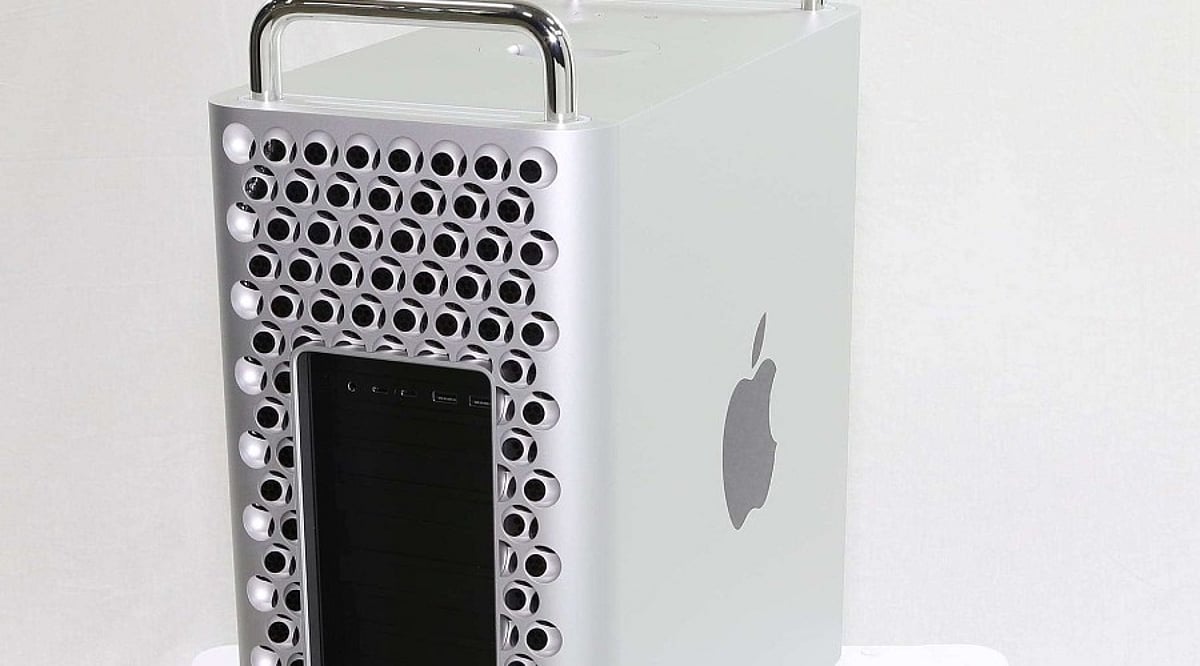
    Apple Reportedly Scrapped Intel Mac Pro and M2/M3 Extreme Chips Before Discontinuation

    Apple’s decision to discontinue the Mac Pro in March 2026 reportedly ended a long internal debate over the future of its most powerful desktop lineup. The company has since removed the Mac Pro from its website, directing professional users toward the Mac Studio, and confirmed no new Mac Pro hardware is planned.

    According to Bloomberg’s Mark Gurman in his ‘Power On’ newsletter, the end of the Mac Pro line ‘wasn’t always the plan.’ Apple had considered several hardware and chip options before giving up on it.

    Apple Worked on M2 Extreme and M3 Extreme Chips

    The biggest aspect of Apple’s fallen Mac Pro vision was the creation of higher-end Apple Silicon CPUs. Apple developed both M2 Extreme and M3 Extreme chips before dropping them, Gurman said. These chips were intended to sit above the ‘Ultra’ tier and would have made the Mac Pro outperform the Mac Studio. However, the projects were aborted due to high development costs and low demand for the more costly workstation-type machines.

    Two Unreleased Mac Pro Models Were in Development

    Apple also reportedly worked on two Mac Pro models that were never released, internally codenamed J170 and J190.

    • J170: A surprising project—a new Mac Pro powered by Intel chips, despite Apple’s strong push toward its own Apple Silicon. This version, targeted at specific professional applications, remained based on the x86 architecture and standard PCIe workflow.
    • J190: Expected to launch alongside the M3 Ultra Mac Studio in early 2025, featuring an M3 Ultra chip. The debut never happened, and Apple discontinued the Mac Pro line altogether.

    Mac Studio Has Replaced the Mac Pro’s Role

    The Mac Pro’s decline wasn’t solely due to performance. It was originally popular for its expandability—high-end graphics cards, audio cards, and other PCIe equipment. However, Apple Silicon adopts a system-on-chip design with unified memory, making upgrades via standard modules less relevant. Apple apparently concluded that maintaining the Mac Pro was no longer necessary to meet user needs. Gurman said he doesn’t think the Mac Pro is likely to return, ‘if ever.’

    This move marks a significant shift in Apple’s professional desktop strategy, consolidating its high-end offerings around the Mac Studio and its custom silicon.

  • India Unveils Rs 1.27 Lakh Crore Semicon 2.0 Program to Build Global Chip Ecosystem

    The Union Cabinet has approved Semicon 2.0, a massive Rs 1.27 lakh crore program aimed at transforming India into a global hub for semiconductor design and production. This marks the country’s largest investment yet in chip manufacturing.

    Unlike the initial phase of the India Semiconductor Mission, which focused primarily on fabrication and packaging, Semicon 2.0 expands support across the entire value chain. The program is built around six pillars: chip design, semiconductor equipment and materials, fabrication plants, packaging and testing, research and development, and talent creation.

    It also introduces incentives for companies producing critical inputs such as specialty chemicals, gases, and manufacturing equipment. The government expects international firms to manufacture chips in India while boosting domestic capabilities amid surging demand from artificial intelligence, electric vehicles, smartphones, electronics, telecommunications, and defense sectors.

    This initiative follows the successes of Semicon 1.0, which secured several chip manufacturing and packaging projects in India. Industry experts believe Semicon 2.0 will ensure supply chain resilience, create skilled jobs, and attract increased investments. As global competition for reliable chip supplies intensifies, the program anchors India’s long-term ambition to become a dominant force in the semiconductor industry.

  • Today’s Tech Roundup: Tata’s Semiconductor Strategy, NVIDIA Robotics, Bybit in Indonesia, and Cognizant Hiring

    Today’s Tech Roundup: Tata’s Semiconductor Strategy, NVIDIA Robotics, Bybit in Indonesia, and Cognizant Hiring

    Welcome to today’s tech roundup! From chips and AI to crypto, climate tech, and hiring, here’s a quick look at the stories shaping the technology world today.

    Tata Group Resorts to Older Tech to Launch Its Chip Foray

    Tata Group’s entry into the field of semiconductors takes an efficient course whereby the company begins its venture from older and tested technologies of chips rather than advanced technology. This ensures cost efficiency, quicker production, and helps meet demands in fields such as the automotive industry, power, and industrial electronics.

    Climate Tech Venture Funding Surges Driven by AI Infrastructure Demand

    There has been renewed interest in climate technology, driven by the accelerated development of AI infrastructure. With the increased usage of energy by data centers, venture capital firms are funding startups that specialize in renewable energy, batteries, smart power grids, and energy efficiency.

    Bybit Launches in Indonesia After NOBI Acquisition

    Bybit crypto exchange has now officially made its entry into Indonesia after taking over local exchange platform NOBI. This marks the extension of their operations in Southeast Asia and gives the firm the ability to provide regulated crypto trading services to customers.

    NVIDIA Partners with Japanese Robotics Firms to Accelerate AI Development

    With the collaboration between NVIDIA and Japanese robotics firms, there is an effort to make progress in developing AI automation. By using its computing technology together with Japan’s robotics expertise, it hopes to produce industrial robots that are better than current ones.

    Cognizant to Hire 1,500 US Graduates by End of 2026

    As part of efforts to build its artificial intelligence team, Cognizant is set to recruit 1,500 graduates in the US by 2026. These new employees will be trained in areas such as artificial intelligence, digital engineering, and other new technologies.