Tag: Stock Market

  • Indian Stock Market Opens Higher: Nifty 50 Gains 0.18%, Sensex Rises 70 Points

    Indian Stock Market Opens Higher: Nifty 50 Gains 0.18%, Sensex Rises 70 Points

    Indian equity markets opened on a positive note Wednesday, buoyed by favorable global cues. The Nifty 50 index climbed 44.3 points, or 0.18%, to open at 24,361.45, while the Bank Nifty advanced 78.4 points, or 0.14%, to start at 57,225.90. The Sensex opened at 77,998.66, approximately 70 points higher than its previous close.

    Broader Market Performance

    Midcap and smallcap indices underperformed the benchmarks, with the Midcap index falling 0.4% and the Smallcap index dropping 0.6%. The Indian rupee opened stronger by 29 paise at Rs. 95.39 per dollar on Friday, compared to the previous close of Rs. 95.68.

    Foreign and Domestic Institutional Activity

    Foreign institutional investors (FIIs) were net buyers of shares worth Rs. 3,624 crore on July 30, while domestic institutional investors (DIIs) were net sellers of shares worth Rs. 1,864 crore. FIIs have maintained net buying over the last three sessions.

    Sensex Technical Outlook

    Technically, the Sensex traded comfortably above its 20-day simple moving average (SMA), a largely positive signal. A bullish candle on daily charts and an uptrend continuation pattern on intraday charts suggest further upside potential.

    Shrikant Chouhan, Head of Equity Research at Kotak Securities, noted: “For trend-following traders, now 77,500 would act as a key support zone. Above this, the uptrend wave is likely to continue. On the higher side, the rally could extend till 78,300-78,500. On the flip side, below 77,500, the uptrend would become vulnerable. Below this, traders may prefer to exit their long positions.”

    Nifty 50 Outlook

    The Nifty 50 continues to display a constructive technical setup, having closed above last week’s high and maintaining a pattern of higher highs and higher lows on the daily chart.

    Bajaj Broking commented: “Going ahead, bias remains positive as the index continues to form higher highs and higher lows in daily charts, and we expect the index to maintain positive bias and head towards 24,370 and 24,480 in the coming sessions. Wednesday’s gap area of (24,041-24,136) is likely to act as immediate support.”

    The benchmark index is expected to gradually move toward the crucial resistance zone of 24,500-24,600, which aligns with the current month’s high and the peak recorded in April 2026. On the downside, the brokerage sees immediate support in the 23,800-24,000 zone, where the 20-day and 50-day exponential moving averages (EMAs) converge.

    Bank Nifty Outlook

    Bank Nifty continued to consolidate around the 57,000 mark after forming its second consecutive high-wave candle, indicating stock-specific movement within a broader sideways trend.

    A decisive breakout above Wednesday’s high and the 57,500 mark could trigger fresh buying momentum and pave the way for a rally toward 58,000. However, failure to surpass 57,500 levels is likely to keep the index range-bound between 56,500-57,500. On the downside, the 56,500-56,000 zone remains a crucial support area, reinforced by the lower band of the six-week trading range, an ascending trendline, and the 52-week EMA.

    Bajaj Broking Research added: “As long as the index holds above this support cluster, the broader outlook is expected to remain constructive.”

    Disclaimer: This article is for informational purposes only and does not constitute investment advice. Readers are encouraged to conduct their own research before making any investment decisions. Analytics Insight does not provide financial advice or guidance on stocks or cryptocurrencies.
  • Microsoft Shatters Record with $450 Billion Single-Day Market Cap Surge as AI Bets Pay Off

    Microsoft Shatters Record with $450 Billion Single-Day Market Cap Surge as AI Bets Pay Off

    Microsoft has once again claimed the title of the world’s most valuable company, setting a historic milestone with a nearly $450 billion single-day gain in market value. The surge, the largest ever recorded for any company, pushed Microsoft’s market capitalization to $3.35 trillion, surpassing NVIDIA’s previous record of $441 billion set on April 9, 2025.

    Shares of the tech giant soared more than 15% following a strong earnings report that highlighted rapid growth in its Azure cloud platform. The company’s aggressive investments in artificial intelligence infrastructure are now delivering tangible returns, with Azure experiencing stronger-than-expected growth. Microsoft’s capital expenditure plans remain robust, with $50 billion earmarked for the fiscal first quarter of 2027 and $175 billion for the 2026 calendar year. The company forecasts Azure to grow at 45% on a constant-currency basis.

    Why Microsoft’s AI Strategy Is Working

    Microsoft has poured billions into AI, cloud services, and new data centers, and the latest earnings indicate that these investments are already paying off. While NVIDIA continues to dominate the AI chip market, Microsoft is leveraging those chips to power cloud services that businesses rely on daily, creating a strong secondary revenue stream. As AI adoption accelerates, the competition among Microsoft, NVIDIA, Google, and Amazon is expected to intensify.

    Jake Behan, head of capital markets at Direxion, commented, “The key question was whether it could shift the conversation from how much it is spending on AI to what it is earning from those investments, and the results suggested meaningful progress.”

    Microsoft’s performance underscores a shift from AI being a long-term vision to a real driver of growth, attracting more customers and boosting its cloud business. The company’s latest results signal that its AI strategy is not just a plan for the future—it is already delivering value today.

  • Renewed AI Optimism Drives South Korean Chip Stocks to Record Gains

    Renewed AI Optimism Drives South Korean Chip Stocks to Record Gains

    South Korea’s stock market experienced a strong rebound on Friday, driven by a rally in semiconductor stocks after better-than-expected earnings from major US technology firms. Investor confidence in the long-term growth of artificial intelligence infrastructure was renewed, reversing recent declines.

    Semiconductor Stocks Lead the Rally

    The benchmark Kospi index surged over 18%, reaching its highest level in about a month. SK Hynix Inc. soared by a record 28%, buoyed by a rare direct share purchase by SK Group Chairman Chey Tae-won. Samsung Electronics Co. rose approximately 26%, while Samsung Electro-Mechanics gained nearly 30%. Hyundai Motor also posted strong growth of almost 8%.

    The rally helped recover losses from earlier in the week, which had been triggered by concerns over valuations and competition from Chinese memory-chip makers.

    Strong US Earnings Restore AI Confidence

    Microsoft reported strong growth in its Azure cloud business, and Amazon exceeded expectations in its cloud computing division, reiterating plans to continue investing in AI infrastructure. These results eased fears that enterprise investments in AI might slow down, prompting investors to rebalance toward semiconductor stocks, particularly those supplying high-performance memory chips and AI infrastructure.

    Domestic Support Boosts Sentiment

    SK Group Chairman Chey Tae-won purchased 3,620 shares of SK Hynix in the open market, his first direct investment in the company, worth approximately 4.8 billion won (about $3.2 million). The move was seen as a strong signal of confidence in the chipmaker’s long-term prospects.

    Additionally, the South Korean government announced plans to allocate nearly $13.9 billion to its sovereign wealth fund for strategic investments in AI, further supporting the sector’s outlook.

  • Microsoft Beats Q4 Estimates as Azure Revenue Tops $100 Billion, Stock Jumps 8%

    Microsoft Beats Q4 Estimates as Azure Revenue Tops $100 Billion, Stock Jumps 8%

    Microsoft (MSFT) shares surged more than 8% in premarket trading after the company reported stronger-than-expected fiscal fourth-quarter earnings, driven by robust cloud demand and AI services. The tech giant posted adjusted earnings per share of $4.74, surpassing analyst expectations of $4.24, while revenue reached $90.01 billion, above the $87.62 billion consensus.

    Net income rose to $35.77 billion, up from $27.23 billion in the same period last year, as growth accelerated across key business segments. The Intelligent Cloud segment generated $39.31 billion in revenue, exceeding the $38.16 billion forecast, with Azure revenue growing 43% year over year on a constant currency basis. Notably, Azure revenue exceeded $100 billion for the first time during fiscal 2026.

    “AI is transforming every layer of the technology stack,” said Microsoft CEO Satya Nadella, as the company continues to embed artificial intelligence across its product portfolio. Microsoft 365 Copilot paid seats climbed to more than 30 million, up from 20 million in April, while GitHub Copilot reached 50 million users, reflecting surging demand for AI-powered coding tools.

    The Productivity and Business Processes segment, which includes Office, Dynamics, and LinkedIn, generated $37.85 billion in revenue, up 14.3% year over year and above analyst estimates. Meanwhile, the More Personal Computing segment, encompassing Windows, Surface, Bing, and Xbox, brought in $12.85 billion, a slight decline year over year but still ahead of market expectations.

    Microsoft maintained its fiscal 2026 capital expenditure outlook at approximately $175 billion, primarily allocated to AI infrastructure and data center expansion. CFO Amy Hood noted that “demand signals across our portfolio” support continued investment. The company also issued a positive revenue forecast for the first quarter of fiscal 2027, projecting revenue between $89.85 billion and $90.95 billion, compared with the analyst estimate of $89.66 billion. Azure growth is expected to remain strong, with constant currency growth of 45% projected for the quarter.

    Commercial remaining performance obligations reached $678 billion, reflecting expanding enterprise commitments. Microsoft also returned $10.2 billion to shareholders through dividends and stock buybacks during the quarter.

    Microsoft’s results come as major technology companies ramp up AI investments, underscoring the strategic importance of cloud and AI capabilities in driving enterprise growth.

  • Flat Start for Indian Markets: Nifty 50 Steady, Sensex Edges Down 15 Points on Weak Global Sentiment

    Flat Start for Indian Markets: Nifty 50 Steady, Sensex Edges Down 15 Points on Weak Global Sentiment

    Indian equity benchmarks opened on a flat note Thursday, tracking weak global cues. The Nifty 50 started at 24,249.55, nearly unchanged from its previous close of 24,250.20, while the Sensex opened 15 points lower at 77,638.86. The Bank Nifty also declined, opening 778.85 points below its prior close.

    The rupee strengthened marginally, opening at Rs. 95.58 against the U.S. dollar compared to Wednesday’s close of Rs. 95.64. Foreign institutional investors (FIIs) remained net buyers, purchasing shares worth Rs. 2,982 crore on July 29, while domestic institutional investors (DIIs) bought stocks worth Rs. 998 crore.

    Broader market indices outperformed, with the Nifty Midcap 100 rising 0.8% and the Nifty Smallcap 100 gaining 1.5%.

    Sensex Outlook

    Technically, the Sensex stayed positive in the previous session, hitting an intraday high of 77,765.49. Buying interest across key sectors and improving momentum supported the index.

    “The 77,000 level is expected to provide immediate support and act as a crucial cushion against any short-term pullback. On the upside, 78,500 is the key resistance level, and a sustained move above this mark could strengthen bullish momentum,” said Sachin Gupta, VP – Technical Research at Choice Equity Broking.

    Nifty 50 Outlook

    The Nifty 50 remains in a consolidation phase after recent weakness. It formed a bearish candle on the daily chart, indicating continued corrective momentum.

    “Overall, the index is expected to extend consolidation in the range of 23,800-24,350. Only a breakout or breakdown will signal the next directional trend. Short-term support is placed at 23,800, being the confluence of the almost identical low of the last 5 weeks and 50 days EMA,” said Bajaj Broking Research.

    A decisive break below Wednesday’s low of 23,961 could drag the Nifty toward the 23,800 support. On the upside, the 24,200 mark is expected to act as immediate resistance.

    Bank Nifty Outlook

    Bank Nifty formed a high-wave candle with a higher high and higher low, indicating renewed buying interest after consolidation. The index has largely traded within the 56,500-58,700 range over the past six weeks.

    “The 57,500 remains the immediate hurdle, while a sustained move above this level could pave the way for an advance towards 58,000. On the downside, the 56,500-56,000 zone remains a crucial support area, reinforced by the lower band of the six-week trading range, an ascending trendline, and the 52-week EMA. The index holding above this support cluster suggests a constructive broader outlook,” said Bajaj Broking.

    Disclaimer: This article is for informational purposes only and does not constitute investment advice. Readers should conduct their own research before making any investment decisions. Analytics Insight does not provide financial guidance on stocks or cryptocurrencies.
  • FTSE 100 Opens Higher as Rolls-Royce Surges, Lloyds Launches £1B Buyback, and Oil Prices Climb

    FTSE 100 Opens Higher as Rolls-Royce Surges, Lloyds Launches £1B Buyback, and Oil Prices Climb

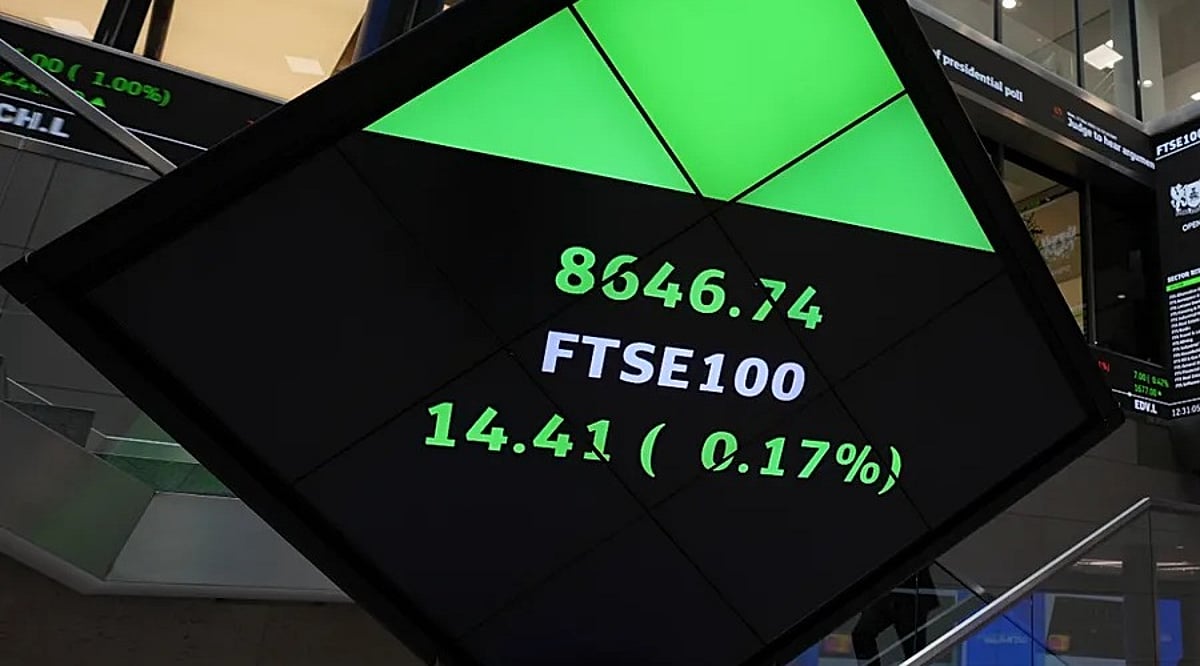
    The FTSE 100 opened 21.92 points higher at 10,930.33 on Thursday, as investors shifted focus to the Bank of England’s upcoming interest rate decision, largely ignoring a hawkish stance from the Federal Reserve and overnight losses on Wall Street. Brent crude futures rose 2.13% to $92.67 per barrel, while US West Texas Intermediate (WTI) advanced 1.47% to $85.70 per barrel.

    Sterling strengthened to $1.3352 from $1.3284 in the previous session, but fell against the euro to €1.1654 from €1.1673.

    Gainers & Losers

    On the upside, Rolls-Royce Holdings surged 4.03% to 1,435.60p. Aberdeen Group gained 2.19% to 243.20p, while Investec advanced 1.99% to 641.50p. Lloyds Banking Group climbed 1.75% to 113.30p, Croda International rose 1.58% to 3,271p, and Standard Chartered also added 1.58% to 2,191p.

    On the downside, London Stock Exchange Group fell 3.50% to 8,876p. Rentokil slumped 17.08% to 367.60p, while Reckitt Benckiser declined 0.96% to 5,348p. Games Workshop Group slipped 0.86% to 19,680p, AstraZeneca eased 0.59% to 13,056p, and Next plc edged 0.56% lower to 15,095p.

    Rentokil Shares Decline

    Rentokil shares plummeted after its CEO criticized the firm’s failure to meet its growth potential across multiple markets. The stock shed over 17% in early trade. Chief executive Mike Duffy stated the company is “not delivering on our growth potential in many of the markets we operate in, nor adequately benefiting from our scale.” The firm reported a 6.7% rise in group revenue for the first half of the year to $3.5 billion (£2.6 billion), with profit before tax growing nearly 10% to $263 million (£196 million). Duffy added, “Our focus is driving volume growth over short-term margin expansion, and this targeted redeployment of resources will enable us, over time, to accelerate organic growth, improve margins and free cash flow and deliver on the clear opportunity for shareholder value creation.”

    Rolls-Royce Shares Jump

    Rolls-Royce shares jumped on Thursday after the company raised its targets and posted a near 50% jump in operating profits for the first half of the year. The firm reported £2.5 billion in underlying operating profit for the first half, up 46% from the same period last year. It now expects to make £4.7 billion to £4.9 billion in underlying operating profit, up from its previous targets of between £4 billion and £4.2 billion. Chief Executive Tufan Erginbilgic, who has pushed through a sweeping overhaul of the aerospace and engineering group, said the company’s “transformation continues to deliver.” “We are demonstrating that Rolls-Royce is now a very different company to that of the past,” he said.

    Lloyds £1 Billion Share Buyback

    Lloyds Banking Group unveiled a £1 billion share buyback and a new four-year strategy after reporting stronger profit for the second quarter. Statutory pre-tax profit rose to £4.3 billion in the first half, from £3.5 billion a year earlier. Second-quarter profit of £2.3 billion beat the £2.1 billion expected by analysts. CEO Charlie Nunn said, “In the first half of 2026, we delivered sustained strength in financial performance, with continued income growth, improving operating leverage, strong credit performance, growing capital generation and increasing shareholder returns.” Guidance for the full year remains unchanged.

    Global Market View

    In the US, Wall Street fell after the Federal Reserve held interest rates. The Dow Jones fell 1,153 points, or 2.2%, while the S&P 500 lost 1.5% and the Nasdaq dropped 1.7%.

    In Asia on Thursday, Tokyo’s Nikkei 225 rose 0.71% to 61,867.43, while China’s Shanghai Composite dipped 0.62%. Hong Kong’s Hang Seng advanced 0.18%, and South Korea’s Kospi edged lower by 1.23%. In India, both the Nifty 50 and the Sensex rose by 0.15% and 0.066%, respectively.

  • Vedanta Power Stock Drops 4% as Q1 Net Loss Overshadows Strong Revenue Growth

    Vedanta Power Stock Drops 4% as Q1 Net Loss Overshadows Strong Revenue Growth

    Vedanta Power shares fell more than 3% on Thursday, July 30, after the company reported a net loss of Rs. 423 crore for the first quarter of fiscal year 2027. The decline came despite a sharp 31.3% increase in revenue, as weaker operating margins and a one-time exceptional loss weighed on investor sentiment.

    The stock touched an intraday low of Rs. 34.03, down 3.65%, while the broader Nifty 50 index remained flat. The results mark the company’s first quarterly report following the Vedanta demerger.

    Revenue for the quarter stood at Rs. 2,607 crore, up from Rs. 1,986 crore in the same period last year. However, strong sales failed to improve profitability. EBITDA fell to Rs. 291 crore from Rs. 417 crore a year earlier, and the EBITDA margin contracted to 11.2% from 21%, reflecting higher costs and operational pressure.

    Vedanta Power’s sales volume rose 38% year over year to 5,224 million units, supported by better generation at Meenakshi Energy and improved performance at the Talwandi Sabo Thermal Plant. The company operates 4,180 MW of installed capacity, making it India’s fifth-largest private merchant thermal power producer.

    Despite the revenue growth, a one-time exceptional loss of Rs. 487 crore pushed the company into a net loss for the quarter. Management emphasized plans to expand capacity further while enhancing fuel security and operational efficiency. Investors will likely monitor upcoming quarters for signs of margin recovery and return on investment.

  • Oil Surge and AI Stock Sell-Off Push Wall Street Lower Ahead of Fed Decision

    Oil Surge and AI Stock Sell-Off Push Wall Street Lower Ahead of Fed Decision

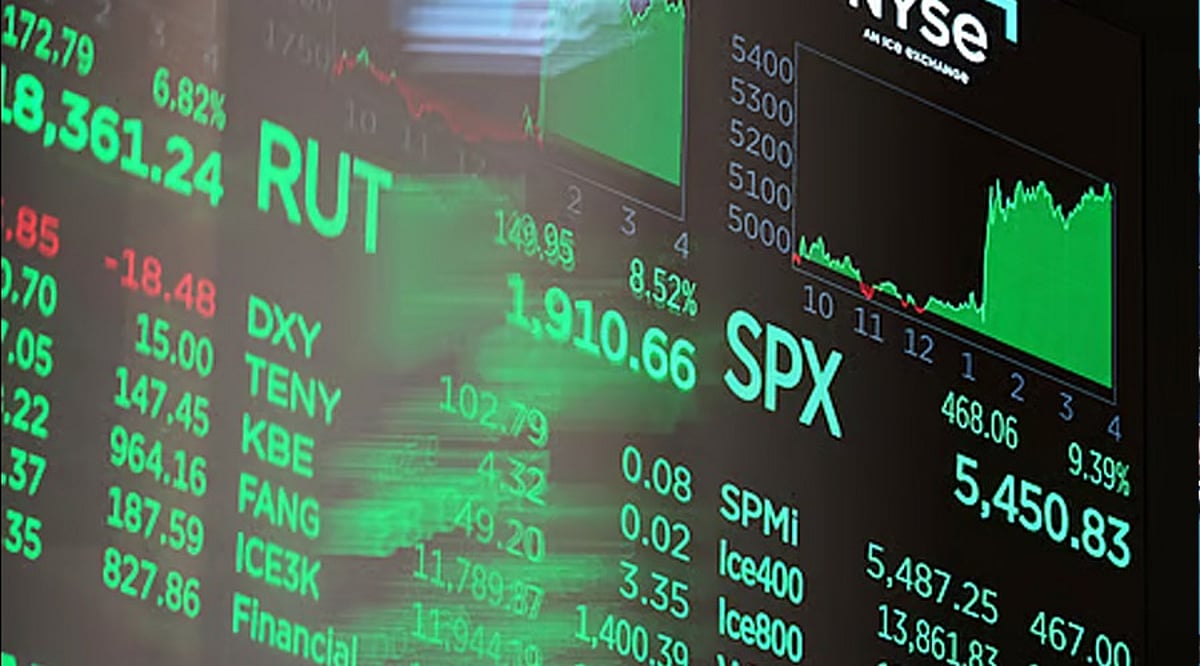
    US stocks fell sharply Wednesday as rising oil prices and semiconductor losses weighed on major indexes. The Dow Jones Industrial Average dropped about 800 points during morning trading. The S&P 500 and NASDAQ Composite also declined before the Federal Reserve’s rate decision.

    Oil prices jumped after a new exchange of attacks involving Iran and US forces in the Middle East, renewing concerns about energy costs and inflation. Investors also watched chip stocks after several sessions of heavy selling.

    Dow Jones Leads Broad Market Decline

    The Dow Jones fell more than 1% as industrial, financial, and consumer shares moved lower. At one stage, the index lost over 800 points. The S&P 500 fell about 0.7%, while the NASDAQ dropped roughly 1%. Market figures fluctuated through the morning as trading remained volatile.

    Declining shares outnumbered advancing stocks on both the New York Stock Exchange and NASDAQ. Caterpillar fell as the industrial sector led losses. Consumer staples and healthcare posted small gains, showing limited demand for defensive shares.

    Oil Surge Adds Pressure Ahead of Fed Decision

    Crude oil prices rose after Iran launched missiles toward US forces in Jordan. US Central Command said forces intercepted the missiles. President Donald Trump then said the United States would respond strongly, adding pressure across energy and equity markets.

    Brent crude gained about 6%, while West Texas Intermediate rose close to 7%. Higher oil prices can raise transport and production costs. The latest jump arrived as the Fed prepared to announce its policy decision at 2 p.m. Eastern Time.

    Futures markets placed the highest probability on the Fed keeping rates between 3.5% and 3.75%. Available pricing showed a hold probability near 64%. The remaining probability supported a quarter-point increase. Traders also expected further tightening later in 2026.

    Jay Woods of Freedom Capital Markets said, “Any Fed surprise could cause this sell-off to accelerate.” Investors will review Chair Kevin Warsh’s press conference for details about inflation, employment, and future policy decisions.

    Semiconductor Stocks Extend Weekly Losses

    Semiconductor shares extended a four-session decline as investors questioned returns from large artificial intelligence spending programs. The iShares Semiconductor ETF fell nearly 4% during Wednesday trading. Its weekly loss moved above 10% as selling spread across major chip companies.

    Micron Technology and Advanced Micro Devices each lost more than 6% during the session. KLA fell more than 8%, while NVIDIA also traded lower. The Philadelphia Semiconductor Index dropped as investors reviewed spending, revenue growth, and competition from Chinese technology companies.

    Gina Martin Adams of HB Wealth said, “The pressure is shifting from spending plans to returns.” Big Tech earnings will provide more data on revenue from AI investments. Microsoft and Meta will report after Wednesday’s close. Amazon and Apple will release results later this week.

    Truist Securities maintained a positive long-term view on chip demand despite the sell-off. Analyst William Stein said industry contacts still reported strong demand. He also noted that buyers now place larger orders for longer periods. However, current trading showed concern about valuations and near-term earnings.

    Ford Rises as Procter and Gamble Falls

    Ford Motor gained more than 6% after raising its annual profit forecast. The automaker also reported results above market expectations. The increase made Ford one of the stronger stocks during a session dominated by broad losses.

    Procter and Gamble fell almost 3% after reporting weaker revenue than expected. The company also forecast slower sales growth for fiscal 2027. Seagate Technology gained after issuing quarterly revenue and profit forecasts above estimates. These moves created pockets of strength and weakness across the market.

    Investors now face three immediate events: the Fed decision setting policy direction for rates, Warsh’s comments shaping expectations for later meetings, and Big Tech earnings testing whether heavy AI spending has started producing stronger revenue.

  • Apple Hits $5 Trillion Market Cap, Becoming Second Company to Reach the Milestone

    Apple Hits $5 Trillion Market Cap, Becoming Second Company to Reach the Milestone

    Apple has crossed the $5 trillion market value mark after a steady rise in its share price, becoming only the second company to reach the historic milestone. The iPhone maker’s market capitalization surged past the $5 trillion threshold, making it the world’s most valuable company, surpassing NVIDIA.

    The jump came after Apple’s shares rose 0.2 percent to $337.7, bringing its market capitalization to $4.96 trillion. With a session high of $342.89, Apple’s market value stood at $5.036 trillion. Including session gains, Apple stock has jumped 24% so far this year, outperforming the other six of the ‘Magnificent 7,’ which include Microsoft, Amazon, Alphabet, Meta Platforms, Tesla, and Nvidia.

    Apple is ready to report its third-quarter earnings after the market close on Thursday. Analysts expect the company will jump more than 15% from the previous year.

    Staying on top will be the real test. The Cupertino-based tech giant has struggled for years to build its own AI models. More recently, Google has used its technology to roll out new services, such as a revamped Siri, that have saved it from the massive infrastructure spending that tech investors so often fear. Dipanjan Chatterjee, vice president and principal analyst at Forrester, said, “Apple has resisted the AI spending race, betting that customer experience – not infrastructure investment – will ultimately determine the winners.”

  • SK Hynix Stock Drops 9% as Record Earnings Fall Short of AI Chip Market Expectations

    SK Hynix Stock Drops 9% as Record Earnings Fall Short of AI Chip Market Expectations

    SK Hynix stock faced renewed selling pressure after the memory-chip maker reported second-quarter figures that came in below market forecasts. While revenue and operating profit reached quarterly records, both measures missed analyst estimates, triggering a sharp decline in share prices.

    The company’s US-listed ADRs closed Tuesday at $130.17, down 8.99% during regular trading, before recovering about 1.9% in after-hours trading. In Seoul, SK Hynix shares fell approximately 9.4% on Wednesday as investors digested the earnings release.

    SK Hynix Earnings Miss Market Forecasts

    SK Hynix reported second-quarter revenue of 79.3 trillion won, up 257% from the same period last year. Analysts had expected approximately 84 trillion won. Operating profit reached 60.5 trillion won, marking a 557% annual increase, but still fell short of the 64 trillion won market forecast.

    Both revenue and operating profit set company records during the June quarter, yet the gap against forecasts shaped the market reaction. Investors had raised expectations after strong demand lifted memory prices and pushed SK Hynix stock to record levels earlier in 2026.

    Net profit surged more than 13 times to 93.9 trillion won, with investment gains playing a major role in that increase. Analysts linked much of the gain to the completed sale of SK Hynix’s indirect stake in Japanese flash-memory maker Kioxia.

    AI Memory Demand Supports Record Results

    Demand for high-bandwidth memory continued to support SK Hynix earnings. HBM chips serve data centers that train and operate artificial intelligence models. The company has secured long-term supply agreements with approximately 10 customers and continues negotiations with other buyers.

    SK Hynix said customers are seeking longer contracts as memory supply remains tight. These agreements include financial protections intended to reduce risks from changes in customer demand. The company also plans 2026 capital spending of about 47 trillion to 48 trillion won.

    However, delays in some HBM4 shipments reduced revenue recognition during the quarter. Price gains for standard DRAM products also came in below earlier expectations, contributing to the operating profit and revenue misses.

    Management maintained its positive demand outlook for the second half of 2026, expecting AI server investment and limited memory supply to support sales. Still, the latest figures show that record growth must also clear high market forecasts.

    SK Hynix Stock Tracks Wider Chip Selloff

    SK Hynix stock moved lower during a broader retreat from AI-linked semiconductor shares. Investors have questioned the funding and returns of large data-center projects. Competition from Chinese memory-chip companies has also added pressure across Asian markets.

    South Korea’s Kospi fell approximately 6% on Wednesday, while Samsung Electronics lost about 4.8%. The moves followed broad selling across chip stocks. SK Hynix ADRs also closed below their $149 US listing price after Tuesday’s decline.

    Investors are also watching the company’s shareholder return plan. SK Hynix has not yet provided details on its timing, size, or structure. Hyundai Motor Securities research head Greg Roh said, “SK needs to come up with a concrete shareholder return policy to turn around investor sentiment.”

    The company reported a net cash position of about 88 trillion won at the end of June and aims to build that figure toward 100 trillion won. Investors will track future spending, customer contracts, HBM4 deliveries, and the planned shareholder return policy.