Tag: Stock Market

  • Milky Mist IPO Opens August 11: Price Band, Lot Size, and Key Dates

    Milky Mist IPO Opens August 11: Price Band, Lot Size, and Key Dates

    Milky Mist Dairy Food has announced the initial public offering (IPO) details, setting a price band of Rs. 133 to Rs. 140 per share. The IPO will open for subscription on August 11 and close on August 13, 2026. Anchor investors can place bids on August 10, a day before the public issue opens.

    The company aims to raise Rs. 1,553 crore through this offering, which includes fresh shares worth Rs. 1,428 crore and an offer-for-sale (OFS) of Rs. 125 crore. The IPO size was reduced from an earlier planned Rs. 2,035 crore. Milky Mist also raised Rs. 357 crore via a pre-IPO round.

    The lot size for the IPO is set at 107 shares. Retail investors will be allocated at least 35% of the issue, non-institutional investors 15%, and qualified institutional buyers (QIBs) up to 50%.

    Proceeds from the IPO will be used primarily for debt reduction and business expansion. Specifically, Rs. 496.8 crore will go toward repaying or reducing loans, Rs. 469.2 crore will be invested in the Perundurai plant in Tamil Nadu, and Rs. 155.3 crore will be used to purchase coolers and freezers for the distribution network.

    Milky Mist reported a 176% increase in profit for the fiscal year ended March 31, 2026, with revenue from operations rising 34%. CEO K. Rathnam expects annual revenue growth of around 30%, citing India’s protein-deficient market as a growth opportunity. The company’s products currently reach over 375,000 retail outlets across India.

    Shares are expected to list on the BSE and NSE on August 18, 2026.

  • Wall Street Hits Fresh Records as Strong Earnings and Easing Geopolitical Tensions Fuel Five-Day Rally

    Wall Street Hits Fresh Records as Strong Earnings and Easing Geopolitical Tensions Fuel Five-Day Rally

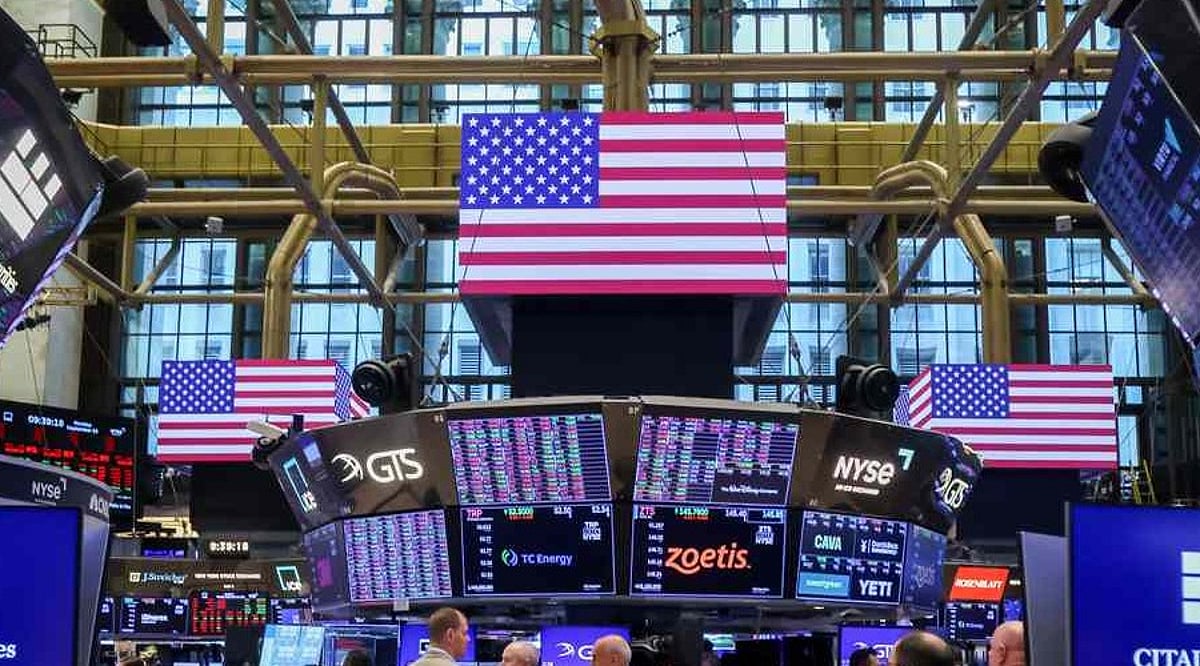
    Wall Street opened higher on Wednesday, reaching record highs as strong corporate earnings and easing geopolitical concerns in the Middle East buoyed investor sentiment. The S&P 500 and Dow Jones Industrial Average both hit fresh intraday highs, extending a five-day rally.

    The S&P 500 rose 0.61% to 7,783.50 shortly after the opening bell. Meanwhile, the Dow advanced 450 points to 54,536.68, and the Nasdaq Composite added 0.41% to 26,694.42.

    US Stocks Extend Five-Day Rally

    US stocks continued their five-session winning streak, which began with renewed demand for technology and consumer shares. All three major indexes are on track for their strongest five-day performance since April 2025. Over the past week, the S&P 500 has gained more than 6%, the Dow has risen over 5%, and the Nasdaq has climbed more than 9%. In the previous session, the S&P 500 closed above 7,700 for the first time, while the Dow gained more than 900 points and secured another record close.

    Market breadth remained positive during early trading. On the New York Stock Exchange, advancing stocks outnumbered declining ones by 1.26 to one, and the ratio on the Nasdaq was 1.13 to one.

    Disney and Eli Lilly Lead Major Stock Moves

    Disney shares rose 2.9% after the company reported better-than-expected fiscal third-quarter profit, helping lift the Dow. Eli Lilly climbed 7.3% after beating second-quarter revenue and earnings estimates and raising its full-year revenue forecast. Healthcare led the S&P 500 sectors with a 1.9% gain.

    Arista Networks jumped 7.3% after forecasting third-quarter revenue above market estimates. Microsoft and Alphabet each gained about 1%, supporting the broader technology sector. However, Uber fell 5.5% after forecasting current-quarter adjusted earnings below estimates, and utilities lagged the broader market, losing nearly 1%.

    According to FactSet, more than 84% of S&P 500 companies have beaten earnings estimates this season, helping investors look past weaker economic data.

    SpaceX and AMD Fall as NVIDIA Rallies

    SpaceX shares dropped 12.5% following its first quarterly report since its June public listing. While the company nearly doubled revenue and narrowed operating losses, a sixfold increase in capital spending to $18.4 billion, largely for AI projects and infrastructure, raised concerns. Nic Puckrin, founder of Coin Bureau, described AI spending as “getting out of hand,” adding that companies showed “no signs of slowing down anytime soon.” AMD shares fell 6.5%, despite forecasting quarterly revenue above analyst estimates, as investors expected a stronger outlook after the stock had gained 142% this year.

    In contrast, NVIDIA rose 3.4% after Elon Musk confirmed that SpaceX would use its processors for AI infrastructure. Musk called NVIDIA’s product “the best AI computer” during the earnings call.

    Hormuz Hopes Support Wall Street

    Oil prices held near recent levels as investors monitored talks involving Iran, Oman, and the Strait of Hormuz. Brent crude rose 1% to $80.22 per barrel, while West Texas Intermediate futures gained 0.46% to $76.12. Prices rose after Houthi militants claimed an attack on a Saudi tanker in the Red Sea.

    Reuters reported that Iran and Oman were discussing a framework covering inbound ship traffic through Hormuz. However, regional sources questioned claims that an agreement was close. One source noted that “the concession has already been made regarding some form of control over Hormuz,” but other details still required negotiation.

    Jobs and Services Data Enter Focus

    US private employers added 44,000 jobs in July, according to ADP, below June’s 95,000 increase and the 75,000 forecast. Investors now await Friday’s official nonfarm payrolls report, which could affect expectations for Federal Reserve interest-rate policy in the coming months.

    Meanwhile, the ISM Services PMI reached 54.1 in July, compared with 54.0 in June, with a reading above 50 signaling expansion. The employment component fell to 47.4, its lowest level since March, while the prices index rose to 70.3, pointing to persistent service-sector inflation.

    Strong corporate earnings and easing geopolitical concerns have kept Wall Street’s record-breaking rally intact despite weak hiring data. Investors now look to Friday’s nonfarm payrolls report for fresh clues on the Federal Reserve’s next policy moves, with earnings momentum and AI-driven growth remaining key drivers of market sentiment.

  • FTSE 100 Rises 44 Points on US-Iran Peace Optimism; BP and HSBC Post Strong Earnings

    FTSE 100 Rises 44 Points on US-Iran Peace Optimism; BP and HSBC Post Strong Earnings

    The FTSE 100 opened 40.58 points higher at 10,898.28 on Tuesday, buoyed by renewed hopes of a diplomatic resolution between the United States and Iran. The positive sentiment was further supported by robust corporate earnings from BP and HSBC, along with a flurry of other company updates.

    Market Movers

    Brent crude futures climbed 1.46% to $84.99 per barrel, while US West Texas Intermediate (WTI) rose 0.70% to $80.90. Sterling edged lower against the dollar, slipping to $1.3423 from $1.3425, and fell to €1.1664 against the euro from €1.1669.

    Top Gainers

    Antofagasta led the risers, surging 3.10% to 3,793p. Babcock International Group and BAE Systems both advanced 2.66%, reaching 1,177p and 2,200p respectively. Anglo American gained 2.54% to 3,799p, Rio Tinto added 2.30% to 7,252p, and Endeavour Mining rose 2.22% to 3,595p.

    Biggest Losers

    On the downside, Smith & Nephew plunged 5.76% to 1,128p. Coca-Cola Europacific Partners fell 4.16% to 7,725p, and Admiral Group declined 2.00% to 3,726p. Next slipped 1.24% to 14,715p, Coca-Cola HBC eased 0.94% to 4,838p, and Games Workshop Group edged 0.57% lower to 19,120p.

    BP Doubles Profit

    BP reported a sharp increase in second-quarter earnings, with underlying replacement cost profit surging to $5.7 billion from $2.4 billion a year earlier and $3.2 billion in the first quarter. Higher oil and gas prices and stronger refining margins offset lower production. Reported profit attributable to shareholders rose to $3.9 billion from $1.6 billion. Operating cash flow jumped 73% year-on-year to $10.9 billion, and net debt was reduced to $22.3 billion from $25.3 billion at the end of March.

    HSBC Beats Forecasts

    HSBC announced a fresh $1 billion share buyback after first-half profit rose 23% to $19.5 billion, beating analyst expectations. Second-quarter profit jumped 60% to $10.1 billion, surpassing the consensus estimate of $9.51 billion. The result was flattered by a $2.1 billion charge related to Bank of Communications taken a year earlier.

    Travis Perkins Cuts Dividend

    Travis Perkins reduced its dividend from 4.5p to 4p after warning of a slump in construction activity and price uncertainty. The company reported a 1.8% drop in first-half revenue to £2.3 billion. Shares have fallen 10% since the start of the year.

    Global Market Overview

    In the US, the Dow Jones rose 1.3%, the S&P 500 climbed 1.5%, and the Nasdaq jumped 2.1%, supported by lower oil prices, stronger manufacturing data, and easing concerns about a hawkish Federal Reserve. In Asia, Tokyo’s Nikkei 225 rose 0.32% to 63,957.53, China’s Shanghai Composite gained 0.33%, while Hong Kong’s Hang Seng declined 0.77%. South Korea’s Kospi edged higher by 1.62%. In India, both the Nifty 50 and the Sensex fell by 1.18% and 0.39%, respectively.

    Disclaimer: This article is for informational purposes only and does not constitute investment advice. Always conduct your own research before making financial decisions.

  • Nifty Holds Above 24,669 as Sensex Gains 626 Points: Market Outlook

    Nifty Holds Above 24,669 as Sensex Gains 626 Points: Market Outlook

    Indian Stock Market Opens Higher; Nifty Above 24,669, Sensex Surges 626 Points

    Indian equity benchmarks opened on a mixed note on Wednesday as positive global cues and a sharp dip in crude oil prices supported sentiment. The Nifty 50 opened 54.3 points (0.22%) higher at 24,669.20, while the BSE Sensex started the session with a gain of 626.43 points, reaching 79,055.38.

    The Bank Nifty, however, opened 97.15 points (0.17%) lower at 57,810.05, reflecting selective selling in financials. In the broader market, the Nifty Midcap index slipped 0.3%, while the smallcap index rose 0.2%.

    The Indian rupee strengthened by 46 paise to open at 94.92 against the US dollar, compared with the previous close of 95.38.

    Foreign institutional investors (FIIs) continued their buying momentum for the sixth consecutive session on August 4, purchasing equities worth ₹2,446 crore. Domestic institutional investors (DIIs), meanwhile, turned net sellers, offloading nearly ₹1,000 crore worth of shares.

    Sensex Outlook

    After a gap-up start, the Sensex faced selling pressure and slipped below its 200-day EMA, forming a bearish candle on the daily chart. According to Shrikant Chouhan, Head of Equity Research at Kotak Securities, the 78,100 and 78,000 levels remain strong support zones. “If the market succeeds in trading above these levels, it could retest 78,800–79,000. On the flip side, below 78,100, selling pressure may accelerate, potentially dragging the index to 77,700–77,500,” he said.

    Nifty 50 Outlook

    The Nifty 50’s broader technical structure remains constructive despite Tuesday’s sharp swings. Late-session buying helped the index close near 24,600, suggesting persistent appetite at lower levels. According to Anand Rathi, the near-term support band has moved higher to around 24,400–24,300, and the index is expected to gradually trend toward 25,000 and beyond in the coming sessions. The brokerage maintains a bullish “buy on dips” stance for the benchmark.

    Bank Nifty Outlook

    Bank Nifty continues to consolidate just below a key resistance zone of 58,500–58,600, where repeated selling pressure has emerged over recent sessions. A decisive breakout above 58,600 could open the path for a fresh rally toward the psychologically significant 60,000 level. On the downside, the 57,300–57,000 zone is seen as strong support. Traders are advised to consider fresh long positions only above 58,600, as per Anand Rathi.

    Market participants will keep a close eye on global developments, crude oil movements, and institutional flows for further direction.

    This article is for informational purposes only and does not constitute investment advice.

  • Wall Street Rises as Oil Prices Drop and Amazon Hits $3 Trillion Market Cap

    Wall Street Rises as Oil Prices Drop and Amazon Hits $3 Trillion Market Cap

    Wall Street opened August with broad gains on Monday as lower oil prices eased pressure across major sectors. Investors responded to signs that Washington may avoid fresh strikes against Iran, though Tehran denied that formal talks had started.

    The Dow led the early advance, while the S&P 500 and NASDAQ also moved higher. Amazon reached a $3 trillion market value. Investors also reviewed strong manufacturing data and prepared for a busy earnings week.

    Oil Slide Lifts Wall Street Sentiment

    The Dow Jones Industrial Average rose 604.70 points, or 1.15%, to 53,089 at 9:35 a.m. ET. The S&P 500 gained 1.2% to 7,585. The NASDAQ Composite added 1.97% to 25,872.

    Seven of the 11 S&P 500 sectors traded higher, with communication services leading. Energy shares lagged as crude prices fell. Advancing stocks outnumbered decliners by 1.89-to-1 on the NYSE and 1.49-to-1 on NASDAQ, showing broad early participation.

    President Donald Trump said planned talks would address Iran and the reopening of the Strait of Hormuz. He also canceled a planned attack on Iran. Tehran rejected his account and said no talks or meetings were scheduled. Brent crude fell 5% to below $84 per barrel. West Texas Intermediate dropped 6.1% to below $80.

    Amazon Reaches $3 Trillion Value

    Amazon shares climbed 5% in early trading, pushing the company’s market value above $3 trillion. The move followed its latest earnings report and extended gains from the previous week. Most large technology and growth stocks also advanced during the opening session.

    Software stocks supported the technology sector, with Microsoft and Salesforce moving higher. Chipmakers moved in the opposite direction. The Philadelphia Semiconductor Index fell 2.8% after a difficult July. Micron also dropped 3.4% after a report said China’s CXMT may build another memory-chip plant in Beijing.

    Earnings Calendar Draws Attention

    SpaceX will release its first quarterly results since its public listing on Tuesday. Its shares rose nearly 3% to trade near 111.57 at press time. Investors will track Starlink growth, launch revenue, and updates on the Starship program. Other technology companies reporting this week include Palantir, AMD, SanDisk, and Western Digital.

    “The on-again, off-again nature of US-Iran diplomacy could mean earnings and jobs data will have to do the heavy lifting for the bulls this week,” said Chris Larkin of E*TRADE. Company reports will also shape trading after July’s volatility around artificial intelligence spending, interest rates, and the Middle East conflict.

    Drug Merger Report Moves Shares

    Bristol Myers Squibb gained 1.5% after reports of preliminary merger discussions with AstraZeneca. A possible combination could create a pharmaceutical company worth nearly $400 billion. Reuters could not confirm whether the discussions remained active.

    Both companies hold large cancer-drug businesses, which could draw close regulatory review. Oncology products generated more than 40% of Bristol Myers’ sales during the first half of 2026. AstraZeneca also receives a large share of its revenue from cancer treatments.

    Factory Data and Fed Policy in Focus

    US manufacturing activity rose to its highest level since May 2022. The ISM manufacturing index reached 55.6 in July, up from 53.3 in June. Economists expected a reading of 54.0. Factory employment rose to 52.8, its first expansion reading in 33 months. Input prices eased to 71.1 but stayed elevated.

    New York Fed President John Williams said he expects inflation to cool during the second half of 2026. He said current interest-rate policy remains ‘well positioned.’ However, he said the Fed could raise rates if inflation fails to move toward 2%. The central bank kept its target range at 3.50% to 3.75% last week. Investors will next review several labor reports, including Friday’s nonfarm payrolls release.

    Disclaimer: This article is for informational purposes only and does not constitute investment advice. Always conduct your own research before making financial decisions.

  • 25 Best Dividend Stocks to Buy in August 2026: Undervalued Opportunities for Income Investors

    25 Best Dividend Stocks to Buy in August 2026: Undervalued Opportunities for Income Investors

    Dividend-paying stocks remain one of the most reliable ways to generate passive income and build long-term wealth. In August 2026, several high-quality dividend stocks appear undervalued based on metrics such as Dividend Yield Theory (DYT), Free Cash Flow (FCF), and historical Price-to-Earnings (P/E) ratios. Below is a curated list of the top 25 dividend opportunities, along with key valuation insights.

    Top 25 Dividend Stock Opportunities for August 2026

    1. Broadridge Financial (BR) – Trading at ~14x P/FCF, Broadridge offers an attractive valuation with a strong, consistent dividend growth record.
    2. Zoetis (ZTS) – Undervalued by 61% according to DYT, trading below 16x forward P/FCF, making it a compelling long-term buy.
    3. Accenture (ACN) – Despite a July rally, Accenture remains one of the cheapest large-cap tech consulting stocks at 8x forward earnings.
    4. Blackstone (BX) – Moderately undervalued; FCF is less relevant for alternative asset managers, so focus on dividend yield.
    5. SBA Communications (SBAC) – A REIT with recurring cash flows, trading at a P/E of 39.86 and a 2.76% annual dividend.
    6. Paychex (PAYX) – Improving from recent lows, reasonably valued at 18x FCF for a high-quality dividend payer.
    7. Amdocs (DOX) – Discounted by 45–47%, trading at 9x P/FCF – a healthy entry point.
    8. Autoliv (ALV) – Fairly valued with a 10% discount margin based on historical P/E, suggesting moderate upside.
    9. McDonald’s (MCD) – Slightly below historical valuations; DYT indicates moderate upside.
    10. Darden Restaurants (DRI) – Relatively fairly valued with limited valuation potential at current prices.
    11. Penske Automotive Group (PAG) – DYT suggests a 10% discount, but trades at ~30x FCF, making it pricey on cash-flow basis.
    12. PepsiCo (PEP) – Shares undervalued by 28–38% per DYT, trading below 20x FCF.
    13. Thomson Reuters (TRI) – 35–44% undervalued after a big price correction, one of the best software-related opportunities.
    14. NextEra Energy (NEE) – DYT shows a 9% discount, but historical earnings suggest more upside; trades at ~19.5x earnings.
    15. Regions Financial (RF) – Fair value per DYT, but high historical FCF multiple.
    16. Essential Utilities (WTRG) – Slight discount, though 20x earnings multiple is above long-term market averages.
    17. Sysco (SYY) – Fairly priced; historical FCF analysis shows ~27% upside potential.
    18. McCormick (MKC) – Consumer staples standout: 45% discount via DYT, 64% upside per FCF analysis.
    19. Constellation Brands (STZ) – ~47% undervalued, one of the best value stocks on the list.
    20. Toronto-Dominion Bank (TD) – Overpriced after a 2025 surge, per both DYT and historical earnings.
    21. American Water Works (AWK) – Reasonably priced historically, but 25x earnings is high on an absolute basis.
    22. Cohen & Steers (CNS) – Slightly overvalued per DYT and earnings-based analysis.
    23. Bank of Montreal (BMO) – Overvalued after recent run-up based on both DYT and historical earnings.
    24. Fifth Third Bancorp (FITB) – Trading at a premium to dividend yield history and earnings after a strong price rise since 2024.
    25. Cullen/Frost Bankers (CFR) – Trading at about par; 16x earnings is reasonable for a quality regional bank.

    Key Takeaways

    The most attractive dividend stocks on multiple valuation measures include Zoetis, Accenture, Broadridge Financial, Amdocs, McCormick, Constellation Brands, Thomson Reuters, PepsiCo, Paychex, and Sysco. Conversely, several banking stocks (Toronto-Dominion Bank, Bank of Montreal, Fifth Third Bancorp, Regions Financial) appear fairly valued or overpriced. Investors should also consider dividend sustainability, earnings growth, balance sheet strength, and business fundamentals before committing capital.

    Frequently Asked Questions

    1. Which dividend stocks appear most undervalued for August 2026?

    Zoetis, Accenture, Amdocs, McCormick, Constellation Brands, Thomson Reuters, and Broadridge Financial stand out across multiple valuation models. Always verify earnings and dividend growth prospects.

    2. What is Dividend Yield Theory?

    Dividend Yield Theory compares a stock’s current dividend yield with its long-term historical average. A higher-than-usual yield may indicate undervaluation, but could also signal business deterioration or weak dividend growth.

    3. Why is free cash flow important for dividend investors?

    Free cash flow indicates how much cash remains after operating and capital expenses. Companies with consistent free cash flow are better positioned to sustain and grow dividends, repay debt, and invest for the future.

    4. Are all 25 stocks currently attractive buys?

    No. Several names (TD, BMO, FITB, RF) appear fairly valued or expensive. This list is a research starting point, not a buy recommendation.

    5. What should investors check before buying a dividend stock?

    Review payout ratios, dividend growth history, earnings stability, debt levels, cash generation, valuation, and industry outlook. A high yield alone does not guarantee a safe investment.

    Disclaimer: This article is for informational purposes only and does not constitute investment advice. Always conduct your own research before investing. Past performance is not indicative of future results.

  • Cathie Wood Doubles Down on Nvidia: What It Signals for Investors

    Cathie Wood Doubles Down on Nvidia: What It Signals for Investors

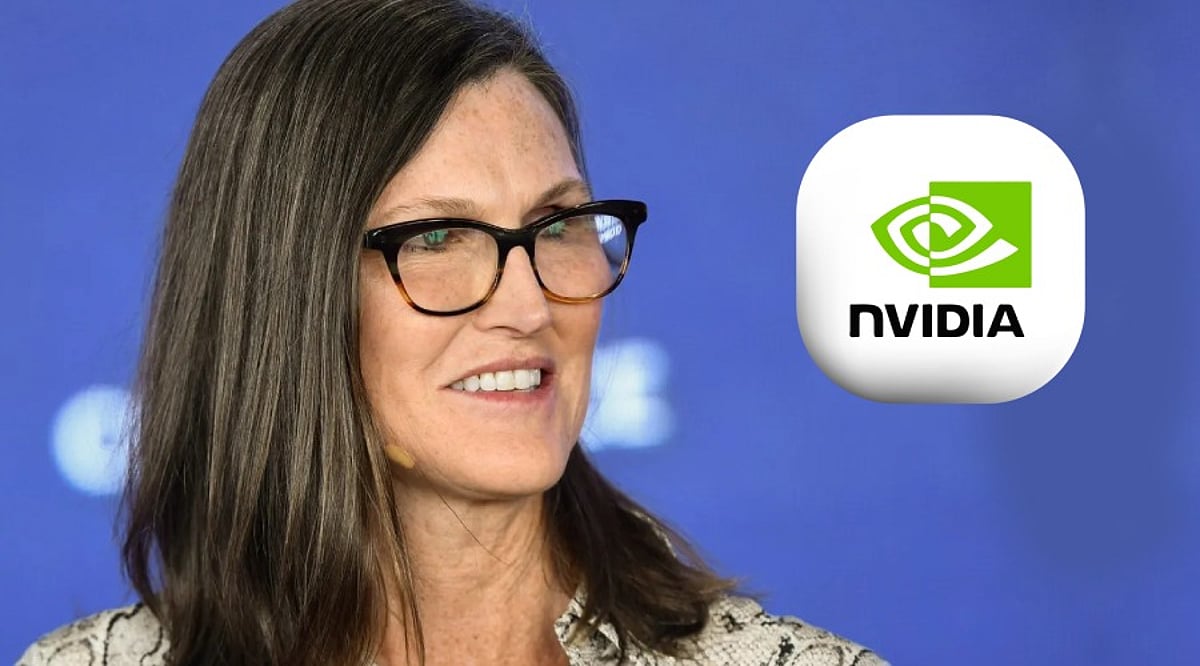
    Cathie Wood, the CEO of ARK Invest, has once again demonstrated her contrarian investment style by increasing her firm’s stake in Nvidia following a recent stock price decline. The move, which involved the purchase of 78,965 shares worth nearly $15.5 million, underscores her unwavering confidence in the company’s long-term prospects within the artificial intelligence sector.

    Despite short-term market volatility and a pullback in Nvidia’s share price, Wood’s decision reflects a belief that the company’s fundamental strengths remain intact. Nvidia continues to be a dominant player in the AI chip market, supplying critical hardware for data centers, cloud computing, and advanced AI applications. The company’s technology is integral to the development of large language models, autonomous vehicles, and other cutting-edge innovations.

    Wood’s investment approach often involves buying during periods of market pessimism, a strategy that has both yielded significant gains and faced criticism in the past. In this case, she is betting that Nvidia’s market leadership and the ongoing expansion of AI infrastructure will drive long-term value, even if near-term price movements are uncertain.

    For investors, the key takeaway is not necessarily to mimic Wood’s trade, but to consider the broader implications. Nvidia’s role in the AI ecosystem is unlikely to diminish quickly, but the stock’s valuation remains elevated compared to historical norms. Factors such as competition from AMD and custom chips developed by major cloud providers, as well as geopolitical risks related to export controls, could introduce additional volatility.

    As always, individual investors should conduct their own research and assess their risk tolerance before making any investment decisions. Wood’s move serves as a reminder that long-term investing often requires patience and a willingness to look beyond short-term market fluctuations.

  • Global Stock Exchange Trading Hours: A Complete Guide to Major Markets

    Global Stock Exchange Trading Hours: A Complete Guide to Major Markets

    Stock market trading hours vary across countries because of different time zones, regulations, and market practices. Understanding these schedules is essential for investors who trade international stocks, monitor global market movements, or react to overnight economic developments. Knowing when major exchanges open and close helps traders plan investments, execute orders efficiently, and stay updated with global financial trends.

    New York Stock Exchange and Nasdaq

    The New York Stock Exchange (NYSE) and Nasdaq are the world’s largest stock exchanges by market capitalization. Both operate from 9:30 AM to 4:00 PM Eastern Time (ET) on weekdays. They also offer pre-market and after-hours trading sessions, allowing investors to react to earnings announcements, economic data, and breaking news outside regular trading hours.

    London Stock Exchange

    The London Stock Exchange (LSE) is Europe’s leading financial marketplace and operates from 8:00 AM to 4:30 PM Greenwich Mean Time (GMT). It serves companies from around the world and is an important hub for international investors. The exchange also conducts opening and closing auctions that help determine fair market prices and improve trading efficiency.

    Indian Stock Exchanges

    India’s two primary exchanges—the National Stock Exchange (NSE) and Bombay Stock Exchange (BSE)—operate from 9:15 AM to 3:30 PM Indian Standard Time (IST). A pre-opening session begins at 9:00 AM, allowing price discovery before regular trading starts. Both exchanges remain closed on weekends and designated public holidays announced by market regulators.

    Asian Market Trading Hours

    Asia is home to several influential stock exchanges. The Tokyo Stock Exchange (TSE) trades from 9:00 AM to 3:00 PM JST, with a lunch break between sessions. Meanwhile, the Hong Kong Stock Exchange (HKEX) operates from 9:30 AM to 4:00 PM HKT, also including a midday trading break, unlike most Western exchanges.

    How Time Zones Affect Global Investors

    Global investors often monitor multiple exchanges throughout the day because markets open sequentially across different regions. Asian markets begin trading first, followed by European exchanges and finally North American markets. This continuous cycle means economic events in one region can influence investor sentiment and stock prices in another before local markets even open.

    Choosing the Right Time to Trade

    Successful investing isn’t only about selecting the right stocks—it also involves understanding when markets are active. Higher trading volumes during opening and closing hours often create greater price movements and liquidity. By tracking global stock market timings, investors can better manage risk, seize opportunities, and make informed decisions across international financial markets.

  • FTSE 100 Opens 44 Points Higher as US-Iran Peace Hopes Lift Markets; BP and HSBC Earnings Surge

    FTSE 100 Opens 44 Points Higher as US-Iran Peace Hopes Lift Markets; BP and HSBC Earnings Surge

    The FTSE 100 opened 40.58 points higher at 10,898.28 on Tuesday, buoyed by signs of diplomatic engagement between the United States and Iran. The positive sentiment also lifted oil prices, with Brent crude futures rising 1.46% to $84.99 per barrel and US West Texas Intermediate (WTI) gaining 0.70% to $80.90 per barrel.

    Sterling edged lower against the dollar, slipping to $1.3423 from $1.3425 in the previous session, and fell to €1.1664 against the euro from €1.1669.

    Gainers and Losers

    Mining stocks led the gains, with Antofagasta climbing 3.10% to 3,793p. Babcock International Group advanced 2.66% to 1,177p, while BAE Systems also gained 2.66% to 2,200p. Anglo American rose 2.54% to 3,799p, Rio Tinto added 2.30% to 7,252p, and Endeavour Mining increased 2.22% to 3,595p.

    On the downside, Smith & Nephew plunged 5.76% to 1,128p, leading the decliners. Coca-Cola Europacific Partners fell 4.16% to 7,725p, while Admiral Group declined 2.00% to 3,726p. Next slipped 1.24% to 14,715p, Coca-Cola HBC eased 0.94% to 4,838p, and Games Workshop Group edged 0.57% lower to 19,120p.

    BP Doubles Profit

    BP more than doubled its second-quarter profits as higher oil and gas prices and stronger refining margins offset lower production. Underlying replacement cost profit rose to $5.7 billion from $2.4 billion a year earlier and $3.2 billion in the first quarter. Reported profit attributable to shareholders increased to $3.9 billion from $1.6 billion.

    Operating cash flow climbed 73% year-on-year to $10.9 billion, despite a $1 billion working capital build. Net debt was reduced to $22.3 billion from $25.3 billion at the end of March, slightly exceeding guidance.

    HSBC Beats Profit Forecasts

    HSBC announced a fresh $1 billion share buyback after first-half profit rose 23% and beat forecasts. The company reported pre-tax profit of $19.5 billion for the first six months of 2026, up 23% from a year earlier. Profit for the second quarter jumped 60% to $10.1 billion, beating the consensus estimate of $9.51 billion. The jump was flattered by the $2.1 billion Bank of Communications charge taken a year earlier.

    Travis Perkins Cuts Dividend

    Travis Perkins cut its dividend from 4.5p to 4p after the building materials firm warned of a slump in construction and price uncertainty. “The UK construction sector remains subdued with activity levels remaining depressed during the first half,” the company said. “Given wider geopolitical and macroeconomic events, building materials price inflation remains hard to forecast. Against this backdrop, the group remains focused on improving what lies within its control.”

    Travis Perkins posted a 1.8% drop in revenue for the first six months of the year to £2.3 billion. The stock is down 10% since the start of the year.

    Global Market View

    In the US, the Dow Jones rose 1.3%, the S&P 500 climbed 1.5%, and the Nasdaq jumped 2.1%. Lower oil prices, stronger US manufacturing data, and fading concerns about a hawkish Federal Reserve helped the S&P close near its record high.

    In Asia on Tuesday, Tokyo’s Nikkei 225 rose 0.32% to 63,957.53, while China’s Shanghai Composite gained 0.33%. Hong Kong’s Hang Seng declined 0.77%, and South Korea’s Kospi edged higher by 1.62%. In India, both the Nifty 50 and the Sensex fell by 1.18% and 0.39%, respectively.

    Disclaimer: Analytics Insight does not provide financial advice or guidance on cryptocurrencies and stocks. This article is provided for informational purposes only and does not constitute investment advice. Always conduct your own research before making any investments.

  • Wall Street Hits New Highs as AI Stocks Surge and Oil Prices Slide

    Wall Street Hits New Highs as AI Stocks Surge and Oil Prices Slide

    The S&P 500 and Dow Jones Industrial Average reached record intraday levels on Tuesday, driven by strong earnings from AI-linked companies and optimism over potential US-Iran talks that pushed oil prices lower.

    The S&P 500 gained 0.58% to 7,644.56, its first intraday record since June. The Dow rose 647 points (1.22%) to 53,825.50, also hitting a new all-time high. The NASDAQ Composite added 1.16% to 26,213.57, supported by technology and semiconductor stocks. Wall Street has recovered from July losses, fueled by robust earnings from major tech firms like Amazon and Microsoft, which reinforced confidence in AI spending. The Philadelphia Semiconductor Index climbed about 4% as chip stocks rebounded.

    Palantir Technologies shares surged 17.4% after raising its annual revenue forecast, citing stronger demand for artificial intelligence services. CEO Alex Karp described the quarterly performance as “otherworldly” and linked growth to sovereign AI systems. Caterpillar shares rose 12% after reporting higher second-quarter profit and raising its annual revenue growth forecast, driven by demand from AI data center projects for power-generation equipment. The company also indicated tariff costs would be near the lower end of its earlier estimate.

    Oil prices fell as US Treasury Secretary Scott Bessent signaled progress in talks with Iran to reopen the Strait of Hormuz, stating there was “a chance” of an agreement within two days. West Texas Intermediate crude dropped about 4% to near $76 per barrel, while Brent crude fell to around $80. The S&P 500 energy sector declined 2.5% as crude prices slid, but lower oil costs eased concerns about transport and production expenses for other industries.

    Corporate earnings have broadly exceeded expectations, with 85.2% of S&P 500 companies beating analyst estimates—well above the long-term average of 67.5%. Investors remain focused on whether AI spending can generate sustainable revenue. Eric Parnell, Chief Market Strategist at Great Valley Advisor Group, noted that while AI earnings have performed well, the key question is sustainability. Coherent gained 14% and Lumentum rose 7.8% on reports of potential US limits on Chinese data center components. McDonald’s added 1.2% despite weak results, while Pfizer fell about 1% after its quarterly report. US job openings dropped to 7.36 million in June, below forecasts. Advancing shares outnumbered decliners on both major exchanges, with the NYSE at a 1.36-to-1 ratio and NASDAQ at 2.04-to-1. Investors also awaited SpaceX’s first earnings report since its public listing.