Tag: Stock Market

  • NASDAQ Futures Climb as Chip Stocks Rebound and Oil Prices Pull Back

    NASDAQ Futures Climb as Chip Stocks Rebound and Oil Prices Pull Back

    US technology stocks entered the new week after another sharp pullback led by semiconductor companies. The NASDAQ 100 has become more sensitive to daily moves in NVIDIA, Micron, AMD and Intel. Their rising market values have also increased their weight within the index.

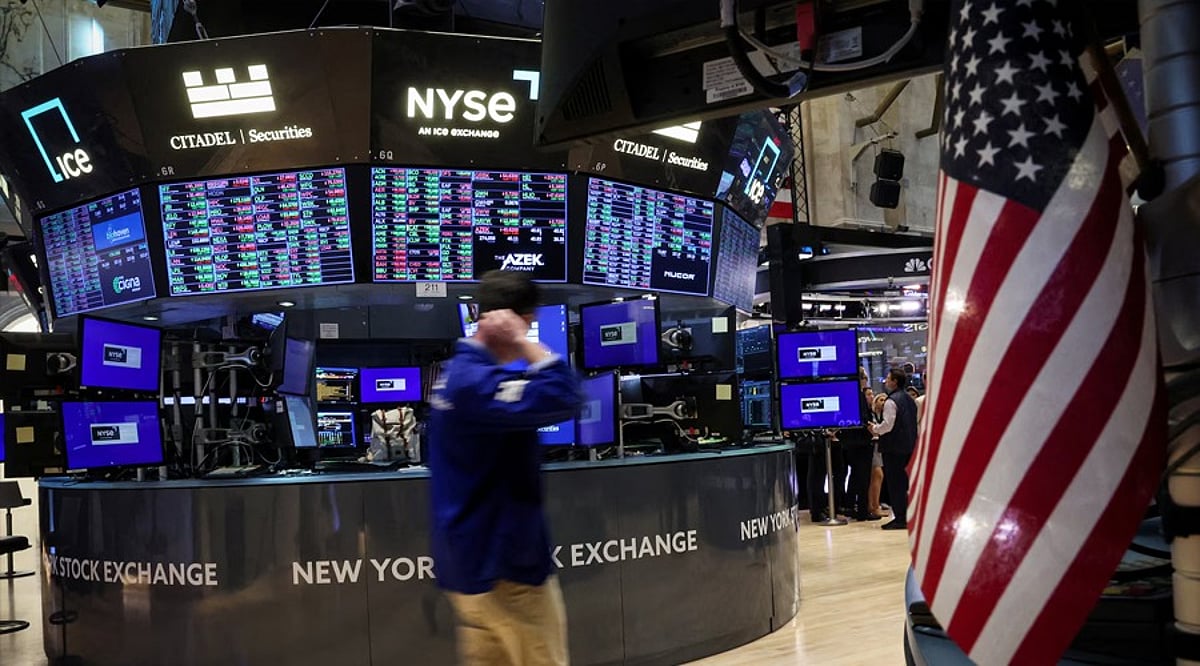
    Wall Street futures moved higher on Monday as several chipmakers recovered before the opening bell. However, oil prices and the conflict involving the United States and Iran kept pressure on stocks. Investors also prepared for earnings from Alphabet, Tesla, IBM and Intel.

    Chip Stocks Drive Sharp NASDAQ Swings

    Semiconductor shares now play a larger role in NASDAQ 100 volatility. Assenagon says the weight of chip companies other than NVIDIA rose from about 15% to nearly 30%. Micron, AMD and Intel gained more influence as their valuations climbed during the AI rally.

    The asset manager said average one-year expected volatility for those companies moved above 80 points at times. That marked the highest level since the global financial crisis. Assenagon said, “Semiconductor stock volatilities are doing the heavy lifting.” Lower correlation between NASDAQ companies reduced part of the pressure, but it did not remove it.

    The Philadelphia Semiconductor Index also entered a bear market after closing more than 20% below its late-June record. Earlier data showed the index had gained 83% during 2026 before the July reversal. Chip funds then recorded large inflows and outflows as traders changed positions quickly.

    Apple and NVIDIA Trade the Top Market Spot

    Apple overtook NVIDIA on Friday to become the world’s most valuable listed company. Apple carried a market value of about $4.88 trillion. NVIDIA stood near $4.86 trillion after its shares fell 3.5%. Apple had not held the top position since April 2025.

    The change came as investors reviewed the prices attached to AI-linked companies. New model releases from China added competition within the sector. Meanwhile, concerns grew over the pace of spending on chips, servers and data centers. NVIDIA and other semiconductor companies had led much of the market’s 2026 advance.

    Bianca Botes of Citadel Global said, “The AI demand story is real,” but prices had moved ahead of earnings evidence. Recent losses in Micron, NVIDIA and other chipmakers showed how quickly sentiment could change. The moves also spread to South Korean technology stocks, including Samsung Electronics and SK Hynix.

    Oil Retreat and Earnings Lift Stock Futures

    NASDAQ 100 futures rose about 0.8% early Monday, while S&P 500 futures gained around 0.4%. Dow futures added about 0.3%. Memory chipmakers also advanced before the market opened. Micron, Western Digital, Seagate and SanDisk gained between 3.2% and 4.2%.

    Brent crude briefly moved above $90 per barrel after US forces struck Iran for a ninth straight day. Prices later eased after Iran said diplomatic contacts remained open. The early oil rise raised fresh concerns about transport costs, inflation and interest rates.

    Investors will now focus on quarterly results from major technology companies. Alphabet, Tesla, IBM and Intel will report during the week. Intel and Texas Instruments will provide new data on chip demand and AI infrastructure spending. Their reports could guide the next move across semiconductor stocks and the NASDAQ 100.


  • Indian Stock Market Opens Lower: Nifty 50 Drops 0.59%, Sensex Falls 350 Points on Crude Oil Spike

    Indian Stock Market Opens Lower: Nifty 50 Drops 0.59%, Sensex Falls 350 Points on Crude Oil Spike

    The Indian stock market opened lower on Monday, dragged down by weak global cues amid escalating US-Iran tensions and rising crude oil prices. The Nifty 50 index opened 144.25 points, or 0.59%, lower, while the Sensex fell 350 points. The Bank Nifty also declined by 783.15 points at the open.

    On Friday, the Sensex had gained 964.58 points, or 1.25%, to settle at 78,151.45, while the Nifty 50 rose 261.55 points, or 1.09%, to close at 24,334.30. The Indian rupee opened 13 paise lower at Rs. 96.41 per dollar on Monday versus its previous close of Rs. 96.28.

    Domestic institutional investors (DIIs) continued their buying spree on July 17, purchasing shares worth Rs. 1,017.89 crore, while foreign institutional investors (FIIs) remained net sellers, offloading equities worth Rs. 376.41 crore.

    Sensex Outlook

    Technically, the Sensex formed a bullish candle on the weekly chart, supporting the possibility of a further uptrend from current levels.

    “The market found support near the 77,000 levels during the week. The 77,000 level and 77,600 will act as crucial trend-deciding levels for positional traders. As long as the market trades above these levels, the bullish sentiment is likely to continue. The rally could extend towards the 78,500-79,400 range. On the flip side, if the market falls below 77,000, the sentiment could turn negative. Below this level, traders may prefer to exit their long trading positions,” said Amol Athawale, VP of Technical Research at Kotak Securities.

    Nifty 50 Outlook

    The Nifty 50 continues to display bullish momentum after ending Friday’s session with a strong breakout candle, indicating that buyers remain in control and the recent upward trend is intact.

    “Going ahead, bias remains positive and a follow-through strength above last week’s high of 24,367 will open upside towards the 24,480 and 24,600 levels, being the trendline resistance and high of April 2026, respectively. Failure to move above last week’s high will signal an extension of the recent consolidation in the range of 24,350-23,800,” said Bajaj Broking Research.

    Immediate support for the Nifty is placed in the 24,000-23,800 zone. This range also coincides with the 50-day Exponential Moving Average (EMA).

    Bank Nifty Outlook

    The Bank Nifty ended Friday’s session on a strong note, forming a bullish candle with a higher high and higher low, indicating improving momentum.

    According to Bajaj Broking Research, the Bank Nifty has been consolidating between 56,500 and 58,700 over the past five weeks. A sustained breakout above 58,700 would confirm a fresh upward move and could push the banking index towards 59,300 initially, followed by the psychologically important 60,000 mark.

    “Going ahead, a move above the June high of 58,700 would confirm a breakout from the ongoing consolidation and could trigger the next leg of the rally towards 59,300 and eventually 60,000 levels in the coming weeks,” said the brokerage.

    On the downside, the 56,500-57,000 zone remains a strong support area, where the 20-week and 50-week EMAs converge along with the previous week’s low.

    Disclaimer: This article is for informational purposes only and does not constitute investment advice. Always conduct your own research before making any investment decisions.

  • Market Crash vs. Market Correction: Key Differences Every Investor Should Know

    Market Crash vs. Market Correction: Key Differences Every Investor Should Know

    Understanding Market Corrections

    A market correction is a temporary decline of 10% to 20% from recent highs. It is often considered a healthy adjustment during long-term market growth cycles, allowing overvalued stocks to return to more reasonable levels.

    What Defines a Market Crash

    A market crash is a sudden and steep decline exceeding 20%, usually triggered by panic selling, economic shocks, or financial crises that severely affect investor confidence.

    Duration Differences

    Corrections generally recover within weeks or months, while crashes may take significantly longer depending on economic conditions and market sentiment.

    Investor Sentiment

    Corrections cause caution among investors, whereas crashes often trigger widespread fear, panic selling, and heightened market uncertainty globally.

    Common Causes

    Corrections typically stem from profit booking or overvaluation, while crashes result from recessions, geopolitical tensions, or systemic financial risks.

    Economic Impact

    Corrections rarely harm the broader economy, but severe crashes can affect employment, business investment, and consumer spending significantly.

    Investment Strategy

    Long-term investors often use corrections to buy quality stocks, while crashes require disciplined investing and avoiding emotional decisions.

    Historical Examples

    The 2020 COVID-19 sell-off resembled a crash, while several post-pandemic pullbacks were classified as market corrections instead.

    Key Takeaway

    Understanding the difference helps investors stay calm, manage risk wisely, and make informed decisions during volatile market conditions.

  • Netflix Stock Tumbles 7% as Wall Street Questions Growth After Q3 Revenue Miss

    Netflix Stock Tumbles 7% as Wall Street Questions Growth After Q3 Revenue Miss

    Netflix shares plunged 7.26% on Friday, closing at $68.95, after the streaming giant issued a third-quarter revenue forecast that fell short of Wall Street expectations. The disappointing outlook has reignited concerns about the company’s growth trajectory and investor confidence.

    Over the past 12 months, Netflix stock has lost approximately 46% of its value. Despite multiple earnings reports and strategic initiatives, investors have yet to see a clear path back to faster growth.

    Analysts See Few Near-Term Catalysts

    Bank of America analyst Jessica Reif Ehrlich described Netflix as being in ‘no man’s land,’ noting that the earnings report offered little for bullish investors while providing ample ammunition for bears. She suggested that an acquisition could serve as a potential catalyst, pointing to NBCUniversal as a possible target following Comcast’s plans to spin off the division. However, Netflix has not announced any such move.

    LightShed Partners analyst Rich Greenfield echoed the sentiment, stating that investors now question whether Netflix can return to stronger growth and view the company as having moved beyond its main expansion phase. ‘This is fundamentally investors believing that Netflix has gone ex-growth,’ he said, adding that the market currently has ‘no patience’ for the company.

    Transparency Concerns and Limited Guidance

    Netflix also announced it will publish its ‘What We Watched’ report once a year instead of twice, raising concerns about reduced transparency around engagement and user activity. Management offered limited details on how it plans to address slower growth, leaving analysts to focus on pricing, advertising, live events, and account-sharing tools as potential levers.

    Some Analysts Still See Long-Term Support

    William Blair analysts maintained a more optimistic view, citing Netflix’s ability to raise prices while retaining customers, as well as its growing advertising business, live sports programming, and paid sharing initiatives. They believe these tools can support double-digit growth over the long term, though they acknowledged the lack of a near-term catalyst. The firm suggested that investors could consider accumulating shares during the pullback but warned that a recovery may require patience.

    Netflix now faces pressure to deliver stronger results in upcoming reports. Wall Street will closely monitor advertising sales, viewer engagement, pricing changes, and returns from live programming as key indicators of the company’s future performance.

  • Anthropic and Meta Discuss $10 Billion AI Compute Lease, Boosting Meta Stock

    Anthropic and Meta Discuss $10 Billion AI Compute Lease, Boosting Meta Stock

    Anthropic is in early-stage talks to lease artificial intelligence computing capacity from Meta in a potential $10 billion, two-year agreement, according to reports. The deal would give Anthropic expanded access to AI chips while providing Meta with a new revenue stream from its data center investments.

    Meta Stock Rises on News

    Meta shares moved off their session lows after the report emerged on Friday. However, both companies declined to comment on the negotiations. The discussions are preliminary and may not result in a final contract.

    Potential Revenue Path for Meta

    Under the proposed terms, Anthropic would make monthly payments to Meta over two years. Either side could terminate the arrangement before the full term expires. If completed, this would mark Meta’s first large customer for rented computing capacity. Currently, Meta uses most of its data centers, chips, and power for its own services and AI models.

    CEO Mark Zuckerberg has previously discussed selling access to Meta’s infrastructure. At a shareholder meeting in May, he said cloud computing was “definitely on the table” and noted that companies approached Meta “almost every week” about buying models or spare computing power.

    Meta expects 2026 capital spending of between $125 billion and $145 billion, including finance lease payments and higher costs for components and data centers. Much of that spending supports AI systems and future computing capacity.

    Early Talks Leave Deal Uncertain

    Anthropic proposed a structure worth up to $10 billion across two years. Still, insiders describe the discussions as very preliminary. Meta must develop commercial systems for billing, customer support, security, and capacity management before operating a large cloud service.

    The companies have not disclosed how much computing power Anthropic could receive, nor have they identified specific chips, data center sites, pricing schedules, or start dates. The final value could fall below $10 billion, and either side could withdraw before the service period begins.

    Anthropic’s Growing Compute Needs

    Anthropic requires massive computing power to train and operate its Claude models. Demand for AI services has pushed developers to secure chips, electricity, and data center space through multiple providers.

    In May, Anthropic reached a separate agreement to use the full computing power of SpaceX’s Colossus 1 facility in Memphis. That site contains more than 220,000 Nvidia processors and provides 300 megawatts of capacity. Reports placed that arrangement at about $1.25 billion per month through May 2029, with early termination options.

    Anthropic also has computing arrangements with major cloud providers. Its talks with Meta show the company is adding more sources as usage grows across its consumer and business products. The proposal would diversify Anthropic’s infrastructure beyond its existing cloud partners.

    For Meta, a completed agreement would generate revenue tied directly to its AI infrastructure. The company is also building a broader cloud operation to sell spare capacity and access to selected AI models.

    No agreement has been announced, and neither Meta nor Anthropic has provided a timeline for completing or ending the talks.

  • Tesla Stock Poised for 7% Swing as Q2 Earnings Put AI and Robotaxi Plans in Focus

    Tesla Stock Poised for 7% Swing as Q2 Earnings Put AI and Robotaxi Plans in Focus

    Tesla stock enters a key earnings week with options traders preparing for a sharp move. The company will release its second-quarter results after the market closes on Wednesday, July 22, followed by an earnings call at 5:30 p.m. Eastern Time.

    Recent options pricing points to a potential swing of about 7% in either direction by Friday. Based on Thursday’s close, that range could take TSLA stock near $365 or above $416. Shares closed Friday at $380.84, down 2.6%.

    The expected move reflects that traders see room for a strong reaction to the Q2 report, though options pricing does not predict direction. Tesla shares have fallen more than 10% since the start of 2026, and a 7% rise would recover part of those losses, while a similar decline would push the stock further below analyst targets.

    Wall Street remains divided on Tesla’s valuation. Among 11 analysts tracked by Visible Alpha, six rate the stock neutral, four rate it a buy, and one recommends selling. Price targets range from $130 to $600, with a $408 average. Morgan Stanley recently raised its price target to $417 from $415, maintaining an equal-weight rating and expecting a solid quarter. The firm noted that the key investor debate remains whether Robotaxi and Optimus progress can justify an accelerating AI investment cycle.

    For the second quarter, Tesla’s company-compiled consensus calls for revenue of $27.58 billion, up from $22.50 billion a year ago. Analysts expect non-GAAP earnings of $0.55 per share and GAAP earnings of $0.36. Automotive revenue is projected at $20.05 billion, energy storage at $3.77 billion, and services at $3.76 billion. Wall Street anticipates a 19.5% gross margin but also forecasts negative free cash flow of about $3.25 billion and capital spending near $6.70 billion.

    Tesla delivered 480,126 vehicles during the quarter and produced 451,758, with Model 3 and Model Y deliveries reaching 467,762. The company also deployed 13.5 gigawatt-hours of energy storage products.

    Investors are expected to look beyond vehicle sales during the call, as Tesla shifts resources toward autonomous driving, Robotaxi services, the Optimus humanoid robot, energy storage, and other AI-linked projects. Progress on Robotaxi and Optimus could shape the stock reaction, with analysts seeking clearer timelines, spending plans, and commercial targets. The Tesla Semi program may also draw questions, especially after Tesla opened a public Megacharger station in Bloomington, California, and encouraged fleet customers to install chargers at their depots.

    Investors have submitted questions about Semi production, sales estimates, and revenue. While Tesla does not answer every submitted question, the Q2 call will provide the next scheduled update on financial results and the company’s broader growth plans.

  • Wall Street Slips as Chip Rout Deepens, Netflix Forecast Disappoints, and Oil Price Worries Return

    Wall Street Slips as Chip Rout Deepens, Netflix Forecast Disappoints, and Oil Price Worries Return

    The S&P 500 fell on Friday as investors reduced exposure to semiconductor stocks. The index dropped 0.6%, while the NASDAQ Composite lost 1%. The Dow Jones Industrial Average traded near the flatline.

    Wall Street also faced pressure from Netflix, higher oil prices, and fighting between the United States and Iran. The major indexes moved toward weekly losses after a reversal in stocks linked to artificial intelligence spending.

    Chip Stocks Extend Weekly Selloff

    Semiconductor shares led the decline. NVIDIA, Advanced Micro Devices, Applied Materials, Lam Research, Intel, and KLA traded lower. The Philadelphia Semiconductor Index fell close to 2% and moved deeper into bear-market territory from its late-June peak.

    The index has lost about 11% this week and nearly 24% from its record high. Investors took profits after a three-month rally that lifted the chip gauge more than 100%. The VanEck Semiconductor ETF headed for its third weekly loss in four weeks.

    Fresh doubts over AI spending added pressure. Chinese startup Moonshot AI introduced Kimi K3, a large open-weight model that it says can compete with leading US systems. The launch raised questions over whether costly AI infrastructure plans will deliver the returns investors expect.

    Strategists at BBH said investors are ‘increasingly questioning the sustainability of the ongoing AI capital expenditure boom.’ Barclays took a less cautious view and said the pullback could create ‘more attractive entry points’ for long-term investors.

    Netflix Drops as Forecast Disappoints

    Netflix shares fell about 9% after its third-quarter forecast came in below Wall Street estimates. The decline weighed on the communication services sector and made Netflix one of the largest S&P 500 losers.

    Intuitive Surgical also dropped more than 11%. The medical device company kept its procedure-growth forecast unchanged and warned that insurance changes may delay care for some patients.

    Meanwhile, Apple shares edged higher while NVIDIA fell, allowing Apple to move ahead of the latter as the most valuable US company. NVIDIA had held the top position since late June last year.

    Meanwhile, the CBOE Volatility Index rose above 18, its highest level in more than a week. Declining stocks outnumbered gainers on both the New York Stock Exchange and the NASDAQ.

    Oil and Inflation Risks Return

    Oil prices rose as fighting between the United States and Iran widened across the Middle East. West Texas Intermediate traded above $81 per barrel, while Brent crude moved above $86.

    Kuwait said Iran attacked a power and water desalination plant. US Central Command said it completed a sixth straight night of strikes on Iranian military targets. Iran later claimed attacks on US forces in Syria and Bahrain.

    The conflict disrupted energy flows through the Strait of Hormuz, a route that handles about one-fifth of global oil traffic. Higher oil prices renewed concerns over inflation and future Federal Reserve policy.

    Cleveland Fed President Beth Hammack said business leaders are asking whether the central bank should act against inflation. She wrote that companies face pressure from energy, insurance, supply chains, and AI data center construction. Hammack added that ‘persistently high inflation is the bigger concern.’

    Consumer sentiment improved to 54.4, while one-year inflation expectations fell to 4.2%. Still, survey director Joanne Hsu said the rise may be hard to sustain if gas prices increase again.

    With semiconductor stocks under pressure, earnings disappointments weighing on sentiment, and geopolitical risks driving oil higher, investors remain focused on the outlook for inflation and Federal Reserve policy.

  • Reliance Industries Shares Climb to Rs 1,320 Ahead of Q1 Results; Analysts Predict 20% Profit Surge

    Reliance Industries Shares Climb to Rs 1,320 Ahead of Q1 Results; Analysts Predict 20% Profit Surge

    Reliance Industries Ltd. shares climbed 1.84% to Rs 1,320.40 on the NSE on Friday, reaching an intraday high of Rs 1,323.70, as investors positioned themselves ahead of the conglomerate’s closely watched June-quarter (Q1 FY27) earnings due after market hours. The stock opened at Rs 1,300 and traded in the Rs 1,296.10–Rs 1,323.70 range, reflecting growing optimism that India’s largest listed company could deliver another resilient quarter.

    The optimism spilled over to the broader market, with the Sensex surging more than 800 points and the Nifty 50 reclaiming the 24,280 mark, supported by gains in Reliance, HDFC Bank, ICICI Bank and leading IT stocks. While global concerns over rising crude prices and tensions in West Asia continue to weigh on sentiment, analysts believe Reliance’s diversified business model could once again help cushion volatility.

    Street Expectations for Reliance Q1 FY27

    Oil-to-Chemicals Expected to Shoulder Earnings Growth

    While there have been mixed fortunes for many companies, analysts forecast Reliance to show another decent quarter. Based on consensus estimates, net profit is expected to increase by about 20% sequentially, while revenue is expected to reach Rs 3 lakh crore. Good refining fundamentals and favorable petrochemical margins will more than compensate for the weak demand in retail operations and the reduced production from the upstream oil and gas segment.

    The oil-to-chemicals (O2C) segment is likely to remain the largest contributor to earnings. Estimates indicate that O2C EBITDA will be close to Rs 16,146 crore, driven by higher refining margins, particularly at the SEZ refinery. While there were maintenance shutdowns of one crude distillation unit during the quarter, the impact was largely mitigated by a weaker rupee and global refining margins.

    Jio Remains the Growth Engine While Retail Faces Headwinds

    Reliance Jio is expected to continue delivering stable operational performance. Brokerages estimate the telecom business will add nearly one crore subscribers during the quarter, taking its total subscriber base to around 53.3 crore. Average Revenue Per User (ARPU) is expected to increase to Rs 216, up from Rs 214 in the previous quarter, driven by customer upgrades and rising data consumption.

    Investors will also watch management commentary on tariff plans, JioFiber expansion and the timeline for the much-anticipated Jio IPO, which could become India’s largest public offering.

    The retail business, however, is likely to remain under pressure. Analysts expect Retail EBITDA to decline around 2% sequentially to Rs 6,784 crore, reflecting slower discretionary spending and continued promotional activity. While margins may remain soft in the near term, analysts remain optimistic about the long-term outlook, citing store expansion, digital commerce growth and improving consumer demand.

    Management Commentary Holds the Real Key

    Beyond the financial performance, institutional investors are expected to focus on Reliance’s forward-looking commentary. Updates on crude sourcing, refinery outlook, petrochemical demand, retail consumption, capital expenditure, debt reduction, new energy investments, and Jio’s IPO preparations could significantly influence market sentiment.

    Reliance has increasingly evolved from being an energy giant into a diversified consumer and technology company. Consequently, investors pay as much attention to future growth initiatives as to quarterly earnings.

    What It Means for Investors

    Reliance enters the first-quarter earnings season with expectations firmly tilted toward another steady performance. Despite continued lags in retail demand and difficulties for upstream activities, the combination of improving refining margins and robust telecom growth is likely to keep profit trends heading in the right direction.

    What is more important, however, is Reliance’s ability to drive growth across its diverse portfolio of operations and make faster strides in developing its digital and renewable energy operations. With such a large representation in key indices, Reliance’s results and management guidance are likely to have implications for market sentiment that will extend far beyond a one-day trading period.

    Disclaimer: This article is for informational purposes only and does not constitute investment advice. Readers should conduct their own research before making any investment decisions.

  • FTSE 100 Opens Higher as Vodafone Surges 3.57% and Wise Reports 25% Revenue Growth

    FTSE 100 Opens Higher as Vodafone Surges 3.57% and Wise Reports 25% Revenue Growth

    The FTSE 100 opened 37.30 points higher at 10,609.54 on Friday, as continued US strikes on Iran weighed on investor sentiment and a sharp sell-off across Asian markets added to the risk-off mood. Brent crude futures rose 0.44% to $84.60 a barrel, while US West Texas Intermediate (WTI) advanced 0.94% to $79.69 a barrel.

    Sterling was quoted at $1.3465 early Friday, lower than $1.3483 at the London equities close on Thursday. Against the euro, sterling fell to €1.1768 from €1.3558 a day earlier.

    Gainers & Losers

    On the upside, Vodafone Group rose 3.57% to £120.40, while British American Tobacco advanced 2.67% to £4,656. Severn Trent gained 2.42% to £3,052, and National Grid climbed 2.34% to £1,245. BT Group added 2.30% to £197.90, and United Utilities Group climbed 2.22% to £1,381.

    On the downside, Lion Finance Group declined 1.66% to £11,280, while Games Workshop Group slipped 0.79% to £20,120. Antofagasta fell 2.48% to £3,499, and Anglo American declined by 2.24% to £3,407. Rio Tinto dropped 1.01% to £6,673, while Spirax Group eased 0.94% to £6,865.

    Burberry Upgrades Revenue Target

    Burberry upgraded its revenue estimates for the first half of the year after demand in the US market helped offset headwinds in Europe. The luxury fashion house reported revenue increased 5% to £455 million in the first quarter. Revenue was up 12% in the US, closely followed by 9% growth in Greater China. Wholesale revenue was upgraded on the back of the first-quarter performance and is expected to grow by a high-single-digit percentage in the first half.

    Wise Revenue Jumps 25%

    Global payments company Wise posted first-quarter net revenue of $714 million, up 25% from last year, with cross-border volume jumping 26% to $69.3 billion. Active customers rose 21% to 11.9 million, while customer holdings grew 31% to $41.2 billion. The average fee dropped to just 0.50%, the lowest in Wise’s history, and 77% of transactions now arrive instantly, up from 70% a year ago. Full-year guidance was reiterated, with revenue growth expected around the middle of its 15%-20% target range and margins near the top of the 20%-25% range.

    Bridgepoint Earnings Surge

    Bridgepoint’s earnings surged after growth in management fees and performance-related earnings. Earnings before tax jumped 77.6% to £227.3 million in the first half of the year, up from £128 million the previous year. This was driven by a 22.8% rise in management fees to £254.4 million and performance-related earnings more than doubling to £120.7 million. Assets under management rose 12.4% to £72.3 billion. The group declared an interim dividend of £4.8 per share.

    Global Market View

    In the US, Wall Street ended lower. The Nasdaq fell 1.5%, while the S&P 500 lost 0.5% and the Dow Jones declined 0.2%. In Asia on Thursday, Tokyo’s Nikkei 225 fell 4.03% to 64,141.14, while China’s Shanghai Composite dipped 3.05%. Hong Kong’s Hang Seng declined 2.15%, and South Korea’s Kospi fell 6.37%. In India, both the Nifty 50 and the Sensex rose by 0.87% and 1.04%, respectively.

    Disclaimer: This article is for informational purposes only and does not constitute investment advice. Always conduct your own research before making any investment decisions.

  • Indian Stock Market Surges: Sensex Gains Over 900 Points, Nifty Crosses 24,300

    Indian Stock Market Surges: Sensex Gains Over 900 Points, Nifty Crosses 24,300

    Indian benchmark indices surged in Friday’s afternoon session, with the Sensex jumping over 900 points and the Nifty crossing the 24,300 mark. Broad-based buying across banking, IT, and heavyweight stocks lifted investor sentiment and pushed markets sharply higher.

    Indian equity benchmarks ended Friday’s session on a strong note, outperforming most Asian markets as robust buying in information technology and financial stocks offset concerns over rising crude oil prices and geopolitical tensions in the Middle East. Investors largely focused on the ongoing June-quarter earnings season, with encouraging corporate results boosting market sentiment.

    The Sensex rose 912.74 points, or 1.18%, to 78,099.61, while the Nifty climbed 248.10 points, or 1.03%, to 24,320.85. The gains pushed the Nifty above the 24,300 mark, reflecting broad-based buying across sectors.

    IT and Financial Stocks Drive the Rally

    The IT sector took center stage in Friday’s rally as Tech Mahindra delivered better-than-expected quarterly results, sparking buying sentiment in technology-related stocks. Shares of Infosys, HCL Technologies, and Tata Consultancy Services rose, with analysts believing the quarter could mark a turning point for the underperforming sector. Banks were also strong, with Jio Financial Services jumping on better-than-expected quarterly results and loan growth estimates for Reliance Industries ahead of its Q1 results.

    Wipro, CEAT Among Major Laggards

    Wipro got off to a poor start as its quarterly earnings fell short of expectations, and management hinted at a delayed-than-anticipated demand recovery. Tire maker CEAT also took a severe beating due to weak earnings performance. Some pharma and metals sector companies were under selling pressure, with Cipla, Dr. Reddy’s Lab, and Hindalco ending on a negative note.

    Earnings Season Takes Center Stage

    According to market analysts, corporate profits and management outlooks should continue driving stock market movements in the coming weeks. Despite high oil prices and geopolitical instability being important factors, market participants will be closely watching how companies perform during the quarterly earnings season.

    Weekly Market Performance (July 13–17)

    The Indian equity market closed on a bullish note despite staying confined to a range during the July 13–17 week due to uncertainties in the global economic environment and expectations of earnings from Indian companies. The Sensex and Nifty stayed in a tight range as traders weighed strong corporate performance in Q4 June against rising crude oil prices and tensions in the Middle East.

    The week started with a volatile session on Monday as major indices managed to recover from early losses due to strong performance in IT sector stocks driven by earnings results and significant deals. The rally on Friday, led by stocks such as Reliance Industries, Jio Financial Services, Tech Mahindra, and private banking stocks, boosted the major benchmarks.

    Disclaimer: This article is for informational purposes only and does not constitute investment advice. Always conduct your own research before making investment decisions.