Tag: Stock Market

  • FTSE 100 Opens Lower After Rally as Brent Crude Surges Above $97; Mixed Corporate Earnings in Focus

    FTSE 100 Opens Lower After Rally as Brent Crude Surges Above $97; Mixed Corporate Earnings in Focus

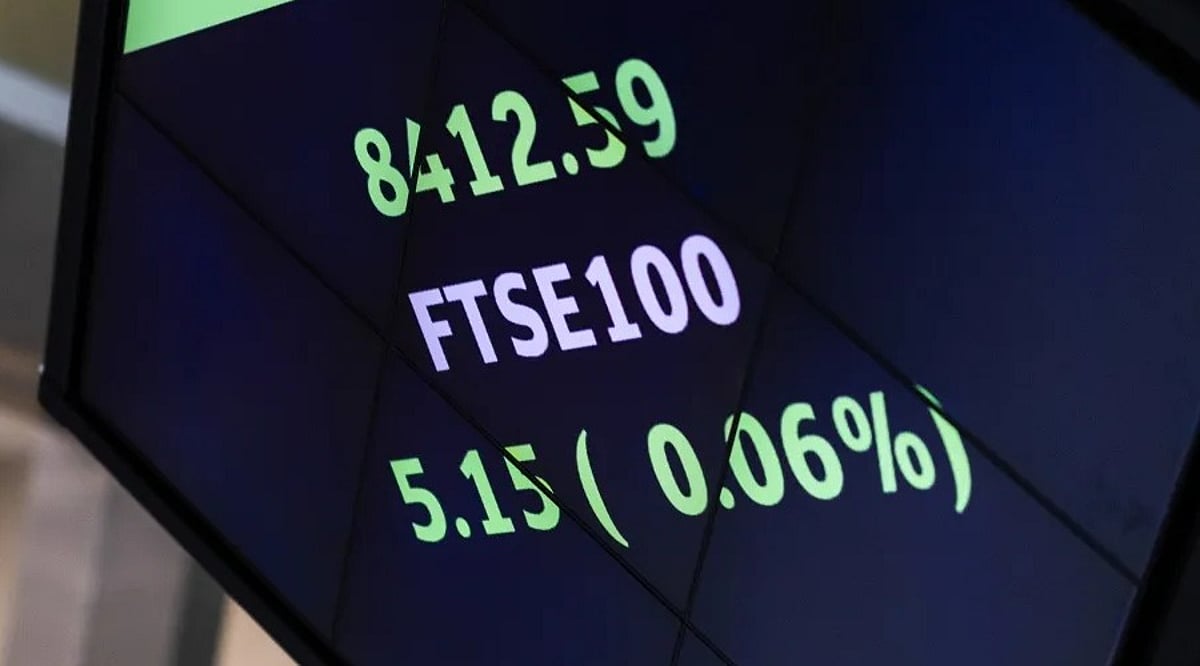
    The FTSE 100 opened 16.72 points lower at 10,700.25 on Wednesday, pulling back after a sharp rally that pushed the index to a 20-week high of 10,716.97. The decline came as oil prices continued to climb, with Brent crude futures jumping 3.36% to $97.23 per barrel and US West Texas Intermediate (WTI) gaining 2.75% to $89.22.

    Gainers & Losers

    On the upside, Segro led the gainers with a 7.06% rise to 958.20p. Anglo American advanced 4.93% to 3,703p, while 3i Group rose 2.98% to 2,628p. RELX gained 2.61% to 2,518.00p, BP climbed 2.32% to 551.80p, and Tritax Big Box REIT added 1.84% to 171.90p.

    On the downside, Whitbread fell 3.14% to 2,379p. Endeavour Mining declined 2.49% to 3,650p, while London Stock Exchange Group slipped 1.34% to 8,566p. AstraZeneca dropped 1.26% to 12,542.00p, Games Workshop Group eased 0.90% to 19,920p, and Lion Finance Group edged 0.69% lower to 11,520p.

    Mixed Numbers from Centrica

    Centrica hiked its interim dividend by 9% despite lower first-half profits, as energy-market volatility slowed progress in parts of the British Gas owner’s business. Underlying earnings (EBITDA) of £737 million were reported for the six months to June, down 18% year-on-year. Statutory profit before tax swung to £672 million from a £43 million loss.

    Burnham to Cut Pub Business Rates

    Andy Burnham announced a 20% cut to business rates for pubs, clubs, and music venues, funded by cracking down on businesses like vape shops and tax-avoidant online sellers. The £100 million commitment follows a campaign by hospitality venues after tax bills soared due to Rachel Reeves’ Autumn Budget last year.

    EasyJet Profits Decline

    EasyJet reported a 70% fall in third-quarter profit, with headline profit before tax of £85 million for the three months to June, down from £286 million a year earlier. The Middle East conflict kept fuel costs elevated and affected bookings. Group revenue advanced 2% to £2.98 billion, but fuel costs jumped 17% to £732 million.

    Jupiter’s Net Inflows Continue

    Jupiter’s net inflows and profit jumped despite the loss of two mandates. Net inflows reached £700 million in the first half of the year, driven by momentum in retail, wholesale, and investments. Assets under management (AUM) rose 36% to £73.7 billion, supported by the acquisition of CCLA. Revenue grew 39% to £213.3 million.

    Global Market View

    In the US, the Nasdaq and S&P 500 fell 0.6% and 0.1%, respectively, while the Dow Jones finished little changed. In Asia, Tokyo’s Nikkei 225 rose 0.46% to 66,422.6, and China’s Shanghai Composite gained 0.25%. Hong Kong’s Hang Seng advanced 1.09%, and South Korea’s Kospi rose 4.4%. In India, the Nifty 50 and the Sensex fell 0.49% and 0.56%, respectively.
  • Tesla Stock Awaits Q2 Earnings: Margins, Cash Flow, and Robotaxi Updates in Focus

    Tesla Stock Awaits Q2 Earnings: Margins, Cash Flow, and Robotaxi Updates in Focus

    Tesla stock edged higher ahead of its second-quarter earnings report, as investors zeroed in on automotive margins, free cash flow, and rising capital expenditures. The upcoming results, due after the market close on Wednesday, July 22, will also shine a spotlight on the company’s progress with Robotaxi expansion, Optimus humanoid robot production, and whether stronger vehicle deliveries can offset mounting costs.

    Shares gained roughly 3% on Tuesday, rebounding from four consecutive losing sessions, though the stock remains down about 13% for 2026.

    Deliveries Recover, Bolstering Revenue Forecasts

    Tesla delivered 480,126 vehicles in the second quarter, a 25% increase year over year. Production reached 451,758 units, while energy storage deployments hit 13.5 gigawatt-hours. Model 3 and Model Y accounted for 467,762 deliveries.

    The company’s internal consensus points to quarterly revenue of approximately $27.58 billion. Analysts expect adjusted earnings of roughly $0.55 per share, up from $0.40 a year ago. Broader market estimates place revenue between $26.2 billion and $27.7 billion.

    The delivery rebound may provide a tailwind for automotive revenue after weaker periods. However, Tesla cautioned that pricing, production costs, foreign exchange rates, and product mix also influence profitability.

    Margins and Cash Flow Under Pressure

    Wall Street forecasts Tesla’s automotive gross margin, excluding regulatory credits, will fall to about 18.1%, down from 19.2% in the previous quarter. Financing incentives, vehicle discounts, and higher input costs could further weigh on the metric.

    Free cash flow is likely to draw particular scrutiny. LSEG data points to negative free cash flow of roughly $3.3 billion for the period, which would mark Tesla’s first quarterly cash burn in more than two years.

    Gene Munster of Deepwater Asset Management expects automotive margins to slightly exceed consensus and projects second-quarter capital spending of about $6.7 billion. “I expect good news,” Munster wrote, but questioned how investors would react to higher spending in 2027.

    In April, Tesla raised its 2026 capital expenditure plan above $25 billion, covering data centers, vehicle plants, robotaxis, and the Optimus humanoid robot program. Investors will be watching whether operating cash flow can fund these projects without severely depleting Tesla’s cash reserves.

    Robotaxi Timelines Return to the Forefront

    Gary Black of The Future Fund noted that repeated missed Robotaxi targets have eroded confidence in Tesla’s public timelines. He pointed to Elon Musk’s earlier forecast that the service would cover half of the U.S. population by the end of 2025.

    Tesla expanded Robotaxi coverage to Orlando and Tampa ahead of earnings, but the service remains limited compared with earlier national ambitions. The company has started production of the Cybercab, though those vehicles have not yet entered its commercial network.

    Investor questions also center on the Optimus production schedule and obstacles slowing Robotaxi expansion. Nine of the ten most-supported questions on Tesla’s investor platform concern artificial intelligence projects, Full Self-Driving, Robotaxi, or Optimus.

    Shareholders have also asked about market speculation regarding a potential Tesla-SpaceX merger. Neither company has confirmed such a transaction. The earnings call is expected to focus on reported financials, spending plans, and management’s timelines for products that have yet to generate significant revenue.

    Tesla shares traded near $379 early Wednesday, placing its market capitalization above $1.3 trillion. The earnings call will begin at 5:30 p.m. Eastern Time.

  • Nifty 50 Opens 0.15% Lower, Sensex Drops 210 Points as Geopolitical Tensions and Crude Prices Weigh on Indian Markets

    Nifty 50 Opens 0.15% Lower, Sensex Drops 210 Points as Geopolitical Tensions and Crude Prices Weigh on Indian Markets

    The Indian stock market opened lower on Wednesday, weighed down by elevated crude oil prices and persistent geopolitical tensions. At the opening bell, the Nifty 50 fell 37.25 points, or 0.15%, while the Sensex declined 210 points. The Bank Nifty also dipped 66.95 points, or 0.12%.

    On Tuesday, the Sensex had dropped 238.41 points, or 0.31%, to close at 77,470.11, while the Nifty 50 fell 50.80 points, or 0.21%, to end at 24,187.70. The Indian rupee opened lower at Rs. 96.36 per dollar on Wednesday, compared to Tuesday’s close of Rs. 96.24.

    Foreign institutional investors (FIIs) turned net buyers on July 21, purchasing equities worth Rs. 1,650.16 crore. In contrast, domestic institutional investors (DIIs) were net sellers, offloading equities worth Rs. 656.88 crore.

    Sensex Outlook

    Technically, the Sensex formed an indecisive candle on the daily chart, indicating that the current range could break in either direction. “A decisive break will be confirmed only if the market surpasses 78,700 or slips below 76,800 on a closing basis. Until then, the market is likely to remain stock-specific with limited movement. The preferred strategy remains unchanged: reduce weak long positions in the 78,300-78,600 zone, while selectively accumulating quality stocks on declines,” said Shrikant Chouhan, Head of Equity Research at Kotak Securities.

    Nifty 50 Outlook

    The Nifty 50 continued to consolidate in Tuesday’s session and closed near the 24,200 mark after range-bound movement throughout the day. “Going ahead, the index is expected to extend the recent consolidation and trade in the broad range of 23,800-24,350 in the coming sessions. Within the consolidation, 24,000-24,100 is the immediate support. We expect the index to hold above that and head toward the upper band of the range and last week’s high of 24,370,” said Bajaj Broking.

    The brokerage added that a decisive breakout above 24,370 could pave the way for the index to move toward 24,600. On the downside, the 24,000-23,800 zone remains a crucial support area.

    Bank Nifty Outlook

    Bank Nifty formed a Doji candle with a long upper shadow, indicating profit booking at higher levels after recent gains. “Going ahead, only a move above the June high of 58,700 would confirm a breakout from the ongoing consolidation and could trigger the next leg of the rally toward 59,300 and eventually 60,000 levels in the coming weeks. Failure to do so will signal an extension of the last six weeks’ consolidation,” said Bajaj Broking.

    Analysts believe the banking index is likely to remain range-bound unless it manages to break above the key resistance level of 58,700.

    Disclaimer: This article is for informational purposes only and does not constitute investment advice. Readers are encouraged to conduct their own research before making any investment decisions.

  • Paytm Shifts Focus from Bonus Shares to Wealth Management with Rs. 100 Crore Investment in Paytm Money

    Paytm Shifts Focus from Bonus Shares to Wealth Management with Rs. 100 Crore Investment in Paytm Money

    One97 Communications, the parent company of Paytm, is trading at around Rs. 1,265.20 after its board withdrew the proposed bonus share issue and approved an investment of up to Rs. 100 crore in its wholly owned subsidiary, Paytm Money. While the decision disappointed investors expecting a bonus issue, it signals a notable shift in the company’s capital allocation strategy.

    Rather than opting for a corporate action that could have boosted short-term market sentiment, Paytm is channeling fresh capital into its wealth management business, underscoring its confidence in the segment’s long-term growth potential and ability to drive future profitability.

    Capital Allocation Reflects a Long-Term Strategy

    Dividend stocks are generally seen as an indication of confidence since they boost shareholders’ holdings without requiring any further investments. Nevertheless, they do not create new funds, enhance performance levels, nor help to improve competitiveness. Paytm’s board has instead chosen to deploy capital into Paytm Money, signaling that expanding its wealth management business is a higher strategic priority than issuing bonus shares. The Rs. 100 crore investment, to be made through a rights issue, will enable the subsidiary to strengthen its business while remaining wholly owned by One97 Communications. The move indicates that the company is prioritizing sustainable growth over short-term market enthusiasm.

    Paytm Money Emerges as a Strategic Growth Engine

    India’s payments ecosystem has reached a point where there is no dearth of users but little scope for monetization. There is continued pressure on transaction margins owing to the level of competition and regulations. In such a scenario, it makes more sense to focus on wealth management, which generates revenue from various avenues like equity trading, mutual funds, ETFs, IPOs, advisory services, and margin lending. Such a business generates high margins and increases the lifetime value of the customer.

    Paytm Money has gradually added more products in the investment domain over the past few years, making it a critical part of the Paytm financial services suite. The new round of funding will help with product development and regulatory compliance.

    Technology and AI Are Driving Platform Expansion

    Artificial intelligence has started playing a vital role in the development of online investment applications, and the Paytm Money application is one of them. The company has been utilizing AI features to make the investment process easier and more personalized for customers. These features help investors analyze their portfolios and make decisions, which will not only improve the customer experience but also lower the cost of serving customers. In addition, AI enhances operational efficiency, making it possible to scale up without increasing costs.

    Margin Trading Strengthens the Revenue Model

    A similarly important element driving trust in Paytm’s wealth management products is the growing importance of the Margin Trading Facility (MTF) service offered by the company. While traditional brokerage depends on trading volumes, the margin facility gives Paytm the chance to make money through interest generated by clients’ borrowed capital used to buy shares. Thus, the improved profit stream is why margin financing may become one of the most lucrative sources of income for Paytm Money.

    Beyond Payments: Expanding to a Multifunctional Financial Services Platform

    This trend corresponds to the overall strategy in India’s fintech sector. Firms that built their business model on a digital payments platform gradually started offering wealth management, lending, and insurance services to increase profits. In the case of Paytm, the ultimate goal is not only processing payments but also leveraging its large user base to cross-sell investments and financial services, generating higher profits.

    Improved Financial Performance Supports Expansion

    This improved financial stability allows the company to make such moves. Recently, Paytm posted a net income of Rs. 220 crore against an annual revenue growth of 28% to Rs. 2,448 crore. With its improved profitability, the company’s balance sheet is now stronger, and it can invest in companies with long-term growth potential.

    Strategic Implications

    While the pullback of the bonus share proposal might have hogged most of the limelight, the more important thing here is Paytm’s changing strategy. What the company is telling us is that any future growth will not come through expanding its payments business, but rather through improving its high-margin financial services. With an investment of Rs. 100 crore in Paytm Money, the company is focusing more on a business area with better earning potential and monetization. If the company succeeds in converting its huge payments base into an investing base, this move could turn out to be much more rewarding than even a bonus share proposal.

  • FTSE 100 Rises Above 10,598 Despite UK Inflation Data; Brent Crude Jumps to $94.22

    FTSE 100 Rises Above 10,598 Despite UK Inflation Data; Brent Crude Jumps to $94.22

    The FTSE 100 traded 12.33 points higher at 10,598.24 on Wednesday, defying cooler-than-expected UK inflation data that boosted the likelihood of near-term Bank of England rate cuts. Investors weighed rising oil prices and ongoing US-Iran tensions, with Brent crude futures surging 3.53% to $94.22 per barrel and US West Texas Intermediate (WTI) gaining 3.53% to $87.32 per barrel.

    Gainers and Losers

    Top gainers:

    • Endeavour Mining: +2.34% to £36.37
    • Fresnillo: +1.29% to £25.99
    • Shell: +1.15% to £32.92
    • Admiral Group: +1.13% to £35.78
    • Reckitt Benckiser: +0.75% to £49.75
    • AstraZeneca: +0.45% to £125.48

    Top decliners:

    • Games Workshop Group: -2.43% to £196.50
    • London Stock Exchange Group: -1.86% to £84.40
    • Halma: -1.72% to £35.54
    • Experian: -1.52% to £26.59
    • Next: -1.51% to £147.25
    • Pershing Square Holdings: -0.95% to £37.54

    Mulberry Narrows Losses

    Mulberry reported a sharp reduction in annual losses and a return to revenue growth, with trading accelerating into the new financial year. Pre-tax losses narrowed to £8.9 million from £32.2 million, as revenues grew 4% to £125.5 million. Growth accelerated to 11% in the second half. The company swung to positive EBITDA of £0.8 million, compared with a £16.8 million loss a year earlier.

    Bloomsbury Expects Cash from Anthropic Settlement

    Bloomsbury, the publisher of Harry Potter, expects a significant payout from the $1.5 billion settlement paid by Anthropic following a copyright dispute. The firm will receive $3,000 for each of its 14,087 books included in the claim, putting it in line to take as much as $42 million (£32 million). Settlement payments will begin in the second half of this financial year. Bloomsbury shares jumped 1.5% to £652 at Wednesday’s market open.

    Fresnillo’s Gold Production Declines

    Fresnillo reported a decline in gold production in the first half of the year, despite an increase in the second quarter. The miner saw a 7.3% fall in production in the six months to end of June, while second-quarter volumes were up 13.8% compared to the first quarter. The firm stated it will continue to focus on efficiency, cost control, and consistent volume performance. Fresnillo shares have fallen by almost a quarter since the start of the year.

    Global Market Overview

    In the US, stocks closed sharply higher, with semiconductor stocks leading the Nasdaq to a 1.3% gain to 25,837. The S&P 500 rose 0.9% to 7,509, and the Dow Jones added 0.7%. In Asia on Wednesday, Tokyo’s Nikkei 225 fell 0.18% to 66,115.6, while China’s Shanghai Composite advanced 0.07%. Hong Kong’s Hang Seng fell 1.13%, and South Korea’s Kospi gained 0.74%. In India, both the Nifty 50 and the Sensex fell by 0.84% and 0.97%, respectively.

  • Stock Market Wrap: Sensex Drops 567 Points, Nifty Slips Below 24,100 During Broad Sell-Off

    Stock Market Wrap: Sensex Drops 567 Points, Nifty Slips Below 24,100 During Broad Sell-Off

    Indian benchmark indices ended Wednesday’s session in the red, as selling pressure across banking, IT, and pharmaceutical stocks dampened investor sentiment. Rising crude oil prices, escalating geopolitical tensions in the Middle East, and global trade uncertainties fueled a risk-off mood, extending the recent losing streak for both the BSE Sensex and NSE Nifty50 despite selective gains in auto stocks.

    Market Performance

    The BSE Sensex closed at 76,903.37, down 567 points (0.73%), while the NSE Nifty50 settled at 24,021.75, losing 166 points (0.69%). Selling was widespread, with 15 of the 16 sectoral indices finishing in negative territory. Pharma stocks tumbled amid new US tariff concerns, while bank stocks declined on weak earnings reports. Midcap and small cap indices also ended lower.

    Top Gainers and Losers

    Top Gainers: Some stocks posted gains, though exact percentage changes were not disclosed in the end-of-day summaries. Notably, the automobile sector delivered decent quarterly results despite the broader market weakness.

    Top Losers: Banking, IT, and pharma stocks were among the worst performers, dragged by profit-taking and external headwinds.

    Market Trends and Key Takeaways

    Wednesday’s decline underscores the heightened sensitivity of Indian equities to global developments. Tensions in the Strait of Hormuz pushed crude oil prices above $92 per barrel, raising concerns about India’s import bill, inflation, and corporate profitability. Additionally, new US tariff proposals on imported drugs weighed heavily on pharmaceutical companies.

    The trading session also highlighted the importance of earnings reports: while the auto sector posted decent results, overall sentiment remained cautious. Moving forward, investors will closely monitor geopolitical events, crude oil price movements, foreign institutional investor (FII) activity, and the ongoing earnings season. Market volatility is likely to persist until clearer signals emerge.

  • HDFC Bank Dips to Rs 766.35: Why Analysts Stay Bullish on Long-Term Growth

    HDFC Bank Dips to Rs 766.35: Why Analysts Stay Bullish on Long-Term Growth

    HDFC Bank shares slipped to Rs. 766.35 for a second consecutive session, as earnings concerns weighed on market sentiment. Despite the correction, analysts remain optimistic, citing the bank’s strong fundamentals, healthy asset quality, and long-term growth prospects.

    Stock Under Pressure Despite Positive Street View

    HDFC Bank continued to drag the Nifty amid further profit-taking after the bank announced its latest quarterly results. Despite the current underperformance, various domestic and international brokerage firms have reaffirmed their confidence in the bank’s long-term potential. The stock opened at Rs. 769.15, reached a high of Rs. 772.50, and fell to a low of Rs. 765.20. High trade volumes indicate involvement from both institutions and individual investors.

    Market observers believe the current weakness is more due to profit-taking from earnings fears than any fundamental deterioration in the bank’s business.

    Chart Signals Weakness, But Key Support Holds

    Technical indicators suggest HDFC Bank continues to trade under selling pressure after failing to sustain its recovery above the Rs. 820 mark earlier this month. The stock has been making lower highs on the daily chart, indicating that bears remain in control in the short term.

    However, the Rs. 760 zone is emerging as an important support level. A decisive breach below this could trigger fresh selling, while a move back above Rs. 800–820 may improve sentiment and pave the way for a stronger recovery.

    Why Brokerages Remain Positive

    Despite the ongoing correction, analysts continue to favor HDFC Bank owing to its strong franchise, healthy balance sheet, and leadership in retail banking. The bank is expected to benefit from steady credit demand, improving deposit mobilization, and its ability to maintain stable asset quality.

    Brokerages also believe that integration-related challenges following the HDFC Ltd merger are gradually easing, allowing the lender to focus on improving profitability and business growth over the coming quarters. While earnings growth may remain moderate in the near term, most analysts see meaningful upside over the longer horizon.

    Opportunities and Risks

    While the recent correction has weighed on investor sentiment, analysts continue to highlight HDFC Bank’s structural strengths that support its long-term growth story. Key factors include strong franchise value, robust capital position, and a diversified loan portfolio.

    What Investors Should Watch Next

    The next few trading sessions are likely to determine whether HDFC Bank can stabilize near current levels or witness another leg of correction. Investors will closely monitor management commentary, loan growth, deposit mobilization, and margin trends for fresh direction.

    From a trading perspective, sustained buying above Rs. 800 could improve momentum, while a break below Rs. 760 may invite additional selling pressure. Long-term investors, however, continue to focus on the bank’s earnings potential rather than short-term market fluctuations.

    Conclusion

    The decline in HDFC Bank to Rs. 766.35 appears to reflect a more cautious mood among investors after the recent earnings season, rather than a significant change in the bank’s business outlook. Even with near-term pressures like margin compression and profit booking, many analysts believe the lender’s long-term growth narrative remains intact.

    Meanwhile, the broader banking sector shows a mixed picture. Some lenders like ICICI Bank have moved up after stronger-than-expected earnings, while stocks including HDFC Bank, Axis Bank, and Kotak Mahindra Bank face selling pressure. This has happened as traders reassess valuation levels and growth expectations. Still, the Indian banking segment continues to draw support from steady credit demand, improving asset quality, and solid capital buffers. Market experts generally view this correction as stock-specific and earnings-driven, not a sign of fragility across the entire banking space. Banks with strong fundamentals are expected to continue benefiting as India’s long-term economic growth continues.

    FAQs

    1. Why did HDFC Bank shares fall for the second consecutive session? HDFC Bank shares declined due to profit booking, earnings concerns, margin pressures, and cautious investor sentiment despite positive long-term brokerage outlooks.
    2. What is HDFC Bank’s current share price? HDFC Bank shares traded around Rs. 766.35 during Tuesday’s session, making it one of the biggest losers on the Nifty index.
    3. Are analysts still bullish on HDFC Bank stock? Yes. Most brokerages remain optimistic, citing strong fundamentals, healthy asset quality, robust capital position, and long-term earnings growth potential.
    4. What levels should investors watch in HDFC Bank shares? Analysts see support around Rs. 760, while sustained buying above Rs. 800–820 could improve near-term market sentiment and momentum.
    5. How are banking stocks performing overall? Banking stocks remain mixed, with earnings driving stock-specific moves, though strong fundamentals continue supporting the sector’s long-term growth outlook.
  • Indian Stock Market Ends Lower: Sensex Drops 316 Points, Nifty Closes at 24,172 as IT and Financial Stocks Weigh

    Indian Stock Market Ends Lower: Sensex Drops 316 Points, Nifty Closes at 24,172 as IT and Financial Stocks Weigh

    Indian equity markets ended Tuesday’s session on a subdued note, with benchmark indices witnessing a volatile trading day before recovering most of their intraday losses. Investors remained cautious amid the ongoing June-quarter earnings season, global geopolitical developments, and uncertainty surrounding crude oil prices. While select financial and IT stocks attracted buying interest, weakness in banking and healthcare counters kept the broader market range-bound.

    At 3:00 pm, the Sensex was at 77,392.41, down 316.11 points or 0.41% lower. The Nifty was at 24,172.30, down 65.65 points or 0.27% lower.

    Top Gainers Lead a Mixed Session

    The buying was seen in selected financial and tech stocks, wherein the day’s biggest gainer turned out to be Shriram Finance, which was up more than 2.5 percent. In addition to this, HCLTech and Bajaj Finserv were also seen in the list of top gainers of the day.

    Banking and Healthcare Stocks Weigh on the Market

    On the flip side, the HDFC Bank was the worst performer in terms of affecting the Nifty performance, followed by Dr. Reddy’s Laboratories, Max Healthcare, Cipla, TCS, Infosys, and SBI. The profit-taking in banks and pharmaceuticals companies prevented the index from closing in positive territory.

    Also Read: Stock Market Update: Nifty Opens 0.09% Lower, Sensex Falls 91.25 points Amid Tensions in the Middle East

    What Today’s Market Trend Signals

    The trading activity on Tuesday also highlighted a trend that has become very apparent in the earnings season; the markets are being moved more on an individual stock basis rather than as a result of any sectorial momentum. Instead of following the indices, investors have been buying selective stocks with potential for earnings growth while selling those that look expensive.

    The erratic performance in the stock market is also a function of continued uncertainty surrounding global developments such as the crude oil prices and geopolitical tensions, which continue to pose risk for emerging economies like India. However, the fundamentals domestically will continue to offer support to keep any correction at bay.

    In the coming days, the direction of the market may well depend on earnings and management statements, FII flows, and global macroeconomic signals. Till then, volatility will rule the markets and the action will be largely specific to stocks.

    Disclaimer: Analytics Insight does not provide financial advice or guidance on cryptocurrencies and stocks. Also note that the cryptocurrencies mentioned/listed on the website could potentially be risky, i.e. designed to induce you to invest financial resources that may be lost forever and not be recoverable once investments are made. This article is provided for informational purposes and does not constitute investment advice. You are responsible for conducting your own research (DYOR) before making any investments. Read more about the financial risks involved here.

  • Indian Stock Market Opens Lower Amid Middle East Tensions: Nifty Down 0.09%, Sensex Falls 91 Points

    Indian Stock Market Opens Lower Amid Middle East Tensions: Nifty Down 0.09%, Sensex Falls 91 Points

    Indian equity markets opened in the red on Tuesday as escalating tensions between the US and Iran weighed on investor sentiment. The Nifty 50 opened 22.45 points (0.09%) lower, while the Sensex declined by 91.25 points. In contrast, the Bank Nifty managed a modest gain of 0.14% at the open.

    On Monday, the Sensex had fallen 442.93 points (0.57%) to settle at 77,708.52, and the Nifty 50 dropped 95.80 points (0.39%) to close at 24,238.50. The Indian rupee opened at Rs. 96.41 against the US dollar on Tuesday, compared to the previous close of Rs. 96.45.

    Midcap stocks gained 0.6%, while smallcaps ended marginally positive. Foreign Institutional Investors (FIIs) sold Rs. 1,121 crore on July 20, but Domestic Institutional Investors (DIIs) absorbed the outflow, buying Rs. 1,312 crore.

    Sensex Outlook

    Technically, the Sensex formed a recovery candle after a gap-down open, indicating buying interest emerging at lower levels. Shrikant Chouhan, Head of Equity Research at Kotak Securities, noted: “The key levels to watch are 76,800 on the downside and 78,300 on the upside. As long as these levels remain intact on a closing basis, stock-specific action is likely to dominate. A close below 76,800 could open the doors for a decline towards 76,200, whereas a sustained move above 78,300 may pave the way for a retest of 78,700. The preferred strategy is to reduce weak long positions in the 78,300-78,600 zone, while remaining selective in accumulating quality stocks on declines.”

    Nifty 50 Outlook

    The Nifty 50 formed a small-bodied candle on the daily chart and closed within the previous session’s range, reflecting continued indecision. Nagaraj Shetti, Senior Technical Research Analyst at HDFC Securities, commented: “A small green candle was formed on the daily chart that closed beside the long bull candle of Friday. Technically, this market action indicates an inside day type candle formation which is reflecting a range bound movement in the market with weak bias. The negative global sentiment has not impacted much on our markets so far.”

    Bank Nifty Outlook

    On Monday, the Bank Nifty formed a small-body bullish candle with wicks on either side, highlighting intraday indecision. Analysts noted: “Going ahead, the immediate resistance for Bank Nifty is placed in the 58,300-58,400 zone. Any sustainable move above this zone could result in Bank Nifty extending its pullback towards 58,800, followed by 59,200 in the short term. On the downside, the immediate support for Bank Nifty is placed in the 57,600-57,500 zone.”

    Disclaimer: This article is for informational purposes only and does not constitute investment advice. Readers should conduct their own research before making any investment decisions.

  • HDFC Bank Shares Drop to ₹776.55 After Q1 Results: Margin Pressure Overrides Profit Growth

    HDFC Bank Shares Drop to ₹776.55 After Q1 Results: Margin Pressure Overrides Profit Growth

    HDFC Bank shares came under intense selling pressure on Monday after the country’s largest private lender announced its June quarter (Q1 FY27) results. The stock dropped to ₹776.55, extending losses as investors reacted to weaker-than-expected profitability despite steady business growth.

    Though the bank reported better performance in profitability, loan growth, and deposits, it was under constant pressure on net interest margins (NIMs). The negative market sentiment affected other private banks, including Axis Bank and Kotak Mahindra Bank, which also saw sharp declines.

    Business Growth Remains Strong

    During the quarter, HDFC Bank reported a standalone net profit of ₹19,060 crore, recording year-on-year growth of nearly 5%. Its net interest income increased to approximately ₹33,535 crore, driven by robust credit demand in the retail and corporate segments. Gross advances stood at ₹30.61 lakh crore, while deposits reached ₹31.68 lakh crore, reflecting the performance of its core banking business.

    However, the most disheartening figure was its NIM of 3.26%, which continued to decline due to high funding costs and intense deposit competition.

    Margins Continue to Dominate Investor Concerns

    Although HDFC Bank delivered healthy business growth, investors remained focused on profitability. The banking sector is currently facing higher funding costs, aggressive competition for deposits, and lower lending yields following interest-rate changes. These factors have made margins one of the most closely watched indicators for banking stocks.

    Private Banking Stocks Extend Selloff

    HDFC Bank wasn’t the only one facing troubles. The share prices of Axis Bank and Kotak Mahindra Bank also fell after the release of their quarterly earnings results. ICICI Bank outperformed due to its strong operations and margins.

    Brokerages Continue to See Long-Term Value

    Despite the sharp correction, most brokerage firms have maintained an upbeat outlook on HDFC Bank. Analysts say the lender still benefits from structural advantages, such as a diversified credit book, a solid balance sheet, strong asset quality, and an industry-leading deposit franchise. Several brokerages expect margins to improve gradually as funding costs moderate and the benefits of lower interest rates begin to flow through the balance sheet.

    What Should Investors Watch Next?

    Over the next few quarters, HDFC Bank is expected to face a critical stretch. Investors will be tracking margin recovery, deposit mobilization, and management commentary on funding costs. Meanwhile, Reserve Bank of India policy decisions and the speed of interest rate changes will shape profitability across the banking sector.

    Market Outlook

    Despite Monday’s sharp dip, analysts remain constructive on HDFC Bank’s long-term outlook. The lender continues to show steady business momentum, strong asset quality, and a solid balance sheet. For the near term, the stock may remain reactive to movements in NIMs and funding costs. If margins improve, investor comfort could return and help the share price recover.

    FAQs

    Why did HDFC Bank shares fall after the Q1 results?

    Investors were disappointed by continued pressure on net interest margins despite healthy profit growth, loan expansion and stable deposit mobilisation during the quarter.

    What was HDFC Bank’s net profit in Q1 FY27?

    HDFC Bank reported a standalone net profit of around ₹19,060 crore, registering nearly 5% year-on-year growth in the June quarter.

    What is worrying investors about HDFC Bank?

    The biggest concern remains declining net interest margins, driven by higher funding costs, intense deposit competition and changing interest-rate conditions.

    Are analysts still bullish on HDFC Bank stock?

    Yes. Most brokerages have retained positive ratings, citing strong fundamentals, healthy asset quality, robust loan growth and long-term earnings potential.

    What should investors watch in the coming quarters?

    Investors should monitor margin recovery, deposit growth, funding costs, RBI policy decisions and management’s outlook on future profitability and business growth.