Tag: Stock Market

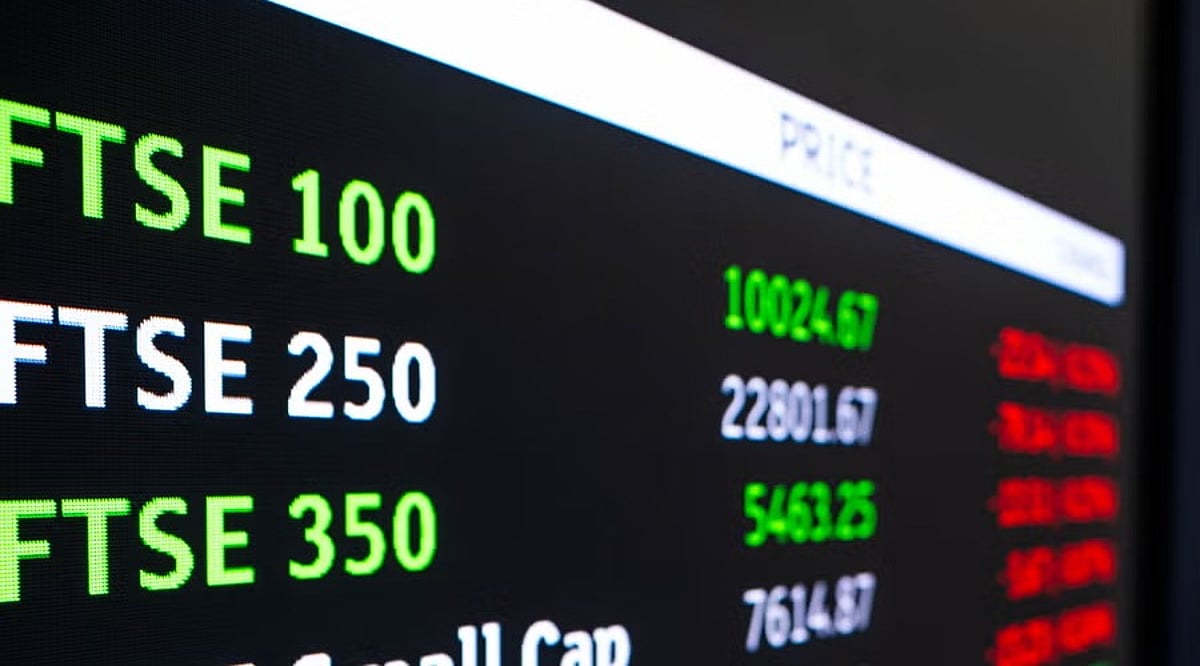
  • FTSE 100 Opens Lower as Oil Nears $100; Computacenter Profit Forecast Lifts Sentiment

    FTSE 100 Opens Lower as Oil Nears $100; Computacenter Profit Forecast Lifts Sentiment

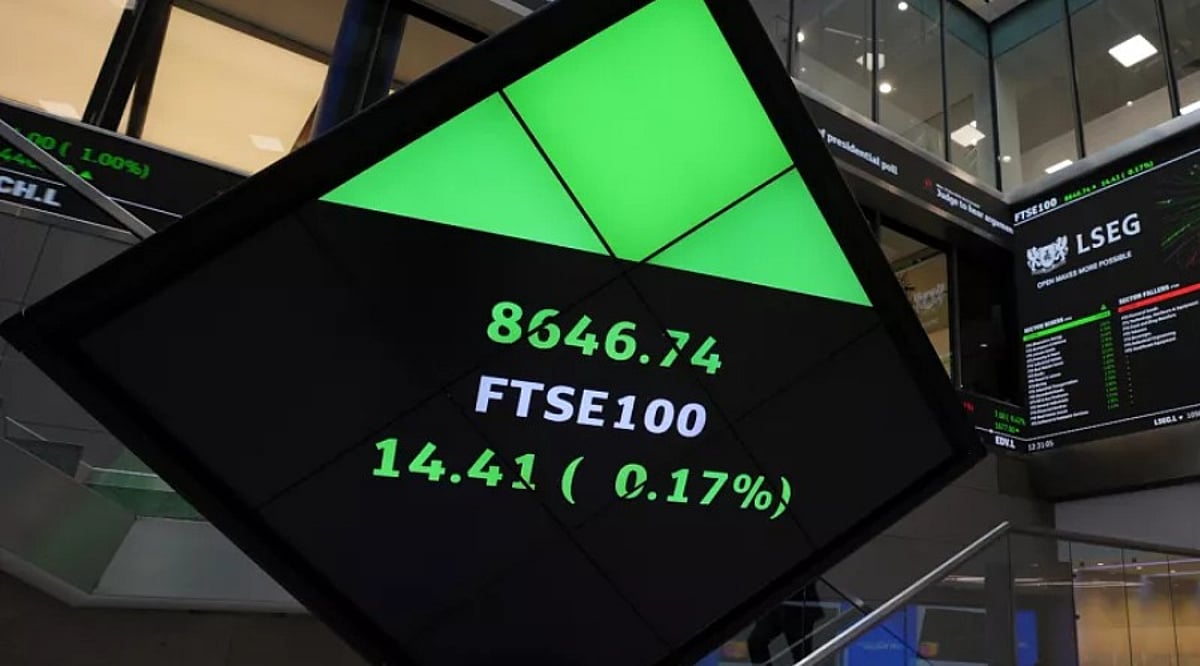
    The FTSE 100 opened 16.06 points lower at 10,806.07 on Tuesday as investors awaited fresh direction from the European Central Bank’s interest rate decision and upcoming US inflation figures. Brent crude futures rose 1.75% to $98.70 per barrel, while US West Texas Intermediate (WTI) advanced 2.89% to $94.12 per barrel.

    Sterling traded at $1.3538 on Tuesday morning, up from $1.3516 at the London equities close on Monday. Against the euro, it slipped to €1.1624 from €1.1638.

    Gainers and Losers

    On the upside, Computacenter climbed 4.64% to 5,860p after upgrading its profit forecast for the second time this year. Auto Trader Group advanced 3.60% to 523.60p, while Antofagasta gained 1.51% to 3,957p. Croda International rose 1.50% to 3,312p, BP added 1.43% to 554.20p, and Glencore increased 1.42% to 612.40p.

    On the downside, HSBC Holdings fell 1.43% to 1,556.40p. Next declined 1.16% to 15,320p, while Whitbread dropped 1.02% to 2,324p. Games Workshop Group slipped 0.71% to 18,270p, Lion Finance Group lost 0.67% to 13,420p, and AstraZeneca edged 0.60% lower to 11,970p.

    Oil Nears $100 Per Barrel

    Oil prices have surged, nearing the $100 per barrel mark. Brent crude gained 1.75% to reach its highest level since July. Reports that Iran-backed Houthis attacked a Saudi energy plant have added fresh pressure on investors. Earlier today, Iran threatened new sanctions on tankers attempting to travel through the Strait of Hormuz.

    Computacenter Increases Profit Forecast

    Computacenter upgraded its profit forecast for the second time this year after its order backlog quadrupled in the last six months. The IT supplier expects to bring in no less than £380 million in pretax profit for the year, well above the previous consensus of £341 million. The order backlog reached a record £9.3 billion, up 323% year-on-year. The group, promoted to the FTSE 100 in the June reshuffle, hiked its dividend by nearly 15% to 27.1p.

    Funding Circle Lifts Profit Forecast

    The boss of Funding Circle has laid out plans for departure as the fintech lifted its profit forecast for the year ahead. Lisa Jacobs, who has led the firm since 2022, will step down as chief executive by no later than September 2027. Revenue jumped 50% to £138 million after loan originations swelled 43% to just over £1 billion. The firm expects profit to reach over £40 million for the year, upgraded from previous expectations of £35 million. Funding Circle also announced a fresh £25 million buyback, bringing total capital returned via buybacks to £100 million since March 2024.

    Global Market View

    In the US, Wall Street was closed on Monday for the Labor Day holiday. In Asia on Tuesday, Tokyo’s Nikkei 225 fell 1.7% to 65,269.33, while China’s Shanghai Composite rose 0.2%. Hong Kong’s Hang Seng declined 0.32%, and South Korea’s Kospi declined 0.58%. In India, both the Nifty 50 and the Sensex fell by 0.54% and 0.59%, respectively.

    Disclaimer: This article is for informational purposes only and does not constitute investment advice. Cryptocurrencies and stocks involve risk. Always conduct your own research before investing.
  • PVR INOX Shares Tumble 8% Following Buyback Record Date and Internal Investigation Report

    PVR INOX Shares Tumble 8% Following Buyback Record Date and Internal Investigation Report

    PVR INOX shares fell more than 8% on Monday, September 7, as investors reacted to the passing of the record date for the company’s Rs. 300 crore share buyback and a media report about an internal investigation involving a former senior executive.

    The stock dropped as much as 8.27% to Rs. 1,125.70 on the NSE during early trade before recovering 4%. PVR INOX had fixed September 4 as the record date for determining shareholders eligible to participate in the buyback.

    PVR INOX Buyback Record Date Passes

    PVR INOX plans to repurchase up to 20.69 lakh equity shares at Rs. 1,450 per share through the tender-offer route. The total buyback size is up to Rs. 300 crore. The announcement had earlier supported buying interest in the stock as investors positioned themselves ahead of the record date. However, with September 4 now behind, investors who bought shares mainly to become eligible for the offer no longer need to hold the stock. This may have contributed to selling pressure on Monday.

    The Rs. 1,450 buyback price does not guarantee that every eligible shareholder can sell all their shares at that price. The company will accept only the specified number of shares under the offer.

    Meanwhile, JM Financial retained its ‘ADD’ rating on PVR INOX and raised its 12-month target price to Rs. 1,270 from Rs. 1,130. The brokerage also increased its valuation multiple to 9 times EV/EBITDA from 8 times.

    Report on Internal Investigation Adds Pressure

    The decline also came after a media report said PVR INOX had conducted an internal investigation into alleged kickbacks involving a former senior executive. The Economic Times reported that the company asked Pramod Arora, its former CEO for growth and investment, to leave in April after an internal probe. The report said alleged payments from developers involved in cinema property construction may have reached as much as Rs. 200 crore over several years.

    PVR INOX has not publicly confirmed or denied the reported Rs. 200 crore amount. The figure therefore remains based on the media report and has not been independently established through a company disclosure.

    Nuvama Institutional Equities, meanwhile, maintained its ‘BUY’ rating and raised its target price to Rs. 1,640 from Rs. 1,620. The brokerage expects the company to benefit from its film release pipeline during FY27.

    PVR INOX Q1 FY27 Profit Returns, Revenue Rises

    PVR INOX reported a consolidated profit after tax attributable to owners of Rs. 56.5 crore for the June quarter of FY27. The company had posted a net loss of Rs. 54.5 crore in the same quarter a year earlier. Revenue from operations rose 11.91% year-on-year to Rs. 1,622.20 crore from Rs. 1,449.6 crore. EBITDA increased 30.91% to Rs. 529 crore from Rs. 404 crore, while the EBITDA margin rose to 32.58% from 27.85%.

    The multiplex operator is also expanding into smaller cities. On September 4, the company announced its first SMART Cinema at ICON Plaza Mall in Muzaffarpur, Bihar. PVR INOX said, “The opening marks the first step in PVR INOX’s strategy to expand its presence across India’s emerging growth markets.” The four-screen property has 644 seats. Following the launch, PVR INOX operates about 1,785 screens across 356 properties in 114 cities in India and Sri Lanka. The company was formed through the merger of PVR Limited and INOX Leisure Limited in 2023.

  • FTSE 100 Rises 16.66 Points to 10,884.55 as Oil Prices Support and Investors Focus on US Jobs Data

    FTSE 100 Rises 16.66 Points to 10,884.55 as Oil Prices Support and Investors Focus on US Jobs Data

    The FTSE 100 traded 16.66 points higher at 10,884.55 on Friday, as investors assessed fresh US trade measures, firmer oil prices, and awaited the US jobs report later in the day. Brent crude futures rose 0.91% to $83.24 per barrel, while US West Texas Intermediate (WTI) fell 0.57% to $77.73 per barrel.

    Sterling was quoted at $1.3452 early Friday, slightly lower than $1.3454 at the London equities close on Thursday. Against the euro, sterling fell marginally to €1.1674 from €1.1675 a day prior.

    Gainers & Losers

    On the upside, Fresnillo surged 2.74% to 2,813p. Convatec Group advanced 2.73% to 233p, while BAE Systems climbed 1.68% to 2,237p. London Stock Exchange Group gained 1.53% to 8,884p, Diageo rose 1.47% to 1,758p, and AstraZeneca added 1.38% to 12,014p.

    On the downside, Severn Trent fell 1.03% to 3,084p. Whitbread declined 0.87% to 2,506p, while Antofagasta slipped 0.76% to 3,944p. 3i Group eased 0.73% to 2,850p, Shell dropped 0.59% to 3,295.5p, and Unilever edged 0.40% lower to 4,690p.

    Oxford Biomedica Cuts Profit Forecast

    Oxford Biomedica slashed its revenue target for the year by nearly £40 million after slower customer demand. The firm lowered its full-year revenue forecast to £180 million to £200 million, from between £220 million and £240 million, due to clients delaying contract signings. CEO Dr. Frank Mathias said despite the profit warning, the company remains confident about its future in the cell and gene therapy sector.

    JD Sports Appoints Former IKEA Boss as Chair

    JD Sports named Peter Agnefjäll, the former CEO of IKEA, as its new chair, succeeding interim chair Darren Shapland. Agnefjäll’s appointment follows Andy Higginson’s resignation in April. Higginson noted he was proud of his tenure during a tough period in the sportswear market and the brand’s US expansion.

    Meta Fined $567 Million in New Mexico

    A New Mexico judge ordered Meta to pay $567 million (£421 million) for failing to protect children against online harms on its platforms. Judge Bryan Biedscheid described the tech giant as a “public nuisance” and compared it to air pollution. This fine adds to a $375 million penalty imposed in March, bringing total penalties to nearly $1 billion.

    Global Market Overview

    In the US, the Dow Jones Industrial Average fell 0.9% from its record high, the S&P 500 slipped 0.2%, and the Nasdaq edged 0.1% lower amid higher Treasury yields. In Asia, Tokyo’s Nikkei 225 fell 0.12%, while China’s Shanghai Composite gained 1.02%. Hong Kong’s Hang Seng advanced 0.45%, and South Korea’s Kospi edged lower by 0.6%. In India, both the Nifty 50 and the Sensex fell by 0.31% and 0.53%, respectively.

    Disclaimer: This article is provided for informational purposes only and does not constitute investment advice. Always conduct your own research before making any investment decisions.

  • Wall Street Rises After Surprise July Job Cuts Fuel Hopes of Fed Rate Pause

    Wall Street Rises After Surprise July Job Cuts Fuel Hopes of Fed Rate Pause

    The S&P 500 posted gains on Friday after a surprising decline in U.S. payrolls for July dampened expectations of a September interest rate hike by the Federal Reserve. Technology and software stocks led the rally, while Treasury yields fell following the release of the employment report.

    The index moved toward a second consecutive weekly gain after hitting a record high earlier in the week. Traders are now turning their attention to July inflation data, which could further shape the central bank’s next policy move.

    S&P 500 Rises on Weak Payroll Data

    The S&P 500 climbed 0.6%, while the NASDAQ Composite gained 1.1%. The Dow Jones Industrial Average added approximately 140 points, a 0.3% increase. According to the Labor Department, U.S. employers cut 23,000 jobs in July, contrasting sharply with economists’ expectations of an 83,000-job gain (Dow Jones poll) and an 80,000 increase projected by a Reuters survey.

    The unemployment rate edged down to 4.1% from 4.2%, but the labor force participation rate fell to its lowest level in more than five years. Revised data also eliminated a combined 103,000 jobs from May and June payroll figures.

    The disappointing report reduced the probability of a Fed rate hike at its September meeting. LSEG data placed the likelihood of an increase near 20%, down from 55% before the payroll release.

    Fed Rate Outlook Shifts Toward a Pause

    Fed funds futures traders now largely expect policymakers to hold rates within the current 3.50% to 3.75% range. The central bank kept rates unchanged during its July meeting. Under Chair Kevin Warsh, the Fed has offered limited guidance on its next move, leading investors to scrutinize labor, inflation, and wage data closely.

    Anthony Saglimbene, chief market strategist at Ameriprise Financial, noted that the report gives policymakers more time. “Even with a negative job print, the job market remains healthy. But it gives the Fed some room to pause in September,” he said.

    Former Dallas Fed Chair Richard Fisher added that he did not view the report as entirely weak. He pointed to slowing wage growth, which could affect consumer spending, and said he did not support raising rates at this time.

    Technology Stocks Lead Wall Street Rally

    Software and semiconductor shares fueled Friday’s gains. Atlassian surged more than 30% after its quarterly profit and revenue exceeded estimates, and the company issued a stronger financial forecast. Cloudflare also rose after raising its annual revenue outlook above market expectations. Microchip Technology advanced after forecasting quarterly revenue above estimates. NVIDIA and Broadcom also recorded gains.

    The Philadelphia Semiconductor Index rose more than 2%, while the S&P 500 software and services index gained about 1.3%. The iShares Semiconductor ETF increased nearly 7% over the week.

    Airbnb climbed approximately 14% after reporting stronger quarterly profit and revenue and raising its full-year revenue and margin guidance, pushing its shares to their highest level in four years. In contrast, Trade Desk dropped nearly 25% after issuing a third-quarter revenue forecast below analysts’ expectations.

    Inflation Data Becomes the Next Market Test

    The S&P 500 has gained more than 3% this week, while the NASDAQ has risen about 5%, on track for its strongest weekly performance since May. The Dow has added about 3%. Corporate earnings have supported the recovery: more than 400 S&P 500 companies have reported quarterly results, with over 85% exceeding analysts’ estimates, according to LSEG data.

    Investors will now monitor the July consumer price index report on Wednesday. Economists expect annual headline inflation of 3.4% and core inflation of 2.5%. Producer price data will follow on Thursday. Retail sales figures are due Friday, offering another measure of household spending. Applied Materials, Cisco, and CoreWeave will also report earnings next week.

    Treasury yields declined after the payroll release. The 10-year yield slipped to 4.65%, while the two-year yield fell to 4.20%, before partially recovering. Oil prices rose about 1% as investors watched US-Iran talks concerning the Strait of Hormuz. Brent crude traded near $83 per barrel, while West Texas Intermediate held around $78. Oil movements remain central to inflation expectations and future Fed decisions.

    Weaker U.S. jobs data boosted hopes of a Federal Reserve pause, lifting Wall Street and supporting gains in technology stocks. Investors will now watch upcoming inflation and retail sales data for further clues on the direction of interest rates.

  • IT Stocks Rise as Infosys Shorts Are Covered and Tech Mahindra Draws Fresh Bets

    IT Stocks Rise as Infosys Shorts Are Covered and Tech Mahindra Draws Fresh Bets

    The Indian IT sector rallied in Tuesday’s trading session as bearish bets on Infosys were unwound and fresh buying emerged in Tech Mahindra. TCS led the gains, helping the entire sector close on a strong note.

    Tech Mahindra’s futures surged 2.30% to Rs 1,675, with open interest climbing 9.86% — a clear sign of new money entering the stock. Meanwhile, TCS, Infosys, and HCLTech futures advanced between 1% and 2%, but their open interest declined, indicating short covering rather than fresh accumulation. Wipro futures edged up 0.91%, but open interest fell 0.26%.

    The contrasting open interest data reveals diverging investor strategies. Short covering in Infosys suggests that bearish traders rushed to exit positions as the stock rebounded. In contrast, Tech Mahindra’s rising open interest signals that institutional and retail investors are placing fresh bets, betting on further upside.

    The broader market context also supports the rotation into IT. After a strong run in banking and other cyclical sectors, traders are now rotating capital into technology stocks, seeking the next wave of growth. This shift in focus has given the Nifty IT index a fresh lift.

    Market analysts note that fresh buying — rather than mere short covering — is often viewed as a more durable indicator of confidence. The latest data suggests that while some investors were forced to cover shorts in Infosys, others are actively building positions in Tech Mahindra, expecting the stock to outperform.

    The IT sector’s performance will remain sensitive to global cues, corporate earnings, and currency movements. However, the recent price action and volume patterns indicate that many traders believe the rally has further room to run.

    As always, investors should monitor evolving macro conditions and company-specific developments before making trading decisions.

  • Tata Sons IPO Hinges on RBI Decision on NBFC Licence Surrender

    Tata Sons IPO Hinges on RBI Decision on NBFC Licence Surrender

    The Reserve Bank of India (RBI) has retained Tata Sons on its Upper Layer non-banking financial company (NBFC) list for 2026–27, intensifying regulatory scrutiny and keeping the prospect of a mandatory public listing alive. However, the central bank is still reviewing the company’s application to surrender its NBFC registration, a decision that will determine whether the Tata Group holding company must proceed with an initial public offering (IPO).

    Under the RBI’s Scale Based Regulation framework, Tata Sons has been classified as an Upper Layer NBFC since 2022. This categorization subjects large NBFCs to enhanced governance, capital planning, disclosure, and risk management rules similar to those imposed on commercial banks. Upper Layer entities are also required to list their shares on stock exchanges within three years of classification, a deadline that Tata Sons has already passed.

    The RBI has clarified that its retention of Tata Sons on the list does not prejudge the outcome of the deregistration application, which remains under examination. Governor Sanjay Malhotra described the framework as “principle-based,” while the company, a core investment firm controlling businesses in technology, aviation, steel, electronics, and financial services, continues to operate under stricter oversight.

    Tata Sons repaid its debt before applying to surrender its NBFC licence roughly two years ago. The RBI has not provided a timeline for its decision. A source familiar with the regulator’s stance indicated that the central bank is unlikely to enforce the listing rule while the application is pending. Nonetheless, until approval is granted, Tata Sons must comply with all Upper Layer requirements, which apply for at least five years after classification.

    The outcome holds significant implications for shareholders. Tata Trusts, which owns about 66% of Tata Sons, could face changes in ownership structure that affect charitable funding and private investments. The Shapoorji Pallonji Group, holding roughly 18%, is seeking ways to monetize its stake to reduce debt, and a Tata Sons IPO could provide a market route for that exit.

    Tata Sons holds stakes in major listed firms such as Tata Consultancy Services, Tata Steel, and Tata Motors, and wholly owns private entities including Air India, Tata Digital, and Tata Electronics. Of the 17 companies on the RBI’s Upper Layer list for 2026–27, Tata Sons is the only unlisted one, underscoring the high stakes of the regulator’s decision.

  • Indian Stocks Open Lower as Rising Oil and Middle East Tensions Weigh on Sentiment

    Indian Stocks Open Lower as Rising Oil and Middle East Tensions Weigh on Sentiment

    Indian equity markets opened lower on Friday, dragged by rising crude oil prices and escalating Middle East tensions that dampened investor sentiment. The Nifty 50 index started the session 97.1 points, or 0.39%, lower at 24,538.90, while the Bank Nifty declined 181.65 points, or 0.31%, to open at 57,882. The Sensex opened 438.68 points below its previous close of 78,954.76.

    Broader market performance was mixed. The Nifty Midcap 100 index edged down 0.4%, while the Nifty Smallcap 100 index gained 0.5%.

    In the currency market, the rupee opened at Rs 95.28 per US dollar on Friday, compared with the previous session’s close of Rs 95.22.

    Foreign institutional investors (FIIs) remained net sellers in Indian equities on August 6, offloading shares worth Rs 28.58 crore. Conversely, domestic institutional investors (DIIs) were net buyers, adding Rs 3,488.43 crore.

    Sensex Outlook

    Technically, the Sensex formed a small candle on the daily chart, and the non-directional intraday activity indicates indecision among traders.

    “For day traders, 79,000 would act as an immediate breakout level. Above this, the market could move up to 79,300-79,500. On the flip side, below 78,600, we could see intraday price corrections down to 78,200-78,000. The intraday market texture is non-directional; hence, level-based trading would be the ideal strategy for day traders,” said Shrikant Chouhan, Head of Equity Research at Kotak Securities.

    Nifty 50 Outlook

    The Nifty 50 could witness profit booking after the recent rally, but the larger trajectory remains positive as long as key support levels hold.

    “The 24,400-24,500 is the immediate support zone, where buying interest is expected to emerge on declines. On the upside, 24,700-24,800 remains the key resistance range. A decisive move above this zone could signal a continuation of the ongoing uptrend and pave the way for fresh highs. As long as Nifty holds above the 24,400 support zone, the preferred strategy remains buy on dips,” said Gaurav Udani, founder of Thincredblu Securities.

    Bank Nifty Outlook

    The Bank Nifty is expected to remain steady, with the underlying technical structure still favorable as the index continues to trade above its key support zones.

    “The 58,200-58,300 band stands out as the immediate resistance area; a decisive move beyond this level would strengthen buying interest and open the path toward 58,500-58,600. On the downside, the 57,800-57,700 zone serves as the first line of support, with a breakdown below this level exposing the index to a deeper pullback toward 57,400-57,300,” said Ponmudi R, CEO of Enrich Money.

    Disclaimer: This article is for informational purposes only and does not constitute investment advice. Always conduct your own research before making investment decisions.

  • S&P 500 Holds Steady as Chip and Software Declines Offset Broader Market Gains

    S&P 500 Holds Steady as Chip and Software Declines Offset Broader Market Gains

    The S&P 500 traded near the flatline on Thursday as steep losses in chip and software stocks offset gains across most other sectors. Investors weighed corporate earnings, labor data, and ongoing negotiations over reopening the Strait of Hormuz.

    At 11:20 a.m. ET, the S&P 500 slipped 0.08% to 7,723. The Dow Jones Industrial Average added 0.49% to 54,350, while the Nasdaq Composite edged up 0.05% to 26,380.

    Western Digital and Sandisk Shares Tumble

    Western Digital shares fell 18.5% in early trading despite reporting fourth-quarter results above Wall Street estimates. Its fiscal first-quarter forecast disappointed investors. Sandisk shares dropped 11.3% after releasing its fiscal fourth-quarter results. Both companies forecast quarterly revenue above estimates, driven by demand for artificial intelligence infrastructure. However, investors focused on valuations after significant gains earlier this year — Western Digital had climbed about 200%, and Sandisk had gained around 400%.

    Hank Smith, investment strategy director at Haverford Trust, noted that expectations had reached demanding levels, calling the price action “some digestion going on in the market.”

    The Philadelphia Semiconductor Index declined 1.5% during early trading. Intel and AMD also traded lower, adding pressure to the technology sector. However, several chip stocks later recovered: Broadcom gained nearly 2%, Marvell Technology rose about 3%, and NVIDIA moved higher during the session.

    Software Earnings Add Pressure to Technology

    Software stocks also recorded steep declines following several earnings reports. Atlassian, Salesforce, Adobe, and Zscaler traded lower. AppLovin shares fell about 17% after missing quarterly revenue estimates. The stock had previously benefited from investor demand for AI-linked companies. Datadog dropped roughly 17% after management forecast slower revenue growth in the third quarter, raising questions about enterprise software demand and valuations.

    Peloton shares fell more than 14% after forecasting lower sales in the coming fiscal year, citing higher prices for equipment and subscriptions. Still, Microsoft and Amazon each gained around 1%, helping limit broader losses across major indexes.

    Most S&P 500 Sectors Trade Higher

    Despite technology weakness, nine of the S&P 500’s 11 sectors traded higher during the morning session. Energy, consumer staples, and healthcare led the gains. Parker-Hannifin rose 8.5% after forecasting annual profit above analysts’ estimates. Albemarle gained 6.7% after beating quarterly profit estimates. Diageo rose about 6% after announcing a three-year plan targeting $1.2 billion in savings.

    Restaurant Brands International reported adjusted earnings of $1.07 per share, above the expected $1.03. Revenue reached $2.52 billion, matching estimates. Burger King recorded an 8.5% increase in comparable restaurant sales, though other brands within the group delivered weaker results.

    Labor Data Sets Up July Jobs Report

    New applications for unemployment benefits increased slightly to 199,000 for the week ending August 1, below the Dow Jones estimate of 204,000. Layoffs fell to their lowest level in two years during July. Second-quarter productivity increased 1.4% (versus 0.8% prior), while unit labor costs rose 1.3% (below the 2.1% estimate). Investors will now examine Friday’s July employment report for clues about the Federal Reserve’s policy path. Fed Chairman Kevin Warsh has reduced forward guidance, increasing the market’s focus on incoming economic data.

    Iran Talks Keep Oil and Gold in Focus

    Brent crude traded near $80 per barrel as investors monitored negotiations involving Iran and Oman focused on reopening shipping routes through the Strait of Hormuz. An Iranian official said a temporary agreement would allow ships to travel without fees or tolls, but final conditions had not been settled. Deutsche Bank strategist Jim Reid noted “unresolved questions” about whether Iran could later charge vessels.

    Gold rose for a fourth consecutive session as geopolitical uncertainty supported demand. Spot gold gained 0.6% to $4,271.33 per ounce, and US gold futures rose 0.6% to $4,330.20. Earlier, spot prices reached their highest level since June 18.

    Conclusion

    Technology losses kept the S&P 500 near the flatline, despite gains across nine of its 11 sectors. Western Digital, Sandisk, AppLovin, and Datadog recorded the sharpest declines following earnings updates. Meanwhile, investors monitored Iran-Oman shipping talks and Friday’s July employment report, both of which could shape energy prices and Federal Reserve rate expectations.

  • AMD Stock Drops 7% Despite Record Q2 Revenue as AI Expectations and SpaceX’s NVIDIA Deal Weigh

    AMD Stock Drops 7% Despite Record Q2 Revenue as AI Expectations and SpaceX’s NVIDIA Deal Weigh

    Advanced Micro Devices (AMD) shares closed 7% lower on Wednesday, even as the company reported record second-quarter revenue of $11.54 billion and a 107% surge in data-center sales. The decline highlights how elevated market expectations and external pressures, including SpaceX’s decision to exclusively use NVIDIA chips, overshadowed strong financial results.

    AMD Q2 Revenue Up 50%

    AMD posted revenue of $11.54 billion, up 50% from $7.69 billion a year earlier, and above the $11.28 billion analyst consensus cited by Reuters. Non-GAAP earnings reached $1.66 per share, while GAAP earnings were $1.38 per share. Data-center revenue rose 107% to $6.72 billion, accounting for 58% of quarterly sales, driven by demand for EPYC server processors and Instinct graphics processors.

    The company forecast third-quarter revenue near $13 billion, with a possible $300 million swing, exceeding the $12.52 billion analyst estimate. However, analysts noted that investors had set a higher bar after recent customer deals. Gross margin improved to 54% under standard accounting, up from 40% a year earlier. Operating income hit $1.99 billion, compared with a $134 million loss, and net income jumped 163% to $2.30 billion.

    SpaceX Chooses NVIDIA for AI Systems

    SpaceX CEO Elon Musk announced that the company would build its AI computing systems exclusively with NVIDIA hardware, calling NVIDIA’s architecture “the best” during SpaceX’s earnings call. NVIDIA shares rose 3.4% while AMD stock fell. Musk’s statement shifted from his earlier position that his companies could source processors from AMD, NVIDIA, and others. AMD CEO Lisa Su expressed “tremendous respect” for Musk and said AMD expects to work with SpaceX over time.

    AMD continues to serve large technology companies and expand its AI product line. Its Helios rack-scale systems, using MI450 accelerators, support AI training and inference, with shipments expected to rise in the second half of 2026.

    Wells Fargo Raises AMD Price Target to $700

    Wells Fargo analyst Aaron Rakers raised AMD’s price target from $615 to $700 while maintaining an Overweight rating, even as the market focused on valuation and near-term growth. Other analysts described the results as solid but noted a “very high bar” (TD Cowen) and that the quarter beat consensus but missed more optimistic forecasts (Deutsche Bank). Supply constraints, including TSMC’s N3 process and CoWoS packaging through 2027, remain on investors’ watchlists.

    CEO Lisa Su expects data-center revenue to more than double by 2027, with server revenue growth of 80% in the second half of 2026 and over 70% year-over-year in 2027. AMD stock closed at $482.53, down 6.6%, erasing nearly $59 billion in market value.

  • FTSE 100 Opens Higher at 10,907 as Strait of Hormuz Reopening Hopes Boost Sentiment

    FTSE 100 Opens Higher at 10,907 as Strait of Hormuz Reopening Hopes Boost Sentiment

    The FTSE 100 opened 18 points higher at 10,907 on Thursday, driven by renewed optimism over a potential reopening of the Strait of Hormuz. Investors also weighed corporate earnings, oil price movements, and global market trends.

    Market Overview

    Brent crude futures edged up 0.21% to $79.52 per barrel, while US West Texas Intermediate (WTI) fell 0.24% to $75.04. Sterling traded at $1.3461 early Thursday, slightly down from $1.3466 at the London equities close on Wednesday. Against the euro, sterling slipped to €1.1654 from €1.1663 the previous day.

    Gainers and Losers

    On the upside, Admiral Group surged 5.07% to 3,894p, Metlen Energy & Metals advanced 3.88% to €50.30, and Persimmon climbed 2.45% to 1,150.5p. Vodafone Group gained 2.01% to 116.7p, Haleon rose 1.89% to 372.6p, and London Stock Exchange Group added 1.41% to 8,750p.

    On the downside, RELX fell 2.98% to 2,634p, Computacenter declined 1.58% to 4,736p, and Antofagasta slipped 1.21% to 4,001p. Halma eased 1.16% to 3,756p, Games Workshop Group dropped 0.84% to 18,850p, and Lion Finance Group edged 0.42% lower to 11,970p.

    WPP Cuts Jobs

    WPP slashed 1,267 jobs in the first half of the year, around 1.3% of its total staffing, as revenue continued to fall. Over the 12 months to June, the media group reduced its workforce by 6.4% to 104,083 employees. Revenue in the half came in at £6.4 billion, down over 3% from last year. Revenue less pass-through costs, a key metric for professional services firms, fell nearly 5% to £4.7 billion.

    Admiral’s Profit Drops

    Insurer Admiral reported an 18% drop in profit before tax to £429.2 million, down from the record £521 million in the first half of 2025. Turnover remained flat at £3.11 billion. Milena Mondini de Focatiis, group CEO, said: “Against more challenging market conditions, we are pricing for long-term sustainable growth with our UK motor business having increased rates earlier than the market, following a softer period in the cycle.”

    Wizz Air Profits Decline

    Increased fuel costs from the Middle East conflict swung Wizz Air to a €198.2 million (£170 million) loss in the first quarter of 2026. Total revenue rose 5.5% to €1,507.4 million, driven by a 25.1% increase in passengers, but revenue per available seat fell 8.1%. The budget airline expects industry challenges to persist and is reallocating capacity to popular European markets over long-haul flights to the Middle East.

    Global Market View

    In the US, the Dow Jones rose 0.5% to a record closing high, while the S&P 500 slipped 0.2% and the Nasdaq fell 0.8%. In Asia on Thursday, Tokyo’s Nikkei 225 fell 0.93% to 65,683.26, China’s Shanghai Composite gained 0.57%, Hong Kong’s Hang Seng declined 1.68%, and South Korea’s Kospi edged lower by 4.58%. In India, the Nifty 50 and the Sensex rose by 0.06% and 0.29%, respectively.