
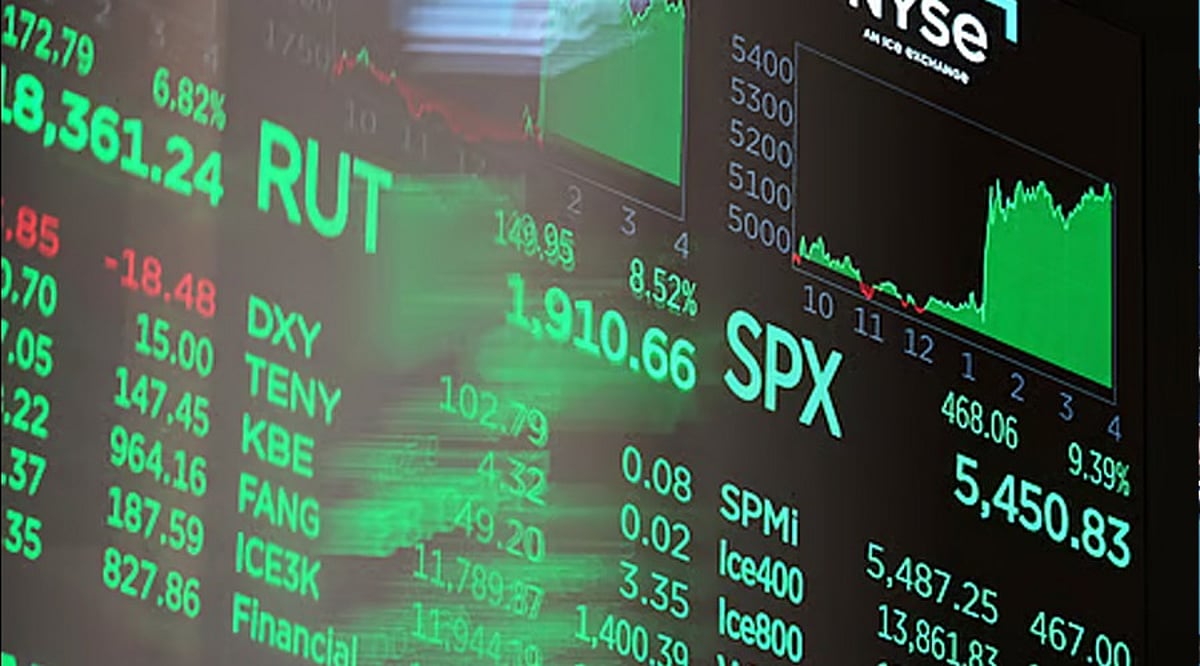
US stocks fell sharply Wednesday as rising oil prices and semiconductor losses weighed on major indexes. The Dow Jones Industrial Average dropped about 800 points during morning trading. The S&P 500 and NASDAQ Composite also declined before the Federal Reserve’s rate decision.
Oil prices jumped after a new exchange of attacks involving Iran and US forces in the Middle East, renewing concerns about energy costs and inflation. Investors also watched chip stocks after several sessions of heavy selling.
Dow Jones Leads Broad Market Decline
The Dow Jones fell more than 1% as industrial, financial, and consumer shares moved lower. At one stage, the index lost over 800 points. The S&P 500 fell about 0.7%, while the NASDAQ dropped roughly 1%. Market figures fluctuated through the morning as trading remained volatile.
Declining shares outnumbered advancing stocks on both the New York Stock Exchange and NASDAQ. Caterpillar fell as the industrial sector led losses. Consumer staples and healthcare posted small gains, showing limited demand for defensive shares.
Oil Surge Adds Pressure Ahead of Fed Decision
Crude oil prices rose after Iran launched missiles toward US forces in Jordan. US Central Command said forces intercepted the missiles. President Donald Trump then said the United States would respond strongly, adding pressure across energy and equity markets.
Brent crude gained about 6%, while West Texas Intermediate rose close to 7%. Higher oil prices can raise transport and production costs. The latest jump arrived as the Fed prepared to announce its policy decision at 2 p.m. Eastern Time.
Futures markets placed the highest probability on the Fed keeping rates between 3.5% and 3.75%. Available pricing showed a hold probability near 64%. The remaining probability supported a quarter-point increase. Traders also expected further tightening later in 2026.
Jay Woods of Freedom Capital Markets said, “Any Fed surprise could cause this sell-off to accelerate.” Investors will review Chair Kevin Warsh’s press conference for details about inflation, employment, and future policy decisions.
Semiconductor Stocks Extend Weekly Losses
Semiconductor shares extended a four-session decline as investors questioned returns from large artificial intelligence spending programs. The iShares Semiconductor ETF fell nearly 4% during Wednesday trading. Its weekly loss moved above 10% as selling spread across major chip companies.
Micron Technology and Advanced Micro Devices each lost more than 6% during the session. KLA fell more than 8%, while NVIDIA also traded lower. The Philadelphia Semiconductor Index dropped as investors reviewed spending, revenue growth, and competition from Chinese technology companies.
Gina Martin Adams of HB Wealth said, “The pressure is shifting from spending plans to returns.” Big Tech earnings will provide more data on revenue from AI investments. Microsoft and Meta will report after Wednesday’s close. Amazon and Apple will release results later this week.
Truist Securities maintained a positive long-term view on chip demand despite the sell-off. Analyst William Stein said industry contacts still reported strong demand. He also noted that buyers now place larger orders for longer periods. However, current trading showed concern about valuations and near-term earnings.
Ford Rises as Procter and Gamble Falls
Ford Motor gained more than 6% after raising its annual profit forecast. The automaker also reported results above market expectations. The increase made Ford one of the stronger stocks during a session dominated by broad losses.
Procter and Gamble fell almost 3% after reporting weaker revenue than expected. The company also forecast slower sales growth for fiscal 2027. Seagate Technology gained after issuing quarterly revenue and profit forecasts above estimates. These moves created pockets of strength and weakness across the market.
Investors now face three immediate events: the Fed decision setting policy direction for rates, Warsh’s comments shaping expectations for later meetings, and Big Tech earnings testing whether heavy AI spending has started producing stronger revenue.
Leave a Reply