
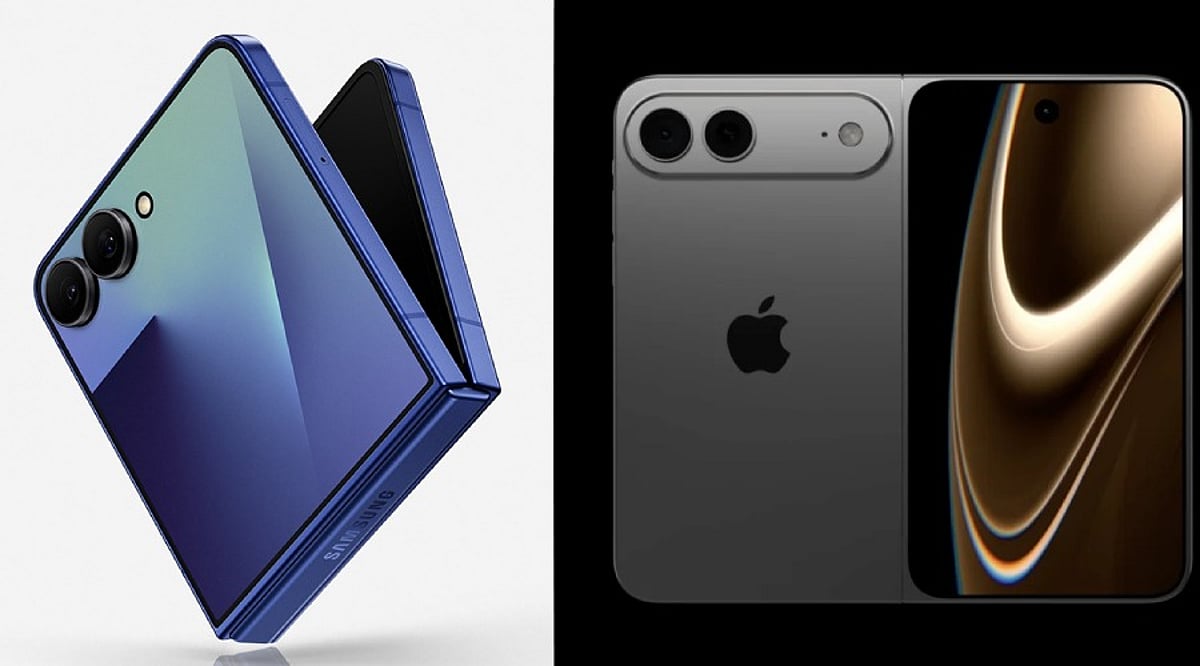
Samsung has officially launched the Galaxy Z Fold8 and Z Fold8 Ultra, while Apple’s foldable iPhone remains unconfirmed. This comparison examines confirmed features, credible reports, software, AI, durability, and pricing, highlighting how hardware maturity and ecosystem strength could shape the foldable smartphone market.
What Is Confirmed, and What Is Still a Report
Samsung’s position rests on solid ground. The company confirmed final specifications and pricing for the Galaxy Z Fold8 and Z Fold8 Ultra through its own newsroom, and both models went on sale August 7, 2026. Apple’s position looks different. The company has made no public statement about a foldable iPhone. What exists instead is an unusually steady stream of reporting. Developers analyzing iOS 27 beta code found references to a ‘foldstate’ system, which some read as preparation for foldable hardware. Separately, outlets including MacRumors and Macworld report that a device could launch alongside the iPhone 18 Pro lineup at Apple’s September event. Analyst Ming-Chi Kuo and Bloomberg’s Mark Gurman have both offered details that mostly line up with each other. That alignment makes the reports worth watching closely. It does not make them official.
Hardware and Design
The Z Fold8 Ultra measures 4.1mm when unfolded and carries an 8-inch internal display in a book-style body. The standard Z Fold8 uses a wider, passport-style shape with a 7.6-inch screen. Reports describe Apple’s foldable using a similar book-style hinge, with a 5.5-inch external display and a 7.8-inch internal one set in a 4:3 aspect ratio closer to a small tablet than a phone. Leakers point to a barely visible crease and a chassis thin enough to rival Samsung’s. None of this comes from Apple directly, so these figures remain a leak consensus rather than a spec sheet. Samsung’s current design reflects years of work on hinge mechanics, display protection, and weight distribution. It is tested through real-world use that Apple has not gone through in public.
Software, Ecosystem, and Daily Use
Samsung’s software shows its age well. The interface handles split screens, app continuity between the cover and inner display, and multitasking with a polish built across several Android foldable releases. That polish extends to ecosystem partnerships too, since Samsung’s foldables draw on a wide base of Android apps already built to adapt across screen sizes. Apple’s approach remains untested. Developers and industry observers have described new app-resizing tools appearing in iOS 27 that could support future foldable devices, though Apple has not announced a foldable-specific software system. Apple’s biggest advantage is its ecosystem. A foldable iPhone would work closely with devices like the Mac, iPad, Apple Watch, and AirPods, offering a connected experience that Samsung cannot fully replicate. Whether that pull offsets a lack of hands-on foldable software experience depends on execution Apple has not shown publicly yet.
Cameras and AI Features
Camera comparison stays lopsided for now, simply since only one side has a shipping product. Samsung’s foldable camera systems are established and reviewed across several generations. Apple’s imaging performance cannot be judged yet, since no foldable device has been announced or tested, and leaked specs mentioning a two-lens rear setup stay unconfirmed. AI features look set to matter more than raw specifications this cycle. Samsung’s foldables already ship with on-device tools for translation, writing help, and image editing. If Apple introduces a foldable iPhone, it will likely extend its existing AI features to the larger display, though the company has not explained how those experiences would differ from current iPhones.
Durability and Ownership
Hinge durability remains the detail most likely to separate a strong foldable from a fragile one. Samsung’s rated fold count gives buyers a solid number to weigh against price. Apple’s foldable is rumored to skip Face ID for Touch ID built into the power button, a tradeoff reportedly tied to how thin the folded chassis needs to stay. That kind of compromise is common in first-generation folding hardware and worth watching once real units ship. Software support length, resale value, and repair cost also belong in this calculation. Samsung’s repair network for foldables spans authorized service centers built up over several product cycles. Apple has a large global service network through its stores and authorized service providers. However, it has no proven track record of repairing foldable devices, and the cost of parts and repairs for a foldable iPhone is still unknown.
Price and Value
Samsung’s pricing is public. The Z Fold8 starts at $1,899.99, and the Z Fold8 Ultra starts at $2,099.99. Apple’s foldable price is not confirmed. Reports from Macworld and MacRumors point to a likely range between $1,999 and $2,500, with some estimates landing closer to $2,000 as a starting point. Until Apple speaks, treat that range as informed speculation rather than a number to plan around.
Who Should Consider Which
Buyers who want a foldable already proven across several hardware generations, with confirmed pricing and a track record on hinge durability, have a clear option in Samsung’s current lineup. Buyers waiting for Apple’s response may not have to wait much longer if current reports hold up. The larger foldable story used to center on whether the category made sense at all. In 2026, it centers on a sharper question: whether Apple’s first foldable can match Samsung’s years of refinement while bringing the ecosystem strength that has defined the iPhone for more than a decade.
Final Thought
The next five weeks will settle more about the foldable market than the last five years of rumors combined. A confirmed Apple event, a shipping Samsung flagship, and a wave of corroborating leaks rarely line up this cleanly. Whichever way this plays out, the foldable phone stops being a niche experiment and starts being a mainstream buying decision.
Leave a Reply