Category: Artificial Intelligence

  • Cut Software Costs with AI Coding: Strategies for Efficiency Without Sacrificing Quality

    Cut Software Costs with AI Coding: Strategies for Efficiency Without Sacrificing Quality

    AI coding can lower software costs by accelerating development, reducing wasted model usage, improving workflows, and strengthening testing—all while maintaining software quality, reliability, security, and performance. However, faster code generation alone does not guarantee savings. The real goal is to deliver useful software to production with less total effort while keeping quality high. As AI adoption reaches mainstream scale, this question now matters to nearly every software team.

    Key Takeaways

    • Measure total task cost: Faster code generation only creates savings when reviews, testing, fixes, and production checks remain efficient.
    • Optimize AI workflows: Better prompts, context management, and selective output can reduce model usage without sacrificing quality.
    • Match models to tasks: Use affordable models for simple work and stronger reasoning models only when complexity demands them.

    AI Code Has Become a Mainstream Tool

    JetBrains surveyed more than 15,000 professional developers for its 2026 Developer Ecosystem Survey. From May to July 2026, 90% of professional developers used AI coding agents at least once a week, while 68% used them every day. The same study found rapid growth across tools such as Codex, Claude Agent, GitHub Copilot, Cursor, OpenCode, and Google Antigravity.

    DORA found a similar shift. Its 2025 research showed that 90% of technology professionals use AI at work, while more than 80% report higher productivity. Yet the same research shows a clear trade-off. AI can speed up code creation, but teams may spend more time on checks and reviews. Higher AI use can also raise both software delivery speed and delivery instability. That gap explains why AI alone cannot guarantee lower costs.

    The Real Saving Comes From Faster Task Completion

    The cost of AI code should not depend only on token use. GitHub published new research on September 2, 2026, with a clear lesson: a shorter AI response can cost more if missing details force an agent to repeat a command or request more context. The better measure is the full task, from the first request to the final result.

    GitHub also found useful gains from better agent design. Selective output compression cut model inference cost by about 5% in offline tests. A live Copilot CLI test then cut average daily model inference cost per user by about 3%, with no material drop in quality or satisfaction.

    Another prompt change removed about 1,300 tokens per turn, which led to 1.8% fewer prompt tokens per session and 2.9% lower normalized cost per active hour. A separate change to task-result delivery cut token-related use by about 2.3%. These figures show a useful point: smart AI workflow design can cut waste without a weaker result.

    Better Checks Protect Software Quality

    Cost control also needs strong tests and reviews. AI can create code at high speed, but every change still needs proof that it works. DORA describes AI as an amplifier of existing strengths and weaknesses. Strong software practices can help teams gain more value, while weak processes can let defects spread faster.

    Small changes offer a safer path. A clear task, a focused AI change, automated tests, and a human review can limit the cost of a mistake. Strong version control, clear project documents, reliable tests, and good internal tools also give AI better context and reduce wasted work.

    Smart Model Choice Can Lower AI Bills

    Not every software task needs the most costly AI model. Simple work can use a lower-cost model, while complex design, difficult faults, or large codebases may need a stronger reasoning model.

    This approach can matter as AI use grows. McKinsey found that about two in ten organizations now scale software coding agents, with the figure at 31% among large enterprises. More strikingly, 32% of respondents said an organization had rejected at least one software purchase or feature purchase after deciding that an internal team could create the same function with agentic coding tools. That shift can create savings far beyond a smaller developer bill.

    The Next Cost Battle Will Focus on Efficiency

    AI can reduce the cost of software work when companies measure the full result rather than the amount of code an AI tool produces. The strongest measure is the cost of a successful software change after AI use, human review, tests, fixes, and production checks.

    The latest data points to a clear direction. AI already has broad use among developers, while new tools focus on lower model cost, better context, and fewer wasted steps. The real advantage will come from teams that pair AI speed with strong software controls. That combination can raise output, reduce waste, and protect performance at the same time.

    Frequently Asked Questions

    1. How can AI coding reduce software costs?

    AI can reduce development time, automate repetitive tasks, improve developer productivity, and lower the effort needed to deliver software changes.

    2. Can AI-generated code affect software quality?

    Yes. AI can introduce bugs or security issues, so automated testing, human review, version control, and strong development practices remain essential.

    3. Does using a more powerful AI model always provide better value?

    No. Simple coding tasks can often use lower-cost models, while complex architecture, debugging, and large codebases may benefit from stronger reasoning models.

    4. What is the best way to measure AI coding savings?

    Measure the total cost of a successful software change, including AI usage, developer time, reviews, testing, fixes, and production validation.

    5. How can companies get more value from AI coding tools?

    Companies should combine AI with clear tasks, good documentation, reliable tests, efficient workflows, appropriate model selection, and human oversight.

  • AI-Powered Simulations Reshape Enterprise Learning: A Conversation with Enparadigm’s CTO

    AI-Powered Simulations Reshape Enterprise Learning: A Conversation with Enparadigm’s CTO

    As businesses accelerate their pace, conventional training approaches often fall short in preparing employees for dynamic workplace challenges. AI-powered simulations are emerging as a transformative solution, offering practical environments where teams can hone skills, sharpen judgment, and achieve workplace readiness.

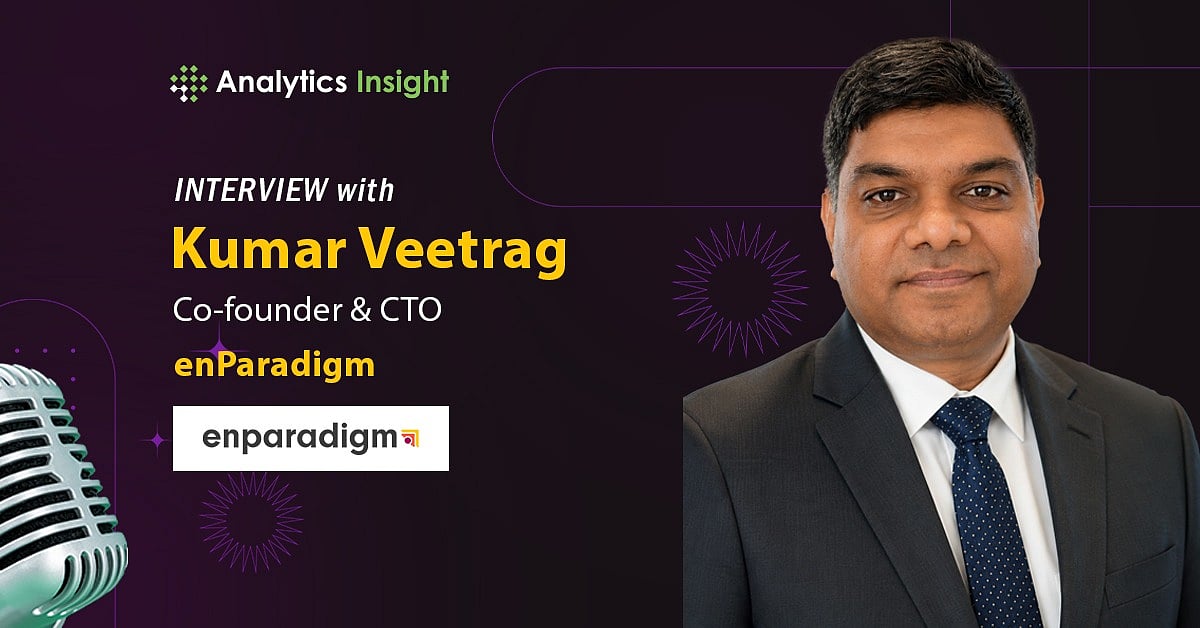
    In a recent episode of the Analytics Insight Podcast, host Priya Dyalani sat down with Kumar Veetrag, Co-founder and CTO of Enparadigm, to examine how AI and simulation-based technologies are reshaping enterprise learning and talent development. The discussion covered the transition from traditional training to experiential learning, the role of AI in assessments and coaching, and the potential of talent analytics to enhance hiring and workforce strategies. The conversation also touched on the critical importance of responsible AI, human oversight, and governance as organizations integrate these tools.

    Key Insights from the Interview

    1. What is experiential learning, and why does it matter for enterprises?

    Experiential learning focuses on practicing skills in realistic contexts rather than relying solely on theoretical knowledge. The podcast highlighted that employees often need to practice judgment, communication, and decision-making before applying these skills on the job. AI-powered simulations create safe practice environments that help employees become proficient faster.

    2. How is AI transforming simulation-based learning?

    AI accelerates, flexibilizes, and personalizes simulation-based learning. Organizations can design scenarios and AI avatars that let employees practice real workplace interactions. These simulations can be customized for different languages, accents, vocabulary levels, and job roles, enabling enterprises to deliver more relevant experiences at scale.

    3. How do AI-based assessments improve traditional talent evaluation?

    AI-based assessments address common pain points in traditional evaluation methods, such as time, cost, and scalability. Thousands of employees can participate simultaneously, while organizations receive faster feedback and consistent scoring. Moreover, assessment data can guide coaching and development, helping employees pinpoint specific areas for improvement.

    4. How can organizations ensure fairness in AI-driven talent decisions?

    To maintain fairness, organizations should pair AI with human judgment and non-AI systems, rather than letting AI make decisions autonomously. Reliable outcomes require clear guardrails, careful AI configuration, multiple AI systems, peer evaluations, and human calibration. Protecting sensitive data and adhering to responsible AI practices throughout the process are also essential.

    5. How will AI influence the future of workforce development?

    The podcast suggested that competitive advantage is shifting from simply hiring the best talent to continuously upskilling existing employees. As business needs evolve rapidly, organizations require adaptable individuals who can learn, practice, and pivot quickly. AI can power this through personalized simulations, coaching, and ongoing skill development.

  • Top 8 AI Developments You Missed This Week: OpenAI, Anthropic, and More

    Top 8 AI Developments You Missed This Week: OpenAI, Anthropic, and More

    Top 8 AI Developments You Missed This Week

    The artificial intelligence landscape is evolving at a breakneck pace, with major players and emerging trends shaping the future of technology. Here are the eight most significant AI updates you might have missed this week.

    1. OpenAI’s Accelerating Race

    OpenAI continues to push the boundaries of what’s possible, intensifying competition in the AI arena. The company is aggressively advancing its models, capabilities, and infrastructure, while also focusing on enterprise adoption and product innovation.

    2. Anthropic’s Focus on Safety and Reasoning

    Anthropic is doubling down on its Claude model, prioritizing AI safety, reliability, and advanced reasoning. The company is targeting coding, enterprise applications, and knowledge work, ensuring that its systems are both powerful and trustworthy.

    3. Google’s Gemini Ecosystem Expansion

    Google’s Gemini ecosystem is growing, with a strong emphasis on multimodal AI, reasoning, and cybersecurity applications. The tech giant is also enhancing its AI-powered productivity tools, intensifying competition in the consumer and enterprise markets.

    4. NVIDIA’s Expanding Influence

    NVIDIA’s impact now extends well beyond semiconductors. The company is heavily investing in AI infrastructure, software ecosystems, and model-development technologies, solidifying its position as a cornerstone of the AI industry.

    5. AI Outages Highlight Dependence

    Recent disruptions affecting major AI platforms have underscored our growing reliance on artificial intelligence services. These outages raise critical questions about reliability, resilience, and the robustness of AI infrastructure.

    6. AI-Powered Cybersecurity Takes Center Stage

    AI-driven cybersecurity is emerging as a critical battleground. Leading companies are developing systems that can identify vulnerabilities, strengthen defenses, and support security researchers in an increasingly hostile digital landscape.

    7. Anthropic’s Potential IPO Signals Market Confidence

    Anthropic’s possible public listing reflects enormous investor interest in frontier AI companies. This move also highlights the growing financial pressures and opportunities as the industry continues its rapid expansion.

    8. Global AI Safety and Risk Debates Intensify

    Governments, researchers, and tech companies are increasingly debating AI safeguards as systems become more capable and autonomous. International officials are urging stronger cooperation, warning that advanced AI could create significant societal, economic, and security challenges.

    Stay tuned for more updates as the AI landscape continues to evolve. Follow our WhatsApp channel for the latest news, exclusives, and videos on artificial intelligence.

  • The Evolution of Digital Work: From Chatbots to AI Employees

    The Evolution of Digital Work: From Chatbots to AI Employees

    Artificial intelligence is rapidly reshaping the workplace, moving beyond simple chatbots to fully autonomous digital employees. This transformation is unfolding in stages, each building on the last to create a future where humans and AI collaborate seamlessly.

    AI Chatbots

    AI chatbots handle routine conversations, answer questions and provide information, helping businesses automate customer support while reducing workloads for human employees.

    AI Copilots

    AI copilots assist professionals with writing, coding, analysis and research, improving productivity while keeping humans responsible for decisions, creativity and oversight.

    AI Agents

    AI agents can plan tasks, use software tools and complete multistep workflows, moving artificial intelligence beyond simple question-and-answer interactions.

    Autonomous Workflows

    AI-powered workflows connect multiple applications and processes, allowing systems to automatically manage repetitive tasks such as scheduling, reporting, documentation and data processing.

    AI Employees

    AI employees represent a broader shift toward digital workers capable of handling defined responsibilities continuously, consistently and with limited human intervention.

    Human-AI Collaboration

    Future workplaces will increasingly combine human judgement with AI execution, allowing employees to focus on strategy, relationships, creativity and complex problem-solving.

    Business Automation

    Companies can use AI workers to automate operational processes, potentially reducing costs, accelerating execution and allowing teams to concentrate on higher-value responsibilities.

    Workplace Transformation

    As AI capabilities expand, job roles and workflows are likely to change, creating new responsibilities while reducing demand for repetitive digital tasks.

    Skills Evolution

    Workers will increasingly need skills in AI collaboration, critical thinking, problem-solving and technology management as digital employees become common workplace tools.

  • NVIDIA CEO Jensen Huang: OpenAI GPT-6 Astra Marks the Arrival of AGI

    NVIDIA CEO Jensen Huang: OpenAI GPT-6 Astra Marks the Arrival of AGI

    NVIDIA CEO Jensen Huang has declared that artificial general intelligence (AGI) has officially arrived, attributing the milestone to OpenAI’s newly launched GPT-6 Astra model. In a post on X (formerly Twitter) on September 6, Huang congratulated OpenAI and noted that the journey from ChatGPT to o1 to Astra took just four years. He emphasized that Astra was trained using more than 100,000 NVIDIA Grace Blackwell NVLink72 systems, with an additional 400,000 GPUs expected to come online soon. Huang initially posted a figure of 300,000 systems before deleting and correcting it to the smaller number.

    OpenAI launched GPT-6 Astra on September 3, describing it as its most capable and aligned model to date. The company claims Astra achieves state-of-the-art performance on benchmarks such as FrontierMath Tier 4, ARC-AGI-3, and TerminalBench-4.0, and scored 100 percent on ExploitBench. The model is designed to handle a wide range of tasks, including computer use, software engineering, cybersecurity, and scientific research. OpenAI President Greg Brockman had already framed the launch as the beginning of the AGI era, and Huang’s endorsement added external weight to that claim.

    However, the AGI label remains contentious. There is no universally accepted definition of AGI across the industry. OpenAI itself defines it as a highly autonomous system that outperforms humans at most economically valuable work. Many researchers argue that Astra still requires task-specific guidance in several areas and has not been independently verified to match human-level reasoning across all domains. Huang’s declaration has drawn pushback from AI researchers who view it as more of a marketing statement than a technical milestone, especially given NVIDIA’s financial stake in large-scale AI training runs. The debate over what truly constitutes AGI is likely to intensify as more labs release models with similar claims.

  • Anthropic Withdraws from $6B Decart AI Acquisition: Key Details and Implications

    Anthropic Withdraws from $6B Decart AI Acquisition: Key Details and Implications

    Anthropic has reportedly abandoned its plans to acquire Israeli AI startup Decart AI for approximately $6 billion, according to a Bloomberg report published on September 8. The decision comes after the company completed due diligence and withdrew without finalizing the transaction, marking a significant shift in its acquisition strategy.

    Background of the Proposed Deal

    The proposed acquisition would have been Anthropic’s largest known deal by a wide margin. Decart, which develops chip optimization software to reduce computing costs during AI training and inference, was seen as a strategic fit for Anthropic’s infrastructure needs. The technology could have helped Anthropic manage rising AI demand without expanding computing resources at the same pace.

    Reasons Behind the Withdrawal

    While neither company has commented publicly, sources familiar with the talks indicate that undisclosed findings during due diligence influenced Anthropic’s decision to walk away. The move preserves Anthropic’s financial flexibility as it prepares for a potential IPO later this year, while keeping its focus on infrastructure expansion.

    Decart’s Position and Future

    Decart recently raised $300 million in May at a valuation of nearly $4 billion, with Radical Ventures leading the round and participation from Nvidia, Adobe Ventures, Atreides Management, and Valor Equity Partners. The company also develops world models and AI tools for applications such as autonomous driving and e-commerce. Following Anthropic’s withdrawal, Decart may now seek alternative buyers, investors, or strategic partnerships.

    Broader Industry Implications

    This development highlights growing scrutiny around expensive AI acquisitions as companies balance computing costs, growth, and investor expectations. For Anthropic, the decision allows it to concentrate on its core business and prepare for its anticipated public listing. The company continues to invest heavily in computing capacity while developing its product line.

    As the AI landscape evolves, this deal’s collapse serves as a reminder that even well-positioned acquisitions can fall through, and that due diligence remains a critical component of strategic decision-making.

  • OpenAI’s ChatGPT Work Now Mimics Your Writing Style Automatically

    OpenAI’s ChatGPT Work Now Mimics Your Writing Style Automatically

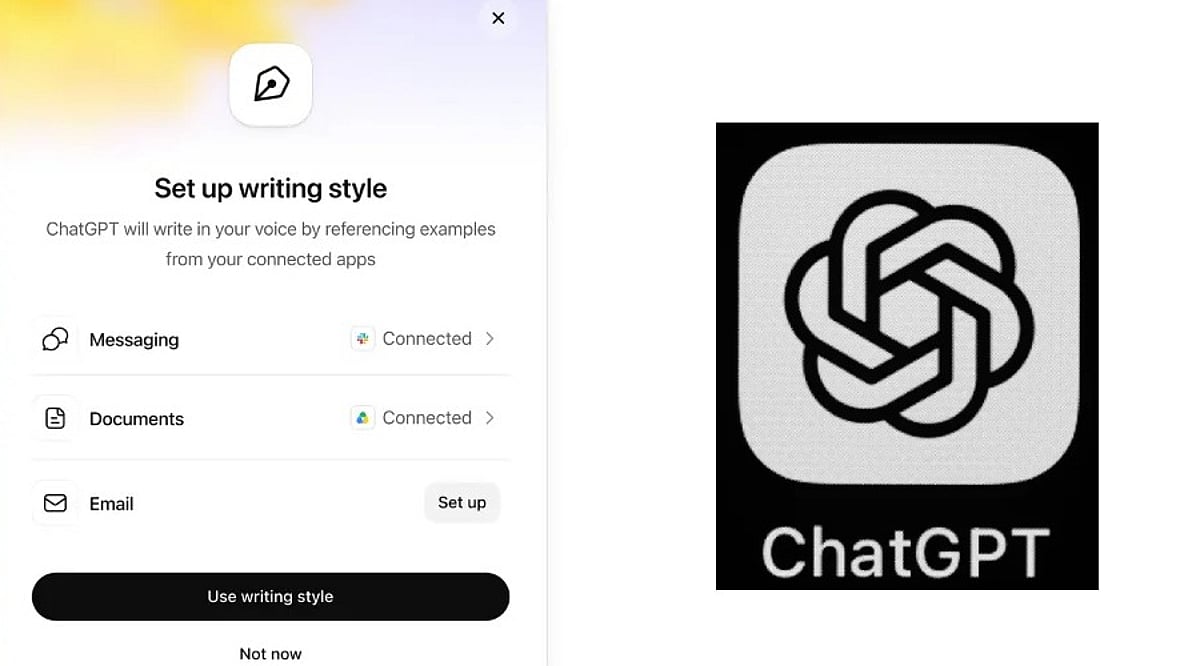
    OpenAI has rolled out a new capability for ChatGPT Work that lets the AI learn a user’s personal writing style and apply it in future interactions. This means less time spent explaining how you want your emails or documents to sound.

    Previously, users had to provide explicit instructions about tone and style. Now, ChatGPT can analyze your past writing—including frequently used phrases, email sign-offs, and subtle habits—to generate drafts that feel more like you.

    The feature can tap into connected applications such as Gmail, Google Drive, Slack, and SharePoint to better understand your writing patterns.

    How to Set It Up

    Enabling this is straightforward. Go to Settings > Personalization > Writing style. From there, you can link your work apps and allow ChatGPT to study your old messages and documents. Once activated, it works across both the web version and mobile apps, but only for ChatGPT Work subscribers on paid plans.

    The more ChatGPT sees of your writing, the more natural its drafts will become. Over time, you might not need to provide detailed instructions at all.

    Higher Productivity Meets Corporate Data Privacy

    This update is particularly useful for professionals who draft many work emails, messages, or reports with the help of AI. However, there’s a catch: because the tool reads through emails and files, it also processes sensitive business information. Companies should weigh the benefits against potential privacy risks, especially regarding who can access or use that data.

    Overall, this change signals where AI writing tools are headed—moving from simple instruction-following to truly understanding individual users. The ultimate goal is fewer edits and drafts that already sound like you.

  • How to Create AI-Generated 80s Photos with ChatGPT: The Viral Instagram Trend Explained

    How to Create AI-Generated 80s Photos with ChatGPT: The Viral Instagram Trend Explained

    Instagram users are turning back the clock with a new viral trend that uses ChatGPT to transform modern photographs into 1980s-style images. The AI-generated photos feature period-appropriate hairstyles, clothing, accessories, and backgrounds, giving users a nostalgic glimpse of how they might have looked in the era of big hair and neon colors.

    What Is the 80s Photo Trend?

    The trend relies on artificial intelligence to reimagine an existing photograph in the visual style of the 1980s while preserving the person’s recognizable facial features. Users upload a photo to ChatGPT and ask the chatbot to adapt their hair, clothes, accessories, surroundings, and overall aesthetic to the decade. The trend has spread rapidly through Instagram Stories, where people share the prompt “Chat, how would I look in the ’80s” and use the “Add Yours” sticker to encourage friends to participate.

    How to Create Your Own 80s Photo with ChatGPT

    Getting your own retro image is straightforward. You need a personal photograph and access to ChatGPT. Follow these steps:

    1. Open ChatGPT and tap the “+” button to upload your photograph.
    2. Enter the following prompt: “Create an image of how I would look in the 1980s, keeping my recognizable characteristics and appearance, but adapting my hair, clothes, accessories, setting and aesthetics to the era.”
    3. ChatGPT will generate a preliminary image using your photo as a reference.
    4. You can refine the result by requesting changes to specific elements such as hairstyle, moustache, or background details.

    For example, you might ask for a “brick” mobile phone, vintage cars in the background, or a setting like a disco, arcade, 80s gym, beach, or birthday party. Once you are satisfied, save the final image and share it on Instagram.

    Customization Options

    The first image does not have to be final. Users can continue the conversation with ChatGPT, tweaking details until the look is perfect. The tool allows adjustments to hair length, color, accessories, and even background elements, giving users full creative control.

    AI Photo Trends Continue to Grow

    The 80s trend is not the first social-media craze built on AI-generated photographs. Earlier trends included creating caricatures based on a person’s profession and generating images of people hugging their favorite celebrity. AI tools are also increasingly used for appearance-related edits, such as experimenting with different hair colors and lengths. This latest trend adds a nostalgic layer, allowing users to reimagine themselves through the visual style of a bygone decade.

    If you want to join the fun, grab a selfie, open ChatGPT, and let the AI take you back to the 1980s.

  • 10 AI-Powered Insurtech Companies Reshaping Insurance in 2026: A Deep Dive

    10 AI-Powered Insurtech Companies Reshaping Insurance in 2026: A Deep Dive

    Overview

    Ten companies made this list on verified deployments, named carrier partners, and reported metrics, not marketing claims. Coverage spans claims computer vision, repair workflows, fraud detection at two different stages, underwriting, actuarial pricing, cyber risk, and full-lifecycle AI insurance. Every figure below traces to a company report, carrier statement, or 2026 industry filing.

    A cyber insurer that stops seven in ten attacks before they land. A claims platform that settles a policy in two seconds flat. These are production numbers from carriers running AI as the core engine of underwriting, claims, and fraud detection, not a support feature bolted onto old workflows. The ten companies below made this list on verified deployments, named carriers, and outcomes anyone can check. A few well-known names got left out, since nothing tied their claims to a specific carrier result or a sourced number.

    What Makes These Insurtechs Leaders in 2026

    Three things separate a genuine leader from a company that simply mentions AI in its pitch deck. AI has to run a core operation, not sit beside it as a support tool. A named carrier, broker, or regulator has to confirm the result in public. And the deployment has to run at scale, across thousands of policies or claims, not a small cohort of early testers. Model sophistication barely matters here. What matters is how much of a workflow AI now finishes without a person stepping in.

    Claims and Damage Assessment: Tractable

    Millions of vehicle and property photos, collected since 2014, taught Tractable’s computer vision system to read collision damage the way a seasoned appraiser would, only faster. The platform reviews car damage with roughly 95% accuracy and turns a photo into a repair estimate in seconds, work that once took 30 minutes. GEICO and 25 of the world’s top 100 insurers now run claims through it, an adoption that pushed Tractable past a $1 billion valuation.

    Claims and Repair Workflow: CCC Intelligent Solutions

    Where Tractable reads the damage, CCC manages what happens next: repair shop, parts, and paperwork between insurer and body shop. Its Mobile Jumpstart tool already initiates 98% of repair estimates for one of the largest multi-store repair operators in the country. This quarter, a top-five insurer became CCC’s biggest customer yet for its AI-based subrogation tool, which automates the reimbursement claims carriers file against each other.

    Fraud Detection After the Claim: Shift Technology

    Claims fraud rarely announces itself, which is the problem Shift Technology’s Paris-built platform was designed to catch. AXA extended its partnership with Shift for five more years to widen fraud detection and underwriting checks across its global business, and Covéa signed on in early 2026 for a fraud framework spanning the entire policy lifecycle. Shift runs its models on Azure OpenAI Service, so carriers get newer AI without losing the compliance layer around it.

    Fraud Screening at the Point of Application: FRISS

    Shift catches fraud after a claim gets filed. FRISS catches it earlier, scoring an application for risk before a policy is even issued. Canadian insurer SGI brought the platform on in January 2026 to flag suspicious requests while speeding up legitimate ones, and a partnership with ForMotiv now folds in behavioral data captured during the application itself.

    Underwriting Built Around Continuous Risk: Cytora

    Commercial underwriting used to work off a single snapshot: an application filled out once, reviewed once, and revisited a year later. Cytora tore that model up with a platform that keeps absorbing broker emails, documents, and calls as new risk data shows up. Zurich Insurance is rolling it out across more than 20 markets over 16 months, and manual triage time there has already dropped from 75 minutes to 15 per submission. Markel and Travelers have adopted it too.

    Underwriting for Workers Comp and Group Health: Gradient AI

    Most insurtechs chase auto or property. Gradient AI went after a line most competitors ignore: workers’ compensation and group health risk scoring. Managing general underwriter BTIS adopted the platform for sharper workers’ comp pricing. One regional carrier running Gradient’s model cut its average quote turnaround from three days to under four hours by pre-scoring every submission and sending only the borderline cases to a human.

    Pricing and Actuarial Modeling: Akur8

    Pricing has always been the hardest place to trust a black box, since regulators expect an actuary to explain exactly why a rate moved. Akur8 built its platform around that constraint, offering machine learning transparent enough to survive review. More than 300 insurers across 40 countries now use it, including AXA, Generali, and Tokio Marine, and over 3,000 actuaries build pricing and reserving models in the system daily.

    Cyber Insurance’s AI-Native Leaders: Coalition and At-Bay

    Cyber risk changes by the hour, which is why Coalition built its ‘Active Insurance’ model around continuous scanning of a policyholder’s exposed systems instead of a one-time application. The company covers roughly 110,000 active policyholders and says they see about 70% fewer claims than the broader cyber market. At-Bay takes a similar approach to early warning. Its 2026 InsurSec Report, built from more than 100,000 policy years, recorded an all-time high average claim severity of $221,000, a figure it now uses to sharpen pricing before renewal.

    The Fully AI-Native Insurer: Lemonade

    No company on this list runs AI through more of the policy lifecycle than Lemonade. Its chatbots take 96% of first notices of loss without a person involved, and 55% of all claims settle from start to finish in seconds. The underwriting side backs that up: Lemonade’s gross loss ratio fell to 62% in the first quarter of 2026, down from 83% two years earlier, an improvement solid enough that the company now keeps more risk on its own books instead of handing it to reinsurers.

    Comparison Table

    Company Focus Area Key Metric Notable Partner
    Tractable Claims & Damage Assessment 95% accuracy, seconds to estimate GEICO
    CCC Intelligent Solutions Claims & Repair Workflow 98% estimates initiated via AI Top-five insurer
    Shift Technology Fraud Detection (post-claim) Extended partnership with AXA AXA, Covéa
    FRISS Fraud Screening (pre-issue) Real-time risk scoring SGI
    Cytora Continuous Underwriting Manual triage: 75 min to 15 min Zurich Insurance
    Gradient AI Workers Comp & Group Health Quote turnaround: 3 days to <4 hours BTIS
    Akur8 Pricing & Actuarial Modeling 300+ insurers, 40 countries AXA, Generali
    Coalition Cyber Insurance 70% fewer claims 110,000 policyholders
    At-Bay Cyber Insurance $221,000 avg claim severity 100,000+ policy years
    Lemonade Full-Lifecycle AI 55% claims settled in seconds Gross loss ratio 62%

    Final Thoughts

    Strip away the branding, and a pattern sits underneath all ten companies. Each one picked a single narrow job — reading a damaged photo, scoring a fraud risk, filing a rate change — and letting AI carry that job from start to finish instead of just assisting the person doing it. Regulators are starting to ask carriers to explain an AI decision, not just report it, and that shift will reward platforms built for scrutiny over ones chasing the broadest AI story. Watch which companies can show their work.

    FAQs

    1. What are AI-powered insurtech companies?

    AI-powered insurtech companies use artificial intelligence to improve insurance operations such as underwriting, claims processing, fraud detection, customer service, and risk assessment. Their technologies help insurers make faster, more accurate decisions while enhancing customer experience.

    2. Which are the leading AI-powered insurtech companies in 2026?

    Some of the leading AI-powered insurtech companies in 2026 include Lemonade, Coalition, At-Bay, Cytora, Akur8, Gradient AI, Tractable, Shift Technology, and FRISS, each specializing in different AI-driven insurance solutions.

    3. How is AI transforming the insurance industry in 2026?

    AI is enabling insurers to automate claims, improve underwriting accuracy, detect fraud in real time, personalize policy pricing, and streamline customer interactions. These advancements reduce costs while improving operational efficiency and customer satisfaction.

    4. What makes an AI-powered insurtech company a market leader?

    Leading AI-powered insurtech companies combine advanced AI capabilities with insurance expertise, strong partnerships, scalable platforms, and proven business impact. Their solutions deliver measurable improvements in risk assessment, claims management, and policy administration.

    5. What are the biggest AI trends shaping insurtech in 2026?

    Key trends include agentic AI for workflow automation, AI-assisted underwriting, computer vision for damage assessment, real-time fraud detection, embedded insurance, and personalized pricing powered by predictive analytics.

  • Best AI Data Analysis Tools for Analysts in 2026: A Comprehensive Guide

    Best AI Data Analysis Tools for Analysts in 2026: A Comprehensive Guide

    Why AI-Powered Data Analysis Tools Are Essential in 2026

    Artificial intelligence is fundamentally reshaping how analysts interact with data. Tasks that once demanded hours of manual cleaning, coding, and visualization can now be completed in minutes with AI-powered platforms. From generating SQL queries to automatically uncovering trends, these tools let analysts focus on interpreting insights rather than repetitive work.

    In today’s data-rich enterprise environment, the ability to make fast, informed decisions is critical. AI-driven analytics handles complex operations like data preparation, anomaly detection, forecasting, natural language querying, and automated reporting—allowing you to ask questions in plain English and receive answers in seconds.

    Top AI Tools for Business Intelligence

    Business intelligence platforms are increasingly embedding AI to enhance their capabilities:

    • Microsoft Power BI Copilot: Create DAX expressions, summarize dashboards, and generate reports using conversational language. It integrates seamlessly with Excel, Teams, and Azure, making it ideal for Microsoft-centric organizations.
    • Tableau Pulse: Continuously monitors datasets for anomalies and highlights unusual trends, helping you spot business changes proactively.
    • Google Looker AI: Enables natural language queries, removing the need for complex query writing and making enterprise reporting more accessible.

    AI Tools That Simplify Data Exploration

    Not every analysis starts with a dashboard. Many analysts spend significant time exploring data before reporting. These tools streamline that process:

    • ChatGPT Advanced Data Analysis: Upload spreadsheets, clean datasets, run statistical analyses, generate Python code, and create visualizations—all within a single conversational interface.
    • Julius AI: A spreadsheet-based tool that lets you upload Excel or CSV files and ask questions in your preferred language, making data exploration more intuitive.

    Natural Language Analytics Is Becoming the Standard

    One of the most significant shifts in analytics is the move toward natural language interfaces. Instead of mastering SQL or navigating complex dashboards, analysts can simply ask questions like “What was the fastest-growing product category quarter over quarter?” or “How does customer churn compare between 2025 and 2026?”

    Platforms such as ThoughtSpot Sage, Qlik Answers, and others convert plain-English questions into analytical queries, reducing the learning curve and boosting productivity across teams.

    How to Choose the Right AI Analytics Tool

    Selecting the best platform depends on your workflow and technical expertise:

    • Power BI Copilot suits business analysts already embedded in the Microsoft ecosystem.
    • Tableau Pulse is perfect for teams that rely on Tableau for visualization.
    • ChatGPT Advanced Data Analysis and Julius AI are excellent for exploratory analysis, ad-hoc reporting, and statistical computations.
    • Looker AI and ThoughtSpot Sage are designed for enterprise-scale data warehouses.

    Final Thoughts

    AI is not replacing data analysts—it’s transforming their roles. By automating tedious tasks like formula writing, report generation, data cleaning, and visualization, AI tools free analysts to focus on strategic decision-making. As more businesses adopt AI-powered business intelligence, professionals who master both classic and AI-assisted analytics will be well-positioned for the future.

    Ultimately, the right tool depends on your environment, reporting needs, and technical skills. But one thing is clear: understanding AI-enabled analytics is becoming a non-negotiable skill for every analyst.

    Frequently Asked Questions

    What are AI data analysis tools?

    AI data analysis tools use artificial intelligence and machine learning to automate data cleaning, visualization, forecasting, anomaly detection, and report generation. They help analysts uncover insights faster and reduce manual effort.

    Which AI tool is best for business analysts?

    Microsoft Power BI Copilot is a top choice for business analysts due to its seamless integration with Excel, Teams, and Azure. It can generate DAX formulas, summarize dashboards, and create reports using natural language, simplifying BI workflows.

    Can ChatGPT be used for data analysis?

    Yes. ChatGPT’s Advanced Data Analysis feature lets you upload Excel or CSV files, clean data, perform statistical analysis, generate Python code, create visualizations, and answer analytical questions in natural language—ideal for exploratory analysis and rapid prototyping.

    What is the difference between Tableau Pulse and Power BI Copilot?

    Power BI Copilot focuses on AI-assisted dashboard creation, report generation, and DAX automation within Microsoft’s ecosystem. Tableau Pulse emphasizes proactive business monitoring by automatically detecting trends, anomalies, and performance changes while delivering AI-generated insights directly to users.

    Are AI analytics tools replacing data analysts?

    No. AI tools enhance analyst productivity by automating repetitive tasks, allowing analysts to focus on interpreting results, solving business problems, and making strategic decisions that require human expertise.