Category: Artificial Intelligence

  • Today’s Top Tech Roundup: Gemini AI Voice Tests, India’s Semiconductor Mission, Meta AI Safety, and More

    Today’s Top Tech Roundup: Gemini AI Voice Tests, India’s Semiconductor Mission, Meta AI Safety, and More

    Stay ahead with the latest tech developments making headlines today. From Google’s Gemini AI voice experiments to India’s ambitious semiconductor push, here is your quick roundup of top tech news.

    Google Tests Custom Gemini Voices

    Google is reportedly testing custom voice options for its Gemini AI assistant, giving users more personalized interactions. The move signals growing competition in the AI voice assistant space as companies race to differentiate through natural language capabilities.

    India Launches Semiconductor Mission 2.0

    India approved a massive ₹1.27 lakh crore investment under Semiconductor Mission 2.0 to build a self-reliant global semiconductor ecosystem. The initiative aims to boost domestic chip manufacturing, reduce import reliance, and foster innovation in chip design and fabrication.

    Meta Adds AI Safety Alerts

    Meta is rolling out new AI safety alerts across its platforms, aiming to protect users from potential harms such as misinformation, hate speech, and malicious AI-generated content. The step aligns with broader industry efforts to implement responsible AI guardrails.

    IT Hiring Rebounds

    After a period of slowdown, IT hiring is showing signs of recovery. Companies are increasingly recruiting for roles in artificial intelligence, data science, and cybersecurity, driven by demand for digital transformation and emerging technologies.

    Microsoft Expands Beyond OpenAI

    While continuing its partnership with OpenAI, Microsoft is actively exploring other AI partnerships and internal projects. This diversification strategy aims to reduce dependency on a single vendor and accelerate AI integration across its product suite.

    These stories underscore the rapid pace of change in technology. For deeper insights, explore related coverage on India’s Semicon 2.0 and other breaking tech news.

  • Meta Introduces AI-Powered Alerts to Protect Teens from Self-Harm Conversations

    Meta Introduces AI-Powered Alerts to Protect Teens from Self-Harm Conversations

    Meta is rolling out a new safety feature that alerts parents when their supervised teen discusses suicide or self-harm with Meta AI. The company has also updated how its AI responds to such conversations and expanded content restrictions for teen accounts.

    The feature is currently launching in the United States, the United Kingdom, Australia, and Canada, with plans for a global rollout by the end of the year.

    Parents to Receive Safety Alerts

    If a supervised teen shares thoughts of suicide or self-harm, Meta AI will encourage them to reach out to a trusted adult, counselor, or crisis support service. Parents using Meta’s supervision tools will receive a notification if their teen needs support. The company aims to help parents recognize signs of distress and intervene when necessary. The system can identify conversations where a teen may be expressing suicidal thoughts, even if the language is not explicit.

    Every Alert Will Be Reviewed

    Meta emphasized that alerts are not generated automatically. Each conversation flagged by its AI is reviewed before a notification is sent to a parent. The company said it will ‘err on the side of caution’ when assessing conversations. If there is uncertainty, parents may still receive an alert rather than risk missing a genuine case where a teen needs help.

    AI Responses Updated with Expert Input

    To improve Meta AI’s responses, the company consulted more than 75 mental health clinicians with experience in adolescent care. Experts reviewed hundreds of conversations involving teens and evaluated whether the AI responded appropriately. Their feedback was used to enhance how Meta AI handles sensitive discussions.

    Meta said the updated system is designed to acknowledge a teen’s emotions, encourage them to seek help, and connect them with relevant support instead of ending the conversation quickly.

    Emergency Response Feature in Development

    Meta is also developing a feature that could allow it to contact emergency services if conversations with Meta AI suggest a user faces an imminent risk of suicide. The company already reports credible suicide threats identified on Facebook and Instagram. Meta said it made more than 19,000 referrals to emergency responders worldwide last year, enabling authorities to perform welfare checks when required.

    More Restrictions for Teen Accounts

    Meta is extending Instagram’s Limited Content setting to Meta AI chats. Teen Accounts already receive age-appropriate AI responses. Meta AI does not engage in sexual or romantic conversations with teens and does not provide recipes for alcoholic drinks. With the stricter Limited Content setting enabled, Meta AI will refuse a wider range of sensitive requests.

    The update builds on Meta’s existing parental supervision tools, including alerts when supervised teens repeatedly search for suicide or self-harm-related content on Instagram. The company said the latest changes are aimed at giving parents more visibility while strengthening protections for teenagers using its AI services.

  • Today’s Tech Roundup: Tata’s Semiconductor Strategy, NVIDIA Robotics, Bybit in Indonesia, and Cognizant Hiring

    Today’s Tech Roundup: Tata’s Semiconductor Strategy, NVIDIA Robotics, Bybit in Indonesia, and Cognizant Hiring

    Welcome to today’s tech roundup! From chips and AI to crypto, climate tech, and hiring, here’s a quick look at the stories shaping the technology world today.

    Tata Group Resorts to Older Tech to Launch Its Chip Foray

    Tata Group’s entry into the field of semiconductors takes an efficient course whereby the company begins its venture from older and tested technologies of chips rather than advanced technology. This ensures cost efficiency, quicker production, and helps meet demands in fields such as the automotive industry, power, and industrial electronics.

    Climate Tech Venture Funding Surges Driven by AI Infrastructure Demand

    There has been renewed interest in climate technology, driven by the accelerated development of AI infrastructure. With the increased usage of energy by data centers, venture capital firms are funding startups that specialize in renewable energy, batteries, smart power grids, and energy efficiency.

    Bybit Launches in Indonesia After NOBI Acquisition

    Bybit crypto exchange has now officially made its entry into Indonesia after taking over local exchange platform NOBI. This marks the extension of their operations in Southeast Asia and gives the firm the ability to provide regulated crypto trading services to customers.

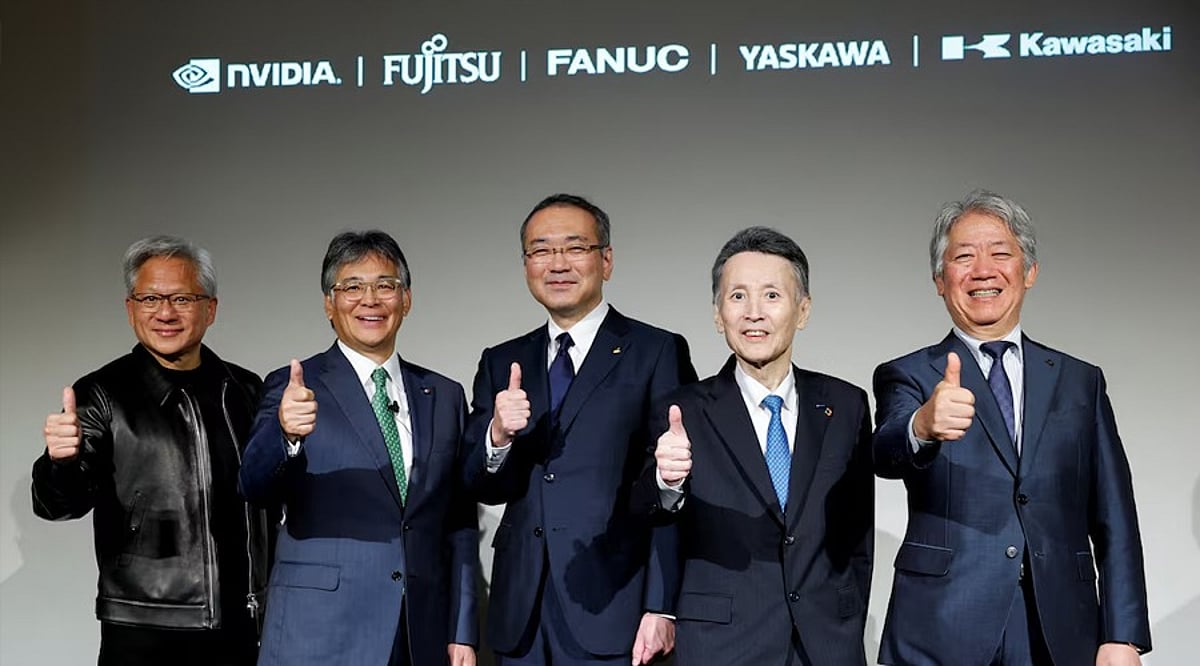
    NVIDIA Partners with Japanese Robotics Firms to Accelerate AI Development

    With the collaboration between NVIDIA and Japanese robotics firms, there is an effort to make progress in developing AI automation. By using its computing technology together with Japan’s robotics expertise, it hopes to produce industrial robots that are better than current ones.

    Cognizant to Hire 1,500 US Graduates by End of 2026

    As part of efforts to build its artificial intelligence team, Cognizant is set to recruit 1,500 graduates in the US by 2026. These new employees will be trained in areas such as artificial intelligence, digital engineering, and other new technologies.

  • How Artificial Intelligence Is Transforming Product Development and Global Sourcing for Brands

    How Artificial Intelligence Is Transforming Product Development and Global Sourcing for Brands

    Building a product requires creativity, planning, strong supplier relationships, smart pricing, and meticulous quality control. For growing brands, this process can be both exciting and overwhelming. Finding the right manufacturer, comparing quotes, managing samples, and keeping production on track are time-consuming tasks. Artificial intelligence is now streamlining these workflows, making them more efficient and data-driven.

    Global Product Sourcing Becomes Data-Driven

    Global product sourcing is a critical component of a successful product line. The right supplier can enhance quality, reduce costs, and ensure timely production. Conversely, a poor supplier can cause delays, inconsistent products, and financial losses. AI tools enable brands to compare suppliers faster and identify better matches based on specific needs. While AI does not replace human judgment—brands must still assess quality, ethics, and shipping regulations—it reduces guesswork and accelerates decision-making with data-backed insights.

    Better Communication Reduces Production Problems

    Most sourcing errors stem from miscommunication. A supplier may misinterpret specifications, overlook material choices, or misunderstand quality standards. These small mistakes can lead to delays, rejected samples, or subpar final products. Clear communication from the outset prevents many of these issues. AI tools help structure specifications, organize supplier responses, and track production details, ensuring both parties work from consistent notes. This is especially valuable when brands operate across different countries and time zones. While not a cure-all, clearer communication significantly increases the likelihood of smooth production runs.

    AI Accelerates the Journey from Idea to Sample

    The early stages of product development are often uncertain. Brands may have a great concept but struggle to translate it into detailed specifications and samples. AI tools assist by clarifying requirements and enabling brands to communicate ideas to suppliers in straightforward terms. This reduces confusion and speeds up the transition from concept to sample. Fast sampling is crucial for brands chasing trends or seasonal opportunities. AI helps teams compare supplier capabilities, estimate costs earlier, and refine product details, giving brands a better chance of launching at the optimal time.

    Supplier Discovery Becomes More Efficient

    Traditionally, finding suppliers involved networking, attending trade shows, or browsing directories—slow processes that often miss viable options. AI sourcing tools scan broader networks, matching suppliers to a brand’s specific needs. This benefits both new brands and established companies expanding into new product categories. Speed matters because finding a supplier is about more than just production capability; it involves meeting quality standards, price targets, order volumes, and delivery schedules. A larger pool of suppliers provides more choice and reduces dependence on a single factory or region.

    Cost Control Begins Before Production

    Most product costs are determined long before manufacturing begins. Material choices, design, packaging, order size, shipping, and supplier location all influence the final cost. AI tools help brands evaluate these factors early, allowing adjustments before costs become fixed. Even small decisions in design or sourcing can significantly impact profit margins. Cost control does not mean always choosing the cheapest supplier—a low-cost supplier with poor quality or missed deadlines can be more expensive in the long run. Smart sourcing balances price against reliability and quality. AI can analyze the numbers, but the final decision rests with the brand and its strategic goals.

  • Top Free AI Video Editing Apps Ranked for 2026

    Top Free AI Video Editing Apps Ranked for 2026

    AI-powered video editing tools have made it easier than ever for creators to produce professional-looking content without expensive software or advanced skills. Here are the best free AI video editing apps ranked for 2026, each offering unique features to streamline your workflow.

    CapCut

    CapCut is one of the most popular free AI video editing apps for beginners and creators. It offers automatic captions, background removal, AI effects, text-to-speech, and smart templates. Its easy interface helps users create professional-looking videos for TikTok, YouTube Shorts, Instagram Reels, and other social platforms within minutes.

    Canva

    Canva combines graphic design and AI-powered video editing in one platform. Users can create videos using Magic Design, AI-generated visuals, animations, subtitles, and drag-and-drop templates. Its cloud-based workflow makes collaboration simple, while the free version includes enough features for students, marketers, and content creators to produce engaging videos.

    Adobe Express

    Adobe Express offers an easy way to edit videos using AI without requiring advanced editing skills. The free version includes automatic resizing, background removal, quick templates, AI image generation, and text effects. It is ideal for creating social media content, promotional videos, and presentations with minimal effort and time.

    Clipchamp

    Microsoft-owned Clipchamp provides a user-friendly editing experience with AI voiceovers, automatic captions, text-to-speech, and stock media. The free version supports full HD exports and basic editing tools for everyday projects. It works directly in the browser, making it convenient for Windows users and beginners looking for quick results.

    InVideo AI

    InVideo AI turns simple text prompts into complete videos using artificial intelligence. Users can generate scripts, voiceovers, visuals, and transitions automatically. The free plan allows creators to test AI-powered video production without spending money. It is especially useful for YouTube creators, marketers, educators, and small business owners.

    VEED.IO

    VEED.IO offers browser-based AI video editing with features like automatic subtitles, background noise removal, eye contact correction, and text-to-video generation. The free version is suitable for podcasts, online tutorials, interviews, and social media content. Its simple interface helps creators edit and publish videos much faster than traditional software.

    Descript

    Descript takes a unique approach by allowing users to edit videos through text. Its AI features include automatic transcription, filler word removal, voice cloning, and screen recording. The free plan is ideal for podcasters, educators, and YouTubers who want to create polished videos without using complicated editing timelines.

    Each of these apps offers powerful AI capabilities at no cost, making professional video editing accessible to everyone. Try them out to find the one that best fits your creative workflow.

  • Inkling AI: Mira Murati’s Open-Weight LLM Challenges ChatGPT and Claude

    Inkling AI: Mira Murati’s Open-Weight LLM Challenges ChatGPT and Claude

    Thinking Machines Lab, the AI startup founded by former OpenAI CTO Mira Murati, has unveiled its first in-house AI model, Inkling. Designed as a response to the growing demand for open-weight AI systems, Inkling gives developers and enterprises greater control over how large language models are trained, adapted, and deployed.

    Unlike closed AI models such as ChatGPT from OpenAI and Claude from Anthropic, which are primarily accessed through hosted products or APIs, Inkling’s weights are available for outside developers to download, modify, and fine-tune. This open-weight approach allows organizations to customize the model for their specific needs, rather than relying on a controlled environment.

    What is Inkling?

    Inkling is a 975 billion-parameter LLM with a one-million-token context window. However, it does not use all 975 billion parameters for every task. Thanks to its mixture-of-experts architecture, it activates around 41 billion parameters per task, making the model more efficient. The model was trained from scratch on 45 trillion tokens of text, image, audio, and video, and it now generates textual outputs such as code, structured data, and formatted diagrammatic artifacts.

    According to Thinking Machines, Inkling is a generalist model developed for agentic tasks, coding, reasoning, and structured outputs. The company states, “That breadth matters for customization and real-world use: different users need models that can adapt to very different workflows, not just excel on benchmarks.” The model can also be configured to adjust its “thinking effort,” allowing it to trade off speed and reasoning depth depending on the use case.

    How Inkling Differs from ChatGPT and Claude

    The primary distinction is openness and customization. Closed frontier models like ChatGPT and Claude are accessed through controlled apps or APIs and must be used in a controlled environment. Inkling, by contrast, is an open-weight base model that enterprises can tune using Thinking Machines’ model customization platform, Tinker.

    This makes Inkling more attractive for organizations that want to create domain-specific AI systems with their own processes and information. However, it also means companies take on more responsibility for safety, alignment, and security after fine-tuning the model.

    Performance and Limitations

    Thinking Machines notes that Inkling performs well for coding and reasoning but acknowledges that it is “not the strongest overall model available today, open or closed.” Instead, the company positions Inkling as the first step in a broader model family. Alongside the main model, it also showcased Inkling-Small, a lighter model with only 12 billion active parameters that offers lower costs and faster response times.

    Inkling represents a significant shift toward more open and customizable AI, giving enterprises new options for building tailored AI solutions.

  • LinkedIn Tops Social Platforms in AI-Generated Content, New Study Reveals

    LinkedIn Tops Social Platforms in AI-Generated Content, New Study Reveals

    A new study by AI detection company Pangram Labs has found that LinkedIn is now the leading social media platform for AI-generated long-form content, with over 40% of posts longer than 250 words being entirely produced by artificial intelligence.

    The research analyzed more than one million posts across LinkedIn, X (formerly Twitter), Reddit, Medium, and Substack. While about a quarter of long-form posts across all platforms were fully AI-generated, LinkedIn emerged as a clear outlier. Although it contributed roughly one-third of the total posts examined, a striking 62% of all AI-generated content identified came from the professional networking site.

    Professionals are increasingly turning to generative AI to craft thought-leadership articles, career advice, and business announcements. X ranked second in fully AI-generated long-form content, and when including AI-assisted writing, nearly half of X’s long posts showed some level of AI involvement.

    The findings arrive ahead of new European Union regulations that will require greater transparency for AI-generated content distributed to EU users. Pangram Labs CEO Max Spero warned, “The unchecked growth of AI-generated content could erode trust across the internet. Transparency and disclosure will become increasingly important as AI writing tools become mainstream.”

    LinkedIn stated it remains committed to authentic conversations on the platform and will take steps to reduce low-quality automated content. The study underscores the mounting pressure on social media platforms to balance the use of AI tools with maintaining authenticity and trust.

  • 9 Technologies That Are Likely to Disappear by 2030

    9 Technologies That Are Likely to Disappear by 2030

    Technology evolves rapidly, and many once-essential tools are becoming obsolete. From authentication methods to transportation, here are nine technologies that are expected to fade away by 2030 as smarter, more efficient alternatives take over.

    Passwords

    Traditional passwords are increasingly vulnerable and inconvenient. Passkeys, biometrics (fingerprint, facial recognition), and multi-factor authentication offer stronger, more user-friendly security, likely making passwords a relic of the past.

    Physical SIM Cards

    eSIM technology is replacing removable SIM cards, simplifying device activation and allowing users to switch carriers without swapping cards. This innovation improves flexibility for mobile network users worldwide.

    Cable Television

    Streaming platforms and on-demand content are steadily replacing traditional cable subscriptions. Internet-based entertainment services offer flexible, personalized viewing experiences, driving the decline of cable TV.

    Gas-Powered Cars

    Electric vehicles (EVs) are advancing rapidly as governments enforce stricter emissions regulations and expand charging infrastructure. The transition to cleaner transportation is accelerating the phase-out of gasoline-powered cars.

    Cash Payments

    Digital wallets, UPI, contactless cards, and mobile banking continue to reduce dependence on physical currency for everyday transactions. The convenience and security of digital payments are pushing cash toward extinction.

    Standalone GPS Devices

    Smartphone navigation apps like Google Maps and Waze offer real-time traffic updates, offline maps, and continuous updates, eliminating the need for dedicated GPS hardware for most consumers.

    USB-A Ports

    USB-C is becoming the universal standard for charging and data transfer, offering faster speeds, higher power delivery, and reversible connectors. Manufacturers are progressively phasing out USB-A ports in modern devices.

    Mechanical Hard Drives

    SSDs (solid-state drives) are rapidly replacing traditional hard drives due to their superior speed, durability, energy efficiency, and decreasing cost per gigabyte. Mechanical drives are becoming obsolete for most applications.

    Manual Customer Support

    AI-powered chatbots and intelligent virtual assistants increasingly handle routine customer queries, providing instant responses 24/7. This reduces reliance on traditional human-only support systems, transforming customer service.

    These nine technologies represent major shifts in how we interact with the world. Staying informed can help businesses and consumers adapt to the inevitable changes ahead.

  • Hinge Creator Justin McLeod Secures $18M for AI Voice-Based Matchmaking App Overtone

    Hinge Creator Justin McLeod Secures $18M for AI Voice-Based Matchmaking App Overtone

    Online dating is about to take a radically different turn. Justin McLeod, the founder of Hinge, has raised $18 million in seed funding for Overtone, an AI-powered matchmaking platform that does away with profiles and swiping in favor of voice conversations. The goal: create more meaningful introductions and improve compatibility from the very first interaction.

    Backed by Match Group and Top VCs

    The round was led by Match Group, FirstMark Capital, and Pace Capital. Overtone positions itself as a matchmaking service rather than a traditional dating app. Users don’t upload public profiles or browse through endless candidates. Instead, the platform relies on voice-based conversations to assess personality, interests, and relationship preferences before suggesting introductions.

    Fighting Dating App Fatigue

    McLeod says Overtone is designed to make finding a partner feel less like endless scrolling and more like a thoughtful, personal introduction. By leaning into conversation instead of curated profiles, the system can better detect compatibility and reduce the burnout many users associate with swipe-based dating.

    The launch comes at a time when the online dating industry is actively seeking fresh solutions to improve user experience. With many users frustrated by the endless swiping loop, companies are exploring more personalized methods to help people build lasting connections.

    A New Direction for Digital Matchmaking

    The investment also signals Match Group’s continued interest in technologies that could reshape the future of matchmaking. After helping Hinge grow into one of the world’s top relationship-driven platforms, McLeod is now betting on fewer options and more carefully selected introductions—a strategy that could lead to better outcomes for users.

    With Overtone, the focus shifts from browsing profiles to fostering conversations and measuring compatibility. It offers an alternative that feels distinctly different from the standard dating app routine.

  • NVIDIA Teams Up with Fanuc, Yaskawa to Boost Robotics and AI in Japan

    NVIDIA Teams Up with Fanuc, Yaskawa to Boost Robotics and AI in Japan

    NVIDIA has announced partnerships with major Japanese robotics manufacturers, including Fanuc and Yaskawa Electric, to accelerate the development of artificial intelligence and robotics. The chipmaker revealed the collaborations during a media event in Tokyo on Thursday, signaling a deepening commitment to Japan’s industrial automation sector.

    NVIDIA CEO Jensen Huang emphasized that AI can make industrial robots smarter, more adaptable, and easier to deploy. “With AI, robots will become smart, easily adaptable and accessible,” Huang said at the Tokyo event. Fanuc and Yaskawa Electric are among Japan’s leading industrial robotics suppliers, providing automation systems to factories worldwide in sectors such as automotive production, electronics, logistics, and industrial equipment.

    The partnerships integrate NVIDIA’s computing platforms and AI software into Japan’s established robotics ecosystem. Financial terms and specific rollout schedules were not disclosed. During his visit, Huang also met with executives from memory chipmaker Kioxia and semiconductor equipment producer Tokyo Electron, and attended an event hosted by Sega Sammy in Tokyo’s Akihabara district.

    Japanese Organizations Adopt NVIDIA’s Nemotron Models

    NVIDIA announced that several Japanese organizations are using its Nemotron open models, datasets, and software tools to build AI systems tailored for Japanese language tasks and industry-specific applications. The Institute of Science Tokyo leveraged NVIDIA datasets and NeMo software to develop the Swallow model family, which supports Japanese language processing, reasoning, coding, and mathematics. Companies are applying Swallow for financial document translation and asset management reports.

    SB Intuitions, SoftBank’s generative AI research arm, trained its Sarashina models with NVIDIA technology. Japan’s Digital Agency selected Sarashina3 mini for specialized AI projects, while SoftBank built a telecom model for automated network operations. Stockmark released a Japanese document-understanding model based on NVIDIA Nemotron 3 Nano Omni and is developing business knowledge systems for manufacturing, energy, and chemical sectors. Sakana AI is integrating Nemotron into its Fugu model-routing platform, which selects different AI models based on accuracy, speed, and cost.

    Enterprise Applications Expand Across Industries

    Japanese companies are deploying Nemotron for customer service, research, remote operations, and workplace automation. Avatarin is developing Japanese-language AI agents for customer conversations and remote-presence systems, using NVIDIA HGX B300 systems for private AI processing and NVIDIA Jetson hardware for digital avatar services at airports and other locations. ENEOS Holdings applies Nemotron tools to energy and materials research, combining document search, image analysis, language processing, and molecular simulations for cooling fluids, catalysts, and other industrial materials.

    NTT Data used NVIDIA’s Japanese training dataset to improve its tsuzumi 2 language model and is exploring a multi-agent system that assigns tasks to different AI models. Hitachi is developing physical AI systems with NVIDIA Nemotron and Cosmos open models, connecting information technology with factory and infrastructure operations. NVIDIA releases Nemotron models with open weights, datasets, and development instructions, allowing companies to customize and run them on private systems or cloud platforms. The models are available through Hugging Face, ModelScope, OpenRouter, NVIDIA’s developer platform, and selected cloud providers.