Category: Artificial Intelligence

  • 3 Google AI Tools to Streamline Your Job Search in 2026

    3 Google AI Tools to Streamline Your Job Search in 2026

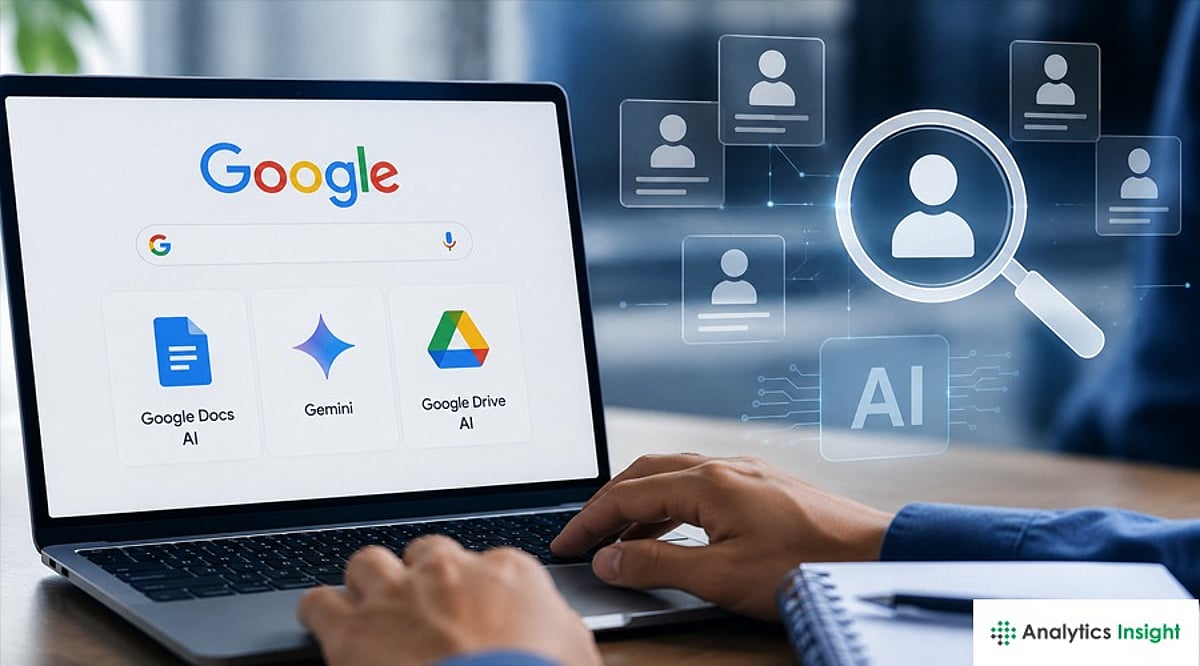
    Finding the right job involves more than submitting applications. Google’s AI tools can support different stages of the process, from exploring career options to improving application materials and practicing interviews. Using them together creates a more structured and focused job-search workflow.

    Career Dreamer Maps Direction, with a Catch

    Career Dreamer takes a person’s past roles, interests, and strengths and turns them into a career identity statement — a summary meant to describe fit rather than list job history. It works well for people whose experience spans industries or does not sit neatly under one job title.

    Career changers, people returning after a break, and professionals with mixed skill sets tend to get the most from it, since the tool surfaces adjacent roles a plain keyword search would miss. Someone who has spent years in operations but wants to move toward program management, for example, often struggles to describe that shift in a way recruiters recognize. Career Dreamer is built for exactly that translation problem.

    One limitation matters here: Career Dreamer is currently available only in the United States. Job seekers outside that market cannot open the tool directly, though the underlying exercise still works elsewhere. Gemini can build a similar transferable-skills assessment when prompted with a list of past roles and strongest outcomes, though it does not replicate Career Dreamer’s dedicated workflow or its structured output format.

    NotebookLM Compares, Rather than Writing

    NotebookLM works differently from a standard writing assistant. Its real strength is comparison. Upload a resume alongside several job postings in the same field, and it can identify which requirements repeat across all of them — a pattern that shows exactly what to emphasize before editing the resume itself. NotebookLM grounds its answers in the documents supplied, so it tends to stay closer to a person’s experience than a generic prompt would, reducing the risk of a resume drifting toward generic corporate language.

    A Google employee’s own account of using these tools followed a different order than the official pitch suggests. She started with NotebookLM, feeding it job postings and profiles that caught her attention before settling on any single direction. Only after spotting recurring themes did she turn to Career Dreamer, then finally to Gemini for evaluating specific roles against her longer-term goals. This example suggests the tools work best as flexible entry points rather than a fixed sequence.

    Gemini Live Tests: What Reads Well but Sounds Weak

    Reading a list of behavioral questions is not the same as answering them aloud. Speaking exposes filler words, weak transitions, and stories that sound thinner out loud than they read on paper. Gemini Live can be set up as a hiring manager for a specific role, offering live feedback while a candidate runs through STAR-format answers. STAR, short for Situation, Task, Action, Result, gives interview responses a clear shape that holds up under pressure.

    What the Tools Cannot Fix

    None of the tools mentioned above replaces judgment. Career Dreamer suggests directions without confirming employability. NotebookLM sharpens framing but cannot invent substance that is not already there. Gemini Live builds confidence, not guaranteed outcomes. A quieter risk sits underneath all three: as more applicants lean on the same tools, resumes and interview answers start converging in tone, making it harder for any single application to stand apart from the pile. The tools remove friction from preparation. They do not remove the need for something distinct to offer an employer.

    Final Thoughts

    The real advantage in this workflow is not the tools themselves. It is the willingness to treat a job search as a process with distinct stages, each demanding a different kind of thinking. Direction, positioning, and delivery rarely improve from the same habit repeated three times. As AI tools spread further into hiring on both sides, the applicants who stand out will likely be the ones using preparation time to sharpen a genuine point of view, not just polish the surface.

    Frequently Asked Questions

    Which Google AI tool should I use first for a job search?

    Start with Career Dreamer, as it helps identify transferable skills, create a career identity statement, and explore roles that match your experience and interests before preparing applications.

    Can NotebookLM help improve resumes and cover letters?

    Yes. NotebookLM can organize resumes, job descriptions, and research materials, making it easier to tailor resumes and cover letters for specific roles.

    How does Gemini Live help with interview preparation?

    Gemini Live lets users practice interview questions through spoken conversations, helping improve responses, communication, confidence, and overall interview readiness.

    Are Google’s AI career tools free to use?

    Some Google AI career tools are available at no cost, while access to certain Gemini features may depend on the app, region, or subscription plan. Check Google’s latest availability for details.

    Why use all three Google AI tools instead of just one?

    Each tool supports a different stage of the job search. Career Dreamer helps discover suitable careers, NotebookLM strengthens application materials, and Gemini Live prepares candidates for interviews, creating a complete AI-assisted job-search workflow.

  • 10 Essential Data Science Concepts to Master in 2026

    10 Essential Data Science Concepts to Master in 2026

    Data science has evolved rapidly, and professionals who want to stay ahead must master a blend of foundational skills and emerging technologies. Here are the ten most important concepts to learn in 2026, covering Python, statistics, SQL, machine learning, generative AI, data engineering, cloud computing, MLOps, and business intelligence.

    1. Python

    Python remains the dominant language for data science due to its readability and extensive library ecosystem. Key skills include functions, classes, object-oriented programming, error handling, decorators, and context managers. Essential libraries: NumPy, Pandas, Polars, Matplotlib, Seaborn, Plotly, Scikit-learn, PyTorch, TensorFlow, and JAX.

    2. Mathematics

    Mathematics underpins every machine learning model. Focus on linear algebra (vectors, matrices, PCA), calculus (derivatives, gradient descent), probability (Bayes’ theorem, distributions), and statistics (hypothesis testing, A/B testing, ANOVA).

    3. SQL

    SQL is critical for querying databases. Beyond basic SELECT statements, learn CTEs, window functions, indexes, and views. Modern cloud data warehouses like Snowflake, BigQuery, and Redshift, plus lakehouse technologies like Delta Lake, are increasingly important.

    4. Machine Learning

    Machine learning enables pattern recognition and prediction. Supervised methods include linear regression, random forests, and gradient boosting. Unsupervised techniques include K-Means, PCA, and t-SNE. Model evaluation metrics like precision, recall, F1 score, and cross-validation are essential.

    5. Deep Learning

    Deep learning powers modern AI with architectures like CNNs for images, RNNs and LSTMs for sequences, and Transformers for language and generation. Mastering these enables advanced pattern detection and classification.

    6. Generative AI

    Generative AI builds on deep learning to create content. Key techniques include Retrieval-Augmented Generation (RAG), fine-tuning, LoRA, PEFT, and RLHF. AI agents and function calling allow models to perform autonomous tasks, making them central to business AI applications.

    7. MLOps

    MLOps ensures models are deployable and maintainable. Tools like Git, MLflow, Docker, Kubernetes, and CI/CD pipelines are vital. Cloud platforms (AWS, Azure, GCP) enable scalable deployment and monitoring for drift and performance issues.

    8. Cloud Computing

    Cloud platforms provide the infrastructure for data processing, storage, and AI at scale. Familiarity with AWS, Azure, or Google Cloud, along with services like S3, Lambda, and BigQuery, is increasingly required for data science roles.

    9. Business Intelligence

    Visualization and communication turn data into actionable insights. Tools like Tableau, Power BI, Looker, and Apache Superset help create dashboards that convey key metrics. Clear reporting supports better decision-making.

    10. Emerging Concepts

    Stay ahead with emerging fields like Responsible AI, Synthetic Data, Causal AI, Time Series AI, Multimodal AI, and AI agents. Combining these with strong fundamentals in Python, mathematics, and SQL will provide the best career opportunities in 2026.


    FAQs:

    1. Why learn data science in 2026? These skills align with current industry demands and future AI roles.
    2. Is Python still the best language? Yes, due to its simplicity and powerful libraries.
    3. Do I need math? Yes, for understanding model mechanics.
    4. What new skills matter? Generative AI, RAG, and MLOps are key.
    5. Can beginners start? Yes, begin with Python, SQL, and statistics, then progress to more advanced topics.
  • Gnani AI: India’s Deep-Tech Pioneer in Agentic Speech and Voice AI Solutions

    Gnani AI: India’s Deep-Tech Pioneer in Agentic Speech and Voice AI Solutions

    Gnani AI is a deep-tech artificial intelligence company based in India that specializes in voice-first agentic AI and conversational AI solutions. The company develops proprietary speech technologies—including automatic speech recognition (ASR), text-to-speech (TTS), and natural language understanding (NLU)—to enable multilingual voice communication, particularly in Indian languages. Businesses leverage these tools to automate customer interactions, authentication processes, and live chat experiences.

    About the Company

    Gnani creates cutting-edge voice-first automation solutions through its advanced conversational AI systems. Its technology enables organizations to build intelligent voice assistants that handle customer interactions, providing seamless communication via natural language understanding, speech processing, and AI-powered chat systems. The platform offers tools for automating conversations, authenticating users with voice biometrics, and analyzing user interactions across multiple channels. The company’s core capabilities include speech recognition, text-to-speech technology, and AI-powered language models, all tailored for high accuracy in Indian languages.

    Products and Services

    Gnani.ai provides a comprehensive suite of AI-powered speech and conversational solutions, including:

    • Speech-to-text transcription
    • Text-to-speech voice generation
    • Multilingual translation
    • AI agents for customer engagement
    • Call analytics and voice biometrics authentication
    • Omnichannel automation tools supporting voice, chat, messaging, and email

    These solutions are designed for enterprise customer engagement and workflow automation, helping businesses reduce manual effort and improve service quality.

    Core Leadership Team

    Gnani AI is led by a team of experienced technologists and entrepreneurs driving innovation in voice AI. The leadership combines deep expertise in artificial intelligence, machine learning, and natural language processing.

    Revenue Streams

    The company generates revenue through a dual model:

    • SaaS subscription model: Delivers the conversational AI platform as a cloud-based service.
    • Enterprise licensing model: Provides voice automation solutions, AI agent deployments, analytics services, voice biometrics tools, and performance-driven customer experience optimization services.

    Client Segments and Target Companies

    Gnani.ai serves B2B clients that aim to automate conversations, improve contact center efficiency, and deliver better multilingual customer service. Target companies operate in telecom, banking, retail, healthcare, and technology sectors, particularly those with extensive customer support and sales operations.

    Target Geography

    While headquartered in India, Gnani.ai has expanded its footprint globally. Enterprises across Asia, Africa, the Middle East, North America, and European markets have implemented its AI-based customer experience automation solutions.

    Social Media and Website

    For more information, visit Gnani AI’s website and follow them on LinkedIn.

  • How Small Businesses Leverage AI to Reduce Operational Costs

    How Small Businesses Leverage AI to Reduce Operational Costs

    Small businesses are increasingly turning to artificial intelligence to streamline operations and cut expenses. From customer support to inventory management, AI tools are helping entrepreneurs do more with less. Here’s a look at the key areas where AI is making a difference.

    AI Chatbots

    AI-powered chatbots handle customer queries 24/7, reducing support costs, improving response times, and allowing staff to focus on complex customer needs.

    AI Accounting Tools

    AI automates bookkeeping, invoice processing, expense tracking, and financial reporting, minimizing manual work while reducing accounting errors and operational expenses.

    AI Marketing Platforms

    AI creates personalized campaigns, automates email marketing, optimizes advertisements, and improves customer targeting, helping businesses lower marketing costs significantly.

    AI Inventory Management

    AI predicts product demand, optimizes stock levels, and reduces overstocking and shortages, helping businesses save on storage, procurement, and wastage expenses effectively.

    AI Content Creation

    AI generates blogs, product descriptions, social media posts, and marketing copy, reducing content production costs while maintaining consistent publishing schedules.

    AI Meeting Assistants

    AI records meetings, generates summaries, extracts action items, and automates documentation, saving employees’ time and improving workplace productivity across teams.

    AI Sales Assistants

    AI qualifies leads, recommends follow-ups, predicts customer behavior, and automates repetitive sales tasks, increasing conversions while reducing manual sales effort.

    AI HR and Recruitment

    AI screens resumes, schedules interviews, and automates candidate communication, reducing hiring costs while speeding up recruitment for growing businesses.

    AI Data Analytics

    AI analyzes business performance, customer trends, and operational data, helping owners make faster decisions that reduce unnecessary spending and improve profitability.

  • How AI Transforms Coupon Discovery into a Real-Time Data Challenge

    How AI Transforms Coupon Discovery into a Real-Time Data Challenge

    Promo codes may seem like a simple marketing tactic, but beneath the surface they represent a surprisingly complex data problem. Each code is a tiny record with a short, unpredictable lifespan: it works under unpublicized conditions, then disappears without warning. Multiply that by millions of codes across hundreds of thousands of online stores, and you have a dataset that decays faster than almost any other consumer-facing information.

    For twenty years, the industry ignored this decay. Coupon aggregators compiled lists, ranked well in search engines, and left verification to shoppers. The data was stale, everyone knew it, and the cost was absorbed one wasted checkout minute at a time. Now, machine learning has made real-time verification economically feasible, quietly shifting coupon discovery from a content business into a data engineering one.

    A Dataset That Rots by Design

    To understand why the old model failed, look at coupon data through an analyst’s lens. First, the decay rate is extreme. Codes expire on fixed dates, hit redemption caps, get pulled mid-campaign, or apply only to narrow segments—first orders, specific categories, minimum spends. A code’s validity isn’t static; it’s a function of time, store, cart contents, and sometimes the shopper’s history. A list of codes without a validation timestamp is closer to a rumor than a dataset.

    Second, there is no authoritative source. Merchants don’t publish machine-readable feeds of active promotions. Codes leak through newsletters, influencer campaigns, affiliate programs, and social posts, then get scraped and re-scraped by aggregators who copy from each other. Errors propagate; corrections don’t.

    Third—the structural flaw—publishers’ incentives were never aligned with accuracy. Aggregator sites monetize traffic, and a page listing twenty dead codes ranks as well as one listing three live ones. Without a feedback loop from actual redemption outcomes, there was no mechanism for self-correction. The result: verification work—the only part that matters—was outsourced to end users, performed manually, and its results discarded. Every day, millions of shoppers ran millions of validity tests at checkout, and none of that signal was captured.

    Verification as the Core Product

    The current generation of AI shopping assistants inverts this model. Instead of publishing codes and hoping, they treat verification as the product and run it at the moment it matters: live, at checkout, against the shopper’s actual cart. Technically, the assistant—typically a browser extension—performs a small automated experiment during checkout. It records the current cart total, applies a candidate code, waits for the page to settle, and interprets the outcome. Did the total drop? By how much? Did the site return an error—expired, not applicable to these items, minimum spend not met? Each attempt produces a labeled data point: this code, this store, this timestamp, this result.

    Two AI capabilities make this workable at web scale. The first is structural understanding: recognizing checkout pages, discount fields, and confirmation messages across storefronts that share no common platform, layout, or language. That’s a classification problem—the model reads contextual signals the way a human would, rather than relying on hard-coded selectors that break with every redesign. The second is semantic interpretation: error messages are free text, phrased differently on every site and in every language, and the system must map them to a small set of meaningful outcomes. Neither capability was practical with rule-based software; both are now routine for machine learning models, which is precisely why this category is emerging now rather than a decade ago.

    The Feedback Loop is the Moat

    The most interesting part of the architecture isn’t any single verification—it’s what happens to the results. Every tested code, successful or failed, flows back into the system. Codes that keep redeeming get promoted; those that keep failing get demoted and eventually retired. Patterns emerge that no static database could capture: which stores rotate codes weekly, which offers are region-locked, which “public” codes are actually single-use. The dataset stops being a snapshot and becomes a living model of the promotional landscape, continuously refreshed by usage itself.

    This creates a data flywheel familiar from other consumer AI products. More users generate more verification events; more events produce a fresher, more accurate code pool; a more accurate pool makes the product more useful, attracting more users. The defensibility isn’t in scraping codes—anyone can do that—it’s in the accumulated, timestamped record of what actually worked, where, and when.

    One production example of this architecture is Couponly, an AI-powered shopping assistant available as a browser extension for Chrome, Firefox, and Microsoft Edge. Rather than presenting shoppers with lists of unverified codes, it finds, tests, and applies codes in real time at checkout, using live outcomes to keep its data current. The company is extending the same data foundation beyond couponing—toward iOS and Android apps, item saving, price tracking, price history, cashback, and smarter deal alerts. This is a natural progression: once a system continuously observes prices and promotions across the web, discount verification is just the first product you can build on top of it.

    Pricing Intelligence is the Same Problem, Wider

    That progression points to where the category is heading. Price tracking and price history are, structurally, the coupon problem again: high-volume, fast-decaying observations that are only valuable if they’re current and verified. A “was €89, now €59” claim is only meaningful if someone has been recording that price over time. Deal alerts are a prediction layer on top—learning what a good price looks like for a product and flagging the moment it appears.

    For the analytics community, the pattern is worth watching because it generalizes. A growing class of consumer AI tools follows the same blueprint: pick a domain where the ground truth changes constantly, build an agent that can measure that truth automatically at the moment of use, and let the measurements compound into a dataset nobody else has. Shopping happens to be an ideal proving ground—outcomes are unambiguous, feedback is instant, and the value lands directly in the user’s cart total.

    Conclusion

    The coupon field survived two decades of ecommerce progress because it wasn’t really a search problem—it was a data-freshness problem wearing a search costume. Static databases can’t keep up with data that decays hourly and varies by store, cart, and shopper. Continuous, automated, in-context verification can. As AI shopping assistants push that approach across the wider terrain of prices, deals, and alerts, coupon discovery is becoming an early case study in a broader shift: consumer applications where the AI’s job is not to generate content, but to keep a decaying picture of the world permanently up to date.

  • Cresta: AI-Powered Agent and Real-Time Assistance Solutions for Contact Centers

    Cresta: AI-Powered Agent and Real-Time Assistance Solutions for Contact Centers

    Cresta is an AI software company that specializes in developing real-time generative AI solutions designed to enhance contact center operations. Its technology helps organizations improve service delivery, strengthen sales outcomes, and reduce operational workload while delivering better overall customer experiences.

    About the Company

    Cresta creates innovative artificial intelligence systems that enable businesses to manage their customer interaction processes more effectively. The platform offers smart research tools that assist service and sales personnel in making informed decisions during customer interactions through automated workflows and performance monitoring systems.

    The platform provides AI-based agent support, conversation analysis, and service delivery management tools that help organizations optimize their operations and increase efficiency. Cresta empowers businesses to make data-driven judgments about their contact center operations, resulting in stronger customer relationships and measurable business growth.

    Products and Services

    Cresta offers a comprehensive suite of AI-powered contact center solutions, including:

    • AI agents for automated conversations
    • Real-time agent assistance
    • Conversation intelligence
    • Customer interaction analytics
    • Workflow automation
    • Customer experience optimization tools

    These solutions help organizations improve service quality, sales performance, and operational efficiency.

    Revenue Streams

    Cresta generates revenue through enterprise SaaS subscriptions, value-based pricing tied to performance outcomes, licensing of its AI-powered product suite, sales of automation solutions, and corporate partnerships that enable market expansion and joint sales activities.

    Client Segments and Target Markets

    B2B Client Segments: Enterprises seeking AI-powered platforms to improve contact center productivity, automate customer interactions, and enhance service performance.

    Target Companies: Telecom providers, financial services firms, retail brands, and technology companies managing large-scale customer support and sales operations.

    Target Geography: North America, Europe, and other global enterprise markets requiring scalable AI-driven customer experience and contact center solutions.

    Social Media

    Follow Cresta on LinkedIn and visit their official website for more information.

  • How Context-Aware Technology Is Revolutionizing Smart Devices Across Industries

    How Context-Aware Technology Is Revolutionizing Smart Devices Across Industries

    Context-aware technology is reshaping the way smart devices interact with users by learning from their habits, location, and daily routines. Instead of waiting for explicit commands, these devices can anticipate needs and deliver personalized experiences. From suggesting workout playlists to automatically adjusting home settings, context-aware systems make everyday interactions more natural, convenient, and tailored to individual preferences.

    Smarter Personalization

    Context-aware technology enables devices to understand user behavior and environmental cues. This allows for predictive actions, such as adjusting lighting when a movie starts or recommending music based on activity. The result is a seamless, intuitive user experience that feels less like technology and more like a helpful companion.

    Better Voice Assistants

    Modern voice assistants are becoming more intelligent by understanding context rather than just processing words. They recognize previous conversations, user preferences, and situational nuances to deliver more accurate responses. This reduces misunderstandings and makes interactions with smart speakers, smartphones, and home assistants faster and more reliable.

    Smarter Homes

    Context-aware systems enhance smart homes by enabling devices to react to changing conditions. Lights dim automatically during a movie, thermostats adjust based on room occupancy, and security cameras detect unusual activity. These intelligent responses create safer, more comfortable, and energy-efficient living spaces for families.

    Improved Health Monitoring

    Wearable devices leverage context-aware technology to provide deeper health insights. Smartwatches track activity, sleep, heart rate, and location together to offer meaningful recommendations. Instead of just collecting data, these devices identify patterns and alert users to unusual changes, empowering informed health decisions.

    Safer Connected Cars

    Modern vehicles use context-aware systems to boost safety and convenience. By analyzing road conditions, driver behavior, traffic, and weather, cars can issue timely warnings or adjust functions automatically. These features reduce distractions, support safer driving, and enhance the overall driving experience.

    More Efficient Workplaces

    Businesses are adopting context-aware technology to improve productivity. Smart office systems adjust lighting, meeting rooms, and climate based on occupancy and schedules. Employees receive relevant notifications at the right time, helping to minimize distractions and streamline everyday tasks.

    The Future of Intelligent Devices

    As artificial intelligence and connectivity advance, context-aware systems will become even more capable. Future smart devices will better understand environments, routines, and user intentions without constant input. This evolution will create seamless digital experiences that save time, boost efficiency, and simplify life across homes and workplaces.

  • The Future of Consumer AI: Proactive Assistants, Voice Tech, and Personalized Health in 2026

    The Future of Consumer AI: Proactive Assistants, Voice Tech, and Personalized Health in 2026

    Consumer AI is evolving far beyond simple chatbots. The next generation of artificial intelligence focuses on intelligent assistants that understand context, remember preferences, and complete real-world tasks. Instead of being a tool people access only through chat, AI is becoming an invisible layer built into everyday apps, devices, and services.

    One of the biggest trends to watch is the rise of AI agents. These assistants do more than answer questions—they can plan trips, compare prices, book reservations, schedule meetings, send follow-ups, and manage multi-step workflows with minimal human input, saving time and effort.

    Voice AI is also becoming faster and more natural. Modern multimodal systems can understand speech, tone, emotions, pauses, images, and video together, creating conversations that feel more human. This powers smarter virtual assistants, customer support, and real-time personal companions.

    AI-powered creativity is now accessible to everyone. New tools generate high-quality text, images, videos, music, and animations from simple prompts, helping creators, students, marketers, and small businesses produce professional content without advanced editing skills.

    Personalized AI is transforming healthcare and daily wellness. By combining data from smartwatches, fitness trackers, and health records, AI provides tailored insights on exercise, sleep, nutrition, and lifestyle, helping users make better everyday health decisions.

    AI is also becoming highly specialized. Instead of relying on one general chatbot, consumers are using focused AI apps for shopping, education, travel planning, budgeting, productivity, and creative work. These niche tools deliver more personalized and practical experiences for specific needs.

    The biggest shift in 2026 is that AI is becoming proactive rather than reactive. The most successful AI products will remember user preferences, work across multiple apps and devices, automate repetitive tasks, and quietly handle everyday work in the background—making AI a natural part of daily life instead of just another chatbot.

  • Today’s Tech Roundup: iQOO 16 Gaming Phone, Apple iOS 27 AI, BrainCo vs Neuralink, Tesla Robo Taxi, and AI Health Wearables

    Today’s Tech Roundup: iQOO 16 Gaming Phone, Apple iOS 27 AI, BrainCo vs Neuralink, Tesla Robo Taxi, and AI Health Wearables

    From iQOO’s upcoming gaming phone and Apple’s smarter Siri to brain-computer breakthroughs and Tesla’s robo-taxi hurdles, here are the biggest stories shaping the tech landscape today.

    iQOO 16 Gaming Phone Leaks

    Leaks have surfaced about the iQOO 16, a smartphone designed specifically for gaming. The device is expected to feature top-tier processors, enhanced cooling systems, and high-refresh-rate displays optimized for competitive mobile gaming.

    Apple iOS 27: Siri Gets a Major AI Update

    Apple is rolling out a significant artificial intelligence upgrade in iOS 27, making Siri more context-aware and conversational. The update aims to improve natural language understanding and offer more proactive assistance across apps and system functions.

    BrainCo vs Neuralink: Battle of the Brain-Computer Interfaces

    BrainCo is emerging as a strong competitor to Elon Musk’s Neuralink, showcasing its own non-invasive brain-computer interface technology. While Neuralink focuses on implantable chips, BrainCo’s headbands and wearable EEG devices aim to decode neural signals for applications in education, therapy, and productivity.

    Tesla’s Robo Taxi Challenge

    Tesla continues to push its autonomous robo-taxi initiative, but faces regulatory hurdles, technical challenges, and public skepticism. The company is testing its latest self-driving software on public roads, aiming to launch a fully driverless ride-hailing service in select cities.

    AI-Powered Health Wearables

    A new wave of health wearables is leveraging artificial intelligence to provide real-time insights on vital signs, activity levels, and potential health risks. These devices promise to move beyond simple step-counting to early detection of conditions such as arrhythmias and sleep disorders.

    These stories represent just a glimpse of how technology continues to evolve, blending AI, mobility, and healthcare into everyday life.

  • Top AI Lip-Sync and Visual Dubbing Platforms for 2026

    Top AI Lip-Sync and Visual Dubbing Platforms for 2026

    AI lip-sync and visual dubbing platforms are transforming video localization, enabling creators, studios, and businesses to produce multilingual content with faster workflows and improved accuracy. These tools use machine learning to match facial movements with translated audio, creating more natural video experiences across global markets.

    What Are AI Lip-Sync and Visual Dubbing Tools?

    AI lip-sync platforms analyze facial movements, speech patterns, and video frames, then adjust mouth movements to align with new audio tracks in different languages. They are useful for film and television localization, YouTube and social media content, corporate training videos, advertising campaigns, gaming content, and digital creators targeting global audiences. Compared to traditional dubbing, AI-powered systems significantly reduce production time and allow creators to produce multiple language versions from a single original video.

    Top AI Lip-Sync and Visual Dubbing Platforms

    Sync: Built for Professional Video Dubbing

    Sync, developed by Sync Labs, is a leading AI lip-sync platform focused on professional video production. It allows users to replace audio while keeping facial movements aligned with new dialogue. The platform supports live-action videos, animation, podcasts, games, and AI-generated content.

    • Advanced models: Sync-3 and Lipsync-2-Pro
    • Multi-language support: Hindi, English, Spanish, French, Korean
    • High-resolution output
    • Multiple face processing
    • API and editing workflow support
    • Adobe Premiere and developer integrations

    Sync is designed for users who need high-quality results for professional projects.

    HeyGen: Popular for AI Avatar Videos

    HeyGen is widely used for creating AI-generated presenters and business videos. It allows users to create digital avatars that speak in different languages with matched facial expressions.

    • AI avatar creation
    • Voice translation
    • Multilingual video generation
    • Support for marketing and training videos

    HeyGen is especially useful for companies creating educational content, advertisements, and online presentations.

    Vozo AI: Focused on Easy Video Translation

    Vozo AI provides tools for creators who want to quickly translate and adapt videos. It combines voice conversion with lip-sync technology to make translated videos look natural.

    • AI video translation
    • Voice cloning options
    • Lip movement adjustment
    • Creator-focused workflows

    The platform is aimed at social media users, influencers, and businesses that need quick localization.

    ElevenLabs: Strong Voice Technology

    ElevenLabs is known for realistic AI voice generation. Its technology helps creators produce natural-sounding speech in multiple languages and styles.

    • Realistic AI voices
    • Multilingual voice generation
    • Voice cloning capabilities
    • Audio production tools

    While primarily focused on voice, it plays an important role in AI dubbing workflows when combined with visual lip-sync technology.

    Rask AI: Designed for Global Content Localization

    Rask AI helps businesses translate and adapt videos for international audiences, supporting automated dubbing and localization for different markets.

    • Video translation
    • AI dubbing
    • Multiple language support
    • Business-focused workflows

    The platform is useful for companies converting large volumes of content for global users.

    How AI Dubbing Is Changing the Media Industry

    AI-powered dubbing helps content producers reach audiences in new markets. A single video can now be adapted into several languages without creating separate recordings for every region. Streaming platforms can use these tools for international releases, brands can create regional advertisements faster, and independent creators can expand their audience without heavy investment in traditional dubbing.

    Key Factors to Consider Before Choosing a Platform

    • Accuracy: How naturally lip movements match the new audio
    • Language Support: Availability of required languages and accents
    • Video Quality: Support for high-resolution exports
    • Integration: Compatibility with editing software and existing workflows
    • Pricing: Cost for individual creators vs. large organizations

    Limitations of AI Lip-Sync Technology

    AI dubbing has improved remarkably but still requires human supervision for complex projects. Difficult camera angles, unclear audio, and highly emotional performances may need additional editing. Professional studios often combine AI tools with human editors to maintain creative quality and accuracy.

    Conclusion

    AI lip-syncing and dubbing services are emerging as essential tools for reaching international audiences. Sync provides professional video dubbing, while platforms like HeyGen, Vozo AI, ElevenLabs, and Rask AI serve different content production needs. The future of video localization will involve both artificial intelligence and human ingenuity, making multilingual content creation easier than ever before.