Category: Artificial Intelligence

  • Zoho Launches AI-Powered Classes 2.0 Across India with Support for 22 Languages

    Zoho Launches AI-Powered Classes 2.0 Across India with Support for 22 Languages

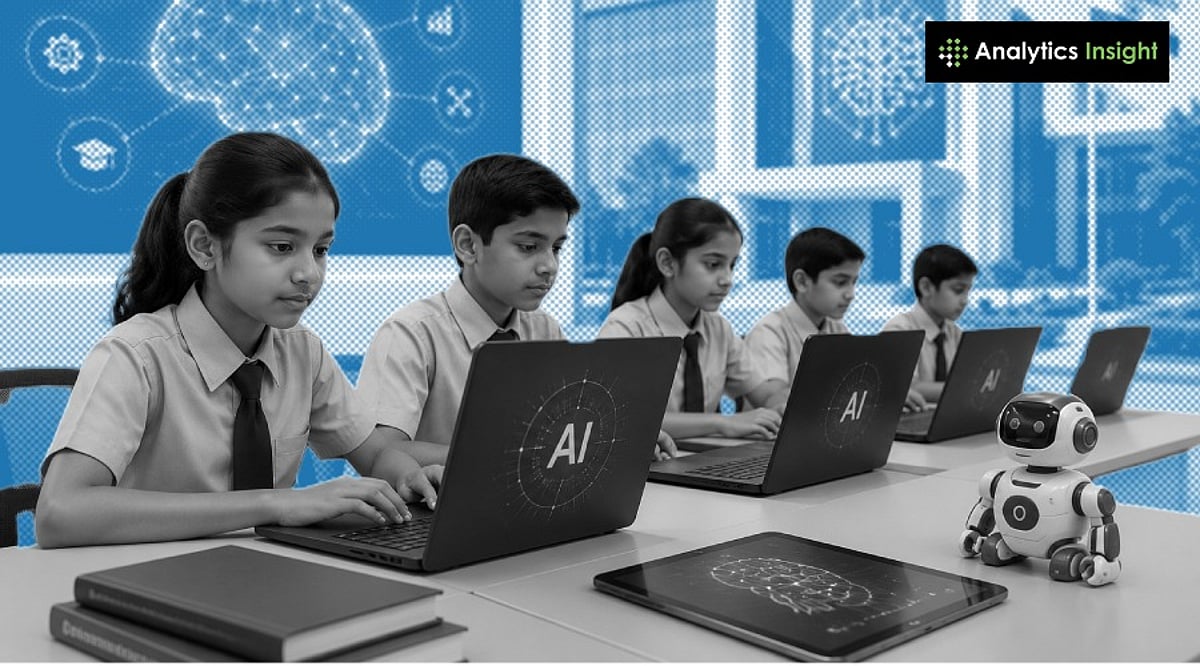
    Zoho has unveiled Zoho Classes 2.0, an advanced Learning Management System (LMS) that leverages artificial intelligence to simplify teaching and learning. The platform introduces a suite of new tools designed for students, teachers, schools, colleges, and universities. Notably, Zoho is offering the platform free of charge to government educational institutions across India.

    Originally launched during the COVID-19 pandemic as a tool for teachers to collect assignments online, Zoho Classes has evolved significantly based on educator feedback. Zoho Classes 2.0 now functions as a comprehensive learning platform that supports everyday classroom activities.

    AI Tools Enhance Teaching and Learning

    One of the standout features is the AI tutor, which only answers questions related to the subjects a student is studying. This ensures learners stay focused on their curriculum rather than receiving answers on unrelated topics. The platform also offers daily practice questions and rewards consistent learning through simple streaks.

    Teachers benefit from time-saving AI tools that can quickly generate lesson plans, course details, learning objectives, and classroom content. Educators can review and customize materials before sharing them with students, significantly speeding up lesson preparation.

    Another valuable addition is AI-based grading, which evaluates computer science assignments and prepares feedback for teachers. Teachers retain final control before releasing marks to students. Zoho states this feature can reduce hours of manual grading each semester, allowing educators to dedicate more time to student interaction.

    New Features for Schools and Colleges

    Educational institutions gain tools to streamline administrative tasks. Many schools and colleges must prepare reports for government and education authorities. Zoho Classes 2.0 helps collect course information and learning records, simplifying and accelerating report generation.

    The platform supports all 22 scheduled Indian languages, enabling students and teachers from diverse regions to use it comfortably. Zoho says the AI understands multiple Indian languages, making learning more natural for users.

    Safety features are also enhanced. The AI tutor restricts answers to classroom subjects, and schools can decide whether to enable AI features for students. The mobile app allows students to view saved lessons offline for a limited time, though full downloads are not available.

    Free Access for Government Institutions

    Zoho is providing Zoho Classes 2.0 at no cost to central and state government schools, colleges, and universities. Individual teachers can use it free for up to 100 students. Private institutions can subscribe for Rs 500 per teacher per month.

    With Zoho Classes 2.0, the company aims to make education more accessible and efficient. The platform reduces routine tasks for teachers, offers better learning support for students, and helps schools manage academic operations smoothly. Its intuitive AI features and multilingual support are expected to drive digital learning adoption across India in the coming years.

  • Why Small Businesses Are Poised to Win Big with AI

    Why Small Businesses Are Poised to Win Big with AI

    For the better part of two years, the national conversation about artificial intelligence has been dominated by the largest technology companies, the researchers building the underlying models, and the policymakers trying to write the rules for them. But what is largely missing from the discussion is the segment of the American economy where the day-to-day impact of these tools will be felt first and most directly: small businesses.

    Small businesses, the roughly 33 million firms that account for nearly half of private sector employment, are the place where AI will either become a unifying force for economic prosperity or create a widening gap in equality. This outcome will be shaped by the choices made over the next several years about access, training, and support.

    Rhett Buttle, founder and CEO of Public Private Strategies and president of the Public Private Strategies Institute, has spent his career at the intersection of policy and the private sector. He argues that small businesses are not bystanders in the AI story, but some of its most promising potential beneficiaries.

    The Numbers Behind the Argument

    The early data is encouraging. Roughly a third of American small businesses report that they are already experimenting with AI in some form, whether through customer service tools, marketing automation, bookkeeping software, or content generation. Their experience also seems to be largely positive. Owners describe saved time, faster customer responses, marketing that is easier to sustain, and the ability to take on work that previously required hiring help they could not afford.

    However, two-thirds of small businesses have not yet engaged with these tools in a meaningful way. Some owners lack the time, others lack the technical confidence, and many have not yet found a tool that fits well with their business. Yet a common theme in all of these reasons is the need for a trusted source to point them toward the tools that would actually be useful for what they do.

    This is the part of the story Buttle keeps coming back to. The risk is not that small businesses will be displaced by AI, but that the businesses already using AI will pull further ahead of the businesses that have not yet started.

    Why Small Businesses Are Well-Positioned

    In some ways, small businesses are better positioned to benefit from AI than larger firms because it is easier for them to implement the technology. Large companies have to integrate AI through a complex process that involves many systems, teams, and compliance considerations. In many cases, the time from deciding to adopt new AI software to deploying it can be measured in quarters or years. Small businesses, by contrast, can adopt a new tool in an afternoon. An owner who decides on Monday that an AI-powered scheduling tool would help her bakery can be using it by Tuesday. The barrier is simply awareness and confidence.

    That structural advantage means small businesses can adapt faster, abandon what does not work, and double down on what does. The firms that figure this out early tend to do so by trial rather than by strategic plan, which is how small businesses have always adopted new tools.

    We saw this play out with e-commerce. When small businesses began adopting websites in the late 1990s and early 2000s, the firms that engaged early found themselves with a meaningful advantage over the firms that waited. The same pattern played out with social media in the 2010s, with mobile payments shortly after. Each wave produced a gap between adopters and non-adopters, and each wave eventually closed as the technology became standard. AI is on a similar trajectory, with one important difference: the productivity gains compound faster.

    The Coordination Problem

    From Buttle’s perspective, the challenge is not the technology itself. It is the coordination required to make sure the tools actually reach the businesses that would benefit from them. This is where the public and private sectors have a meaningful role to play.

    There are already federal and state small business support programs that are well positioned to help on the awareness side. The Small Business Administration’s network of resource partners, including Small Business Development Centers and SCORE chapters, reaches millions of business owners every year. Adding clear, vendor-neutral AI guidance to that work is feasible and will benefit countless small businesses.

    In the private sector, technology companies that build for small businesses have an interest in making their tools genuinely accessible, not just available. That means pricing that works for a five-person firm, onboarding that does not assume a technical background, and support that respects the time constraints of an owner who is also the person opening the store in the morning. The companies that get this right will likely have long-term customers in a part of the economy that, as a whole, is larger than most enterprise markets.

    Philanthropy and civil society have a third role. Industry associations, chambers of commerce, and community-based organizations are often the most trusted source of practical guidance for small business owners. There is an opportunity to equip those organizations with the resources to offer real AI literacy programs to their members.

    Public Private Strategies has been organized, in part, around exactly this kind of coordinated work. The Small Business Roundtable, which Buttle helped build, brings together organizations representing small business owners across industries, regions, and backgrounds. In addition, the Next Gen Chamber of Commerce, which he founded, is built around the priorities of a new generation of business leaders who are often the first in their networks to experiment with new tools. The bottom line is that the infrastructure to move quickly on AI literacy exists. The question is whether it gets used.

    A Realistic Read on the Risks

    AI adoption at the small business level also brings real questions about data privacy, about reliability, and about the quality of the outputs these tools produce. Owners who deploy AI in customer-facing contexts need to understand what the technology can and cannot do, along with clear guidance on how to use it responsibly.

    Buttle’s argument is that these challenges are manageable when they are addressed deliberately. The country has navigated technology transitions in the small business segment before. The pattern that tends to work is a combination of clear policy frameworks, accessible private sector products, and trusted community-level guidance. These pieces are available. They just need to be put together.

    An Opportunity Worth Building Toward

    If the country gets this right, the next several years could produce one of the most significant productivity gains the small business community has seen in a generation. Owners who once spent their evenings on bookkeeping will get those hours back. Firms that could not previously afford marketing will have access to it. Customer service that used to drop off at 5 p.m. will be available around the clock. None of this is hypothetical. It is already happening at the firms that have started using AI.

    The question is how widely the benefit gets distributed. Rhett Buttle’s argument, consistent across his work, is that broad-based participation in this kind of transition does not happen by default. It happens when the public and private sectors are willing to design for it together.

    "Entrepreneurship is the basis for everything we do," Buttle has said of his own organization. Applied to the AI moment, the line points toward a specific responsibility: making sure the tools of the next economy reach the entrepreneurs who will use them best. That is the goal, and it is one of the more promising opportunities of the decade.

  • Morning Briefing: ASML’s AI Boom, OpenAI’s First Hardware, and High-Paying Degrees

    Morning Briefing: ASML’s AI Boom, OpenAI’s First Hardware, and High-Paying Degrees

    ASML Lifts Guidance Again on Surging AI Chip Demand

    Dutch semiconductor equipment leader ASML has raised its financial outlook for the second time this year, citing robust demand for its advanced lithography systems used in AI chip production. The company’s order backlog remains strong as major chipmakers continue expanding AI compute capacity. ASML expects AI infrastructure spending to remain a key growth driver despite broader economic uncertainties.

    Top Bachelor’s Degrees for Highest Salaries in 2026

    A new analysis reveals that bachelor’s degrees in engineering, computer science, and healthcare offer the best earning potential and job stability. Employers are prioritizing specialized technical skills, steering students toward fields that align with tech-driven industry shifts.

    Europe’s Founder Factories Accelerate Startup Growth

    Europe’s startup ecosystem is being transformed by “founder factories” like Antler, which combine funding, mentorship, and operational support to launch multiple high-growth companies. This model is cultivating serial entrepreneurs and strengthening the region’s position on the global innovation map.

    Best Crypto Exchanges for Beginners in 2026

    Cryptocurrency exchanges are increasingly focusing on user-friendly interfaces, educational resources, and robust security to attract newcomers. This guide ranks platforms by ease of use, fees, and available cryptocurrencies, helping beginners choose reliable entry points into the volatile market.

    OpenAI’s First Consumer Device Rumored to Be a Screenless Smart Speaker

    OpenAI is reportedly developing its debut hardware product—a voice-first smart speaker without a screen. If launched, it would mark the company’s entry into the consumer electronics space, extending its AI capabilities beyond software.

  • 10 Best GenAI and Agentic AI Certifications to Future-Proof Your Career in 2026

    10 Best GenAI and Agentic AI Certifications to Future-Proof Your Career in 2026

    The AI job market is shifting toward professionals who can build, deploy, and manage intelligent systems instead of simply using AI tools. GenAI and Agentic AI courses provide structured learning with hands-on projects and industry-recognized credentials. The best programs can strengthen both technical expertise and long-term career prospects.

    Overview

    GenAI and Agentic AI courses develop practical skills in large language models (LLMs), AI agent frameworks, RAG, Model Context Protocol (MCP), AI governance, and autonomous AI system design for real-world applications. These programs cater to different experience levels, from beginners learning generative AI fundamentals to professionals building production-ready AI agents, enterprise workflows, and intelligent automation systems.

    University-backed and industry-recognized courses combine hands-on projects, technical expertise, and system-level thinking to prepare learners for AI engineering, product management, software development, and enterprise AI leadership roles.

    Prompt engineering got people through the door of Generative AI. Now the demand is shifting toward something bigger: professionals who can build, deploy, and govern autonomous AI systems that actually solve business problems. Certification programs are moving with that shift, leaving prompt basics behind and teaching production-ready AI skills instead.

    Generative AI courses teach people to use large language models to create content and applications. Agentic AI courses go further. They teach people to build systems that plan, use tools, maintain context, and finish tasks with little human input. That is why courses covering architecture, evaluation, and governance now carry more weight than courses built around prompting alone.

    How We Ranked the Best GenAI and Agentic AI Courses in 2026

    These ten are ranked by curriculum depth, verified hands-on project work, institutional accountability, and how directly the skills map to a real job function, from the complete beginner through the production engineer. That range is deliberate. A ‘top 10’ list that only serves engineers offers little to a product manager or executive searching for the same term.

    Top 10 GenAI and Agentic AI Courses at a Glance

    1. Learnbay – Generative AI & Agentic AI Master Program

    Most AI courses just teach tools or prompt writing. Learnbay takes a different path, helping learners apply AI directly in their existing fields. The Generative AI & Agentic AI Master Program mixes live classes, real projects, and guidance from actual industry practice. Topics covered include Generative AI, Agentic AI, RAG, LangChain, LangGraph, CrewAI, MCP, vector databases, LLMOps, AI deployment, automation, and responsible AI use. The focus stays on real work, not sample projects. Through AI Co-Lab and startup-style challenges, plus the Build Your Own Project (BYOP) program with a mentor guiding each step, learners build a portfolio worth showing employers. The projects are tailored to different fields too, including banking, healthcare, manufacturing, retail, telecom, and consulting. Classes run live on weekends, which works well for people balancing a full-time job. A three-year access period is also included, so the material stays available for future review. Career Services Pro adds further support with resume building, LinkedIn profile help, mock interviews, and placement assistance.

    2. Building AI Agents and Agentic Workflows (IBM)

    A three-course specialization that moves from LangGraph fundamentals to CrewAI multi-agent orchestration to AG2 and BeeAI, inside guided labs using real large language models such as GPT and IBM Granite. It works as a reasonable second step after a GenAI foundations course, though it remains a framework survey in nature. Learners wanting deep architecture or governance content will outgrow it fast.

    3. Full Stack Agentic AI Specialization (Coursera)

    This program moves past framework tours into ownership: RAG pipelines, the Model Context Protocol, vector databases, and backend orchestration. It suits engineers who want the whole stack under one roof rather than a single layer. The tradeoff is breadth over depth. Covering the full stack means less specialization in any one area than Cornell’s architecture-focused track offers.

    4. Master Agentic AI: Core Principles and Real-World Applications (Coursera)

    Built for people who already build ML models and need to operate agent systems at production scale: reward-signal design, CI/CD pipelines for retraining, drift detection, and threat modeling for agent security. The honest limitation is the prerequisite. Real ML fluency is assumed already. This program suits practitioners moving beyond prompting, not those starting from it.

    5. Applied Agentic AI Certificate (University of San Francisco)

    An intensive, in-person program with labs and a hackathon, built for people who need to understand agentic AI without writing code. It fills a genuine gap, since most agentic programs assume an engineering background. The cost is depth: graduates leave with strategic fluency, not implementation skill.

    6. Agentic AI Certificate Program (Johns Hopkins)

    A twelve-week, university-backed program covering Python, LLMs, RAG, and agent construction through applied projects, with weekly live sessions from faculty and industry experts. It sits between USF’s no-code approach and Coursera’s engineering-heavy tracks, a reasonable middle path for professionals wanting some hands-on coding without a pure software-engineering prerequisite.

    7. Agentic AI Architecture (eCornell)

    Four short courses over two months, focused not on building agents step by step but on designing the systems around them: LLM reliability, RAG, multi-agent workflows, and governance frameworks for responsible deployment. It suits architects, tech leads, and PMs who own decisions rather than code. Engineers wanting deep framework practice will find it thinner on implementation than IBM’s specialization.

    8. Generative and Agentic AI Certification (BITS Pilani Digital)

    A roughly 30-week program covering LLM applications, agentic systems, RAG, and deployment, built for technology professionals moving from experimenting with AI to architecting it. The length is the differentiator, for better and worse. It offers more depth than any other program on this list but demands a real-time commitment, closer to a part-time postgraduate course than a certification sprint.

    9. Agentic and Generative AI Course (IISc CCE with TalentSprint)

    An advanced program carrying IISc’s research credibility, relevant in India and among engineers who value an academic institution behind the certificate. It overlaps closely in content with BITS Pilani’s track, so the deciding factor usually comes down to institutional preference and location rather than curriculum difference.

    10. GitHub Certified: Agentic AI Developer (Microsoft)

    Four courses at 15 to 16 hours each, built for developers already working inside GitHub workflows and the software development lifecycle. It teaches agentic development inside tools people already use daily, which shortens the learning curve for that specific audience and narrows relevance for anyone outside it.

    How to Choose the Right GenAI and Agentic AI Certification

    Complete beginners fit best with Generative AI for Everyone before attempting anything agentic; every program past that point assumes basic LLM familiarity. Developers wanting hands-on framework practice suit IBM’s specialization or Coursera’s Full Stack track. Architects and technical leads gain more from Cornell’s system-design focus than from a coding-heavy specialization they will not use directly. Professionals wanting depth and university credibility should weigh BITS Pilani or IISc against the time commitment involved. Non-technical leaders get the most direct value from USF’s applied, no-code format.

    Final Thoughts

    The strongest certification is rarely the longest or the most recognizable name. It is the one that closes an actual skill gap. Whether that means understanding what generative AI even is, building production-ready agents, or governing how autonomous systems get deployed at scale.

    FAQs

    1. What is the difference between Generative AI and Agentic AI? Generative AI creates content such as text, images, code, and audio from user prompts, while Agentic AI enables systems to reason, plan, use tools, and complete multi-step tasks with minimal human intervention.
    2. Which GenAI and Agentic AI certification is best for beginners? Beginners should start with foundational Generative AI courses that teach LLMs, prompt engineering, and AI applications before advancing to Agentic AI courses focused on autonomous agents and workflow automation.
    3. Are GenAI and Agentic AI courses worth pursuing in 2026? Yes. As businesses increasingly adopt AI-powered workflows and intelligent agents, courses with hands-on projects and practical AI skills can improve employability and support long-term career growth.
    4. What skills should a good GenAI and Agentic AI certification include? A strong certification should cover prompt engineering, large language models (LLMs), retrieval-augmented generation (RAG), AI agent frameworks, workflow automation, AI governance, model evaluation, and real-world project development.
    5. How do I choose the right GenAI and Agentic AI course? Select a course based on your experience level, career goals, curriculum, hands-on learning opportunities, industry recognition, and whether it covers practical applications such as AI agent development, deployment, and enterprise AI solutions.
  • Merging Economics, Engineering, and AI: How Oleh Halat Solves Modern Retail Challenges

    Merging Economics, Engineering, and AI: How Oleh Halat Solves Modern Retail Challenges

    Most analysts read dashboards. Most engineers build systems. Most AI strategists develop frameworks. Oleh Halat does all three, and his role at ALEKO Products, an outdoor and home retailer based in Kent, Washington, exemplifies how rare that combination still is.

    Three professional disciplines that traditionally exist in separate departments, and often in separate companies, converge in a single role. For modern multi-channel retailers, that convergence is becoming less unusual and more necessary. The complexity of digital commerce now demands people who can understand margins, build technical systems, evaluate automation, and measure whether any of it actually improves the business.

    Halat’s career offers a clear example of what that hybrid profile looks like in practice, and industry observers increasingly describe this convergence of disciplines as the emerging standard for the next generation of e-commerce leaders. His path to that combination was not planned. He earned a Bachelor’s degree in Economy of an Enterprise from Kyiv National University of Trade and Economics in 2016. After moving to the U.S., he added a degree in Applied Science in Web Development. “I trained as an economist and finished training as a web developer,” Halat says. “Ten years ago that combination didn’t exist in any job description. Today it’s the only profile that makes sense for modern commerce.”

    At ALEKO, Halat’s work begins with the analytical layer. He owns pricing strategy and performance analytics across eight major retail channels, including Home Depot, Lowe’s, Walmart, Amazon, Overstock, Unbeatable, Wayfair, and the company’s direct-to-consumer storefront. His responsibilities include channel-level economic modeling, customer segmentation, conversion optimization, and data-driven decisions about platform and product investment.

    “Pricing in a multi-channel world isn’t a number — it’s a system,” Halat says. “You’re not setting one price; you’re setting a logic that determines prices across eight retailers, multiple platforms, and an evolving promotional landscape.”

    That distinction matters because Halat is not only interpreting what happens inside the business. He is also building the systems that shape those outcomes. His engineering role places him directly inside the technical infrastructure supporting ALEKO’s digital commerce operations. He owns the company’s U.S. BigCommerce storefront and a separate Canadian e-commerce platform, while coordinating an integration stack that includes SellerCloud, Klaviyo, Klevu, Bolt, Affirm, and BigCommerce itself.

    The engineering hat shows up in a daily reality most analysts never touch. Halat led the complete redevelopment of alekoproducts.com across 2024 and 2025, designed a dynamic live-pricing system that adjusts retail prices in real time across multiple channels, created automated checkout discount logic, and runs an ongoing technical SEO and Core Web Vitals program that has meaningfully improved the site’s performance across critical web-performance metrics.

    “Managing eight retail channels simultaneously taught me one thing: consistency at scale isn’t about tools — it’s about integration architecture,” he says. “Tools come and go. Architecture decides whether you survive growth.”

    The clearest single artifact of Halat’s hybrid profile in action is Cosmoflows.app, an innovative standalone workflow-tracking and process-automation platform that he designed, built, and deployed himself. He created Cosmoflows because the existing tools did not fit how ALEKO’s team actually worked. Most automation platforms assume that workflows are already clearly defined. In many mid-size retail operations, they are not. Processes live in spreadsheets, emails, side conversations, task lists, and individual memory. Before automation can create value, the work itself has to become visible.

    “I built Cosmoflows because I kept seeing the same pattern: companies buy automation tools but never describe their actual workflows,” Halat says. “You can’t automate what you haven’t made visible yet.”

    Cosmoflows takes a step back from automation as a buzzword. It first surfaces how processes actually move across teams, then creates structure around what should be tracked, improved, and eventually automated. Currently deployed at ALEKO, the platform replaces scattered Excel tracking and email threads, streamlines processes for the operations team, and delivers something many teams value even more than time saved: fewer dropped tasks, clearer project visibility across functions, and less context-switching between disconnected systems.

    That is where Halat’s profile becomes more than a résumé of separate skills. The economist understands where inefficiency costs the business. The engineer can build the tool that removes it. The AI strategist can decide which parts of the workflow should be automated, measured, or left human.

    The results are visible in ALEKO’s direct-to-consumer e-commerce performance. Over the past year, the channel has delivered significant year-over-year revenue growth despite a declining site-traffic environment that many industry observers attribute to shifting customer behavior around generative AI. The growth came from metrics tied directly to operational optimization: substantial improvements in conversion, average order value, and revenue per visit — outcomes that reflect disciplined execution rather than macro tailwinds.

    At one of the most difficult conversion bottlenecks in online retail — cart abandonment — the direction of the metrics also improved meaningfully, alongside continued growth in early-funnel shopping intent measured through product engagement.

    Those results show the practical meaning of Halat’s hybrid role. Performance improvement did not come from analytics alone, engineering alone, or AI strategy alone. It came from the ability to connect all three into operational decisions that could be implemented, tested, and measured.

    “Being an E-Commerce Business Analyst in 2026 isn’t only reading the data,” Halat says. “It’s understanding the system that produces it, and knowing where AI fits in the next iteration. Most teams have only one of those three. The hard part is having all three.”

    The third discipline — AI integration strategy — completes the profile. Halat was an early adopter of agentic coding environments and parallel large language model systems in production e-commerce operations. He also authored the AI-Commerce Integration Assessment Framework, known as ACIAF, published through Zenodo and registered as a literary work — a contribution to the industry that formalizes how retailers should evaluate AI investment decisions.

    For Halat, methodology is not abstract. It grows out of the same daily question that drives his operational work: where, exactly, does AI create measurable value in this business, and where does it not?

    That question separates his approach from broad enthusiasm around new technology. AI is not treated as a separate initiative sitting outside the business. It is evaluated inside existing workflows, pricing systems, platform architecture, customer behavior, and measurable commercial outcomes.

    Few e-commerce roles combine pricing strategy, performance analytics, AI integration, platform architecture, and operational automation under a single person’s ownership. Halat’s career suggests that this combination is no longer rare by accident. It is becoming the structural answer to the operational complexity modern retailers actually face.

    The companies best positioned for the next phase of digital commerce may not be those with the largest AI budgets or the most aggressive technology roadmaps. They may be the ones that find or grow operators capable of building, measuring, and operating those systems themselves.

    In that sense, Oleh Halat represents a new generation of recognized e-commerce experts — one who can read the economics, build the infrastructure, and decide where artificial intelligence belongs inside the work.


  • OpenAI Reportedly Developing Screen-Free AI Smart Speaker as First Consumer Hardware

    OpenAI Reportedly Developing Screen-Free AI Smart Speaker as First Consumer Hardware

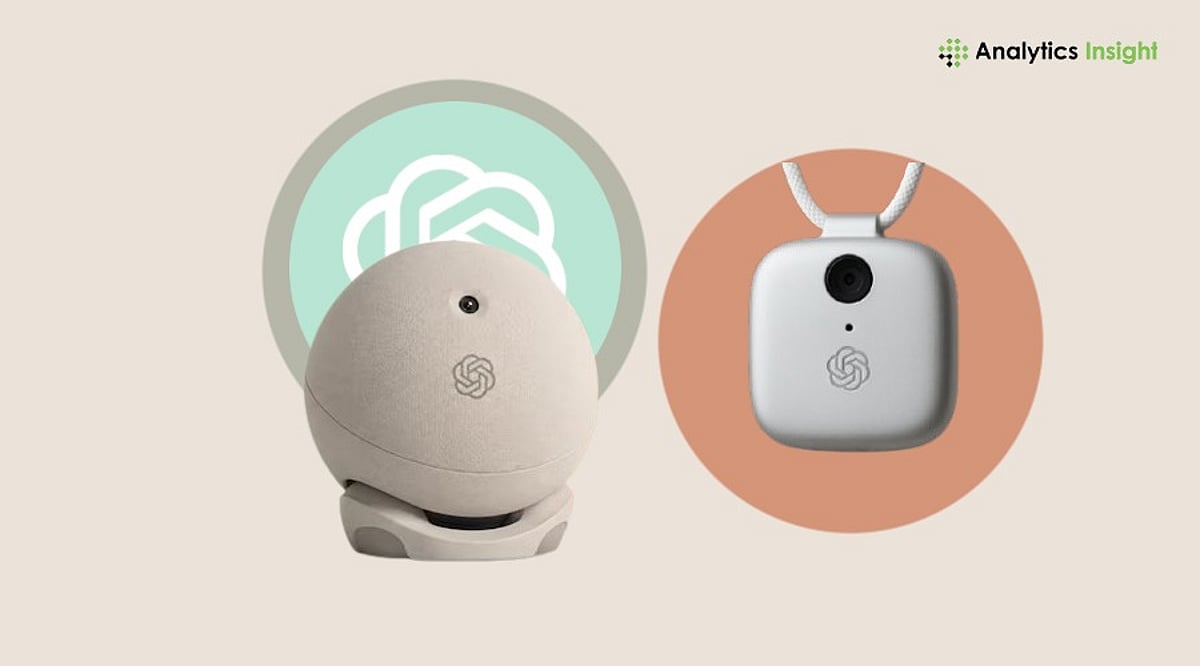
    OpenAI is reportedly making its first foray into consumer hardware with a portable, screen-free smart speaker powered by ChatGPT. According to a recent report, the device is designed as an AI companion for the home, emphasizing natural voice interaction over a traditional display.

    Unlike conventional smart speakers, this new device is expected to feature a self-recharging battery, allowing users to carry it from room to room. It will also include a camera and various sensors to understand its environment and respond contextually. The speaker will manage smart home devices, play music, answer questions, handle messages, and provide access to ChatGPT, likely leveraging the advanced GPT-Live voice technology.

    One of its standout features is a mechanism that enables physical movement, adding a new dimension to home AI interaction.

    Design Team Led by Jony Ive

    The project reportedly involves Jony Ive, the former Apple design chief, and his firm LoveFrom, along with former Apple employees. This comes after OpenAI’s $6.5 billion acquisition of the AI hardware startup founded by Ive. Notably, Apple has filed a lawsuit against OpenAI, accusing the company and former Apple employees of misusing trade secrets in the development of consumer hardware. OpenAI has denied the allegations and declined to comment on the latest reports.

    Potential Launch Timeline

    While OpenAI has not officially announced the product, rumors suggest the smart speaker could be unveiled later this year and hit the market in 2027. The company is also working on other AI hardware projects beyond ChatGPT.

  • Spotify Premium Users Get AI Chatbot for Music, Podcast, and Audiobook Discovery

    Spotify Premium Users Get AI Chatbot for Music, Podcast, and Audiobook Discovery

    Spotify is transforming its app into a conversational assistant for Premium subscribers. The new ‘Talk to Spotify’ feature allows users to discover music, podcasts, and audiobooks by typing or speaking natural language prompts. Rolling out as a beta in the United States, Ireland, and Sweden, the feature is available on both iOS and Android in English.

    How Talk to Spotify Works

    Embedded in the Home and Now Playing views, users can tap a microphone icon or type into an AI-powered text box. Unlike earlier recommendation tools, this chatbot accesses a listener’s personal Spotify data—playlists, favorite artists, listening history—to deliver highly tailored suggestions.

    More Than Playlist Generation

    While Spotify already offers AI DJ and AI Playlists, Talk to Spotify is designed for deeper interaction. For example, a user can say, ‘Play some artists I haven’t heard before,’ then narrow the search by album, artist, or mood. The chatbot can also save songs, queue tracks, and follow artists using natural language. Spotify confirmed the system combines its own AI technology with models from multiple providers, depending on the task.

    Why Spotify Is Pushing AI

    This rollout reflects Spotify’s goal to make discovery more personal and useful. Users have long expressed frustration with algorithmic suggestions, and conversational AI gives them more control over what plays next. If successful, the chatbot could significantly improve how people search, discover, and control audio within the app.

  • Karnataka Unveils India’s First Government-Led AI University to Build Next-Gen Tech Talent

    Karnataka Unveils India’s First Government-Led AI University to Build Next-Gen Tech Talent

    In a landmark move to position itself as India’s artificial intelligence hub, the Karnataka government has announced a comprehensive AI roadmap that includes introducing AI education from Class 6 and establishing the country’s first government-led AI University. The initiative was unveiled during Google I/O Connect India 2026 in Bengaluru by Chief Minister D.K. Shivakumar.

    AI Curriculum from Class 6

    The proposed AI University, to be located in Bengaluru, will focus on developing skilled professionals in artificial intelligence and emerging technologies. The government will also create a dedicated AI Hub to support research, innovation, and collaboration among educational institutions, startups, and industry players.

    Starting from Class 6, students will be introduced to AI concepts to build foundational understanding at an early age. Additionally, 50 AI labs will be established in government colleges across the state.

    A First-of-Its-Kind Institution

    This AI University is expected to be the first AI institution in India created and administered by a state government. It will serve as a dedicated center for AI education, research, innovation, entrepreneurship, and talent development. The curriculum will be developed in consultation with businesses, tech firms, and AI professionals to ensure a globally competitive learning environment.

    Infrastructure and Sustainability

    Beyond education, Karnataka plans to build AI infrastructure through an AI Innovation Hub designed to benefit entrepreneurs, researchers, and enterprises. Next-generation green AI data centers are being constructed in Bengaluru and Mangaluru, relying entirely on renewable energy and recycled water to address the environmental impact of AI computing.

    These developments underscore Karnataka’s ambition to maintain its leadership in technology and expand its focus from software services to AI innovation. If successful, the initiative could set a precedent for AI-based public education across India.

  • Meta Denies Using AI to Decide Layoffs Amid Landmark Lawsuit

    Meta Denies Using AI to Decide Layoffs Amid Landmark Lawsuit

    Meta has officially denied allegations that it used artificial intelligence to determine which employees would be laid off during its May 2026 restructuring, which eliminated about 8,000 jobs—roughly 10% of its global workforce. The company insists that human managers made all workforce decisions, and that AI only supported administrative processes.

    The denial comes in response to a lawsuit filed on July 14 in the US District Court for the Northern District of California by 26 current and former employees. The plaintiffs accuse Meta of using an internal AI system called Metamate—a large language model trained on employee communications and documents—alongside algorithmic productivity scores derived from keystroke activity, browser history, email data, and AI token consumption. They claim this system scored, ranked, and selected workers for termination in a way that disproportionately targeted people on medical, maternity, or parental leave.

    Nearly half of the plaintiffs say their termination directly followed protected leave. The complaint argues that the scoring framework failed to account for time spent on legally protected leave, effectively penalizing employees for reduced output during periods when they were legally entitled to be away. “Meta did not assemble the termination list through the considered judgment of managers who knew the work,” the complaint states.

    Meta’s spokesperson told CNBC that the claims “lack merit and are not based on facts,” maintaining that human judgment drove all workforce decisions. The plaintiffs are now seeking a preliminary court ruling to block Meta from completing the layoffs on July 22 while they pursue their claims in private arbitration, as required by their employment contracts.

    Legal analysts note that a human manager signing off on an algorithm’s output does not automatically insulate a company from discrimination claims if the underlying scoring criteria were discriminatory. This lawsuit arrives just weeks after a federal judge in California ruled that Workday must face similar claims that its AI-powered job-screening services allegedly violate anti-discrimination laws.

    This case is the first of its kind against a major US company regarding AI-selected layoffs. Its outcome could shape how courts evaluate the use of AI in workforce decisions, what disclosure obligations employers carry when algorithmic tools inform layoffs, and whether “a human approved it” constitutes sufficient oversight when the scoring methodology was built without legal-leave exemptions. For the broader tech industry, which has rapidly adopted AI-driven performance tools, the case represents an early signal of legal and regulatory exposure.

  • Google DeepMind CEO Demis Hassabis Urges Global AGI Safety Regulations Before It’s Too Late

    Google DeepMind CEO Demis Hassabis Urges Global AGI Safety Regulations Before It’s Too Late

    Google DeepMind CEO Demis Hassabis has issued a stark warning to world leaders: the window to prepare for Artificial General Intelligence (AGI) is closing fast, and robust safety rules must be established before more powerful systems are deployed.

    In a recent essay, Hassabis emphasized that AGI—an AI capable of performing any intellectual task that a human can—may become a reality within just a few years. He called for an international body to test advanced AI models before release, arguing that proactive regulation is essential to mitigate risks.

    What Is AGI and Why Does Hassabis Want Caution?

    Unlike today’s narrow AI, which excels at specific tasks like writing or coding, AGI would handle diverse challenges, learn autonomously, and solve problems much like a human. Hassabis wrote that AGI is “just a few short years away” and urged governments, researchers, and companies to collaborate rather than compete without safeguards.

    “We’ve already seen the challenges frontier models pose for cybersecurity, and other threats, including nuclear and bio risks, may soon emerge as capabilities continue to advance,” he said.

    Why AI Safety Matters More Than the Race for Better Models

    The AI industry has prioritized speed and capability, but Hassabis argues that safety deserves equal attention. As AI grows smarter, the potential damage from mistakes or misuse escalates. He advocates for global safety standards, independent testing, and regular reviews to ensure responsible development without stifling progress.

    The World Needs to Prepare Together

    Hassabis stressed that countries must act now—not later. Governments need updated laws, businesses must exercise caution, educational institutions should teach AI-relevant skills, and cybersecurity teams must anticipate new threats. “The world still has a chance to get ready. However, it may not last for long,” he concluded.