Category: Finance

  • Top Gold-Holding Nations in 2026: US Dominates as China and India Expand Reserves

    Top Gold-Holding Nations in 2026: US Dominates as China and India Expand Reserves

    Central banks worldwide continue to rely on gold as a cornerstone of financial stability, reserve diversification, and economic confidence. As of 2026, the United States maintains its commanding lead in official gold reserves, while China and India steadily build their holdings. Despite a slowdown in central bank purchases during the first half of the year, gold remains a trusted asset in global finance.

    United States Far Ahead

    The United States holds the largest official gold reserve in the world with 8,133.5 metric tons, representing about 83% of the country’s total foreign exchange reserves. No other nation comes close; the U.S. stock alone exceeds the combined holdings of Germany and Italy, the second and third largest holders. This position has remained virtually unchanged for decades.

    European Nations Hold Strong Positions

    Germany ranks second with 3,350.3 metric tons of gold, followed by Italy (2,451.8 metric tons) and France (2,437 metric tons). Gold forms more than 80% of the official reserves in all three countries. Combined, euro area reserves exceed 10,800 metric tons, surpassing any single nation’s holdings.

    Russia and China Build Strategic Strength

    Russia holds 2,313.4 metric tons (fifth place), while China follows closely with 2,304.7 metric tons according to the World Gold Council. The People’s Bank of China added about 15 metric tons in June 2026—the largest monthly increase since 2023—marking 20 consecutive months of purchases. This reflects a clear long-term strategy to diversify reserves and strengthen financial security.

    India Moves Higher

    India holds 880.5 metric tons of official gold, ranking eighth in the world. Gold accounts for roughly 18% of the country’s foreign exchange reserves. The Reserve Bank of India has steadily expanded its holdings in recent years. Indian households own far more gold than the central bank, making the country a major overall owner of the precious metal.

    Other Notable Holders

    Switzerland ranks seventh with 1,039.9 metric tons, Japan holds about 845.9 metric tons, and the Netherlands completes the top ten with approximately 634.7 metric tons. Reserve strategies vary: Switzerland uses gold as part of a balanced portfolio, while Japan keeps only a small share of its reserves in gold.

    Central Bank Confidence Remains Strong

    The World Gold Council reports that central bank purchases slowed sharply in the first half of 2026—only 57 metric tons in Q1 (the lowest in 15 years) and about 345 metric tons total in H1. Even so, central banks still account for nearly one-third of global gold demand. A 2026 survey found that 89% of reserve managers expect global gold reserves to rise in the next 12 months, and a record 45% expect their own institutions to increase holdings. Gold continues to offer stability, liquidity, and protection against financial and geopolitical risks.

    Frequently Asked Questions

    1. Which country has the largest gold reserves in 2026?

    The United States leads with 8,133.5 metric tons.

    2. Why do central banks hold gold?

    Gold provides financial stability, diversifies reserves, protects against economic uncertainty, and strengthens confidence in a country’s financial system.

    3. Which countries are in the global top five for gold reserves?

    The United States, Germany, Italy, France, and Russia hold the five largest official gold reserves.

    4. Has China increased its gold reserves in 2026?

    Yes, China continued adding gold during 2026 as part of its long-term reserve diversification strategy.

    5. Why is gold still important despite slower central bank purchases?

    Gold remains a trusted store of value, offering liquidity, stability, and protection during financial and geopolitical uncertainty.


  • Indian Stocks Open Lower as Rising Oil and Middle East Tensions Weigh on Sentiment

    Indian Stocks Open Lower as Rising Oil and Middle East Tensions Weigh on Sentiment

    Indian equity markets opened lower on Friday, dragged by rising crude oil prices and escalating Middle East tensions that dampened investor sentiment. The Nifty 50 index started the session 97.1 points, or 0.39%, lower at 24,538.90, while the Bank Nifty declined 181.65 points, or 0.31%, to open at 57,882. The Sensex opened 438.68 points below its previous close of 78,954.76.

    Broader market performance was mixed. The Nifty Midcap 100 index edged down 0.4%, while the Nifty Smallcap 100 index gained 0.5%.

    In the currency market, the rupee opened at Rs 95.28 per US dollar on Friday, compared with the previous session’s close of Rs 95.22.

    Foreign institutional investors (FIIs) remained net sellers in Indian equities on August 6, offloading shares worth Rs 28.58 crore. Conversely, domestic institutional investors (DIIs) were net buyers, adding Rs 3,488.43 crore.

    Sensex Outlook

    Technically, the Sensex formed a small candle on the daily chart, and the non-directional intraday activity indicates indecision among traders.

    “For day traders, 79,000 would act as an immediate breakout level. Above this, the market could move up to 79,300-79,500. On the flip side, below 78,600, we could see intraday price corrections down to 78,200-78,000. The intraday market texture is non-directional; hence, level-based trading would be the ideal strategy for day traders,” said Shrikant Chouhan, Head of Equity Research at Kotak Securities.

    Nifty 50 Outlook

    The Nifty 50 could witness profit booking after the recent rally, but the larger trajectory remains positive as long as key support levels hold.

    “The 24,400-24,500 is the immediate support zone, where buying interest is expected to emerge on declines. On the upside, 24,700-24,800 remains the key resistance range. A decisive move above this zone could signal a continuation of the ongoing uptrend and pave the way for fresh highs. As long as Nifty holds above the 24,400 support zone, the preferred strategy remains buy on dips,” said Gaurav Udani, founder of Thincredblu Securities.

    Bank Nifty Outlook

    The Bank Nifty is expected to remain steady, with the underlying technical structure still favorable as the index continues to trade above its key support zones.

    “The 58,200-58,300 band stands out as the immediate resistance area; a decisive move beyond this level would strengthen buying interest and open the path toward 58,500-58,600. On the downside, the 57,800-57,700 zone serves as the first line of support, with a breakdown below this level exposing the index to a deeper pullback toward 57,400-57,300,” said Ponmudi R, CEO of Enrich Money.

    Disclaimer: This article is for informational purposes only and does not constitute investment advice. Always conduct your own research before making investment decisions.

  • MCX Gold Rises 0.5% to Rs 1,49,608 Ahead of US Jobs Data; Key Levels to Watch

    MCX Gold Rises 0.5% to Rs 1,49,608 Ahead of US Jobs Data; Key Levels to Watch

    Gold prices edged higher on the Multi Commodity Exchange (MCX) on Friday, August 7, as investors awaited the release of the US non-farm payrolls (NFP) report for clues on the Federal Reserve’s interest rate trajectory. August gold futures rose 0.5% to Rs 1,49,608 per 10 grams, while September silver futures advanced 1.09% to Rs 2,28,300.

    Domestic Gold Prices

    In the Indian bullion market, 24K gold increased by Rs 16 to Rs 1,49,890 per 10 grams, and 22K gold gained Rs 15 to Rs 1,37,400. Regional prices remained largely uniform: Mumbai and Kolkata quoted Rs 1,49,890, Delhi Rs 1,50,040, and Chennai Rs 1,50,000.

    Global Gold and Commodity Markets

    Internationally, spot gold rose 0.6% to $4,262.39 per ounce, heading for its biggest weekly gain since January. US gold futures climbed 0.5% to $4,321.50. The rally was supported by weaker oil prices and expectations that the Fed may adopt a more dovish stance.

    Spot silver added 1.3% to $62.27, platinum rose 0.5% to $1,737.25, while palladium slipped 0.2% to $1,368.37. In the energy market, Brent crude futures rose 1.83% to $84 per barrel, and US West Texas Intermediate (WTI) edged up 1.67% to $78.58.

    Key Technical Levels

    Analysts noted that the $4,000 level has emerged as solid support for gold. XAU/USD trades at $4,260.68 on the daily chart, holding above the 21-day simple moving average (SMA) at $4,083.25 and the 50-day SMA at $4,151.23, keeping the near-term bias bullish.

    On the upside, immediate resistance is at the 100-day SMA of $4,389.72, followed by a more substantial barrier at the 200-day SMA around $4,494.54. On the downside, support lies at the 50-day SMA near $4,151.23 and then $4,083.25.

    “Regardless of how NFP plays out, $4,000 has proven to be a solid support level — and I suspect bulls are waiting for dips to take advantage of a much-needed correction higher towards $4,600. NFP may provide some noise over the near term, but price action has spoken, and gold looks like it wants to rally,” said market analyst Simpson.

    Investors now await the US non-farm payrolls data, which could provide further direction for gold prices in the near term.

  • Freedom Holding Corp. Enters Turkish Banking with Acquisition of Turkish Bank A.Ş.

    Freedom Holding Corp. Enters Turkish Banking with Acquisition of Turkish Bank A.Ş.

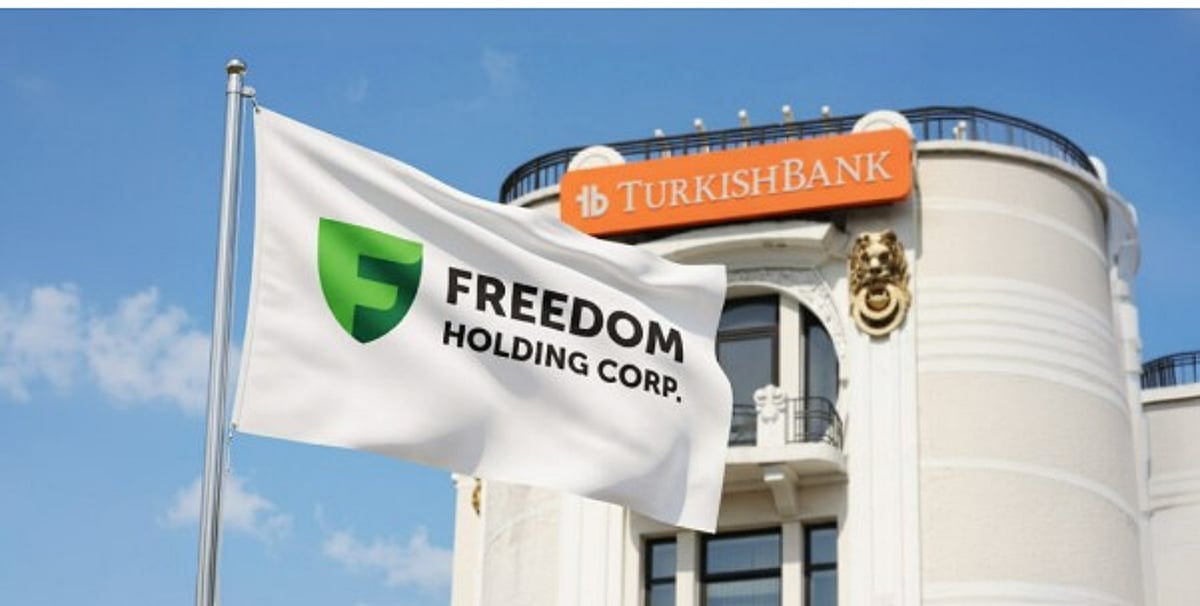
    Nasdaq-listed Freedom Holding Corp. has completed the acquisition of a 99.32% stake in Turkish Bank A.Ş., marking its formal entry into Türkiye’s banking sector and laying the groundwork for an integrated financial and digital platform. The transaction was executed through its subsidiary, Freedom Finansal Hizmetler A.Ş., and the bank has been renamed Freedom Bank A.Ş. following the transfer of control.

    The Acquisition Is Only the First Step

    The deal was finalized after receiving approval from Türkiye’s Banking Regulation and Supervision Agency (BDDK) and the Turkish competition authority. Freedom Holding plans to strengthen the bank’s capital position, upgrade its IT infrastructure, develop digital channels, launch new products, and improve operational efficiency.

    According to the BDDK, more than 120 million digital bank accounts have been opened in the country, with approximately 85% of the population using mobile banking. Turkish customers are already accustomed to advanced mobile-banking services, meaning the new platform must compete not only on product range but also on app usability, transaction speed, and overall customer experience.

    Türkiye occupies a special place in Freedom Holding Corp.’s global growth strategy. The country serves as a geographical bridge between Europe and Asia and a strategic gateway connecting the world’s largest financial markets.

    Why the Ecosystem Needs Its Own Bank

    Freedom Holding Corp. began building its Turkish infrastructure in 2022 with the establishment of Freedom Finansal Hizmetler A.Ş., created to support investments in banking, insurance, capital markets, payment systems, and other financial-services segments. In 2025, after approval from Türkiye’s Capital Markets Board, Freedom Yatırım Menkul Değerler A.Ş. was formed as the group’s local brokerage platform.

    The bank acquisition complements Freedom’s expansion into Türkiye’s capital markets. The group now has a banking platform on which to build its own ecosystem in the country. Banking services provide regular customer contact through accounts, cards, payments, transfers, deposits, and lending products, placing the acquired bank at the center of the future platform.

    Testing Freedom’s Kazakhstan Model in Türkiye

    In Kazakhstan, Freedom Holding has already built an ecosystem combining banking, brokerage, investment, insurance, payment services, e-commerce, travel, ticketing, and entertainment. The group plans to draw on this experience in Türkiye.

    “In Kazakhstan, we built an ecosystem in which financial and everyday services operate through a single SuperApp, which has become the country’s fastest-growing digital service,” said Timur Turlov, founder and CEO of Freedom Holding Corp. “We are now bringing this model to Türkiye, where customers already have high expectations of their banks. Our task over the next few years is to strengthen the bank’s capital base and technological capabilities so that an ecosystem can develop rapidly around it.”

    The group’s experience in Kazakhstan demonstrates that financial and lifestyle services can be combined on a single digital platform. Türkiye will show how successfully the model can scale beyond the home market.

    Freedom Holding Corp. operates in 22 countries, including Kazakhstan, the United States, Cyprus, Poland, Spain, Uzbekistan, and Armenia, with its principal executive office in New York. Its shares trade under the ticker FRHC on Nasdaq, the Kazakhstan Stock Exchange, and the Astana International Exchange.

    The company strengthened its financial position in fiscal year 2026, which ended March 31. Revenue increased 9% year-on-year to $2.19 billion, while net income more than doubled to $153.3 million from $76.2 million a year earlier. Total assets rose 33% to $13.16 billion. By March 2026, the Freedom ecosystem served more than 14 million customers.

    In June 2026, S&P Global Ratings upgraded the credit ratings of four Freedom subsidiaries to BB- with a Stable outlook, while affirming the holding company’s long-term issuer credit rating at B-, also with a Stable outlook.

  • S&P 500 Holds Steady as Chip and Software Declines Offset Broader Market Gains

    S&P 500 Holds Steady as Chip and Software Declines Offset Broader Market Gains

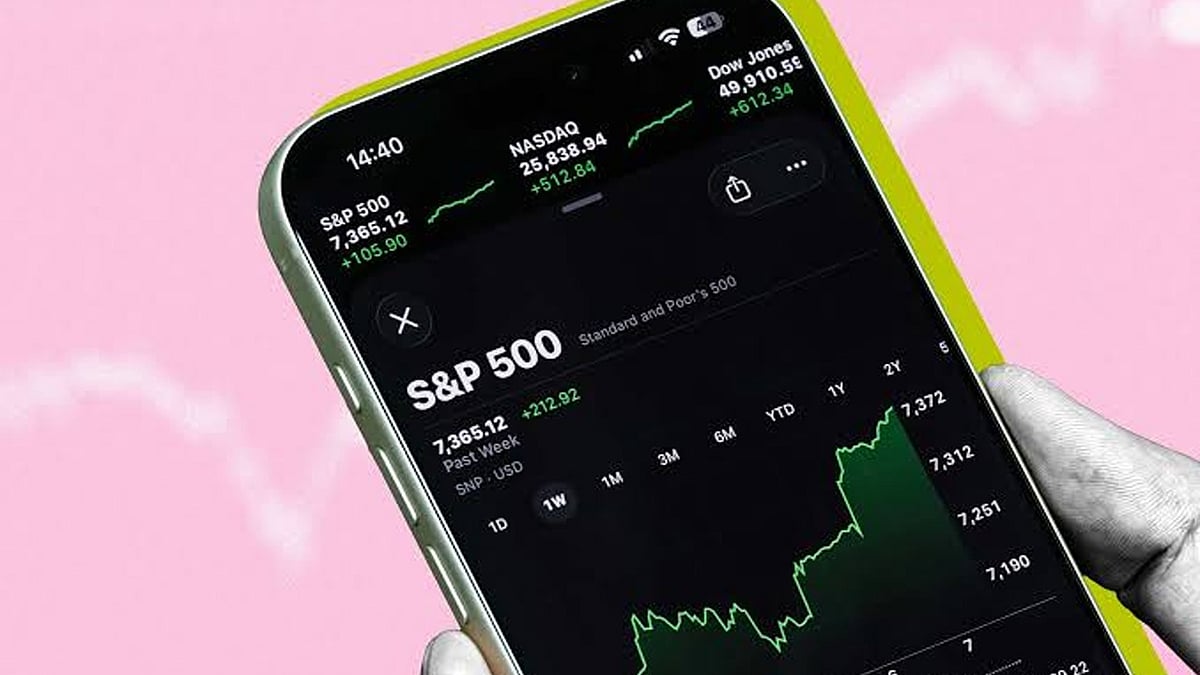
    The S&P 500 traded near the flatline on Thursday as steep losses in chip and software stocks offset gains across most other sectors. Investors weighed corporate earnings, labor data, and ongoing negotiations over reopening the Strait of Hormuz.

    At 11:20 a.m. ET, the S&P 500 slipped 0.08% to 7,723. The Dow Jones Industrial Average added 0.49% to 54,350, while the Nasdaq Composite edged up 0.05% to 26,380.

    Western Digital and Sandisk Shares Tumble

    Western Digital shares fell 18.5% in early trading despite reporting fourth-quarter results above Wall Street estimates. Its fiscal first-quarter forecast disappointed investors. Sandisk shares dropped 11.3% after releasing its fiscal fourth-quarter results. Both companies forecast quarterly revenue above estimates, driven by demand for artificial intelligence infrastructure. However, investors focused on valuations after significant gains earlier this year — Western Digital had climbed about 200%, and Sandisk had gained around 400%.

    Hank Smith, investment strategy director at Haverford Trust, noted that expectations had reached demanding levels, calling the price action “some digestion going on in the market.”

    The Philadelphia Semiconductor Index declined 1.5% during early trading. Intel and AMD also traded lower, adding pressure to the technology sector. However, several chip stocks later recovered: Broadcom gained nearly 2%, Marvell Technology rose about 3%, and NVIDIA moved higher during the session.

    Software Earnings Add Pressure to Technology

    Software stocks also recorded steep declines following several earnings reports. Atlassian, Salesforce, Adobe, and Zscaler traded lower. AppLovin shares fell about 17% after missing quarterly revenue estimates. The stock had previously benefited from investor demand for AI-linked companies. Datadog dropped roughly 17% after management forecast slower revenue growth in the third quarter, raising questions about enterprise software demand and valuations.

    Peloton shares fell more than 14% after forecasting lower sales in the coming fiscal year, citing higher prices for equipment and subscriptions. Still, Microsoft and Amazon each gained around 1%, helping limit broader losses across major indexes.

    Most S&P 500 Sectors Trade Higher

    Despite technology weakness, nine of the S&P 500’s 11 sectors traded higher during the morning session. Energy, consumer staples, and healthcare led the gains. Parker-Hannifin rose 8.5% after forecasting annual profit above analysts’ estimates. Albemarle gained 6.7% after beating quarterly profit estimates. Diageo rose about 6% after announcing a three-year plan targeting $1.2 billion in savings.

    Restaurant Brands International reported adjusted earnings of $1.07 per share, above the expected $1.03. Revenue reached $2.52 billion, matching estimates. Burger King recorded an 8.5% increase in comparable restaurant sales, though other brands within the group delivered weaker results.

    Labor Data Sets Up July Jobs Report

    New applications for unemployment benefits increased slightly to 199,000 for the week ending August 1, below the Dow Jones estimate of 204,000. Layoffs fell to their lowest level in two years during July. Second-quarter productivity increased 1.4% (versus 0.8% prior), while unit labor costs rose 1.3% (below the 2.1% estimate). Investors will now examine Friday’s July employment report for clues about the Federal Reserve’s policy path. Fed Chairman Kevin Warsh has reduced forward guidance, increasing the market’s focus on incoming economic data.

    Iran Talks Keep Oil and Gold in Focus

    Brent crude traded near $80 per barrel as investors monitored negotiations involving Iran and Oman focused on reopening shipping routes through the Strait of Hormuz. An Iranian official said a temporary agreement would allow ships to travel without fees or tolls, but final conditions had not been settled. Deutsche Bank strategist Jim Reid noted “unresolved questions” about whether Iran could later charge vessels.

    Gold rose for a fourth consecutive session as geopolitical uncertainty supported demand. Spot gold gained 0.6% to $4,271.33 per ounce, and US gold futures rose 0.6% to $4,330.20. Earlier, spot prices reached their highest level since June 18.

    Conclusion

    Technology losses kept the S&P 500 near the flatline, despite gains across nine of its 11 sectors. Western Digital, Sandisk, AppLovin, and Datadog recorded the sharpest declines following earnings updates. Meanwhile, investors monitored Iran-Oman shipping talks and Friday’s July employment report, both of which could shape energy prices and Federal Reserve rate expectations.

  • Top Brokers by Active Investors in India: August 2026 Rankings

    Top Brokers by Active Investors in India: August 2026 Rankings

    India’s brokerage landscape continues to evolve, with digital-first platforms leading the charge in attracting active investors. As of August 2026, the latest data reveals which brokers command the largest active investor bases, highlighting the shift toward low-cost, user-friendly trading solutions.

    Groww: The Market Leader

    Groww has emerged as India’s largest broker with over 1.3 crore (13 million) active investors. The platform’s success is driven by its easy onboarding process, low-cost investing options, and a highly intuitive trading interface that appeals to both new and experienced investors.

    Zerodha: Strong Loyalty and Education

    Zerodha, India’s pioneering discount broker, retains nearly 69 lakh (6.9 million) active investors. Its powerful trading tools and extensive educational resources continue to foster strong user loyalty and engagement.

    Angel One: Digital-First Expansion

    Angel One has rapidly grown to over 32 lakh (3.2 million) active investors. The broker’s digital-first approach, combined with robust research support and diversified investment offerings, has fueled nationwide expansion.

    Upstox: Competitive and Growing

    Upstox maintains more than 29 lakh (2.9 million) active investors by offering competitive pricing, advanced charting tools, and a seamless investing experience. Its fast-growing retail participation reflects increasing trust in digital brokerage.

    ICICI Direct: Trusted Full-Service Broker

    ICICI Direct serves around 20 lakh (2 million) active investors. As a full-service broker, it provides integrated banking, wealth management, comprehensive research, and a wide range of investment solutions.

    HDFC Securities: Banking Integration

    HDFC Securities holds approximately 16 lakh (1.6 million) active investors. Its strong integration with HDFC Bank, advisory services, and reliable customer support make it a preferred choice for many.

    Kotak Securities: Comprehensive Offerings

    Kotak Securities has around 15 lakh (1.5 million) active investors. The broker offers comprehensive trading platforms, research-backed recommendations, and seamless banking integration, backed by long-standing market credibility.

    Motilal Oswal and SBI Securities

    Motilal Oswal serves nearly 11 lakh (1.1 million) active investors, combining quality research with wealth management expertise and portfolio advisory. SBI Securities, backed by India’s largest public sector bank, also supports around 11 lakh active investors with trusted trading and investment services.

    This data underscores the growing preference for digital brokers that prioritize ease of use, low costs, and educational support, while traditional full-service brokers maintain a significant presence through integrated banking and advisory services.

  • Indian Stock Market Opens Higher: Nifty 50 Edges Up, Sensex Gains Over 200 Points

    Indian Stock Market Opens Higher: Nifty 50 Edges Up, Sensex Gains Over 200 Points

    The Indian stock market opened on a positive note Thursday, tracking mixed global cues. The benchmark Nifty 50 index opened 16.35 points, or 0.07%, higher at 24,641, while the Bank Nifty climbed 75.05 points, or 0.13%, to start at 57,815. The Sensex opened 201.43 points above the previous close of 78,581, reaching 78,782.43.

    Among broader indices, the Nifty midcap index rose 0.18%, while the smallcap index gained 0.76%. The Indian rupee opened flat at Rs. 95.13 per dollar against the previous close of Rs. 95.13.

    Foreign institutional investors (FIIs) turned net sellers on August 5, offloading shares worth Rs. 943.42 crore. In contrast, domestic institutional investors (DIIs) remained net buyers, investing Rs. 2,883.17 crore.

    Sensex Outlook

    Technically, the Sensex witnessed range-bound activity. Short-term support is placed at 78,200–78,000, while 78,900–79,000 remains the crucial resistance area for the bulls. According to Shrikant Chouhan, Head of Equity Research at Kotak Securities, “We believe that, as long as the market is trading between these ranges, a range-bound texture is likely to continue. On the higher side, a breakout above 79,000 could push the market towards 79,300–79,500. On the flip side, a dismissal of 78,000 could push the market towards 77,500.”

    Nifty 50 Outlook

    The Nifty 50 formed a bullish hammer-like candle on the daily chart, indicating buying interest at lower levels. Bajaj Broking Research stated, “We expect the index to extend the last two sessions’ consolidation and form a base at higher levels. The overall structure is positive; we believe the current breather should be used to accumulate quality stocks in a staggered manner.” The brokerage expects the benchmark index to gradually move towards the 25,000–25,200 zone over the coming weeks. Immediate support is placed in the 24,400–24,500 range. As long as the Nifty remains above this zone, analysts expect a pullback towards 24,720 and 24,800 in the near term. Stronger short-term support is now seen around 24,200–24,000, where key Fibonacci retracement levels coincide with the 20-day and 50-day exponential moving averages (EMAs).

    Bank Nifty Outlook

    Bank Nifty traded within a narrow range during Wednesday’s session and formed an inside-bar candle, reflecting indecision after recent profit booking. Bajaj Broking noted, “The index continues to consolidate within the broader 56,500–58,700 range that has been in place over the past seven weeks. A decisive breakout above 58,700 would signal a resumption of the uptrend, opening the door towards 59,300 and 60,000 in the coming sessions. Until then, the index is likely to remain range-bound with a stock-specific bias.” According to the brokerage, immediate support for Bank Nifty is near 57,400, followed by the 57,000–56,800 zone. On the upside, resistance is seen around 58,000–58,100, while a sustained move above the 58,500–58,700 range could strengthen bullish momentum.

    Disclaimer: This article is for informational purposes only and does not constitute investment advice. Please conduct your own research before making any financial decisions.

  • MCX Gold Rises 0.61% to ₹1,49,401 as Softer Dollar and Strait of Hormuz Hopes Boost Sentiment

    MCX Gold Rises 0.61% to ₹1,49,401 as Softer Dollar and Strait of Hormuz Hopes Boost Sentiment

    Gold prices climbed on the Multi Commodity Exchange (MCX) on August 6, buoyed by a softer U.S. dollar, lower oil prices, and growing optimism that the Strait of Hormuz may reopen soon after U.S. President Donald Trump pledged to reach an agreement with Iran.

    August gold futures rose 0.61% to ₹1,49,401 per 10 grams, while September silver futures advanced 0.23% to ₹2,28,115. Meanwhile, Brent crude futures slipped 0.11% to $79.32 per barrel, and U.S. West Texas Intermediate (WTI) edged down 0.20% to $75.07 per barrel.

    Domestic Gold Prices

    In the domestic market, 24K gold rose by ₹398 to ₹1,49,730 per 10 grams, and 22K gold advanced by ₹365 to ₹1,37,250. City-wise rates: Mumbai and Kolkata quoted ₹1,49,730, Delhi ₹1,49,860, and Chennai ₹1,47,060.

    U.S. Gold Prices

    U.S. gold prices extended gains for a fourth consecutive session, touching their highest level in seven weeks. A soft U.S. dollar and lower Treasury yields, combined with hopes of the Strait of Hormuz reopening, supported the rally. Spot gold rose 0.5% to $4,265.22 per ounce, while U.S. gold futures gained 0.5% to $4,324.60.

    Spot silver fell 0.1% to $62.02, platinum climbed 1.2% to $1,755.18, and palladium advanced 0.8% to $1,374.33, marking its third straight session of gains.

    Key Levels to Watch

    “The sharp rally came on building optimism that a diplomatic breakthrough in the Middle East is close to being finalised. This in turn would keep downside pressure on oil prices and reduce the need for central banks to raise rates, providing a clear tailwind for gold,” said Tony Sycamore, market analyst at IG.

    Sycamore added that a sustained break above the 200-day moving average could pave the way for a stronger recovery toward the $5,000 mark.

    On MCX, gold is currently trading in a broader range of ₹1,45,000 to ₹1,52,000 per 10 grams, with a narrower range of ₹1,47,000 to ₹1,50,000. Resistance is seen at ₹1,50,000; a breakout above this level could push prices toward ₹1,52,000. Internationally, COMEX gold faces immediate resistance at $4,320 per ounce. A break above this level could target $4,350.

  • FTSE 100 Opens Higher at 10,907 as Strait of Hormuz Reopening Hopes Boost Sentiment

    FTSE 100 Opens Higher at 10,907 as Strait of Hormuz Reopening Hopes Boost Sentiment

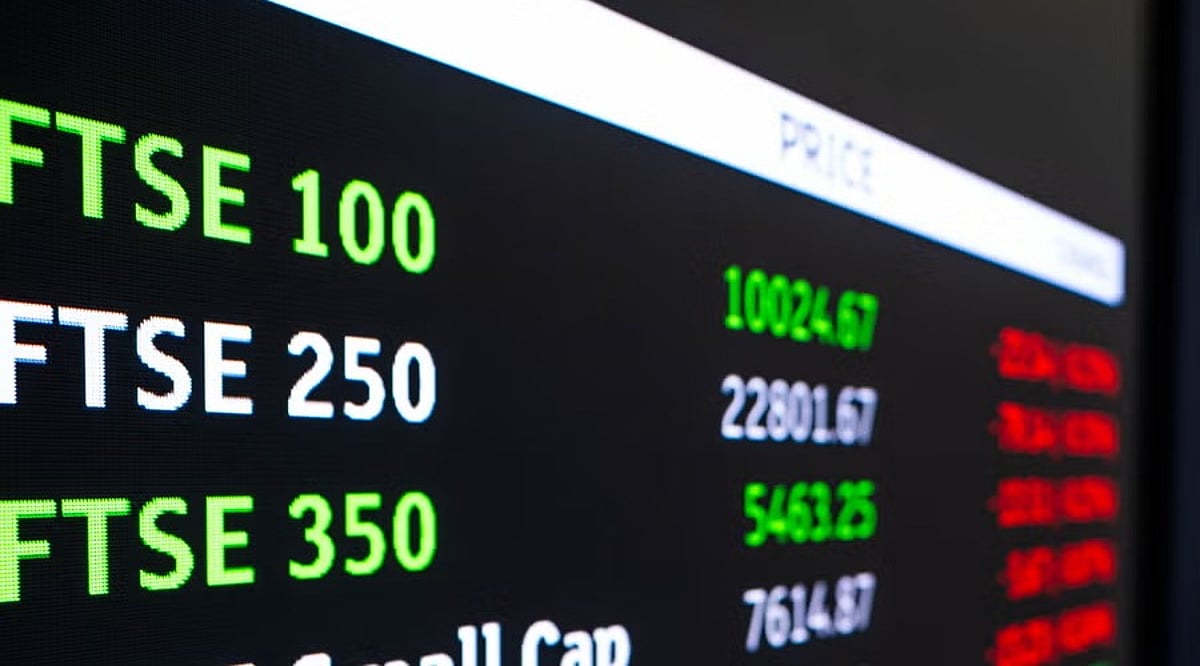
    The FTSE 100 opened 18 points higher at 10,907 on Thursday, driven by renewed optimism over a potential reopening of the Strait of Hormuz. Investors also weighed corporate earnings, oil price movements, and global market trends.

    Market Overview

    Brent crude futures edged up 0.21% to $79.52 per barrel, while US West Texas Intermediate (WTI) fell 0.24% to $75.04. Sterling traded at $1.3461 early Thursday, slightly down from $1.3466 at the London equities close on Wednesday. Against the euro, sterling slipped to €1.1654 from €1.1663 the previous day.

    Gainers and Losers

    On the upside, Admiral Group surged 5.07% to 3,894p, Metlen Energy & Metals advanced 3.88% to €50.30, and Persimmon climbed 2.45% to 1,150.5p. Vodafone Group gained 2.01% to 116.7p, Haleon rose 1.89% to 372.6p, and London Stock Exchange Group added 1.41% to 8,750p.

    On the downside, RELX fell 2.98% to 2,634p, Computacenter declined 1.58% to 4,736p, and Antofagasta slipped 1.21% to 4,001p. Halma eased 1.16% to 3,756p, Games Workshop Group dropped 0.84% to 18,850p, and Lion Finance Group edged 0.42% lower to 11,970p.

    WPP Cuts Jobs

    WPP slashed 1,267 jobs in the first half of the year, around 1.3% of its total staffing, as revenue continued to fall. Over the 12 months to June, the media group reduced its workforce by 6.4% to 104,083 employees. Revenue in the half came in at £6.4 billion, down over 3% from last year. Revenue less pass-through costs, a key metric for professional services firms, fell nearly 5% to £4.7 billion.

    Admiral’s Profit Drops

    Insurer Admiral reported an 18% drop in profit before tax to £429.2 million, down from the record £521 million in the first half of 2025. Turnover remained flat at £3.11 billion. Milena Mondini de Focatiis, group CEO, said: “Against more challenging market conditions, we are pricing for long-term sustainable growth with our UK motor business having increased rates earlier than the market, following a softer period in the cycle.”

    Wizz Air Profits Decline

    Increased fuel costs from the Middle East conflict swung Wizz Air to a €198.2 million (£170 million) loss in the first quarter of 2026. Total revenue rose 5.5% to €1,507.4 million, driven by a 25.1% increase in passengers, but revenue per available seat fell 8.1%. The budget airline expects industry challenges to persist and is reallocating capacity to popular European markets over long-haul flights to the Middle East.

    Global Market View

    In the US, the Dow Jones rose 0.5% to a record closing high, while the S&P 500 slipped 0.2% and the Nasdaq fell 0.8%. In Asia on Thursday, Tokyo’s Nikkei 225 fell 0.93% to 65,683.26, China’s Shanghai Composite gained 0.57%, Hong Kong’s Hang Seng declined 1.68%, and South Korea’s Kospi edged lower by 4.58%. In India, the Nifty 50 and the Sensex rose by 0.06% and 0.29%, respectively.

  • Ramp Review: AI-Powered Spend Management and Corporate Cards for Growing Businesses

    Ramp Review: AI-Powered Spend Management and Corporate Cards for Growing Businesses

    What Is Ramp?

    Ramp is an AI-driven spend management platform that helps companies manage corporate card programs, expenses, bill payments, and accounts payable in one place. Designed for startups and small to medium-sized businesses, it combines expense tracking, corporate cards, invoicing, and financial automation on a single platform.

    Ramp at a Glance

    • Founded: 2019
    • Platform Support: Web, Android, iOS
    • Rating: 4/5

    Key Features of Ramp

    • AI-powered expense management with receipt matching and categorization.
    • Corporate credit cards with cashback, spending controls, and real-time transaction tracking.
    • Invoicing and bill payment solutions with customizable workflow approvals.
    • Business expense reimbursements and vendor payments.
    • Integration with ERP systems such as QuickBooks, NetSuite, and Sage.

    Benefits of Ramp

    • Automated expense management helps control business spending.
    • AI-driven invoice processing reduces manual finance work.
    • Provides transparency into company expenditures.
    • Offers both virtual and physical corporate cards.
    • Supports growing businesses with financial management.

    Challenges of Ramp

    • Accounts payable automation may be less advanced than specialized AP software.
    • Advanced procurement and workflow features require paid plans.
    • ERP integrations may not include bi-directional syncing capabilities.
    • Some manual processes still involve repetitive data entry.
    • Support quality can vary during onboarding and issue resolution.

    Pricing and Plans

    Ramp offers a free plan with no annual fee for employee corporate cards and basic expense management. Advanced procurement features, workflow automation, ERP customizations, and enterprise finance capabilities are available through paid subscription plans with custom enterprise pricing.

    Support Options

    • Help Center and Learning Resources: FAQs, product documentation, finance guides, onboarding resources, blog articles, and knowledge base.
    • Customer Support: Live chat, email support, implementation assistance, and enterprise customer success services.

    Final Verdict

    Ramp is a reliable AI-powered spend management platform for businesses seeking an integrated solution for corporate cards, expense management, invoice processing, and bill payments. Its automation capabilities and easy-to-use interface make financial operations more efficient for growing organizations. However, businesses that require advanced procure-to-pay automation, deeper ERP integrations, and highly customizable workflows may need a more specialized accounts payable solution.