Category: Finance

  • FTSE 100 Rises 16.66 Points to 10,884.55 as Oil Prices Firm and US Jobs Report Looms

    FTSE 100 Rises 16.66 Points to 10,884.55 as Oil Prices Firm and US Jobs Report Looms

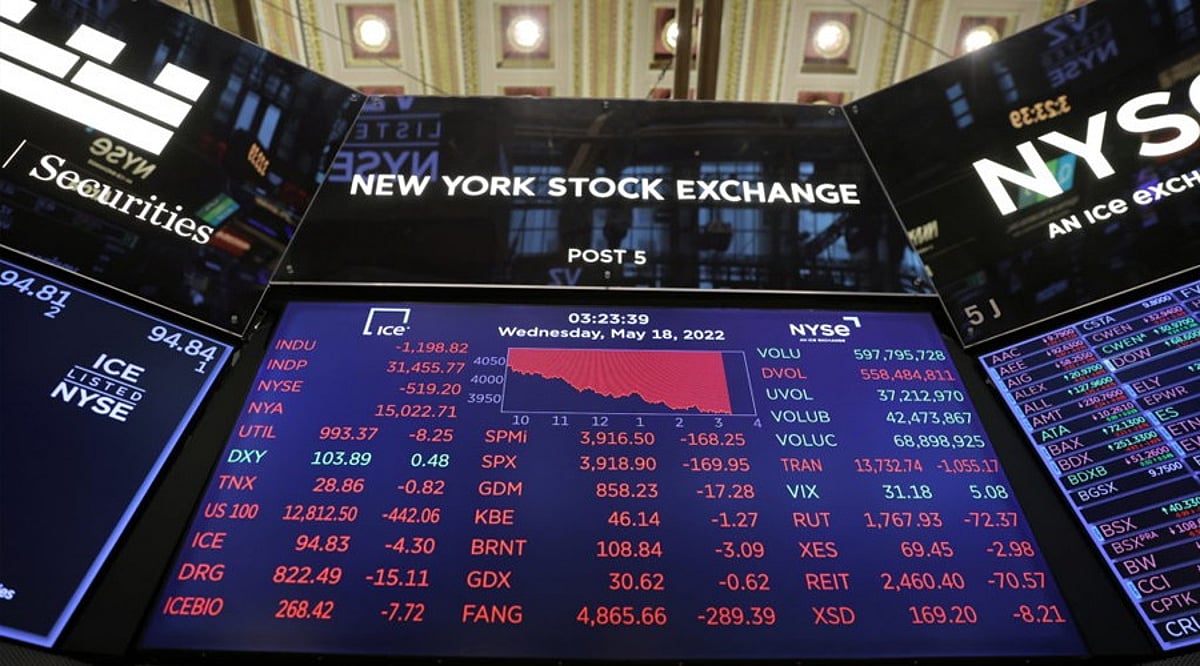
    The FTSE 100 traded 16.66 points higher at 10,884.55 on Friday, as investors assessed fresh US trade measures, firmer oil prices, and prepared for the release of the US jobs report later in the day. Brent crude futures rose 0.91% to $83.24 per barrel, while US West Texas Intermediate (WTI) fell 0.57% to $77.73 per barrel.

    Sterling was quoted at $1.3452 early Friday, slightly lower than $1.3454 at the London equities close on Thursday. Against the euro, sterling fell marginally to €1.1674 from €1.1675 a day prior.

    Gainers & Losers

    On the upside, Fresnillo surged 2.74% to 2,813p. Convatec Group advanced 2.73% to 233p, while BAE Systems climbed 1.68% to 2,237p. London Stock Exchange Group gained 1.53% to 8,884p, Diageo rose 1.47% to 1,758p, and AstraZeneca added 1.38% to 12,014p.

    On the downside, Severn Trent fell 1.03% to 3,084p. Whitbread declined 0.87% to 2,506p, while Antofagasta slipped 0.76% to 3,944p. 3i Group eased 0.73% to 2,850p, Shell dropped 0.59% to 3,295.5p, and Unilever edged 0.40% lower to 4,690p.

    Oxford Biomedica Cuts Profit Forecast

    Oxford Biomedica has slashed its revenue target for the year by nearly £40 million after slowing customer appetite. The firm has lowered its revenue forecast for the full year to £180 million to £200 million, from between £220 million and £240 million, given a drop in demand from clients.

    The medical company said the ‘short-term impact’ is driven by customers opting to delay signing contracts for the year, resulting from changes in the clients’ clinical data or their strategy. Dr. Frank Mathias, chief executive officer of Oxford Biomedica, said despite the profit warning, “we remain confident about OXB’s future as we continue to expand our market position in the growing cell and gene therapy sector and support our clients in delivering life-changing therapies to patients.”

    JD Sports Appoints Former IKEA Boss as Chair

    JD Sports has named the former boss of Ikea as its new chair. The retailer said on Friday Peter Agnefjäll would take the post, succeeding Darren Shapland, who has served in the role on an interim basis. Agnefjäll’s recruitment follows Andy Higginson quitting as chair in April ahead of his tenure finishing in July. He said he was “proud of his time” at the company, in which JD oversaw a “tough period” in the sportswear market and expanded the brand in the US.

    Meta Fined $567 Million Over Child Safety

    Meta has been ordered by a New Mexico judge to pay $567 million (£421 million) for failing to protect children against online harms on its platforms. In the ruling handed down on Friday, US Judge Bryan Biedscheid said the tech giant is a “public nuisance” and compared the WhatsApp, Facebook, and Instagram owner to air pollution. The new fine is in addition to a $375 million penalty the tech company was already ordered to pay in damages in March after a jury ruled Meta had intentionally impacted children’s mental health, hiking the total penalty to nearly $1 billion.

    Global Market View

    In the US, the Dow Jones Industrial Average pulled back from its record high as higher Treasury yields dampened sentiment. The Dow fell 0.9%, the S&P 500 slipped 0.2%, and the Nasdaq edged 0.1% lower.

    In Asia on Friday, Tokyo’s Nikkei 225 fell 0.12% to 65,606.71, while China’s Shanghai Composite gained 1.02%. Hong Kong’s Hang Seng advanced 0.45%, and South Korea’s Kospi edged lower by 0.6%. In India, both the Nifty 50 and the Sensex fell by 0.31% and 0.53%, respectively.

  • FTSE 100 Rises 16.66 Points to 10,884.55 as Oil Prices Support and Investors Focus on US Jobs Data

    FTSE 100 Rises 16.66 Points to 10,884.55 as Oil Prices Support and Investors Focus on US Jobs Data

    The FTSE 100 traded 16.66 points higher at 10,884.55 on Friday, as investors assessed fresh US trade measures, firmer oil prices, and awaited the US jobs report later in the day. Brent crude futures rose 0.91% to $83.24 per barrel, while US West Texas Intermediate (WTI) fell 0.57% to $77.73 per barrel.

    Sterling was quoted at $1.3452 early Friday, slightly lower than $1.3454 at the London equities close on Thursday. Against the euro, sterling fell marginally to €1.1674 from €1.1675 a day prior.

    Gainers & Losers

    On the upside, Fresnillo surged 2.74% to 2,813p. Convatec Group advanced 2.73% to 233p, while BAE Systems climbed 1.68% to 2,237p. London Stock Exchange Group gained 1.53% to 8,884p, Diageo rose 1.47% to 1,758p, and AstraZeneca added 1.38% to 12,014p.

    On the downside, Severn Trent fell 1.03% to 3,084p. Whitbread declined 0.87% to 2,506p, while Antofagasta slipped 0.76% to 3,944p. 3i Group eased 0.73% to 2,850p, Shell dropped 0.59% to 3,295.5p, and Unilever edged 0.40% lower to 4,690p.

    Oxford Biomedica Cuts Profit Forecast

    Oxford Biomedica slashed its revenue target for the year by nearly £40 million after slower customer demand. The firm lowered its full-year revenue forecast to £180 million to £200 million, from between £220 million and £240 million, due to clients delaying contract signings. CEO Dr. Frank Mathias said despite the profit warning, the company remains confident about its future in the cell and gene therapy sector.

    JD Sports Appoints Former IKEA Boss as Chair

    JD Sports named Peter Agnefjäll, the former CEO of IKEA, as its new chair, succeeding interim chair Darren Shapland. Agnefjäll’s appointment follows Andy Higginson’s resignation in April. Higginson noted he was proud of his tenure during a tough period in the sportswear market and the brand’s US expansion.

    Meta Fined $567 Million in New Mexico

    A New Mexico judge ordered Meta to pay $567 million (£421 million) for failing to protect children against online harms on its platforms. Judge Bryan Biedscheid described the tech giant as a “public nuisance” and compared it to air pollution. This fine adds to a $375 million penalty imposed in March, bringing total penalties to nearly $1 billion.

    Global Market Overview

    In the US, the Dow Jones Industrial Average fell 0.9% from its record high, the S&P 500 slipped 0.2%, and the Nasdaq edged 0.1% lower amid higher Treasury yields. In Asia, Tokyo’s Nikkei 225 fell 0.12%, while China’s Shanghai Composite gained 1.02%. Hong Kong’s Hang Seng advanced 0.45%, and South Korea’s Kospi edged lower by 0.6%. In India, both the Nifty 50 and the Sensex fell by 0.31% and 0.53%, respectively.

    Disclaimer: This article is provided for informational purposes only and does not constitute investment advice. Always conduct your own research before making any investment decisions.

  • Wall Street Rises After Surprise July Job Cuts Fuel Hopes of Fed Rate Pause

    Wall Street Rises After Surprise July Job Cuts Fuel Hopes of Fed Rate Pause

    The S&P 500 posted gains on Friday after a surprising decline in U.S. payrolls for July dampened expectations of a September interest rate hike by the Federal Reserve. Technology and software stocks led the rally, while Treasury yields fell following the release of the employment report.

    The index moved toward a second consecutive weekly gain after hitting a record high earlier in the week. Traders are now turning their attention to July inflation data, which could further shape the central bank’s next policy move.

    S&P 500 Rises on Weak Payroll Data

    The S&P 500 climbed 0.6%, while the NASDAQ Composite gained 1.1%. The Dow Jones Industrial Average added approximately 140 points, a 0.3% increase. According to the Labor Department, U.S. employers cut 23,000 jobs in July, contrasting sharply with economists’ expectations of an 83,000-job gain (Dow Jones poll) and an 80,000 increase projected by a Reuters survey.

    The unemployment rate edged down to 4.1% from 4.2%, but the labor force participation rate fell to its lowest level in more than five years. Revised data also eliminated a combined 103,000 jobs from May and June payroll figures.

    The disappointing report reduced the probability of a Fed rate hike at its September meeting. LSEG data placed the likelihood of an increase near 20%, down from 55% before the payroll release.

    Fed Rate Outlook Shifts Toward a Pause

    Fed funds futures traders now largely expect policymakers to hold rates within the current 3.50% to 3.75% range. The central bank kept rates unchanged during its July meeting. Under Chair Kevin Warsh, the Fed has offered limited guidance on its next move, leading investors to scrutinize labor, inflation, and wage data closely.

    Anthony Saglimbene, chief market strategist at Ameriprise Financial, noted that the report gives policymakers more time. “Even with a negative job print, the job market remains healthy. But it gives the Fed some room to pause in September,” he said.

    Former Dallas Fed Chair Richard Fisher added that he did not view the report as entirely weak. He pointed to slowing wage growth, which could affect consumer spending, and said he did not support raising rates at this time.

    Technology Stocks Lead Wall Street Rally

    Software and semiconductor shares fueled Friday’s gains. Atlassian surged more than 30% after its quarterly profit and revenue exceeded estimates, and the company issued a stronger financial forecast. Cloudflare also rose after raising its annual revenue outlook above market expectations. Microchip Technology advanced after forecasting quarterly revenue above estimates. NVIDIA and Broadcom also recorded gains.

    The Philadelphia Semiconductor Index rose more than 2%, while the S&P 500 software and services index gained about 1.3%. The iShares Semiconductor ETF increased nearly 7% over the week.

    Airbnb climbed approximately 14% after reporting stronger quarterly profit and revenue and raising its full-year revenue and margin guidance, pushing its shares to their highest level in four years. In contrast, Trade Desk dropped nearly 25% after issuing a third-quarter revenue forecast below analysts’ expectations.

    Inflation Data Becomes the Next Market Test

    The S&P 500 has gained more than 3% this week, while the NASDAQ has risen about 5%, on track for its strongest weekly performance since May. The Dow has added about 3%. Corporate earnings have supported the recovery: more than 400 S&P 500 companies have reported quarterly results, with over 85% exceeding analysts’ estimates, according to LSEG data.

    Investors will now monitor the July consumer price index report on Wednesday. Economists expect annual headline inflation of 3.4% and core inflation of 2.5%. Producer price data will follow on Thursday. Retail sales figures are due Friday, offering another measure of household spending. Applied Materials, Cisco, and CoreWeave will also report earnings next week.

    Treasury yields declined after the payroll release. The 10-year yield slipped to 4.65%, while the two-year yield fell to 4.20%, before partially recovering. Oil prices rose about 1% as investors watched US-Iran talks concerning the Strait of Hormuz. Brent crude traded near $83 per barrel, while West Texas Intermediate held around $78. Oil movements remain central to inflation expectations and future Fed decisions.

    Weaker U.S. jobs data boosted hopes of a Federal Reserve pause, lifting Wall Street and supporting gains in technology stocks. Investors will now watch upcoming inflation and retail sales data for further clues on the direction of interest rates.

  • CRED’s Next Move: What Lies Ahead for Kunal Shah’s Fintech Platform

    CRED’s Next Move: What Lies Ahead for Kunal Shah’s Fintech Platform

    CRED has emerged as one of India’s most prominent fintech platforms, and questions are mounting about its next phase of growth and innovation. Founded by Kunal Shah, the company initially gained traction by rewarding users for timely credit card payments while cultivating a premium financial community.

    Beyond bill payments, CRED has expanded into lending, payments, financial products, and money management solutions. After years of rapid expansion, the company’s future focus is expected to sharpen on stronger monetization, deeper customer engagement, and sustainable business growth.

    India’s fintech market is becoming increasingly competitive, with digital payment platforms and financial technology companies launching new products for consumers. CRED’s ability to attract high-value users remains a key advantage as it explores fresh opportunities in the evolving financial services sector.

    The company faces challenges including profitability expectations, intensifying competition, shifting regulations, and the need to maintain long-term customer trust. Future growth could depend on expanding financial services while delivering greater value beyond traditional payment experiences.

    CRED’s next chapter will be closely watched as the fintech industry moves toward deeper digital banking and personalized financial solutions.

  • 9 Visionary Entrepreneurs Driving India’s Fastest-Growing Startup Ecosystem

    9 Visionary Entrepreneurs Driving India’s Fastest-Growing Startup Ecosystem

    India’s startup ecosystem continues to thrive, powered by visionary founders who are disrupting industries and redefining business norms. From beauty and fintech to quick-commerce and wireless communication, these nine entrepreneurs have built some of the country’s fastest-growing companies, each bringing a unique blend of innovation, strategy, and execution.

    Falguni Nayar – Nykaa

    Falguni Nayar transformed Nykaa into India’s leading beauty platform by executing a strong omnichannel strategy and curating premium brands. Her vision reshaped online cosmetics retail, making Nykaa a household name.

    Vineeta Singh – SUGAR Cosmetics

    Vineeta Singh scaled SUGAR Cosmetics into a top beauty brand by targeting young, style-conscious consumers with innovative products and a digital-first marketing approach. Her brand resonates with the modern Indian woman.

    Neha Satak – Astrome

    Neha Satak founded Astrome to develop advanced wireless communication technologies that improve broadband connectivity in underserved regions of India. Her work bridges the digital divide, bringing high-speed internet to remote areas.

    Roshni Mahatani – Greylabs AI

    Roshni Mahatani created AI-powered fintech solutions at Greylabs AI, enabling financial institutions to enhance decision-making, automate processes, and deepen customer engagement through intelligent analytics.

    Shashank Kumar – Razorpay

    Shashank Kumar co-founded Razorpay, a platform that simplified digital payments for businesses across India. With secure, scalable fintech solutions, Razorpay now serves millions of merchants nationwide.

    Nithin Kamath – Zerodha

    Nithin Kamath revolutionized stock investing in India by introducing low-cost brokerage services and technology-driven trading platforms. Zerodha empowered retail investors with accessible, affordable investment tools.

    Nikhil Gupta – Neo Group

    Nikhil Gupta built Neo Group into a rapidly expanding wealth management platform catering to high-net-worth clients. His focus on modern investment solutions and personalized service has driven impressive growth.

    Nitin Gupta – Uni Cards

    Nitin Gupta launched Uni Cards to redefine credit experiences in India. The platform offers flexible payment options, digital-first services, and simplified financial management tools for a new generation of users.

    Aadit Palicha – Zepto

    Aadit Palicha scaled Zepto into a leading quick-commerce platform by pioneering ultra-fast grocery deliveries. Through efficient logistics and technology innovation, Zepto has set new standards for convenience in e-commerce.

  • 10 Fintech Leaders Revolutionizing Digital Payments Worldwide

    10 Fintech Leaders Revolutionizing Digital Payments Worldwide

    From mobile wallets to global payment networks, a new wave of fintech companies is transforming how the world sends and receives money. Here are ten key players driving innovation in digital payments.

    Stripe

    Stripe powers online payments for millions of businesses with developer-friendly APIs and global payment solutions, making it a cornerstone of modern e-commerce.

    PayPal

    PayPal remains one of the world’s most trusted digital payment platforms, serving both consumers and merchants with secure and convenient transactions.

    Block (Square)

    Block, formerly known as Square, simplifies digital payments for businesses while expanding into banking, Bitcoin, and financial services.

    Adyen

    Adyen enables seamless omnichannel payments for global brands through a unified commerce platform, catering to enterprise-level needs.

    Razorpay

    Razorpay has become a leading fintech firm in India, offering payment gateways and business banking solutions to a growing market.

    PhonePe

    PhonePe continues to drive UPI adoption across India with digital payments, financial services, and merchant solutions.

    Revolut

    Revolut combines digital banking, global payments, investing, and cryptocurrency services in a single app, appealing to modern consumers.

    Wise

    Wise makes international money transfers faster and cheaper through transparent exchange rates, challenging traditional remittance services.

    These companies exemplify the rapid evolution of fintech, each contributing to a more accessible and efficient financial ecosystem.

  • RBI’s New Rules on Remote Locking of Financed Devices: What Borrowers Must Know

    RBI’s New Rules on Remote Locking of Financed Devices: What Borrowers Must Know

    The Reserve Bank of India (RBI) has unveiled a regulatory framework that governs how banks and other regulated lenders can remotely restrict smartphones, tablets, and laptops that were financed through specific loans. Slated to take effect on January 1, 2027, these rules aim to strike a balance between lenders’ recovery rights and stronger consumer protections.

    Under the new guidelines, lenders cannot block a device immediately after a missed EMI. Restrictions may only be imposed after a loan is overdue for at least 30 days, and even then, lenders are expected to use a phased approach rather than an immediate lock. A full device restriction can only occur after 60 days of overdue repayments, giving borrowers additional time to regularize payments.

    The RBI has also mandated that certain essential services must remain operational even under restrictions. These include incoming phone calls, SMS services, emergency SOS functions, and work-related features. Furthermore, lenders are prohibited from accessing personal information on the financed device—such as contact lists, photos, videos, SMS, call logs, or location history—unless directly related to loan recovery.

    Borrowers must receive prior intimation before any restriction is applied, and lenders must clearly explain the terms at the time of loan sanction. If a borrower clears their overdue payment, the lender must restore full device access within one hour of payment clearance. Failure to do so results in a penalty of Rs. 250 per hour of delay, up to the outstanding loan amount.

    The framework also preserves borrowers’ contractual rights to prepay or foreclose loans. Overall, the RBI’s new rules provide a balanced approach to using technology in loan recovery without imposing undue restrictions on consumers or compromising their data privacy.

  • IT Stocks Rise as Infosys Shorts Are Covered and Tech Mahindra Draws Fresh Bets

    IT Stocks Rise as Infosys Shorts Are Covered and Tech Mahindra Draws Fresh Bets

    The Indian IT sector rallied in Tuesday’s trading session as bearish bets on Infosys were unwound and fresh buying emerged in Tech Mahindra. TCS led the gains, helping the entire sector close on a strong note.

    Tech Mahindra’s futures surged 2.30% to Rs 1,675, with open interest climbing 9.86% — a clear sign of new money entering the stock. Meanwhile, TCS, Infosys, and HCLTech futures advanced between 1% and 2%, but their open interest declined, indicating short covering rather than fresh accumulation. Wipro futures edged up 0.91%, but open interest fell 0.26%.

    The contrasting open interest data reveals diverging investor strategies. Short covering in Infosys suggests that bearish traders rushed to exit positions as the stock rebounded. In contrast, Tech Mahindra’s rising open interest signals that institutional and retail investors are placing fresh bets, betting on further upside.

    The broader market context also supports the rotation into IT. After a strong run in banking and other cyclical sectors, traders are now rotating capital into technology stocks, seeking the next wave of growth. This shift in focus has given the Nifty IT index a fresh lift.

    Market analysts note that fresh buying — rather than mere short covering — is often viewed as a more durable indicator of confidence. The latest data suggests that while some investors were forced to cover shorts in Infosys, others are actively building positions in Tech Mahindra, expecting the stock to outperform.

    The IT sector’s performance will remain sensitive to global cues, corporate earnings, and currency movements. However, the recent price action and volume patterns indicate that many traders believe the rally has further room to run.

    As always, investors should monitor evolving macro conditions and company-specific developments before making trading decisions.

  • Tata Sons IPO Hinges on RBI Decision on NBFC Licence Surrender

    Tata Sons IPO Hinges on RBI Decision on NBFC Licence Surrender

    The Reserve Bank of India (RBI) has retained Tata Sons on its Upper Layer non-banking financial company (NBFC) list for 2026–27, intensifying regulatory scrutiny and keeping the prospect of a mandatory public listing alive. However, the central bank is still reviewing the company’s application to surrender its NBFC registration, a decision that will determine whether the Tata Group holding company must proceed with an initial public offering (IPO).

    Under the RBI’s Scale Based Regulation framework, Tata Sons has been classified as an Upper Layer NBFC since 2022. This categorization subjects large NBFCs to enhanced governance, capital planning, disclosure, and risk management rules similar to those imposed on commercial banks. Upper Layer entities are also required to list their shares on stock exchanges within three years of classification, a deadline that Tata Sons has already passed.

    The RBI has clarified that its retention of Tata Sons on the list does not prejudge the outcome of the deregistration application, which remains under examination. Governor Sanjay Malhotra described the framework as “principle-based,” while the company, a core investment firm controlling businesses in technology, aviation, steel, electronics, and financial services, continues to operate under stricter oversight.

    Tata Sons repaid its debt before applying to surrender its NBFC licence roughly two years ago. The RBI has not provided a timeline for its decision. A source familiar with the regulator’s stance indicated that the central bank is unlikely to enforce the listing rule while the application is pending. Nonetheless, until approval is granted, Tata Sons must comply with all Upper Layer requirements, which apply for at least five years after classification.

    The outcome holds significant implications for shareholders. Tata Trusts, which owns about 66% of Tata Sons, could face changes in ownership structure that affect charitable funding and private investments. The Shapoorji Pallonji Group, holding roughly 18%, is seeking ways to monetize its stake to reduce debt, and a Tata Sons IPO could provide a market route for that exit.

    Tata Sons holds stakes in major listed firms such as Tata Consultancy Services, Tata Steel, and Tata Motors, and wholly owns private entities including Air India, Tata Digital, and Tata Electronics. Of the 17 companies on the RBI’s Upper Layer list for 2026–27, Tata Sons is the only unlisted one, underscoring the high stakes of the regulator’s decision.

  • India Passes 2026 Tax Amendment Bill: Incentives for Foreign Investors, Electronics, and Data Centers

    India Passes 2026 Tax Amendment Bill: Incentives for Foreign Investors, Electronics, and Data Centers

    The Lok Sabha has passed the Taxation and Other Laws (Amendment) Bill, 2026, introducing a series of changes designed to attract foreign investment, strengthen India’s electronics manufacturing ecosystem, and create a more flexible framework for digital payments.

    The Bill amends provisions in the Income-tax Act, 2025, the Finance Act, 2026, and the Payment and Settlement Systems Act, 2007. It also replaces the Income-tax (Amendment) Ordinance, 2026. While much of the attention has focused on the possibility of future charges on UPI transactions, the legislation also includes tax incentives for foreign investors, data centres, electronics manufacturing, and the diamond industry.

    FDI, Electronics and Data Centres Get Tax Boost

    One of the Bill’s key features is the extension of tax incentives for foreign companies involved in electronics manufacturing. Eligible overseas firms supplying components through bonded warehouses to Indian manufacturers will continue to receive tax benefits until March 31, 2041. The legislation also eases tax rules for foreign-owned data centres by removing certain notification requirements and expanding eligibility to leased facilities, a move expected to encourage investment in India’s fast-growing digital infrastructure sector.

    Additionally, foreign institutional investors (FIIs) and the Bank for International Settlements (BIS) will receive tax relief on interest income and capital gains from investments in government securities, a measure aimed at attracting more global capital.

    UPI Provision Creates Flexibility, Not Immediate Charges

    The new provision in the Payment and Settlement Systems Act has attracted considerable attention since it gives the central government the discretion to determine which digital modes of payment will not incur any charges. However, the Bill does not immediately introduce any charges on UPI or reinstate the merchant discount rate (MDR). It provides the necessary provisions for the government to bring about such changes at a later point if needed, through a separate government notification.

    What It Means for Businesses and Investors

    The bill is expected to support various industries through reduced tax uncertainty and long-term policies. The manufacturing industry, cloud service providers, international investment firms, and companies working in special economic sectors can be provided with incentives for expanding their businesses in India. These changes might boost India’s status as an ideal place to manufacture goods, build digital infrastructure, and invest, creating jobs in the long run.

    Consumers will not directly experience any changes since no digital payments taxes have been announced. The bill provides the government with enough room for more flexible policies and the continued execution of its tax reforms and industry growth approach. Businesses and investors should watch for further amendments through regulations and notifications.