Category: Finance

  • Pghinvestment Review: Multi-Asset Trading for Both Active and Passive Traders

    Pghinvestment Review: Multi-Asset Trading for Both Active and Passive Traders

    Not every trading platform is designed with the same user in mind. Some are built for active, self-directed traders who want full control. Others are aimed at participants who prefer to allocate to experienced traders and step back from daily decision-making. Most choose one or the other. This Pghinvestment review examines how the brand attempts to serve both within the same environment, and whether the underlying platform conditions hold up across that range of use cases.

    The Managed-Account Ecosystem: PAMM, MAM, Copy Trading and VIP

    The most structurally distinctive aspect of Pghinvestment is its managed-account framework. Where many multi-asset platforms treat managed participation as a secondary feature, Pghinvestment positions PAMM, MAM, Copy Trading and VIP frameworks as core components of the platform rather than add-ons.

    The logic behind the suite is participation flexibility. PAMM and MAM structures allow participants to allocate to experienced traders while maintaining oversight of their own capital. Copy Trading replicates positions in real time. The VIP framework layers in premium support and tailored conditions for higher-tier clients. What this means in practice is that a user who wants full discretion over their account and one who would rather delegate strategy execution can operate within the same environment without either being disadvantaged by a design built for the other.

    That is not a trivial distinction. Most platforms optimise for one model. The degree to which Pghinvestment’s infrastructure actually delivers on both simultaneously is one of the more useful things a pghinvestment.com review can investigate.

    Self-Directed Trading: Platform Conditions and Asset Range

    For traders operating independently, the platform provides integrated charting, responsive tools and a demo environment that mirrors live conditions precisely. That last point matters more than it might appear: a demo that reflects actual execution conditions rather than a smoothed approximation gives the learning period real transferable value. Any strategy tested in the demo should behave consistently once the account goes live.

    The forex market is naturally central to the Pghinvestment offering, but the instrument range extends across stocks, crypto, metals, indices, commodities and NFTs from a single account. For a self-directed trader building exposure across several asset classes, the operational advantage of a consolidated environment is significant. Monitoring, adjusting and closing positions across different markets from one login removes the overhead that comes from managing multiple accounts with disconnected data feeds.

    Account Structure: Entry Points and Tier Progression

    The account structure opens at a low minimum deposit, making the entry point accessible without requiring a material initial commitment. Tiers scale upward through several levels, each adding features that reflect growing engagement: tighter trading conditions, swap-free access for Islamic account holders, and dedicated account managers at the upper end of the structure.

    This tiered design reinforces the platform’s dual-audience intent. A trader starting modestly has access to the core platform and the full managed-account framework from the outset. The premium features, the tighter conditions, the personal support, arrive progressively as commitment grows. It is a model that avoids forcing a choice between accessible entry and professional-grade conditions. The trade-off is that the most substantive support and the tightest conditions are only available once larger sums are committed, which is worth factoring in when reading any Pghinvestment review at the basic account level.

    Security, Funding and Withdrawal Conditions

    Onboarding applies KYC and AML checks before account activation, with verification completing typically within 72 hours. Negative-balance protection is applied universally: an account cannot fall below zero regardless of market conditions or leverage, which effectively caps the downside at the amount deposited. Given that leverage on the platform extends to 1:1000 on certain instruments, that structural protection is a meaningful operational safeguard rather than a footnote.

    Funding is supported across cards, bank transfer and cryptocurrency including Bitcoin and Tether, with no deposit fee charged by the platform. Withdrawals operate from a low minimum threshold. Standard compliance checks apply before withdrawal access opens, which is consistent with the onboarding framework throughout.

    Overall Assessment

    This Pghinvestment review finds a platform that has made deliberate structural choices rather than accumulating features without coherence. The managed-account suite is broad and well-integrated. The self-directed environment is capable and consistent. The account architecture scales without forcing a platform change. The areas to calibrate expectations around are the depth of premium support at entry level, and the deposit thresholds required to unlock the most differentiated features. For a fuller picture from third-party sources, this Pghinvestment review aggregates additional coverage worth reviewing alongside this assessment.

  • S&P 500 Gains as June Inflation Slows and Bank Profits Surge

    S&P 500 Gains as June Inflation Slows and Bank Profits Surge

    U.S. stocks climbed on Tuesday after June inflation data came in cooler than expected, easing fears of an imminent Federal Reserve rate hike. The S&P 500 rose 0.5%, the NASDAQ Composite added 1%, and the Dow Jones Industrial Average gained roughly 86 points, or 0.2%. However, a steep drop in IBM shares and rising oil prices capped broader gains.

    June Inflation Data Boosts Market Sentiment

    The Consumer Price Index fell 0.4% in June from the prior month, bringing the annual inflation rate down to 3.5% from 4.2% in May. Economists had anticipated a 0.2% monthly decline and a 3.8% annual rate. The softer data reduced concerns that rising energy costs would push prices higher, and Treasury yields fell in response, lifting technology and housing-related stocks. Builders FirstSource and Lennar both gained as borrowing costs eased.

    Traders also scaled back bets on a July rate increase. According to CME FedWatch data, the probability of a hike dropped to 17% from 42% the previous day. Markets still see a higher chance of tighter policy at the September meeting.

    Bank Earnings Lift Financial Sector

    Major banks kicked off second-quarter earnings season with stronger-than-expected profits. Goldman Sachs rose after beating estimates, driven by dealmaking and equities trading. JPMorgan Chase, Citigroup, and Bank of America also gained on higher quarterly earnings. Wells Fargo traded lower despite reporting profit above expectations. The broader S&P 500 financial sector moved higher, with most major sectors posting gains during early trading.

    Investors are watching earnings reports for insights into consumer spending, business activity, and credit conditions. The reports showed steady card spending and stronger trading revenue, along with fresh data on loan demand.

    IBM Plunge Weighs on Dow

    IBM shares tumbled about 24% after the company warned that second-quarter revenue and profit would miss expectations due to weak demand in software and infrastructure. The decline pressured the Dow and dragged down other software stocks, including Oracle, ServiceNow, and Accenture. CEO Arvind Krishna acknowledged that the company failed to close several large deals on schedule, stating, “We did not adapt and move quickly enough,” while pointing to weaker execution across key businesses.

    Oil Prices Rise Amid Geopolitical Tensions

    Oil prices climbed as tensions between the United States and Iran escalated. U.S. crude traded above $80 per barrel, and Brent crude moved above $85 after President Donald Trump announced plans to restore a blockade on Iranian shipping through the Strait of Hormuz. The move raised concerns about global energy supplies. Higher fuel costs could slow the recent decline in inflation and maintain pressure on the Federal Reserve.

    Skyler Weinand of Regan Capital noted that the inflation surge linked to the conflict may be fading but warned that the relief “may just be temporary” as regional tensions increase.

    Chip Stocks Rebound After Monday’s Losses

    Semiconductor shares recovered after heavy selling in the previous session. The VanEck Semiconductor ETF rose nearly 2%, and the Philadelphia Semiconductor Index gained more than 3%. Applied Materials, Teradyne, Lam Research, Micron Technology, and STMicroelectronics all moved higher. NVIDIA also gained after falling sharply on Monday. The rebound helped the NASDAQ recover part of its previous decline, while investors continued to watch valuations in the volatile AI sector.

    Fed Chair Kevin Warsh prepared to testify before Congress later Tuesday, reiterating that returning inflation to the central bank’s 2% target remains a priority. He did not provide a direct signal about the Fed’s next rate decision.

    Disclaimer: Analytics Insight does not provide financial advice or guidance on cryptocurrencies and stocks. This article is for informational purposes only and does not constitute investment advice. Always conduct your own research before making any investments.

  • Biocon Stock Surges 7% as Mylan Exits via Rs. 3,676 Crore Block Deal, Removing Supply Overhang

    Biocon Stock Surges 7% as Mylan Exits via Rs. 3,676 Crore Block Deal, Removing Supply Overhang

    Biocon Ltd shares jumped sharply on Tuesday following a huge block deal worth Rs. 3,676 crore, triggering strong buying in the biotechnology stock. Nearly 9.19 crore shares changed hands, representing a 5.64% stake at around Rs. 400 per share, marking Mylan’s complete exit from Biocon.

    The stock opened higher at Rs. 427.35, up around 4% from the previous close and later surged as high as 5.61% to Rs. 434 apiece. At about 11:50 am, Biocon shares were trading at Rs. 441, up 7.43%, even as the Nifty 50 slipped 0.45%.

    Mylan’s Biocon Exit a Success

    As of June 2026, Mylan held a 5.64% stake in Biocon. The stake was acquired after Biocon completed the transaction involving Biocon Biologics and Mylan, which included both cash consideration and a share swap. Mylan had planned to sell its entire stake in Biocon through a block deal. The reported floor price was Rs. 378.5, an 8% discount from Monday’s close.

    Why Did Biocon Shares Rise?

    Investors seemed to have seen the stake sale as liquidating a notable supply overhang. Volatile events like a big sell-off from large shareholders can pressure stocks as investors anticipate additional selling. However, after a successful block deal, there was a turnaround in sentiment.

    Biocon was one of the biggest winners on the BSE MidCap index. It has risen 14.22% in the last 12 months and 9.93% year-to-date. Total traded volume so far in the day stood at 3.69 times its 30-day average.

    Analyst View

    Bloomberg data shows that there are 19 analysts covering Biocon, of which 10 have given a ‘buy’ rating while 6 have given a ‘sell’ rating and three have given a ‘hold’ rating. The average 12-month consensus target price of Rs. 429.06 implies a limited upside of 4.48%. The RSI is at 50.86, indicating neutral momentum.

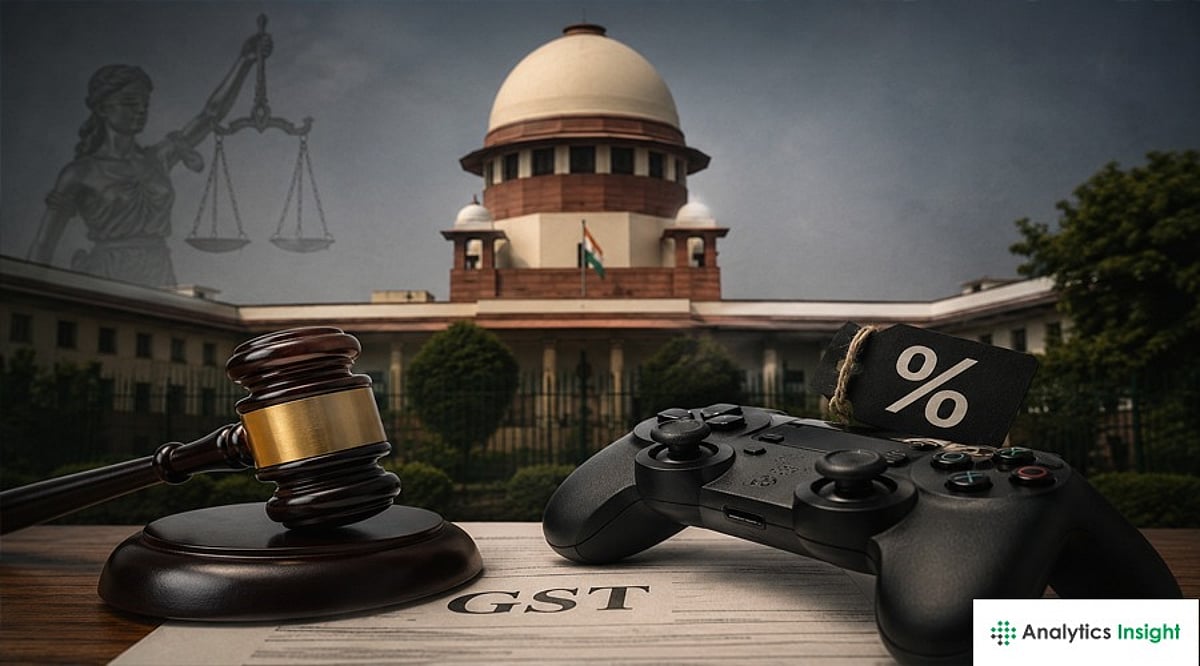
  • India’s Online Gaming Firms Make Last-Ditch Supreme Court Challenge Against 28% GST on Player Entry Fees

    India’s Online Gaming Firms Make Last-Ditch Supreme Court Challenge Against 28% GST on Player Entry Fees

    India’s online real-money gaming industry is back in the Supreme Court, with major companies filing review petitions to challenge the government’s decision to levy a 28% Goods and Services Tax (GST) on the full entry fee paid by players. This legal battle could determine the future of the country’s gaming sector.

    According to reports, Play Games24x7 and Junglee Games have already filed review petitions, and several other online gaming companies are expected to follow suit. The tax demands in question exceed Rs. 1.5 lakh crore, making this one of the most significant tax disputes in the industry’s history.

    Why Gaming Companies Are Fighting the Tax

    Gaming companies argue that the GST rules were not clear when the tax was initially applied, making it unfair to impose retrospective tax demands. They contend that GST should be charged only on the platform fee they earn from each contest, not on the total amount players pay to join games. The government, however, maintains that the full entry fee constitutes a taxable supply.

    Potential Impact on the Industry

    The Supreme Court’s decision will have far-reaching consequences. If the companies win, they could avoid paying massive tax dues, preserving the current business model. If the government prevails, many gaming platforms may have to restructure their operations or face financial strain.

    How India Compares to Other Countries

    India’s tax regime for online gaming is considered one of the harshest globally. In the UK, gaming companies pay tax only on the money they retain after payouts, not on total player deposits. Singapore takes a similar approach for licensed operators. In the US, taxation varies by state but is generally based on gaming income rather than entry fees. The Philippines taxes licensed operators on profits, while Brazil is building its online betting market with a comparable framework. India’s 28% GST on the entire contest entry amount stands out as particularly stringent.

    The outcome of this case is being closely watched by investors, operators, and policymakers alike, as it will set a precedent for how online real-money gaming is taxed in one of the world’s largest markets.

  • Titan Q1 FY27 Results Preview: Why the August 7 Earnings Call Matters for Investors

    Titan Q1 FY27 Results Preview: Why the August 7 Earnings Call Matters for Investors

    Titan Company is gearing up to announce its first-quarter results for FY2026-27, and investors are closely watching for the board meeting date and earnings call schedule. The company has closed its trading window for designated persons and their close relatives, effective from June 23, 2026, until 48 hours after the board approves the Q1 results, in compliance with SEBI insider trading norms.

    While Titan has not yet fixed the exact board meeting date, it is expected to follow a similar timeline to last year, when Q1 FY26 results were released on August 7, 2025, after a business update in early July. Investors are particularly focused on management’s outlook on jewelry demand, margins, and overall business growth amid rising gold prices.

    Titan performed strongly in the fourth quarter of FY26. Consolidated total income reached Rs. 20,300 crore, a 46% year-over-year increase, while profit after tax rose 35% to Rs. 1,179 crore. For the full fiscal year, revenue grew 33% to Rs. 76,078 crore, and annual profit after tax hit Rs. 5,073 crore. The board has also recommended a final dividend of Rs. 15 per equity share for FY26, with a record date of July 9, 2026, and payment expected on or after July 28, 2026, subject to approval at the 42nd Annual General Meeting on July 27, 2026.

    There have been leadership changes as well. Three non-executive directors nominated by co-promoter TIDCO stepped down in June 2026, and a new chairman has since taken over. Market watchers are keeping an eye on jewelry demand trends, especially with gold prices remaining high. Once Titan confirms the board meeting date, more details on the earnings call timing and management commentary on demand, margins, and the outlook for the rest of FY27 will follow.

  • IBM Revenue Warning Sparks Widespread Decline in Software Stocks

    IBM Revenue Warning Sparks Widespread Decline in Software Stocks

    IBM shares plunged more than 22% in premarket trading Tuesday after the company issued a preliminary second-quarter earnings warning, citing weaker software and infrastructure results as customers redirected spending toward AI hardware. The warning triggered a broad sell-off across major software stocks, including Microsoft, ServiceNow, Salesforce, and Intuit, which fell between 3% and 5%.

    IBM expects second-quarter revenue of $17.2 billion, up 1% year-over-year but below the analyst consensus of $17.86 billion compiled by LSEG. Adjusted earnings are projected at $2.93 per share, compared to the forecast of $3.02 per share. The company attributed the shortfall to a significant shift in customer spending during the final weeks of June, as businesses accelerated capital expenditures on servers, storage, and memory chips for artificial intelligence systems ahead of anticipated price increases and supply constraints.

    CEO Arvind Krishna acknowledged that while IBM anticipated some supply-chain pressure, it “did not anticipate the magnitude” of the spending shift. He also noted that rapidly evolving cybersecurity concerns distracted clients and impacted purchasing decisions. Preliminary figures show software revenue rose 5% in the quarter, consulting revenue remained flat, and infrastructure revenue declined 7%, driven by weaker Z mainframe performance and related transaction-processing software.

    Despite the overall miss, several business areas posted gains. Red Hat revenue increased 11%, while recent acquisitions HashiCorp and Confluent delivered stronger results. Distributed infrastructure revenue rose 37%, supported by demand for Power systems and storage products. The z17 mainframe program reached nearly 130% of the comparable z16 stage, and the distributed infrastructure backlog stood at approximately $500 million at quarter-end.

    IBM reported a GAAP gross profit margin of 57.7%, down one percentage point year-over-year, and an adjusted gross margin of 59.4%, down 0.7 percentage points. GAAP earnings were $2.27 per share, while adjusted earnings rose 5% to $2.93. Operating cash flow through June totaled $7.8 billion, and free cash flow reached $4.8 billion.

    The earnings warning pressured the broader software sector before Tuesday’s market open. The iShares Expanded Tech-Software Sector ETF dropped more than 4%. Analysts noted that IBM’s update reflects a broader shift in corporate technology budgets toward data centers, chips, storage, and networking equipment, leaving less quarterly spending available for traditional software purchases.

    IBM plans to release its complete second-quarter financial results on July 22, with an earnings call scheduled for 5 p.m. Eastern Time. Management stated that current figures are preliminary and may differ slightly from the final numbers. The company will provide further detail and discuss full-year expectations during the call.

  • Wall Street Slips as Renewed US-Iran Tensions Lift Oil Prices and Drag Down Chip Stocks

    Wall Street Slips as Renewed US-Iran Tensions Lift Oil Prices and Drag Down Chip Stocks

    US stocks declined on Monday as escalating tensions between the United States and Iran prompted investors to adopt a cautious stance. The S&P 500 fell 0.4% at its session low, while the NASDAQ Composite dropped 1%. The Dow Jones Industrial Average traded roughly 56 points lower, or 0.1%.

    The market weakened after President Donald Trump announced the reinstatement of a blockade targeting Iranian shipping through the Strait of Hormuz. Oil prices surged on the news, adding pressure to growth stocks and other risk assets. This came despite the S&P 500 posting two consecutive weekly gains amid volatile chip shares and renewed Middle East risks.

    Oil Surges After New Hormuz Order

    Trump stated that the United States would act as ‘THE GUARDIAN OF THE HORMUZ STRAIT’ and impose a 20% charge on cargo shipped through the route to cover security costs. He said the action would prevent Iranian ships and customers from entering or leaving via the waterway.

    West Texas Intermediate crude futures gained more than 5%, moving above $75 per barrel. Brent crude climbed about 5.3% to $80. The gains followed another exchange of strikes between the US and Iran over the weekend, renewing concerns over energy supplies and shipping access.

    Chip Stocks Lead the Market Decline

    Semiconductor shares posted some of Wall Street’s steepest losses. US-listed shares of SK Hynix fell 7% after surging 13% during its NASDAQ debut on Friday. Micron Technology dropped about 6% to 7%, while Sandisk lost close to 10%. Seagate Technology fell 6%, and Advanced Micro Devices and Intel traded around 4% lower. The Philadelphia Semiconductor Index slid 3.6%, standing more than 14% below its late-June record.

    Technology became the weakest S&P 500 sector during the morning session, falling about 1.3%. Four of the index’s 11 sectors traded lower early. The NASDAQ posted the largest decline among the three major indexes, while gains in IBM and UnitedHealth helped limit losses in the Dow.

    “Markets have started the week firmly on the defensive,” said Daniela Hathorn, senior market analyst at Capital.com. She linked the weaker mood to renewed US-Iran tension and uncertainty over the path toward a lasting agreement.

    Earnings and CPI Move into Focus

    Wall Street also prepared for a busy week of corporate results. JPMorgan Chase, Goldman Sachs, Morgan Stanley, Bank of America, Citigroup, and Wells Fargo will report. Netflix, Johnson & Johnson, and UnitedHealth also have results scheduled.

    Analysts expect second-quarter S&P 500 earnings to rise by more than 23% from a year earlier, based on FactSet and LSEG estimates. Investors will track bank results for signs of consumer strength and credit quality. Technology earnings will also draw attention as companies update AI spending plans.

    The June consumer price index report arrives Tuesday morning. The data could reshape interest-rate expectations after higher oil prices renewed inflation concerns. Federal Reserve Chair Kevin Warsh will also deliver his first monetary policy testimony before Congress on Tuesday.

    Apple drew attention after Citi raised its price target to $365 from $315, citing potential market share gains despite slower demand. Analyst Asiya Merchant noted that ‘selective price increases’ may offset margin pressure, and pointed to the September iPhone 18 launch as a possible catalyst before Apple reports earnings on July 30.

  • Indian Stock Market Update: Nifty 50 Holds Above 24,000, Sensex Targets 77,800 as Global Volatility Persists

    Indian Stock Market Update: Nifty 50 Holds Above 24,000, Sensex Targets 77,800 as Global Volatility Persists

    The Indian stock markets are expected to open lower amid weak global cues, as the ongoing US-Iran conflict continues to weigh on risk sentiment. GIFT Nifty also indicates a gap-down start, trading at 24,056 with a discount of 187 points from its previous Nifty futures close.

    On Monday, the Sensex gained 47.01 points or 0.06% to settle at 77,616.40, while the Nifty 50 rose 4.10 points or 0.02% to finish at 24,211. The broader markets, Nifty Midcap 100 and Nifty Smallcap 100, ended on a flat note. The Indian rupee opened 32 paise lower at Rs. 95.94 per dollar on Tuesday against Monday’s close of Rs. 95.62.

    Sensex Outlook

    Technically, the Sensex formed a bullish candle on the daily chart and recovered its morning losses.

    “The 77,000 would act as a key support zone for short-term traders. As long as the market trades above this level, the uptrend wave is likely to continue. On the higher side, 77,800 would act as an immediate resistance for day traders. If the market successfully breaks that level, the rally could continue till 78,000-78,500. On the flip side, below 77,000, the uptrend would become vulnerable. Below this level, traders may prefer to exit their long positions,” said Shrikant Chouhan, Head of Equity Research at Kotak Securities.

    Nifty 50 Outlook

    Nifty 50 formed a small bullish candle on the daily chart, reflecting continued buying interest at lower levels.

    With weekly expiry today, traders should be prepared for heightened volatility and sharp intraday swings as derivatives positions are adjusted throughout the session. Right now, 24,000 is the ultimate floor. Slipping below this point will likely trigger a deeper slide and ruin the near-term chart setup. On the flip side, any bounce faces a heavy ceiling in the 24,200 to 24,300 zone. Because global headlines are running the show, upcoming expiry-day hedging could easily whip up extra wild price swings. Traders should avoid aggressive positions at the open and focus on disciplined, level-based execution. Expect volatility to remain elevated throughout the day, especially around key support and resistance levels.

    Bank Nifty Outlook

    On Monday, Bank Nifty rose 5.55 points or 0.15% to close at 58,131.45, forming a bullish candle on the daily chart, indicating buying interest at lower levels.

    It has been consolidating within the 56,500-58,500 range over the last four weeks, indicating a healthy pause after the previous up move. On the upside, 58,700 remains the immediate hurdle, said Bajaj Broking Research. “Failure to move above 58,700 will signal extension of last 4 weeks consolidation. On the downside, 57,400-57,500 is expected to act as the immediate support, coinciding with Thursday’s gap-up zone and Monday’s low. The major support is placed at 56,500, where the 20-week and 50-week EMAs converge along with the previous week’s low, making it a strong demand zone,” the brokerage added.

    Disclaimer: Analytics Insight does not provide financial advice or guidance on cryptocurrencies and stocks. This article is provided for informational purposes and does not constitute investment advice. You are responsible for conducting your own research (DYOR) before making any investments.

  • MCX Gold Rises 0.54% to ₹1,41,066 as Brent Crude Gains and US Inflation Data Awaited

    MCX Gold Rises 0.54% to ₹1,41,066 as Brent Crude Gains and US Inflation Data Awaited

    Gold traded higher on MCX on July 14, following gains in global bullion prices as investors bought at lower levels. August gold futures rose 0.54% to ₹1,41,066. September silver futures advanced 0.64% to ₹2,19,109. Meanwhile, Brent crude futures rose 1.69% to $84.71 per barrel, and US West Texas Intermediate (WTI) advanced 1.92% to $79.64 per barrel.

    According to the CME FedWatch Tool, traders now expect a 76% chance of a September rate hike by the Fed, up from 57% last week.

    Domestic Gold Prices
    24K gold fell by ₹11 to ₹1,42,800 per 10 grams, while 22K gold declined by ₹10 to ₹1,30,900. By city, Mumbai and Kolkata mirrored prices at ₹1,42,800, Delhi at ₹1,42,950, and Chennai at ₹1,43,460.

    US Gold Prices
    US gold rose on Tuesday after hitting a two-week low earlier in the session, as markets awaited key US inflation data amid escalating US-Iran tensions driving oil prices higher. Spot gold was up 0.3% at $4,013.93 per ounce. US gold futures for August delivery gained 0.4% at $4,020.80. Spot silver inched 0.1% lower to $57.60 per ounce, having earlier touched a two-week low. Platinum fell 0.5% to $1,597.52, and palladium rose 0.6% to $1,254.82.

    Key Levels to Watch
    “You have a situation where the markets probably don’t want to commit. They have a big batch of event risks in front of them. There’s, of course, the Warsh testimony and then the CPI print, so there’s a lot for people to look at in addition to the headlines out of the Middle East,” said Ilya Spivak, head of global macro at Tastylive.

    Internationally, gold price has support at $3,955–$3,910 and resistance at $4,040–$4,085 per troy ounce. Silver has support at $56–$54.40 and resistance at $59.10–$60.60 per troy ounce.

    On MCX, gold price may find support at ₹1,39,100–₹1,37,700 and resistance at ₹1,41,400–₹1,42,200. MCX silver has support at ₹2,16,000–₹2,12,400 and resistance at ₹2,20,000–₹2,22,500.

  • Foreign Investors Pour $2.6 Billion into Indian Stocks: What’s Driving the July 2026 Rally?

    Foreign Investors Pour $2.6 Billion into Indian Stocks: What’s Driving the July 2026 Rally?

    After months of sustained selling, foreign investors have made a strong comeback to the Indian stock market in July 2026. This reversal has injected fresh optimism and lifted overall market sentiment. During the first ten days of July, Foreign Portfolio Investors (FPIs) invested approximately Rs. 24,662 crore ($2.6 billion) into Indian equities, marking one of the most aggressive buying phases in recent months.

    Market experts believe this is not a fleeting trend but the result of several converging factors. Attractive valuations, supportive government policies, a stable macroeconomic environment, and expectations of robust corporate earnings have collectively restored confidence in Indian assets.

    Key Drivers Behind the FII Inflow

    • Better Valuations: The earlier market correction made quality large-cap stocks more affordable, especially in banking and financial services.
    • Policy Support: Tax reforms and liquidity measures by the government and the Reserve Bank of India have improved the investment climate for foreign capital.
    • Stable Rupee: The Indian rupee has remained relatively stable compared to other emerging market currencies, reducing currency risk for foreign investors.
    • Earnings Optimism: Anticipation of strong Q1 FY2027 corporate results is driving interest in sectors with steady growth.

    Banking Sector Leads the Charge

    The banking and financial services sector has been the primary beneficiary of the renewed FII buying. Large private banks and non-banking financial companies (NBFCs) have seen substantial inflows, supported by healthy credit demand and stable asset quality. Stocks in this segment have outperformed the broader market during recent trading sessions.

    What to Watch in the Rest of July

    If the current trend persists, banking and financial stocks could continue to lead gains. The Nifty 50 may test higher resistance levels as investor confidence improves. However, global factors such as interest rate expectations, crude oil price movements, and geopolitical developments remain key risks. The upcoming Q1 earnings season will be crucial; strong results could sustain the rally, while disappointments may trigger short-term corrections.

    Other sectors that could benefit from the FII flows include capital goods, infrastructure, select IT companies, and consumer-focused businesses with strong earnings visibility.

    Conclusion

    The return of foreign investors marks a significant shift in sentiment after months of outflows. While global uncertainties persist, the combination of domestic policy support, stable economic fundamentals, and improving earnings outlook has created a favorable environment for Indian equities. The trajectory for the remainder of July will depend on earnings reports, global events, and the pace of foreign investment. If the current momentum holds, the Indian stock market is poised for a sustained rally with support from both domestic and foreign players.