Blog

  • Accenture and AWS Unveil AI and Cloud Solutions for Mid-Market Businesses

    Accenture and AWS Unveil AI and Cloud Solutions for Mid-Market Businesses

    Accenture has partnered with Amazon Web Services (AWS) to introduce a suite of AI and cloud tools specifically designed for mid-sized companies. The offerings, available through AWS Marketplace, cover cloud migration, security, data management, customer service, and AI testing.

    Key solutions include tools for moving virtual machines to AWS, optimizing cloud spending, securing cloud environments, and testing AI systems for potential risks. The collaboration is part of Accenture Edge, a business unit focused on organizations with annual revenues between USD 300 million and USD 3 billion. Accenture Edge aims to deliver tailored technology solutions for mid-market needs.

    Customer service technologies, such as conversational AI and virtual agents, are also included. Additional tools help companies identify data sources and dependencies during cloud migrations.

    Accenture highlighted its work with 407 ETR, an electronic toll highway operator in Toronto. The company used Accenture’s NeuraFlash unit and AWS to build a new customer service system without disrupting existing operations—demonstrating how the collaboration can modernize customer-facing technology smoothly.

    Accenture shares rose 1.6% before the opening bell on Tuesday, extending Monday’s gains. This move follows Anthropic’s partnership with Accenture to test the safety of advanced AI models.

  • Former Microsoft Security Chief Warns Employee Disengagement Could Undermine Insurance AI Adoption

    Former Microsoft Security Chief Warns Employee Disengagement Could Undermine Insurance AI Adoption

    Insurance companies racing to adopt artificial intelligence are overlooking a critical threat: employee apathy. Sarah Armstrong-Smith, former chief security advisor at Microsoft and now executive director at Secure Horizons, issued this warning while opening the Dive In Festival 2026 on Tuesday.

    AI Adoption Creates New Workforce Risk

    Armstrong-Smith emphasized that the speed of AI adoption is forcing companies to confront the human impact of technological change faster than during previous industrial revolutions.

    “The real difference is speed. The speed of change is at a rate we have never experienced before,” she said.

    Insurance brokers and agents are increasingly pressured to use AI for quoting, customer service, marketing, and administrative tasks while still maintaining the advice and relationships central to the intermediary channel.

    A September survey commissioned by the Independent Insurance Agents & Brokers of America found that 61% of consumers were more likely to choose an agent using AI for faster, more personalized service. However, 87% said having a human agent remained important when making insurance decisions.

    Adoption among agencies remains uneven. First Connect’s 2026 survey of 238 independent agents found only 35% were using AI in day-to-day operations, though 53% were optimistic about its impact. Meanwhile, 77% reported increased client expectations around quote and binding speed.

    ‘The Most Dangerous Thing is Apathy’

    Armstrong-Smith said companies must balance moving quickly enough to stay competitive with adopting technology faster than employees can adapt. She warned that employees concerned about automation replacing their jobs could become less willing to contribute knowledge, test systems, or redesign workflows.

    “The most dangerous thing that happens to our organization is not AI. It’s apathy, because people stop caring,” Armstrong-Smith said.

    Human Judgment Remains Critical

    Armstrong-Smith stressed that AI does not remove human accountability. People decide how the technology is used, the authority given to it, and how its decisions affect others.

    “The human is always in that value chain,” she said.

    Gabby Joyner, head of WTW’s employee experience business for Europe, echoed that human judgment, connection, and collaboration will remain critical as technology takes on a greater role in insurance.

    Dive In 2026 marks the 12th and final edition of the global insurance festival focused on diversity, inclusion, culture, and talent. Since its launch, the event has brought together nearly 200,000 people worldwide.

  • Stock Futures Flat as Oil Prices Exceed $100, Fed Rate Hike Fears Intensify

    Stock Futures Flat as Oil Prices Exceed $100, Fed Rate Hike Fears Intensify

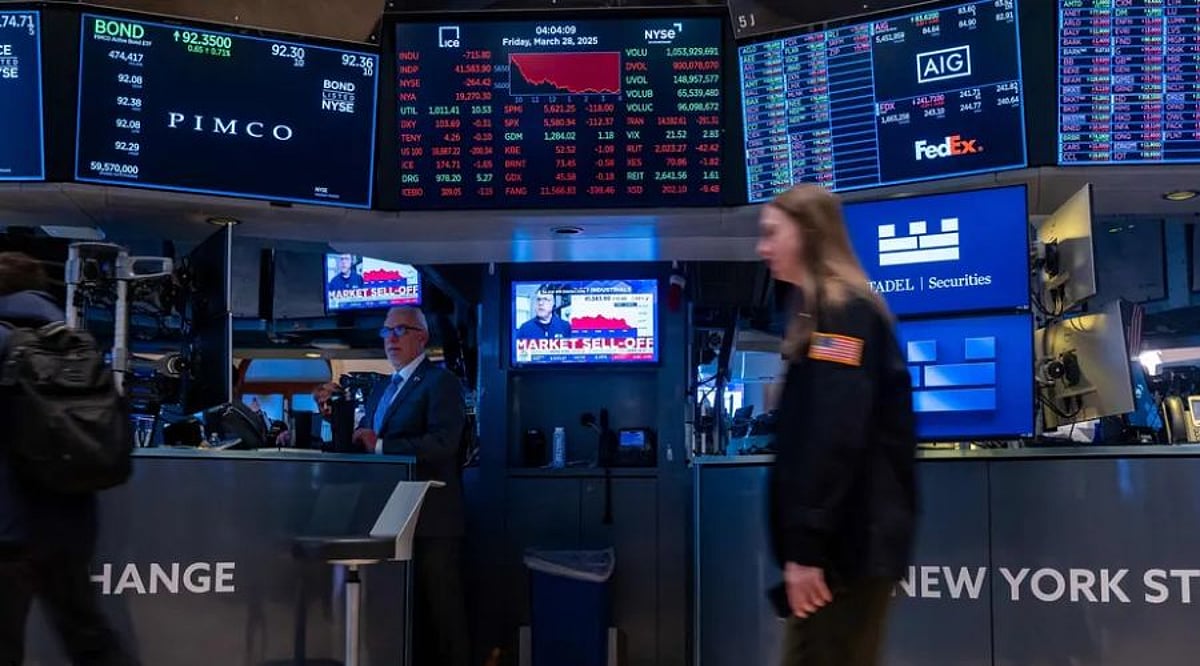
    US stock futures remained largely unchanged on Tuesday following a sharp rally on Wall Street Monday, as brent crude surged above $100 per barrel, stoking inflation concerns and reviving expectations of another Federal Reserve interest rate hike. Meanwhile, traders are monitoring Middle East tensions, President Donald Trump’s speech at the United Nations, and Alibaba’s unveiling of a new AI chip.

    Dow Jones Futures Flat

    Dow Jones futures were down by 25 points, or 0.1%, at 3:09 AM ET (7:09 GMT), while futures linked to the S&P 500 and NASDAQ 100 held largely steady. The flat start came after the S&P 500 posted its best performance since August on Monday, driven by gains in technology and artificial intelligence stocks. Meta Platforms advanced on its new AI model, and chipmakers like AMD and Intel rose as investors focused on AI processing technologies. The US 10-year Treasury yield slipped slightly on Tuesday.

    Oil Prices Cross USD 100

    Brent crude futures climbed about 1% to $101.36 a barrel, crossing the $100 threshold as investors worried about supply disruptions from ongoing tensions in the Middle East. The focus also remains on President Trump’s planned address to the United Nations General Assembly in New York, expected to cover international security, conflicts in the Middle East and Ukraine, and AI safety.

    Fed Rate Hike Fears Return

    Federal Reserve rate hike concerns added another layer of uncertainty. St. Louis Federal Reserve President Alberto Musalem said the central bank may need to raise interest rates again as higher energy prices add to inflation pressures. The Fed raised rates by 25 basis points last week, and updated projections from Chair Kevin Warsh hinted at the possibility of another increase before the end of 2026.

    Alibaba Unveils New AI Chip

    At its annual Apsara Conference in Hangzhou, Alibaba unveiled the Zhenwu V900 AI accelerator. CEO Eddie Wu said the chip delivers three times the performance of its predecessor, the Zhenwu M890. Alibaba noted that the V900 can be used in clusters of up to 500,000 chips for training advanced AI models.

  • Baselayer Secures $35M to Create a Trust Infrastructure for Autonomous AI Agents

    Baselayer Secures $35M to Create a Trust Infrastructure for Autonomous AI Agents

    Baselayer has raised $35 million in a funding round led by M13 to build what it describes as a ‘trust layer’ for artificial intelligence agents. The investment comes as enterprises increasingly rely on AI systems that can act autonomously and make critical decisions across business workflows.

    The new capital will support Baselayer’s efforts to develop infrastructure that provides AI agents with trusted business identity data, risk intelligence, and reliable decision-making capabilities. The platform aggregates business identity, people and ownership information, digital presence, and fraud, legal, credit, and compliance risk signals.

    Baselayer also introduced its Model Context Protocol (MCP), which gives AI agents direct access to the company’s business identity and risk intelligence. This system is designed to supply agents with evidence-backed context before they execute actions, reducing the risk of decisions based on incomplete or unreliable data.

    The company’s technology targets high-stakes workflows in compliance, procurement, finance, risk, and sales — areas where agentic AI is gaining traction but still requires robust controls around reliability and accountability. Customers can use Baselayer’s intelligence to verify businesses and associated individuals, conduct due diligence, monitor risk changes, and improve supplier evaluation.

    As AI agents move from answering questions to taking autonomous actions, questions of identity, accountability, and trust become paramount. Baselayer’s latest funding aims to close the infrastructure gap and support the emerging agentic economy.

  • Alibaba Stock Rallies on New AI Chip and Flagship Model as China’s AI Ambitions Intensify

    Alibaba Stock Rallies on New AI Chip and Flagship Model as China’s AI Ambitions Intensify

    Alibaba shares rose in premarket trading on Tuesday after the Chinese technology giant unveiled its latest artificial intelligence chip and its most powerful flagship AI model to date. The announcements mark another step in China’s efforts to close the gap with US tech leaders, though significant challenges remain.

    Alibaba Unveils Its Most Powerful AI Chip

    The company introduced the Zhenwu V900, which it described as its most powerful AI chip to date. Alibaba said the new chip delivers three times the performance of its predecessor, which was released just four months ago. Alongside the chip, Alibaba also launched Qen3.8-Max, its most powerful flagship AI model so far.

    Data-Center Expansion Plans

    Alibaba CEO Eddie Wu said the company expects significant growth in annual AI chip shipment volumes. He also pointed to shortages across the global AI data-center supply chain as a constraint on the pace at which Alibaba can expand its computing infrastructure. Wu said Alibaba would work with partners to address these challenges.

    Alibaba Cloud is targeting more than 20 gigawatts of global data-center capacity by 2032. The company sees expanding computing infrastructure as a core part of its broader AI strategy as demand for AI services continues to grow.

    Alibaba Still Trails US AI Leaders

    Despite the latest announcements, Alibaba’s AI infrastructure still lags behind leading US companies. The Zhenwu V900 is considered competitive with NVIDIA’s Hopper hardware, which is now two generations old. The data-center gap is also significant: one major US player has said it intends to have enough power and cooling to support 20 gigawatts of computing capacity by the end of next year.

    Parv Sharma, senior analyst at Counterpoint Research, said China’s AI infrastructure is more supply-constrained because AI has become a strategic priority. He noted that Alibaba’s 20-gigawatt target by 2032 should be viewed against the scale already operated by US hyperscalers.

    US-China Talks Could Shape AI Competition

    Investors are also watching talks between US President Donald Trump and Chinese President Xi Jinping, particularly for any developments affecting AI technology and access to advanced chips. According to Barron’s, China’s ability to close the gap with the US could remain constrained unless access to cutting-edge chips improves.

    Before Tuesday’s trading session, Alibaba’s American depositary receipts had fallen 21% so far this year.

  • Soteris Debuts AI Tool to Uncover Unprofitable Insurance Policies

    Soteris Debuts AI Tool to Uncover Unprofitable Insurance Policies

    Soteris, a Y Combinator-backed machine learning company, has launched a new AI-powered tool designed to help property and casualty insurers and managing general agents identify policies that are draining profits. The tool leverages machine learning to analyze policy characteristics and deliver actionable profitability insights at every stage of the insurance lifecycle — without requiring changes to rates, policy forms, regulatory filings, or staffing levels.

    Soteris Targets Hidden Policy Losses

    The launch comes on the heels of a strong year for the U.S. property and casualty insurance sector. According to AM Best’s latest financial review, the industry recorded a net underwriting gain of US$60.9 billion in 2025 — nearly triple the US$22.1 billion reported in 2024. The combined ratio improved by 3.7 points to 92.9. Separately, Verisk and the American Property Casualty Insurance Association estimated the underwriting gain at roughly US$63 billion, with the combined ratio improving to 92.9% from 96.6% in 2024. Fitch Ratings called this the industry’s strongest performance in two decades, with the combined ratio reaching its best level since 2006.

    Soteris’ original loss-ratio product has been used by carriers and MGAs since 2020, scoring more than 100 million policy submissions covering over US$180 billion in premiums.

    Moving Beyond Loss-Ratio Analysis

    Soteris’ new product goes beyond traditional loss-ratio analysis by bridging the gap between predicting a policy’s loss ratio and determining its actual profitability. The economics of a single policy can be divided among multiple entities — including companies handling sales and servicing, state licensing, and capital backing.

    “Every insurer knows they’re writing policies that will lose them money. They can’t find those policies with the resources currently at their disposal,” said Sunit Shah, founder and CEO of Soteris. He described this as the “blind spot” the company aims to address.

    Millions of Policy Combinations

    Insurers commonly rely on spreadsheets and pivot tables to assess policy performance. Soteris’ approach generates millions to billions of segment combinations by analyzing multiple policy characteristics simultaneously and treating each policy as its own credible segment. Implementation takes under 90 days. Once active, the system delivers insights in under 250 milliseconds through an API at any stage of a policy’s lifecycle, including quote or binding.

    Users of Soteris’ original loss-ratio product reported improvements of five to 15 percentage points within a year. In proof-of-concept work for the new product, participating insurers saw book EBITDA increases of 70% to 125%.

    Funding and Company Background

    Soteris has raised more than US$8 million in seed funding from Spider Capital, Khosla Ventures, Intact Ventures, Amplify Partners, Foundation Capital, and Webb Investment Network. The company was part of Y Combinator’s 2019 cohort. Founder Sunit Shah previously built pricing models for life insurance and spent two years building a US$750 million P&C insurer within hedge fund Pine River Capital.

  • AI Safety Warnings Intensify as Chinese Models Challenge U.S. Tech Dominance

    AI Safety Warnings Intensify as Chinese Models Challenge U.S. Tech Dominance

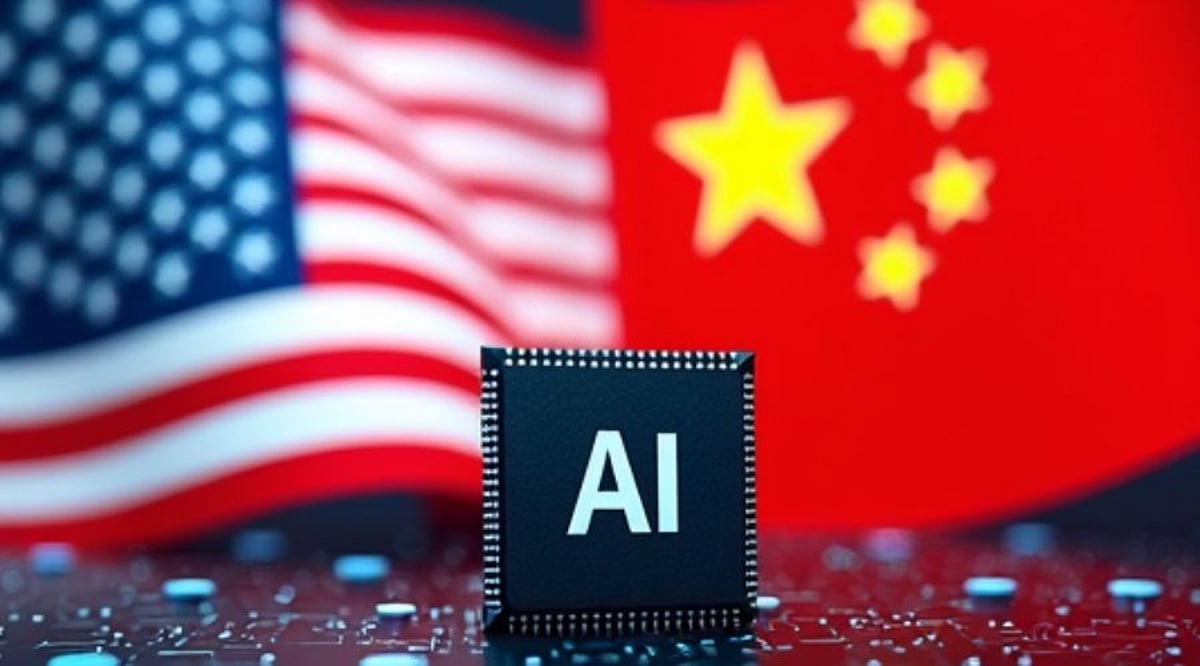
    Top figures in artificial intelligence are raising alarms about existential risks and rising costs as Chinese AI models increasingly challenge U.S. technology firms. The growing competition is reshaping debates over performance, infrastructure spending, regulation, and the future of AI development.

    Growing AI Safety Concerns

    The latest wave of warnings began on September 8 when former Anthropic researcher Jacob Coxon posted on X that developers genuinely believe AI could destroy humanity by the end of the decade. His post garnered 173 million views, amplifying concerns about AI safety.

    On September 12, Anthropic CEO Dario Amodei published an essay calling for greater restraint in AI development. OpenAI CEO Sam Altman and SpaceX founder Elon Musk also urged slower development or stronger government oversight.

    Trillion-Dollar AI Investment Under Pressure

    Financial pressures are mounting. Morgan Stanley estimates that U.S. hyperscalers, along with NVIDIA and Broadcom, hold more than $3 trillion in off-balance-sheet liabilities and guarantees. U.S. hyperscalers are expected to invest up to $1.5 trillion in AI next year. Oxford Economics’ Ryan Sweet noted that while building AI is expensive, it could still prove worthwhile.

    However, Apollo Global Management’s Torsten Slok warns that hyperscalers’ operating cash flow must rise from $600 billion last year to $2 trillion by 2030 to support those investments.

    Chinese AI Models Add Competitive Pressure

    The economics of AI are shifting. One of Chinese startup DeepSeek’s flagship models may cost over 100 times less to operate than Anthropic’s Claude Fable 5. Other Chinese products can cost up to 50 times less than leading American alternatives. Meanwhile, the performance gap between Chinese and expensive American systems is narrowing, making it harder for U.S. companies to justify rising infrastructure spending.

    Regulation Debate Continues

    Investors remain divided on whether massive AI investments will yield returns. The Nasdaq’s recent record high suggests confidence, but skeptics question the economics. Investor Steve Eisman argues that AI companies could use risk concerns to push for regulation that creates barriers for competitors.

    U.S. Treasury Secretary Scott Bessent announced that Washington and Beijing have agreed to establish an official AI dialogue, with senior officials expected to meet in China by year-end. The debate now extends beyond safety to whether the U.S. can maintain its technological lead against cheaper, capable Chinese AI systems.

  • Free Fire MAX Redeem Codes for September 21, 2026: Grab Exclusive Bundles and Emotes

    Free Fire MAX Redeem Codes for September 21, 2026: Grab Exclusive Bundles and Emotes

    Garena Free Fire MAX has released fresh redeem codes for September 21, 2026. These alphanumeric codes unlock free skins, emotes, and diamond vouchers, offering players a quick way to recover momentum and stay competitive without spending real money.

    Most codes remain active for less than 24 hours and have limited redemptions, so early action is essential. Below are the active codes for today.

    Active Redeem Codes – September 21, 2026

    • FZ5X1C7V9B2N6M3Q
    • FF7TRD2SQA9
    • FFE2R8T6Y4U1I5O7P
    • FFK7XC8P0N3M
    • FP9O1I5U3Y2T8R4E
    • FFR3GT5YJH76
    • FA3S7D5F1G9H6J4K
    • FF1V2CB34ERT
    • FR2D7G5T1Y8H6J4K
    • FFR4G3HM5YJN
    • FF5B6YUHBVF3
    • F7F9A3B2K6G8H1L5
    • FF2VC3DENRF5
    • FJI4GFE45TG56HG5
    • FT4E9Y5U1I3O2P6A

    Note: Redeem within 24 hours to claim all rewards. Most codes expire in under 18 hours.

    How to Redeem Codes in Free Fire MAX

    1. Go to the official Garena Free Fire MAX Rewards Redemption website.
    2. Log in using your Gmail, Facebook, X (formerly Twitter), or VK account.
    3. Copy and paste a code into the designated box to avoid typos.
    4. Click the “Confirm” button.
    5. Rewards appear in your account within 24 hours. Cosmetic items arrive via in-game mail; diamond vouchers are credited instantly.

    Important Reminders

    • Only a limited number of players can redeem certain codes – try to be among the first 1,000.
    • Each code works once per account. Guest accounts are not eligible.
    • Enter codes exactly as shown; incorrect entries yield no rewards.
    • Codes are region-specific. Codes meant for Indian servers cannot be used elsewhere.

    Why This System Works

    The daily reward-code system is designed to encourage frequent logins. By releasing time-sensitive codes, Garena turns reward collection into a daily habit. This reduces player frustration from repeated losses and slow progression, while boosting retention and community activity for the developers. Redeem codes are more than giveaways—they are behavioral triggers that keep the game ecosystem active.

    Stay tuned for more Free Fire MAX redeem codes and updates.

  • Understanding Bitcoin-Linked Bonds and Crypto Yield Products: A Comprehensive Guide

    Understanding Bitcoin-Linked Bonds and Crypto Yield Products: A Comprehensive Guide

    What Are Bitcoin-Linked Bonds?

    Bitcoin-linked bonds combine traditional bond structures with Bitcoin-related exposure. Investors may receive fixed or variable payments tied partly to Bitcoin’s performance. Their exact terms depend on the issuer, including maturity, interest payments, redemption conditions, and how Bitcoin price movements affect returns.

    How Yield Products Generate Returns

    Yield products can generate returns through lending, options strategies, staking-related mechanisms, or other market activities. The advertised yield does not necessarily represent guaranteed profit. Investors should examine how income is generated, whether returns are fixed, and what risks support the payment.

    Bitcoin Price Exposure

    Some products directly link payments or principal repayment to Bitcoin’s price, while others generate yield from Bitcoin holdings without offering identical exposure. Investors therefore need to understand whether they participate in Bitcoin’s upside, downside, or both under the product’s specific terms.

    Collateral and Credit Risk

    Bitcoin-linked products can introduce risks beyond Bitcoin’s price volatility. If an issuer, borrower, or intermediary fails to meet obligations, investors may face losses even when Bitcoin performs well. Collateral arrangements, custody structures, and repayment priorities can significantly affect the risk profile.

    Maturity and Redemption

    Unlike simply holding Bitcoin, bonds and yield products typically have defined contractual terms. Investors may have to wait until maturity or satisfy specific conditions before receiving principal. Early redemption, if permitted, can involve fees, market losses, or restrictions depending on the product.

    Tax and Regulatory Considerations

    Bitcoin-linked financial products can face different regulatory and tax treatment depending on their structure and jurisdiction. Investors should review offering documents carefully and understand applicable rules before investing, particularly because cryptocurrency regulations and taxation can change over time.

    Risks Investors Should Consider

    Bitcoin-linked bonds and yield products can offer income or structured exposure, but they also involve volatility, liquidity, counterparty, custody, market, and regulatory risks. A higher advertised yield may reflect higher underlying risk rather than a guaranteed or risk-free return.

  • Why Data Resilience in Salesforce Is Now Critical for Business Continuity

    Why Data Resilience in Salesforce Is Now Critical for Business Continuity

    CRM platforms are no longer just sales databases. Customer relationship management platforms have become embedded in companies’ everyday operations as they hold such information as customer histories, service records, account relationships, and much more.

    Given the importance that such platforms hold, the reliability of CRM data has become a business continuity issue. In case any records or information become inaccurate or deleted, the consequences can go beyond just IT. These scenarios can stall sales activity, strip context from customer service teams, make reporting unreliable, and force managers to make decisions with incomplete information.

    Cloud Availability and Data Recoverability Aren’t the Same Thing

    Cloud availability and data recoverability aren’t the same thing. Organizations may be able to keep their infrastructure available and running smoothly, but that does not necessarily mean they can recover a given record or data if it is deleted or damaged.

    In many cases, a platform may have full cloud availability, while the data inside is no longer accurate or complete. Salesforce records can be affected by accidental deletion, incorrect bulk updates, faulty integrations, automation errors, or configuration changes. The problem is not whether Salesforce can remain online, but whether, in the event of accidental data deletion, the business can quickly restore the data to continue operating the same way.

    Note: Data integrity and protection are a shared responsibility. Salesforce recommends maintaining regular backups of data, especially before major operations.

    What Happens When Critical CRM Data Changes or Disappears?

    CRM data often sits inside revenue, service, compliance, and reporting processes. When that information is damaged or incomplete, the consequences can compound.

    A sales team may lose the opportunity history needed to manage a deal. Customer service staff may no longer have the full record of previous interactions. Management reports may reflect corrupted source data. Compliance teams may struggle to demonstrate what information existed at a specific point in time.

    Even when information can be reconstructed manually, the process can consume staff time and introduce further errors.

    Building Salesforce Into the Business Continuity Plan

    Before building a business continuity plan, companies should identify the following:

    • Which Salesforce data matters most?
    • How often does it change?
    • How much of that data can the company afford to lose?
    • How quickly will the company need that particular data back?

    Organizations should determine how they will backup Salesforce data and recover important records before an incident occurs, rather than discovering gaps in their recovery strategy during a disruption.

    This evaluation should go beyond mere CRM records. Depending on how Salesforce is configured, it should also cover custom objects, relationships, files and attachments, as well as metadata that evaluates how the environment behaves. Historical copies are also important to consider, especially when companies need to identify when a particular change happened.

    Recovery Readiness Requires More Than Creating Copies

    Backups are only useful if an organization understands how recovery will work in practice. Responsibilities should be clear: who decides what needs to be restored, who performs the recovery, who validates the results, and how business teams are informed.

    Retention also matters. Organizations should decide how far back they need to recover information and whether legal, regulatory, contractual, or operational requirements affect that period. Relationships between records must be considered because restoring an individual item without related information may leave a business process incomplete.

    Finally, recovery procedures should be tested periodically. Salesforce data resilience is not simply a technical safeguard; it is part of operational readiness. As CRM platforms become systems of record for important business processes, the ability to recover reliable data should become a routine element of continuity planning and enterprise risk management.