Tag: 2026

  • Top Desk Fans for Home Offices and Workspaces in 2026: Expert Picks

    Top Desk Fans for Home Offices and Workspaces in 2026: Expert Picks

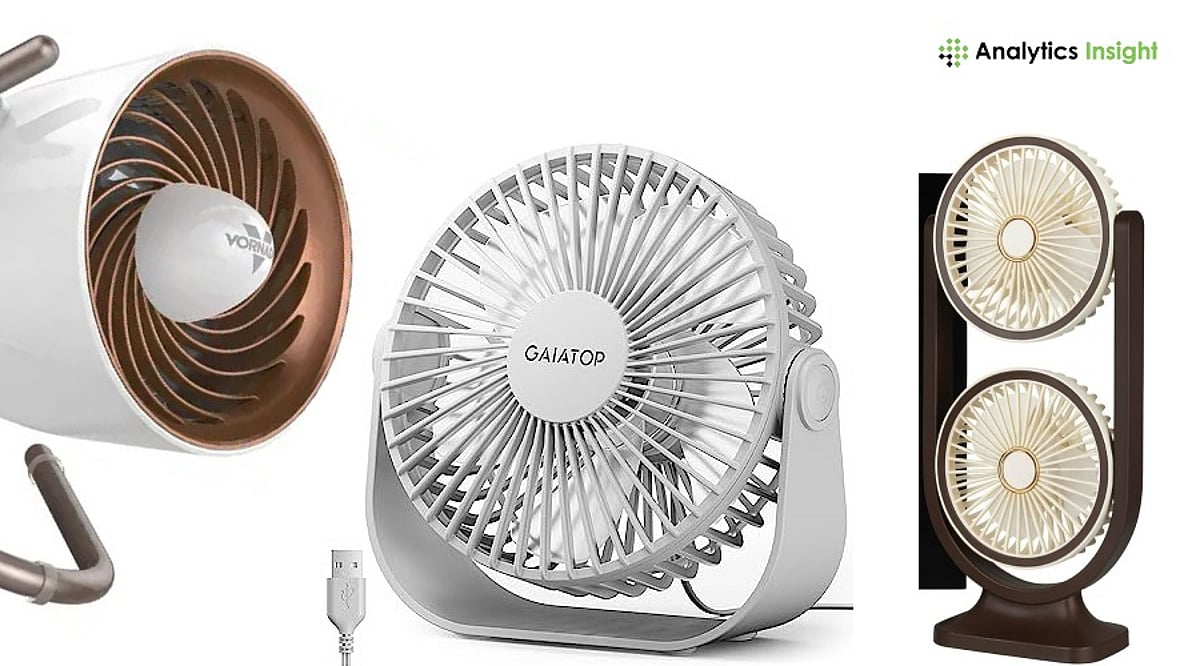
    A reliable desk fan can make long work hours more comfortable without significantly increasing electricity bills. Whether you need a compact USB fan for your workstation or a high-speed table fan for a home office, today’s options combine quieter motors, energy-efficient operation, and portable designs.

    Why a Desk Fan is a Must-Have for Your Home Office

    Desk fans have evolved beyond simple cooling devices. In 2026, buyers increasingly prioritize low noise levels, energy efficiency, USB-C charging, and rechargeable batteries over sheer airflow. While compact USB fans are ideal for personal cooling, full-sized table fans remain the better choice for larger rooms. We have listed the best desk fans you can buy based on performance, features and overall value.

    Atomberg Renesa 400mm Table Fan

    The Atomberg Renesa 400mm Table Fan uses a BLDC motor. It uses around 50%–65% less energy than a conventional induction motor while maintaining consistent airflow. The three ABS blades are aerodynamically designed, and the fan offers various speed settings and oscillation options. It runs quite silently and is therefore ideal for video conferencing and working.

    Best for: Professionals seeking an energy-efficient, low-noise desk fan for daily home office use.

    USHA Maxx Air Ultra

    The USHA Maxx Air Ultra features a copper motor that delivers high air thrust for fast cooling. With a sweep length of 400 mm and a wide oscillating angle, the fan provides airflow in all areas of the room. It comes with a tilting feature for proper direction of the airflow.

    Best for: Users who prioritize strong and consistent airflow in medium-sized rooms.

    Bajaj Frore Neo

    Bajaj Frore Neo is a cost-effective model with reliable functionality. It is equipped with a fast motor and a blade sweep of 400 mm and efficient blades capable of providing effective airflow within the unit’s small size. Moreover, the robust base ensures low vibrations when it is working, and the adjustable head facilitates customized airflow.

    Best for: Students, small home offices and budget-conscious buyers looking for reliable everyday cooling.

    Portronics CoolCube Mini Rechargeable

    Portronics CoolCube Mini is a personal cooling device with a lithium-ion rechargeable battery, enabling the fan to run for several hours without being plugged into the mains. It is charged via USB Type-C and therefore works with computers, power banks, and chargers. It has different speed settings that let users adjust airflow, and its compact size allows it to fit well on a busy desk.

    Best for: Remote workers, students and travelers who need portable cooling.

    AGARO Signify USB Desk Twin

    The AGARO Signify USB Twin Fan has two individual adjustable fan heads that allow the direction of airflow to be adjusted in two directions at once. Being powered by USB, it is compatible with both laptop and desktop computers as well as docking stations and portable chargers without needing an additional power socket. The brushless engine ensures quiet operation but keeps high air performance.

    Best for: Professionals using dual-monitor setups or shared workstations.

    Portronics Aero Breeze 2-in-1 Fan

    The Portronics Aero Breeze works as both a table fan and a hanging fan. This provides greater flexibility and portability. This includes having a rechargeable battery, variable fan speed, and a portable frame that makes it easy to carry from room to room and outdoors. USB charging makes it easy to recharge the fan using a laptop, power bank, or USB adapter.

    Best for: Hybrid workers, campers, and users seeking a multipurpose cooling solution.

    Crompton HighSpeed Torpedo

    The Crompton High Speed Torpedo Table Fan is made for those users who want a fan providing high air volume. This fan has a heavy-duty copper motor along with high-lift blades to provide good airflow in large rooms. There are features such as oscillation, tilting, and durable body construction that make it more durable.

    Best for: Larger home offices or workspaces that require high-velocity cooling.

    What to Consider Before Buying a Desk Fan

    The ideal desk fan depends on workspace size and usage. Compact rechargeable models suit personal desks and remote workers, while high-speed table fans provide better cooling for larger home offices. Experts also recommend adjustable tilt and oscillation to improve air circulation without increasing power consumption. Attributes like strong performance, adjustable airflow, energy-saving motors, and battery backup are preferred over low prices. An appropriate model will always offer greater productivity.

    FAQs

    1. Which desk fan is the best choice for home office use?
      The Atomberg Renesa is a strong choice as it combines an energy-efficient BLDC motor, quiet performance, multiple speed settings and consistent airflow for long working hours.
    2. Are rechargeable desk fans worth buying in 2026?
      Yes. Rechargeable desk fans provide cordless operation, USB-C charging and battery backup, making them ideal for remote work, travel, outdoor use and temporary power interruptions.
    3. What is the advantage of choosing a BLDC motor fan?
      BLDC motor fans consume significantly less electricity, produce less noise, generate efficient airflow and typically last longer than fans powered by conventional induction motors.
    4. How do I choose the right desk fan for my workspace?
      Select a fan based on room size, airflow requirement, portability, power source, oscillation, adjustable tilt, noise level and whether battery operation is necessary.
    5. Are table fans better than compact USB desk fans?
      Table fans offer stronger airflow and wider coverage for larger rooms, while USB desk fans are better suited for personal cooling at individual workstations and study desks.

  • Top Generative AI Certification Courses for 2026: From Beginner to Advanced

    Top Generative AI Certification Courses for 2026: From Beginner to Advanced

    Generative AI has become one of the most transformative technologies in today’s digital landscape. Businesses across industries are leveraging AI to enhance customer service, automate workflows, generate content, analyze data, and boost productivity. As demand for AI expertise grows, employers actively seek professionals who understand generative AI and can apply it effectively.

    Learning AI has never been more accessible. Numerous trusted platforms now offer certification programs tailored to both beginners and seasoned professionals. Some courses focus on foundational concepts, while others dive into advanced topics like large language models, prompt engineering, AI agents, and application development. Choosing the right certification depends on your career goals, current skill level, and the knowledge you need to succeed.

    Below are some of the best generative AI certification courses to consider in 2026.

    Coursera – Generative AI: Introduction and Applications

    This introductory course is ideal for anyone wanting to understand generative AI from the ground up. It explains core concepts in simple language and illustrates how different industries apply AI in real-world scenarios. Topics include popular AI tools, foundation models, prompt engineering basics, and responsible AI practices. Real-world examples make the material accessible even to non-technical learners.

    Coursera – Generative AI for Everyone Specialization

    Designed for business professionals, students, managers, and educators, this specialization emphasizes practical uses of generative AI in the workplace. It covers how organizations use AI to improve productivity and decision-making, along with prompt design, responsible AI, ethical considerations, and digital transformation. No programming knowledge is required.

    Coursera – Generative AI for Content Creation

    Content creation is one of the most common applications of generative AI. This course focuses on leveraging AI to produce blogs, marketing copy, social media posts, presentations, emails, and more. Lessons cover writing effective prompts, refining AI-generated content, maintaining quality, and the ongoing importance of human creativity.

    Udemy – Complete Generative AI Course with LangChain and Hugging Face

    This advanced, hands-on course is perfect for developers. It covers developing modern applications using LangChain and Hugging Face, including retrieval-augmented generation, vector databases, embeddings, prompt engineering, AI agents, and large language models. Numerous practical exercises help you build real AI-powered apps.

    BITS Pilani Digital – Generative AI and Agentic AI Course

    Offered by BITS Pilani Digital, this certification blends generative AI with the emerging field of agentic AI. The structured curriculum combines theory with practical business applications, covering foundation models, AI agents, autonomous workflows, prompt engineering, and enterprise AI solutions. Industry case studies and projects reinforce learning.

    FutureSkills Prime – Fundamentals in Generative AI and Machine Learning

    This beginner-friendly certification builds a solid foundation in machine learning and generative AI. It starts with simple concepts and gradually introduces more advanced topics like neural networks, foundation models, and responsible AI. The course prepares learners for future advanced certifications.

    Microsoft Learn – Generative AI for Beginners

    Microsoft provides a free, self-paced course featuring tutorials and learning materials for hands-on learners. Topics include large language models, prompt engineering, semantic search, vector databases, AI agents, and responsible AI. The course is regularly updated to reflect the latest trends.

    Great Learning – IIT Bombay Certificate in Generative AI

    This certification combines academic rigor with practical experience. It covers fundamentals before progressing to advanced topics like prompt engineering, large language models, and industry applications. Expert guidance, live sessions, and project-based learning help learners understand real-world AI use cases.

    How to Choose the Right Generative AI Certification

    The best certification depends on your career goals and background. Beginners may prefer introductory courses from Coursera, Microsoft Learn, or FutureSkills Prime. Business-oriented learners who want to understand AI’s impact may benefit from “Generative AI for Everyone.” Developers and technical professionals should consider courses covering LangChain, Hugging Face, and agentic AI. Before deciding, compare curricula, practical projects, instructor expertise, certification value, and how often content is updated.

    Final Thoughts

    Generative AI is now an essential skill across many industries. Certification programs provide a clear path to learning this technology, but hands-on projects are what truly build expertise. The demand for AI skills continues to grow, making now a great time to invest in your education.

    Frequently Asked Questions

    1. Which is the best Generative AI certification course for beginners? Courses from Coursera, Microsoft Learn, and FutureSkills Prime provide a strong foundation.
    2. Are Generative AI certifications worth it in 2026? Yes. They help build practical AI skills and improve career opportunities across many industries.
    3. Which course is best for developers? The Udemy course with LangChain and Hugging Face is a strong choice for developers seeking hands-on experience.
    4. Do these courses require coding knowledge? Not all of them. Many are suitable for non-technical learners, while others focus on programming and AI development.
    5. What should I consider before choosing a certification? Compare the curriculum, practical projects, certification value, instructor expertise, and how often the content is updated.
  • Display Tech Showdown: How Quantum Dots, OLED, MicroLED, and RGB Mini-LED Compare for 2026

    Display Tech Showdown: How Quantum Dots, OLED, MicroLED, and RGB Mini-LED Compare for 2026

    The battle for the best TV display is no longer just about picture quality. Manufacturing scale, production costs, and commercial readiness are shaping the market as much as image performance. OLED and quantum dot LCD started this race, but RGB Mini-LED and MicroLED have since widened it into a genuine four-way contest. Here’s how each technology stacks up for 2026.

    The 2026 Brightness Reality

    Brightness has come a long way this year. Samsung’s flagship S95H hit 2,553 nits in standard mode, while the S99H crossed 2,700 nits. LG rates its 2026 Tandem WOLED panel at up to 4,500 nits, but independent testing of the 2025 LG G5 measured only 2,213 nits—a reminder that spec sheet promises often differ from real-world performance.

    TCL is pushing harder with its new RGB Mini-LED sets, claiming up to 10,000 nits peak brightness and as many as 20,000 local dimming zones. Real-world results won’t reach those numbers, but even scaled back, RGB Mini-LED runs brighter than any OLED TV on the market today.

    Burn-In: A Key Differentiator

    Leave a static image on an OLED or QD-OLED screen long enough, and it can leave a permanent mark, though pixel shifting has made this far less likely. QLED, RGB Mini-LED, and MicroLED use inorganic LEDs that don’t degrade like organic pixels, making them immune to burn-in—a clear advantage for static content like TV logos or desktop interfaces.

    Manufacturing Decides the Winner

    Picture quality alone never determines which technology wins—scalability does. Industry estimates suggest MicroLED mass-transfer yields need to approach 99.99% for cost-effective production, and current yields remain below that. Closing that gap takes serious time, money, and engineering.

    MicroLED’s current position is reflected in commercial products: the Garmin Fenix 8 Pro wearable and a Sony-Honda MicroLED display for EV exteriors. Notice what’s missing: a television. Analysts expect the next two years to settle whether MicroLED enters consumer TVs after 2027 or stays in wearables, cars, and signage.

    Meanwhile, RGB Mini-LED isn’t waiting. It’s cheaper to build, faster to scale, and delivers serious brightness—which is why Samsung, LG, Hisense, and TCL have all launched RGB Mini-LED sets this year. Reviewers now call it the go-to pick for bright rooms that QLED once owned.

    A Market Split Four Ways

    There isn’t one right answer anymore. OLED and QD-OLED still own dark-room movie nights. RGB Mini-LED has carved out bright-room viewing, sports, and everyday use. MicroLED chips away at manufacturing challenges while growing in wearables and commercial screens. Quantum dot LCD remains the value pick for solid performance without the premium price.

    Final Thoughts

    The next big leap in display tech won’t come from more nits—it will come from solving manufacturing problems. Solve the mass-transfer yield issue, and MicroLED has a real shot at consumer TVs after 2027. Until then, the best display isn’t the newest on paper. It’s the one that best matches the room, viewing habits, and budget.

    FAQs

    1. Which display technology will dominate in 2026? OLED and QD-OLED lead the premium consumer market for picture quality and availability, while MicroLED remains niche due to high costs.

    2. Is MicroLED better than OLED? MicroLED offers higher brightness, longer lifespan, and no burn-in, but OLED is more practical and affordable for most consumers.

    3. What is the difference between Quantum Dot and OLED displays? Quantum Dot uses LED backlighting enhanced with quantum dots for brightness and color; OLED uses self-emissive pixels for perfect blacks and infinite contrast.

    4. Does OLED still suffer from burn-in in 2026? Modern OLEDs include pixel shifting and screen refresh to reduce burn-in risk. It’s far less common during normal use.

    5. Which display technology is best for gaming and HDR? QD-OLED and OLED offer exceptional contrast and fast response times for gaming; QLED excels in bright rooms; MicroLED is premium but too expensive for most buyers.

  • Top Philips Air Fryers in India for 2026: A Complete Guide to Features, Performance, and Value

    Top Philips Air Fryers in India for 2026: A Complete Guide to Features, Performance, and Value

    Philips air fryers are designed to make everyday cooking quicker, healthier, and more convenient. Whether you are preparing snacks after work or cooking meals for the whole family, the right model can save time while delivering crispy, tasty food with very little oil.

    Overview

    Philips offers air fryers for every type of home, from compact kitchens to large families. Capacity, cooking modes, and ease of use matter just as much as price. The best Philips air fryer depends on your cooking habits, family size, and budget.

    Imagine getting home after a busy day and looking for something hot and crispy without spending too much time in the kitchen. The common choice is fries made with a pan full of oil. Instead, you can now simply place the food in an air fryer, press a few buttons, and let it cook. This is one of the primary reasons why air fryers have become a favorite in many homes. Among the many options available, Philips stands out for its reliable performance, simple controls, and consistent cooking.

    With several models available in the market, picking the right one can be confusing. To make things easier, we compared the best Philips air fryers available in India based on features, performance, price, and user ratings, so you can find the one that suits your kitchen and budget.

    Best Philips Air Fryers in India Compared

    Whether you cook every day or only on weekends, these Philips air fryers are among the strongest options available. A quick look at the table shows that Philips has something for almost every type of buyer. If you live alone or with one other person, the Philips 1000 Series or the NA130 can easily handle everyday cooking. Generally, a 4.2-liter model is the perfect fit for small families. They can cook larger portions in one go, which means less waiting and fewer cooking rounds. If you prepare food every day, these models are practical choices.

    The NA352/00 sits at the top of the range. Its dual baskets make a real difference by allowing you to cook two dishes at once. Instead of waiting for one item to finish before starting another, both can cook at the same time. This makes busy evenings much easier.

    Which Philips Air Fryers Would I Recommend?

    After comparing all the above-mentioned models, my first choice is the PHILIPS Air Fryer NA352/00. If I have to pick just one from the list, this would be it. The model offers a dual-basket design, which is a game-changer. It saves time, especially while cooking a full meal. Another highlight is the simple controls. Even with the added features, it is never too hard to use.

    If there’s another option, I would go for the PHILIPS NA221/00 4.2L. In my opinion, this model is the best value for money. The basket size is perfect for most families; it cooks evenly and heats up fast. I think it has everything that most people need for regular home cooking.

    The third model I would recommend is the Philips 2000 Series Airfryer 4.2L. While it may lack advanced features, it delivers reliable performance every day. I like its compact size and steady cooking results. For someone buying an air fryer for the first time, this is an easy recommendation.

    If your budget is limited, the Philips 1000 Series Airfryer is also worth a look. It covers the basics well and offers dependable performance without costing too much.

    Final Thoughts

    A good air fryer is one of those kitchen appliances you end up using more often than you expect. It makes everyday cooking much simpler by reducing the mess. The best part is the reduced effort. You don’t have to stay in the kitchen constantly. Once the device is set with a timer, it operates automatically.

    However, the best choice isn’t always the model with the most features. It’s the one that fits your routine and the amount of food you usually cook. Whether you want a compact air fryer for quick snacks or a larger one for family dinners, Philips has a range of products that suit different needs and budgets. Take a little time to compare the features that matter to you, and you’ll have an appliance that makes cooking easier every single day.

    Frequently Asked Questions

    Which Philips air fryer is best for families?

    The PHILIPS Air Fryer NA352/00 is a great choice for families. Its dual baskets let you cook two different dishes together, helping save both time and effort.

    Which Philips air fryer offers the best value?

    The PHILIPS NA221/00 4.2L offers an excellent balance of price, basket size, and cooking performance. It is a practical choice for most homes.

    Is a 4.2-liter air fryer enough for daily cooking?

    Yes. A 4.2-liter air fryer is suitable for small and medium-sized families. It can prepare everyday meals without needing several cooking batches.

    Do Philips air fryers need oil for cooking?

    Very little oil is needed. Many foods can be cooked with little or no added oil while still turning out crispy and evenly cooked.

    Which Philips air fryer is best for beginners?

    The Philips 2000 Series Airfryer 4.2L is a good choice for first-time buyers. It is easy to operate, simple to clean, and delivers reliable cooking results.

  • 10 Innovative ChatGPT Uses in 2026 Beyond Simple Conversations

    10 Innovative ChatGPT Uses in 2026 Beyond Simple Conversations

    ChatGPT has evolved into a powerful AI assistant in 2026, helping users with much more than answering questions. Here are ten amazing ways to leverage ChatGPT beyond its basic chatbot function.

    1. Summarize Long Documents: Turn lengthy reports, PDFs, and meeting notes into concise summaries within seconds to save valuable time.
    2. Brainstorm and Create Content: Use ChatGPT to brainstorm business ideas, create marketing content, and generate social media posts for different platforms.
    3. Personalized Learning: Students can use ChatGPT for personalized learning, exam preparation, language practice, and step-by-step explanations of complex topics.
    4. Assist in Software Development: Developers rely on ChatGPT to write code, debug programs, explain errors, and accelerate software development workflows.
    5. Plan Schedules and Itineraries: Create travel itineraries, meal plans, fitness routines, and personalized schedules tailored to your preferences and goals.
    6. Generate Images and Analyze Data: ChatGPT now supports advanced image generation, document analysis, voice interactions, and workflow automation for eligible users.
    7. Enhance Customer Support: Businesses are using AI assistants to improve customer support, automate repetitive tasks, and increase team productivity.
    8. Automate Workflows: Integrate ChatGPT to streamline repetitive processes and boost efficiency across teams.
    9. Verify Information Carefully: As AI becomes more capable, users should always verify important information and avoid sharing sensitive personal data.
    10. Stay Updated: Join our WhatsApp Channel to get the latest news, exclusives, and videos on WhatsApp.
  • 10 African Fintech Startups Shaping Digital Finance in 2026

    10 African Fintech Startups Shaping Digital Finance in 2026

    Africa’s fintech sector continues to gain momentum, with startups across the continent raising approximately $3.4 billion in disclosed funding during 2025—a 33% increase from the previous year. The positive trend has extended into 2026, with fintechs securing $187.1 million in the first quarter across 21 deals. These figures underscore sustained investor interest and growing demand for digital financial tools that help people send money, save, borrow, and run businesses more efficiently.

    Here are the top 10 African fintech startups leading innovation in payments, lending, merchant services, and financial inclusion.

    1. OPay

    OPay has become a major payments platform in Nigeria, offering transfer features, merchant tools, and other financial services within a single app. It serves individuals and small to medium-sized enterprises (SMEs) seeking quick and easy payment solutions, making it one of the most recognizable fintech companies in the region.

    2. Moniepoint

    Moniepoint enables small businesses to make payments and access banking services easily. By focusing on merchants, it has emerged as a top financial platform for SMEs in Nigeria, addressing the real payment challenges faced by everyday business owners.

    3. Flutterwave

    Flutterwave provides business-to-business and business-to-consumer payment services across Africa and beyond. Its platform facilitates checkout, payouts, and cross-border payments, making it a go-to solution for businesses that need seamless international transactions.

    4. Yoco

    Yoco serves small businesses in South Africa with card readers and point-of-sale tools. It simplifies card payments for smaller merchants, offering easy setup and clear control for business owners who want to accept digital payments without complexity.

    5. Paymob

    Paymob is a digital payment platform used by retailers in Egypt and neighboring regions. It helps businesses accept various payment methods and process transactions easily, playing a vital role in the region’s digital economy.

    6. MNT-Halan

    MNT-Halan combines lending, payments, and consumer finance on a single platform. It serves customers who need flexible credit and easy access to everyday financial tools, securing a strong position in North Africa’s growing fintech market.

    7. PiggyVest

    PiggyVest is an app that enables people to save and invest. Its strength lies in its simplicity and ease of use, making saving and investing accessible to a broad audience. It has gained popularity for its stress-free functionality.

    8. Tala

    Tala provides short-term credit through data-driven lending, reaching users often excluded from traditional banking. Its model is crucial in markets where access to credit remains limited, offering quick financial support when needed.

    9. Interswitch

    Interswitch remains a key part of Africa’s payments infrastructure, especially in Nigeria. It supports card processing, transaction systems, and enterprise payment services used by many businesses, earning strong trust and reach through its long market presence.

    10. PalmPay

    PalmPay has grown quickly as a mobile payments platform built around convenience. It excels in consumer payments, merchant acceptance, and customer incentives, with a simple interface that appeals to a broad user base.

    Future Outlook

    The African fintech market is advancing through clear use cases rather than a single broad direction. Nigerian platforms like OPay, Moniepoint, Flutterwave, and PalmPay are building payment rails for consumers, merchants, and small businesses. In South Africa, Yoco helps smaller retailers accept card payments more easily. In Egypt, Paymob and MNT-Halan are expanding digital payments and credit access. In Kenya, Tala continues to serve users who need short-term loans. The companies that will lead are those solving market-specific problems with products people use every day.

    FAQs

    Why is Africa’s fintech sector growing so rapidly in 2026?
    Rising smartphone adoption, expanding internet access, growing demand for digital payments, and the need for financial services reaching underserved individuals and small businesses are driving growth.

    Which African countries have the strongest fintech ecosystems?
    Nigeria, South Africa, Egypt, and Kenya remain the continent’s leading fintech hubs, supported by active startup ecosystems, strong investor interest, and expanding digital infrastructure.

    What services do African fintech startups commonly offer?
    Most provide digital payments, money transfers, merchant solutions, lending, savings, investment, mobile wallets, and financial management tools for consumers, entrepreneurs, and small businesses.

    Why are investors interested in African fintech startups?
    Investors see strong growth opportunities because these companies address real financial challenges, expand financial inclusion, serve large underserved markets, and record steady user adoption and funding momentum.

    Which African fintech startups are worth watching in 2026?
    Companies including OPay, Moniepoint, Flutterwave, Yoco, Paymob, MNT-Halan, PiggyVest, Tala, Interswitch, and PalmPay are expected to remain among Africa’s most influential fintech innovators in 2026.

  • Top Electric Three-Wheel Scooters to Consider in 2026

    Top Electric Three-Wheel Scooters to Consider in 2026

    Electric three-wheel scooters continue to gain popularity as reliable, eco-friendly transportation for daily commuting, errands, and leisure rides. The 2026 lineup offers enhanced range, comfort, and stability, catering to a variety of needs. Below is a curated list of the best models available this year.

    • EWheels EW-36: Offers a long driving range, comfortable seating, smooth handling, and excellent stability, making it ideal for daily commuting and leisure rides.
    • Pride Victory 10 3-Wheel: Features premium ride comfort, a tight turning radius, dependable battery performance, and easy controls for everyday use.
    • Afikim Afiscooter C3: Combines luxury seating, powerful performance, advanced suspension, and extended range for riders seeking maximum comfort.
    • Drive Medical ZooMe 3: Designed with a lightweight frame, simple disassembly, reliable battery life, and compact dimensions for easy transport.
    • EV Rider VitaXpress: Delivers sporty styling, higher top speed, advanced suspension, and dependable performance for urban and suburban travel.
    • Golden Technologies Buzzaround LX: Provides excellent maneuverability, plush seating, long battery range, and intuitive controls for comfortable daily rides.
    • Green Transporter EV3 Three-Wheel Electric Mobility Scooter: Features robust construction, comfortable ergonomics, reliable electric power, and stable three-wheel handling for personal transportation.
    • Merits Pioneer 3: Offers durable engineering, spacious seating, dependable performance, and a comfortable ride suitable for extended outdoor use.
    • Shoprider Enduro XL3: Delivers strong motor performance, enhanced stability, comfortable suspension, and impressive range for regular commuting.

    Whether you value range, comfort, or portability, the 2026 market has an electric three-wheel scooter to match your lifestyle. Stay tuned for more updates as technology continues to evolve.

  • Dogecoin 2026 Price Forecast: Can DOGE Surpass Key Resistance Levels?

    Dogecoin 2026 Price Forecast: Can DOGE Surpass Key Resistance Levels?

    Key Takeaways

    • DOGE faces major resistance between $0.088 and $0.10.
    • DogeOS development could improve Dogecoin’s long-term utility.
    • Analysts expect $0.12–$0.22 if market conditions remain favorable.

    Dogecoin (DOGE) continues to attract attention in 2026 as one of the best-known cryptocurrencies. What started as a meme coin has become a major digital asset with a large community and regular market activity. Many investors now watch Dogecoin because of its strong brand, active trading, and growing ecosystem.

    The biggest question this year is whether DOGE can move above an important resistance level and begin a stronger upward trend. Market experts believe this price zone could decide the next major move for the coin.

    Current Dogecoin Price Trend

    In 2026, Dogecoin has remained within a stable price range for most of the time. As per the latest available market data, the price of Dogecoin has been within the range of $0.07 and $0.10. This suggests buyers and sellers remain cautious as they wait for a clearer market direction.

    The range of $0.088 and $0.10 has become quite difficult for DOGE to overcome successfully. This is because every time the price goes to this level, it encounters enormous selling pressure. If it succeeds in crossing this level, then there will be chances of more buyers coming in and gaining market confidence.

    There is an increase in the trading volume during the recent uptrends. It suggests that the buyers are buying DOGE every time it approaches important support levels. The technical indicators suggest that the market has become more balanced during the recent weeks, thereby opening up chances for a breakout anytime soon.

    Why Resistance Matters

    Resistance is a price level where many traders decide to sell their holdings. For Dogecoin, the first important resistance sits near $0.088, close to its 50-day moving average. This level has stopped several recovery attempts during 2026.

    The next major barrier is $0.10, a price that many traders closely watch. If DOGE closes above this level and stays there, the market could become much more positive.

    Some analysts believe that a strong breakout could open the path toward $0.12 to $0.15. On the other hand, if buyers fail once again, the price could return to the support area near $0.07.

    Recent News Supports Long-Term Growth

    Dogecoin is back in the spotlight due to some recent developments on the Dogecoin blockchain. One of the major upgrades being made is an additional layer of smart contracts called DogeOS, which will create many new possibilities for utilizing Dogecoin in real-world applications.

    DogeOS also received additional funding for applications in Decentralized Finance (DeFi), Web3 gaming, and AI. These developments could help Dogecoin evolve beyond a payment-focused cryptocurrency into a broader blockchain ecosystem.

    Additionally, after Bitcoin has shown signs of a resurgence, the entire Cryptocurrency Market also tends to recover along with Bitcoin. With Bitcoin moving to new highs, the entire market and therefore Doge would be positively affected.

    While there are now hundreds of new meme coins in circulation, Dogecoin still represents about half of the total value of all meme coins. Dogecoin continues to be considered one of the brightest stars in the universe of memecoins.

    Institutional Investors Remain Careful

    Recent reports show that some Dogecoin investment products recorded small capital outflows. This means a few institutional investors reduced their exposure despite positive network developments.

    At the same time, blockchain data shows that several large holders purchased millions of DOGE during price declines. This type of buying often reflects confidence in future price growth. Similar activity has supported previous market recoveries, although no pattern guarantees the same result every time.

    Technical Signals Show Better Momentum

    The Relative Strength Index (RSI) remains close to neutral, which means the coin is neither heavily overbought nor oversold. The MACD indicator also points toward improving momentum.

    Higher trading volume during price increases also supports the bullish case. Strong volume often confirms that buyers believe the price can continue to rise. However, many analysts still wait for several daily closes above resistance before they confirm a true breakout.

    Risks Still Exist

    Dogecoin has an inflationary supply because billions of new coins enter circulation every year. This constant supply creates extra selling pressure and requires steady demand to support higher prices.

    The coin also depends heavily on overall crypto market sentiment. A decline in Bitcoin or negative economic news could quickly affect DOGE.

    Competition from newer blockchain projects also remains strong. Many modern networks offer advanced features, which means Dogecoin must continue to improve its ecosystem to stay competitive.

    Why This Matters

    Dogecoin dominates half the meme coin market. Its ability to break resistance and add real-world utility via DogeOS dictates whether retail capital rallies across the broader crypto landscape or pulls back entirely.

    Dogecoin Forecast for 2026

    Current market forecasts suggest Dogecoin could trade between $0.12 and $0.22 during 2026 if market conditions remain favorable. However, cryptocurrency prices can change very quickly, so forecasts may also change.

    For this bullish outlook to become reality, Dogecoin must first break above the $0.088 to $0.10 resistance zone. Continued ecosystem development, stronger investor confidence, and better overall crypto market conditions would also support higher prices.

    At present, Dogecoin stands at an important point. Technical indicators have improved, new development projects continue to move forward, and buyer interest has returned. A successful move above resistance could mark the beginning of a stronger rally. Until that happens, the market will likely remain cautious and closely follow both Bitcoin’s direction and progress within the Dogecoin ecosystem.

    FAQs

    1. What is the main resistance level for Dogecoin in 2026?

    The primary resistance zone sits between $0.088 and $0.10. Breaking above this heavily watched psychological barrier is crucial for sparking a sustainable upward market trend.

    2. Why is DogeOS important for Dogecoin?

    DogeOS introduces smart contracts to the blockchain. This expands Dogecoin beyond a basic payment method into utility-focused sectors like DeFi, Web3 gaming, and artificial intelligence.

    3. Can Dogecoin reach $0.15 in 2026?

    Yes, if buyers clear the $0.10 resistance with strong trading volume, analysts expect the price could quickly rally toward a target range of $0.12 to $0.15.

    4. What are the biggest risks for Dogecoin?

    An inflationary supply creates constant selling pressure. Additionally, DOGE remains highly vulnerable to broader crypto market downturns and intense competition from newer utility blockchains.

    5. What could trigger a Dogecoin rally?

    A decisive daily close above $0.10, sustained ecosystem development, returning institutional interest, and an overall market resurgence led by Bitcoin could trigger a strong rally.

  • XRP Price Analysis: Will the $1 Support Level Hold or Break in 2026?

    XRP Price Analysis: Will the $1 Support Level Hold or Break in 2026?

    XRP has reached one of the most pivotal points of 2026. The $1 price level has become the main area that traders and investors now watch daily. This level has historically acted as strong support, with many buyers entering around this price. After several months of volatility, XRP now sits close to this critical mark. The coming weeks could determine whether the token begins a new recovery or suffers a deeper decline.

    As of early July 2026, XRP trades just above $1 after a nearly 20% drop during June. This decline occurred despite Ripple achieving several positive milestones this year. The broader cryptocurrency market remains cautious, with many investors shifting to safer assets, reducing demand for digital currencies.

    Why the $1 Support Level Matters

    The $1 level is more than a round number. It has become a strong psychological support area because buyers have stepped in near this price multiple times before. If XRP stays above $1, confidence could gradually return, potentially pushing the price toward $1.15 and then testing the $1.20 resistance.

    However, if XRP falls below $1 and closes there for several days, more selling may follow. Many traders place stop-loss orders near this support zone. Once triggered, the price could drop quickly, with the next major support near $0.80 becoming the likely target.

    Ripple Shows Strong Business Growth

    Despite XRP’s price struggles, Ripple has made solid progress in 2026. The company expanded its payment network and continued developing new products for banks and financial institutions. Activity on the XRP Ledger has increased significantly, with daily transactions now reaching nearly three million. More businesses use the network for tokenized real-world assets, automated market maker pools, and RLUSD settlements. Tokenized assets on the blockchain now represent hundreds of millions of dollars, demonstrating that Ripple continues to build useful services even when XRP’s price performance remains weak.

    XRP ETFs Bring Institutional Money

    One of the biggest developments for XRP came with the launch of spot XRP exchange-traded funds (ETFs) in late 2025. These products have attracted around $1.48 billion in total inflows, opening the door for more institutional investors to gain exposure to XRP without directly buying the cryptocurrency. This steady flow has supported market confidence for much of the year. However, recent sessions recorded the first notable outflows after months of steady demand, indicating that large investors have also become more cautious amid recent market weakness.

    Regulation Could Shape XRP’s Future

    Government rules remain a major factor affecting XRP. Investors closely watch new cryptocurrency laws in the United States. Clear regulations could make it easier for financial companies to invest in digital assets with greater confidence. Several proposals have raised hopes for better legal clarity during 2026, but delays in new legislation have tempered market excitement. Many experts believe stronger regulatory support could attract more institutional money into XRP, though market conditions and the overall economy will still play a major role in future price movements.

    Technical Charts Show Mixed Signals

    Technical indicators suggest selling pressure has started to ease. The Relative Strength Index (RSI) has recovered from oversold levels, often meaning sellers may lose strength after a sharp decline. Trading volume has also decreased during recent price drops, which can indicate fewer traders are willing to sell at current prices. However, XRP still trades below several important moving averages, so analysts have not confirmed a long-term bullish trend.

    The first resistance area stands between $1.08 and $1.10. If buyers push above this range, XRP may move toward $1.18 and then $1.20. A stronger rally could later send the token into the $1.30 to $1.45 range. Conversely, failure to defend $1 may increase selling pressure and pull the price closer to $0.80.

    The Overall Crypto Market Still Controls XRP

    Ripple’s business growth has improved during 2026, but XRP still follows the direction of the wider cryptocurrency market. Bitcoin and other major digital assets have faced heavy pressure as investors remain cautious about global economic conditions and interest rate expectations. This cautious mood has reduced the amount of money entering cryptocurrencies. Positive news about Ripple has helped support confidence but has not been strong enough to create a lasting rally. Many market experts believe XRP needs both stronger market sentiment and continued business growth before a major recovery becomes possible. Institutional demand through ETFs has provided some support, but that alone may not push prices much higher unless the overall crypto market also turns positive.

    Why This Matters

    XRP hovering near the $1 psychological threshold represents a make-or-break crossroads for 2026. While Ripple utility expands via three million daily ledger transactions and $1.48 billion in spot ETF inflows, broader macroeconomic risk aversion threatens a breakdown toward $0.80 if this pivotal support fails.

    Final Outlook for XRP in 2026

    The rest of 2026 could become one of the most important periods for XRP. The $1 support level now stands at the center of market attention. If buyers keep control of this area, XRP could slowly recover toward $1.20 and later move into the $1.30 to $1.45 range if the broader cryptocurrency market improves. A clear break below $1 would weaken the technical outlook and may open the door for a decline toward $0.80. Ripple continues to report strong business growth, higher network activity, and rising institutional interest through XRP ETFs. These positive developments support the long-term outlook. However, short-term price movement still depends on investor confidence and the direction of the overall cryptocurrency market.

    Frequently Asked Questions

    1. Why is the $1 price mark so critical for XRP right now?

    The $1 mark is a major psychological and technical support line. Holding above it keeps a recovery toward $1.20 alive, whereas closing underneath it risks triggering mass stop-loss selling orders.

    2. How have the newly launched spot XRP ETFs impacted the market?

    Spot ETFs have pulled in $1.48 billion in net inflows since late 2025. These investment funds provide solid underlying structural demand by giving large institutional investors direct exposure to XRP.

    3. Is Ripple’s real-world business adoption actually expanding?

    Yes. Independent of price, the XRP Ledger averages nearly three million daily transactions. This operational growth is driven by automated market maker pools, tokenized real-world assets, and RLUSD stablecoin settlements.

    4. What happens from a technical standpoint if the $1 support level breaks?

    Consecutive daily closes below $1 would invalidate the current market structure. This technical failure would give short-sellers total control, likely exposing the cryptocurrency to a deeper correction toward $0.80.

    5. What macro factors are keeping XRP from staging a major breakout?

    XRP remains tied to the broader crypto market. Digital assets face persistent selling pressure amid global economic uncertainty, and cautious interest rate expectations have reduced capital flowing into riskier assets.

  • Top Samsung Refrigerators with Digital Inverter Technology in 2026: A Complete Buying Guide

    Top Samsung Refrigerators with Digital Inverter Technology in 2026: A Complete Buying Guide

    Samsung’s inverter refrigerators combine AI-powered cooling, energy efficiency, smart connectivity, and modern designs. From compact single-door models to premium Family Hub refrigerators, this guide compares features, pricing, and the best options for every household.

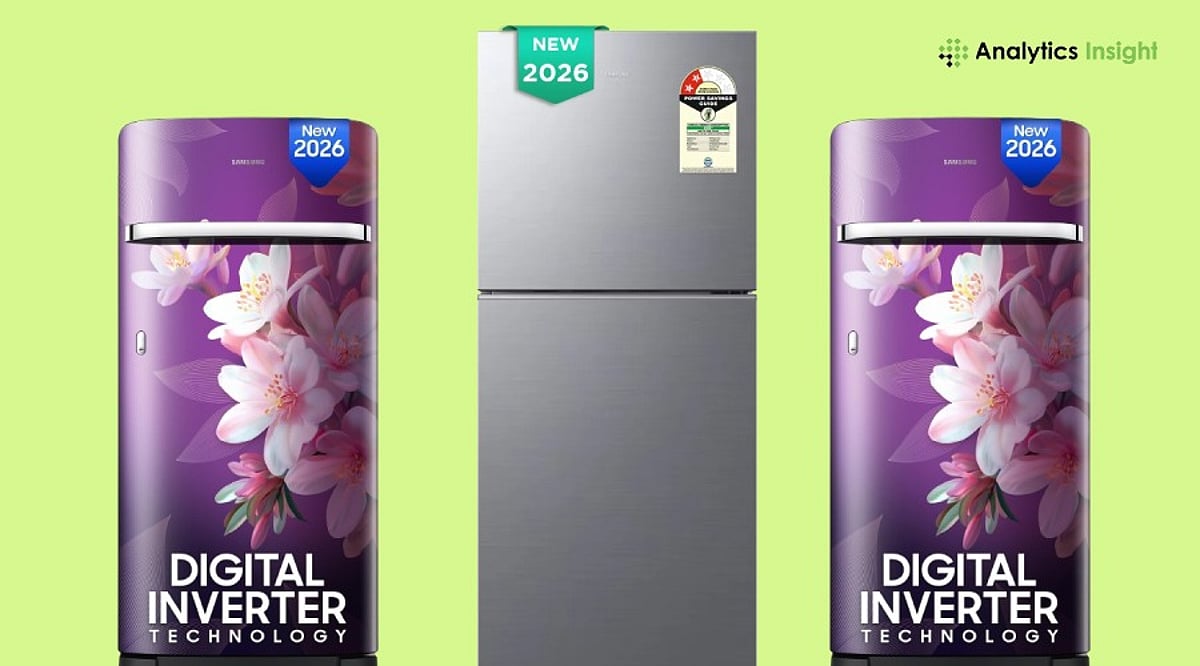
    Samsung is leading the refrigerator market with its futuristic inverter technology. The inverter models, coupled with smart technology, allow the refrigerator to adjust compressor speed based on the cooling needs. It ensures consistent freshness, quieter performance, and exceptional energy savings.

    Inverter technology has massively raised the benchmark in the cooling device industry. Unlike conventional refrigeration, which operates on fixed cooling cycles, Samsung’s inverter refrigerators raise the bar by adjusting the cooling with its Smart Cooling technology, adapting to various needs and conditions. From premium AI-powered Family Hub designs to compact single-door options, the brand offers options that keep every type of buyer interested. Samsung’s inverter technology has proven essential for efficiency and sustainable living, which define the modern lifestyle.

    Best Samsung Refrigerators with Digital Inverter Technology in 2026

    Samsung Bespoke AI Family Hub (653L, Side-by-Side)

    The Bespoke AI Family Hub suits large families and tech-savvy users who need personalized cooling and quick adaptation to certain occasions. It has Twin Cooling Plus and frost-free features, delivering exceptional cooling options. It is AI-powered with Gemini that tracks food expiry and provides timely notifications. A 21.5-inch touchscreen, WiFi, and SmartThings are some useful integrations that take refrigeration beyond just keeping the food cool. It has a 3-star energy efficiency rating that consumes 450-500 units of electricity per year. Samsung Bespoke AI Family Hub is currently priced between Rs. 77,000 and Rs. 90,000.

    Samsung RT38DG5A4DBXHL (350L, Double Door)

    The Samsung RT38DG5A4DBXHL is highly compatible with mid-sized families whose needs are limited yet require adaptive features on different occasions. It has frost-free technology that uses sensors and a heating coil to detect and automatically melt ice buildup. This model has a 3-star energy efficiency rating and is priced between Rs. 40,000 and Rs. 50,000.

    Samsung RR23 (215L, Single Door)

    The Samsung RR23 is a game-changer for small families or bachelors with limited needs. It is certified with a 4-star BEE (Bureau of Energy Efficiency) rating. It has a compact design with an antibacterial gasket that prevents bacterial infestation. Samsung RR23 is priced at Rs. 21,690.

    Samsung RS76CG8003S9HL (653L, Side-by-Side)

    The Samsung RS76CG8003S9HL is strictly for premium buyers who are into sustainable living and modern stylistic features. It has SpaceMax technology that optimizes space with thinner interior walls, providing more room for food storage. It has a twin cooling system, which controls the temperature of the fridge and freezer separately. The AI energy mode makes up for its smart intelligence that indicates essential information.

    Samsung RT34 (330L, Double Door)

    The Samsung RT34 caters to the needs of medium-range families and targets the middle-class society. It is equipped with a WiFi-enabled feature that delivers all-round connectivity. A convertible freezer turns the fridge into an ice-building space. The Twin Cooling system maintains the fridge and freezer temperature separately. Samsung RT34 is priced modestly at Rs. 45,990.

    Final Thoughts

    For tech-savvy large families, the Samsung Bespoke AI Family Hub is the best option, as it offers a wide range of advanced features and ample storage space. The Samsung RT38DG5A4DBXHL best suits mid-sized families who value both advanced features and compact space. The Samsung RR23 single-door refrigerator is versatile and well-suited to small homes and bachelors. Meanwhile, the Samsung RS76CG8003S9HL appeals to the premium buyer segment. Samsung inverter technology no doubt leads the market, offering advanced features and catering to all kinds of families. This technology saves big on electricity, providing style and substance.

    FAQs

    1. What is Samsung digital inverter technology?

    Samsung digital inverter technology automatically adjusts the compressor speed according to cooling requirements, reducing energy consumption, minimizing noise, and maintaining a consistent temperature.

    2. Are Samsung inverter refrigerators more energy-efficient than conventional refrigerators?

    Yes. Samsung inverter refrigerators consume significantly less electricity than conventional models by operating at variable compressor speeds instead of repeatedly switching on and off.

    3. Which Samsung refrigerator is best for a large family in 2026?

    The Samsung Bespoke AI Family Hub (653L) is an excellent choice for large families, offering spacious storage, AI-powered features, Twin Cooling Plus, and SmartThings connectivity.

    4. Do Samsung inverter refrigerators require a voltage stabilizer?

    Most Samsung inverter refrigerators can operate within a wide voltage range of approximately 90V–310V, allowing them to function without a separate voltage stabilizer under normal conditions.

    5. Which Samsung inverter refrigerator offers the best value for mid-sized families?

    Samsung RT38DG5A4DBXHL and Samsung RT34 are ideal for mid-sized families, combining energy efficiency, frost-free operation, smart features, and ample storage at competitive prices.