Tag: 2026

  • Indian Brands Making Waves Globally in 2026: Tech, Auto, Fashion & More

    Indian Brands Making Waves Globally in 2026: Tech, Auto, Fashion & More

    Indian brands are expanding rapidly in 2026, building global recognition across technology, automobiles, fashion, food, and consumer industries. Companies like Tata Group continue strengthening their international presence through businesses in automobiles, technology services, steel, and consumer products.

    Reliance Industries is expanding its global footprint through digital services, retail, entertainment, and new energy investments. Indian technology companies are gaining worldwide attention by providing software solutions, cloud services, and artificial intelligence capabilities to global businesses.

    Automobile brands are reaching international customers with electric vehicles, affordable models, and advanced mobility solutions designed for changing markets. Indian fashion and lifestyle brands are entering global markets by combining traditional designs with modern products and international retail strategies.

    Food and beverage companies from India are growing overseas by introducing regional flavors and packaged products to new consumers. Indian startups are attracting global investors and expanding into areas such as fintech, health technology, artificial intelligence, and digital platforms.

    Government initiatives, manufacturing growth, and stronger global demand are helping Indian companies compete in international markets.

  • Leading Smart Glasses Brands Shaping 2026: Meta, XREAL, Apple & More

    Leading Smart Glasses Brands Shaping 2026: Meta, XREAL, Apple & More

    The smart glasses market is rapidly evolving, with 2026 poised to be a breakthrough year for wearable AI and augmented reality. From stylish consumer frames to enterprise-grade headsets, several brands are leading the charge. Here’s a look at the companies defining the future of smart eyewear.

    Meta Ray-Ban

    Meta’s collaboration with Ray-Ban has produced stylish smart glasses integrated with AI features, a camera, speakers, and voice assistance. These glasses blend fashion with functionality, making them a popular choice for everyday use.

    XREAL

    XREAL (formerly known as Nreal) offers popular AR glasses designed for immersive entertainment and productivity. Their lightweight form factor and compatibility with smartphones make them a leader in consumer AR.

    Google

    Google continues to develop AI-powered smart eyewear that integrates with its Gemini AI platform. Leveraging years of research, Google aims to bring contextual assistance and hands-free computing to users.

    Apple

    Apple’s wearable roadmap is expected to redefine premium mixed-reality experiences. While the Apple Vision Pro sets the stage, future iterations may bring more accessible smart glasses, combining high-end design with advanced sensors.

    Vuzix

    Vuzix focuses on enterprise-grade smart glasses for logistics, healthcare, and industrial applications. Their headsets provide rugged, hands-free solutions for workers requiring real-time data overlays.

    Lenovo

    Lenovo offers innovative AR wearables designed for business collaboration and virtual workspaces. Their ThinkReality series targets professionals seeking augmented productivity tools.

    Rokid

    Rokid produces affordable AR smart glasses that are gaining popularity for education and entertainment. Their devices focus on accessibility, making AR experiences available to a wider audience.

    Samsung

    Samsung is building an AI-powered XR ecosystem expected to expand wearable computing. With deep expertise in displays and mobile technology, Samsung’s upcoming smart glasses could integrate seamlessly with Galaxy devices.

    These brands are pushing the boundaries of what wearable AI and AR can achieve, from personal assistants to immersive work tools. Keep an eye on 2026 as these companies release next-generation smart glasses.

  • Best Philips Headphones in 2026: Wireless and Wired Picks for Every Listener

    Best Philips Headphones in 2026: Wireless and Wired Picks for Every Listener

    Looking for premium audio? These Philips headphones deliver excellent value for 2026, whether you prefer the freedom of wireless or the fidelity of wired.

    Philips Fidelio L4

    Premium wireless headphones with outstanding ANC and rich sound quality.

    Philips TAH8506

    Great balance of comfort, battery life, and active noise cancellation.

    Philips SHP9600

    Audiophile-approved wired headphones with an open-back design.

    Philips TAT8506 Earbuds

    Compact wireless earbuds offering immersive sound and effective ANC.

    Philips H9505

    Perfect for frequent travelers needing long battery life and comfort.

    Philips SHP9500

    Affordable wired headphones known for exceptional sound performance.

    Philips TAH5209

    Budget-friendly Bluetooth headphones for everyday listening.

    Philips Fidelio X3

    Premium wired headphones designed for detailed high-resolution audio.

  • Top-Rated Smoke Detectors and Dual Alarms for Every Home in 2026

    Top-Rated Smoke Detectors and Dual Alarms for Every Home in 2026

    A smoke detector is one of the most important safety devices you can have at home. It gives you an early warning if smoke is detected, helping you act before a fire becomes dangerous. Many new models can also detect carbon monoxide, a gas you cannot see or smell. Some even send alerts to your phone when you are away.

    Today, there are many options to choose from. Some are simple battery-powered units, while others come with Wi-Fi and smart features. To help you pick the right one, we compared some of the best smoke detectors and dual alarms available.

    Best Smoke Detectors and Dual Alarms Compared

    The models below offer different features for different homes and budgets. Looking at the list, it is easy to see that every model is made for a different need. If you want a simple smoke detector, there are affordable choices. If you want more safety features, smart dual alarms are worth considering.

    • NOTOFIRE® Smoke Detector: A good option for small homes and apartments. It is easy to install and gives a loud warning when smoke is detected. It is also one of the most affordable models on this list.
    • HIKVISION HF-S2E Photoelectric Smoke Detector: Prioritizes rapid smoke detection. It is suitable for both homes and offices and is built for reliable everyday use.
    • ROCKTECH Smart Smoke Detector: A good choice if you want smart home features. It connects to Wi-Fi and sends alerts to your phone. This can be useful if you travel often or spend long hours away from home.

    Which Smoke Detectors Would I Recommend?

    If I had to choose only one, I would go with the First Alert Smoke and Carbon Monoxide Detector Battery Powered. It provides two types of protection in a single device and is easy to install. I think it offers the best mix of safety, price, and ease of use for most homes.

    The next choice will be the Kidde Hardwired Smart Smoke and Carbon Monoxide Detector. The first reason that I liked the smoke detector is its features and a hardwired power supply. The voice alerts and phone notifications add extra peace of mind. It is a great choice for bigger homes.

    Aside from these two, if I have to pick another, my third pick will be the ROCKTECH Smart Smoke Detector. This one is easy to install and sends alerts to your phone. I feel it offers good value for buyers who want smart features without spending too much.

    Final Thoughts

    A smoke detector is a small device that can make a big difference during an emergency. It gives you more time to react and helps protect your family. A dual alarm adds even more safety by detecting carbon monoxide.

    For most people, the First Alert Smoke and Carbon Monoxide Detector Battery Powered is the best overall choice. It is simple and reliable, and it offers two important safety features. If you want smart features and a hardwired setup, the Kidde model is worth buying. Buyers looking for an affordable smart detector should also consider the ROCKTECH Smart Smoke Detector.

    Take a little time to compare the features before buying. The right smoke detector can help keep your home and your loved ones safe for years.

    FAQs

    Which smoke detector is the best for most homes?

    The First Alert Smoke and Carbon Monoxide Detector Battery Powered is a great choice for most homes. It detects both smoke and carbon monoxide, is easy to install, and offers dependable everyday protection.

    Should I buy a smoke detector or a dual alarm?

    A dual alarm is usually the better option because it detects both smoke and carbon monoxide. It provides wider protection and removes the need to install two separate safety devices.

    Are smart smoke detectors worth the extra cost?

    Yes. Smart smoke detectors send alerts directly to your phone, so you can be notified about smoke or fire even when you are away from home. This adds extra peace of mind.

    How often should I replace a smoke detector?

    Most manufacturers recommend replacing a smoke detector every 10 years. You should also test the alarm regularly and replace the batteries whenever the low-battery warning sounds.

    Can I install a smoke detector by myself?

    Yes. Most battery-powered and Wi-Fi smoke detectors are easy to install with the included hardware. Hardwired models are best installed by a qualified electrician for safe and proper setup.

  • How to Choose the Right Geyser in 2026: Expert Buying Guide

    How to Choose the Right Geyser in 2026: Expert Buying Guide

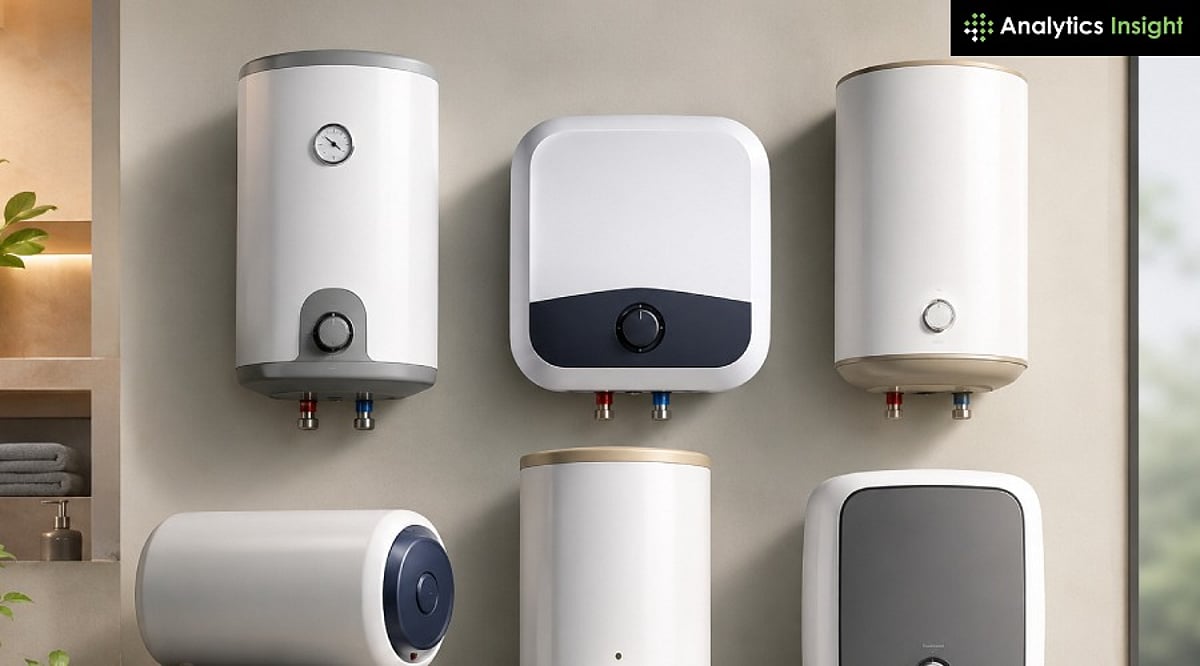
    A well-chosen water heater provides consistent hot water while keeping electricity consumption under control. With several geyser options available in 2026, understanding their differences is more important than ever. The right choice depends on your home, usage, and budget.

    Step 1: Pick the Type First

    Every other decision comes back to this one. An instant heater has no tank; it heats water as it flows through. That’s enough for one or two people who want a quick shower and don’t have space to spare. A storage geyser keeps a tank of hot water sitting ready, which matters when two bathrooms are running at once. Gas geysers heat cheaply but need ventilation and a gas line, so most apartments are out. Heat pump water heaters cost more initially but move heat instead of generating it from scratch—busy households will feel that difference on the electricity bill. For one or two people with modest needs, go for an instant heater. For households with more than three people, storage is usually the smarter call.

    Step 2: Size for Recovery Time, Not Just Family Size

    Capacity gets treated like a headcount problem, but the number that matters is recovery time: how fast the tank reheats once emptied. Two people showering back-to-back need a bigger tank or faster recovery, even in a small household. A 15L tank with slow recovery can leave the second person waiting fifteen minutes for warm water. A 10L model with a higher heating capacity may recover much faster. As a rough starting point, one or two people need 6 to 15 L, three or four need 15 to 25 L, and five or more should look at 25 to 35 L or a heat pump system. Push that number up if mornings are rushed.

    Step 3: Understand What Actually Drives the Electricity Bill

    BEE rates geysers on a 1 to 5-star scale based on standing loss—the energy lost keeping stored water hot while nobody’s using it. A 5-star tank loses less heat overnight than a 3-star tank of the same size. BEE published revised star-rating norms in the Gazette of India in December 2025, with new thresholds taking effect from July 1, 2026. A 5-star label bought this year is actually a stricter standard than one bought two years ago, even though the sticker looks the same.

    Wattage tells a different part of the story. Instant heaters pull more power, 3 to 4.5 kW, but only while water’s running. Storage heaters draw less, around 2kW, but stay on longer. For one person, instant usually costs less over a month. For a family running the geyser all evening, a well-insulated storage tank tends to win: it just reheats less often.

    Step 4: Match the Geyser to Your Water and Your Building

    Hard water shortens a geyser’s life faster than almost anything else. A glass-lined or enamel-coated tank resists corrosion, a magnesium anode rod helps protect the tank from rust, and an Incoloy heating element withstands hard-water conditions better than a standard copper element. Together, they improve durability and help extend the geyser’s service life.

    Pressure rating matters just as much, and it’s the one buyers skip most often. A 6.5 bar-rated unit is usually plenty for an independent house or low-rise building. High-rise apartments with running pressure pumps generally need 8 bar or higher. A standard-pressure geyser in a high-rise risks leaks or early failure, and most warranties won’t cover damage from exceeding the rated pressure. Worth checking before you buy, not after something leaks.

    Step 5: Don’t Skip Safety and Installation

    A geyser should carry BIS certification (ISI mark), along with a pressure relief valve and a thermostat with thermal cutoff. It should run on dedicated earthing with its own MCB rather than sharing a circuit. Instant geysers pulling 3kW or more need wiring rated for that load, so older homes should get this checked first. A mid-range geyser installed correctly is safer than a premium model installed carelessly, so budget for installation as part of the purchase.

    Quick Checklist Before Buying

    • Pick the type that fits the household size and daily hot water usage.
    • Choose capacity based on recovery time, not just the liters on the box.
    • Check the BEE star rating and make sure it meets the 2026 norms.
    • Confirm the geyser is compatible with your water quality and the pressure rating matches the building.
    • Look for ISI certification, a pressure relief valve, dedicated earthing, and proper installation.
    • Compare the tank warranty and the heating element warranty separately—they’re often not the same.

    Final Thoughts

    There’s no single geyser that’s right for every home. It comes down to family size, water quality, and the building itself, not whichever brand has the longest feature list. Get that part right, and everything else follows: lower bills, safer operation, fewer headaches years down the line.

    FAQs

    1. Which type of water heater is better: instant or storage?

    Instant water heaters are ideal for small households and quick hot water needs, while storage geysers are better for families requiring a steady supply of hot water for multiple users.

    2. What geyser capacity is suitable for a family of four?

    A 15L to 25L storage water heater is generally suitable for a family of four. The ideal capacity depends on bathing habits, the number of bathrooms, and simultaneous usage.

    3. How important is the BEE star rating when buying a water heater?

    The BEE star rating indicates a water heater’s energy efficiency. Higher-rated models consume less electricity over time, helping reduce energy bills without compromising performance.

    4. Can I use a regular geyser in areas with hard water?

    Yes, but choosing a model with a glass-lined tank, corrosion-resistant heating element, and magnesium anode rod helps improve durability and reduces damage caused by hard water.

    5. What safety features should I look for in a water heater?

    Choose a water heater with an ISI certification, thermostat, thermal cut-out, pressure relief valve (PRV), and proper earthing compatibility to ensure safe and reliable everyday operation.

  • Top AI Healthcare Stocks and ETFs to Watch in 2026: Intuitive Surgical, Tempus AI, and More

    Top AI Healthcare Stocks and ETFs to Watch in 2026: Intuitive Surgical, Tempus AI, and More

    Artificial intelligence is rapidly reshaping the healthcare sector, with applications in robotic surgery, diagnostics, medical imaging, drug discovery, genomics, and clinical workflow automation. Investors can gain exposure through individual stocks or diversified ETFs. Here’s a look at the leading opportunities.

    Intuitive Surgical

    Intuitive Surgical is the maker of the da Vinci robotic surgery system, widely used in minimally invasive procedures. The stock offers exposure to surgical automation and data-driven operating rooms. In Q1 2026, the company reported revenue of $2.77 billion, up 23% year-over-year, with adjusted earnings of $2.50 per share. Both the da Vinci and Ion systems saw procedure growth of 17% and 39%, respectively, and 431 new da Vinci systems were installed globally.

    Tempus AI

    Tempus AI uses AI and medical data to enable precision medicine, focusing on oncology, cardiology, radiology, and depression. Listed on Nasdaq under ticker TEM in 2024, the company specializes in diagnostics and genome sequencing. While the opportunity is large—precision medicine requires integrating genomic, clinical, and imaging data—Tempus remains a growth-stage business, so investors should monitor revenue growth, margins, cash burn, and adoption rates.

    GE HealthCare

    GE HealthCare provides AI exposure through medical imaging and hospital technology at scale. The company operates four segments: medical imaging, ultrasound, patient care solutions, and pharmaceutical diagnostics. It has acquired AI firms such as Caption Health (2023) and Intelligent Ultrasound’s clinical AI business (2024). Trading near $64, about 27.77% below its 52-week high of $89.77, GE HealthCare offers a less momentum-driven AI healthcare play.

    AI Healthcare ETFs

    For diversified exposure, consider these ETFs:

    • Global X Robotics and Artificial Intelligence ETF (BOTZ) – $3.52 billion AUM, 0.68% expense ratio. Includes industrial robotics, autonomous systems, and medical robotics, with holdings like Intuitive Surgical.
    • First Trust Nasdaq Artificial Intelligence and Robotics ETF (ROBT) – 114 stocks, 0.65% expense ratio. Broader exposure across tech, industrials, and healthcare, including Tempus AI and Illumina.
    • ROBO Global Robotics and Automation Index ETF (ROBO) – $2.05 billion AUM, 0.95% expense ratio. Targets robotics, automation, and AI across healthcare, life sciences, and industrials, with no single oversized holding.

    Final Thoughts

    Intuitive Surgical offers robotic surgery exposure; GE HealthCare provides scale in hospital technology; and Tempus AI targets high-growth precision medicine. ETFs like BOTZ, ROBT, and ROBO reduce single-stock risk. A balanced strategy combining established names, ETFs, and a smaller allocation to higher-risk AI stocks may be prudent.

    Disclaimer: This article is for informational purposes only and does not constitute investment advice. Always conduct your own research before making investment decisions.

  • Top 10 Data Analytics Certifications to Boost Your Career in 2026

    Top 10 Data Analytics Certifications to Boost Your Career in 2026

    In 2026, data analytics certifications remain a powerful tool for professionals aiming to validate their skills and stand out in a competitive job market. Whether you’re a beginner or an experienced analyst, the right certification can sharpen your expertise in SQL, visualization, reporting, and business intelligence—while signaling to employers that you can solve real-world problems with data.

    Below, we break down the ten most valuable data analytics certifications for 2026, covering everything from entry-level credentials to advanced, cloud-focused designations. Each certification is chosen for its relevance, industry recognition, and practical, hands-on focus.

    1. Google Data Analytics Professional Certificate

    An excellent starting point for beginners, this certification covers the fundamentals: cleaning data in spreadsheets, writing SQL queries, creating basic visualizations, and translating numbers into actionable business insights. No prior technical background is required, making it a solid first step toward a career in analytics.

    2. Microsoft Power BI Data Analyst Associate

    Ideal for business intelligence professionals, this certification focuses on data preparation, modeling, dashboard creation, and DAX (Data Analysis Expressions). It’s a perfect fit for organizations already using Microsoft products and needing skilled report creators.

    3. CompTIA Data+

    A vendor-neutral certification that covers data governance, reporting, and interpretation. It’s great for beginners who want a broad, foundational understanding of analytics without being tied to a specific platform. Data+ is especially useful for analysts who value versatility.

    4. IBM Data Analyst Professional Certificate

    This project-based certificate teaches Excel, SQL, Python, and dashboard creation. It’s designed to build practical skills and a portfolio—ideal for those who want to demonstrate hands-on ability to employers.

    5. Certified Analytics Professional (CAP)

    An advanced certification for seasoned analysts, CAP validates end-to-end analytical skills: problem formulation, methodology selection, data analysis, and business impact assessment. It’s best for professionals seeking strategic recognition in analytics.

    6. aCAP (Associate Certified Analytics Professional)

    Targeted at early-career professionals, aCAP introduces core principles, standards, and professional requirements. It’s a stepping stone for those not yet ready for the full CAP certification.

    7. Tableau Certified Data Analyst

    Focused on visualization and dashboarding, this certification proves you can connect to data, prepare it, analyze it, and communicate insights using Tableau. It’s particularly valuable for roles that require clear data storytelling.

    8. AWS Certified Data Analytics – Specialty

    For cloud-focused roles, this certification covers data pipelines, storage, analytics services, and large-scale workflow management on AWS. It’s suited for engineers and data professionals working in cloud-based environments.

    9. SAS Advanced Analytics Professional

    Essential for industries heavily reliant on SAS, this certification demonstrates advanced statistical and analytical abilities. It’s highly relevant for sectors like healthcare, finance, and insurance where SAS is a standard tool.

    10. Cloudera Certified Associate Data Analyst

    Relevant for big data environments, this certification validates SQL analysis and querying on Cloudera platforms. It’s ideal for analysts working with large datasets who need to prove their competence in handling massive data volumes.

    The Road Ahead

    In 2026, data analytics certifications are valued for their practical, hands-on focus. Employers prioritize credentials that prove real skill in SQL, dashboards, cloud tools, and business thinking. While certifications alone won’t guarantee a job, they give candidates a strong edge when combined with portfolio projects and real-world experience. The best strategy: choose one focused certification, build a portfolio, and demonstrate you can solve actual business problems with data.

    FAQs

    Which data analytics certification is best for beginners?
    Google Data Analytics Professional Certificate and IBM Data Analyst Professional Certificate are excellent beginner-friendly choices because they cover SQL, spreadsheets, visualization, and practical analytics skills through hands-on projects.

    Do employers value data analytics certifications in 2026?
    Yes. Certifications remain valuable because they demonstrate verified technical skills, especially when combined with practical experience, portfolio projects, and the ability to solve real business problems using data.

    Which certification is best for Power BI professionals?
    The Microsoft Power BI Data Analyst Associate certification is ideal for professionals working with dashboards, data modeling, DAX, reporting, and business intelligence using Microsoft’s analytics ecosystem.

    Is AWS Data Analytics certification suitable for beginners?
    No. AWS Certified Data Analytics – Specialty is better suited for professionals with cloud analytics experience and knowledge of AWS services, data pipelines, and large-scale data processing environments.

    Are certifications enough to get a data analytics job?
    Certifications improve your resume, but employers also expect practical projects, SQL knowledge, visualization skills, problem-solving ability, and experience demonstrating how you analyze and communicate business insights effectively.

  • 7 High-Growth US Tech Stocks to Watch in 2026: Key Drivers and Risks

    7 High-Growth US Tech Stocks to Watch in 2026: Key Drivers and Risks

    The US technology sector continues to be shaped by artificial intelligence, cloud software, and semiconductor innovation. Companies delivering consistent revenue and earnings growth remain in focus. These high-growth tech stocks stand out for their strong business momentum and long-term potential.

    Overview

    Seven US tech companies posted verified double- or triple-digit revenue growth in their most recent 2026 quarterly reports. Each stock carries a distinct growth driver, from AI infrastructure demand to NAND storage contracts, rather than a repeated AI narrative. Every pick comes with a specific, company-disclosed risk factor investors should track before buying.

    Revenue separates market leaders from market stories. The strongest US tech companies are proving their growth through earnings rather than expectations. From AI infrastructure to cybersecurity and digital commerce, these seven stocks are backed by measurable performance instead of market hype.

    NVIDIA Stock: Why it Remains a Top High-Growth AI Stock in 2026

    NVIDIA posted first-quarter fiscal 2027 revenue of $81.6 billion, up 85% year over year, with data center revenue up 92%. The Blackwell ramp is still driving that growth, and the Rubin platform is set to contribute revenue for the first time next quarter. The clearest risk sits in the guidance itself: NVIDIA is assuming zero data center compute revenue from China going forward, a quantified exposure rather than a vague valuation concern.

    Palantir Stock: Enterprise AI Growth Makes it a Top Tech Stock in 2026

    Palantir grew revenue 85% year over year in Q1 2026, its fastest pace since 2020, with US commercial revenue up 133%. The company raised its full-year guidance to 71% growth and reported a Rule of 40 score of 145. Operating expenses rose 32% in the same quarter, so any slowdown in commercial deal velocity would hit margins faster than revenue could offset it.

    Shopify Stock: Commerce Growth and AI Innovation Drive 2026 Performance

    Shopify crossed $100 billion in quarterly GMV for the second straight quarter, with revenue up 34%. The Universal Commerce Protocol, now backed by Amazon, Meta, Microsoft, Salesforce, and Stripe, is the structural story here. Investors should still note that the stock fell 8.7% on the print itself, as rising transaction losses and a price-to-earnings ratio near 135 offset the headline growth.

    Zscaler Stock: Cybersecurity Growth Powered by AI Demand

    Zscaler grew revenue 25% and ARR 25% in its third fiscal quarter, positioning itself as the cybersecurity layer for AI agents. Strip out the Red Canary acquisition, and organic ARR growth drops to 21%, and the company’s own early guidance for fiscal 2027 points to a step down to 16 to 17% growth.

    HubSpot Stock: AI-Powered CRM Growth Supports Long-Term Potential

    HubSpot grew revenue 23% in Q1 2026, with total customers approaching 300,000 and active AI seat users up 90% year over year. The company’s push into agentic tools, including its new Customer, Prospecting, and Data Agents, is driving upmarket deal sizes higher, with deals above $120,000 in ARR up 64%. But pricing and go-to-market changes made in April slowed sales capacity, and management has already guided Q2 growth down to 18%. That is a declaration the company disclosed itself, not a market guess.

    SanDisk Stock: AI-Driven NAND Demand Fuels Revenue Growth

    Revenue more than tripled to $5.95 billion as AI workloads drove NAND demand, and the company locked in $42 billion of long-term supply contracts covering a third of its fiscal 2027 bit shipments. Management has flagged the risk directly: the variable-priced portions of those contracts could erode margins fast if NAND supply outpaces demand.

    Reddit Stock: Advertising and AI Data Licensing Drive Growth

    Reddit rounds out the list with a genuinely different growth driver. Revenue grew 69% in Q1 2026, its seventh straight quarter above 60% growth, powered by advertising revenue up 74% and a data licensing relationship with AI model builders built on more than 25 billion posts and comments. Active advertisers on the platform grew more than 75% year over year, and the company’s own automated campaign product, Reddit Max, is already showing measurable results for advertisers. The gap to watch: US daily active users sit at 53.5 million, approximately half of management’s own stated target of 100 million.

    What is Driving High-Growth US Tech Stocks in 2026?

    None of these seven stocks is growing for the same reason. NVIDIA and SanDisk are riding AI infrastructure demand from opposite ends of the supply chain. Palantir and HubSpot are monetizing AI inside enterprise software. Shopify is building a two-decade-old commerce network. Zscaler is selling security for a threat landscape that did not exist five years ago. Reddit is turning its content archive into a licensing asset.

    Final Thoughts

    Every stock on this list beat growth expectations this year, and every one of them also handed investors a specific reason to stay disciplined. The market has stopped rewarding growth on its own; it now waits to see whether a China exposure, a slowing organic ARR line, or a guided deceleration actually shows up in the next print. The companies that manage their own disclosed risk will separate from the ones that only manage the headline. Watch the risk column as closely as the growth column, because that is where the real verdict gets written.

  • Top 5 boAt Smartwatches Under ₹2,000 in India (2026 Buyer’s Guide)

    Top 5 boAt Smartwatches Under ₹2,000 in India (2026 Buyer’s Guide)

    Buying a smartwatch on a budget no longer means settling for basic features. boAt’s affordable lineup includes models with Bluetooth calling, fitness tracking, and modern designs. Discover the best boAt watches under ₹2,000 available in India in 2026.

    Overview:

    • Five boAt models verified for live pricing and availability under ₹2,000 as of July 2026, each ranked for a distinct strength rather than a repeated feature set.
    • A side-by-side comparison table covers display, battery, calling, and IP rating so buyers can shortlist without reading every section.
    • Prices on Amazon and Flipkart shift often in this segment, so the guide flags where figures moved recently and recommends checking the live listing before buying.

    The budget smartwatch market in India has never been more competitive. boAt has responded by spreading its sub-₹2,000 lineup across five distinct strengths rather than chasing one flagship formula. This guide compares them on verified pricing, features, and real-world value, so you can match the watch to what matters most to you in July 2026. Prices verified across Amazon India and Flipkart listings in July 2026. Figures shift during sale events and vary by color and seller, so check the live listing before purchase.

    boAt Wave Astra 3: Best Overall Balance

    Wave Astra 3 earns the overall pick without forcing a trade-off. Its 1.83-inch HD display runs at 240×296 pixels, sharp enough for daily notifications, while the claimed 7-day battery outlasts most watches in this price band. Turn-by-turn navigation stands out: the watch shows directional arrows on the wrist during a ride, a feature usually reserved for pricier models. Over 700 sports modes and IP67 resistance complete a watch built for commuting, workouts, and calls in one device. Buy now

    boAt Wave Sigma 3: Best for a Bigger Display

    If screen real estate is the priority, the Wave Sigma 3’s 2.01-inch display is the largest here, and it’s also the most affordable of the five. The watch adds an emergency SOS button that alerts a preset contact and a built-in QR code tray for quick payments, both beyond the usual step-counting basics. Battery life is rated up to 7 days, with Bluetooth calling included. The trade-off is a bulkier presence on the wrist for buyers who prefer a compact watch. Buy now

    boAt Storm Call 3: Best for Calling on a Budget

    Storm Call 3 is the cheapest watch here and still includes GPS and Bluetooth calling, a combination rarely available below ₹1,300. Its 1.83-inch HD display and up to 5-day battery are more modest than the Astra 3 or Sigma 3, and user reviews note faster battery drain when calling is switched on. For buyers who want calling specifically and don’t need the longest runtime, this is the most direct route to it without paying for navigation or a bigger screen. Buy now

    boAt Lunar Discovery: Best for Navigation

    Lunar Discovery is built around one feature: MapMyIndia turn-by-turn navigation on a 1.39-inch HD TFT display. Riders get left-and-right directional cues without pulling out a phone, and the watch stores up to 20 contacts for quick Bluetooth calling from the built-in dialpad. The display resolution, at 240×240 pixels, is the lowest in this group, better suited to wayfinding than visual sharpness. Buy now

    boAt Lunar Orb: Best for Style

    Lunar Orb breaks from the rectangular dial that dominates this list with a 1.45-inch round AMOLED display, a shape that reads closer to a traditional watch. Always-on display, live cricket and football score updates, and a DIY watch face studio give it the most personalization of the five. Battery life is rated up to 7 days with typical use, though an always-on display cuts that down. This is the pick for a smartwatch that doesn’t look like one. Buy now

    Which Model Should You Buy?

    • Want one watch that does everything reasonably well: Wave Astra 3
    • Want the biggest screen for the least money: Wave Sigma 3
    • Want to call on the tightest budget: Storm Call 3
    • Ride often and need on-wrist directions: Lunar Discovery
    • Care most about how the watch looks: Lunar Orb

    Final Thoughts

    None of these watches replaces a proper fitness tracker or a premium smartwatch, and that’s not the point at this price. Each solves one problem well: the Astra 3 balances everything, the Sigma 3 maximizes screen size, the Storm Call 3 minimizes cost, the Lunar Discovery prioritizes navigation, and the Lunar Orb leads in design. Match the watch to the feature that matters most, and verify the current price before checkout.

    FAQs

    1. Which is the best boAt watch under ₹2,000 in India in 2026? The best boAt watch under ₹2,000 depends on your needs. Some models prioritize Bluetooth calling, while others offer better battery life, larger displays, or more comprehensive fitness tracking.
    2. Are boAt smartwatches under ₹2,000 good for fitness tracking? Yes. Most boAt smartwatches in this price range include features such as heart rate monitoring, SpO₂ tracking, sleep analysis, step counting, and multiple sports modes for everyday fitness.
    3. Do boAt watches under ₹2,000 support Bluetooth calling? Many boAt smartwatches under ₹2,000 support Bluetooth calling, enabling users to make and receive calls directly from the watch when connected to a compatible smartphone.
    4. How long does the battery last on a boAt smartwatch under ₹2,000? Depending on the model and usage, most boAt smartwatches under ₹2,000 provide around 5 to 10 days of battery life on a single charge.
    5. What should I consider before buying a boAt smartwatch under ₹2,000? Look for display quality, battery life, Bluetooth calling, health tracking features, water resistance, build quality, and smartphone compatibility to choose the best boAt smartwatch for your requirements.
  • Top Credit Cards for Online Shopping in India (2026 Edition)

    Top Credit Cards for Online Shopping in India (2026 Edition)

    Online shopping credit cards allow users to earn cashback, rewards, and exclusive discounts on everyday purchases across popular e-commerce platforms. Choosing the right card can significantly boost your savings on digital transactions.

    Amazon Pay ICICI Credit Card

    This card offers attractive cashback, lifetime free membership, and extra savings for frequent Amazon shoppers. It is ideal for those who primarily shop on Amazon India.

    Flipkart Axis Bank Credit Card

    Designed for Flipkart enthusiasts, this card provides cashback on Flipkart purchases, partner brands, and exciting discounts during festive shopping sales.

    HDFC Millennia Credit Card

    HDFC Millennia rewards online spending across shopping, travel, food delivery, and entertainment platforms with cashback benefits, making it a versatile choice for everyday use.

    SBI Cashback Credit Card

    The SBI Cashback Credit Card offers cashback on eligible online transactions across multiple merchants without restricting rewards to one platform, giving you flexibility.

    Axis Bank ACE Credit Card

    This card combines cashback on online shopping, utility bill payments, and selected partner merchant transactions, making it a strong all-rounder.

    How to Choose the Right Card

    Compare annual fees, cashback rates, reward limits, and your spending habits before selecting a card. Always pay credit card bills on time to avoid interest charges and maintain a healthy credit score. The right credit card can maximize savings while making online shopping more rewarding, convenient, and financially beneficial in 2026.