Tag: blockchain

  • Crypto Roundup: Bitcoin ETF Inflows Hit $170M, XRP Gains RLUSD Lending, TRON Surpasses 15B Transactions

    Crypto Roundup: Bitcoin ETF Inflows Hit $170M, XRP Gains RLUSD Lending, TRON Surpasses 15B Transactions

    Bitcoin Spot ETFs See $170 Million in Net Inflows

    According to data from SoSoValue, U.S. spot Bitcoin ETFs recorded a total net inflow of $170.09 million yesterday. BlackRock’s IBIT led the charge with $111.43 million in daily net inflows, bringing its historical total to $60.59 billion. Fidelity’s FBTC followed with $33.36 million, reaching a cumulative net inflow of $9.95 billion. The overall net asset value of Bitcoin spot ETFs now stands at $77.58 billion, reflecting an ETF net asset ratio of 6.06% and a historical cumulative net inflow of $51.49 billion.

    XRP Holders Can Now Borrow RLUSD on Ethereum

    Flare has integrated FXRP into Sentora’s $280 million RLUSD vault on Morpho, enabling XRP holders to use their assets as collateral to borrow Ripple’s RLUSD stablecoin—without selling their XRP. This marks the first time an XRP-based asset has been accepted as collateral in an institutionally curated lending vault on Ethereum mainnet, opening the door for XRP to participate in institutional decentralized finance (DeFi). Holders can convert XRP into FXRP, bridge it to Ethereum, deposit it into the vault, and borrow RLUSD, thereby increasing capital efficiency.

    TRON Crosses 15 Billion Transactions

    TRONSCAN data shows the network has processed more than 15 billion confirmed transactions as of press time, with over 12.56 million transactions in the preceding 24 hours. Total registered accounts reached 396.74 million, after adding about 158,871 accounts in the same period. The milestone reflects cumulative network operations including token transfers, smart contract calls, and staking activity. TRON DAO reported that the blockchain processed 950 million transactions in Q1 2026, a 0.62% increase from the previous quarter.

    Former FBI Agent Accused of Stealing $1 Million in Crypto

    Patrick Steven Yaroch, a former FBI agent, has been charged with interstate transportation of stolen goods and receipt of stolen goods after allegedly stealing approximately $1 million in cryptocurrency from wallets under FBI custody. Court documents indicate that the thefts occurred between early 2025 and July 2026, during which Yaroch worked in the Counterintelligence and Espionage Division with Top Secret security clearances. He is accused of accessing internal systems to retrieve recovery phrases for wallets seized in investigations targeting a foreign adversary.

    Tether Reports Strong Q2 2026 Operating Profits

    Tether announced $1.5 billion in net operating profit for Q2 2026, a 50% quarter-on-quarter increase. USDT supply grew to $184.6 billion, and the global user base surpassed 650 million. The company’s Q2 attestation showed $187.75 billion in assets against $183.64 billion in liabilities, resulting in a $4.11 billion surplus. Tether also added 14 tons of gold during the quarter, pushing its gold reserves past 146 tons, and increased its Bitcoin holdings to 98,932 BTC, valued at $5.8 billion.

  • On-Chain Activity Surges for Ethereum, Solana, and Avalanche Despite Steep Token Price Declines

    On-Chain Activity Surges for Ethereum, Solana, and Avalanche Despite Steep Token Price Declines

    Ethereum, Solana, and Avalanche have recorded significantly higher on-chain activity and lower transaction costs over the past year, even as their native tokens lost roughly half or more of their value. A new staking report from Bitwise attributes the improvement to larger blockspace, cheaper transactions, and rising institutional participation. However, token prices remain far below their 2025 peaks, signaling that blockchain performance and market sentiment are no longer moving in lockstep.

    More Activity at Lower Cost

    Bitwise found that activity expanded while user fees declined across all three proof-of-stake networks. The report attributes this shift mainly to protocol upgrades rather than weaker demand. Ethereum, Solana, and Avalanche increased network capacity to process more transactions at lower cost. As a result, users gained cheaper access while developers received more room to build applications.

    Previous market cycles often treated congestion and expensive transactions as signs of strong demand. Now, greater capacity allows networks to handle heavier use without creating the same fee pressure. Lower costs also reduced protocol revenue because the networks earn much of their direct income from transaction fees. Developers accepted that trade-off to improve scalability and encourage wider adoption.

    Institutional Staking, Declining Yields

    Proof-of-stake networks depend on validators who lock digital assets to secure transactions and receive staking rewards. Institutional investors drove much of the additional Ethereum entering validator pools during the second quarter. Exchange-traded products, corporate treasuries, and other large holders increased their staking exposure.

    More than 40 million ETH—roughly one-third of Ethereum’s circulating supply—had entered staking by the end of the period. BitMine, the largest public Ethereum treasury company, reported staking nearly 4.9 million ETH from total holdings of about 5.8 million ETH.

    However, staking yields continue to decline because rewards now reach a larger group of validators. More participants share the available token issuance and transaction-fee income. Bitwise estimates that about 93% of Ethereum staking rewards and more than 90% of Solana rewards came from newly issued tokens.

    That structure increases token supply and dilutes holders who do not stake. Meanwhile, lower fee revenue raises further questions about long-term staking economics.

    Liquid staking products also continue attracting attention because they let holders earn rewards while retaining usable tokenized assets. Investors can deploy those assets as collateral, supply them to lending markets, or place them in liquidity pools. Institutions can therefore combine staking income with broader capital use.

    Token Market Performance

    Developers continue launching applications, institutions add staked assets, and users remain active across decentralized finance platforms despite weaker token valuations. The trend suggests that practical blockchain use now plays a larger role in network activity. Meanwhile, token prices remain tied to market sentiment and wider economic conditions.

    For developers, lower fees and greater capacity support broader adoption. For investors, falling yields, inflation-funded rewards, and weaker fee income create different measures for assessing returns.

    Ethereum, Solana, and Avalanche processed more activity at lower costs despite sharp token-price declines. Institutional staking also expanded, although yields and protocol revenue fell. The data show that investors must evaluate network usage, token issuance, fee income, and staking returns separately from short-term market performance.

  • Ripple Backs ZILO and Licuido to Advance Tokenized Fund Infrastructure on XRP Ledger

    Ripple Backs ZILO and Licuido to Advance Tokenized Fund Infrastructure on XRP Ledger

    Ripple has made strategic investments in ZILO and Licuido, two UK-based firms, to accelerate its tokenized capital markets strategy. The deals aim to strengthen regulated fund issuance, settlement, trading, custody, and collateral mobility on the XRP Ledger (XRPL) and Ripple’s institutional infrastructure.

    Ripple Expands Regulated Fund Infrastructure

    ZILO specializes in transfer agency and fund administration systems for asset managers, wealth firms, and custodians. Its technology creates regulated digital ownership records for investors holding tokenized fund shares. The company recently announced raising $58.7 million in total equity funding. Ripple expects ZILO’s systems to support the creation and management of tokenized share classes on XRPL.

    Licuido operates an investment platform regulated by the UK Financial Conduct Authority (FCA). It facilitates the issuance, distribution, trading, and collateral use of traditional financial assets in digital form. Together, the two companies cover the full lifecycle of a tokenized fund, including investor recordkeeping, issuance, distribution, liquidity, settlement, and collateral movement.

    Nigel Khakoo, Ripple’s senior vice president for trading and markets, highlighted the importance of these investments: “ZILO and Licuido provide core capabilities that are essential to further scaling this shift: regulated digital transfer agency infrastructure and liquidity for issuance and collateral mobility.” He added, “This is just the beginning of the journey, and we see a substantial opportunity to bring huge efficiencies to the investment sector over the next decade.”

    Tokenized Funds Move Toward XRPL

    Ripple plans to integrate both companies’ services with its broader institutional infrastructure. This integration would allow financial firms to issue assets, hold them in custody, transfer ownership, and use them as collateral seamlessly. The model aims to reduce idle collateral in traditional fund structures, where newly issued fund units often face delays before becoming available for trading or financing.

    Ripple wants tokenized funds to be usable immediately upon issuance, connecting fund administration records with trading, custody, payments, and collateral systems through XRPL. This follows Ripple’s partnership with Aviva Investors, which announced plans in February to develop tokenized fund structures on XRPL. The ledger provides built-in tools for asset issuance, trading, escrow, and regulated financial activity.

    Additionally, Ripple recently launched Ripple Mint, a platform for institutional asset issuance and management. It supports the creation, redemption, and administration of tokenized securities, stablecoins, fund units, bonds, and other assets.

    RLUSD Supports Onchain Settlement

    RLUSD, Ripple’s stablecoin, is expected to serve as the cash side of transactions involving tokenized assets. Ripple plans to use RLUSD for delivery-versus-payment settlement, where the asset and payment transfer simultaneously. This reduces settlement risk, which occurs when one side of a transaction completes before the other. RLUSD already supports liquidity and settlement services for several tokenized investment products.

    XRP Price Remains Under Pressure

    Despite these positive developments, XRP’s near-term price action remains weak. XRP traded near $1.06 after falling 1.05% over 24 hours. The token has broken below a late-July symmetrical triangle and trades under key moving averages. The 50-day exponential moving average near $1.09 now acts as immediate resistance. Key support sits between $1.05 and $1.06; a break below that could bring the psychological $1.00 level into play, while a move above $1.09 may ease selling pressure.

    The broader regulatory environment also remains uncertain. The US Senate faces limited time to advance the CLARITY Act before its August recess, while lawmakers continue debating market structure, ethics, stablecoin, and consumer protection rules.

  • Globant: Revolutionizing Global Business with AI-Driven Digital Solutions

    Globant: Revolutionizing Global Business with AI-Driven Digital Solutions

    Globant is a digitally native company that delivers data engineering services, big data solutions, and ETL pipeline development to help organizations achieve their transformation goals through artificial intelligence, design, and innovation. Founded in Buenos Aires, the company now operates worldwide, assisting businesses in modernizing operations and creating advanced digital solutions across multiple sectors.

    About the Company

    Globant combines artificial intelligence, software engineering, and design to create digital transformation solutions for its clients. Its offerings are built to scale with business needs while delivering superior user experiences in various industries. The company employs a studio-based operating model that unites specialized teams focused on AI, blockchain, and digital experience platforms. It serves sectors including finance, healthcare, and media, helping organizations achieve greater efficiency and continuous innovation in a competitive global market.

    Products and Services

    Globant provides a range of AI-driven services such as AI Studios, AI Pods, and Enterprise AI platforms. Its solutions span data, CloudOps, blockchain, cybersecurity, digital experience, and marketing, enabling businesses to innovate, optimize processes, and build scalable digital products.

    Core Leadership Team

    Globant’s leadership includes experienced executives driving its strategic vision and operational excellence. (Detailed leadership information was not provided in the source.)

    Revenue Streams

    Globant generates revenue through professional services including software development, digital transformation, AI-powered solutions like AI Pods, managed services, platform-based products, and licensing of proprietary tools and intellectual property.

    Client Segments and Target Market

    Client Segments: Globant serves organizations across industries, offering AI solutions, digital transformation, software engineering, and cloud services. Target Companies: Large-scale institutions in finance, healthcare, media, and retail that require scalable digital and AI solutions. Target Geography: Global operations with a strong presence in North America, Latin America, Europe, and growing markets in Asia and the Middle East.

    Social Media

    LinkedIn | Website

  • Quantum Computing vs. Blockchain: Separating Cryptography Myths from Real-World Risks

    Quantum Computing vs. Blockchain: Separating Cryptography Myths from Real-World Risks

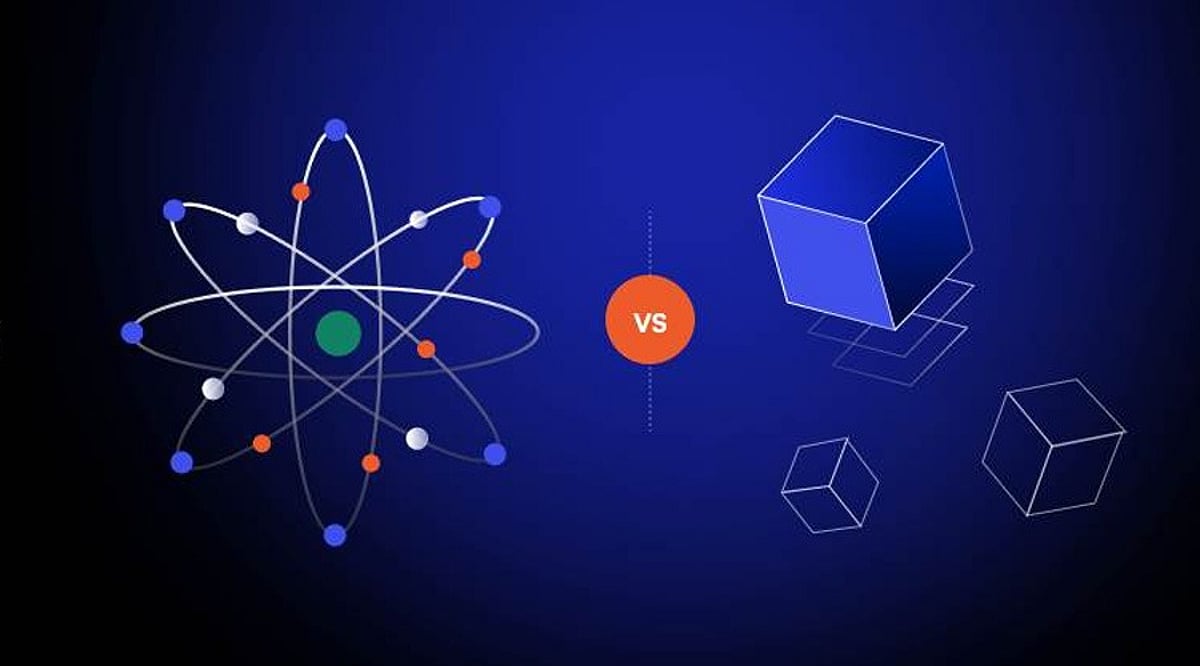
    Quantum computing does not pose an immediate threat to blockchain, but it does challenge the cryptography behind digital signatures and wallets. The industry is already preparing with post-quantum cryptography and migration strategies. Understanding the real risks helps separate technical reality from common misconceptions.

    How Blockchain Security Works

    Blockchain security relies on cryptographic algorithms, consensus rules, a distributed network, and incentive structures. Quantum computing only affects cryptography, not consensus or network integrity. The real quantum risk is concentrated in the cryptographic layer that secures digital signatures and wallet control.

    Shor’s vs. Grover’s Algorithm

    Two quantum algorithms drive this conversation, but they are not equally significant. Shor’s algorithm can theoretically break elliptic curve cryptography, allowing attackers to derive private keys from exposed public keys. This would enable forged signatures and fraudulent transactions. In many networks, public keys remain hidden until a transaction is signed, limiting exposure for unused addresses. Grover’s algorithm accelerates brute-force searches against hash functions, but its impact is modest and can be offset by longer hash outputs. Treating these two threats as identical is a common mistake.

    Is Blockchain at Risk Today?

    No existing quantum computer is capable of running Shor’s algorithm at the scale needed to threaten current signatures. Researchers refer to a “cryptographically relevant quantum computer” (CRQC) as the threshold, and current hardware remains far short due to error rates and qubit instability. The migration conversation is urgent because building and testing replacement cryptography takes years. Waiting for a CRQC to appear would leave networks exposed during the transition.

    Where Quantum Risk Exists

    Quantum risk is not evenly distributed across a blockchain network. It is concentrated in identity and authorization—specifically the cryptographic algorithms used for digital signatures and wallet security. Consensus mechanisms and ledger validation remain unaffected.

    Post-Quantum Blockchain Upgrades

    The response is already underway. NIST finalized its first set of post-quantum cryptography (PQC) standards in 2024, giving developers real building blocks. Blockchain researchers are testing quantum-resistant signature schemes, and some projects have begun hybrid migrations that layer new cryptography alongside existing systems. This phased approach enables upgrades without breaking compatibility. Enterprise blockchain applications—such as supply chain tracking and identity systems—face the same cryptographic exposure as cryptocurrency wallets.

    What This Means for Users

    Investors should evaluate a project’s readiness for post-quantum migration alongside traditional metrics. Projects actively testing quantum-resistant signatures signal stronger planning. Builders should monitor signature scheme upgrades and wallet compatibility. Crypto asset holders do not need to act today; the transition will likely happen gradually through wallet updates. Exchanges and custodians will probably lead the shift, rolling out new signature standards before individual users notice changes.

    Final Thoughts

    The quantum threat to blockchain is real, specific, and manageable. It sits almost entirely in the cryptographic layer, driven by Shor’s algorithm. The industry has years of runway before a CRQC becomes a practical concern. Post-quantum cryptography is not a hypothetical defense—it is standardized, tested, and already being integrated into next-generation blockchain infrastructure.

    Frequently Asked Questions

    1. Will quantum computing break blockchain?
    Not immediately. It threatens certain cryptographic algorithms used for digital signatures. Most experts expect networks to transition to PQC before CRQCs become widely available.

    2. What is the biggest quantum threat to blockchain?
    The greatest risk is to public-key cryptography, especially elliptic curve cryptography (ECC), which secures wallets and verifies transactions. Consensus mechanisms are not directly broken.

    3. What is post-quantum cryptography?
    PQC refers to algorithms designed to resist attacks from both classical and quantum computers. It is the leading strategy for protecting blockchain and other digital systems against future quantum threats.

    4. Are today’s blockchains already preparing?
    Yes. Many projects, researchers, and standards organizations are exploring quantum-resistant signature schemes, hybrid approaches, and migration strategies.

    5. Should investors and developers worry now?
    No immediate panic is needed, but preparation is important. Investors should follow projects with clear upgrade plans; developers should design adaptable systems and monitor PQC advances.

  • BlockDAG Leads 2026 Crypto Race: Why It Outpaces Solana, Hyperliquid, and XRP in Ecosystem Growth

    BlockDAG Leads 2026 Crypto Race: Why It Outpaces Solana, Hyperliquid, and XRP in Ecosystem Growth

    Introduction

    Determining which cryptocurrency to buy now requires a close look at operational milestones, transaction speeds, and user adoption across emerging and established networks. While Solana provides scalable infrastructure for decentralized finance (DeFi) applications, Hyperliquid specializes in decentralized perpetual futures trading, and XRP focuses on cross-border liquidity for enterprise financial corridors. However, BlockDAG has recently gained significant momentum with a complete infrastructure upgrade, achieving over 7,000 transactions per second (TPS), live claiming and staking protocols, and more than $4.7 million in monthly casino gaming revenue. This analysis compares these four platforms to highlight how technical metrics shape modern digital asset opportunities.

    1. BlockDAG: Staking Unlocked Drives Explosive Ecosystem Growth

    BlockDAG (BDAG) is dominating the conversation about which crypto to buy now, as full-scale X30 miner production officially goes live following the successful completion of the X30 beta program. To mark this milestone, an exclusive allocation offers BDAG at $0.000000017, a live swap valuation set 22% below reference rates, with a projected 135X ROI and a sell-back price of $0.025. Participating accounts also receive a $1,000 exchange credit applicable toward the upcoming BlockDAG Exchange launch.

    Network performance has exploded after a comprehensive infrastructure overhaul. With upgraded RPC architecture, AWS-based deployment, enhanced explorer indexing, and tighter network synchronization, the chain now operates at an incredible 7,000+ TPS with lightning-fast two-second consensus times.

    Simultaneously, the live BlockDAG Casino ecosystem is generating massive organic volume. Featuring over 100 active titles, the platform generated $4.7 million in gross gaming revenue within its first 30 days while processing over $150 million in total wagers across 23,000 deposits. With 13,000 new registered accounts joining in a single month, continuous internal circulation ensures steady, real-time payouts across the ecosystem.

    This high-octane mix of sheer engine throughput, live mining infrastructure, and massive gaming revenue positions BlockDAG far ahead of typical layer-1 projects. With the first delivery wave scheduled within 45 days and X100 production set to follow, this special pricing window remains strictly limited before secondary market exchange debuts take off. Securing miner allocation now locks in priority access to network rewards before exchange trading expands globally.

    2. Solana: High-Speed Layer One Powers Scalable DeFi

    Solana remains a high-throughput blockchain network for deploying smart contracts and DeFi protocols. The asset recently traded between $72 and $78, with billions in market cap and consistent on-chain decentralized exchange volume. Analysts looking at what crypto to buy now note Solana’s use of a proof-of-history consensus mechanism combined with proof-of-stake for sub-second block times. The network hosts automated market makers, liquidity pools, NFT marketplaces, and enjoys broad institutional integration. While market volatility affects short-term valuation, technical indicators show stable transaction throughput across validator nodes, reflecting sustained application usage across decentralized financial markets.

    3. Hyperliquid: On-Chain Perpetual Engine Secures Trader Volume

    For investors seeking niche derivative platforms, Hyperliquid is a dedicated layer-1 infrastructure built for perpetual futures trading. The native token trades within its usual price zone of $52–$58 and maintains consistent daily volume on its native order book. Hyperliquid uses an on-chain matching engine to execute trades, designed to reduce latency—unlike other decentralized exchanges that rely on automated market maker-style order books. The protocol sources liquidity from vault systems and native perpetual contracts to cater to active derivatives traders. The platform has become a leading specialized venue for decentralized derivatives market infrastructure, with consistent fee generation and open interest evident in network data.

    4. XRP: Global Settlement Infrastructure Anchors Enterprise Payment Liquidity

    XRP serves as a liquidity bridge currency on the XRP Ledger, used for cross-border payment settlements between global financial institutions. The digital asset trades between $1.02 and $1.09 and performs transactions at minimal operational costs within three to five seconds. The network does not require traditional mining but instead relies on a consensus protocol between trusted validator nodes to ensure ledger integrity. Institutional adoption efforts focus on working with banking software corridors for real-time gross settlement systems. For international corporate remittance exposure, market participants often look at network metrics alongside macroeconomic trends and legal developments when deciding what crypto to buy now.

    Conclusion

    Determining which crypto to buy now involves contrasting established network utility against rapidly accelerating ecosystem growth. Solana maintains its major market footprint through high-capacity DeFi throughput, Hyperliquid controls a specialized niche in decentralized perpetual futures trading, and XRP provides cross-border settlement infrastructure for global enterprise institutions. However, BlockDAG presents a unique growth path, combining an upgraded 7,000+ TPS engine, active claiming and staking yields, $4.7 million in monthly casino revenue, and a $1,000 exchange credit bonus. With the limited $0.000000017 valuation window closing fast and Batch 7 unlocking soon, BlockDAG’s rapid operational momentum creates an urgent opportunity before full exchange listing launches shift market dynamics permanently.

  • Top DePIN Cryptocurrencies to Watch in July 2026: Bittensor, Render, Filecoin, ICP, and Helium

    Top DePIN Cryptocurrencies to Watch in July 2026: Bittensor, Render, Filecoin, ICP, and Helium

    Key Takeaways

    • Bittensor leads the DePIN market with its decentralized AI infrastructure and strong investor interest.
    • Render benefits from rising demand for decentralized GPU computing and AI workloads.
    • Filecoin, ICP, and Helium continue expanding decentralized storage, cloud, and wireless networks.

    The Decentralized Physical Infrastructure Network, widely known as DePIN, has become one of the fastest-growing areas in the crypto market. These blockchain projects connect digital networks with physical resources such as storage, wireless coverage, cloud services, and GPU computing. Every network rewards participants that contribute useful infrastructure instead of relying on large centralized companies.

    The DePIN market has reached a total value of about $7.0 billion to $7.2 billion in July 2026. Daily trading volume stands near $400 million, which reflects healthy market activity. Artificial intelligence has become the biggest growth theme in this sector. Projects that support AI computing now attract more attention than traditional storage networks. Bittensor leads the market with almost half of the total sector value, while several other established projects continue to expand their ecosystems.

    Bittensor Keeps the Top Position

    Bittensor (TAO) remains the largest DePIN cryptocurrency in July 2026. The token trades between $360 and $380, while the market capitalization stays close to $3.3 billion to $3.5 billion. These numbers place Bittensor far ahead of most competitors in the DePIN space. The network focuses on decentralized artificial intelligence. Developers create machine learning models and receive rewards when those models provide useful results. This system creates an open marketplace where AI developers earn value from quality work instead of depending on a single company. Recent protocol improvements have increased network activity and attracted fresh interest from investors. Strong demand for AI infrastructure continues to support the project’s long-term outlook.

    Render Gains Strength From AI Demand

    Render (RENDER) stands among the most important AI infrastructure projects in the crypto market. The token trades around $1.50 to $1.60, while the market capitalization ranges between $850 million and $900 million. The project has earned a strong reputation as a decentralized GPU computing network. Render allows users to access distributed graphics processing power for rendering tasks and artificial intelligence workloads. This model helps developers find computing resources through a decentralized network instead of traditional cloud providers. Recent partnerships and platform improvements have increased utility across creative industries and AI applications. Market analysts continue to view Render as one of the strongest AI-focused DePIN assets in 2026.

    Filecoin Continues To Lead Decentralized Storage

    Filecoin (FIL) remains the largest decentralized storage network in the crypto industry. The token trades between $2.30 and $2.50, while the market capitalization stays around $700 million to $800 million. The project has maintained its leadership position through continuous ecosystem development and practical storage solutions. Organizations and developers use Filecoin to store important data across a decentralized network. This approach improves security and reduces dependence on centralized storage providers. Enterprise adoption has continued throughout 2026, which supports long-term confidence in the project. Although the token price has shown weaker momentum than AI-focused projects, Filecoin still holds an important place in the DePIN sector.

    Internet Computer Expands Cloud Infrastructure

    At present, the Internet Computer (ICP) stands at a price limit of $6 to $7, with its market capitalization being more than $3 billion. This project is focused on providing distributed cloud services that enable the creation of digital applications, websites, and services on blockchain. The objective is to change the face of traditional hosting by utilizing distributed forms of cloud as the main alternative. With the help of this vision, developers can create their own solutions without the need to use centralized server services. Developing its ecosystem and increasing the number of developers, DePIN managed to gain trust from investors during 2026.

    Helium Builds Wireless Infrastructure

    Helium (HNT) continues to focus on decentralized wireless networks. The token trades between $3 and $4, while the market capitalization stands near $600 million to $700 million. The project has developed one of the most recognized wireless infrastructure networks in the blockchain industry. Helium allows individuals and businesses to provide network coverage through compatible hardware. Participants receive token rewards after they expand network reach and support connectivity. The launch and expansion of Helium Mobile has added fresh momentum to the ecosystem. The project continues to attract attention from investors who seek exposure to wireless infrastructure within the DePIN market.

    Smaller DePIN Projects Offer Higher Growth Potential

    Several emerging projects have also attracted investor attention during 2026. Grass focuses on decentralized bandwidth sharing, while io.net provides a marketplace for AI GPU resources. Aethir develops enterprise-grade GPU cloud infrastructure, Akash Network delivers decentralized cloud computing services, and Fluence works on decentralized cloud platforms. These projects carry higher risk than established names such as Bittensor, Render, and Filecoin. Smaller market size often creates larger price swings, yet successful adoption can produce stronger returns during favorable market conditions. Investors continue to monitor these ecosystems for future growth opportunities as the DePIN sector expands.

    Why This Matters

    DePIN has become one of the fastest-growing areas in the crypto market. These projects connect blockchain technology with real-world infrastructure, which creates practical use cases beyond digital payments. Strong growth in artificial intelligence, cloud computing, storage, and wireless networks has increased interest in this sector, making it an important area for investors and industry observers.

    Final Thoughts

    The DePIN sector has entered a new phase of growth in July 2026. Artificial intelligence now shapes the strongest investment narrative, while decentralized storage, cloud infrastructure, and wireless networks continue to support the broader ecosystem. Bittensor holds the leadership position through its AI-powered network, Render benefits from rising demand for GPU computing, Filecoin remains the dominant storage platform, Internet Computer strengthens decentralized cloud services, and Helium expands wireless infrastructure. Together, these projects represent the strongest DePIN cryptocurrencies to watch as blockchain technology continues to connect digital innovation with real-world infrastructure.

    FAQs

    1. What is DePIN in cryptocurrency?

    DePIN stands for Decentralized Physical Infrastructure Network, where blockchain-based systems coordinate and reward users who provide real-world infrastructure such as computing power, storage, and connectivity.

    2. Which DePIN cryptocurrency is leading in 2026?

    Bittensor (TAO) remains one of the largest DePIN cryptocurrencies in 2026 due to its focus on decentralized artificial intelligence networks.

    3. Why are AI-focused DePIN projects gaining popularity?

    AI requires massive computing resources, and DePIN projects provide decentralized alternatives for GPU power, machine learning models, and cloud infrastructure.

    4. Are DePIN cryptocurrencies risky investments?

    Yes. DePIN projects can experience high volatility, especially smaller networks. Investors should consider adoption, technology, market conditions, and project development before investing.

    5. Which DePIN projects should investors watch besides Bittensor?

    Render, Filecoin, Internet Computer, Helium, Akash Network, io.net, Aethir, Grass, and Fluence are among the notable DePIN projects attracting attention in 2026.

    Disclaimer: This article is provided for informational purposes and does not constitute investment advice. You are responsible for conducting your own research (DYOR) before making any investments.

  • Eole Becomes First Listed Japanese Firm to Disclose Corporate HYPE Purchase Under Neo Crypto Bank Plan

    Eole Becomes First Listed Japanese Firm to Disclose Corporate HYPE Purchase Under Neo Crypto Bank Plan

    Tokyo-listed Eole Inc. has made Japan’s first publicly disclosed corporate purchase of HYPE, the native token of the Hyperliquid blockchain. The company bought 1,078 HYPE on July 28 for approximately $66,002 (¥10.08 million), paying an average of $57.15 (¥9,352) per token. The acquisition marks a strategic expansion beyond bitcoin as part of Eole’s broader Neo Crypto Bank initiative.

    Phased Allocation Toward ¥100 Million Target

    Eole plans to increase its HYPE holdings through multiple purchases through August, aiming for a total allocation of ¥100 million (approximately $611,113). The phased approach avoids a single large transaction and spreads market exposure over several weeks.

    HYPE as a Strategic Asset for On-Chain Finance

    Under its Neo Crypto Bank strategy—launched in October 2025—Eole will hold HYPE alongside bitcoin to build financial infrastructure for an economy where AI agents can execute payments and contracts autonomously. The company views the token not solely as an investment for capital gains but as a operational asset to support its on-chain finance and Web3 operations.

    Lending, Hedging, and Smart Contract Integration

    Eole is exploring revenue generation through digital asset lending and plans to hedge price risks via traditional financial markets. The company will also integrate its crypto holdings with its own services, moving beyond a single cryptocurrency toward automated finance powered by smart contracts.

  • Ethereum to GBP Conversion: A Simple Step-by-Step Guide for 2026

    Ethereum to GBP Conversion: A Simple Step-by-Step Guide for 2026

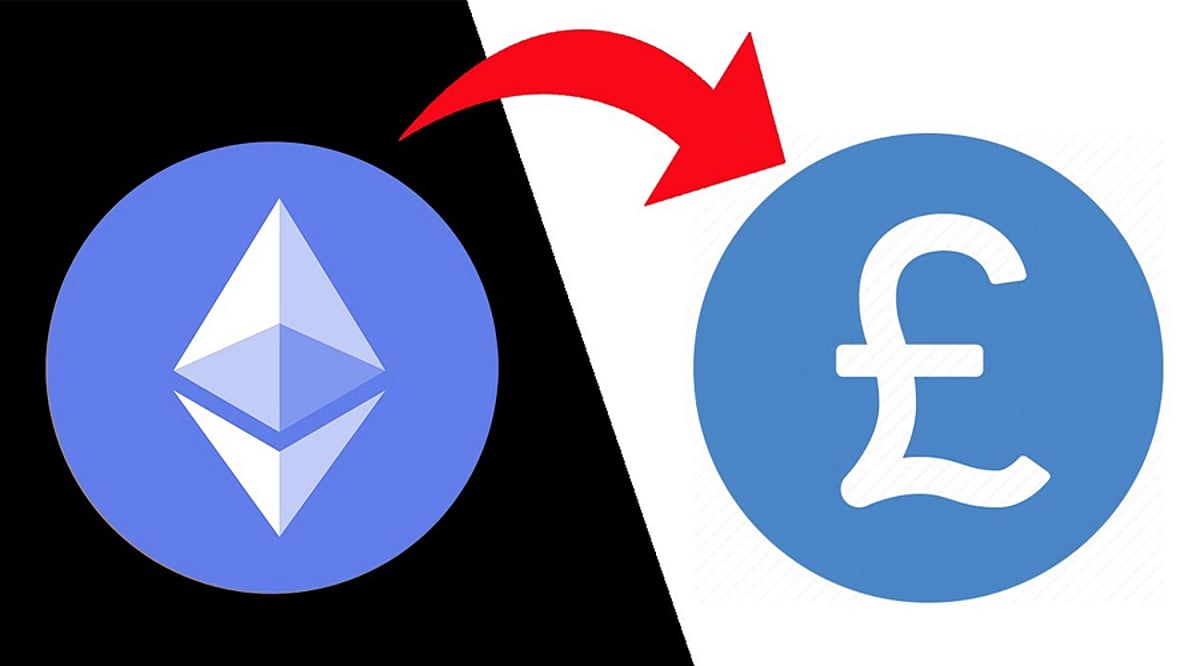
    Want to exchange Ethereum for British Pounds? Follow this beginner-friendly guide to trade confidently in 2026. Learn the essential steps before making your first transaction. Smart trading starts with understanding the basics.

    Choose a Trusted Crypto Exchange

    Select a regulated cryptocurrency exchange that supports ETH to GBP conversions. Compare fees, security features, and withdrawal options carefully. A trusted platform helps protect your funds. Always verify account security before trading.

    Complete Identity Verification

    Most exchanges require Know Your Customer (KYC) verification before withdrawals. Upload valid identification documents and complete the process. Verification improves account security and regulatory compliance. It also unlocks higher transaction limits.

    Transfer Your Ethereum

    Send Ethereum from your crypto wallet to your exchange wallet. Double-check the wallet address before confirming the transfer. Blockchain transactions cannot usually be reversed. Wait until the network confirms your deposit.

    Sell ETH for GBP

    Choose the ETH/GBP trading pair on the exchange. Review the current market price before placing your order. You can use either a market order or a limit order. Confirm the trade after reviewing all details.

    Withdraw Your Money

    After selling Ethereum, transfer your GBP balance to your linked UK bank account. Check withdrawal fees and estimated processing times. Most regulated exchanges provide secure bank transfers. Keep records of every transaction.

    Trade Safely Every Time

    Monitor Ethereum’s price before selling to maximize returns. Enable two-factor authentication for stronger account protection. Stay informed about market trends and tax rules. Careful planning helps make crypto trading safer and more profitable.

  • Ethereum’s Layer-2 TVL Plunges 90%: What It Means for ETH Price and Adoption

    Ethereum’s Layer-2 TVL Plunges 90%: What It Means for ETH Price and Adoption

    Ethereum Layer-2 Total Value Locked Crashes from $48B to $5B

    Ethereum’s Layer-2 ecosystem has experienced a dramatic decline in total value locked (TVL), dropping from a high of $48 billion earlier in 2026 to just around $5 billion, according to L2BEAT. This represents a staggering 90% decrease, adding fresh headwinds to an already volatile asset. Despite the rout, Optimism, Base, and Arbitrum remain the dominant players, collectively holding approximately $4.8 billion—or 96% of the remaining Layer-2 liquidity.

    Earlier this year, Arbitrum boasted $16.8 billion in TVL, Base nearly $10.7 billion, and Optimism around $8 billion. The combined total of these three networks exceeded $35 billion, making the current contraction all the more striking.

    Fragmentation and Capital Outflows Weigh on Activity

    Over 73 active Layer-2 rollups currently operate on Ethereum, but growing fragmentation continues to drain liquidity. While no major protocol has officially explained the traffic drop, analysts believe capital has shifted away from Layer-2 networks as users sought opportunities elsewhere or bridged assets back to Ethereum’s mainnet and competing blockchains.

    The debate intensified after the launch of Robinhood’s chain, which handled $4.5 billion in trading volume on decentralized exchanges in its first week and briefly outpaced Ethereum mainnet and Base on daily trading volume. However, during the same period, the chain generated only about $4,000 in fees, compared to Ethereum’s $7.4 billion, raising questions about the economic value Layer-2 networks return to the base chain.

    Institutional Competition Intensifies

    Major institutions like DTCC and JPMorgan are diversifying their tokenization initiatives across multiple public blockchains rather than relying solely on Ethereum. Meanwhile, the Ethereum Foundation has undergone several leadership changes this year, adding uncertainty about the network’s future direction. Despite these challenges, stablecoins maintain a significant presence in transactions across the Ethereum ecosystem, including its Layer-2 solutions.

    Technical Outlook: Key Support and Resistance Levels

    ETH is currently trading above a key support zone at $1,850–$1,900, near $1,920. Derivatives positioning remains subdued, reflecting limited conviction from both bulls and bears. Immediate resistance lies around $2,036–$2,050. A decisive move above this could target the 0.236 Fibonacci level near $2,134, with further milestones at $2,377 and $2,572. On the downside, $1,780 is critical support, followed by $1,742 if sellers regain control.

    Frequently Asked Questions

    Why has Ethereum’s Layer-2 TVL fallen so sharply?

    According to L2BEAT, Layer-2 TVL declined from about $48 billion to nearly $5 billion in 2026. Analysts attribute the drop to lower on-chain activity, capital outflows, and liquidity fragmentation across multiple rollup networks.

    Which Layer-2 networks still dominate Ethereum’s ecosystem?

    Optimism, Base, and Arbitrum remain the largest platforms, together accounting for about $4.8 billion or 96% of the remaining TVL in Ethereum’s Layer-2 ecosystem.

    What are the key price levels for Ethereum right now?

    ETH is holding above the important $1,850–$1,900 support zone. Immediate resistance is between $2,036 and $2,050, while a break below $1,780 could expose the next support near $1,742.

    Why are institutions exploring blockchains beyond Ethereum?

    Major institutions such as DTCC and JPMorgan are expanding tokenization initiatives across multiple public blockchains to reduce dependence on a single network and broaden infrastructure options.

    Does the decline in Layer-2 activity weaken Ethereum’s long-term outlook?

    A slowdown in Layer-2 adoption presents a near-term challenge, but Ethereum continues to benefit from strong stablecoin usage, an established developer ecosystem, and ongoing institutional interest, making its long-term outlook dependent on future network growth and adoption.