Tag: generative AI

  • Amazon Restructures AGI Division, Lays Off Workers to Prioritize Core AI Initiatives

    Amazon Restructures AGI Division, Lays Off Workers to Prioritize Core AI Initiatives

    Amazon has laid off employees in parts of its Artificial General Intelligence (AGI) division as part of a broader restructuring aimed at sharpening its focus on AI projects that deliver the greatest customer impact. The move follows a series of workforce reductions across the company, including 16,000 job cuts announced in January.

    While the company has not disclosed the exact number of roles eliminated in this latest round, an Amazon spokesperson stated: “We’ve been building large AI models for several years, and it remains one of the most important things we’re working on. We’re sharpening our focus on the initiatives that matter the most for customers, so we can move faster on what counts. That focus means some difficult decisions, including eliminating some roles within parts of our AGI organization.”

    AI Ambitions Remain Strong

    These layoffs do not indicate a shift in Amazon’s commitment to artificial intelligence. Instead, they represent a reallocation of resources within its AI business. The company continues to develop its Nova line of foundation models and expand generative AI capabilities within Amazon Web Services (AWS). Amazon views AI as one of its top long-term priorities and plans to maintain significant investments in the field.

    Leadership Changes Precede Restructuring

    The workforce reduction follows notable leadership departures within Amazon’s AGI organization. Rohit Prasad, former head of the AGI business, left at the end of last year, and David Luan, who led the AGI Lab, departed in February. In December, Amazon consolidated its AGI operations under Senior Vice President Peter DeSantis, integrating them into a larger technology group that also oversees silicon development and quantum computing.

    According to reports, employees under Adeeb Shanaa, Vice President of AGI Data Services, and Vishal Sharma, Vice President of AGI Information, were among those affected. Amazon has not confirmed the full scope of the cuts.

    Ongoing Workforce Optimization

    The AGI layoffs come months after Amazon eliminated 16,000 roles in January as part of a company-wide restructuring to streamline operations. This latest development indicates that Amazon continues to reorganize its teams, concentrating efforts on areas deemed critical to its AI vision.

    Despite the job losses, Amazon has reiterated that AI remains central to its future strategy. The company believes the restructuring will eliminate redundancies and accelerate the delivery of AI products that provide significant value to customers.

  • Top Google AI Certifications and Courses for 2026: A Comprehensive Guide

    Top Google AI Certifications and Courses for 2026: A Comprehensive Guide

    Google’s AI learning ecosystem has expanded to include professional certifications, structured courses, and hands-on learning paths. Each credential targets specific skills and career objectives, making it essential to understand the options available. This guide breaks down the eight best Google AI certifications and courses, ranked by audience and career value, to help you choose the right path for building artificial intelligence expertise.

    Certifications vs. Courses: What’s the Difference?

    Google Cloud offers three proctored exams: Generative AI Leader, Professional Machine Learning Engineer, and Cloud GenAI Engineer. These exams carry a pass or fail result and a fixed validity window. In contrast, courses on Coursera or Google Skills focus on building practical skills rather than resume credentials. Understanding this distinction is key to making the right investment.

    1. Google AI Essentials

    Five short courses totaling approximately five hours, priced at $49 per month with no prerequisites. This is the most enrolled generative AI course on Coursera, covering prompting, responsible use, and everyday AI fundamentals rather than technical depth. Best for: Beginners seeking workplace fluency fast.

    2. Google Prompting Essentials

    A standalone course priced at $49, focusing purely on prompt design. Google states this will not prepare anyone for a prompt engineering role. Best for: Professionals who want sharper outputs from AI tools.

    3. Google AI Professional Certificate

    Launched on Coursera in February 2026, this certificate pairs seven short courses with a capstone project, totaling about ten hours, priced at $49 per month with no prerequisites. Enrollment includes three months of free Google AI Pro access for labs. Best for: Learners past the basics who want documented, practical proof of AI work.

    4. Introduction to Generative AI (Google Skills)

    Google Cloud’s free learning path includes four short courses covering generative AI fundamentals and responsible AI, each about an hour long. It sits on the free Google Skills tier with monthly lab credits at no charge. Best for: Those planning to attempt the Generative AI Leader certification who need Google Cloud terminology first.

    5. Google Cloud Generative AI Leader

    The first proctored credential on this list, built for non-engineers. The 90-minute exam includes 50 to 60 questions and costs roughly $99, valid for three years with renewal by retake. No coding is tested. Best for: Business leaders and product managers needing a recognized credential without writing code.

    6. Generative AI for Developers (Google Skills)

    The technical counterpart to the beginner path above, requiring prerequisite courses in responsible AI. Full access requires a paid Google Skills subscription near $30 per month. Coverage includes retrieval-augmented generation and multimodal application building with Gemini. Best for: Developers heading toward the Cloud GenAI Engineer exam.

    7. Cloud GenAI Engineer

    Priced near $200, this exam focuses on building generative AI applications through the Gemini API, RAG pipelines, and agentic workflows on existing infrastructure. Best for: Developers shipping GenAI features who do not manage full ML systems.

    8. Professional Machine Learning Engineer

    The most demanding credential. Google recommends three or more years of industry experience, including at least one year on Google Cloud. The two-hour exam includes 50 to 60 questions and costs $200, valid for two years with renewal options. A recent update shifted the exam toward the Gemini Enterprise Agent Platform. Best for: Engineers with real production experience who want Google Cloud’s strongest technical signal.

    Final Thoughts

    None of these credentials serves as a shortcut. The certifications with real hiring weight—Generative AI Leader, Cloud GenAI Engineer, and Professional Machine Learning Engineer—all expect existing baseline knowledge. The smarter move is matching the credential to your current experience level, not the one that looks most impressive on paper.

  • Elon Musk Announces Grok Imagine Will Produce AI-Generated Film of Homer’s The Odyssey by 2026

    Elon Musk Announces Grok Imagine Will Produce AI-Generated Film of Homer’s The Odyssey by 2026

    Elon Musk has announced that Grok Imagine, his AI-powered content generation tool, will produce a full-length movie based on Homer’s The Odyssey before the end of 2026. The announcement was made via a post on X (formerly Twitter) on Wednesday, accompanied by a short AI-generated video. Musk emphasized that the film would remain “historically accurate and true to the art of Homer.”

    The announcement comes as Christopher Nolan’s big-budget adaptation of The Odyssey enjoys a record-breaking opening weekend, grossing $264.1 million globally. Despite weeks of online debate over Nolan’s casting choices, the film has drawn massive audiences and is now one of the biggest movie launches of 2026.

    In his X post, Musk wrote: “Before this year ends, Grok Imagine will make a full-length movie of The Odyssey that is historically accurate and true to the art of Homer.” The video shared with the post was reportedly created by an X user using Grok Imagine.

    Musk has been openly critical of Nolan’s film since early casting reports surfaced online. He questioned the decision to cast Lupita Nyong’o in a prominent role and also reacted to rumors that Elliot Page would play Achilles. However, later reports confirmed that Page is playing Sinon, not Achilles.

    Christopher Nolan dismissed the criticism ahead of the film’s release, stating: “These conversations that happen before people see the film are always irrelevant, because no one having them knows what the film actually is yet.”

    The online debate has not dampened the film’s commercial success. The Odyssey earned $264.1 million worldwide in its opening weekend, marking Nolan’s biggest global opening and one of the strongest launches of 2026.

    As the AI filmmaking space heats up, Musk’s latest announcement signals a new frontier in generative AI—where tools like Grok Imagine aim to challenge traditional filmmaking by producing full-length, historically accurate narratives autonomously.

  • Best Generative AI Certifications to Advance Your Career in 2026

    Best Generative AI Certifications to Advance Your Career in 2026

    Demand for professionals with generative AI expertise continues to grow as organizations integrate AI into everyday operations. Earning a recognized certification helps validate your knowledge and practical abilities. The best programs combine real-world learning with credentials that employers value.

    Overview

    Generative AI certifications now span every experience level, from beginner-friendly introductions to advanced programs focused on model development, cloud AI, and enterprise strategy. Each certification serves a different purpose, with some emphasizing workplace productivity and AI governance, while others focus on hands-on engineering, large language models, or cloud deployment.

    Industry-recognized credentials paired with practical projects provide stronger career value than collecting multiple introductory certificates, making role alignment more important than certification count.

    Generative AI is now one of the most in-demand workplace skills. However, a certificate alone rarely decides a hiring call these days. Employers usually check if a person can actually use AI to fix a business problem, speed up a workflow, or show real output. With many certification options showing up every month, choosing the right one matters more than collecting several.

    The credentials that hold up combine real industry backing with hands-on experience that turns into an actual skill on the job. This comparison covers eight leading generative AI certifications on cost, depth, career fit, and long-term value, so professionals can pick a path that fits what they actually want.

    What Makes a Certification Worth the Effort

    Four factors decide whether a program earns its price tag.

    • Career relevance – Does the content map to an actual job function rather than offering broad AI trivia?
    • Hands-on depth – Programs built around real projects and labs are more valuable than those built around lecture videos.
    • Provider recognition – Some brands carry more weight in screening rooms.
    • Cost and time investment – Should match the payoff a learner expects, since a three-hour course and a six-month program solve different problems.

    Which GenAI Certificate Fits Your Path

    How the Leading GenAI Certifications Stack Up

    • Generative AI for Everyone (Coursera): Walks through core AI concepts with no coding involved. Works well as a starting point for someone with zero background.
    • Google AI Essentials: Built around real workplace tasks, shows how AI tools fit into daily work. Professionals who want quick, practical gains lean toward this one.
    • Google Generative AI Leader: For managers. Builds fluency in AI strategy and governance, skipping technical training.
    • IBM AI Engineering Professional Certificate: The most comprehensive technical program on the list, covering machine learning fundamentals through actual project work. Ideal for hands-on engineering roles.
    • NVIDIA GenAI and LLM Credentials: Training goes straight into infrastructure — GPUs, deployment, and systems running large language models. Engineers working close to that layer benefit most.
    • Microsoft Azure AI Fundamentals: Teaches AI concepts within Microsoft’s cloud ecosystem. Highest value for professionals in organizations using Microsoft’s cloud.
    • MIT xPRO Executive Programs: For senior leaders seeking strategic grounding, not technical skill. Focuses on business transformation and decision-making.
    • DataCamp AI Fundamentals: A gentler, self-paced entry point. Builds foundational understanding before moving toward something more technical.

    Matching a Certification to a Career Stage

    A learner with no AI background and limited budget starts with Generative AI For Everyone. Someone already using AI tools daily benefits more from Google AI Essentials. A manager shaping AI policy without writing code fits better with Google Generative AI Leader or an executive program.

    Anyone building or deploying models should go straight to IBM AI Engineering. A role touching infrastructure calls for NVIDIA credentials, while a Microsoft-based workplace favors Azure AI Fundamentals. DataCamp AI Fundamentals is a good first step before any of these.

    Employer recognition matters, but it rarely settles a hiring decision alone. Names like IBM, Microsoft, and Google carry weight, yet none of these certifications substitutes for a visible project or work sample. Pairing any single credential with demonstrable output remains the strongest move available to a career changer.

    Final Thoughts

    Certification programs will increase in number as generative AI tools further integrate into daily workflows. However, the real differentiator will stay the same: a certification proves potential, while applied work shows capability. Professionals who combine recognized credentials with proven experience can outpace others who only collect certificates.

    FAQs

    1. Are generative AI certifications worth it for career growth?

    Yes. A recognized certification can validate your AI knowledge and demonstrate a commitment to upskilling. However, employers typically value practical projects and real-world experience alongside certifications.

    2. Which generative AI certification is best for beginners?

    Beginner-friendly options such as AI For Everyone, Generative AI for Everyone, Google AI Essentials, and DataCamp AI Fundamentals provide a solid introduction without requiring prior coding experience.

    3. Do I need coding skills to earn a generative AI certification?

    Not always. Many entry-level and business-focused certifications concentrate on AI concepts, prompting, and workplace applications. Technical certifications, such as IBM AI Engineering, generally require programming knowledge.

    4. Which certification is best for technical professionals?

    Professionals pursuing AI engineering, machine learning, or cloud AI roles should consider IBM AI Engineering Professional Certificate, Microsoft Azure AI Fundamentals, or NVIDIA GenAI and LLM credentials, depending on their career goals and technology stack.

    5. Is one certification enough to get an AI job?

    A certification alone is rarely enough. Pairing a respected credential with hands-on projects, a portfolio, and practical experience demonstrates real capability and significantly strengthens your job prospects.

  • Dan Moore on AI, Robotics, and the New Frontier of Creative Expression

    Dan Moore on AI, Robotics, and the New Frontier of Creative Expression

    Introduction

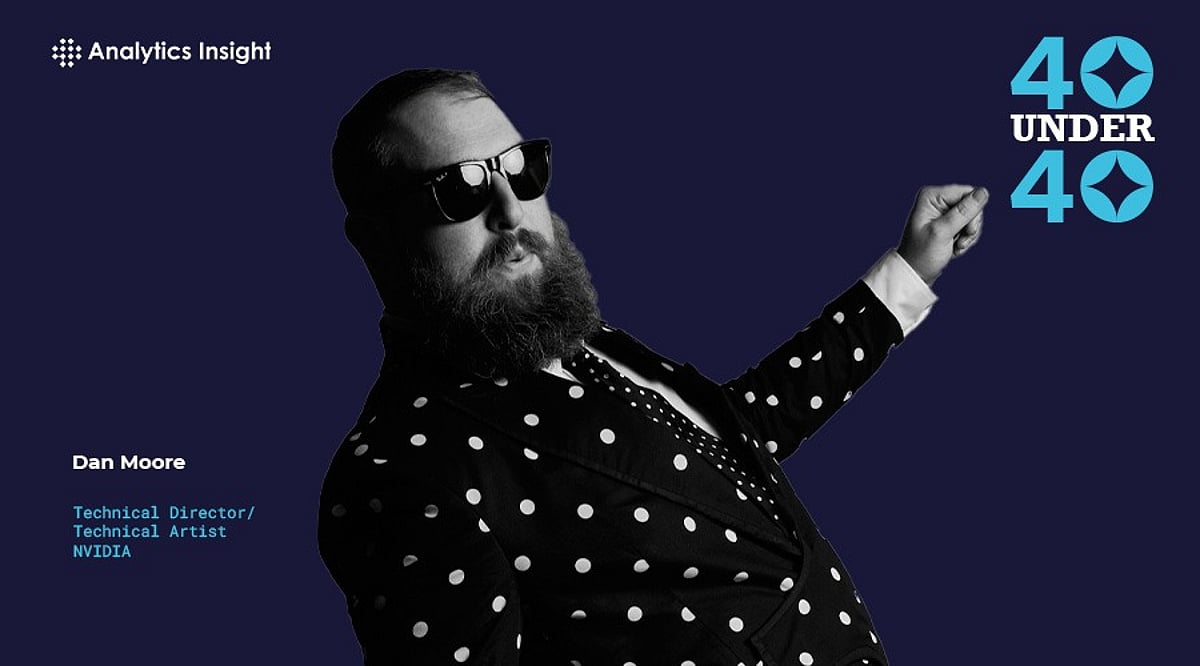
    Dan Moore is an artist, designer, technologist, and educator working at the intersection of art, technology, and culture. His practice explores what it means to create alongside machines, treating AI not simply as a tool, but as a collaborator in the production of images, objects, performances, and systems.

    Moore is a Senior Technical Artist at NVIDIA, where he works with real-time graphics, generative AI, robotics, simulation, and creative production technologies. In this role, he bridges artistic practice and advanced technical systems, helping translate emerging tools into workflows for artists, designers, and creative teams.

    Moore’s independent work spans painting, textiles, time-based media, robotics, and interactive installations. His projects examine distributed authorship, machine agency, and the shifting relationship between human intuition and computational process. Among his notable works are AI-generated painting series, live generative fashion through GLITCHWEAR, robotic performance works, and The Great American Pastime: Berra and the Bronx Legends, an AI-driven infinite baseball broadcast commissioned by the Yogi Berra Museum.

    Moore also teaches creative technology at The New School, helping students understand code, AI, and digital systems as expressive materials.

    The Interview

    Q: Please introduce yourself and tell us about your journey.

    A: I am Dan Moore, an artist, technologist, and educator working with AI, robotics, and generative systems. I am also a Senior Technical Artist at NVIDIA. My journey has always moved between engineering and art. Early in my career, I became fascinated by tangible interaction and computational media, leading to projects involving robot arms, large-scale interactive installations, real-time graphics, and later generative AI. My practice has expanded from building tools into making cultural works that question authorship, agency, and collaboration between humans and machines. I also teach at The New School, where I work with students to think critically about software, AI, and the social impact of technology.

    Q: What inspired you to pursue a career in creative technology?

    A: I’m bored by technology that’s just functional. I’m drawn to the expressive, the strange, and the emotionally resonant. Creative technology lets me smash engineering discipline into artistic curiosity. The most interesting moment is when a machine does something I didn’t predict. In most fields, that’s an error; in mine, it’s the point. That discovery keeps me moving. Whether at NVIDIA, in my studio, or in the classroom, I treat creative technology as a way for artists to hijack the future of tools and culture before they’re handed to us as finished products.

    Q: What achievement are you most proud of?

    A: I’m proud of building a practice that refuses to sit still. The Great American Pastime series is a highlight. It won the 2025 AI Creative Future Award for turning fictional baseball into an infinite, AI-generated radio broadcast. I also value my time as an educator. Teaching students that code and AI are raw, expressive materials is as vital to me as the work I hang on a gallery wall.

    Q: What has been the most exciting project you’ve worked on so far, and why does it stand out?

    A: GLITCHWEAR. It’s a live generative system that knits one-of-one garments from a visual stream that never repeats. The project stands out because it rethinks fashion as a time-based medium. A garment is no longer just designed, selected, and reproduced—it is encountered, coming from a specific moment in a system that will never repeat in the same way. GLITCHWEAR brings together generative art, real-time graphics, textile production, e-commerce, and physical craft.

    Q: How do you see AI and real-time technologies changing the future of creative industries?

    A: AI and real-time technologies are shifting the role of the creator from someone who only makes final artifacts to someone who designs systems, behaviors, prompts, constraints, and relationships. The future of creative work will involve building living systems that can generate, respond, adapt, and evolve. At NVIDIA, I see how real-time tools, simulation, and generative AI are already changing creative production, making it more immediate, iterative, and performative. AI will not replace creativity, but it will change where creativity happens.

    Q: What advice would you give to aspiring innovators?

    A: Do not wait for permission. The best way to understand emerging technology is to use it, break it, misuse it, and push it into places it was not designed to go. Don’t define yourself too narrowly—learn enough engineering to build your ideas, enough art to question them, and enough culture to understand why they matter. Innovation is not just using the newest tool; it’s asking a better question. Protect your curiosity and stay open to surprise.

    Q: What emerging technology excites you the most?

    A: I’m most excited by the convergence of AI, robotics, and real-time simulation. The next major shift will happen when intelligent systems move more directly into physical space. Robotics forces AI to deal with the material world—movement, balance, force, timing, and failure. Combined with real-time simulation and generative models, we can create machines that improvise behaviors, not just execute instructions. This convergence opens incredible possibilities for performance, installation, manufacturing, fashion, and public art.

    Q: What is one challenge you’ve faced in your career, and how did you overcome it?

    A: One challenge has been learning to work in fields that do not always share the same language—art, engineering, fashion, education, and technology all have different expectations. I overcame that by treating translation as part of the practice. Innovation is not only about making something new; it’s also about helping people understand why the new thing matters. Communication, framing, and storytelling are as important as the technical execution.

    Additional Insight

    One thing I would add is that the future of creative technology depends on artists being deeply involved in the development of emerging tools. AI and robotics should not only be shaped by efficiency and automation—they should also be shaped by questions of meaning, authorship, beauty, culture, and human experience. Artists reveal what a technology is really doing beneath its surface, exposing assumptions and turning failures into new forms of expression. As AI becomes more embedded in daily life, creative practitioners will be essential in helping society understand not only what machines can do, but what we want them to become.

  • 5 Top AI Engineer Certifications to Land a Job in 2026

    5 Top AI Engineer Certifications to Land a Job in 2026

    Artificial intelligence is no longer confined to research labs—it now powers products, services, and operations across every industry. As companies invest heavily in generative AI, automation, and machine learning, the demand for skilled AI engineers continues to surge. Recruiters, however, are looking for more than theoretical knowledge; they want candidates who can apply AI to solve real-world problems.

    A recognized certification can strengthen your resume, validate your skills, and help you stand out during the hiring process. While it is not a substitute for practical experience, it complements a strong portfolio and improves your chances of landing interviews. Below are five industry-recognized AI certifications that can help you get hired in 2026.

    1. Google Cloud Professional Machine Learning Engineer

    The Google Professional Machine Learning Engineer certification is highly valued by employers for enterprise-scale AI roles. It covers the development, deployment, and management of machine learning models using Vertex AI and Google Cloud. Topics include model optimization, MLOps, monitoring, and responsible AI. This certification is ideal for professionals with some experience in machine learning and cloud computing.

    2. Microsoft Azure AI Engineer Associate (AI-102)

    This certification is designed for developers and cloud professionals who want to build AI-powered applications on Microsoft’s Azure platform. Learners gain hands-on skills with Azure AI services, Azure OpenAI, computer vision, speech services, and natural language processing. The course also emphasizes building secure and responsible AI applications.

    3. AWS Certified AI Practitioner

    AWS Certified AI Practitioner is an entry-level certification for those building a foundation in artificial intelligence. It introduces AI concepts, generative AI, prompt engineering, responsible AI, and AWS AI services. This is a practical starting point for IT professionals, software developers, and cloud engineers transitioning into AI roles.

    4. Databricks Certified Generative AI Engineer Associate

    As organizations deploy AI assistants and enterprise chatbots, generative AI skills have become highly sought after. This certification focuses on Retrieval-Augmented Generation (RAG), large language models, vector databases, prompt engineering, and AI agent development. It is aimed at engineers working on modern LLM-powered applications.

    5. IBM AI Engineering Professional Certificate

    IBM’s certification emphasizes project-based learning over theory. Participants learn Python, machine learning, deep learning, TensorFlow, and PyTorch through practical projects. This program is an excellent way for beginners to combine technical skills with a portfolio of AI projects.

    Final Takeaway

    Candidates are now evaluated on their ability to create rather than just their credentials. While a certification can make your profile stand out, practical experience is what gets you through the door. Recruiters prefer candidates who have built AI products, contributed to GitHub repositories, deployed models using cloud technology, and understand vector databases, prompt engineering, and MLOps. A relevant certification can give you the edge over other applicants, but remember: earning a certification is only the first step in your AI career journey.

    Frequently Asked Questions

    What is the best AI certification for beginners in 2026?

    AWS Certified AI Practitioner and IBM AI Engineering Professional Certificate are top choices for beginners. They cover AI fundamentals, generative AI, Python, and practical skills without requiring extensive machine learning experience.

    Which AI certification is most valued by employers?

    Google Cloud Professional Machine Learning Engineer and Microsoft Azure AI Engineer Associate are highly regarded, especially for enterprise AI, cloud computing, and production-scale machine learning roles.

    Do AI certifications guarantee a job?

    No. Certifications improve your resume and validate your knowledge, but employers also expect practical experience through AI projects, GitHub portfolios, cloud deployments, and problem-solving skills during technical interviews.

    Which certification is best for generative AI careers?

    The Databricks Certified Generative AI Engineer Associate is a strong choice for those interested in large language models, RAG, prompt engineering, vector databases, and enterprise AI applications.

    How should I prepare for an AI engineering role in 2026?

    Build a strong foundation in Python, machine learning, and cloud platforms. Earn a recognized AI certification, create real-world projects, and maintain an active portfolio to showcase your technical abilities.

  • Top AI-Powered Innovations Transforming Smartphone Photography

    Top AI-Powered Innovations Transforming Smartphone Photography

    Artificial intelligence is rapidly reshaping the way we capture and edit photos on smartphones. From automatic scene adjustments to advanced generative editing, the latest AI features make it easier than ever to take professional-quality images without manual effort. Here are the key AI capabilities that are making smartphone cameras smarter.

    AI Scene Recognition

    Modern smartphones automatically identify landscapes, food, pets, documents, and portraits. The AI then adjusts exposure, colors, contrast, and white balance in real time, ensuring every shot looks its best with zero user input.

    Computational Photography

    By combining multiple frames into a single image, computational photography dramatically improves sharpness, dynamic range, and low-light performance. This technique eliminates the need for manual camera adjustments and consistently delivers detailed, balanced photos.

    Night Mode AI

    Intelligent image stacking and noise reduction allow smartphones to brighten dark scenes while preserving natural colors and fine details. Night mode AI makes low-light photography accessible and impressive, even for casual users.

    AI Portrait Mode

    Using advanced subject separation, portrait mode creates realistic depth effects with adjustable blur. The result is studio-quality portraiture that highlights the subject while smoothly blurring the background.

    Object Eraser

    Generative AI powers object eraser tools that remove unwanted people, reflections, wires, or other distractions. The surrounding background is naturally reconstructed, making the edit nearly invisible.

    AI Image Upscaling

    When enlarging photos, AI upscaling intelligently enhances resolution and restores details without introducing artificial sharpness or artifacts. This feature breathes new life into older or lower-resolution images.

    Smart HDR Processing

    Smart HDR uses AI to balance bright highlights and dark shadows, ensuring every part of the image retains realistic detail and vibrant colors. It works seamlessly in high-contrast scenes.

    Real-Time Video Enhancement

    During video recording, AI improves stabilization, lighting, autofocus, and exposure. The result is smoother, sharper, and more professional-looking footage, even in challenging conditions.

    Generative AI Editing

    Advanced editing tools now expand image backgrounds, fill missing areas, and perform complex edits using AI-generated content. These features maintain visual consistency and realism, offering creative possibilities previously reserved for desktop software.

    These AI-driven innovations are making smartphone cameras more capable than ever, putting powerful photography tools in everyone’s pocket. As AI continues to evolve, we can expect even smarter and more intuitive camera experiences.

  • Top Free AI Certifications in 2026: Google, IBM, Microsoft, AWS, and NVIDIA

    Top Free AI Certifications in 2026: Google, IBM, Microsoft, AWS, and NVIDIA

    Artificial intelligence is no longer a niche skill for software engineers. In 2026, industries from banking to healthcare to retail expect employees to understand AI fundamentals. To meet this demand, leading tech companies offer free certification programs that award verifiable credentials. Here’s a breakdown of the best free AI certifications available this year.

    Google: Generative AI Foundations

    Google Cloud’s ‘Introduction to Generative AI’ course provides a beginner-friendly overview of large language models, prompt engineering, and ethical AI. Lessons range from 30 minutes to two hours and include shareable skill badges. Advanced modules cover Vertex AI, TensorFlow, and BigQuery ML.

    IBM: Extensive Free Course Library

    IBM offers over 1,500 free courses on AI, cybersecurity, and cloud computing. Popular options include AI Fundamentals, Generative AI Basics, and AI Ethics. Many courses award digital badges that enhance LinkedIn profiles. The content covers natural language processing, machine learning essentials, and IBM watsonx.

    Microsoft: Practical AI for the Workplace

    Microsoft’s ‘Career Essentials in Generative AI’ learning path, created with LinkedIn Learning, focuses on real-world application. Topics include Microsoft Copilot, responsible AI, and prompt writing. This certification is ideal for business professionals and managers seeking to integrate AI into daily tasks.

    AWS: Cloud-Based AI Skills

    Amazon Web Services’ AWS Skill Builder offers free beginner courses on generative AI, Amazon Bedrock, and machine learning basics. The modular design allows learners to complete lessons in a few hours, making it easy to gain cloud AI knowledge over a weekend.

    NVIDIA: Technical AI Made Accessible

    NVIDIA provides free courses on neural networks, deep learning, and GPU computing. The material is written in plain language, making complex topics approachable for those with some AI background. Perfect for future software developers, engineers, and data analysts.

    DeepLearning.AI: Foundational Knowledge

    Founded by Andrew Ng, DeepLearning.AI offers ‘AI for Everyone’ — a non-technical course covering AI basics, business strategy, and ethics. No coding required, making it suitable for students, entrepreneurs, and professionals from all backgrounds.

    Elements of AI: Beginner-Friendly Worldwide

    Developed by the University of Helsinki, Elements of AI has trained millions globally. It covers machine learning, neural networks, and AI limitations in simple, step-by-step lessons. A certificate is awarded upon completion.

    Government-Supported Certifications

    India’s YUVA AI course, part of the IndiaAI Mission, offers a government-recognized certificate for beginners. No prior AI experience is needed, and the credential carries trust for job seekers.

    Which Certification Is Best?

    Each certification serves a different goal. Google excels for generative AI beginners, IBM for breadth of topics, Microsoft for workplace practicality, AWS for cloud AI, NVIDIA for technical depth, DeepLearning.AI for foundational knowledge, and Elements of AI for absolute novices. Government-backed options like YUVA AI add credibility.

    Final Thoughts

    Free AI certifications from top tech companies are more valuable than ever in 2026. They provide structured learning paths, practical skills, and respected credentials — all without tuition costs. As AI reshapes industries globally, these courses offer an affordable way to build future-ready skills that employers increasingly demand.

    FAQs

    1. Are these certifications really free? Yes, introductory courses are free; optional advanced exams may charge fees.

    2. Which is best for beginners? Google’s Introduction to Generative AI, IBM AI Fundamentals, and DeepLearning.AI’s AI for Everyone are top picks.

    3. Do they provide certificates? Many offer digital badges or certificates after completion.

    4. Is coding required? No, several beginner courses require no coding.

    5. Which certification is most useful for jobs in 2026? It depends on your goals: Google/IBM for general AI, Microsoft for workplace tools, AWS for cloud AI, NVIDIA for technical roles.

  • Netflix Acquires Ben Affleck’s AI Startup InterPositive for $587M

    Netflix Acquires Ben Affleck’s AI Startup InterPositive for $587M

    Netflix has disclosed a $587 million cash payment for a business acquired in March 2026, now confirmed to be InterPositive, the AI filmmaking startup co-founded by actor and director Ben Affleck. The streaming giant announced the purchase on March 5 but withheld the price until its latest quarterly filing revealed the $587 million figure.

    Netflix Brings InterPositive Team In-House

    InterPositive develops AI tools for film and television production, focusing on post-production tasks such as generating missing shots, background replacements, and lighting corrections. Netflix stated that the technology is designed to support filmmakers while keeping humans in control of creative decisions.

    The acquisition brings InterPositive’s full team into Netflix, with Affleck joining as a senior adviser. Netflix has not published the startup’s revenue, earlier valuation, or a detailed purchase-price breakdown.

    Affleck said he began developing the company after studying production AI systems in 2022, believing existing models did not meet filmmakers’ needs. His team recorded a private dataset on a controlled soundstage to train its first model, which studies visual logic, editing consistency, and real production conditions. InterPositive says its smaller datasets focus on filmmaking methods rather than performances. Affleck emphasized he wanted to “protect the power of human creativity and the people behind it.”

    AI Tools Address Post-Production Problems

    Film productions often discover missing material or visual errors after shooting ends. Fixing those problems can require reshoots, new sets, extra crew time, and more spending. InterPositive designed its tools to handle some corrections within the editing process.

    Its system can generate or adjust footage while following the style of existing material, matching lighting, camera movement, and scene structure. Netflix has not identified which InterPositive products are already active on its films or series, nor confirmed whether outside studios will receive the technology. In March, Affleck said he expected the broader creative community to access future work, though neither Netflix nor InterPositive provided a release schedule or licensing plan.

    Company executives said AI tools should expand creative choices without replacing writers, directors, actors, or crews. Netflix has not released employment figures, savings estimates, or production data tied directly to the startup’s technology.

    Netflix Expands Generative AI Use

    Netflix’s second-quarter shareholder letter shows wider generative AI use across its content pipeline. The company said AI workflows featured in roughly 300 titles during 2026, with most of that work taking place during post-production.

    Netflix named Glory from India, Brasil 70: A Saga do Tri, and The American Experiment as examples. Those projects used AI for enhanced crowds, historical battle scenes, and large establishing shots. Netflix said some shots may not have appeared without the technology.

    The streamer also uses AI for title discovery, natural-language search, and advertising services. Buying InterPositive adds filmmaker-focused production software to that wider technology plan. Netflix has not stated how quickly the acquisition could reduce costs.

    The $587 million disclosure gives investors a clearer figure for Netflix’s spending on production AI. Future filings may provide more information about integration expenses, accounting treatment, and the startup’s contribution to Netflix’s operations, as well as whether the tools reach outside productions.

  • Best AI Architecture Certifications for 2026: From Beginner to Expert

    Best AI Architecture Certifications for 2026: From Beginner to Expert

    The demand for AI architects is skyrocketing as enterprises scale generative AI, agentic AI, and automation across industries. Whether you’re just starting out or an experienced professional, earning the right AI architecture certification can validate your expertise and unlock higher-paying roles. This guide covers the top certifications for 2026, from entry-level to advanced, and offers tips on choosing the best path for your career.

    Why AI Architecture Certifications Matter Now

    AI architecture goes beyond traditional software development. It involves building end-to-end systems that integrate data pipelines, cloud services, machine learning models, APIs, security, governance, and monitoring. Employers increasingly seek professionals who not only understand how AI models work but also how to deploy and scale them responsibly. Modern certifications cover real-world scenarios like retrieval-augmented generation (RAG), AI agents, MLOps, prompt engineering, and responsible AI, making them highly relevant for hands-on roles.

    Best Certifications for Beginners

    If you’re new to AI, these foundational certifications require no prior programming experience:

    • Microsoft Azure AI Fundamentals (AI-900): Introduces machine learning, computer vision, natural language processing, and responsible AI concepts with a focus on Microsoft’s AI services.
    • AWS Certified AI Practitioner: Designed for both technical and business professionals, covering generative AI concepts, AWS AI services, and real-world use cases.
    • Google Generative AI Leader: A newer option gaining traction for professionals interested in understanding how generative AI can be applied in business contexts.

    Intermediate Certifications for AI Engineers

    After building a foundation, these certifications focus on creating and deploying practical AI applications:

    • Microsoft Azure AI Engineer Associate (AI-102): Concentrates on building AI applications using Azure AI services, cognitive services, and responsible AI practices.
    • Google Cloud Professional Machine Learning Engineer: Ideal for those working with ML pipelines, model deployment, and AI infrastructure on Google Cloud.
    • AWS Certified Machine Learning Engineer – Associate: Covers building, deploying, and monitoring models with cloud-native ML workflows.

    Advanced Certifications for AI Architects

    Experienced professionals designing enterprise-scale AI platforms should consider these advanced programs:

    • Databricks Certified Generative AI Engineer Associate: Focuses on production-grade generative AI applications using vector databases, retrieval systems, MLflow, and large language models. Ideal for organizations deploying AI copilots and enterprise search.
    • NVIDIA Deep Learning Institute (DLI) Certifications: Increasingly valuable as enterprises adopt GPU-accelerated AI. Programs cover deep learning optimization, LLM deployment, and high-performance AI computing.

    How to Choose the Right Certification Path

    Your choice should align with your career goals and experience level:

    • Non-technical professionals: Start with AI literacy certifications, then move to cloud AI engineering certifications.
    • Software developers: Choose associate-level cloud AI certifications to build on existing coding skills.
    • Data scientists: Combine cloud certifications with MLOps and generative AI credentials.

    Also consider the cloud ecosystem of your target employer. Azure is common in large enterprises, AWS dominates the infrastructure market, and Google Cloud is strong in ML and data engineering.

    Beyond Certifications: Building Real-World Skills

    Certifications validate knowledge, but employers want proof of practical experience. Work on AI systems, explore open-source LLMs, build RAG applications, and contribute to GitHub projects. Combining recognized certifications with hands-on projects will make you far more competitive. The goal is to create secure, scalable, production-ready AI systems.

    Why This Matters

    AI architecture certifications provide structured learning, validate industry-relevant skills, and keep you current with emerging technologies like LLMs, RAG, MLOps, AI governance, and cloud AI services. When paired with real-world experience, they significantly boost employability and prepare you for AI leadership roles.