Tag: India

  • India Lifts Emergency Gas Restrictions as LNG Flows Through Strait of Hormuz Resume

    India Lifts Emergency Gas Restrictions as LNG Flows Through Strait of Hormuz Resume

    The Indian government has withdrawn most of the emergency natural gas regulations it imposed earlier this year, following the resumption of liquefied natural gas (LNG) shipments through the Strait of Hormuz after a ceasefire in the West Asia conflict. The Ministry of Petroleum and Natural Gas issued a notification on Saturday amending the Natural Gas (Supply Regulation) Order, 2026, removing the operational provisions that had governed how domestic and imported gas was allocated across sectors.

    What Changes Now

    With a ceasefire in place, negotiations ongoing, and maritime traffic through Hormuz restored, the ministry determined that emergency measures were no longer necessary. The notification specifically cited the resumption of sea traffic through the strait as the basis for withdrawing the priority-customer framework that had overridden existing commercial gas contracts.

    This was the last of three emergency measures introduced during the crisis to be rolled back. The government had already lifted earlier restrictions directing refiners to maximize LPG output by diverting petrochemical feedstock, and curbs on diesel sales to bulk consumers, as supply conditions eased.

    “The ongoing conflict in the Middle East that had resulted in the disruption of liquefied natural gas shipments through the Strait of Hormuz has been subject to a ceasefire, and negotiations are ongoing, as part of which, sea traffic through the Strait of Hormuz has been permitted to be resumed,” the notification stated.

    Reasons Behind the Restrictions

    The original order was issued on March 9 under the Essential Commodities Act, after fighting between the US, Israel, and Iran triggered by strikes on Iran on February 28. Tehran’s retaliation disrupted LNG shipments passing through the Strait of Hormuz. Several suppliers invoked force majeure clauses and diverted cargoes elsewhere, prompting the government to step in with sector-wise gas rationing to protect priority consumers.

    Piped natural gas for households, CNG for transport, LPG production, and pipeline operations were guaranteed full supply based on their prior six-month average consumption, while sectors like petrochemicals and select power stations absorbed the resulting cutbacks.

    Why the Strait of Hormuz Matters for India’s Energy Security

    The episode underscored how exposed India remains to disruptions along the Hormuz corridor despite years of energy diversification efforts. The country imports about 88% of its crude oil needs and roughly half of its natural gas requirement, with West Asia supplying 40-45% of its crude oil imports and nearly 65% of its LNG.

    While India was able to shift crude purchases toward other producers during the disruption, its gas imports remained far more vulnerable, since the bulk of LNG cargoes from Qatar travel through the same strait. With shipping now restored and commercial contracts in force, attention shifts to whether current ceasefire terms hold, given how quickly a fresh escalation could reintroduce the same supply risks the March order was designed to manage.

  • 10 Best Electric Egg Boilers to Buy in 2026: Expert Picks for Every Kitchen

    10 Best Electric Egg Boilers to Buy in 2026: Expert Picks for Every Kitchen

    Electric egg boilers have become a practical addition to modern kitchens. They cook eggs consistently without the guesswork of stovetop boiling. Here are the top 10 electric egg boilers in 2026, selected for performance, convenience, and value.

    Boiling eggs on a stove demands attention. Water levels shift, timing slips, and shells crack more often than expected. An electric egg boiler solves all three problems by automating the process end to end. This guide compares the best electric egg boilers available in India for 2026, across budgets and household sizes, based on verified listings rather than manufacturer claims alone.

    How We Chose the Best Electric Egg Boilers

    Every product on this list was evaluated against eight factors: capacity, build quality, auto-shutoff performance, cooking consistency, additional functions (poaching, steaming), brand reputation, customer feedback, and value for money. Products with strong marketing but weak or inconsistent reviews were excluded, even when they appeared frequently in other roundups.

    What to Look for Before Buying an Electric Egg Boiler

    Capacity should match household size rather than aspiration. A single buyer rarely needs an 8-egg model, while a family of four outgrows a 6-egg one quickly. Power matters less than it appears to. Higher wattage can shorten cooking time, but auto-shutoff calibration determines whether the result is actually edible. Cooking functions vary from basic boiling to poaching and steaming, and paying extra for functions that go unused adds no value.

    Safety features such as dry-boil protection and audible buzzers reduce the chance of a ruined batch or a damaged unit. Cleaning matters more in daily use than most buyers expect, and a non-stick heating plate with removable trays saves real time over months of use. The best egg boiler is not the biggest or the most expensive. It is the one that matches everyday cooking habits.

    Top 10 Electric Egg Boilers in India

    1. AGARO Grand Egg Boiler & Poacher

    Best for: Families and meal prep. Pairs an 8-egg capacity with 500W power and a two-year warranty at under a thousand rupees, making it the strongest value on this list.

    Why Choose It: Fast cooking, high capacity, long warranty for the price, and simple one-touch operation.

    Things to Consider: The poaching function performs less consistently than the boiling function.

    2. KENT Super Egg Boiler

    Best for: Brand trust and service support. Carries the deepest review history in this category, with a stainless steel body built to resist rust over years of use.

    Why Choose It: Wide service network, durable construction, consistent cooking results.

    Things to Consider: 6-egg capacity limits it for larger families.

    3. Borosil Electric Plus Egg Boiler

    Best for: Steaming and poaching. Extends beyond boiling with a genuine steaming function, useful for vegetables and dumplings alongside eggs.

    Why Choose It: Multi-function design, established brand, solid build quality.

    Things to Consider: Some units report auto-shutoff issues after months of use.

    4. Milton 2-in-1 Egg Boiler & Poacher

    Best for: Daily versatility. Matches AGARO on capacity and wattage, backed by Milton’s home-service support network.

    Why Choose It: Reliable daily performance and strong after-sales support.

    Things to Consider: A portion of buyers report base leakage after repeated use.

    5. Lifelong 2-in-1 Egg Boiler & Poacher

    Best for: Budget buyers. Offers 8-egg-plus-poaching capacity at the lowest entry price among comparable models.

    Why Choose It: Strong value, capable feature set for the price.

    Things to Consider: Some units show reduced longevity under heavy daily use.

    6. Wipro Vesta Electric Egg Boiler

    Best for: Compact daily use. A straightforward 7-egg boiler built for one-touch operation in smaller kitchens.

    Why Choose It: Simple to use, compact footprint, and positive reviews on ease of use.

    Things to Consider: Recurring complaints about the heating plate rusting over time.

    7. KENT Instant Egg Boiler

    Best for: Simple daily use. Delivers the same KENT reliability as the Super model with a slightly larger 7-egg capacity and a poaching tray included.

    Why Choose It: Brand consistency, added poaching function, and dependable build.

    Things to Consider: Priced above some 7-egg competitors.

    8. Glen SA3036EBSPLUS Egg Boiler

    Best for: Large households. Stands apart with a 16-egg capacity, the largest on this list, built for shared kitchens.

    Why Choose It: Unmatched capacity, suited to big families or hostels.

    Things to Consider: Glen sells several similarly named SKUs, so confirm the exact model before buying.

    9. Amazon Basics Electric Egg Boiler

    Best for: Lowest price. Strips away extra functions to focus on reliable boiling at the lowest price point in this list.

    Why Choose It: Lowest cost, backed by Amazon’s standard return policy.

    Things to Consider: No poaching or steaming function.

    10. Russell Hobbs REG300 Egg Cooker

    Best for: Longest warranty. Costs more than most entries here but backs that price with a two-year manufacturer’s warranty, the longest on this list.

    Why Choose It: Strongest warranty backing, established international brand.

    Things to Consider: Smaller 6-egg capacity relative to its price.

    Which Egg Boiler Should You Buy?

    Common Mistakes to Avoid

    • Oversized Capacity: Buying more capacity than you need wastes counter space and money.
    • Price-Only Decisions: Choosing solely on price often means sacrificing warranty support or build quality.
    • Service Availability: Ignoring local service access leaves buyers stuck if a unit fails outside the return window.
    • Cleaning Requirements: Overlooking maintenance needs leads to calcium buildup and reduced performance over time.
    • Wattage Myth: Assuming higher wattage always means better results ignores auto-shutoff calibration, which affects the final result more directly.

    Final Thoughts

    Most Indian households do best with an 8-egg, 500W model like AGARO Grand, since it balances speed, price, and everyday practicality. Bachelors and students can go smaller with Wipro Vesta or KENT Instant. Large families should skip the debate entirely and go straight for Glen’s 16-egg capacity, which earns its higher price through convenience.

    FAQs

    1. What is the best electric egg boiler in 2026? The best electric egg boiler depends on your needs, but models like the Dash Rapid Egg Cooker are popular for their consistent performance, auto shutoff, and ease of use. For Indian buyers, brands such as Borosil and AGARO also offer reliable options.
    2. How does an electric egg boiler work? An electric egg boiler uses a heated plate to convert a measured amount of water into steam. As the water evaporates, the appliance cooks the eggs and automatically shuts off or alerts the user when the cooking cycle is complete.
    3. Can an electric egg boiler cook more than just boiled eggs? Yes. Many modern electric egg boilers include poaching trays, omelet trays, or steaming accessories, allowing them to prepare poached eggs, omelets, vegetables, and other light foods.
    4. What capacity egg boiler should I buy? A 6–7 egg capacity model is suitable for individuals, couples, or students, while families may benefit from 9–14 egg models that can prepare larger batches in a single cycle.
    5. Are electric egg boilers worth buying? If you cook eggs regularly, an electric egg boiler can save time and deliver consistent soft-, medium-, or hard-boiled eggs with minimal effort. Features like one-touch operation, auto shutoff, and easy cleaning also make them a convenient addition to everyday kitchens.

  • Top Cloud Computing Stocks to Watch in India

    Top Cloud Computing Stocks to Watch in India

    India’s cloud computing sector is rapidly expanding, driven by digital transformation across industries. Here are the leading Indian IT companies offering robust cloud services and solutions.

    Tata Consultancy Services (TCS) – A global IT leader providing enterprise cloud migration, infrastructure management, and digital transformation services across multiple industries and international markets.

    Infosys – Strong cloud capabilities through strategic partnerships, helping businesses modernize infrastructure, improve scalability, and accelerate digital transformation initiatives worldwide.

    HCLTech – A leading cloud services provider specializing in hybrid cloud, cybersecurity, application modernization, and enterprise digital transformation for global clients across sectors.

    Wipro – Expands cloud consulting and managed services through strategic collaborations with major cloud providers, supporting enterprises undergoing digital modernization successfully worldwide.

    Tech Mahindra – Offers cloud transformation, AI integration, and enterprise technology services, helping organizations improve efficiency, agility, and customer experience across industries globally.

    LTIMindtree – Delivers cloud migration, analytics, AI solutions, and managed services, enabling businesses to modernize operations and optimize digital infrastructure effectively worldwide.

    Mphasis – Focuses on cloud-native application development, migration services, automation, and financial technology solutions for enterprise customers across international markets.

    Persistent Systems – Provides cloud engineering, software development, AI integration, and digital platform services, supporting businesses embracing next-generation technology solutions globally.

    Coforge – Expands cloud transformation services across banking, insurance, aviation, and healthcare sectors, helping enterprises accelerate innovation and operational efficiency through technology.

  • Behind Every UPI App: The Sponsor Banks Ensuring Fast and Reliable Payments

    Behind Every UPI App: The Sponsor Banks Ensuring Fast and Reliable Payments

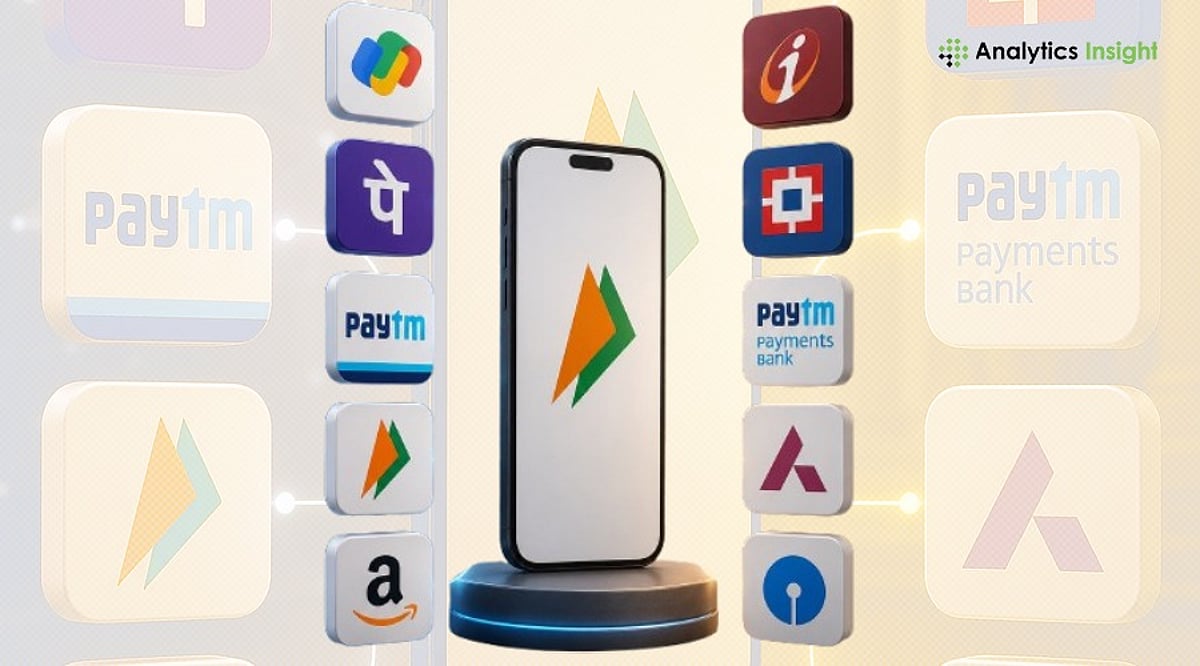
    India’s digital payment revolution runs on a simple interface that millions open daily, yet the banking infrastructure behind it remains largely invisible. Every transaction through apps like PhonePe, Google Pay, and Paytm passes through a sponsor bank before reaching the National Payments Corporation of India (NPCI) settlement system. This partnership defines transaction speed, dispute resolution, and overall reliability.

    What Is a Sponsor Bank?

    UPI apps—technically third-party application providers—do not hold banking licenses. They rely on regulated banks called Payment Service Provider (PSP) banks or sponsor banks to authenticate transactions, connect to NPCI’s core network, and settle funds. Without such a tie-up, no UPI app can process a single payment.

    The importance of sponsor banks became starkly visible in 2020 when the Reserve Bank of India placed a moratorium on Yes Bank, which then supported about 20 of the 32 third-party UPI apps. The disruption forced many apps to adopt multi-bank partnerships—a practice now standard across the industry.

    Which Banks Sponsor India’s Top UPI Apps?

    UPI App Sponsor Banks
    PhonePe Yes Bank, ICICI Bank, Axis Bank
    Google Pay Axis Bank, ICICI Bank, HDFC Bank, State Bank of India
    Paytm Axis Bank, HDFC Bank, SBI, Yes Bank

    PhonePe originally launched with Yes Bank as its sole partner in 2016. After the 2020 crisis, it added ICICI Bank and Axis Bank, distributing transaction load across three institutions. Google Pay entered with Axis Bank and gradually expanded to include ICICI Bank, HDFC Bank, and SBI, ensuring high success rates even during peak volumes.

    Paytm underwent the most significant restructuring. After the RBI restricted Paytm Payments Bank from onboarding new customers in early 2024, NPCI approved a multi-bank model. Axis Bank, HDFC Bank, SBI, and Yes Bank now jointly handle its UPI traffic, with user handles like @ptaxis and @ptsbi.

    How Sponsor Banks Work in the UPI Ecosystem

    A sponsor bank performs several critical functions that a UPI app cannot legally do alone:

    • Issuing and managing the Virtual Payment Address (VPA) handle
    • Authenticating the user’s linked bank account via NPCI’s mapper system
    • Routing payment requests to the beneficiary bank in real time
    • Settling funds between payer and payee banks
    • Handling regulatory compliance and dispute escalation

    When a payment fails, the sponsor bank is the first point of technical accountability, though the app remains the customer’s primary support contact. Apps with a single sponsor bank face greater risk during outages; those with multiple partners recover faster.

    Why Multiple Sponsor Banks Matter

    NPCI enforces a volume cap that restricts any single third-party app to 30% of total UPI transaction volume. This rule, expected to take fuller effect by year’s end, pushes apps and sponsor banks toward diversification. Benefits include:

    • For users: Clearer path for dispute escalation
    • For businesses: Better reliability when evaluating payment integrations
    • For regulators: Reduced systemic risk if one sponsor bank faces trouble
    • For developers: Ability to plan redundancy before launching new UPI products

    Final Thoughts

    The sponsor bank model forms the structural foundation of every UPI transaction in India. From PhonePe’s early reliance on Yes Bank to Paytm’s pivot to a four-bank arrangement, the pattern is clear: diversification protects both the app and the user from single-point failures. As UPI expands globally and transaction volumes continue climbing, strong banking partnerships will become even more critical to maintaining the seamless experience users expect.

    Frequently Asked Questions

    What is a sponsor bank in the UPI ecosystem?

    A sponsor bank (PSP bank) connects a third-party UPI app to NPCI’s network and handles authentication, routing, and settlement for every transaction.

    Which bank sponsors PhonePe?

    PhonePe operates through three sponsor banks: Yes Bank, Axis Bank, and ICICI Bank—a structure adopted after the 2020 Yes Bank moratorium.

    Why did Paytm switch to multiple sponsor banks?

    After regulatory restrictions on Paytm Payments Bank in 2024, NPCI approved a multi-bank model using Axis Bank, HDFC Bank, SBI, and Yes Bank to keep its UPI services uninterrupted.

    Does BHIM need a sponsor bank?

    BHIM operates as a direct extension of NPCI and does not require a separate sponsor bank, unlike third-party apps such as PhonePe and Google Pay.

    Why do UPI apps prefer multiple sponsor banks?

    Multiple sponsor banks reduce dependency risk, distribute transaction load, and help apps maintain uptime even if one partner bank faces technical or regulatory disruption.

  • Bollywood Stars Backing AI, Fintech, and EdTech Startups: A Look at Celebrity Investors

    Bollywood Stars Backing AI, Fintech, and EdTech Startups: A Look at Celebrity Investors

    Bollywood celebrities are increasingly diversifying their portfolios beyond the silver screen, investing in cutting-edge technology startups spanning artificial intelligence, fintech, and edtech. Here is a roundup of notable Bollywood personalities who have placed strategic bets on innovative ventures.

    Shilpa Shetty – AI Wellness

    Shilpa Shetty has invested in AI-powered wellness and health technology ventures, reflecting a growing trend among celebrities to back preventive healthcare and digital fitness innovations.

    Suniel Shetty – Fintech

    Suniel Shetty has backed fintech startups focused on digital payments and financial inclusion, expanding his investment interests beyond entertainment and traditional business sectors.

    Deepika Padukone – EdTech

    Through her investment initiatives, Deepika Padukone has supported education-focused technology companies that help learners access quality digital education and skill development opportunities.

    Ranveer Singh – AI Marketing

    Ranveer Singh has invested in AI-driven consumer technology and marketing startups that enhance brand engagement through advanced analytics and personalized customer experiences.

    Madhuri Dixit – EdTech Learning

    Madhuri Dixit has backed online education platforms promoting accessible learning, combining educational innovation with technology-driven student engagement across diverse audiences.

    Ajay Devgn – AI Content

    Ajay Devgn has entered AI-enabled media technology ventures that explore content creation, production efficiency, and innovative entertainment solutions for digital-first consumers.

    Alia Bhatt – Sustainable Tech

    Alia Bhatt has invested in technology startups that combine AI with sustainability, highlighting her interest in environmentally responsible innovation and future-focused business models.

    Karan Johar – Digital Startups

    Karan Johar has expanded his investment interests into technology-led startups, supporting scalable digital businesses across entertainment, fintech, and consumer technology ecosystems.

    Riteish Deshmukh – Startup Ecosystem

    Riteish Deshmukh has actively invested in emerging startups spanning AI, fintech, and edtech, encouraging innovation while diversifying his entrepreneurial ventures beyond cinema.

    These investments underscore a broader shift where Bollywood celebrities are leveraging their influence and capital to shape the future of technology and education in India.

  • RBI Warns Against Crypto Legalization, Citing Threats to India’s Financial Stability

    RBI Warns Against Crypto Legalization, Citing Threats to India’s Financial Stability

    The Reserve Bank of India (RBI) has firmly opposed the legalization of virtual digital assets (VDAs), warning that cryptocurrencies pose significant risks to the country’s monetary and financial stability. During a parliamentary briefing on Thursday, the central bank urged lawmakers to maintain the prohibition on private crypto assets as India reviews its digital currency strategy.

    RBI Flags Crime Risks and Offshore Enforcement Gaps

    The Parliamentary Standing Committee on Finance examined virtual digital assets and possible policy responses during its seventh meeting on the subject. BJP lawmaker Bhartruhari Mahtab chaired the session, which included representatives from the RBI and the Institute of Chartered Accountants of India (ICAI). The meeting also reviewed progress in India’s central bank digital currency pilot, commonly known as the digital rupee.

    The RBI told the panel that privately issued digital assets create complex regulatory, tax, and enforcement challenges. It also warned that criminals could use digital money for terror financing, narcotics smuggling, and other illegal activities. The central bank said offshore crypto entities remain difficult for Indian authorities to track, as cross-border platforms can operate outside domestic oversight.

    To support its position, the RBI cited China and Qatar as countries that prohibit similar financial activities. It also noted that the European Union allows VDAs through a strict regulatory framework with extensive controls.

    “It is encouraging to see the RBI reinforce the critical distinction between speculative crypto assets and Real-World Asset (RWA) tokenisation before the Parliamentary Standing Committee on Finance,” said Edul Patel, CEO at Mudrex.

    ICAI Backs Regulation as Digital Rupee Adoption Slows

    ICAI supported a comprehensive legal framework for virtual digital assets instead of continued uncertainty. The accounting body said clear rules could improve financial reporting, compliance, and the treatment of VDAs across different business activities. It offered to research the various forms of digital assets and examine their economic characteristics to guide recognition, measurement, presentation, and disclosure standards within company financial statements.

    Mahtab said the RBI remained firmly against legalizing VDAs in India. He also noted that existing income tax rules already cover parts of the sector and allow authorities to examine related financial activity. The committee considered the slower adoption of the digital rupee compared with privately issued digital assets. Mahtab said the RBI’s digital asset had not achieved the same level of market traction.

    As a result, the panel examined possible policy measures that could expand India’s digital financial ecosystem while protecting consumers and financial institutions. Members also reviewed the need to safeguard the broader economy from emerging risks. The discussion covered taxation, enforcement, investor protection, offshore access, and stablecoin use. It also placed the digital rupee within India’s wider effort to promote financial innovation without weakening monetary control or financial stability.

    What’s Next?

    The RBI remains firmly opposed to crypto legalization, citing financial stability, offshore enforcement, and illicit finance risks. Meanwhile, ICAI supports a clear regulatory framework as Parliament reviews India’s digital asset policy. Lawmakers must now decide how to protect the economy while supporting responsible financial innovation.

  • India Orders Removal of BAT-BMS and Epoch Li-ion Apps Over E-Rickshaw Bluetooth Security Fears

    India Orders Removal of BAT-BMS and Epoch Li-ion Apps Over E-Rickshaw Bluetooth Security Fears

    The Indian government has directed Apple’s App Store and Google’s Play Store to remove two smartphone applications—BAT-BMS and Epoch Li-ion—following viral social media videos that raised concerns about Bluetooth-enabled disruptions to e-rickshaw battery systems.

    The Ministry of Electronics and Information Technology (MeitY) issued the directive after videos surfaced showing individuals allegedly using Bluetooth to connect to nearby e-rickshaw batteries and cut off their power supply. While there is no evidence that the apps could remotely stop moving e-rickshaws, authorities acted preemptively to address public safety concerns.

    MeitY Secretary S. Krishnan announced the removal at the CII Cybersecurity Summit on July 3, stating that both apps were taken down due to potential misuse. The apps, developed by Chinese company Shenzhen Grenergy Technology (BAT-BMS) and others (Epoch Li-ion), were designed for monitoring lithium-ion battery parameters such as voltage, current, temperature, and charging cycles.

    However, a feature called Lossigy in BAT-BMS allows users to toggle the battery’s discharge function on or off via the app. Although intended as a safety measure, experts warn that weak security settings in many low-cost electric vehicle battery management systems—such as no password protection or default credentials—could allow anyone within Bluetooth range to connect and potentially disrupt operations.

    Cybersecurity specialists emphasize that the core issue is not the monitoring functionality itself but the inadequate security configurations of the battery systems. They recommend stronger authentication and encryption to prevent unauthorized access.

  • Parle Products Files for Rs 9,530 Crore IPO at Over Rs 1 Lakh Crore Valuation

    Parle Products Files for Rs 9,530 Crore IPO at Over Rs 1 Lakh Crore Valuation

    Parle Products, the iconic Indian company behind Parle G, Melody, and other household brands, is reportedly preparing for a blockbuster initial public offering (IPO) that could raise more than Rs 9,530 crore and value the company at over Rs 1 lakh crore. If finalized, the listing would be one of the largest consumer-sector IPOs in India.

    According to media reports, Parle Products has selected top investment banks—Kotak Mahindra Capital, HSBC Securities, and Axis Capital—as advisors for the proposed IPO. Another bank may join later. The issue is expected to be structured primarily as an offer for sale, meaning existing shareholders will sell part of their stakes rather than the company raising fresh capital.

    The company has not confirmed the reports. Chief Marketing Officer Mayank Shah stated that Parle Products does not comment on market speculation but regularly evaluates options to support future growth.

    Strong Brand Portfolio and Financial Health

    Founded in 1929, Parle Products is one of India’s most trusted food companies. Its brands include Parle G, Melody, Monaco, Hide & Seek, KrackJack, Poppins, Mazelo, Kaccha Mango Bite, and 20-20 Cookies. These products are available across India and in many international markets.

    Financially, the company has shown steady growth. In FY25, operational revenue rose 8.5% to Rs 15,568.49 crore, while total income reached Rs 16,190.98 crore. However, net profit fell 39% to Rs 979.53 crore due to higher raw material costs.

    Impact on India’s Consumer Market

    A successful IPO would bring one of India’s most-loved consumer brands to the stock market, potentially encouraging other family-owned businesses to go public. The timing aligns with the expansion of India’s packaged food industry, which the India Brand Equity Foundation estimates will grow from about Rs 1.16 lakh crore in 2025 to nearly Rs 1.64 lakh crore by 2030.

    Investors are now waiting for an official announcement regarding the IPO size, valuation, and timeline. If executed, the Rs 9,530 crore IPO could become a landmark event in India’s FMCG and capital markets sectors.

  • Rockwell Automation and Cisco Partner to Transform Manufacturing in India with Software-Defined Solutions

    Rockwell Automation and Cisco Partner to Transform Manufacturing in India with Software-Defined Solutions

    Rockwell Automation (NYSE: ROK) and Cisco (NASDAQ: CSCO) have announced a strategic collaboration aimed at reimagining the future of manufacturing in India. The partnership unites IT and industrial automation to support the country’s ambitions for advanced, resilient, and globally competitive manufacturing.

    At the core of this initiative is the launch of a Full-Stack Software-Defined Manufacturing reference design. Additionally, a Software-Defined Manufacturing Demo Pod has been established at Rockwell Automation’s Gurugram facility, developed in collaboration with Cisco’s Country Digital Acceleration program. The companies have also introduced a joint digital skills initiative to address the manufacturing digital skills gap, leveraging Cisco Networking Academy and Rockwell’s Learning+ program.

    These efforts reflect a shared commitment to help India’s manufacturing sector transition from traditional automation toward AI-enabled autonomous operations. The Full-Stack Software-Defined Manufacturing reference design integrates Cisco’s software-defined networking with Rockwell Automation’s software-defined automation, delivering secure, observable, and resilient operations. By enabling secure data flow across IT and OT, manufacturers gain real-time visibility and actionable insights to improve efficiency, reduce risk, and support AI-enabled decision-making while maintaining compliance and protecting critical operations.

    “India’s manufacturing sector is at a defining moment,” said Dilip Sawhney, managing director of Rockwell Automation India. “By bringing together industrial automation expertise and modern digital infrastructure, we are helping manufacturers build operations that are more resilient, intelligent, and ready for the future.”

    The Software-Defined Manufacturing Demo Pod in Gurugram will serve as a collaborative innovation environment where customers, partners, and ecosystem players can experience, validate, and co-create solutions tailored to India’s manufacturing needs. It provides a practical foundation for organizations to move from pilot projects to scalable deployment across plants and production lines.

    A key aspect of this collaboration is skills development. Through a social impact initiative, Rockwell Automation and Cisco Networking Academy are committed to equipping India’s manufacturing workforce with essential digital, networking, and cybersecurity skills for modern, software-defined industrial environments. This initiative supports India’s goals for workforce readiness and inclusive growth as manufacturing becomes more digital.

    “Cisco is proud to work alongside Rockwell Automation to support India’s manufacturing transformation,” said Kartika Prihadi, Vice President of Partner and Routes to Market Sales at Cisco APJC. “By unifying secure networking, automation, and AI-ready infrastructure, we are helping manufacturers move from automation to autonomy, unlocking new levels of efficiency, innovation, and trust.”

    As India continues to strengthen its position as a global manufacturing hub, the Rockwell Automation and Cisco collaboration provides a blueprint for how technology, skills, and ecosystem partnerships can come together to support sustainable growth and operational excellence.

  • India Expands Scrutiny to Telegram and Signal Over Username Feature Security Risks

    India Expands Scrutiny to Telegram and Signal Over Username Feature Security Risks

    The Indian government has intensified its oversight of messaging platforms, extending its scrutiny to Telegram and Signal after raising concerns about WhatsApp’s planned username feature. The Ministry of Electronics and Information Technology (MeitY) has sent formal notices to both Telegram and Signal, requesting detailed information on how their username features operate and what safeguards are in place to prevent fraud, impersonation, and misuse.

    Why the Government is Concerned

    Username features allow users to communicate without revealing their mobile phone numbers. While this enhances privacy, it also reduces traceability and makes it easier for fraudsters to create fake identities. The government’s primary worry is impersonation of public figures, government officials, banks, and trusted institutions. Officials are also alarmed by the potential rise in phishing, online fraud, and so-called “digital arrest” scams, which have become a growing cybercrime threat in India.

    Earlier, MeitY had asked Meta to delay the launch of WhatsApp’s username feature in India, citing security concerns. The ministry gave WhatsApp a three-day deadline to provide information on its security measures and to refrain from introducing the feature until consultations are complete. India is WhatsApp’s largest market, with over 500 million users, making any new feature a major regulatory concern.

    Major Security Risks

    • Reduced traceability: Anonymity makes it harder for law enforcement to track cybercriminals who hide their phone numbers.
    • Increased impersonation risks: Usernames can mimic those of government agencies, celebrities, or financial institutions.
    • Facilitation of digital arrest scams: Fraudsters can contact users without revealing phone numbers.
    • Phishing attacks: Fake profiles can send harmful links or fraudulent messages at scale.
    • Undermined SIM identity association: Reduced traceability weakens the link between SIM identity and messaging activity.

    WhatsApp’s Safeguards

    WhatsApp has stated that usernames will be used for public accounts, government bodies, celebrities, and verified Meta accounts. It has also proposed an optional “Username Key” feature, requiring a four-digit number along with the username before unknown contacts can reach the user.

    The government will review responses from WhatsApp, Telegram, and Signal before taking any action under Indian IT laws.