Tag: Oil Prices

  • Wall Street Hits Fresh Records as Strong Earnings and Easing Geopolitical Tensions Fuel Five-Day Rally

    Wall Street Hits Fresh Records as Strong Earnings and Easing Geopolitical Tensions Fuel Five-Day Rally

    Wall Street opened higher on Wednesday, reaching record highs as strong corporate earnings and easing geopolitical concerns in the Middle East buoyed investor sentiment. The S&P 500 and Dow Jones Industrial Average both hit fresh intraday highs, extending a five-day rally.

    The S&P 500 rose 0.61% to 7,783.50 shortly after the opening bell. Meanwhile, the Dow advanced 450 points to 54,536.68, and the Nasdaq Composite added 0.41% to 26,694.42.

    US Stocks Extend Five-Day Rally

    US stocks continued their five-session winning streak, which began with renewed demand for technology and consumer shares. All three major indexes are on track for their strongest five-day performance since April 2025. Over the past week, the S&P 500 has gained more than 6%, the Dow has risen over 5%, and the Nasdaq has climbed more than 9%. In the previous session, the S&P 500 closed above 7,700 for the first time, while the Dow gained more than 900 points and secured another record close.

    Market breadth remained positive during early trading. On the New York Stock Exchange, advancing stocks outnumbered declining ones by 1.26 to one, and the ratio on the Nasdaq was 1.13 to one.

    Disney and Eli Lilly Lead Major Stock Moves

    Disney shares rose 2.9% after the company reported better-than-expected fiscal third-quarter profit, helping lift the Dow. Eli Lilly climbed 7.3% after beating second-quarter revenue and earnings estimates and raising its full-year revenue forecast. Healthcare led the S&P 500 sectors with a 1.9% gain.

    Arista Networks jumped 7.3% after forecasting third-quarter revenue above market estimates. Microsoft and Alphabet each gained about 1%, supporting the broader technology sector. However, Uber fell 5.5% after forecasting current-quarter adjusted earnings below estimates, and utilities lagged the broader market, losing nearly 1%.

    According to FactSet, more than 84% of S&P 500 companies have beaten earnings estimates this season, helping investors look past weaker economic data.

    SpaceX and AMD Fall as NVIDIA Rallies

    SpaceX shares dropped 12.5% following its first quarterly report since its June public listing. While the company nearly doubled revenue and narrowed operating losses, a sixfold increase in capital spending to $18.4 billion, largely for AI projects and infrastructure, raised concerns. Nic Puckrin, founder of Coin Bureau, described AI spending as “getting out of hand,” adding that companies showed “no signs of slowing down anytime soon.” AMD shares fell 6.5%, despite forecasting quarterly revenue above analyst estimates, as investors expected a stronger outlook after the stock had gained 142% this year.

    In contrast, NVIDIA rose 3.4% after Elon Musk confirmed that SpaceX would use its processors for AI infrastructure. Musk called NVIDIA’s product “the best AI computer” during the earnings call.

    Hormuz Hopes Support Wall Street

    Oil prices held near recent levels as investors monitored talks involving Iran, Oman, and the Strait of Hormuz. Brent crude rose 1% to $80.22 per barrel, while West Texas Intermediate futures gained 0.46% to $76.12. Prices rose after Houthi militants claimed an attack on a Saudi tanker in the Red Sea.

    Reuters reported that Iran and Oman were discussing a framework covering inbound ship traffic through Hormuz. However, regional sources questioned claims that an agreement was close. One source noted that “the concession has already been made regarding some form of control over Hormuz,” but other details still required negotiation.

    Jobs and Services Data Enter Focus

    US private employers added 44,000 jobs in July, according to ADP, below June’s 95,000 increase and the 75,000 forecast. Investors now await Friday’s official nonfarm payrolls report, which could affect expectations for Federal Reserve interest-rate policy in the coming months.

    Meanwhile, the ISM Services PMI reached 54.1 in July, compared with 54.0 in June, with a reading above 50 signaling expansion. The employment component fell to 47.4, its lowest level since March, while the prices index rose to 70.3, pointing to persistent service-sector inflation.

    Strong corporate earnings and easing geopolitical concerns have kept Wall Street’s record-breaking rally intact despite weak hiring data. Investors now look to Friday’s nonfarm payrolls report for fresh clues on the Federal Reserve’s next policy moves, with earnings momentum and AI-driven growth remaining key drivers of market sentiment.

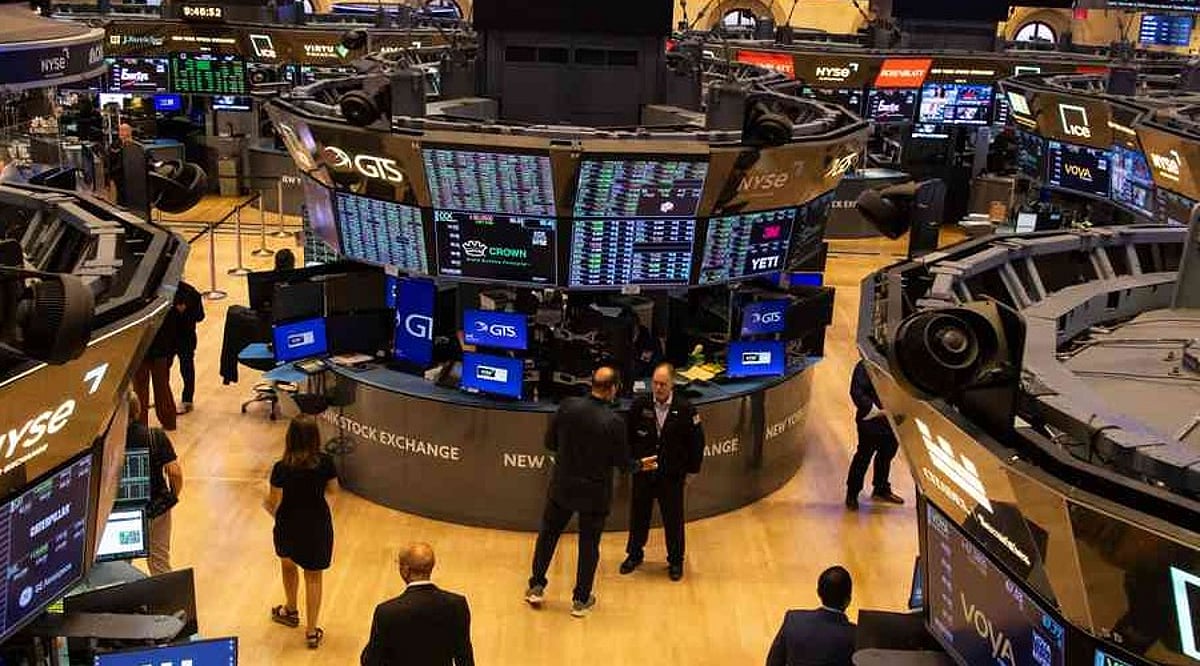
  • Wall Street Rises as Oil Prices Drop and Amazon Hits $3 Trillion Market Cap

    Wall Street Rises as Oil Prices Drop and Amazon Hits $3 Trillion Market Cap

    Wall Street opened August with broad gains on Monday as lower oil prices eased pressure across major sectors. Investors responded to signs that Washington may avoid fresh strikes against Iran, though Tehran denied that formal talks had started.

    The Dow led the early advance, while the S&P 500 and NASDAQ also moved higher. Amazon reached a $3 trillion market value. Investors also reviewed strong manufacturing data and prepared for a busy earnings week.

    Oil Slide Lifts Wall Street Sentiment

    The Dow Jones Industrial Average rose 604.70 points, or 1.15%, to 53,089 at 9:35 a.m. ET. The S&P 500 gained 1.2% to 7,585. The NASDAQ Composite added 1.97% to 25,872.

    Seven of the 11 S&P 500 sectors traded higher, with communication services leading. Energy shares lagged as crude prices fell. Advancing stocks outnumbered decliners by 1.89-to-1 on the NYSE and 1.49-to-1 on NASDAQ, showing broad early participation.

    President Donald Trump said planned talks would address Iran and the reopening of the Strait of Hormuz. He also canceled a planned attack on Iran. Tehran rejected his account and said no talks or meetings were scheduled. Brent crude fell 5% to below $84 per barrel. West Texas Intermediate dropped 6.1% to below $80.

    Amazon Reaches $3 Trillion Value

    Amazon shares climbed 5% in early trading, pushing the company’s market value above $3 trillion. The move followed its latest earnings report and extended gains from the previous week. Most large technology and growth stocks also advanced during the opening session.

    Software stocks supported the technology sector, with Microsoft and Salesforce moving higher. Chipmakers moved in the opposite direction. The Philadelphia Semiconductor Index fell 2.8% after a difficult July. Micron also dropped 3.4% after a report said China’s CXMT may build another memory-chip plant in Beijing.

    Earnings Calendar Draws Attention

    SpaceX will release its first quarterly results since its public listing on Tuesday. Its shares rose nearly 3% to trade near 111.57 at press time. Investors will track Starlink growth, launch revenue, and updates on the Starship program. Other technology companies reporting this week include Palantir, AMD, SanDisk, and Western Digital.

    “The on-again, off-again nature of US-Iran diplomacy could mean earnings and jobs data will have to do the heavy lifting for the bulls this week,” said Chris Larkin of E*TRADE. Company reports will also shape trading after July’s volatility around artificial intelligence spending, interest rates, and the Middle East conflict.

    Drug Merger Report Moves Shares

    Bristol Myers Squibb gained 1.5% after reports of preliminary merger discussions with AstraZeneca. A possible combination could create a pharmaceutical company worth nearly $400 billion. Reuters could not confirm whether the discussions remained active.

    Both companies hold large cancer-drug businesses, which could draw close regulatory review. Oncology products generated more than 40% of Bristol Myers’ sales during the first half of 2026. AstraZeneca also receives a large share of its revenue from cancer treatments.

    Factory Data and Fed Policy in Focus

    US manufacturing activity rose to its highest level since May 2022. The ISM manufacturing index reached 55.6 in July, up from 53.3 in June. Economists expected a reading of 54.0. Factory employment rose to 52.8, its first expansion reading in 33 months. Input prices eased to 71.1 but stayed elevated.

    New York Fed President John Williams said he expects inflation to cool during the second half of 2026. He said current interest-rate policy remains ‘well positioned.’ However, he said the Fed could raise rates if inflation fails to move toward 2%. The central bank kept its target range at 3.50% to 3.75% last week. Investors will next review several labor reports, including Friday’s nonfarm payrolls release.

    Disclaimer: This article is for informational purposes only and does not constitute investment advice. Always conduct your own research before making financial decisions.

  • Wall Street Hits New Highs as AI Stocks Surge and Oil Prices Slide

    Wall Street Hits New Highs as AI Stocks Surge and Oil Prices Slide

    The S&P 500 and Dow Jones Industrial Average reached record intraday levels on Tuesday, driven by strong earnings from AI-linked companies and optimism over potential US-Iran talks that pushed oil prices lower.

    The S&P 500 gained 0.58% to 7,644.56, its first intraday record since June. The Dow rose 647 points (1.22%) to 53,825.50, also hitting a new all-time high. The NASDAQ Composite added 1.16% to 26,213.57, supported by technology and semiconductor stocks. Wall Street has recovered from July losses, fueled by robust earnings from major tech firms like Amazon and Microsoft, which reinforced confidence in AI spending. The Philadelphia Semiconductor Index climbed about 4% as chip stocks rebounded.

    Palantir Technologies shares surged 17.4% after raising its annual revenue forecast, citing stronger demand for artificial intelligence services. CEO Alex Karp described the quarterly performance as “otherworldly” and linked growth to sovereign AI systems. Caterpillar shares rose 12% after reporting higher second-quarter profit and raising its annual revenue growth forecast, driven by demand from AI data center projects for power-generation equipment. The company also indicated tariff costs would be near the lower end of its earlier estimate.

    Oil prices fell as US Treasury Secretary Scott Bessent signaled progress in talks with Iran to reopen the Strait of Hormuz, stating there was “a chance” of an agreement within two days. West Texas Intermediate crude dropped about 4% to near $76 per barrel, while Brent crude fell to around $80. The S&P 500 energy sector declined 2.5% as crude prices slid, but lower oil costs eased concerns about transport and production expenses for other industries.

    Corporate earnings have broadly exceeded expectations, with 85.2% of S&P 500 companies beating analyst estimates—well above the long-term average of 67.5%. Investors remain focused on whether AI spending can generate sustainable revenue. Eric Parnell, Chief Market Strategist at Great Valley Advisor Group, noted that while AI earnings have performed well, the key question is sustainability. Coherent gained 14% and Lumentum rose 7.8% on reports of potential US limits on Chinese data center components. McDonald’s added 1.2% despite weak results, while Pfizer fell about 1% after its quarterly report. US job openings dropped to 7.36 million in June, below forecasts. Advancing shares outnumbered decliners on both major exchanges, with the NYSE at a 1.36-to-1 ratio and NASDAQ at 2.04-to-1. Investors also awaited SpaceX’s first earnings report since its public listing.

  • Indian Stock Market Surges: Sensex Jumps 788 Points, Nifty Opens Above 24,570 on Positive Cues

    Indian Stock Market Surges: Sensex Jumps 788 Points, Nifty Opens Above 24,570 on Positive Cues

    Indian equity markets opened sharply higher on Monday, driven by easing oil prices, sustained foreign institutional investor (FII) buying, a stronger rupee, and positive technical signals. The rally followed news that former President Trump signaled he would call off attacks on Iran after pressure from Middle East allies to pursue a diplomatic deal.

    Market Opening Highlights

    • Sensex: Opened 788.7 points higher at 78,883.34, compared to the previous close of 78,094.64.
    • Nifty 50: Started the session 189.1 points (approximately 0.8%) higher at 24,572.70.
    • Bank Nifty: Opened 304.75 points up.
    • Indian Rupee: Opened 25 paise stronger at Rs. 95.14 per dollar versus the previous close of Rs. 95.39.
    • FII Activity: Foreign institutional investors remained net buyers for the fourth consecutive session on July 31, purchasing Rs. 277.48 crore. Domestic institutional investors (DIIs) added Rs. 2,260.37 crore.

    Sensex Technical Outlook

    The Sensex maintains a positive technical structure, with immediate support in the 77,800–77,600 zone. As long as the index holds above this support band, the broader bullish trend is likely to remain intact.

    “On the upside, the 78,300–78,500 zone acts as immediate resistance. A sustained breakout above this range could pave the way for the next leg of the rally, with the Sensex potentially advancing toward 78,800–79,000 levels,” said Sachin Gupta, VP of Technical Research at Choice Equity Broking.

    Nifty 50 Technical Outlook

    The Nifty 50 traded within a narrow range but maintained a positive bias, ending near the 24,400 mark. The index formed a high-wave candle with a higher high and higher low on the daily chart, signaling that bullish momentum remains intact.

    “Index bias remains positive, and dips should be used as a buying opportunity for an up move toward the short-term resistance area of 24,500–24,600, which is the confluence of the high of July and April 2026. A breakout above that will signal a breakout above the three-month consolidation range and open a fresh leg of the up move toward 24,800 and 25,000 levels in the coming weeks,” said Bajaj Broking Research.

    On the downside, analysts expect immediate support in the 24,100–24,200 zone, with a stronger support base between 24,000 and 23,800.

    Bank Nifty Technical Outlook

    Bank Nifty continued to consolidate near the 57,000 level, printing its third straight high-wave candle, indicating stock-specific movement. If the price manages to push decisively above Wednesday’s high and above 57,500, fresh buying momentum may get activated, potentially pushing the index toward 58,000 and then 58,500—an area that also aligns with the upper band of the past six weeks’ consolidation.

    “On the downside, the 56,500–56,000 zone remains a crucial support area. This region is reinforced by the confluence of the lower band of the six-week trading range, an ascending trendline, and the 52-week EMA, making it a strong demand zone,” added Bajaj Broking.

    Disclaimer: This article is for informational purposes only and does not constitute investment advice. Always conduct your own research before making investment decisions.

  • FTSE 100 Surges 84 Points to 10,981.47 as Global Tech Rally Boosts UK Markets; Brent Oil Drops to $87.88

    FTSE 100 Surges 84 Points to 10,981.47 as Global Tech Rally Boosts UK Markets; Brent Oil Drops to $87.88

    The FTSE 100 opened 84.20 points higher at 10,981.47 on Friday, driven by a global rally sparked by strong Amazon earnings and a broad rebound in technology shares on Wall Street and across Asia. Meanwhile, Brent crude futures fell 1.29% to $87.88 per barrel, and US West Texas Intermediate (WTI) declined 1.71% to $82.16 per barrel.

    Sterling held steady at $1.3440, little changed from $1.3439 in the previous session. Against the euro, the pound edged up to €1.1678 from €1.1671.

    Gainers & Losers

    On the upside, Polar Capital Technology Trust surged 4.42% to 638.50p. NatWest Group gained 3.86% to 710.20p, while IMI advanced 3.53% to 3,050p. Anglo American climbed 3.36% to 3,851p, Antofagasta rose 3.21% to 3,823p, and Sainsbury (J) added 3.01% to 366.40p.

    On the downside, IG Group Holdings declined 6.80% to 1,590p. Pearson dropped 3.17% to 1,251.50p, while RELX slipped 1.65% to 2,631p. Unilever eased 1.43% to 4,780.50p, Reckitt Benckiser fell 0.87% to 5,254p, and London Stock Exchange Group edged 0.74% lower to 8,542p.

    Interest Rates Hit Housing Market

    The UK housing market’s summer slowdown extended into July as geopolitical uncertainty continued to pressure interest rates and energy prices. Annual house price growth slowed to 1.8% in July, down from 2.2% the previous month. The average price fell by £551.1 during the month to £277,542, according to the latest Nationwide house price index.

    IAG Shares Decline

    British Airways owner IAG dropped more than 4% to 419p after reporting a 16% decline in profit to €1.4 billion, hurt by soaring fuel prices following disruptions to the oil market from the Iran conflict. Mark Crouch, market analyst at eToro, noted the airline’s resilience: “Higher fuel prices, disruption linked to the Middle East conflict and lower-than-planned capacity all weighed on second-quarter profits, but strong demand for travel and disciplined cost control helped the group preserve one of the strongest margins in the sector. Clear skies are far from guaranteed, particularly if fuel prices remain elevated or geopolitical tensions intensify. However, with bookings holding up and shareholder returns continuing, IAG appears well positioned to keep flying above much of the industry’s turbulence.”

    Intertek Revenue Jumps

    Intertek reported a 6% rise in first-half revenue to £1.8 billion, driven by new acquisitions and strong performance in its corporate assurance business. Pre-tax profit climbed 14% to £145.5 million. Growth was fueled by a 10% revenue increase in the corporate assurance arm and a 6% rise in its health and safety division. Last month, the firm agreed to an £11 billion takeover by Swedish buyout firm EQT.

    Global Market View

    In the US, the Nasdaq surged 2.8% as tech stocks led a comeback, while the S&P 500 climbed 1.7% and the Dow added 1.2%. In Asia on Friday, Tokyo’s Nikkei 225 jumped 4.03% to 64,362.02, China’s Shanghai Composite gained 0.72%, Hong Kong’s Hang Seng advanced 0.12%, and South Korea’s Kospi edged higher. In India, both the Nifty 50 and the Sensex rose modestly.

  • Indian Stock Market Ends Mixed: Sensex Rises 274 Points, Nifty Holds Above 24,300, Bank Nifty Slips

    Indian Stock Market Ends Mixed: Sensex Rises 274 Points, Nifty Holds Above 24,300, Bank Nifty Slips

    The Indian stock market ended on a mixed note on Thursday, following a positive session the previous day. Despite weak global cues, the benchmark indices showed resilience, with the Sensex rising 273.55 points (0.35%) to close at 77,928.15, and the Nifty 50 gaining 0.27% to finish above the 24,300 mark at 24,317.15. However, the Bank Nifty declined by 58.40 points (0.10%) to settle at 57,147.50, while the India VIX rose by 1.23%.

    Market sentiment was influenced by the US Federal Reserve’s decision to hold interest rates at 3.50%-3.75%, which led to cautious trading. Additionally, rising oil prices—driven by US airstrikes against Iran and the ongoing Middle East tensions—added to investor uncertainty. Brent crude futures gained 1.5% to $92.10 per barrel, and US West Texas Intermediate futures advanced 0.9% to $85.23 per barrel.

    Top Gainers and Losers

    Selective buying was observed in automobile, mining, and manufacturing stocks. Mahindra & Mahindra emerged as the top gainer, rising 2.26%, followed by Maruti Suzuki, Coal India, Eicher Motors, and TVS Motor. On the downside, Adani Ports led the losses, falling 3.38%, while HDFC Life, Shriram Finance, Jio Financial Services, and SBI Life Insurance also traded lower as investors booked profits in financial and insurance stocks.

    Key Market Drivers

    The benchmarks rose on buying in select heavyweights, but mid- and small-cap segments witnessed profit booking after the Fed’s rate decision. Expectations are growing that the central bank may raise rates in September due to inflation risks from the Middle East conflict. Three out of 12 Fed policymakers voted in favor of a rate hike on July 29. The rupee closed at 95.68 per US dollar, little changed from the previous session’s 95.6475.

    Overall, the Indian stock market ended on a mixed note, with gains in auto and mining stocks supporting the indices, while persistent global uncertainties and geopolitical tensions kept investor sentiment cautious.

  • Oil Surge and AI Stock Sell-Off Push Wall Street Lower Ahead of Fed Decision

    Oil Surge and AI Stock Sell-Off Push Wall Street Lower Ahead of Fed Decision

    US stocks fell sharply Wednesday as rising oil prices and semiconductor losses weighed on major indexes. The Dow Jones Industrial Average dropped about 800 points during morning trading. The S&P 500 and NASDAQ Composite also declined before the Federal Reserve’s rate decision.

    Oil prices jumped after a new exchange of attacks involving Iran and US forces in the Middle East, renewing concerns about energy costs and inflation. Investors also watched chip stocks after several sessions of heavy selling.

    Dow Jones Leads Broad Market Decline

    The Dow Jones fell more than 1% as industrial, financial, and consumer shares moved lower. At one stage, the index lost over 800 points. The S&P 500 fell about 0.7%, while the NASDAQ dropped roughly 1%. Market figures fluctuated through the morning as trading remained volatile.

    Declining shares outnumbered advancing stocks on both the New York Stock Exchange and NASDAQ. Caterpillar fell as the industrial sector led losses. Consumer staples and healthcare posted small gains, showing limited demand for defensive shares.

    Oil Surge Adds Pressure Ahead of Fed Decision

    Crude oil prices rose after Iran launched missiles toward US forces in Jordan. US Central Command said forces intercepted the missiles. President Donald Trump then said the United States would respond strongly, adding pressure across energy and equity markets.

    Brent crude gained about 6%, while West Texas Intermediate rose close to 7%. Higher oil prices can raise transport and production costs. The latest jump arrived as the Fed prepared to announce its policy decision at 2 p.m. Eastern Time.

    Futures markets placed the highest probability on the Fed keeping rates between 3.5% and 3.75%. Available pricing showed a hold probability near 64%. The remaining probability supported a quarter-point increase. Traders also expected further tightening later in 2026.

    Jay Woods of Freedom Capital Markets said, “Any Fed surprise could cause this sell-off to accelerate.” Investors will review Chair Kevin Warsh’s press conference for details about inflation, employment, and future policy decisions.

    Semiconductor Stocks Extend Weekly Losses

    Semiconductor shares extended a four-session decline as investors questioned returns from large artificial intelligence spending programs. The iShares Semiconductor ETF fell nearly 4% during Wednesday trading. Its weekly loss moved above 10% as selling spread across major chip companies.

    Micron Technology and Advanced Micro Devices each lost more than 6% during the session. KLA fell more than 8%, while NVIDIA also traded lower. The Philadelphia Semiconductor Index dropped as investors reviewed spending, revenue growth, and competition from Chinese technology companies.

    Gina Martin Adams of HB Wealth said, “The pressure is shifting from spending plans to returns.” Big Tech earnings will provide more data on revenue from AI investments. Microsoft and Meta will report after Wednesday’s close. Amazon and Apple will release results later this week.

    Truist Securities maintained a positive long-term view on chip demand despite the sell-off. Analyst William Stein said industry contacts still reported strong demand. He also noted that buyers now place larger orders for longer periods. However, current trading showed concern about valuations and near-term earnings.

    Ford Rises as Procter and Gamble Falls

    Ford Motor gained more than 6% after raising its annual profit forecast. The automaker also reported results above market expectations. The increase made Ford one of the stronger stocks during a session dominated by broad losses.

    Procter and Gamble fell almost 3% after reporting weaker revenue than expected. The company also forecast slower sales growth for fiscal 2027. Seagate Technology gained after issuing quarterly revenue and profit forecasts above estimates. These moves created pockets of strength and weakness across the market.

    Investors now face three immediate events: the Fed decision setting policy direction for rates, Warsh’s comments shaping expectations for later meetings, and Big Tech earnings testing whether heavy AI spending has started producing stronger revenue.

  • FTSE 100 Opens Higher as Oil Prices Surge on Middle East Tensions; Investors Eye Fed Decision

    FTSE 100 Opens Higher as Oil Prices Surge on Middle East Tensions; Investors Eye Fed Decision

    The FTSE 100 opened 64.86 points higher at 10,935.88 on Wednesday, driven by renewed tensions in the Middle East that pushed oil prices higher. Investors are now awaiting the latest US Federal Reserve interest rate decision, which could influence market direction.

    Oil and Currency Markets

    Brent crude futures rose 3.54% to $87.07 per barrel, while US West Texas Intermediate (WTI) advanced 3.60% to $82.11. Sterling eased slightly to $1.3298 from $1.3306, and against the euro it fell to €1.1662.

    Top Gainers and Losers

    Gainers: Weir Group surged 8.40% to 2,736p, Reckitt Benckiser advanced 5.37% to 5,454p, Burberry Group gained 4.91% to 1,196p, Standard Chartered climbed 4.44% to 2,190p, Glencore rose 3.93% to 526.40p, and Sage Group increased 3.15% to 969.40p.

    Losers: Admiral Group declined 1.22% to 3,720p, Endeavour Mining fell 1.03% to 3,551p, Severn Trent slipped 0.92% to 3,032p, Halma eased 0.91% to 3,498p, Coca-Cola HBC dropped 0.79% to 5,045p, and Coca-Cola Europacific Partners edged 0.47% lower to 8,400p.

    Sage Revenue Growth

    Sage reported another quarter of double-digit revenue growth. Revenue rose 11% to £2.06 billion in the first nine months, with third-quarter growth accelerating to 12%, fueled by demand for its cloud accounting, payroll, and HR software. Cloud revenue climbed 15% to £1.76 billion, while recurring subscription revenue topped £2 billion. CFO Jacqui Cartin noted “nine months of accelerating revenue growth,” boosted by AI features and strong demand for products like Sage Intacct. The company maintained its forecast for organic revenue growth above 9% and expects continued operating margin improvements. Sage shares remain about 13% lower than a year ago.

    Greggs Shares Jump on Profit Surge

    Greggs shares rose more than 10% in early trade to 1,862p after the bakery chain posted a 20% jump in pre-tax profit to £76 million. The company plans to expand to at least 3,500 stores across the UK. Analyst Duncan Ferris of Freetrade said the profit boost came more from cost controls and lower inflation than from sales growth, adding that strong performance at new stores may alleviate fears of cannibalization.

    Glencore Trading Profit

    Glencore reported first-half profits of around $3.3 billion from its commodities trading arm, slightly below its annual earnings guidance of $3.5 billion. CEO Gary Nagle said the company delivered a “strong production performance” with key assets meeting expectations. Full-year production guidance for copper, zinc, and nickel remains unchanged, while energy and steelmaking coal guidance saw minor adjustments.

    Global Market Overview

    In the US, the Dow Jones climbed 537 points (1%) to 52,747, and the S&P 500 added 0.2%, while the Nasdaq slipped 0.2% to 24,877. In Asia, Tokyo’s Nikkei 225 fell 1.49% to 61,434.19, China’s Shanghai Composite gained 0.4%, Hong Kong’s Hang Seng advanced 1.77%, and South Korea’s Kospi edged lower by 5.98%. India’s Nifty 50 and Sensex rose 0.99% and 1.15%, respectively.

    Disclaimer: This article is for informational purposes only and does not constitute investment advice. Always conduct your own research before making investment decisions.

  • FTSE 100 Edges Up 16.79 Points to 10,798 Despite Tech Sell-Off; Unilever Surges, Barclays Slips

    FTSE 100 Edges Up 16.79 Points to 10,798 Despite Tech Sell-Off; Unilever Surges, Barclays Slips

    The FTSE 100 opened 16.79 points higher at 10,798.54 on Tuesday, defying an early tech-driven sell-off triggered by reports of Chinese advancements in domestic semiconductor manufacturing equipment. The index’s resilience came as investors weighed sector-specific earnings and global oil price declines.

    Market Movers: Unilever Leads Gains, Barclays Falls

    Unilever climbed 5.74% to 4,892.50p after posting its strongest quarterly volume growth in over a decade. The consumer goods giant reported underlying sales rose 5.8% in the second quarter, exceeding the 4.14% consensus estimate, with revenue reaching €13.05 billion. CEO Fernando Fernandez hailed it as “the best volume quarter at Unilever in over a decade,” driven by Power Brands and emerging markets.

    Other gainers included Admiral Group (+3.18%), Reckitt Benckiser (+2.63%), Babcock International (+2.45%), Diageo (+2.33%), and The Sage Group (+2.22%).

    On the downside, Barclays shares tumbled as much as 7% in early trading, their steepest decline since April last year, despite the bank topping profit and income expectations in Q2. Analysts noted that the investment bank’s strong performance had already been priced in, while earnings outside that division were more muted than expected. Games Workshop fell 3.17%, Lion Finance Group dropped 2.21%, and AstraZeneca slipped 1.63%.

    Unite Students Reports £400 Million Loss

    Unite Students, the UK’s largest student landlord, plunged to a £417 million pre-tax loss in the six months to June, reversing a £186 million profit a year earlier. The loss was driven by a £530 million revaluation of its property portfolio and “extremely challenging” building costs. The company plans to sell up to 20,000 beds as it reduces its footprint. Shares fell 3.4% to £538.

    Oil Prices Extend Decline

    Brent crude futures fell 1.95% to $86.64 per barrel, while US West Texas Intermediate declined 1.49% to $81.38 per barrel, as concerns over global demand and Chinese semiconductor news weighed on energy markets.

    Global Market Overview

    In the US, the Dow Jones gained 0.5%, while the S&P 500 was flat and the Nasdaq fell 0.2%. In Asia, Japan’s Nikkei 225 dropped 3.95%, China’s Shanghai Composite fell 1.16%, but Hong Kong’s Hang Seng rose 0.36%. India’s Nifty 50 and Sensex both edged higher.

    Disclaimer: This article is for informational purposes only and does not constitute investment advice. Always conduct your own research before making investment decisions.

  • S&P 500 Dips as Chip Stocks Slump Despite US-Iran Ceasefire

    S&P 500 Dips as Chip Stocks Slump Despite US-Iran Ceasefire

    US stocks reversed early gains on Monday as a semiconductor selloff weighed on the broader market. The S&P 500 fell 0.2%, while the NASDAQ Composite lost 0.5%. Meanwhile, the Dow Jones Industrial Average gained about 258 points, or 0.5%.

    Markets opened higher after the United States and Iran paused attacks over the weekend. However, the relief rally faded as investors sold chip stocks. Lower oil prices supported travel shares and reduced pressure on bond yields, but technology losses pulled the S&P 500 into negative territory.

    Chip Stocks Pull Major Indexes Lower

    Semiconductor shares fell across the market during Monday trading. The VanEck Semiconductor ETF dropped 3.7%, extending Friday’s losses. Advanced Micro Devices and Teradyne each fell more than 7%, while Micron Technology declined more than 6%.

    The Philadelphia Semiconductor Index dropped about 4% after rising early in the session. Most companies in the index traded lower. NVIDIA also declined as investors assessed stronger Chinese competition and continued artificial intelligence investment. The sector has faced repeated selling during July after strong gains earlier in 2026.

    Investor attention also shifted to spending plans at major technology companies. Ken Mahoney of Mahoney Asset Management said, “The biggest risk is the continuation of the spend.” He also warned that slower spending growth could hurt chip suppliers that depend on large data-center orders.

    Oil Prices Slide After Fighting Pause

    Oil prices fell sharply after both sides halted attacks for a third night. Brent crude dropped about 6.8% to near $90.25 a barrel. West Texas Intermediate crude fell around 6.1% to $83.83. Brent had traded above $100 days earlier as shipping risks increased.

    US Ambassador to the United Nations Mike Waltz said the pause was ‘giving diplomacy some space.’ Iran denied holding direct talks with Washington. Still, Tehran confirmed discussions with Oman about maritime traffic in the Strait of Hormuz. Waltz also said more US military assets were moving into the region.

    The oil decline supported airlines, cruise operators and other companies with high fuel costs. Energy shares moved lower as crude prices fell. Europe’s STOXX 600 gained about 0.9%, while retail and travel stocks rose more than 2%. Asian markets also advanced.

    Fed Decision Returns to Market Focus

    The Federal Reserve will announce its interest rate decision on Wednesday. Most analysts expect the central bank to keep rates unchanged. However, market pricing showed about a one-in-three chance of a rate increase at the July meeting.

    Investors raised rate-hike bets after oil prices and new tariffs added pressure to the inflation outlook. Monday’s oil retreat reduced some concerns. The 10-year US Treasury yield fell about four basis points to 4.64%, while the dollar weakened against several major currencies.

    Fed Chair Kevin Warsh faces a difficult policy setting. Inflation remains above the central bank’s 2% goal, while recent labour and consumer data have stayed steady. Samy Chaar of Lombard Odier said policymakers were ‘not there yet’ on another increase and linked the next move to Middle East tensions.

    Big Tech Earnings Put AI Spending in Focus

    Amazon, Apple, Meta Platforms and Microsoft will report quarterly results this week. Their spending plans will receive close attention after Alphabet’s results raised concerns about artificial intelligence costs. Semiconductor companies rely heavily on orders from cloud and data-center operators.

    About one-third of S&P 500 companies will publish results this week. Earnings are tracking a 26.5% increase from a year earlier. Strong profit growth may support stocks, though investors are also watching cash flow and capital spending.

    The economic calendar includes second-quarter US gross domestic product, June inflation data, personal income and consumer spending. Weekly jobless claims, employment costs and consumer sentiment figures are also due. These reports will give markets more information on growth, prices and the next Federal Reserve decision.

    Also Read: Indian Stock Market Closes Higher: Sensex, Nifty Rally on Easing Crude Prices