
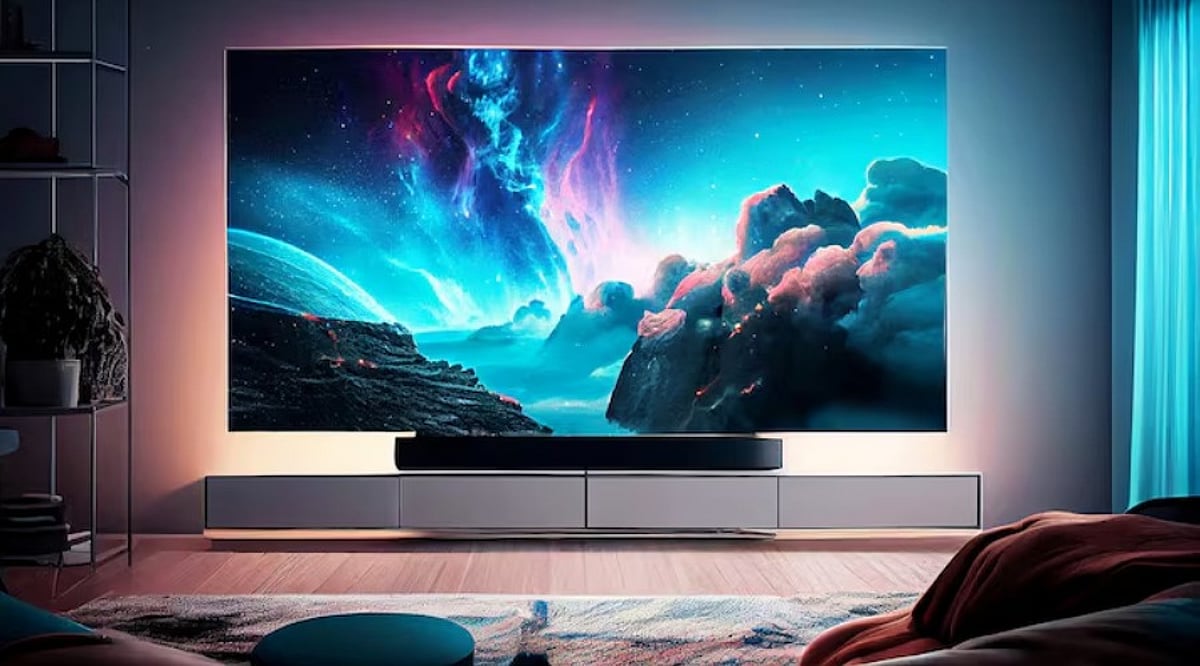
Television has quietly evolved from a passive screen into an intelligent hub that listens, learns, and adapts. By 2027, AI will be the core of how we interact with our TVs, moving beyond simple voice commands to truly conversational experiences. The global AI TV market, valued at USD 9.76 billion in 2026, is projected to grow at a compound annual rate of 17.2 percent through 2030, according to market research firm Accio. This growth reflects how deeply artificial intelligence is becoming woven into the everyday act of watching television.
1. Conversational AI Companions Replace Remote Controls
Voice control on TVs is no longer about shouting single commands. Samsung’s Vision AI platform already lets viewers ask contextual questions about on-screen content, pulling in tools like Microsoft Copilot and Perplexity for real-time answers. In 2027, TVs will act less like screens and more like conversational assistants that understand what show is playing and respond accordingly. Consumer Reports notes that chatbots built into TVs will increasingly replace traditional remote navigation, allowing viewers to simply talk to find what they want.
2. Personalized Content Discovery Gets Sharper
AI-driven recommendation engines are becoming far more accurate. By 2027, TVs will study viewing patterns more closely, factoring in mood, time of day, and even who else is in the room. This means recommendations will feel highly tailored, keeping viewers engaged longer and reducing endless menu scrolling. For streaming platforms, smarter recommendations are a key competitive advantage.
3. On-Device AI Processing Improves Privacy and Speed
A major shift is moving AI processing from the cloud to local chips inside the TV. This reduces lag time and gives users more control over their data, addressing privacy concerns tied to always-listening devices. Stronger system-on-chip hardware makes this possible, and 2027 models are expected to lean further into local processing for faster, more private interactions.
4. Smarter Picture and Sound Without Manual Tweaking
AI upscaling is already standard, letting 1080p signals look close to 4K. By 2027, AI will automatically adjust brightness, contrast, and sound profiles based on content type—whether it’s a sports match, a dark thriller, or a video call. Viewers will spend less time fiddling with settings as the TV handles optimization in the background.
5. The Bigger Picture: Why These Trends Matter
These trends reshape how people interact with home entertainment and how much data companies collect. For manufacturers, AI has become the main differentiator in a market where screen technology alone no longer sets brands apart. For viewers, it means TVs that feel more intuitive, respond faster, and adapt to individual habits without extensive setup. As 2027 approaches, AI in television is no longer an add-on feature but the foundation shaping how screens are designed, marketed, and used every day.
Leave a Reply