Category: Artificial Intelligence

  • UK Regulator Probes TikTok Over Child Safety and AI Shopping Video Concerns

    UK Regulator Probes TikTok Over Child Safety and AI Shopping Video Concerns

    Ofcom has launched a formal investigation into TikTok, questioning whether the platform’s age-checking systems adequately protect underage users. The regulator also faces pressure from brands and creators over AI-generated shopping videos that some say mislead consumers and erode trust.

    Ofcom Questions TikTok’s Child Age Checks

    Ofcom has expressed ‘serious doubts’ about TikTok’s ability to identify users under 18. The regulator believes the platform’s age inference system—which estimates age based on user activity—may fail to detect many children who provide false birth dates or bypass restrictions. Kate Davies, Ofcom’s group director for strategy and research, stated: “We have serious doubts about them, and so we have launched an investigation into TikTok.”

    The UK Online Safety Act requires platforms to use effective age checks when children may encounter harmful material. Ofcom will examine whether TikTok has taken suitable steps to identify young users and limit their access to restricted content. TikTok responded that it strictly enforces age-based experiences through platform rules and advanced technology, and remains confident it meets its duties under the act.

    TikTok Risks Major Financial Penalty

    If the investigation finds TikTok violated UK online safety rules, Ofcom can impose a fine of up to £18 million or 10% of TikTok’s qualifying worldwide revenue—whichever is higher. This follows broader regulatory action against platforms failing to protect children. Child safety groups, including the Molly Rose Foundation, have called for wider scrutiny of TikTok’s recommendation systems.

    AI Shopping Videos Raise Trust Concerns

    TikTok Shop faces separate criticism over AI-generated product videos using virtual models. Creators say these automated clips compete with genuine reviews from people who own and test products. Affiliate creator Rosemarie Soma described it as ‘very frustrating’ when AI videos receive advertising support and generate sales. SharkNinja has banned affiliates from using TikTok’s AI Video Maker to promote its products, warning that violators could lose commissions. Rare Beauty also distanced itself from AI-generated promotional content after an unauthorized affiliate posted such videos.

    TikTok Shop sales in the United States are expected to reach $23.41 billion this year, according to eMarketer, while its affiliate network has grown from 2.3 million creators in 2024 to 11.3 million in 2026, per Charm.io. This rapid expansion makes it harder for brands to control unauthorized AI product videos.

  • ViewSonic Unveils First ViewBoard with Built-in 48MP AI Camera for Seamless Hybrid Meetings and Classrooms

    ViewSonic Unveils First ViewBoard with Built-in 48MP AI Camera for Seamless Hybrid Meetings and Classrooms

    ViewSonic has announced the launch of its newest premium interactive display, the ViewBoard IN04V-N Series, marking the company’s first interactive display to feature an integrated 48MP AI camera. Designed to address the growing demand for streamlined hybrid collaboration, the display combines advanced AI capabilities with enterprise-grade performance to simplify communication in boardrooms, classrooms, and other collaborative environments.

    At the core of the ViewBoard IN04V-N is an intelligent imaging system that uses AI facial tracking to keep presenters naturally in focus. The display is equipped with an 8-microphone array, gesture recognition, and sound localization, enabling it to automatically follow speakers, capture voices accurately across the room, and support touch-free interactions. By integrating these features into a single device, ViewSonic eliminates the need for external cameras and audio peripherals, creating a more intuitive conferencing experience.

    “Video collaboration has become the foundation of modern communication, and organizations today need solutions that are intelligent, seamless, and ready from the moment a meeting begins,” said Muneer Ahmad, Vice President – Sales & Marketing, ViewSonic India. “With the ViewBoard IN04V-N, we are introducing our first interactive display with a built-in 48MP AI camera that eliminates the need for multiple peripherals while delivering exceptional video quality and intelligent tracking capabilities. Combined with powerful AI tools for collaboration and learning, the IN04V-N is designed to help businesses and educational institutions create smarter, more connected spaces.”

    The ViewBoard IN04V-N is available in 65-inch, 75-inch, and 86-inch screen sizes, and it enhances productivity through an advanced AI toolkit. The AI Text Recognition Pen instantly converts handwritten notes into editable digital text, while other AI-powered features include multilingual translation, text-to-speech functionality, and intuitive formatting tools such as text resizing, alignment controls, color customization, and shape editing. Users can also copy, duplicate, rearrange layers, lock or unlock objects, and delete content, enabling a more flexible collaborative workflow.

    The display introduces AI-assisted search and learning capabilities that enrich meetings and classroom sessions. Users can search recognized text directly on YouTube and Wikipedia, generate explanations and learning challenges for educational content, and use the Magical Pen to transform rough sketches into polished geometric shapes or convert simple drawings into detailed AI-generated visuals. The Shape Recognition feature automatically refines hand-drawn geometric figures into clean, professional-looking forms, making brainstorming sessions and presentations more engaging.

    Powered by Android 16 EDLA, the ViewBoard IN04V-N features a 4K Ultra HD display with an IR multi-touch frame, an RK3576 processor based on Arm Cortex-A72×4 and Cortex-A53×4 architecture, 8GB LPDDR5 RAM, and 128GB eMMC storage for responsive multitasking. Additional features include HDMI input supporting up to 3840 × 2160 at 60Hz, a Smart USB port compatible across all channels, 80-pin OPS support for 4K 60Hz display, integrated speakers, and NFC functionality for quick and secure access.

    With the launch of the ViewBoard IN04V-N Series, ViewSonic continues to expand its portfolio of AI-enabled visual solutions. The series will be available across India through ViewSonic’s authorized partners and enterprise sales network.

    About ViewSonic

    Founded in 1987 and headquartered in Brea, California, ViewSonic is a leading global provider of visual solutions for education, business, and consumer markets. The company delivers a unified ecosystem of innovative hardware, software, and services that integrate seamlessly with the platforms and tools customers trust. Its product portfolio includes monitors, projectors, interactive displays, LED displays, commercial displays, video conferencing systems, and industrial solutions. Complementing its hardware is a robust suite of software offerings, including myViewBoard, ClassSwift, TeamOne, Manager, and AirSync, featuring AI-powered tools for collaboration, device optimization, and management. Learn more at www.viewsonic.com.

  • How Digital Twins Are Transforming Manufacturing Operations

    How Digital Twins Are Transforming Manufacturing Operations

    Digital twins are revolutionizing the manufacturing industry by creating virtual replicas of physical assets, systems, and processes. These dynamic digital models use real-time sensor data to mirror the behavior of machines, production lines, and entire factories, enabling manufacturers to gain unprecedented visibility and control over their operations.

    Real-Time Production Monitoring

    Digital twins create virtual replicas of machines, production lines, and factories using live sensor data. Manufacturers can monitor equipment performance, identify bottlenecks, and track production in real time. This visibility helps managers make informed decisions, improve operational efficiency, reduce downtime, and maintain consistent production quality across manufacturing facilities.

    Predictive Maintenance

    By continuously analyzing equipment data, digital twins detect early signs of wear and potential failures before breakdowns occur. Manufacturers can schedule maintenance only when required instead of following fixed intervals. This approach minimizes unexpected downtime, extends machine lifespan, reduces maintenance costs, and ensures uninterrupted production with improved asset reliability.

    Faster Product Development

    Engineers use digital twins to simulate product designs and manufacturing processes before physical production begins. They can test different materials, identify design flaws, and optimize production methods virtually. This reduces prototype costs, shortens development cycles, accelerates innovation, and enables manufacturers to launch higher-quality products more quickly.

    Improved Quality Control

    Digital twins continuously compare real-time production data with expected performance standards. Any deviation is identified instantly, allowing manufacturers to correct defects before products reach customers. This proactive quality management reduces waste, improves product consistency, enhances customer satisfaction, and lowers the cost of rework and product recalls.

    Smarter Supply Chain Management

    Manufacturers use digital twins to model supply chains and simulate disruptions such as material shortages or transportation delays. These simulations help optimize inventory, improve logistics planning, and identify alternative sourcing strategies. Better visibility across the supply chain strengthens resilience, reduces costs, and ensures smoother production schedules.

    Energy Efficiency and Sustainability

    Digital twins monitor energy consumption across manufacturing operations and identify areas where electricity, water, or raw materials are being wasted. Manufacturers can test energy-saving strategies virtually before implementation. This leads to lower operating costs, reduced carbon emissions, improved resource utilization, and stronger progress toward sustainability goals.

    Better Workforce Safety and Training

    Digital twins simulate factory environments, allowing workers to practice operating equipment and responding to emergencies without real-world risks. Manufacturers can evaluate workplace safety, identify hazardous conditions, and improve training programs. These virtual environments reduce accidents, enhance employee confidence, strengthen compliance, and promote a safer manufacturing culture.

  • Daily Tech Roundup: Cognizant’s AI Hiring Push, OpenAI Codex Micro, Chip Stock Dip & Crypto Lows

    Daily Tech Roundup: Cognizant’s AI Hiring Push, OpenAI Codex Micro, Chip Stock Dip & Crypto Lows

    Good morning! Here is your quick scan of the latest developments in AI hiring, global markets, developer tools, startup funding, and cryptocurrency.

    What’s New Today

    Asian stocks fell after semiconductor stocks came under selling pressure, even as softer US inflation data helped bonds. Cognizant announced it will recruit 1,500 US graduates by 2026 to build its AI talent pool. Meanwhile, OpenAI launched Codex Micro, an AI-based macropad for developers.

    Fast-Track Insights

    The speed at which artificial intelligence produces code now exceeds the pace at which human engineers can review it, prompting startup Graphite to raise $15 million to automate code reviews. In the crypto space, nearly 40% of all altcoins are trading near their lows.

    Asian Shares Fall Despite Cooler US Inflation

    Asian shares edged lower due to declines in the tech and semiconductor sectors, while government bonds gained amid better-than-expected US inflation readings. Despite positive data, investor sentiment remains negative regarding the chip sector and the global economy. The next focus will be on earnings reports and monetary policy moves. Read More…

    Cognizant to Hire 1,500 US Graduates for AI Roles

    Cognizant has announced plans to hire 1,500 graduates across the USA by 2026. This initiative aims to augment the firm’s artificial intelligence capabilities and create a robust pipeline of AI talent. The move responds to increasing demand for AI professionals as companies intensify their use of AI technology. Read More…

    Graphite Raises $15 Million to Fix AI Code Review Bottleneck

    Graphite, co-founded by engineers from Dropbox and Palantir, has raised $15 million to address one of the biggest challenges in AI development: reviewing code written by AI. With coding assistants producing software at an unprecedented pace, Graphite’s platform helps developers automate the code review process. Read More…

    OpenAI Launches Codex Micro for Developers

    OpenAI has introduced Codex Micro, a programmable macro keyboard that gives developers access to AI-based coding utilities. This compact device allows users to assign hotkeys for prompts, automation, and programming, providing a more efficient workflow when developing with AI. Read More…

    40% of Altcoins Near Historic Lows: Buying Opportunity?

    According to the latest market analysis, nearly 40% of altcoins are currently trading around their historic lows due to continued selling pressure. Some market analysts believe this correction could present a buying opportunity if sentiment improves in the coming months. Read More…

    Join our WhatsApp Channel to get the latest news, exclusives, and videos on WhatsApp.

  • Landing AI: Empowering Enterprises with Agentic AI and Computer Vision Solutions

    Landing AI: Empowering Enterprises with Agentic AI and Computer Vision Solutions

    Landing AI, founded in 2017 by AI pioneer Andrew Ng, is a leading company specializing in data-centric computer vision and AI-powered document extraction. The firm enables organizations to build, deploy, and scale AI models efficiently, with a strong focus on manufacturing and complex unstructured document workflows through agentic document extraction.

    About the Company

    Landing AI develops artificial intelligence software that transforms large volumes of visual and document data into actionable insights. By leveraging data-centric AI and computer vision technologies, the company helps enterprises implement AI systems across multiple industrial sectors, including manufacturing, healthcare, and logistics. Its main platforms—LandingLens and Agentic Document Extraction (ADE)—allow users to build AI models with minimal programming, converting difficult visual data and unstructured documents into organized, structured data.

    Products and Services

    Landing AI offers two core platforms: LandingLens for building computer vision systems and Agentic Document Extraction (ADE) for extracting structured data from documents. These tools enable organizations to automate analytics and enterprise workflows using data-centric artificial intelligence. The company also provides API access, consulting services, and strategic partnerships to support deployment.

    Leadership

    Under the leadership of founder Andrew Ng, a renowned figure in AI, Landing AI has assembled a team of experts driving innovation in computer vision and document automation. The company’s leadership focuses on practical, scalable AI solutions for real-world enterprise challenges.

    Revenue Streams

    Landing AI generates revenue through subscriptions to its LandingLens SaaS platform, enterprise AI solutions, API access for agentic AI tools, strategic partnerships, and consulting services for deploying data-centric computer vision applications.

    Target Markets

    The company serves B2B clients across industries such as manufacturing, finance, healthcare, logistics, agriculture, and technology. Geographically, its solutions are adopted by organizations in North America, Europe, Asia-Pacific, and other global regions. Key client segments include enterprises looking to enhance their computer vision systems, document automation processes, and data extraction capabilities.

  • Understanding AI Appreciation Day: Origins, Impact, and Why It Matters

    Understanding AI Appreciation Day: Origins, Impact, and Why It Matters

    Every July 16, AI Appreciation Day offers a moment to reflect on how artificial intelligence is reshaping industries and everyday life. First observed in 2021, the day has grown from a niche awareness initiative into a globally recognized occasion, embraced by technology companies and enterprise leaders. This article explores the history, significance, and practical benefits of AI Appreciation Day, along with how organizations are marking it in 2026.

    What Is AI Appreciation Day?

    AI Appreciation Day is an annual observance held on July 16. It recognizes the growing role of AI in daily life and encourages open discussions about ethics, governance, and responsible adoption. Despite its name, the day is not a government or UN holiday; it originated as a commercial entry on the National Day Calendar.

    The Origin of AI Appreciation Day

    The observance traces back to 2021 and A.I. Heart LLC, founded by freelance advertising professional Jason Kirton. Kirton, who has stated he does not run an AI company, registered the day through a paid directory. Early coverage linked it to a film project called A.I. Eve, and some outlets dismissed it as a marketing stunt. However, by 2023–2024, journalists from Forbes and PC Gamer investigated the origins, and Kirton clarified his goal: to create a fixed moment for reflecting on AI ethics and regulation. He even spent time near SpaceX’s Starbase hoping to discuss AI regulation with Elon Musk. By 2025–2026, the day was increasingly adopted by technology companies, with C-suite leaders publishing statements to mark it.

    Significance of AI Appreciation Day

    The day’s significance has evolved from novelty to infrastructure. Leaders from various sectors emphasize different aspects:

    • Sumed Marwaha, Managing Director, AHEAD India, notes that AI creates the greatest impact when built on a modern technology foundation that enables confident innovation.
    • Badri Gomatam, Group CTO at STL, highlights AI data centers as the backbone of the AI economy, stressing the rapid growth in demand for low-latency computing.
    • Vivek Ganesh, Regional Vice President, OutSystems India, warns that speed without visibility is exposure, citing research that Indian organizations embrace AI faster while accepting higher identity-related risks.
    • Marshal Correia, General Manager for India and South Asia at SUSE, calls for resilient and sovereign AI ecosystems, noting that a regulatory decision elsewhere should not shut down operations overnight.

    Benefits of AI Appreciation Day

    The day’s value lies less in celebration and more in what it prompts organizations to do:

    • Builds public awareness – gives people outside the AI field a reason to understand how the technology touches finance, healthcare, and daily operations.
    • Opens governance conversations – leaders publish plain-language positions on identity risk, data sovereignty, and responsible deployment.
    • Recognizes the people building the systems – from researchers to engineers to founders shaping enterprise AI policy.
    • Brings diverse sectors together – crypto, healthcare, and infrastructure join a single conversation.

    Industry voices also highlight practical benefits: Nischal Shetty of WazirX describes AI as an always-on research assistant for traders; Masaharu Morita of NURA points to earlier, more accurate diagnoses in healthcare; Ish Thukral of Neo4j emphasizes that better-connected data, not larger models, reduces errors and builds trust.

    How Organizations Are Observing It

    Companies mark the day less with celebration and more with candid assessment. Some publish plain-language explanations of how they use AI. Others run internal panels on identity risk and sovereignty. A growing number use the data to publish infrastructure commitments, shifting the focus from what AI can do to who controls the systems running it.

    Why It Matters

    AI is changing industries faster than most people expected. AI Appreciation Day gives everyone a chance to step back—not just to celebrate technology, but to think about what it really means for society. It builds awareness, pushes for responsible development, and gets people talking honestly about where AI is headed.

    Final Thoughts

    AI Appreciation Day may never earn formal government recognition, and its commercial origin will keep inviting skepticism. But its 2026 edition points to something sturdier taking shape. Enterprise leaders are choosing this date to say publicly what once stayed in boardrooms: that AI’s next chapter rests less on model breakthroughs and more on the foundations built beneath them.

  • Why MCP Is Becoming the Go-To Standard for AI Agent Connectivity

    Why MCP Is Becoming the Go-To Standard for AI Agent Connectivity

    AI agents are only as powerful as the systems they can reach. A model that reasons well but cannot connect to your database, ticketing queue, or internal documents is just a chatbot with ambition. That gap is exactly what the Model Context Protocol (MCP) was built to close. As AI agents need to interact with more tools, MCP is proving itself the natural foundation for reliable, scalable connections. Here are the seven key reasons driving its adoption.

    1. It Kills the Integration Sprawl

    Before MCP, each agent-to-tool connection required a custom integration. Ten tools and three agent frameworks meant thirty separate connectors, each with its own authentication, error handling, and maintenance burden. Every connector broke in its own way, and every fix lived in a different codebase. MCP replaces that with a single protocol: build one MCP server for your tool, and any compliant agent can use it. The math changes from N times M integrations to N plus M — the difference between a weekend project and a standing engineering team.

    2. Tools Become Plug-and-Play

    An agent does not need to be rebuilt when you add a new capability. Connect a database server, a chat server, or a file-system server, and the agent discovers the available tools at runtime. Because tool definitions travel with the server rather than living inside the agent’s code, swapping or upgrading a tool never touches the agent itself. This works for creative tooling as well as infrastructure — for example, an image generation platform can expose its rendering pipeline through an MCP server, letting any agent generate visuals as one step in a larger workflow. The agent stays generic while the capabilities stay modular, and that separation is the whole point.

    3. Context Stops Being Stale

    Most agent failures trace back to missing or outdated context. A support agent working from a six-month-old knowledge dump gives six-month-old answers. MCP servers expose live data instead: current inventory, open tickets, the actual state of a codebase — whatever the agent needs to reason over what is true right now rather than what was true at training time. For anything operational, that difference is the whole ballgame. It also changes how teams think about knowledge management, since the source of truth stays in the source system instead of being copied into prompts.

    4. It Is Model-Agnostic by Design

    Teams do not want their tool layer welded to one vendor. An MCP server works with any client that speaks the protocol, and support now spans the major agent frameworks and coding environments. If you switch models next quarter, your integration layer survives the move without a rewrite. That portability alone justifies the setup cost for most engineering teams. It also lowers the risk of experimenting, because trying a different model no longer means rebuilding your connections from scratch.

    5. The Ecosystem Hit Critical Mass

    Standards win on adoption, not elegance. There are now thousands of community and vendor-built MCP servers covering everything from version control and cloud storage to niche internal tooling. Official SDKs exist in Python, TypeScript, and other major languages, which keeps the barrier to building your own server low. When the connector you need probably already exists, building on the protocol becomes the default choice rather than a bet. Momentum feeds itself: more servers attract more agent builders, and more agent builders create demand for more servers.

    6. Security Gets a Defined Shape

    Ad-hoc integrations tend to smear credentials across scripts and environment files. Nobody can audit that, and nobody wants to own it. MCP gives permissions a boundary. Each server declares what it exposes, clients can require human approval before sensitive actions run, and access can be scoped per server rather than granted wholesale. It does not solve agent security entirely — prompt injection remains a real concern — but it gives teams a consistent place to enforce controls instead of fifty inconsistent ones, and consistency is what makes security reviewable.

    7. It Unlocks Multi-Tool Workflows

    Real work crosses systems. Pulling a bug report from your tracker, checking the related code, and posting a summary to your team chat is one workflow, not three. Because every tool speaks the same protocol, an agent can chain these steps without custom glue code between each hop. The output of one tool becomes the input of the next, and the agent handles the routing. That is where agents stop being demos and start handling end-to-end tasks. It is also the strongest signal that MCP is not a passing convention but the connective layer the agent ecosystem was missing.

    What This Means If You Are Building Agents Now

    The practical takeaway is simple. Treat the protocol as your default interface for anything an agent needs to touch, and only build custom when a server genuinely does not exist. Start with one or two servers that cover your highest-friction workflow — usually your data store and your task tracker. Get the permission scoping right before you expand, because retrofitting access controls across a dozen servers is painful. Then add capabilities one server at a time, letting the agent’s tool list grow with your needs. Teams that follow this order tend to ship working agents in weeks rather than quarters.

    MCP won because it solved a boring problem well. Agents needed a universal port to the outside world. Once one existed, everything else compounded around it: tooling, security patterns, and ecosystem momentum. The standard is not winning because it is clever. It is winning because every alternative means maintaining a pile of one-off connectors that nobody wants to touch twice.

  • Tesla Optimus Robot: 10 Impressive Capabilities Already Demonstrated

    Tesla Optimus Robot: 10 Impressive Capabilities Already Demonstrated

    Tesla’s humanoid robot, Optimus, has already demonstrated a wide range of practical skills, from walking independently to assisting with household chores. Here are 10 things Tesla Optimus can already do, showcasing its rapid progress in robotics and artificial intelligence.

    • Walk Independently: Optimus can walk steadily across different surfaces using advanced balance systems and AI-powered movement coordination for stable navigation.
    • Carry Objects: The robot lifts, carries, and transports everyday items carefully, demonstrating practical usefulness in warehouses, factories, and future household environments.
    • Sort Items: Optimus identifies, categorizes, and organizes objects using computer vision, making repetitive industrial and logistics tasks more efficient and accurate.
    • Perform Factory Tasks: Tesla designed Optimus to handle repetitive manufacturing jobs, reducing human workload while increasing productivity across production facilities and assembly lines.
    • Climb Small Steps: The robot navigates slight elevation changes and steps with improved stability, expanding mobility across real-world indoor environments effectively.
    • Use Human-Like Hands: Advanced robotic hands grip delicate and heavy objects precisely, enabling versatile performance in numerous practical everyday applications.
    • Respond to Voice Commands: AI-powered speech recognition allows Optimus to understand instructions and complete assigned tasks through natural voice interactions efficiently.
    • Learn Through AI Training: Optimus continuously improves movement and task performance using artificial intelligence models trained on real-world human demonstrations and experiences.
    • Assist with Household Chores: Tesla envisions Optimus helping with cleaning, organizing, carrying groceries, and other repetitive household responsibilities in the near future.

    These capabilities mark significant strides toward a versatile, general-purpose robot that could transform industries and daily life. Stay tuned for more updates on Tesla Optimus.

  • Report: YouTube and X Fuel Surge in AI Deepfake Nudify App Discoveries

    Report: YouTube and X Fuel Surge in AI Deepfake Nudify App Discoveries

    Finding AI nudify apps online may be easier than many people think. A new study claims that social media platforms, especially YouTube and X (formerly Twitter), are helping users discover websites that offer these harmful tools. The research, conducted by The Institute for Strategic Dialogue (ISD), reveals that this occurs despite most major platforms having rules against abusive and non-consensual explicit content.

    According to the report, many nudify websites receive millions of visits. Between December 2025 and March 2026, social media accounted for 5.7 million visits to these sites. YouTube sends the largest share—over 1.82 million visits, representing nearly 30% of all social media traffic. X follows with about 20%, contributing more than 1.3 million visits. Reddit, Facebook, Instagram, and other platforms also send users to these sites, but in much smaller numbers.

    The study highlights how videos, posts, and shared links are often used to direct people to AI nudify services. It also puts a spotlight on content moderation gaps. YouTube states it removes content promoting harmful or illegal activity and prohibits explicit material. X also claims it does not allow non-consensual intimate content. However, researchers found that posts linking to these websites remain available in many cases.

    Facebook and Instagram have announced policies against deepfake abuse and AI-generated explicit content, but the report suggests a gap between rules and what users actually see. Some posts stay online until reported, while others are taken down only to reappear quickly. The study concludes that current moderation systems are struggling to keep pace with the spread of AI tools, emphasizing the need for faster and more effective action by platforms to prevent harmful content from reaching wider audiences.

  • Google Adds Three Gemini-Powered Features to Gmail: AI Inbox, Overviews, and Enhanced Help Me Write

    Google Adds Three Gemini-Powered Features to Gmail: AI Inbox, Overviews, and Enhanced Help Me Write

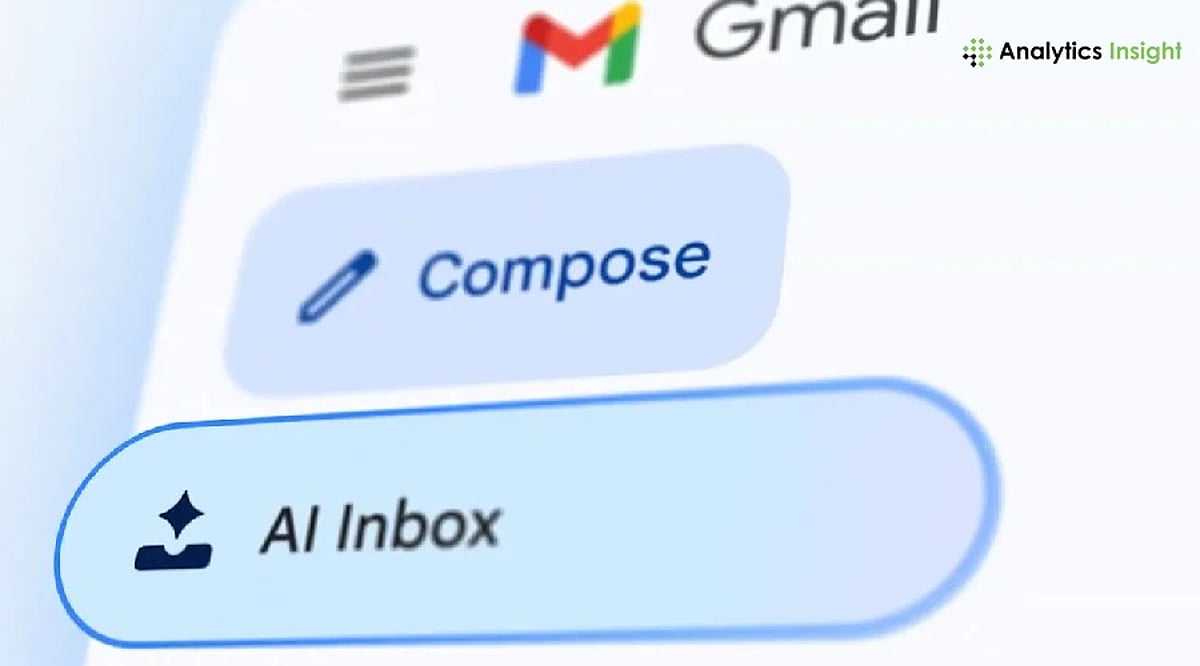
    Google has expanded Gmail’s AI capabilities with three new features powered by its Gemini AI model: AI Inbox, AI Overviews, and an upgraded Help Me Write tool. These features are designed to help users organize their inboxes, quickly find important information, and draft emails with less effort. The rollout applies to Google AI Pro, AI Ultra, and eligible Google Workspace subscribers.

    AI Inbox Highlights What Needs Attention

    The new AI Inbox changes how Gmail displays emails. Instead of listing messages in chronological order, it highlights those that require immediate attention. A Proposed To-Dos list helps users locate emails that need action, such as responding to requests or paying bills. Another section, Topics to Catch Up On, groups related emails together with an overview. This function operates only on emails in the Primary folder, not spam or other folders.

    Help Me Write Speeds Up Email Drafting

    Google has also enhanced Help Me Write, allowing users to generate an email draft by entering a simple prompt. The tool can rewrite the draft based on user preferences—making it shorter, more formal, more detailed, or easier to understand—before sending. The final draft remains editable, giving users complete control over the message.

    AI Overviews Summarize Long Conversations

    Another addition is AI Overviews, which condenses lengthy email threads into short summaries. Users can also ask Gmail questions about emails in their inbox using natural language. Instead of searching through multiple conversations, the feature pulls together relevant information and presents it in a concise format.

    Part of Google’s Gemini Expansion

    The latest Gmail update is part of Google’s wider effort to integrate Gemini across Workspace applications. The company says the new tools aim to reduce the time users spend managing emails while making it easier to stay on top of conversations. Google recommends reviewing AI-generated drafts and summaries before using them, especially for important or professional communication.