
Category: Technology

  • 10 Must-Have AI Tools for Modern Product Managers

    10 Must-Have AI Tools for Modern Product Managers

    Product managers juggle customer feedback, roadmap planning, cross-functional communication, and progress tracking. AI-powered tools can automate repetitive tasks like documentation and meeting follow-ups, freeing PMs to focus on strategic decisions. This guide compares ten leading AI tools for product management, highlighting their strengths, pricing, and best-use scenarios.

    Top AI Tools for Product Managers

    1. Luna AI

    Best For: Roadmap Execution Visibility

    Luna AI offers transparent tracking of project progress, roadmaps, and delivery risk. Teams can monitor milestones and blockers and update stakeholders with minimal manual effort.

    • AI-powered roadmap tracking
    • Goal and OKR monitoring
    • Jira risk alerts
    • Priority management
    • Workflow automation

    Ideal for product teams focused on execution and delivery.

    2. DevRev

    Best For: Customer Feedback Intelligence

    DevRev bridges customer support with engineering and product teams. AI summarizes conversations, organizes issues, and improves cross-departmental collaboration.

    • AI-generated support summaries
    • Shared customer history
    • Smart ticket routing
    • Product and engineering collaboration
    • Feedback intelligence

    Ideal for teams handling large volumes of customer feedback.

    3. Zeda.io

    Best For: Voice-of-Customer Prioritization

    Zeda.io collects customer feedback from multiple sources and converts it into product priorities. AI identifies trends and groups similar requests automatically.

    • AI feedback summaries
    • Trend detection
    • Auto-tagging
    • Product documentation
    • Goal alignment

    Ideal for teams building products around customer insights.

    4. Canny

    Best For: Feedback-Driven Roadmaps

    Canny simplifies feature request management with AI-powered organization and categorization. Sales, support, and customer success teams can submit feedback directly into roadmap planning.

    • Feature request management
    • AI feedback grouping
    • Public roadmap
    • Customer voting
    • Changelog management

    Ideal for companies with active customer communities.

    5. Productboard

    Best For: Customer-Driven Roadmaps

    Productboard centralizes customer feedback from various channels and links insights to roadmap planning. AI supports categorization and feature planning.

    • Customer feedback management
    • Feature prioritization
    • Insight organization
    • Product briefs
    • Roadmap planning

    Ideal for product organizations focused on customer-led development.

    6. Jira Product Discovery

    Best For: Evidence-Based Prioritization

    Jira Product Discovery helps teams organize ideas before development begins. AI summarizes customer insights and prepares product ideas for prioritization.

    • AI-generated summaries
    • Customer insight organization
    • Product idea management
    • Stakeholder collaboration
    • Jira integration

    Ideal for teams already using the Atlassian ecosystem.

    7. Airfocus by Lucid

    Best For: Strategic Roadmap Planning

    Airfocus uses scoring models and roadmap planning tools for structured prioritization. AI assists with evaluating product opportunities and planning releases.

    • Prioritization frameworks
    • Trade-off analysis
    • Roadmap intelligence
    • Delivery tracking
    • Development tool integrations

    Ideal for teams managing complex product portfolios.

    8. Craft.io

    Best For: End-to-End Product Strategy

    Craft.io combines product strategy, roadmapping, backlog management, and release planning. AI supports documentation and planning.

    • Product strategy management
    • Epic analysis
    • Release planning
    • AI documentation
    • Engineering integrations

    Ideal for teams managing the complete product lifecycle.

    9. Miro

    Best For: Collaborative Product Planning

    Miro enables brainstorming, workshops, and visual collaboration. AI organizes ideas into structured plans for product teams.

    • AI brainstorming
    • Sticky note clustering
    • Diagram creation
    • Workflow generation
    • Team collaboration

    Ideal for remote and cross-functional product teams.

    10. Aha!

    Best For: Enterprise Product Planning

    Aha! provides AI-driven research analysis, roadmap planning, and documentation for large organizations.

    • Research synthesis
    • Idea clustering
    • AI writing assistant
    • Roadmap automation
    • Enterprise reporting

    Ideal for large product organizations with multiple stakeholders.

    How to Choose the Right AI Tool

    Selecting the best tool begins with identifying your biggest productivity bottleneck. Consider these factors:

    • Identify the workflow that consumes the most time.
    • Review AI features that solve that challenge.
    • Check integrations with existing tools.
    • Evaluate pricing and scalability.
    • Test usability during the trial period.
    • Measure productivity improvements within the first month.

    Best Practices for Product Managers

    AI delivers the most value when it supports routine tasks while humans make strategic decisions. Apply these practices:

    • Select tools based on business needs.
    • Validate AI-generated recommendations.
    • Keep customer context at the center.
    • Connect AI platforms with existing workflows.
    • Track measurable productivity gains.
    • Review outputs before sharing with stakeholders.

    Will AI Replace Product Managers?

    AI excels at documentation, research, prioritization, and communication. However, product management still requires business acumen, customer empathy, market knowledge, and leadership. Great PMs use AI to make decisions more efficiently while leveraging their unique human skills to solve problems and create excellent products.

    Final Thoughts

    Modern product management increasingly relies on AI. The right platform improves client feedback handling, streamlines planning, boosts team collaboration, and reduces administrative overhead. Choosing a tool that fits your specific workflow often yields better results than a one-size-fits-all solution. Product managers who embrace AI will deliver products with greater customer impact.
  • Top External SSDs for Creative Professionals: Fast, Rugged, and Reliable Storage

    Top External SSDs for Creative Professionals: Fast, Rugged, and Reliable Storage

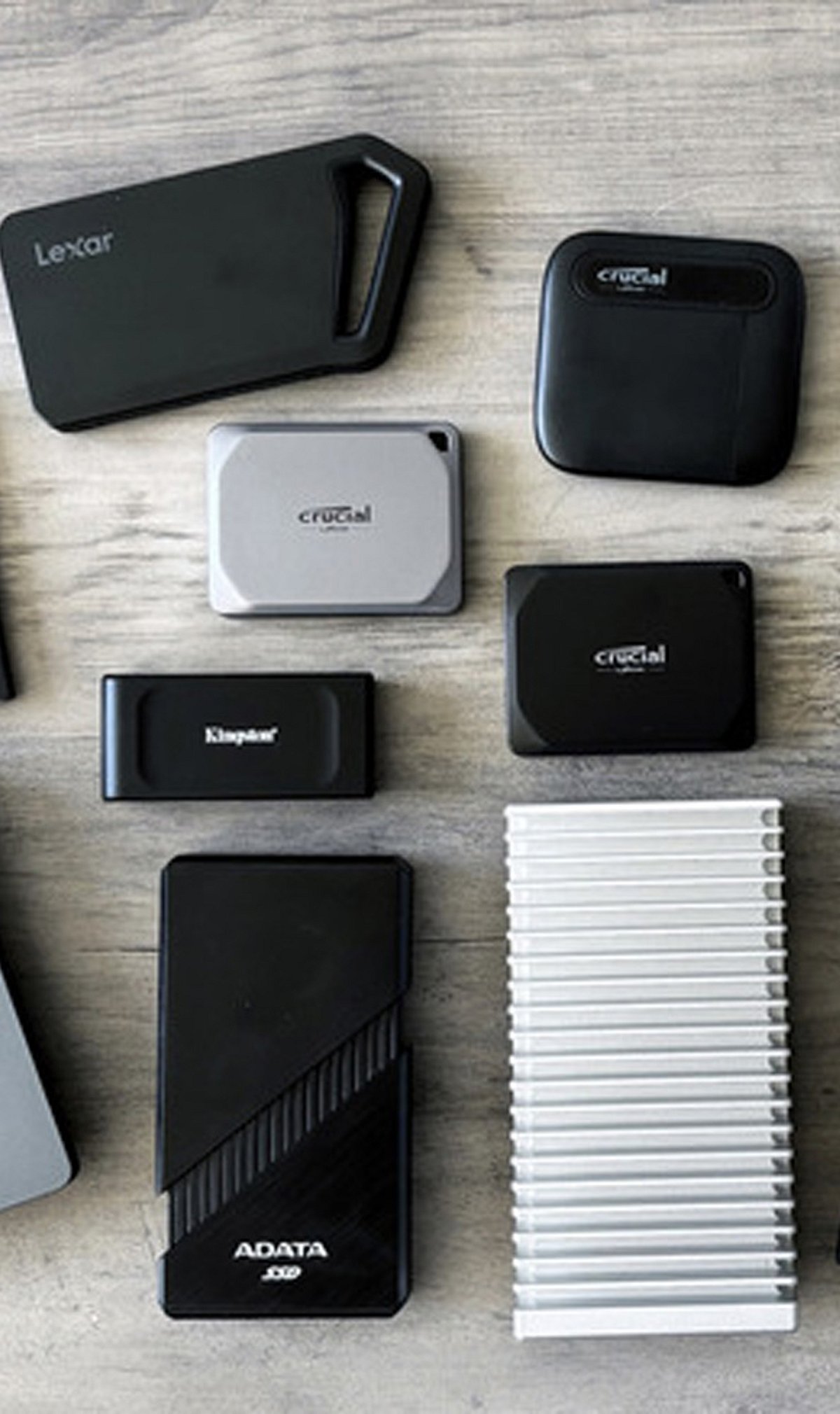
    Creative professionals—photographers, videographers, graphic designers, and content creators—demand storage that keeps pace with their workflows. External SSDs offer blazing-fast transfer speeds, rugged durability, and ample capacity for large media files. Here are the best external SSDs for creators in 2025.

    Samsung Portable SSD T9

    The Samsung T9 delivers ultra-fast transfer speeds, durable build quality, broad compatibility, and reliable performance. It provides ample storage for professional creative workflows and backups, making it a top choice for creators who need speed and dependability.

    SanDisk Extreme PRO Portable SSD

    With exceptional read and write speeds, rugged durability, and IP-rated protection, the SanDisk Extreme PRO is a dependable storage solution for photographers, videographers, and content creators everywhere. Its compact design fits easily in a camera bag.

    Crucial X10 Pro

    The Crucial X10 Pro combines impressive performance with compact portability. It makes large file transfers, video editing, creative projects, and backups faster and more efficient for daily use. A great balance of speed and size.

    Kingston XS2000 Portable SSD

    Featuring high-speed performance in a pocket-sized design, the Kingston XS2000 delivers reliable storage, strong compatibility, and excellent value for creative professionals on the move. It’s perfect for creators who need to carry their work everywhere.

    WD_BLACK P50 Game Drive SSD

    While marketed for gaming, the WD_BLACK P50 provides blazing-fast storage performance suitable for creators handling large media files, intensive editing projects, gaming content, and high-resolution video production workloads. Its speed and capacity make it a versatile tool.

    Seagate One Touch SSD

    The Seagate One Touch SSD offers reliable performance, lightweight portability, fast file transfers, and convenient backup capabilities. It’s suitable for everyday creative tasks and workflows, especially for those who prioritize simplicity and ease of use.

    Lexar SL600 Portable SSD

    Designed for demanding creators, the Lexar SL600 delivers high-speed performance, durable construction, efficient thermal management, and dependable storage for large multimedia projects. It handles intensive workloads without overheating.

    ADATA SE920 External SSD

    With USB4 connectivity, the ADATA SE920 offers outstanding transfer speeds, an active cooling design, premium performance, and reliable storage for professional creative applications and editing. It’s one of the fastest drives on the market.

    LaCie Rugged SSD Pro5

    Built for professionals who require durability in challenging environments, the LaCie Rugged SSD Pro5 combines Thunderbolt performance, rugged protection, and reliable storage. It enables fast workflows even in extreme production conditions worldwide.

    Whether you’re editing 8K video, backing up massive photo libraries, or working on complex design projects, these external SSDs offer the speed, durability, and capacity creators need. Choose the one that best fits your workflow and budget.

  • Top AI-Powered HR SaaS Platforms Revolutionizing Workforce Management

    Top AI-Powered HR SaaS Platforms Revolutionizing Workforce Management

    Artificial intelligence is transforming human resources, enabling organizations to streamline hiring, payroll, performance management, and workforce planning. Below are the leading AI-powered HR SaaS platforms that help businesses of all sizes optimize their HR operations.

    Workday

    Workday delivers AI-driven workforce planning, talent management, payroll automation, predictive analytics, and enterprise-grade HR solutions for growing organizations globally.

    BambooHR

    BambooHR simplifies employee management with AI-assisted hiring, onboarding, performance tracking, time-off management, and insightful workforce analytics for businesses everywhere.

    Rippling

    Rippling combines HR, IT, and payroll automation with AI-powered workflows, seamless integrations, compliance tools, and efficient employee lifecycle management capabilities.

    Deel

    Deel enables global hiring with AI-assisted payroll, compliance management, contractor payments, localized employment support, and streamlined international workforce administration processes.

    UKG Pro

    UKG Pro provides intelligent workforce management through AI scheduling, payroll processing, talent optimization, employee engagement, and predictive workforce insights for enterprises.

    SAP SuccessFactors

    SAP SuccessFactors offers AI-enhanced recruiting, learning, performance management, workforce planning, and personalized employee experiences across global organizations with scalability.

    Oracle HCM Cloud

    Oracle HCM Cloud empowers businesses through AI-driven talent acquisition, HR automation, workforce analytics, payroll integration, and comprehensive human capital management solutions.

    HiBob

    HiBob enhances modern HR operations using AI-powered engagement tools, performance tracking, onboarding automation, and workforce analytics for dynamic growing organizations.

    Zoho People

    Zoho People streamlines HR processes with AI-enabled attendance, leave management, employee self-service, performance reviews, and customizable workforce management tools efficiently.

  • Meta Challenges $1.4 Trillion Penalty Demand in Youth Safety Lawsuit Over Facebook and Instagram

    Meta Challenges $1.4 Trillion Penalty Demand in Youth Safety Lawsuit Over Facebook and Instagram

    Meta has disclosed that four U.S. states are seeking approximately $1.4 trillion in penalties in a youth safety lawsuit targeting Facebook and Instagram. The company revealed the figure in a court filing on Monday, ahead of a trial scheduled for August in Oakland, California.

    The case involves California, Colorado, Kentucky, and New Jersey, which accuse Meta of designing its platforms to maximize engagement among young users and of misleading the public about safety measures. Meta has denied these allegations and questioned the penalty demand, calling it unprecedented.

    Meta Questions $1.4 Trillion Penalty Claim

    According to Meta, the proposed penalty figure emerged from filings by the attorneys general outlining how penalties should be calculated if the states prevail at trial. The company noted that the amount is close to its market value and argued that the states have not provided evidence to support such a sum.

    In its filing, Meta stated, “A sanction of that size has no analog in the history of consumer protection enforcement.” The company also asserted that the figure lacks a proper legal basis under the facts of the case.

    The states’ filings are sealed, but they explained part of their methodology at a June court hearing. They indicated that they calculated the number of alleged violations and multiplied that by fine amounts permitted under state consumer laws. The violations were based on estimates of teens and young users allegedly affected by Meta’s conduct. Representatives for the attorneys general did not immediately comment after Meta disclosed the figure.

    Facebook and Instagram Face Youth Safety Trial

    The August trial will take place before U.S. District Judge Yvonne Gonzalez Rogers. It will cover claims under the federal Children’s Online Privacy Protection Act (COPPA) as well as consumer protection claims from the four states.

    Twenty-nine states have sued Meta in federal court, with many alleging that the company collected data from children without proper parental consent. The four states also claim that Meta misled the public about whether Facebook and Instagram were safe for young users.

    Meta rejects this position. The company argues that the attorneys general have not shown that it misled users about platform addiction. It also contends that “social media addiction” is not an established psychiatric condition, so its statements about addiction cannot be false.

    Judge Rogers recently denied Meta’s request to cancel the trial, stating that factual disputes remain, including whether the platforms were addictive, whether Meta denied designing them that way, and whether the company partly directed the platforms at children.

    Meta Also Faces WhatsApp Scrutiny in India

    Separately, Meta is facing a regulatory issue in India over a new WhatsApp usernames feature. The feature would allow users to chat without sharing phone numbers. India’s Ministry of Electronics and Information Technology has asked Meta to pause the rollout and explain its safety controls.

    Officials have raised concerns that usernames could be used for spoofing or fraud, with scammers potentially copying names linked to real people, government offices, or trusted organizations. Meta has until July 9 to send a detailed response.

    WhatsApp has defended the feature, stating that usernames will be optional and that users will not be searchable only through a username. The company also says users will see safety information before replying to unknown accounts, including the sender’s country and whether the account is new.

    Also read: ChatGPT Lawsuit Claims OpenAI Secretly Shared Private User Chats with Meta and Google

  • Nintendo to Discontinue Original Switch, Lite, and OLED Models in Europe by Early 2027

    Nintendo to Discontinue Original Switch, Lite, and OLED Models in Europe by Early 2027

    Nintendo has announced that it will phase out production of the original Nintendo Switch, Switch Lite, and Switch OLED models for European retailers starting in mid-February 2027. The move brings an end to a hardware lineup that has defined the company for nearly a decade and sold over 155 million units by December 2025.

    Why Nintendo is Pulling the Plug

    Contrary to speculation, the discontinuation is not due to declining sales—the Switch lineup remains Nintendo’s most successful hardware line, surpassing even the Nintendo DS. Instead, the trigger is European Regulation 2023/1542, which mandates that consumer electronics sold in the EU must include user-replaceable batteries starting February 18, 2027. The original Switch, Lite, and OLED all use sealed, non-replaceable batteries. Rather than redesigning decade-old hardware, Nintendo has chosen to exit the European market for these devices.

    How the Switch 2 Adapts

    Instead of retrofitting older consoles, Nintendo is redesigning the newer Switch 2 to comply with the regulation. A European-market version with a “BEE” model number prefix is expected this autumn, featuring a user-replaceable battery rated at 5,172 mAh—slightly smaller than the standard 5,220 mAh unit and marginally heavier at around 411g. Updated Joy-Con 2 controllers with replaceable batteries are planned for winter, with a small weight increase and no change in battery capacity. However, not all accessories will receive this treatment; the original Switch Pro Controller and some retro-style controllers will be discontinued outright.

    What This Means for Shoppers and Existing Owners

    Nintendo has confirmed that all three original consoles will continue to be manufactured through 2026 and remain widely available across Europe for the rest of the year, giving shoppers a real window to purchase before the cutoff. Existing owners will not be left behind: games, accessories, the Nintendo eShop, and Nintendo Switch Online will continue to work “for the foreseeable future.” Notably, Nintendo has not announced similar discontinuation plans for the US or Japan, describing those markets as “currently unknown.”

    This European transition underscores the growing impact of sustainability and repairability regulations on consumer electronics—and Nintendo’s strategic pivot to a newer, more compliant hardware generation.

  • Getting Started with Apple Intelligence on iPhone and Mac: A Step-by-Step Guide

    Getting Started with Apple Intelligence on iPhone and Mac: A Step-by-Step Guide

    Apple Intelligence brings powerful AI capabilities directly to your iPhone and Mac. This guide shows you how to enable it and make the most of its smartest features every day.

    Check Device Compatibility

    Apple Intelligence works on supported iPhone, iPad, and Mac models powered by Apple Silicon or the latest A-series chips. Make sure your device is compatible before proceeding.

    Update to the Latest Software

    Install the most recent version of iOS, iPadOS, or macOS to access all Apple Intelligence features. Updates often include new AI tools and improvements.

    Turn On Apple Intelligence

    Open Settings, go to Apple Intelligence, and enable AI-powered features after completing the setup process. Once activated, the system will start learning your preferences.

    Use Smarter Writing Tools

    Rewrite emails, summarize notes, proofread documents, and generate text directly inside supported apps. These tools help you communicate more effectively and save time.

    Experience the New Siri

    The upgraded Siri offers more natural conversations, deeper app control, and contextual assistance across your devices. Ask complex questions or perform multi-step tasks effortlessly.

    Create Images With Image Playground

    Generate fun illustrations, custom visuals, and creative artwork using Apple’s built-in AI tools. Perfect for adding a personal touch to messages, documents, and projects.

    Organize Notifications

    Apple Intelligence automatically prioritizes important alerts, summarizes messages, and reduces notification clutter. Stay focused on what matters most.

    Boost Productivity

    Summarize webpages, organize notes, create reminders, and speed up daily tasks with AI assistance. Let Apple Intelligence handle routine work so you can focus on what’s important.

  • 7 Google Chrome Habits That Are Slowing Down Your PC — and How to Fix Them

    7 Google Chrome Habits That Are Slowing Down Your PC — and How to Fix Them

    Google Chrome is one of the world’s most popular web browsers, but certain everyday habits can make it consume more memory and slow down your computer. From keeping too many tabs open to ignoring browser updates, these common mistakes can hurt your PC’s performance. Here are seven Chrome habits to avoid if you want faster browsing and a smoother computing experience.

    1. Keeping Too Many Tabs Open

    Opening dozens of Chrome tabs at once is one of the biggest reasons PCs slow down. Every tab uses RAM, even when you’re not actively viewing it. Over time, this can make your browser lag, increase loading times, and reduce your computer’s overall performance. Close unused tabs or enable Chrome’s Memory Saver feature.

    2. Installing Too Many Extensions

    Chrome extensions add useful features, but having too many can drain your system resources. Many extensions continue running in the background, consuming memory and processor power. Review your installed extensions regularly and remove those you rarely use to keep Chrome running smoothly.

    3. Never Clearing Cache and Cookies

    Cache and cookies help websites load faster, but they can build up over time and slow down your browser. A large amount of stored browsing data may also cause website glitches and performance issues. Clearing your browser data every few weeks helps Chrome stay responsive and efficient.

    4. Using an Outdated Version of Chrome

    Ignoring Chrome updates can hurt both speed and security. Google frequently releases updates that fix bugs, improve performance, and patch security vulnerabilities. Running the latest version ensures you get the best browsing experience while protecting your PC from known threats.

    5. Letting Chrome Run in the Background

    Even after closing Chrome, some background apps and processes may continue running. These hidden tasks consume RAM and CPU resources, affecting your PC’s speed. Disable background apps in Chrome’s settings if you don’t need them running after you exit the browser.

    6. Ignoring Malware and Harmful Software

    Malicious extensions, adware, or unwanted software can significantly slow Chrome and your computer. They may also display unwanted ads or redirect your searches. Use Chrome’s Safety Check and a trusted antivirus program to scan for threats and remove harmful software regularly.

    7. Not Using Chrome’s Built-In Performance Tools

    Many users overlook Chrome’s built-in features like Memory Saver and Energy Saver. These tools reduce resource usage by putting inactive tabs to sleep and optimizing power consumption. Enabling them can improve browsing speed, especially on older PCs or laptops with limited hardware.

    Small changes in how you use Chrome can lead to big performance gains. Start implementing these tips today for a faster, more efficient browsing experience.

  • Tech Roundup: Claude AI Revives Classic Game, Godrej on AI Future, Humanoid Robot IPO, Android Halo, and AI Chip Stocks

    Tech Roundup: Claude AI Revives Classic Game, Godrej on AI Future, Humanoid Robot IPO, Android Halo, and AI Chip Stocks

    In today’s top tech news, several major developments are shaping the industry. Anthropic’s Claude AI has been used to revive a classic video game, showcasing the potential of large language models in creative coding and game preservation. Meanwhile, Godrej, the Indian conglomerate, has shared its vision for the next phase of artificial intelligence, predicting increased integration into everyday business operations.

    On the robotics front, a humanoid robot company has announced plans for an initial public offering, signaling growing investor confidence in the sector. Additionally, Android Halo, a new mobile operating system feature, has debuted, promising enhanced user privacy and customization. Finally, AI chip stocks continue to exert pressure on the Nasdaq as semiconductor companies face fluctuating demand and regulatory scrutiny.

    These stories represent just a snapshot of the fast-moving technology landscape. Stay tuned for more updates as the week progresses.

  • Top SSD Upgrades to Give Your Old PC a New Lease on Life

    Top SSD Upgrades to Give Your Old PC a New Lease on Life

    Is your old PC feeling sluggish? One of the most impactful upgrades you can make is swapping out that aging hard disk drive (HDD) for a solid-state drive (SSD). Not only does it slash boot times and accelerate file access, but it also makes everyday computing feel snappy again. Below, we break down the best SSD upgrades that can transform your machine without breaking the bank.

    Replace Slow Hard Drives

    Replacing an old HDD with an SSD dramatically reduces boot times, accelerates file access, and makes everyday computing noticeably faster. It’s the single most effective performance upgrade for older systems.

    Choose SATA SSDs for Maximum Compatibility

    SATA SSDs fit most older desktops and laptops, offering excellent speed improvements without requiring expensive hardware upgrades or motherboard replacements. They are a drop-in solution for nearly any system with a standard SATA port.

    Upgrade to NVMe Where Supported

    If your PC has an M.2 NVMe slot, upgrading to an NVMe SSD unlocks significantly faster read and write speeds. This enhances multitasking, gaming, and productivity workloads, making your system feel modern again.

    Increase Storage Capacity

    Modern SSDs come in larger capacities than ever before. You can store more applications, media files, and games without sacrificing system performance or reliability. A high-capacity SSD means fewer worries about running out of space.

    Improve Boot and Shutdown Speeds

    SSDs enable operating systems to boot within seconds while reducing shutdown times. This creates a smoother and more efficient user experience, saving you precious time every day.

    Enhance Gaming Performance

    Faster storage decreases game loading times, speeds up level transitions, and minimizes texture-loading delays. Gamers will enjoy a more immersive experience with fewer interruptions.

    Boost Productivity Applications

    SSDs improve responsiveness in office software, creative applications, browsers, and multitasking. Completing tasks becomes more efficient, helping you get more done in less time.

    Reduce Power Consumption

    SSDs consume less energy than traditional hard drives, extending laptop battery life while producing less heat and operating almost silently. This is especially beneficial for mobile users.

    Extend the Life of Older PCs

    Installing a quality SSD is one of the most cost-effective upgrades you can make. It delays the need for expensive hardware replacements while delivering near-new system responsiveness. A simple upgrade can keep your trusted PC running for years to come.

  • Top 10 IoT Innovators Shaping 2026: Companies Driving Connected Technology Forward

    Top 10 IoT Innovators Shaping 2026: Companies Driving Connected Technology Forward

    The Internet of Things (IoT) continues to transform industries worldwide, and a handful of companies are leading the charge with cutting-edge hardware, software, and cloud platforms. Here are the top 10 IoT companies driving innovation in 2026.

    1. Cisco – Delivers enterprise-grade IoT networking, cybersecurity, and edge computing solutions that support secure digital transformation across multiple industries globally.
    2. Siemens – Leads industrial IoT with smart manufacturing, automation, predictive maintenance, and digital twin technologies for efficient factory operations worldwide.
    3. IBM – Combines AI, cloud computing, and IoT platforms to optimize asset management, predictive analytics, and enterprise decision-making across industries.
    4. Microsoft – Azure IoT services enable businesses to securely connect devices, analyze data, and automate operations using advanced cloud technologies efficiently.
    5. Amazon Web Services (AWS) – AWS IoT offers scalable cloud infrastructure connecting billions of devices while supporting analytics, machine learning, and industrial applications worldwide.
    6. Intel – Develops processors, edge AI solutions, and IoT hardware powering smart cities, manufacturing, healthcare, and connected infrastructure across diverse sectors.
    7. Bosch – Innovates through connected mobility, smart homes, industrial automation, and sensor technologies that improve efficiency, safety, and sustainability worldwide.
    8. Qualcomm – Provides advanced IoT chipsets, wireless connectivity, and edge intelligence enabling smarter consumer electronics, vehicles, and industrial equipment globally.
    9. Samsung – Expands IoT ecosystems with connected appliances, SmartThings integration, advanced sensors, and AI-powered devices, enhancing everyday digital lifestyles seamlessly.

    These organizations are defining the future of connected technology, from industrial automation to smart homes and beyond.