Tag: Apple

  • Top 7 Companies Offering Massive Manager Salaries in 2026: AI, Equity, and More

    Top 7 Companies Offering Massive Manager Salaries in 2026: AI, Equity, and More

    Overview

    AI is reshaping compensation: Managers with artificial intelligence, machine learning, and advanced computing expertise command premium salaries across leading technology companies. Equity drives earnings: Stock grants and performance incentives significantly increase total compensation beyond base salaries at major global technology firms. Leadership demand is rising: Companies increasingly reward managers who can lead large teams, deliver complex products, and manage high-impact technology programs.

    Management roles in technology have become some of the most lucrative positions in the global job market. In this tech-powered world, compensation at leading companies increasingly reflects the value of AI expertise, technical leadership, and the ability to manage large-scale engineering organizations.

    Companies Offering Highest Salary Packages to Managers

    These companies offer some of the strongest salaries across tech, finance, consulting, e-commerce, and product roles. Their pay ranges, bonuses, and stock options set them apart. You get high-value roles, fast growth, and exposure to global projects. Here are the best companies paying high salary packages to managers in 2026.

    Meta

    Meta has one of the best compensation structures for managers of software engineers. Reported compensation packages in US dollars range from ₹5.14 crore to ₹34.06 crore per year, depending on experience. The median compensation is around ₹7.30 crore per year. Equity constitutes a major portion of total compensation packages. Managers involved in artificial intelligence, machine learning, infrastructure, and large-scale engineering earn the best packages.

    Google

    Software engineers at Google earn roughly ₹3.66 crore to ₹18.91 crore per year on average in total compensation. The median package is nearly ₹6.22 crore. Google compensates employees through a combination of base salary, annual bonuses, and stocks. Engineers who manage important AI, cloud, and engineering projects get hefty compensation packages.

    Nvidia

    Nvidia’s technical expertise in AI leadership has increased its importance. Software engineering managers are earning approximately ₹3.59 crore to ₹6.66 crore per year, with a median salary of around ₹5.50 crore. Senior managers receive approximately ₹5.86 crore, while directors earn about ₹6.66 crore.

    Microsoft

    Microsoft continues to provide premium pay for managers working in artificial intelligence, cloud computing, cybersecurity, and enterprise software. Reported packages for engineering managers start from ₹3.38 crore, with top positions earning more. Base pay, year-end bonuses, and RSUs form the basic components of the package.

    Amazon

    Amazon’s Engineering Management salary packages depend on the size of its cloud and technology business. Salary for software engineering managers in the United States starts from about ₹2.95 crore and goes up to nearly ₹18.26 crore, with a median of roughly ₹4.95 crore. Cloud, AI, and infrastructure are among the most lucrative domains. Amazon also pays well in India, where software development managers earn an annual salary range between ₹86.2 lakh and ₹5.49 crore, median around ₹1.42 crore.

    Apple

    Apple offers substantial compensation to software engineering managers, especially those working on strategic products, platforms, and advanced technologies. In India, software engineering manager compensation ranges from approximately ₹1.49 crore to ₹2.56 crore annually, with a median total compensation of nearly ₹1.68 crore. Equity represents a significant portion of the overall package.

    HCLTech

    HCLTech focuses on exceptional remuneration at the pinnacle of the tech industry in India. For FY26, HCLTech’s CEO C Vijayakumar received about ₹176.47 crore in total compensation, including salary, bonuses, stock-based rewards, and other components. While not a manager-level figure, it shows the earning potential for tech industry leaders.

    Compensation Comparison Table

    Company Low (₹ crore/year) Median (₹ crore/year) High (₹ crore/year)
    Meta 5.14 7.30 34.06
    Google 3.66 6.22 18.91
    Nvidia 3.59 5.50 6.66
    Microsoft 3.38 — —
    Amazon (US) 2.95 4.95 18.26
    Apple (India) 1.49 1.68 2.56
    HCLTech (CEO) — — 176.47

    Note: US compensation figures converted at approximately ₹96.5 per US dollar; total compensation includes salary, stock, and bonuses where reported.

    Why Managerial Pay Is Rising

    The most generous bonuses go to positions related to AI, cloud computing, and advanced computing. The demand for leaders capable of assembling teams, managing complex infrastructure, and delivering products globally is intense.

    Stock-based compensation also plays a central role. At companies such as Meta, Google, and Nvidia, equity can represent a substantial share of total annual earnings. As a result, headline salary figures often understate the value of senior management packages. Looking ahead, technical managers responsible for high-value AI projects and infrastructure will get the most attractive compensation packages.

    Frequently Asked Questions

    1. Which company pays managers the highest salaries in 2026? Meta offers among the highest reported compensation packages, with senior software engineering managers potentially earning millions through salary, bonuses, and equity.
    2. Why are technology managers earning such high salaries? Technology managers combine leadership expertise with technical knowledge, enabling companies to execute complex AI, cloud, infrastructure, and software projects at global scale.
    3. Does total compensation include only the manager’s salary? No. Total compensation typically includes base salary, annual bonuses, stock awards, and other incentives, which can significantly increase a manager’s overall earnings.
    4. Which skills can help managers secure higher compensation? Artificial intelligence, machine learning, cloud computing, cybersecurity, infrastructure management, and large-scale engineering leadership remain among the most valuable skills for managers.
    5. Are these salary packages available to managers worldwide? Compensation varies by country, role, and seniority. The highest figures generally come from US-based technology roles and executive positions at global companies.
  • Leading US Tech Giants: Apple, Microsoft, NVIDIA, and More Dominate 2025

    Leading US Tech Giants: Apple, Microsoft, NVIDIA, and More Dominate 2025

    The United States continues to be the global epicenter of technological innovation, housing some of the most influential companies that shape industries ranging from consumer electronics to enterprise software and artificial intelligence. Here is an overview of the top 10 tech companies in the US, highlighting their core strengths and market impact.

    1. Apple

    Apple leads consumer technology with premium iPhones, Macs, and wearables. The company is expanding its AI capabilities, developing powerful silicon chips, and maintaining a thriving global ecosystem that keeps users engaged across devices.

    2. Microsoft

    Microsoft dominates enterprise software with Azure cloud services, AI innovation, productivity tools like Office 365, gaming through Xbox, cybersecurity solutions, and business applications used by millions worldwide.

    3. NVIDIA

    NVIDIA powers the AI revolution through advanced GPUs, data center technologies, autonomous driving platforms, and high-performance computing infrastructure that are critical for modern AI workloads.

    4. Amazon

    Amazon combines global e-commerce leadership with AWS cloud services, AI innovations, logistics expertise, and smart consumer devices like Alexa and Echo, reaching consumers and businesses across markets.

    5. Alphabet (Google)

    Alphabet, the parent company of Google, drives internet search, AI breakthroughs, cloud services, the Android ecosystem, and cutting-edge digital advertising technologies that underpin much of the web.

    6. Meta

    Meta connects billions through Facebook, Instagram, and WhatsApp, while investing heavily in AI research, virtual reality, and metaverse initiatives that aim to shape future digital interactions.

    7. Oracle

    Oracle specializes in enterprise databases, cloud infrastructure, AI-powered business applications, and mission-critical software that serve governments and multinational corporations worldwide.

    8. IBM

    IBM focuses on hybrid cloud, artificial intelligence, quantum computing, consulting services, and enterprise technology solutions tailored for regulated industries such as finance and healthcare.

    9. Intel

    Intel develops advanced processors, semiconductor technologies, AI accelerators, networking solutions, and manufacturing innovations that support global computing infrastructure from PCs to data centers.

    10. Cisco

    Cisco provides networking hardware, cybersecurity solutions, collaboration platforms like Webex, and enterprise connectivity that power businesses, governments, and digital transformation initiatives around the world.

    These ten companies not only drive technological progress but also create millions of jobs and generate trillions of dollars in market value, solidifying the US position as a leader in the global tech landscape.

  • Big Tech’s Revenue Per Second: How Amazon, Apple, and Others Generate $68,000 Every Moment

    Big Tech’s Revenue Per Second: How Amazon, Apple, and Others Generate $68,000 Every Moment

    Every second, the world’s largest technology companies collectively generate nearly $68,000 in revenue, a staggering figure that puts their financial scale into perspective. Amazon, Apple, Alphabet, Microsoft, and Meta—the five US tech giants ranked by trailing twelve-month revenue through March 2026—drive this rapid cash flow through distinct business models: cloud infrastructure, digital advertising, enterprise software, hardware ecosystems, and online retail.

    Why Revenue Per Second Matters

    Market cap and headline revenue are common benchmarks, but revenue per second reveals how quickly money moves through a business. Calculated by dividing trailing twelve-month (TTM) revenue by 31,536,000 seconds in a year, this metric stays current—unlike stale annual reports. Critically, revenue is not profit; it’s income before costs, R&D, marketing, and taxes. A company can have high revenue per second yet thin margins, a distinction often overlooked in coverage.

    Company-by-Company Breakdown

    Amazon

    Amazon leads by a wide margin, thanks to its three-tiered model: retail (thin margins), AWS cloud (roughly 30% operating margin), and advertising (near-pure margin). Together, they outpace rivals even in categories where Amazon isn’t the largest player.

    Apple

    Apple’s speed comes from maximizing existing customers. Services like the App Store, Apple Music, iCloud, and Apple TV+ now boast gross margins above 70%. Each device sold becomes a platform for recurring services revenue.

    Alphabet

    Alphabet’s revenue flows from a live auction. Every search query triggers real-time bidding among advertisers, with Alphabet taking a cut. Billions of daily queries translate into constant per-second revenue tied to auction volume.

    Microsoft

    Microsoft benefits from structural stickiness. Enterprise customers reliant on Azure or Microsoft 365 face high switching costs, turning contracts into recurring compounding revenue. AI tools like Copilot further deepen that dependency.

    Meta

    Meta doesn’t sell products to its 3.56 billion daily active users; it sells access to their attention via ad inventory. Average ad prices rose 12% year-over-year while impressions climbed 19%, meaning Meta earns more per unit of attention and more units overall.

    What the Numbers Really Reveal

    Revenue per second says nothing about margin. Amazon’s TTM net income is about $90.8 billion on $743 billion revenue, a far lower conversion than Apple’s $451.4 billion revenue yielding over $100 billion profit. Two companies can move money at similar speeds but land in very different profit positions. The underlying business mechanism—ad auction, subscription, or cloud contract—matters far more than the per-second figure itself.

    Final Thoughts

    Two companies can match revenue speed yet have almost nothing in common underneath. One lives off subscriptions, another off cloud contracts, another off ad auctions in an ecosystem users rarely leave. The number grabs attention, but the differences underneath explain everything.

  • Apple Might Turn to Chinese Supplier CXMT for iPhone Memory Chips

    Apple Might Turn to Chinese Supplier CXMT for iPhone Memory Chips

    Apple is reportedly considering a major shift in its supply chain by exploring an agreement with Chinese memory chip manufacturer CXMT (ChangXin Memory Technologies). If finalized, this move could see future iPhones equipped with memory chips sourced from a Chinese supplier for the first time, potentially reducing costs and altering the dynamics of global semiconductor politics.

    Industry insiders suggest that Apple is evaluating CXMT as a partner for DRAM or NAND flash memory, categories historically dominated by South Korean giants like Samsung and SK Hynix, as well as U.S.-based Micron. The motivation appears to be twofold: first, to diversify the supply chain and reduce dependency on a few key players; second, to lower component costs, which could enhance profit margins or allow for competitive pricing.

    However, the prospective partnership is not without controversy. CXMT, despite being a relatively young player in the memory market, has faced scrutiny over intellectual property disputes and allegations of technology theft. Additionally, geopolitical tensions between the U.S. and China have made any technology collaboration between American and Chinese firms a sensitive subject. Apple would need to navigate potential security concerns, quality assurance issues, and the risk of supply chain disruptions due to trade restrictions.

    For consumers, the biggest question is whether CXMT’s memory chips can match the performance and reliability of established suppliers. Early reports indicate that CXMT’s products have improved significantly, but they are still perceived as trailing behind industry leaders. If Apple can integrate these chips without compromising iPhone performance, it could signal a new era of cost-efficient manufacturing.

    This bold strategy, if implemented, would redefine Apple’s sourcing relationships and could have ripple effects across the entire electronics industry. Competitors may follow suit, further reshaping the global memory market. Whether this move will ultimately benefit or backfire on Apple remains to be seen, but it is a development worth watching closely.

  • Apple A20 Pro Chip Leak: 2nm Process and WMCM Packaging Could Power iPhone 18 Pro

    Apple A20 Pro Chip Leak: 2nm Process and WMCM Packaging Could Power iPhone 18 Pro

    Apple’s next-generation A20 Pro chip could be one of the biggest upgrades coming to the iPhone 18 Pro lineup, according to a new report. While Apple has not confirmed any details, early leaks suggest the chipset will introduce two major architectural changes aimed at improving performance, battery life, and on-device AI capabilities.

    2nm Process Could Improve Speed and Efficiency

    The A20 Pro is expected to be built using TSMC’s 2nm manufacturing process. If the report is accurate, it will be the first iPhone chip to move beyond the 3nm process used in Apple’s current-generation processors. A smaller fabrication process allows more transistors to fit within the same chip area, which typically translates into better performance while consuming less power. Users could see faster app launches, smoother gaming, and improved battery life during everyday use.

    WMCM Packaging May Be the Bigger Change

    The second upgrade mentioned is the adoption of Wafer-Level Multi Chip Module (WMCM) packaging technology. Unlike traditional PoP packaging, WMCM brings important elements such as processors, memory, and the Neural Engine into close proximity. This is expected to minimize communication delays, improve memory bandwidth, and better manage heat dissipation.

    Designed for the Next Phase of Apple Intelligence

    Apple has continued to enhance its Apple Intelligence technology, and the A20 Pro is believed to include hardware to support future AI applications. By enabling quicker memory access and better processing efficiency, it would be possible to handle more AI tasks directly on the device without relying on cloud servers.

    Apple Yet to Announce the Chip

    The A20 Pro processor remains a rumor, and Apple has not announced any specifications or confirmed the iPhone 18 Pro series. If the leaks turn out to be true, it would be one of the biggest architectural advancements in Apple’s iPhone processors in recent years. More information can be expected once Apple officially reveals the iPhone 18 Pro series.

  • Tech Roundup: Samsung Unpacked 2026, iPhone Price Increase in India, GTA 6 Launch, OpenAI Controversy, and Apple Lawsuit

    Tech Roundup: Samsung Unpacked 2026, iPhone Price Increase in India, GTA 6 Launch, OpenAI Controversy, and Apple Lawsuit

    Samsung is gearing up for its highly anticipated Unpacked 2026 event, while iPhone prices are expected to rise in India. Meanwhile, Grand Theft Auto 6 aims for a record-breaking launch, OpenAI faces growing backlash, and Apple has filed a lawsuit against OpenAI. Here’s a quick rundown of today’s top tech stories.

    Samsung Unpacked 2026
    Samsung is preparing to unveil new devices at its Unpacked 2026 event. The tech giant is expected to showcase the latest Galaxy smartphones, foldables, and possibly new wearables. Industry watchers anticipate significant upgrades in camera technology, battery life, and AI integration.

    iPhone Price Hike in India
    Apple may increase iPhone prices in India due to rising import duties and currency fluctuations. The potential hike could affect the entire lineup, including the latest iPhone models. This move comes as Apple continues to expand its manufacturing footprint in the country.

    GTA 6 Eyes Record Launch
    Rockstar Games’ Grand Theft Auto 6 is on track for a historic launch, with pre-order numbers and anticipation breaking records. The game is expected to set new benchmarks for the gaming industry, both in terms of sales and cultural impact.

    OpenAI Faces Backlash
    OpenAI is under fire over recent controversies, including allegations of unethical data usage and governance issues. Critics are calling for greater transparency and accountability from the AI research lab.

    Apple Sues OpenAI
    Apple has filed a lawsuit against OpenAI, accusing the company of violating intellectual property rights and misusing proprietary technology. The legal battle highlights the growing tensions between Big Tech and AI developers.

    Join our WhatsApp Channel to get the latest news, exclusives, and videos on tech.

  • Apple iPhone 18 Pro Max: Leaked India Price, Camera Upgrades, and Key Specifications for 2026

    Apple iPhone 18 Pro Max: Leaked India Price, Camera Upgrades, and Key Specifications for 2026

    Apple is expected to unveil the iPhone 18 Pro Max during its September 2026 launch event, with India sales likely to begin soon after. Current leaks suggest the flagship could start at around ₹1,54,900, while higher-storage variants may cost up to ₹1,69,900. Apple has not officially confirmed these prices yet.

    The iPhone 18 Pro Max is rumored to feature a 6.9-inch Super Retina XDR OLED display with a 120Hz ProMotion refresh rate and up to 3,000 nits peak brightness. Leaks also suggest a smaller Dynamic Island thanks to an under-display Face ID system, giving users more screen space.

    Photography could receive its biggest upgrade in years. Reports point to a triple 48MP rear camera setup with a new variable-aperture main camera, allowing better control over light, sharper portraits, and improved low-light photography. The phone is also expected to offer enhanced zoom and AI-powered image processing.

    Performance is expected to be powered by Apple’s A20 Pro chipset, built on TSMC’s 2nm process. The next-generation chip is rumored to deliver faster performance, improved power efficiency, and stronger on-device AI capabilities while keeping the phone cooler during gaming and demanding tasks.

    Battery life may get a noticeable boost. The iPhone 18 Pro Max is tipped to pack a battery of around 5,500mAh, making it Apple’s largest iPhone battery yet. Leaks also mention improved thermal management with a vapor chamber cooling system and faster wired and MagSafe charging support.

    Apple could introduce fresh color choices, including Dark Cherry, Light Blue, Dark Grey, and Silver. The Pro Max is also expected to run iOS 27, featuring advanced AI tools, including an upgraded Siri experience, while retaining the premium titanium-inspired design with only minor physical changes.

    Although the iPhone 18 Pro Max looks set to bring meaningful camera, AI, and performance upgrades, all current specifications, pricing, and launch details are based on leaks and rumors. Apple is expected to reveal the official details during its September 2026 keynote, so buyers should wait for the final announcement before making purchase decisions.

  • Apple Tests AI-Powered Live Notes to Automatically Transcribe Genius Bar Sessions

    Apple Tests AI-Powered Live Notes to Automatically Transcribe Genius Bar Sessions

    Apple is piloting a new artificial intelligence feature called Live Notes at select Apple Stores. The tool is designed to automatically record and transcribe conversations during Genius Bar support appointments, reducing the need for employees to take manual notes, according to a report from 9to5Mac citing Bloomberg’s Mark Gurman.

    The feature transcribes customer conversations in real time, generates a summary, and saves the record to Apple’s internal Genius Bar system after the session ends. Apple has emphasized that the feature is optional and requires explicit consent from both the customer and the employee before recording begins.

    To address privacy concerns, Apple has informed employees that voice recordings are not stored on any server, managers will not have access to the raw transcripts, and employees retain the ability to edit both the transcript and the generated summary before submission. Despite these assurances, some staff members have expressed concerns that the transcripts could be used in performance evaluations.

    Currently, Live Notes is being tested in only a limited number of Apple retail locations. The company has not announced plans to expand the trial or make the feature mandatory.

    This move highlights Apple’s continued investment in AI to enhance customer service experiences while navigating privacy and employee relations challenges.

  • Apple Reportedly Scrapped Intel Mac Pro and M2/M3 Extreme Chips Before Discontinuation

    Apple Reportedly Scrapped Intel Mac Pro and M2/M3 Extreme Chips Before Discontinuation

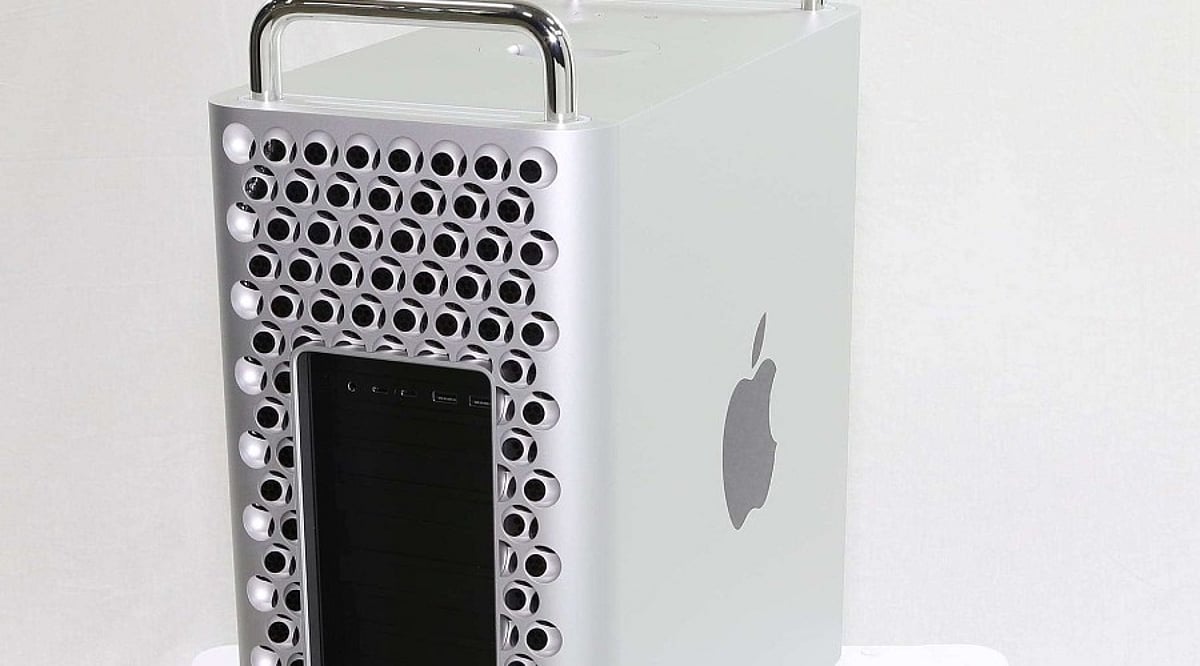
    Apple’s decision to discontinue the Mac Pro in March 2026 reportedly ended a long internal debate over the future of its most powerful desktop lineup. The company has since removed the Mac Pro from its website, directing professional users toward the Mac Studio, and confirmed no new Mac Pro hardware is planned.

    According to Bloomberg’s Mark Gurman in his ‘Power On’ newsletter, the end of the Mac Pro line ‘wasn’t always the plan.’ Apple had considered several hardware and chip options before giving up on it.

    Apple Worked on M2 Extreme and M3 Extreme Chips

    The biggest aspect of Apple’s fallen Mac Pro vision was the creation of higher-end Apple Silicon CPUs. Apple developed both M2 Extreme and M3 Extreme chips before dropping them, Gurman said. These chips were intended to sit above the ‘Ultra’ tier and would have made the Mac Pro outperform the Mac Studio. However, the projects were aborted due to high development costs and low demand for the more costly workstation-type machines.

    Two Unreleased Mac Pro Models Were in Development

    Apple also reportedly worked on two Mac Pro models that were never released, internally codenamed J170 and J190.

    • J170: A surprising project—a new Mac Pro powered by Intel chips, despite Apple’s strong push toward its own Apple Silicon. This version, targeted at specific professional applications, remained based on the x86 architecture and standard PCIe workflow.
    • J190: Expected to launch alongside the M3 Ultra Mac Studio in early 2025, featuring an M3 Ultra chip. The debut never happened, and Apple discontinued the Mac Pro line altogether.

    Mac Studio Has Replaced the Mac Pro’s Role

    The Mac Pro’s decline wasn’t solely due to performance. It was originally popular for its expandability—high-end graphics cards, audio cards, and other PCIe equipment. However, Apple Silicon adopts a system-on-chip design with unified memory, making upgrades via standard modules less relevant. Apple apparently concluded that maintaining the Mac Pro was no longer necessary to meet user needs. Gurman said he doesn’t think the Mac Pro is likely to return, ‘if ever.’

    This move marks a significant shift in Apple’s professional desktop strategy, consolidating its high-end offerings around the Mac Studio and its custom silicon.

  • 7 Leading Technology Stocks for July 2026: From Apple’s Ecosystem to IonQ’s Quantum Leap

    7 Leading Technology Stocks for July 2026: From Apple’s Ecosystem to IonQ’s Quantum Leap

    Overview

    Technology stocks continue to benefit from AI, cloud computing, data storage, and quantum computing advancements. The global tech industry is worth over $21 trillion, and investors are looking for companies with strong earnings and scalable business models. This July 2026, we highlight seven stocks with market caps above $1 billion and EPS growth over 20% in the past year.

    Top Technology Stocks for July 2026

    1. Apple Inc. (AAPL)

    Market Cap: $4.88 trillion | EPS Growth: 28.6%. Apple’s ecosystem of iPhone, Mac, iPad, Apple Watch, and services provides recurring revenue. AI integration into devices is expected to fuel the next growth phase.

    2. Sandisk Corporation (SNDK)

    Market Cap: $208.9 billion | EPS Growth: 370%. Sandisk leads in flash memory storage for consumer devices, AI servers, and enterprise systems, benefiting from increasing demand for high-speed storage.

    3. Dell Technologies Inc. (DELL)

    Market Cap: $253.66 billion | EPS Growth: 96.71%. Dell provides PCs, servers, storage, and IT infrastructure. Its data center solutions are critical for AI workloads.

    4. Seagate Technology Holdings plc (STX)

    Market Cap: $167.1 billion | EPS Growth: 51.4%. Seagate is a key supplier of hard disk drives for computers and data centers, important for global data creation.

    5. Western Digital Industries Ltd (WDI)

    Market Cap: $160.9 billion | EPS Growth: 267.47%. Western Digital specializes in HDDs and enterprise storage, driven by demand from data centers and cloud platforms.

    6. Everpure, Inc. (P)

    Market Cap: $22.73 billion | EPS Growth: 73.68%. Everpure offers enterprise data-storage and management solutions, focusing on all-flash storage for AI and analytics.

    7. IonQ, Inc. (IONQ)

    Market Cap: $13.1 billion | EPS Growth: 125.83%. IonQ works on trapped-ion quantum computers, providing cloud access. Though early-stage, it offers exposure to transformative quantum technology.

    Final View

    Apple provides ecosystem scale, Dell leads in AI infrastructure, and storage demand benefits Sandisk, Seagate, Western Digital, and Everpure. IonQ introduces high-growth quantum computing. These seven stocks cover the technology stack from devices to next-gen computing.

    Disclaimer: This article is for informational purposes only and does not constitute investment advice. Always conduct your own research before investing.