Tag: Apple

  • Foldable iPhone Leak Sparks Buzz: Viral Images Fuel Rumors and Debate

    Foldable iPhone Leak Sparks Buzz: Viral Images Fuel Rumors and Debate

    Images claiming to show Apple’s foldable iPhone have gone viral, captivating fans and tech watchers while stirring fresh debate over the device’s authenticity and potential price. The leaked visuals depict a phone that folds like a book, revealing a large inner screen in a design that appears slimmer than many current foldable models.

    Some observers believe the images could represent an early Apple prototype, while others suspect they are concept renders or a modified existing device. Apple has not confirmed any foldable iPhone, but the company has been linked to folding phone rumors for years, fueling the excitement.

    Foldable iPhone Rumors Are Back

    The leaked images show a book-style foldable design. However, some users have noted that the two halves appear uneven in the images, raising questions about whether the device would fold properly. Other reports suggest Apple has experimented with both book-style and flip-style models. Additionally, rumors claim the foldable iPhone, possibly called iPhone Ultra, could pack a 5,000 mAh battery and launch alongside the iPhone 18 lineup in September 2026.

    For now, there is no proof that the viral images are real. Until Apple makes an official statement, they remain part of the growing rumor mill.

    What Apple Must Get Right

    If Apple does launch a foldable iPhone, users will have high expectations. The device must be durable for daily use, with a smooth hinge and minimal screen crease. Battery life is crucial since a larger screen typically consumes more power; users will expect all-day performance. Apps should transition seamlessly between outer and inner screens, and the overall experience must feel intuitive, not just novel.

    Price will be another key test. Foldable phones from Samsung, Google, and others already cost significantly more than standard flagships, and Apple’s premium positioning suggests its foldable could be the most expensive iPhone yet. High excitement may not translate into purchases if the price tag is too steep.

    For now, all we have are rumors and viral images, but they have reignited one of the most talked-about ideas in tech.

  • White House Urges Apple, NVIDIA, and SpaceX to Boost Intel’s US Chip Production

    White House Urges Apple, NVIDIA, and SpaceX to Boost Intel’s US Chip Production

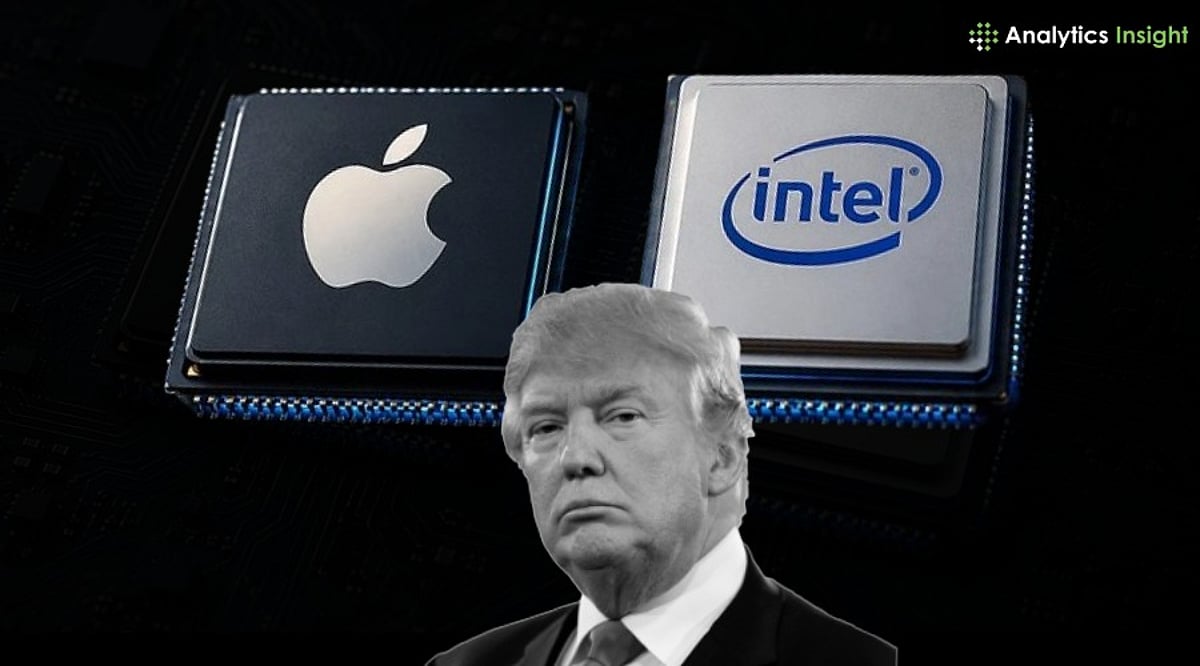
    The Trump administration has taken an active role in Intel’s recovery, urging major US technology companies to invest in or work with the chipmaker. Apple, NVIDIA, and SpaceX have entered talks or partnerships with Intel as Washington seeks to expand semiconductor production within the United States.

    This support has improved Intel’s access to capital and raised demand for its processors. However, the company’s contract manufacturing business still relies heavily on work from Intel’s own product units. Outside foundry revenue remains small compared with the wider manufacturing division.

    White House Presses Tech Firms to Back Intel

    President Donald Trump and Commerce Secretary Howard Lutnick urged Apple Chief Executive Tim Cook to use Intel’s US factories during talks over proposed semiconductor tariffs. Apple later reached a preliminary agreement for Intel to manufacture selected chips, though large-scale production may take several years.

    Washington also converted about $8.87 billion in federal funding into an equity position of roughly 10% in Intel, making the US government the company’s largest shareholder. NVIDIA subsequently invested $5 billion, while SoftBank added $2 billion. Officials also encouraged Intel to work with NVIDIA and SpaceX.

    Meanwhile, Intel Chief Executive Lip-Bu Tan reorganized engineering teams and shifted spending toward equipment for advanced production and packaging. Intel also recruited managers with experience at Samsung Electronics and SK Hynix.

    Server Sales Rise as Intel Posts a Loss

    Intel reported first-quarter revenue of $13.6 billion, up 7% from one year earlier. Data Center and AI revenue rose 22% to $5.1 billion as cloud and AI customers bought more Xeon processors. Intel still recorded a net loss of $3.7 billion, partly linked to restructuring charges.

    The company expects second-quarter revenue between $13.8 billion and $14.8 billion and projects adjusted earnings of $0.20 per share. Tan said AI inference is ‘significantly increasing the need for Intel’s CPUs and wafer and advanced packaging offerings.’

    Additionally, Intel expanded its work with Google Cloud. The companies agreed to use Intel Xeon processors across AI, inference, and general computing tasks. The agreement gives Intel a large processor customer, though it does not establish Google as a major outside buyer for Intel’s foundry plants.

    Outside Foundry Revenue Stays Limited

    Intel Foundry reported $5.4 billion in first-quarter revenue, up 16% from a year earlier. Most of that amount came from Intel’s internal product groups. External foundry revenue reached only $174 million, compared with $31 million in the same quarter of 2025.

    The increase mainly came after Altera became an outside customer following its separation from Intel. Intel’s filing said the change accounted for much of the $143 million annual rise. Chief Financial Officer David Zinsner described the outside sales as ‘legacy business that we have mainly on the wafer side.’

    Intel has identified external foundry growth as a key long-term strategy. The company has secured capital, processor agreements, and government support, but first-quarter figures show that third-party manufacturing orders have not yet become a major source of revenue.

  • Apple Files Lawsuit Against OpenAI, Alleging Theft of AI Hardware Trade Secrets

    Apple Files Lawsuit Against OpenAI, Alleging Theft of AI Hardware Trade Secrets

    Apple has initiated legal proceedings against OpenAI, accusing the ChatGPT developer of misusing confidential information to accelerate its artificial intelligence hardware initiatives. This lawsuit marks a significant shift in the previously collaborative relationship between the two tech giants, who had partnered on AI features in 2024. The dispute could reshape competitive dynamics in the rapidly evolving AI sector.

    Filed in the U.S. District Court for the Northern District of California, Apple’s complaint alleges that OpenAI and two former Apple employees improperly accessed and used proprietary information. The confidential data reportedly includes product designs, manufacturing processes, supplier details, and internal business strategies related to future hardware projects.

    Apple specifically names Tang Tan, former Vice President of Product Design, and Chang Liu, former Senior System Electrical Engineer, as defendants. The lawsuit also targets OpenAI entities and io Products, a hardware startup acquired by OpenAI. Apple asserts that these actions enabled OpenAI to expedite hardware development without investing equivalent resources in research and development.

    According to the complaint, Liu retained an Apple-issued laptop after leaving the company and later exploited a security vulnerability to access Apple’s internal network, downloading confidential hardware files. Apple also claims Tan forwarded supplier information and internal reports to himself before departing and encouraged job candidates to bring Apple components to interviews at OpenAI.

    Apple contends these activities were part of a broader effort to acquire trade secrets. The company also alleges that some OpenAI employees contacted Apple’s suppliers for proprietary production details. In one instance, a supplier reportedly shared a confidential metal finishing process under the mistaken belief that OpenAI had authorization.

    OpenAI has denied the allegations, stating it has no interest in using another company’s trade secrets and intends to defend itself vigorously. The court has not yet ruled on the case, and all claims remain unproven at this stage.

    The relationship between Apple and OpenAI had previously been cooperative, with Apple integrating ChatGPT into its devices via Apple Intelligence in 2024. Since then, both companies have advanced their respective AI strategies, intensifying competition in the fast-growing AI market.

    Industry experts suggest the lawsuit could influence how technology firms protect confidential information when hiring experienced personnel. A court decision may clarify the boundaries between professional expertise and corporate trade secrets, particularly as AI competition heats up.

    Apple also noted that over 400 former employees now work at OpenAI, acknowledging that employee movement is common in the tech industry. However, Apple argues that confidential company information should not follow employees when they change jobs.

    The legal action comes as OpenAI expands its focus on consumer hardware. The company’s acquisition of io Products, founded by former Apple designer Jony Ive, signals ambitions to develop a new AI device offering a different interaction paradigm. Analysts believe the lawsuit could affect OpenAI’s hardware plans and set precedents for hiring practices across the tech sector.

    Apple maintains that the lawsuit is intended to protect its intellectual property amid the intensifying AI race.

  • iPhone Air 2 Drops Below ₹1 Lakh: Full Deal Analysis and Buying Guide

    iPhone Air 2 Drops Below ₹1 Lakh: Full Deal Analysis and Buying Guide

    Apple’s premium iPhone Air has just received one of its most significant price cuts since launch, now available for under ₹1 lakh. This makes the flagship device a far more attractive option for buyers who have been waiting for a better deal.

    The discount comes via Vijay Sales, where the iPhone Air is now listed at ₹98,990, down from its original ₹1,19,900 — a flat ₹20,000 reduction. But the savings don’t stop there. Buyers using eligible bank cards from HDFC Bank, ICICI Bank, SBI Bank, or Axis Bank can get an additional ₹4,000 discount. Trade-in offers on old smartphones can further reduce the price, depending on the device’s condition. Vijay Sales is also offering no-cost EMI options, making the purchase more manageable without paying the full amount upfront.

    This deal is particularly noteworthy because Apple phones usually don’t see such steep discounts outside major shopping festivals. At this price, the iPhone Air directly competes with Samsung’s Galaxy S26, both targeting premium buyers with distinct strengths.

    iPhone Air vs. Galaxy S26: Which Should You Choose?

    If cameras are your top priority, the Galaxy S26 has the edge with more camera options, a larger battery, and useful AI features for photo editing and daily tasks. However, the iPhone Air excels in other areas: it’s lightweight, runs smoothly, and integrates seamlessly with other Apple devices like MacBook, Apple Watch, or iPad.

    Both phones feature bright screens and snappy performance suitable for everyday use. If you prefer Android and want more control over your phone, the Galaxy S26 is a solid choice. But if you’re a fan of iOS and want to stay within the Apple ecosystem, the iPhone Air makes more sense.

    Is the Discounted iPhone Air Worth Buying?

    At ₹98,990, the iPhone Air offers better value than at launch. Apple typically provides software updates for many years — if the phone gets updates for about six years, the ownership cost comes to roughly ₹16,600 per year, making the price easier to justify for long-term users.

    Another advantage is resale value. iPhones generally sell for more than most Android flagships after a few years, further reducing the real cost of ownership. If you’ve been waiting for the right time to buy the iPhone Air, this is one of the strongest deals available so far.

  • iPhone 18 Pro Max 1TB Expected to Set New Price Record in India

    iPhone 18 Pro Max 1TB Expected to Set New Price Record in India

    Apple’s upcoming iPhone 18 Pro Max could become the company’s most expensive smartphone ever sold in India, with the 1TB storage variant reportedly crossing the ₹2 lakh mark. According to recent leaks, the price hike is driven primarily by rising memory and component costs rather than new hardware features.

    Early estimates from Digit suggest the top-tier model will see a significant jump over the iPhone 17 Pro series, contradicting earlier rumors that Apple might keep pricing similar to the previous generation. The shift reflects growing pressure from global supply chain expenses, especially for high-capacity memory modules.

    If the leaks prove accurate, buyers will pay a premium not only for performance but also for the status and storage capacity of the 1TB version. The final price will be confirmed at launch, but early indications point to a major repositioning of the Pro Max as an ultra-premium device.

  • iPhone 18 Pro Max Component Costs Could Rise by Nearly $300, Driven by Memory and Chip Price Hikes

    iPhone 18 Pro Max Component Costs Could Rise by Nearly $300, Driven by Memory and Chip Price Hikes

    Apple’s next flagship smartphone may come with a significantly higher production cost. According to a new report from Counterpoint Research, the bill of materials for a 1TB iPhone 18 Pro Max could be nearly $300 more than that of the 1TB iPhone 17 Pro Max. The primary reason: surging prices for memory chips and the new A20 Pro processor.

    What’s Driving the Cost Increase?

    The largest contributor is the rising cost of NAND flash storage and DRAM. NAND alone could exceed $250 per unit on the 1TB model, a figure approaching the total component cost of an entire older-generation iPhone. Memory chips are currently in short supply due to increased demand from AI-enabled smartphones and AI server infrastructure.

    The iPhone 18 Pro Max is expected to feature 12GB of RAM, up from 8GB on the current model, further adding to cost. The A20 Pro chip, likely the first phone chip built on TSMC’s new 2nm process node, is also more expensive to manufacture than its predecessor.

    Offsetting Savings and Price Adjustments

    Not all components will see price increases. The display and certain other parts may actually become cheaper. Camera costs could rise, possibly due to the introduction of a variable aperture lens. Apple is expected to adjust pricing differently across storage tiers to maintain profit margins on higher-capacity models.

    What to Expect at Launch

    The iPhone 18 Pro series is anticipated to launch in September. Average price increases could land around $200, with the largest jumps reserved for the top storage configurations. Apple has not yet announced official pricing.

    For more details, read the full report from Counterpoint Research.

  • Can Apple’s Foldable iPhone Revitalize the Sluggish Foldable Phone Market?

    Can Apple’s Foldable iPhone Revitalize the Sluggish Foldable Phone Market?

    Apple’s trusted brand could finally push foldable smartphones beyond early adopters into mainstream consumer markets worldwide. Consumer interest already exists, but affordability, durability, and usability remain the biggest barriers to purchase today. Apple’s premium pricing strategy could determine whether foldable phones succeed or remain luxury products exclusively.

    The foldable phone space has been building for years, and one question keeps coming up: Can Apple actually change this market? After looking at the latest research and production reports, the answer appears to be yes, but only if Apple gets a few big things right.

    Foldable phones have been around for years. Samsung, Motorola, Google, and OnePlus have all released models. However, foldables still make up only about 3% of total smartphone sales. This shows that the category is hyped but doesn’t have mass appeal. At least not yet, but Apple is venturing into this space, which can change on the back of its massive brand value worldwide.

    Why Consumers Are More Open Than Expected

    A recent survey from SmartTech Research offers some useful clues. It polled 291 qualified smartphone buyers across the country, not just tech enthusiasts in big cities. The results are notable. About 58% of respondents said they are at least somewhat open to buying a foldable phone next. Only 5.3% said they are unlikely to buy this model.

    This suggests people are not against foldables. They simply don’t have a strong reason to buy one yet. Additionally, the specs, features, and aesthetics can be improved since Apple has a late-mover advantage and it can crack its popularity issue.

    The Apple Trust Factor

    When the same survey asked whether Apple’s entry into the foldable market would make people more confident about buying one, 60.5% said yes. This makes sense given Apple’s history, as it has a pattern of entering product categories later than its competitors and then making them feel mainstream. The iPod was not the first MP3 player, and the iPhone was not the first smartphone. Apple did not invent these categories, but it refined the experience until people trusted and embraced them.

    For foldables, that trust matters even more. Buyers worry about creases, hinges, durability, and repair costs. If Apple can quell those fears, it could pull hesitant buyers off the sidelines. The tech giant will have this big responsibility of addressing these issues with its innovative approach and comprehensive research and development.

    The Price Problem Apple Cannot Ignore

    This is the part that raises concern. Reports now suggest Apple’s foldable iPhone could cost around $2,400 to $2,500. This price is above that of almost every other foldable on the market today. Counterpoint Research data shows only about 2% of foldables are expected to be priced above $2,000 this year.

    The survey backs this up too. Most consumers expect to pay under $1,000 for their next phone. Only a small group said they would pay $2,000 or more for a foldable, even if it offered clear benefits.

    There is also a depreciation problem. Research on foldable phones from SellCell indicates the devices could lose close to 65% of their value within a year. At a $2,500 price point, that could mean losing over $1,600 in value in just twelve months. This is a hard number to ignore.

    Why It Matters

    This matters because Apple rarely enters a market halfway. Recent reports suggest Apple has raised its foldable production target to around 10 million units. This is almost double what Samsung plans to produce across its entire foldable lineup. This is not a cautious test run. It is a serious bet. If Apple pulls this off, it could do what it has done before. It could turn a niche product into a normal purchase. This would expand the entire foldable market, not just Apple’s slice of it. Samsung, Google, and Motorola could all benefit from more people simply being open to the idea of a folding phone. If Apple gets the price or the durability story wrong, though, it risks turning this into an expensive misstep. A device priced above $2,000 could stay a luxury item rather than a mainstream choice.

    The Bigger Picture

    Apple appears to have a real chance to reshape this market. It has secured both trust and credibility. However, it needs a price and design that do not scare buyers away. If it delivers a foldable iPhone that feels reliable and useful rather than fragile and overpriced, it could turn years of foldable hype into real, lasting demand.

    Frequently Asked Questions

    1. Will Apple release a foldable iPhone? Reports suggest Apple is preparing to launch a foldable iPhone, with production plans pointing toward a large-scale rollout rather than a limited test release.
    2. How much will the Apple foldable iPhone cost? Current reports estimate a price between $2,400 and $2,500, which would place it well above the price of most foldable phones sold today.
    3. Are consumers actually interested in foldable phones? Yes. A recent survey found that about 58% of smartphone buyers are at least somewhat open to buying a foldable phone next.
    4. Does Apple’s entry make people trust foldables more? According to the same survey, 60.5% of respondents said Apple entering the foldable market would make them more confident about buying one.
    5. What is the biggest risk for Apple’s foldable phone? Price and depreciation stand out as the biggest risks. Foldable phones already lose close to 65% of their value within a year, and a high starting price could make that loss even steeper.

  • Apple and Broadcom Forge $30B+ Chip Supply Deal for US Manufacturing Through 2031

    Apple and Broadcom Forge $30B+ Chip Supply Deal for US Manufacturing Through 2031

    Apple has signed a multiyear agreement valued at over $30 billion with Broadcom to design and produce custom silicon parts and wireless connectivity chips in the United States through 2031. The deal includes a $1.5 billion expansion of Broadcom’s Fort Collins, Colorado facility, reinforcing Apple’s broader commitment to domestic manufacturing.

    Strategic Partnership Expansion

    The agreement covers advanced radio-frequency components, including FBAR filters, which are critical for wireless communication features in Apple products. This expands a long-standing supplier relationship and secures a larger US-based production path for key components used across Apple’s device lineup.

    Apple expects the collaboration to result in the production of more than 15 billion chips in the United States, supporting hundreds of American jobs tied to chip production and related manufacturing work. This deal is the largest commitment under Apple’s American Manufacturing Program, which aims to increase domestic production and deepen ties with US suppliers.

    Infrastructure Investment

    Broadcom will invest $1.5 billion to expand and modernize its Fort Collins facility, which will produce radio-frequency components and advanced wireless connectivity technologies for Apple devices. Apple CEO Tim Cook stated, “The cutting-edge components built in Fort Collins are essential to delivering the incredible performance and connectivity our customers expect, and we’re proud to deepen our investments in US-based suppliers that share our commitment to excellence and innovation.”

    Hock Tan, President and CEO of Broadcom, added, “Broadcom is proud to continue to work with Apple after decades of success together, and we share a strong commitment to American innovation.”

    Broader US Supply Chain Strategy

    The agreement aligns with Apple’s plan to invest $600 billion in the US economy over four years, covering manufacturing, job creation, supplier growth, and technology development. It also comes amid federal efforts to boost domestic chip production, with the Trump administration urging tech companies to reduce reliance on foreign supply chains.

    Following the announcement, Broadcom shares rose over 4%, while Apple shares dipped slightly, reflecting investor reactions to the expanded supplier role and spending commitments.

  • Apple’s Foldable iPhone Begins Mass Production: 10 Million Units Expected for September 2026 Launch

    Apple’s Foldable iPhone Begins Mass Production: 10 Million Units Expected for September 2026 Launch

    Apple’s first foldable iPhone has officially entered mass production, signaling a major step toward its anticipated September 2026 launch. According to supply chain reports, the tech giant has begun large-scale manufacturing after finalizing the device’s design. The foldable model is expected to debut alongside the iPhone 18 Pro and iPhone 18 Pro Max at Apple’s annual September event.

    Earlier reports hinted at delays due to hinge development challenges, but fresh updates indicate those issues have been resolved, and production is now on schedule. This contradicts a recent prediction from analyst Ming-Chi Kuo, who suggested that while the phone might be announced in September, customer availability could be limited until later in the year. Kuo also speculated that initial stock would be constrained as production ramps up.

    The foldable iPhone, rumored to carry the name “iPhone Ultra,” is expected to feature a 7.8-inch inner OLED display and a 5.5-inch cover screen, using a book-style folding design that opens like a small tablet. A titanium body and an advanced hinge are anticipated to deliver a smoother folding experience. Under the hood, the device may include Apple’s upcoming A20 chip for faster performance and better battery efficiency. Reports also suggest a Touch ID fingerprint sensor embedded in the power button instead of Face ID, along with two rear cameras and a slim, premium build.

    Mass production is a critical milestone, indicating Apple’s readiness to compete with established foldable phone makers like Samsung and Huawei. The company has reportedly increased its 2026 production target from 7–8 million units to nearly 10 million units, reflecting strong anticipated demand. However, early availability may still be limited. Pricing is expected to range between $2,300 and $2,500, making it the most expensive iPhone to date. Apple has not officially confirmed the device, so the name, features, price, and launch date remain subject to change before the September event.

  • Today’s Top Tech Roundup: iOS 27 Beta 3, Vivo X300e, iPhone Fold Ultra, Vivo X500 Pro Max, and iQOO 16

    Today’s Top Tech Roundup: iOS 27 Beta 3, Vivo X300e, iPhone Fold Ultra, Vivo X500 Pro Max, and iQOO 16

    Apple has released iOS 27 Beta 3 to developers, bringing new features and performance improvements ahead of the public release. Meanwhile, the Vivo X300e has received 3C certification in China, signaling an imminent launch. Luxury customization brand Caviar has unveiled the iPhone Fold Ultra, a premium foldable concept. The Vivo X500 Pro Max is nearing its global launch, and reports suggest the iQOO 16 may face a delay in its India release.

    Stay tuned for more updates on these exciting developments in the world of tech.