Tag: India

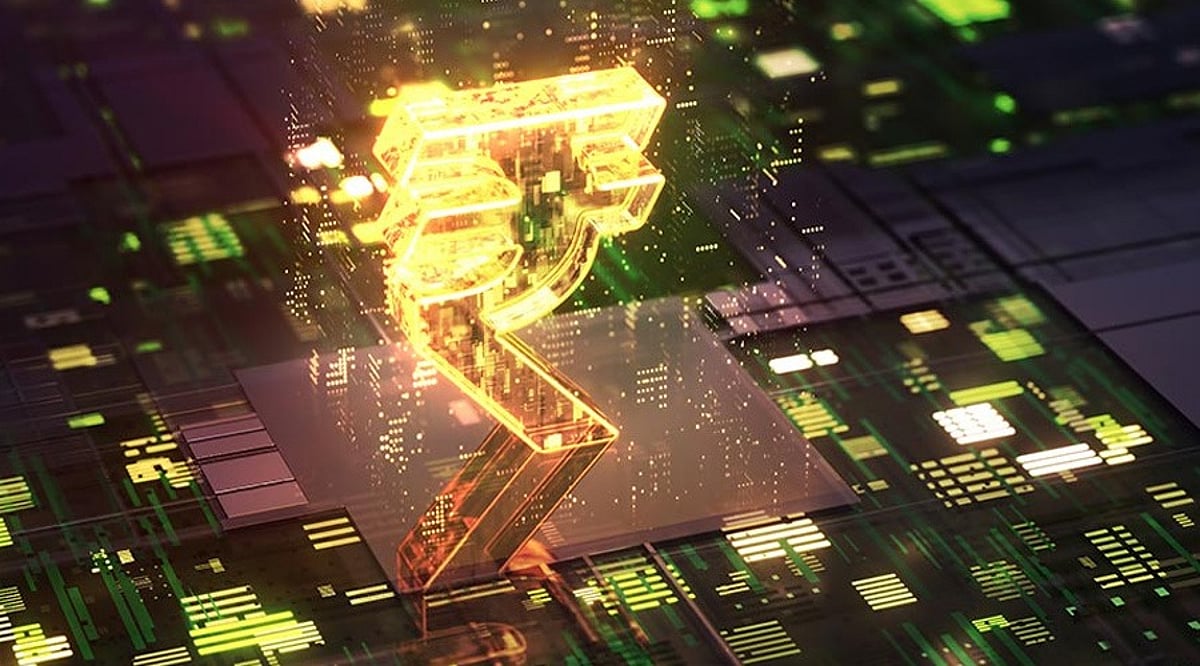
  • India’s Fintech Revolution: Unlocking a Trillion-Dollar Market Opportunity

    India’s Fintech Revolution: Unlocking a Trillion-Dollar Market Opportunity

    India’s financial landscape has undergone a remarkable transformation over the past decade. What began as a push toward digital payments has evolved into a thriving fintech ecosystem that is reshaping how millions save, borrow, invest, and transact daily.

    Traditional banking with its long, tedious paper forms has given way to financial services accessible at the tap of a smartphone. The country’s robust digital public infrastructure, expanding internet access, and a young, tech-savvy population have created fertile ground for fintech innovation.

    Today, India boasts one of the world’s largest digital payment ecosystems, alongside a growing network of startups building tools for lending, insurance, wealth management, and embedded finance. With artificial intelligence (AI) emerging as a new layer of innovation, many industry experts believe India’s fintech sector is entering its next growth phase — one that could eventually make it one of the country’s trillion-dollar industries.

    UPI Became a Game Changer

    The launch of the Unified Payments Interface (UPI) in 2016, created by the National Payments Corporation of India (NPCI), gave a huge boost to the fintech revolution. UPI enables instant payments from one bank account to another via mobile phones.

    Consumer behavior shifted dramatically. QR codes are now ubiquitous across the country — from roadside tea stalls and vegetable vendors to shopping malls and multinational corporations. Digital payments are no longer confined to urban users; they have become accessible in smaller towns and rural areas.

    The success of UPI opened the door for further fintech innovations. Startups began crafting offerings for lending, saving, investing, and insurance based on users’ digital payment histories.

    Booming Fintech Ecosystem

    India’s fintech applications extend far beyond payments. Fintech startups now operate across digital lending, wealth management, insurtech, personal finance, embedded banking, and cross-border payments.

    The large number of unbanked individuals and micro, small, and medium enterprises (MSMEs) has created immense opportunities for fintech companies to fill gaps left by traditional banking. These startups help individuals access banking services through alternative credit scoring, paperless onboarding, and quick loan approvals — even for those with low or no credit ratings.

    Digital lending has become a reliable source of working capital for small enterprises. Meanwhile, investment fintech platforms have opened up mutual funds, shares, and government securities to novice investors.

    AI Powering the Next Wave of Innovation

    Artificial intelligence is emerging as the backbone of fintech innovation. Organizations are using AI algorithms to detect fraud, automate customer service, and improve credit underwriting.

    Banks and fintech companies leverage AI to enhance compliance processes, monitor suspicious transactions, and reduce operational expenses. Loan approvals are faster, and risk assessment improves through the use of alternative data sources.

    As digital transactions increase, AI will be crucial for handling larger volumes securely and conveniently.

    Why Investors Remain Optimistic

    While global venture capital investment has experienced ups and downs, India continues to attract strong investment in fintech. This is not due to cyclical trends but to structural factors.

    The country’s growing digital economy, widespread smartphone usage, supportive government policies, increased internet penetration, and the world’s largest real-time payment system collectively create a solid foundation for future growth. Financial inclusion presents significant opportunities, as many Indians enter the formal financial system for the first time.

    Challenges on the Road Ahead

    Rapid growth is not without risks. Cybersecurity threats, digital fraud, and data privacy concerns have heightened focus on consumer safety. Regulations from the Reserve Bank of India are tightening, especially regarding digital lending and payment processes.

    Profitability remains an issue for many fintech companies operating with zero-cost or heavily subsidized products. Ultimately, consumer trust will be the deciding factor.

    The Trillion-Dollar Opportunity

    India’s fintech evolution extends beyond replacing cash with digital payments. It involves building a complete financial ecosystem where payment systems, lending services, investment platforms, insurance schemes, and commerce increasingly integrate across digital platforms.

    The coming decade will see increased partnerships among banks, fintech companies, regulators, and technology providers. Artificial intelligence, digital public infrastructure, and supportive policies will play pivotal roles in accelerating this process.

    Given the current momentum, India’s fintech sector could become one of the most notable success stories of the Indian economy — contributing to financial inclusion, capital generation, and the transformation of banking for over a billion people.

  • How Vijay Shekhar Sharma Bet on a Cashless India and Won

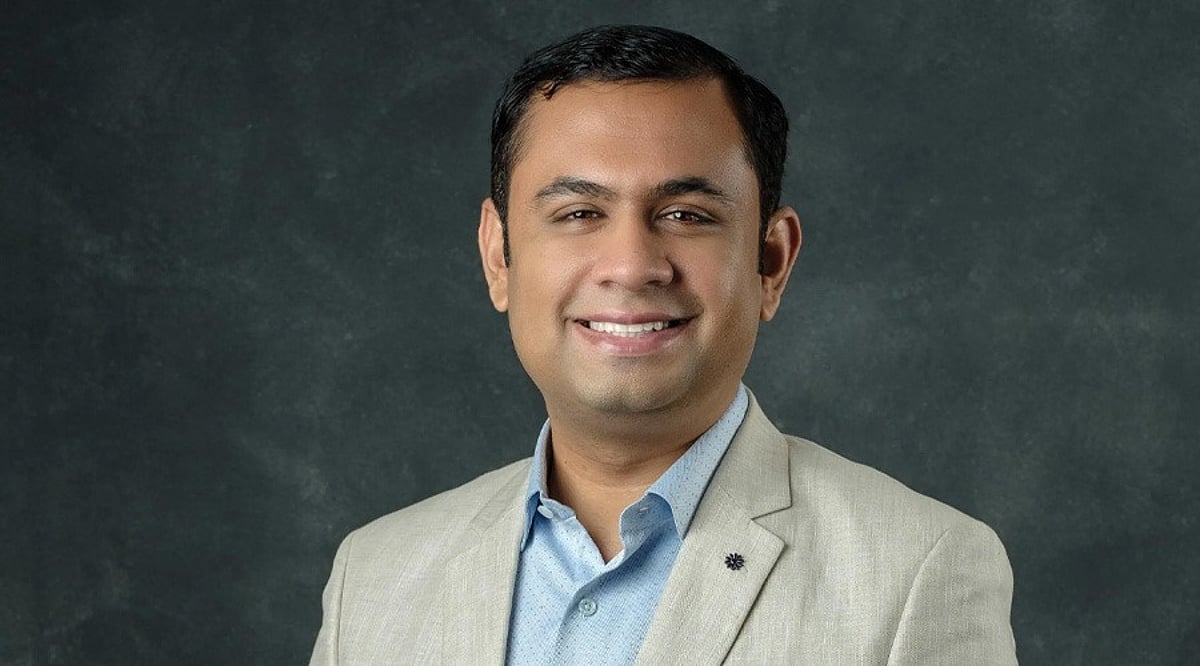
    How Vijay Shekhar Sharma Bet on a Cashless India and Won

    Every day, millions of Indians scan a QR code without a second thought. From roadside tea stalls and neighborhood kirana stores to taxi rides and hospital bills, digital payments have become part of everyday life. Long before that familiar QR sticker appeared across the country, Vijay Shekhar Sharma was betting that India’s relationship with cash would eventually change.

    From a Hindi-Medium Classroom to Big Dreams

    Sharma grew up in Harduaganj, a small town in Uttar Pradesh, in a Hindi-medium household where English was not spoken. When he entered engineering college in Delhi at fifteen, the coursework was not what slowed him down—the language was. Textbooks, lectures, and classroom conversations all arrived in a language he was still learning to read fluently, let alone speak with confidence. He has often said that English, not mathematics or physics, was the steepest climb of his early life. That struggle shaped how he approached everything afterward. Sharma taught himself English by reading everything he could find, and he carried the same self-taught instinct into technology.

    Building One97 Before Smartphones Took Over

    While still in college, he built indiasite.net, an early web content venture. He sold it two years later for a million dollars, a deal that gave him both confidence and capital for what came next. In 2000, he started One97 Communications, offering mobile content and services at a time when most of India had barely heard of the internet, let alone owned a smartphone. The dot-com crash tested that first venture severely. One97 survived by pivoting and adapting, a pattern Sharma would repeat throughout his career.

    The Bet That Became Paytm

    Those years also changed how Sharma viewed technology. While many internet companies were still thinking in terms of websites, he had become convinced that India’s next computing platform would be the mobile phone. Paytm began modestly, as a platform for prepaid mobile recharges, but the ambition behind it was never modest. Sharma wanted to turn the phone into a wallet—one that could hold money the way a physical wallet did and move it as easily as a text message.

    How Demonetisation Accelerated Paytm’s Growth

    For years, that vision grew steadily rather than explosively. Then, in November 2016, the government withdrew high-value currency notes from circulation overnight. Cash, the backbone of Indian commerce, disappeared from circulation almost instantly. Demonetisation did not create Sharma’s vision; it accelerated one that already existed. While demonetisation drove a surge in adoption, Paytm had already spent years building its payments infrastructure, merchant network, and consumer base before the policy took effect. Sharma became the public face of a shift the entire country was living through at once.

    The IPO That Changed the Conversation

    Growth on that scale eventually demands a different kind of scrutiny. In 2021, Paytm’s parent company, One97 Communications, went public in what was then India’s largest IPO, raising close to 18,300 crore rupees. The transition from startup darling to publicly listed company fundamentally changed the questions investors asked. Growth alone was no longer enough. Paytm’s listing was followed by a sharp decline in its share price as public investors questioned when, or if, the company would turn a profit. The optimism that had carried Paytm through a decade of private funding rounds met a far more skeptical audience.

    Regulatory Challenges and Rebuilding Trust

    If the IPO tested Paytm’s financial discipline, what followed tested its governance. The Reserve Bank of India moved against Paytm Payments Bank in 2024, citing persistent compliance concerns and ultimately restricting most of its operations. The action marked one of the biggest regulatory setbacks in Paytm’s history. Beyond the operational impact, it raised broader questions about governance, compliance, and how quickly fintech companies could scale while still meeting banking regulations. It forced Sharma into a period of restructuring and rebuilding, separating the payments bank from the broader Paytm ecosystem and working to reassure both regulators and customers that the business could operate within tighter compliance boundaries. Public markets demanded profitability. Regulators demanded stronger governance. Both pressures arrived within a few years of each other, and both forced Sharma to prove that Paytm could mature into an institution, not just remain a fast-growing startup.

    The Legacy of Vijay Shekhar Sharma

    Vijay Shekhar Sharma’s story mirrors the evolution of India’s digital economy itself. It began with a language barrier in a small town, accelerated through bold bets on mobile technology, and was tested by the realities of public markets and regulation. Sharma has often credited his upbringing for giving him the discipline to keep rebuilding after setbacks—a quality that has become as important as his willingness to take risks. His journey suggests that building a company at a national scale is less about getting a single decision right than about repeatedly adapting as technology, markets, and institutions evolve.

  • How Harshil Mathur and Razorpay Revolutionized India’s Digital Payments Ecosystem

    How Harshil Mathur and Razorpay Revolutionized India’s Digital Payments Ecosystem

    When Harshil Mathur and Shashank Kumar launched Razorpay in 2014, India’s online payment infrastructure was a mess of failed transactions, clunky integrations, and limited options for businesses trying to accept money digitally. Twelve years later, Razorpay processes over $180 billion in annualized total payment volume, has onboarded more than 12 million merchants, and filed a confidential DRHP with SEBI in June 2026, targeting a public listing valued at $5 to $6 billion. For Mathur, the journey from wireline field engineer to CEO of one of India’s most consequential fintech companies is anything but accidental.

    From Jaipur to IIT Roorkee to a Bold Bet

    Born in 1991 into a middle-class family in Jaipur, Rajasthan, Mathur developed an early fascination with technology and coding. He completed a degree in metallurgical engineering from IIT Roorkee in 2013 and joined Schlumberger as a wireline field engineer, a technically intensive role that lasted just eight months before the pull toward building something of his own won out. In December 2014, he co-founded Razorpay with Kumar around a straightforward insight: India’s businesses desperately needed a clean, developer-friendly API to accept online payments, and nothing available delivered that reliably.

    Y Combinator and the Developer-First Growth Engine

    In 2015, Razorpay got into Y Combinator’s Winter batch, one of the world’s most selective startup programs. The YC period sharpened the company’s product thinking and opened the door to early investors. Early growth was built almost entirely on developer trust; Razorpay’s clean API documentation and reliable integration made it the default payment gateway for startups, SMEs, and eventually larger enterprises. By 2020, the company had crossed the $1 billion unicorn mark. By December 2021, a $375 million Series F round valued it at $7.5 billion, backed by Peak XV Partners, Tiger Global, Ribbit Capital, Lightspeed, and Singapore’s GIC.

    Building Beyond Payments

    Mathur’s strategic ambition for Razorpay was never limited to a payment gateway. Under his leadership, the company expanded into RazorpayX, a neobanking platform now serving over 40,000 businesses with payroll, corporate cards, and connected banking; Razorpay Capital for merchant credit; and Magic Checkout, a one-click product reportedly reducing cart abandonment by 22%. In January 2026, Razorpay received RBI’s payment aggregator cross-border license, enabling transactions across 130-plus currencies in over 180 countries, and the company has established operations in Singapore and Malaysia.

    The IPO Moment

    Razorpay’s planned stock market debut is the most significant milestone on the horizon. The company filed a confidential DRHP with SEBI on June 12, 2026, targeting Rs 5,000 to Rs 6,000 crore through fresh shares and an offer for sale, with Axis Capital, Kotak Mahindra Capital, JPMorgan, and Citi appointed as lead managers. The targeted $5 to $6 billion IPO valuation is a markdown from the $7.5 billion 2021 peak, reflecting broader compression in fintech valuations and a public market that now demands profitability alongside growth. Razorpay’s FY25 revenue grew 65% to Rs 3,783 crore, though a net loss of Rs 1,209 crore, driven by ESOP costs and one-time reverse-flip tax liabilities from its 2025 domicile shift back to India, is a narrative that Mathur will need to tell convincingly to public-market investors.

    The Leader Behind the Company

    Mathur’s leadership style is widely described as product-first, technically grounded, and collaborative. He has consistently credited the broader Razorpay team and his co-founder rather than positioning himself as the singular force behind the company’s rise. He is also an active angel investor with a portfolio of over 22 companies, has been recognized on the Forbes 30 Under 30 Asia list, and has been a vocal voice in India’s startup community on digital policy issues. What makes his story particularly resonant is the consistency of the original thesis: building reliable, developer-first financial infrastructure for Indian businesses was not a fashionable idea in 2014. A decade on, it has become the foundation of how a significant share of India’s digital economy moves money.

    Why This Matters

    India’s digital economy depends on reliable payment infrastructure, and entrepreneurs like Harshil Mathur have played a significant role in building it. His journey demonstrates how solving a fundamental business problem with technology can create lasting impact, inspire future founders, and accelerate innovation across an entire industry.

  • Best Mutual Funds in India for 2026: High Returns with Lower Risk

    Best Mutual Funds in India for 2026: High Returns with Lower Risk

    As Indian investors look ahead to 2026, selecting the right mutual funds is crucial for balancing growth and stability. The following funds have been identified for their consistent performance, smart diversification, and risk management. Whether you are a conservative investor or seeking higher growth, these options cater to a range of financial goals.

    Parag Parikh Flexi Cap Fund

    This flexi-cap fund is known for its diversified investing approach, delivering strong long-term returns through disciplined stock selection across market caps.

    HDFC Balanced Advantage Fund

    By dynamically balancing equity and debt, this fund helps investors manage market volatility while targeting steady wealth creation over the long term.

    SBI Contra Fund

    Employing a value-oriented strategy, SBI Contra Fund invests in undervalued companies with strong recovery potential, aiming for long-term growth across sectors.

    UTI Nifty 50 Index Fund

    Ideal for passive investors, this fund tracks the Nifty 50 Index, offering low-cost exposure to India’s top companies with consistent long-term performance.

    ICICI Prudential Bluechip Fund

    Focused on established large-cap companies with stable earnings, this fund is suitable for those seeking relatively lower-risk equity investing.

    Nippon India Small Cap Fund

    Investing in promising small-cap companies, this fund offers higher growth opportunities, though it carries greater market volatility and risk.

    Kotak Equity Opportunities Fund

    Diversifying across large and mid-cap stocks, this fund aims for balanced growth with effective risk management through professional fund selection.

    Axis ELSS Tax Saver Fund

    Combining tax-saving benefits with long-term equity investments, this ELSS fund is attractive for investors seeking wealth creation and deductions under Section 80C.

    Choose Based on Your Goals

    Financial experts advise selecting mutual funds according to your personal financial goals, investment horizon, and risk tolerance, rather than relying solely on historical returns. Always review fund performance and consult a financial advisor before investing.

  • Flipkart Launches Pay Later with Flexible Repayment Options for Indian Shoppers

    Flipkart Launches Pay Later with Flexible Repayment Options for Indian Shoppers

    Flipkart Group, in partnership with PayU Finance, has announced the launch of Flipkart Pay Later, a new credit offering that provides flexible repayment options directly at checkout. Available across Flipkart, Myntra, and Flipkart Minutes, the service aims to make credit more accessible for millions of Indian consumers.

    Key Features of Flipkart Pay Later

    Flipkart Pay Later offers three repayment choices: a Pay Later option with up to 30 days for everyday purchases, a Pay in 3 option that splits the cost into three payments, and EMI plans ranging from 3 to 12 months for higher-value categories such as mobiles, electronics, appliances, and furniture. The offering is designed for both high-frequency, low-value transactions across categories like fashion, home, beauty, and general merchandise, as well as larger purchases where structured repayment can ease access.

    Powered by Commerce Intelligence and Responsible Underwriting

    Flipkart Finance has initiated the program with PayU Finance as its first lending partner, with plans to add more financial institutions as it scales. PayU Finance acts as the licensed lender, while Flipkart Finance manages customer relationships and credit intelligence, leveraging commerce data to enable faster and more accurate credit decisions.

    “Affordability remains the core driver of how millions in India engage with digital commerce. For these consumers, aspiration has never been a constraint, access has. As pioneers of easy financing, with Flipkart Pay Later, we are putting a decade of commerce signals to work, building an underwriting model that sees these customers clearly and extends them credit at the moment it matters the most. This is not a payment feature. It is an important step in building a financial services capability that we believe will fundamentally change who gets to participate in India’s digital economy.” — Vishal Ahuja, Executive Director, Flipkart Finance

    “As digital commerce continues to evolve, the need for responsible and accessible credit has never been greater. Through our partnership with Flipkart Finance, we are combining technology, data-driven underwriting, and strong risk management to deliver seamless credit experiences at scale. Flipkart Pay Later is another step towards expanding financial inclusion while powering the next phase of India’s digital commerce growth.” — Deepak Mendiratta, CEO, PayU Finance

    How Credit Decisions Are Made

    The credit decisions behind Flipkart Pay Later are built on Flipkart Finance’s commerce intelligence, transaction history, purchase patterns, and platform behavior, combined with PayU Finance’s lending and risk management capabilities. Customer exposure is assessed using multiple data sources to ensure credit is extended responsibly without over-leveraging.

    About the Flipkart Group

    The Flipkart Group is one of India’s leading digital commerce entities with a strong technology-first foundation, including group companies Flipkart, Myntra, Flipkart Wholesale, Cleartrip, and super.money. Established in 2007, Flipkart has enabled millions of sellers, merchants, and small businesses to participate in India’s digital commerce revolution. With a registered user base of more than 500 million, Flipkart’s marketplace offers over 150 million products across 80+ categories. Today, there are over 1.4 million sellers on the platform, including Shopsy sellers. Flipkart has pioneered services such as Cash on Delivery, No Cost EMI, Easy Returns, and UPI payments.

    About PayU

    PayU is India’s leading diversified fintech platform with Prosus as an investor. It operates businesses regulated by the Reserve Bank of India and offers advanced solutions for digital payments. PayU provides payment gateway solutions to online businesses, empowering over 4.5 lakh businesses. It enables digital payments across 100+ methods including Credit Cards, Debit Cards, Net Banking, EMIs, pay-later, QR, UPI, and Wallets. PayU Finance, its NBFC arm, empowers 3.5 lakh merchants and 6 million consumers with innovative credit solutions.

  • India’s Crypto Reporting Rules: Higher Compliance Standards for Exchanges, No New Taxes for Users

    India’s Crypto Reporting Rules: Higher Compliance Standards for Exchanges, No New Taxes for Users

    India’s Central Board of Direct Taxes (CBDT) has issued a Guidance Note implementing the OECD’s Crypto-Asset Reporting Framework (CARF), raising compliance standards for crypto exchanges. The new rules do not introduce additional taxes for individual investors—the existing 30% tax on Virtual Digital Asset gains and 1% TDS remain unchanged. However, crypto platforms must now undertake comprehensive due diligence, including determining users’ tax residency, collecting prescribed taxpayer information, identifying reportable users, classifying transactions, maintaining detailed records, and filing annual reports via Form 167. Platforms must also securely store external wallet addresses linked to reportable transfers for seven years.

    This shift requires significant investment in technology, compliance infrastructure, secure data management, and specialized talent. While it increases operating costs, it also strengthens market credibility and trust—following the trajectory of other financial industries that evolved through stronger reporting standards and transparency. Investors stand to benefit from a more structured ecosystem with fewer ambiguities, though decentralized finance, self-custodied wallets, and peer-to-peer activity remain outside the reporting framework. The industry continues to advocate for rationalizing the 1% TDS and allowing loss offsets to improve liquidity. Overall, the guidance marks a key step in integrating India’s crypto ecosystem into the formal financial system, demanding better governance and long-term compliance commitment.

  • Google Launches Always-On Gemini Spark AI Agent in India for 24/7 Task Automation

    Google Launches Always-On Gemini Spark AI Agent in India for 24/7 Task Automation

    Google has officially launched Gemini Spark in India, a cloud-based AI agent that operates continuously in the background — even when your phone is locked or your laptop is closed. Initially previewed at Google I/O 2026, the rollout begins for Google AI Ultra subscribers, with Google AI Pro subscribers gaining access in the coming weeks.

    An Agent That Works While You Sleep

    Unlike traditional AI assistants that respond to individual prompts, Gemini Spark is designed to autonomously complete multi-step tasks over time. It runs on Google’s cloud infrastructure and requires no active user involvement once a task is set. Built on the upgraded Gemini 3.6 Flash model, the agent integrates natively with Google Workspace apps including Gmail, Google Docs, Google Sheets, and Calendar — with no manual setup required.

    Tasks range from organizing emails in a personalized style and summarizing wedding RSVPs to planning travel itineraries across multiple services and managing recurring subscriptions.

    How Tasks, Schedules, and Skills Work

    Gemini Spark operates using three core components:

    • Task – The outcome the user wants the AI to achieve, from simple inbox clearing to complex multi-step workflows like coordinating a business trip.
    • Schedule – Recurring automations, such as a weekly summary of unread emails every Monday morning.
    • Skill – Specific capabilities Spark can apply, which will expand over time through updates. The agent can also interact with websites on the user’s behalf via a browser-based environment.

    Google has not yet confirmed which web capabilities will be available immediately in India. The launch comes shortly after OpenAI released ChatGPT Work, targeting a similar productivity and enterprise niche.

    User Control and High-Stakes Approval

    Users maintain full control over what Gemini Spark can access and do. They can limit connected apps or disable the agent entirely. For high-stakes, irreversible actions — such as sending an email without prior review, making a purchase, or any difficult-to-reverse action — Spark is designed to ask for explicit approval before proceeding.

    Google describes this human-in-the-loop design as a deliberate safeguard, positioning Spark as an agent that operates under user supervision. The India launch marks the company’s clearest step yet toward agentic AI that handles repetitive digital work autonomously.

  • Young Indian Innovator Develops $9 Offline AI Storytelling Device Using ESP32 Chip

    Young Indian Innovator Develops $9 Offline AI Storytelling Device Using ESP32 Chip

    An eight-year-old boy from India named Laksh has built an offline AI storytelling device that costs just Rs. 760 (approximately $9). The device uses an ESP32 microcontroller to generate, narrate, and animate stories without requiring any internet connection or cloud services.

    Laksh customized the open-source TinyStories LLM for the ESP32 platform. The original model already supported offline story generation, but the young developer added voice interaction, playback controls, and on-screen animations to enhance the user experience. The source code is available on GitHub, allowing other developers to replicate or improve the project.

    During a live demonstration, Laksh spoke the command “Make a funny story,” and the device quickly generated a new story, read it aloud, and displayed simple animations on its screen. It also responded to commands such as “play,” “pause,” “resume,” and “next story.”

    Laksh noted that the next step is to improve the text-to-speech engine, as the English voice currently sounds basic. Despite this limitation, the project demonstrates how low-cost hardware can run AI locally without relying on online services.

    This achievement highlights the potential of open-source AI and affordable hardware to empower students and young creators. Offline AI devices like this one could be especially valuable in schools and regions with limited or unreliable internet access.

    Laksh’s project proves that big ideas and simple tools can lead to impressive results without significant financial investment.

  • Daily Briefing: Cambricon’s AI Chip Ambitions, UK Student Loan Relief, Crypto-Banking Integration, India SpaceTech Boom, and Spur’s $200M Security Raise

    Daily Briefing: Cambricon’s AI Chip Ambitions, UK Student Loan Relief, Crypto-Banking Integration, India SpaceTech Boom, and Spur’s $200M Security Raise

    Good morning! Artificial intelligence, space technology, crypto finance, and education dominate today’s headlines. From China’s AI chip ambitions and India’s booming SpaceTech ecosystem to fresh student loan reforms in the UK and a major AI security funding round, here are the biggest developments you need to know.

    What’s New Today?

    Chinese artificial intelligence chipmaker Cambricon has released an audacious revenue target tied to employee incentives. The UK government has announced new steps toward alleviating the student loan repayment burden, while the cryptocurrency community is seeking ways to integrate more deeply into the traditional banking system. Indian SpaceTech startups have raised their highest investment levels ever, while AI security company Spur raises $200 million against advanced AI bots.

    Fast Track Insights

    The Chinese domestic AI chip rivalry is heating up through bold growth plans by Cambricon. The UK government is offering more lenient terms to help those repaying student loans. The crypto community is seeking ways to integrate into the banking sector, Indian private space is receiving investments, and AI security is emerging as one of the most appealing investment opportunities.

    Cambricon Releases Bold AI Revenue Target

    The leading Chinese AI chipmaker Cambricon has launched an employee incentive program tied to achieving a target revenue of around $14.8 billion. This initiative aims at enhancing China’s domestic AI chip development industry, considering the current restrictions imposed by the United States on China’s technology.

    Student Loan Forgiveness Comes to the UK

    The UK authorities have announced changes to make student loans easier for graduates to pay off. It will offer more financial freedom while allowing them to deal with the cost of living and debt repayment.

    Banking Sector Faces New Challenges from Cryptocurrencies

    The cryptocurrency industry is attempting to establish stronger connections with the financial sector to facilitate better adoption of digital currency.

    India’s SpaceTech Funding Reaches New High

    India’s private space tech startup ecosystem has received $871 million in cumulative funding to date, showcasing increasing investor interest in satellites, launch capabilities, and space technologies. The government and private involvement are still driving the rapid growth of the industry.

    Spur Raises $200 Million for AI Bot Detection

    AI Security start-up Spur has just raised $200 million in fresh funds aimed at fortifying its technology capable of detecting artificial intelligence-generated bots and any other malicious automated traffic. This is happening at a time when firms have to confront greater challenges associated with the emergence of more sophisticated AI-driven cyberattacks and online fraud.

  • Marvell Pledges $250M Investment in India to Boost AI Semiconductor R&D at Bangalore Hub

    Marvell Pledges $250M Investment in India to Boost AI Semiconductor R&D at Bangalore Hub

    Marvell Technology, Inc., a leader in data infrastructure semiconductor solutions, has announced a strategic investment of $250 million in India over the next three years. The investment will expand the company’s capabilities in technology, talent, and infrastructure, coinciding with its 20-year anniversary of engineering innovation in the country.

    As part of the plan, Marvell aims to double its headcount in India within three years, unveil a new wing at its Bangalore office, and strengthen its presence in Hyderabad. This expansion will reinforce the company’s global innovation network, focusing on the design and development of advanced semiconductor solutions for AI, cloud, and data infrastructure applications.

    “India has become a strategic hub of engineering excellence for Marvell, playing a critical role in advancing the infrastructure technologies that power the world’s leading hyperscalers and cloud providers,” said Navin Bishnoi, vice president and India country manager at Marvell. “As we celebrate 20 years in India, we remain committed to expanding R&D investments, strengthening the country’s semiconductor ecosystem, and developing the next generation of technology talent.”

    Advancing Semiconductor Innovation

    Marvell established operations in Bangalore in 2006 and has since grown India into the company’s second-largest R&D organization worldwide. Teams across Bangalore, Pune, and Hyderabad have developed deep expertise in advanced process technologies (2nm and beyond), high-speed analog IP, subsystem design, software/firmware development, and end-to-end silicon development. Today, Marvell India contributes across numerous technology platforms, with its employees holding multiple patents and playing a leading role in applying advanced AI tools to accelerate engineering productivity and innovation.

    Beyond technology development, Marvell continues to invest in the long-term growth of India’s semiconductor ecosystem through collaboration with universities, startups, industry associations, and government organizations. The company collaborates with leading universities to support internship programs, faculty development initiatives, joint research projects, and curriculum development designed to better prepare students for careers in advanced technology fields. Marvell also works with emerging startups through mentorship and strategic collaborations in areas aligned with its technology and product portfolios. Additionally, Marvell actively engages with industry associations and government bodies to foster greater collaboration across the ecosystem and support the continued growth of India’s semiconductor industry.

    Marvell Scholarship Program

    During the event, Marvell highlighted its commitment to developing future engineering talent through its Marvell Scholarship for Technical and Engineering Merit (MSTEM) program. This initiative aims to cultivate the next generation of AI and semiconductor innovators through financial support, hands-on industry experience, and exposure to real-world technology development.

    Launched earlier this year, the MSTEM program supports students pursuing degrees in electronics, electrical engineering, and computer science. The program attracted more than 7,000 applicants from leading universities across India, with 100 outstanding students selected to receive scholarships. By combining financial assistance with practical industry engagement, the program aims to strengthen India’s technology talent pipeline and prepare students for careers at the forefront of semiconductor and AI innovation.

    About Marvell
    To deliver the data infrastructure technology that connects the world, Marvell builds solutions on the most powerful foundation: partnerships with its customers. Trusted by the world’s leading technology companies for over 30 years, Marvell moves, stores, processes, and secures the world’s data with semiconductor solutions designed for customers’ current needs and future ambitions. Through a process of deep collaboration and transparency, Marvell is changing the way tomorrow’s enterprise, cloud, and carrier architectures transform—for the better.

    Marvell and the M logo are trademarks of Marvell or its affiliates. For a complete list of Marvell trademarks, visit www.marvell.com. Other names and brands may be claimed as the property of others.

    This press release contains forward-looking statements within the meaning of the U.S. federal securities laws that involve risks and uncertainties. Actual events, results, or achievements may differ materially from those contemplated in this press release. Forward-looking statements speak only as of the date they are made, and no person assumes any obligation to update or revise any such forward-looking statements.