Tag: India

  • Delhi High Court Rules No Copyright Breach in OpenAI’s AI Training Practices

    Delhi High Court Rules No Copyright Breach in OpenAI’s AI Training Practices

    The Delhi High Court has delivered a landmark ruling in favor of OpenAI, stating that the company’s use of copyrighted material to train its artificial intelligence models does not violate copyright law. The decision, announced on Friday, rejected an interim injunction sought by the news agency ANI in its ongoing copyright lawsuit against the AI developer.

    Justice Amit Bansal held that OpenAI’s act of storing ANI’s works for training its Large Language Models (LLMs) does not, by itself, constitute copyright infringement. The court further found that ANI failed to establish a prima facie case that ChatGPT had memorized or reproduced its copyrighted content in its responses.

    “OpenAI’s act of storing ANI’s works does not amount to copyright infringement,” Justice Bansal observed, adding that “ANI had failed to show that any memorization or regurgitation of ANI’s work has happened from responses generated by ChatGPT.”

    ‘Irreparable Injury’ to Public if AI Training is Stopped

    The court emphasized that granting an interim injunction would have wider consequences beyond the parties involved. Justice Bansal highlighted that irreparable injury would be caused not only to OpenAI but also to the public at large if such an injunction were granted. The ruling noted that restricting AI companies from training their models using copyrighted material could adversely affect technological innovation and scientific progress.

    ANI Sought Rs. 2 Crore in Damages

    ANI filed the lawsuit in November 2024, alleging that OpenAI had used its copyrighted news reports without permission to train ChatGPT. The agency sought Rs. 2 crore in damages and asked the court to permanently restrain the company from storing, publishing, reproducing, or using its content. ANI argued that ChatGPT generated responses that were “verbatim or substantially similar” to its reports, and also alleged that the chatbot produced “hallucinated” responses falsely attributed to the agency.

    OpenAI Cited Publicly Available Data

    OpenAI rejected the claims, stating that its AI models are trained based on publicly available data. According to the court, OpenAI informed the court that it had blacklisted the domain name of ANI in October 2024, following which no new content from the website can be used for training any AI model. Senior counsel Amit Sibal, representing OpenAI, argued that “copyright protects the expression of ideas; there is no monopoly on facts” and noted that OpenAI’s servers are located outside India.

    This case represents one of the first landmark decisions in India concerning the use of copyrighted works for training generative AI, setting a significant precedent for the technology sector.


  • boAt Unveils Nirvana Eutopia 2 ANC: Dual Drivers, 45dB Adaptive Hybrid ANC, and 80-Hour Battery at ₹4,999

    boAt Unveils Nirvana Eutopia 2 ANC: Dual Drivers, 45dB Adaptive Hybrid ANC, and 80-Hour Battery at ₹4,999

    boAt, India’s leading audio and wearables brand, has announced the launch of the Nirvana Eutopia 2 ANC, the latest addition to its premium over-ear headphone lineup. Priced at a special launch price of ₹4,999, the new model brings dual drivers, 45dB Adaptive Hybrid Active Noise Cancellation (ANC), Hi-Res Audio support, 3D Spatial Audio, and an impressive 80-hour playback time.

    The headphones are designed to meet the demands of modern users who switch between music, calls, gaming, travel, and work throughout the day. A 10-minute fast charge delivers up to 12 hours of playback, making the Nirvana Eutopia 2 ANC a practical choice for heavy users.

    Key Features

    • Dual Drivers – Delivers powerful bass, clear vocals, and detailed sound separation.
    • 45dB Adaptive Hybrid ANC – Automatically adjusts noise cancellation to suit environments like commutes, cafés, flights, and shared workspaces.
    • Hi-Res Audio & 3D Spatial Audio – Enhances depth and width for music, movies, and gaming.
    • Up to 80 Hours Playback – Long-lasting battery with quick 10-minute charge for 12 hours of use.
    • Bluetooth 5.4 & Google Fast Pair – Fast, stable connections across compatible devices.
    • AI ENx Calling – Reduces ambient noise during calls for crystal-clear conversations.
    • Adaptive Fit & Memory Foam Cushions – Premium comfort for extended wear.
    • boAt Hearables App Support – Customize EQ, controls, and listening preferences.
    • Foldable & Swivel Design – Portable with a premium hard carrying case.

    Pricing & Availability

    The boAt Nirvana Eutopia 2 ANC is available in Cosmic Black and Utopian White at a special launch price of ₹4,999. It can be purchased from the official boAt website and leading e-commerce platforms.

    About boAt

    boAt, owned by Imagine Marketing Limited, is one of India’s most recognized consumer technology brands. Founded in 2015, it has expanded from personal audio into wearables, charging solutions, and lifestyle technology. The company is committed to the Make in India initiative, with 71% of total units produced locally in FY2025. boAt Labs, its in-house R&D center with over 100 engineers, drives innovation across categories.

  • India’s New Labour Codes Mandate Final Salary Payment Within Two Days of Resignation

    India’s New Labour Codes Mandate Final Salary Payment Within Two Days of Resignation

    Employees changing jobs in India may no longer have to wait weeks for their final salary. Under the country’s new Labour Codes, employers must now pay wage-related dues within two working days after an employee resigns or leaves the company. The rule, effective from November 21, 2025, aims to streamline the full and final settlement process, making it faster and smoother for both parties.

    The new timeline primarily covers pending salary and leave encashment. However, other payments such as gratuity, provident fund, and certain bonuses continue to follow separate legal timelines. Employees should not expect every payment to arrive within the two-day window.

    A full and final settlement typically includes unpaid salary, leave encashment, approved expense claims, incentives, and other eligible payments. Employers can also deduct amounts for notice pay, unpaid loans, taxes, or charges for company assets that were not returned.

    The speed of the final payment also depends on how quickly the exit process is completed. Employees who finish the handover, return company property, submit expense claims, and update bank details generally receive their settlement without unnecessary delays.

    The Labour Codes also encourage employees to update their nomination details. Correct records can help family members receive pending wage dues without legal complications in case of an unexpected situation.

    This new law marks a significant change from the earlier practice, where many employees waited 30 to 45 days for their final payment. The faster timeline is designed to improve the exit process for both employees and employers. While some payments will still take longer, salary-related dues should now reach employees much sooner.

  • Utho Cloud Commits to 10,000 GPU Deployment to Power India’s Sovereign AI Compute Backbone

    Utho Cloud Commits to 10,000 GPU Deployment to Power India’s Sovereign AI Compute Backbone

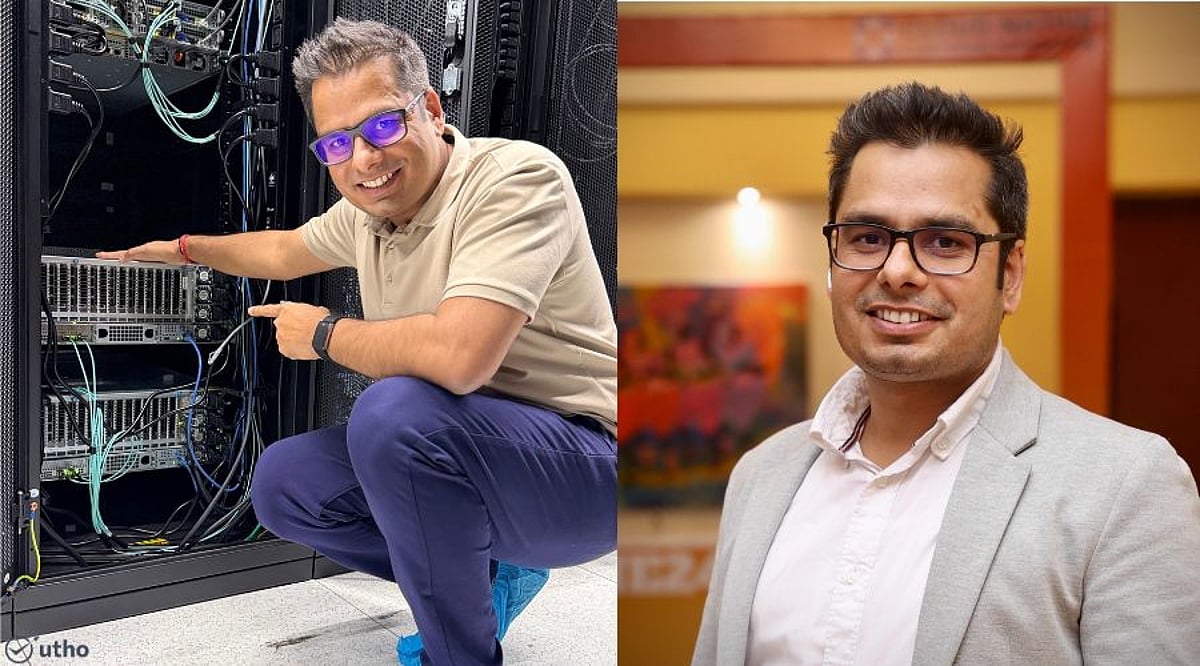
    Utho Cloud, India’s sovereign cloud and AI infrastructure platform, has announced a landmark commitment to deploy 10,000 GPUs over the next 7–8 quarters. The investment is part of a long-term vision to build India’s sovereign AI compute backbone, enabling businesses, startups, researchers, and public sector organizations to access high-performance AI infrastructure hosted entirely within the country.

    The GPU portfolio will span NVIDIA’s enterprise-grade offerings, including the H200, H100, A100, RTX PRO 6000 Blackwell, and L4 models. This expansion guarantees GPU availability without long waitlists or auction-based pricing, a significant advantage in a market often plagued by shortages and unpredictable costs.

    Key features of the infrastructure include:

    • Sovereign AI compute: Customer data and model training remain within their chosen jurisdiction, with full ownership of intellectual property.
    • Transparent and predictable pricing: Up to 60% lower than traditional hyperscaler GPU rates, with billing in Indian Rupees.
    • Flexibility: Supports workloads from single-model inference to large-scale distributed AI training.
    • 24/7 human support: Dedicated assistance for mission-critical production AI workloads.

    With over 51,000 users, Utho Cloud already offers cloud infrastructure with data residency in India and compliance with the Digital Personal Data Protection (DPDP) Act.

    “We have spent years building a cloud platform designed around India’s data sovereignty and regulatory requirements. With this expansion, we will offer guaranteed GPU availability without extended wait times, sovereign AI compute with data and model training hosted within customer jurisdictions, transparent and predictable pricing, and the flexibility to support workloads ranging from AI inference to large-scale model training. By combining 100% data residency, compliance with the DPDP Act, and cost-efficient AI infrastructure, we aim to remove the barriers that have long limited access to high-performance AI computing and accelerate India’s journey towards becoming a global AI powerhouse.”

    — Manoj Dhanda, Founder and CEO of Utho Cloud

    The announcement comes amid growing concerns over AI compute availability, with GPU shortages, rising costs, and extended procurement timelines emerging as key challenges for enterprises worldwide. Unlike conventional cloud models that often expose businesses to foreign currency billing, unpredictable GPU costs, and infrastructure dependencies outside India, Utho’s sovereign AI platform is designed to provide organizations with predictable pricing in Indian Rupees, complete data residency, and enterprise-grade AI infrastructure deployed within Indian jurisdiction.

    Utho Cloud positions itself as “Bharat ka Cloud” — proudly Indian and sharply attuned to the needs of domestic enterprises. Today, 70% of India’s cloud telephony runs on Utho. Enterprises like FIITJEE, Jindal Steel & Power, and APL Apollo trust the platform, and over 51,000 businesses — from solo developers to unicorn startups — deploy production workloads on infrastructure that Utho owns, operates, and supports 24/7.

  • Vertiv Names Raghavendra Kale as New Channel Head for India to Drive Partner Growth

    Vertiv Names Raghavendra Kale as New Channel Head for India to Drive Partner Growth

    Vertiv (NYSE: VRT), a global leader in critical digital infrastructure, has promoted Raghavendra Kale to the role of channel leader for India. In this capacity, he will spearhead the company’s channel sales strategy across the region, focusing on expanding ecosystem reach, accelerating market penetration, and deepening engagement with key partner segments.

    Prashant Bhatia, vice president of sales at Vertiv India, commented on the appointment: “Raghavendra’s journey with Vertiv reflects deep commitment, strong execution, and a consistent focus on partner success. His ability to build strong relationships and deliver business outcomes has been instrumental in strengthening our channel ecosystem. As we scale our presence in India, the channel will play a pivotal role in driving growth and market reach. Raghavendra’s leadership will help us deepen partner engagement and unlock new opportunities across key segments.”

    With nearly three decades of experience, Kale has built deep domain expertise and strong partner relationships across the industry. In his most recent role as director, West Zone, channel, he played a pivotal role in streamlining operations, strengthening the partner ecosystem, and driving consistent business performance across the region.

    In his new role, Kale will also drive the development of a scalable partner engine to nurture and grow strategic accounts, further strengthening Vertiv’s channel-led growth strategy in India.

    Speaking on his new role, Kale said: “I am honored to take on this responsibility at a time when demand for resilient and scalable digital infrastructure is accelerating in India. I look forward to working closely with our partners to drive innovation, expand our reach, and deliver greater value to customers.”

    Vertiv continues to reinforce its commitment to a partner-first approach and sustained growth in India. The company’s portfolio spans power, thermal management, and IT infrastructure solutions, including uninterruptible power supply (UPS) systems, precision cooling, and integrated rack and enclosure offerings, complemented by software and services that give customers greater visibility and control across the data center lifecycle. As organizations across industries scale their digital and AI-ready infrastructure, this breadth of offerings enables partners to address a wide range of customer needs, from edge deployments to hyperscale environments, further reinforcing the channel’s role as a key extension of Vertiv’s go-to-market strategy in India.

    For more information about the Vertiv channel partners program, visit Vertiv.com.

  • Best Indian Web Development Companies for 2026: Trusted by Businesses

    Best Indian Web Development Companies for 2026: Trusted by Businesses

    Introduction

    As businesses increasingly move online, choosing the right web development partner is critical. India has emerged as a global hub for web development, offering a blend of technical expertise, scalability, and cost-effectiveness. Here are the top Indian web development companies that businesses trust in 2026.

    1. TCS: Enterprise-Grade Web Development

    TCS delivers secure, scalable digital platforms for large enterprises requiring complex integrations, cloud capabilities, and long-term technology support.

    2. Infosys: AI-Powered Digital Experiences

    Infosys combines web development with artificial intelligence, cloud computing, automation, and digital transformation for modern enterprise applications.

    3. HCLTech: Complex Technology Ecosystems

    HCLTech builds enterprise web platforms integrated with backend systems, cloud infrastructure, cybersecurity frameworks, and advanced digital engineering capabilities.

    4. Tech Mahindra: Industry-Focused Solutions

    Tech Mahindra develops customized web solutions for telecommunications, manufacturing, healthcare, banking, and businesses undergoing large-scale digital transformation.

    5. Aalpha Information Systems: Custom Development

    Aalpha provides full-stack development, e-commerce platforms, custom software, and mobile applications for businesses seeking flexible technology partnerships.

    6. Emizen Tech: E-commerce Expertise

    Emizen Tech focuses on web development, e-commerce platforms, custom software, and digital solutions designed for businesses across multiple industries.

    7. IndiaNIC: Digital Product Development

    IndiaNIC helps businesses create custom websites, web applications, software products, and digital platforms tailored to specific operational requirements.

    8. Hidden Brains: Enterprise Digital Transformation

    Hidden Brains offers web applications, enterprise software, cloud solutions, and emerging technologies for organizations pursuing long-term digital innovation.

    9. Acodez IT Solutions: Design And Development

    Acodez combines responsive web design, development, e-commerce capabilities, and digital solutions to help businesses build engaging online experiences.

  • 8 Indian Fintechs Including BharatPe and Paytm Make CNBC-Statista Global Top 2026 List

    8 Indian Fintechs Including BharatPe and Paytm Make CNBC-Statista Global Top 2026 List

    Eight Indian fintech companies have been recognized in the CNBC-Statista World’s Top Fintech Companies 2026 list, underscoring the country’s expanding influence in the global financial technology sector. The featured firms are BharatPe, Paytm, PhonePe, Razorpay, Cashfree, Freecharge, MobiKwik, and Skydo, all placed in the payments category, which remains the largest segment in this year’s rankings.

    Compiled annually by CNBC and market research firm Statista, the list identifies leading fintech companies across multiple business segments worldwide. Payments accounted for 115 companies, or 23% of the 500 firms featured, reaffirming its dominance. The report notes that payment companies are now expanding beyond digital checkouts to focus on real-time domestic and cross-border money movement, reflecting evolving customer and business needs.

    Wealth technology was the second-largest category with 75 companies (15% of the list), followed by enterprise fintech and alternative financing, each comprising 12%. This year’s rankings introduced a separate regtech category, which along with digital assets remained one of the smallest segments, signaling increased focus on regulatory compliance as artificial intelligence becomes more prevalent in financial services.

    Statista evaluated approximately 3,500 fintech companies using over 25,000 data points, assessing indicators such as revenue growth and employee headcount. The final list features companies headquartered in more than 50 countries and territories, listed alphabetically within their categories rather than assigned numerical positions.

    According to McKinsey, the global fintech industry generated $650 billion in revenue in 2025, a 21% year-on-year increase, compared to 6% growth for the broader financial services industry. The report also noted 31 fintech IPOs in 2025, with the combined market capitalization of listed fintech companies reaching a record $850 billion.

    The inclusion of eight Indian companies highlights the country’s growing role in global fintech. As digital payments continue to expand and companies diversify their offerings, Indian firms are strengthening their position alongside established global players.

  • Stock Market Wrap: Sensex Drops 567 Points, Nifty Slips Below 24,100 During Broad Sell-Off

    Stock Market Wrap: Sensex Drops 567 Points, Nifty Slips Below 24,100 During Broad Sell-Off

    Indian benchmark indices ended Wednesday’s session in the red, as selling pressure across banking, IT, and pharmaceutical stocks dampened investor sentiment. Rising crude oil prices, escalating geopolitical tensions in the Middle East, and global trade uncertainties fueled a risk-off mood, extending the recent losing streak for both the BSE Sensex and NSE Nifty50 despite selective gains in auto stocks.

    Market Performance

    The BSE Sensex closed at 76,903.37, down 567 points (0.73%), while the NSE Nifty50 settled at 24,021.75, losing 166 points (0.69%). Selling was widespread, with 15 of the 16 sectoral indices finishing in negative territory. Pharma stocks tumbled amid new US tariff concerns, while bank stocks declined on weak earnings reports. Midcap and small cap indices also ended lower.

    Top Gainers and Losers

    Top Gainers: Some stocks posted gains, though exact percentage changes were not disclosed in the end-of-day summaries. Notably, the automobile sector delivered decent quarterly results despite the broader market weakness.

    Top Losers: Banking, IT, and pharma stocks were among the worst performers, dragged by profit-taking and external headwinds.

    Market Trends and Key Takeaways

    Wednesday’s decline underscores the heightened sensitivity of Indian equities to global developments. Tensions in the Strait of Hormuz pushed crude oil prices above $92 per barrel, raising concerns about India’s import bill, inflation, and corporate profitability. Additionally, new US tariff proposals on imported drugs weighed heavily on pharmaceutical companies.

    The trading session also highlighted the importance of earnings reports: while the auto sector posted decent results, overall sentiment remained cautious. Moving forward, investors will closely monitor geopolitical events, crude oil price movements, foreign institutional investor (FII) activity, and the ongoing earnings season. Market volatility is likely to persist until clearer signals emerge.

  • Glomo Achieves Visa Principal Membership, Becoming India’s First Non-Bank Acquirer on the Network

    Glomo Achieves Visa Principal Membership, Becoming India’s First Non-Bank Acquirer on the Network

    Glomo, a regulated payment service provider based at GIFT IFSC in Gujarat, has announced that it is now a Visa Principal Member. This milestone makes Glomo the first non-bank acquirer in India and the first GIFT IFSC-licensed payment service provider to join the Visa network directly.

    With this membership, Glomo can process Visa-powered card payments for merchants on its platform without relying on intermediary acquirers. This direct access gives the company greater control over transaction approvals, fraud monitoring, risk management, and dispute handling through Visa’s infrastructure. The move is expected to accelerate merchant onboarding and payment processing, particularly for businesses with cross-border needs such as exporters, AI platforms, SaaS companies, financial services firms, and educational platforms.

    Benefits for Merchants and the Payments Ecosystem

    The direct acquiring arrangement reduces the number of intermediaries in cross-border card payments, which often create friction in settlement, approvals, and risk management. For merchants, this translates into more predictable settlement times, improved payment performance, and a smoother experience as they expand internationally. Glomo also plans to use its membership to enhance card infrastructure capabilities, including the development of issuing products.

    Akash Arun, Founder and CEO of Glomo, commented: “Cross-border card payments often pass through multiple intermediaries, which can create friction across settlement, transaction approvals, risk management and dispute handling. Becoming Visa’s Principal Member gives us direct control over these critical parts of the payment chain. For merchants, this can translate into more predictable settlement, improved control over payment performance and a more consistent experience as they expand across markets. It is also an important validation of the financial infrastructure being built at GIFT IFSC.”

    Rishi Chhabra, Country Manager for India at Visa, added: “We are pleased to welcome Glomo as a Principal Member of the Visa network. As Indian businesses expand across borders, trusted and secure payment infrastructure becomes critical to enabling commerce that is seamless, reliable and resilient. Visa’s global payments network, built on decades of trust, security and scale, will play a crucial role in supporting this evolution.”

    Strategic Implications for India’s Cross-Border Payments

    By managing acquiring directly, Glomo can optimize merchant onboarding, payment processing, settlement, and risk policies. It also helps reduce unnecessary foreign exchange conversion costs and limitations associated with intermediary-led processing. The announcement comes at a time when more Indian businesses are seeking robust payment infrastructure that can handle multiple currencies, banking systems, and regulatory requirements.

    About Glomo

    Glomo (Glomo Payments IFSC Private Limited) is the first regulated payment service provider at GIFT City, building financial infrastructure for global businesses. It offers a unified platform for collecting, holding, disbursing, and managing funds across multiple currencies. The platform integrates global payments, payouts, treasury management, identity verification, AML screening, and outward remittance through a single compliance-first stack. Glomo partners with over 18 large banks and non-banks to provide superior payment capabilities to enterprise customers. Authorized by IFSCA and PCI-DSS certified, Glomo is designed for businesses that need compliant, programmable cross-border money movement.

    For more information, visit www.glomopay.com.

  • Meesho Denies GST Allegations, States No SEBI Notice Received

    Meesho Denies GST Allegations, States No SEBI Notice Received

    Meesho has denied allegations concerning its Goods and Services Tax (GST) treatment, following reports that proxy advisory firm InGovern had asked the Securities and Exchange Board of India (SEBI) to review the company’s tax practices. The e-commerce platform clarified that it has not received any notice or communication from SEBI or any other regulatory body.

    The controversy emerged after ET Now reported that InGovern raised concerns about Meesho’s GST treatment. The representation to SEBI reportedly highlighted potential financial, disclosure, and regulatory risks linked to the company’s tax position. However, there is no confirmation that SEBI has initiated an investigation or requested clarification from Meesho.

    A Meesho spokesperson stated, “Meesho rejects the claims in this representation, which reflects no finding by SEBI or any tax authority. We have not received any communication from SEBI or any regulator on this matter.” The spokesperson added that the company remains confident in its tax position, asserting that its GST treatment complies with the existing legal framework and that it continues to meet all disclosure requirements.

    Meesho also questioned the authenticity of the documents attached to the representation. According to the company, the sample invoice included in the complaint appears to belong to an Amazon employee whose LinkedIn profile identifies the person as a finance manager. This raises questions about the credibility of the supporting material.

    The issue arises at a time when Meesho is already contesting a separate GST demand of Rs. 14.29 crore. Despite the latest allegations, the company reiterated that it has received no communication from any regulator. SEBI has not yet issued any public statement on the matter.