Tag: India

  • Why the RBI Warns Private Cryptocurrencies Threaten Emerging Economies Like India

    Why the RBI Warns Private Cryptocurrencies Threaten Emerging Economies Like India

    The Reserve Bank of India (RBI) has reiterated its warning that private cryptocurrencies pose significant risks to emerging economies like India. In its latest comments before a parliamentary standing committee, the central bank underscored that virtual digital assets (VDAs) should not receive legal recognition as they could undermine the country’s financial system.

    According to RBI officials, private cryptocurrencies operate outside the control of India’s financial system, creating risks that are difficult to manage. The central bank supports strict restrictions rather than full legal approval, emphasizing that innovation is welcome only when it protects the economy.

    Loss of Control Over the Economy

    One of the RBI’s primary concerns is the potential loss of control over India’s monetary system. Central banks manage money supply, interest rates, and inflation to maintain economic stability. If cryptocurrencies become widely used for savings or payments, fewer people may rely on the Indian rupee, reducing the RBI’s ability to implement effective monetary policy. This risk is amplified if foreign stablecoins gain acceptance, as they are tied to currencies like the US dollar rather than the rupee.

    Financial Stability Risks

    The RBI warns that cryptocurrencies can cause financial instability due to their extreme price volatility. A digital asset may surge in value one week and plummet the next, leading to heavy investor losses. If a large portion of household savings shifts into cryptocurrencies, a market downturn could reduce consumer spending and savings, affecting the broader economy. Unlike bank deposits, cryptocurrencies lack government backing or deposit insurance, leaving investors unprotected if a platform fails or a token collapses.

    Illegal Transactions and Tax Compliance

    Another major concern is the facilitation of illegal activities through cryptocurrencies. Cross-border transactions and offshore exchanges make it difficult for authorities to track money movements, potentially enabling money laundering, tax evasion, and financing of unlawful activities. Even when suspicious transactions are identified, enforcement is challenging if the platform is based abroad.

    India taxes cryptocurrency profits at 30%, with a 1% Tax Deducted at Source (TDS) on many transactions. However, tax compliance remains weak. Despite nearly 39 million crypto holders and digital assets worth $2.1 billion as of May 2026, fewer than 25% of traders correctly reported their holdings in 2022-23. Offshore exchanges and private wallets exacerbate this issue.

    Greater Vulnerability of Emerging Economies

    The RBI believes developing countries face higher risks than advanced economies. India’s financial system relies heavily on banking for economic growth. A shift of household savings from banks to cryptocurrencies could reduce deposits, limiting loans to businesses and consumers. Additionally, investments in foreign-backed digital assets may pressure the Indian rupee, especially during economic uncertainty.

    Digital Rupee as the Preferred Alternative

    Instead of supporting private cryptocurrencies, the RBI promotes the Digital Rupee (e₹), India’s Central Bank Digital Currency (CBDC). Unlike private digital assets, the Digital Rupee is issued and backed by the RBI, offering digital payment speed and convenience while maintaining official monetary oversight. This approach allows financial innovation without exposing the economy to the uncertainties of private crypto assets.

    With nearly 39 million Indians holding virtual currencies worth $2.1 billion, the debate over cryptocurrency regulation is crucial. The RBI continues to advocate for financial innovations that ensure stability as India advances its digital economy.
  • HDFC Bank Shares Drop to ₹776.55 After Q1 Results: Margin Pressure Overrides Profit Growth

    HDFC Bank Shares Drop to ₹776.55 After Q1 Results: Margin Pressure Overrides Profit Growth

    HDFC Bank shares came under intense selling pressure on Monday after the country’s largest private lender announced its June quarter (Q1 FY27) results. The stock dropped to ₹776.55, extending losses as investors reacted to weaker-than-expected profitability despite steady business growth.

    Though the bank reported better performance in profitability, loan growth, and deposits, it was under constant pressure on net interest margins (NIMs). The negative market sentiment affected other private banks, including Axis Bank and Kotak Mahindra Bank, which also saw sharp declines.

    Business Growth Remains Strong

    During the quarter, HDFC Bank reported a standalone net profit of ₹19,060 crore, recording year-on-year growth of nearly 5%. Its net interest income increased to approximately ₹33,535 crore, driven by robust credit demand in the retail and corporate segments. Gross advances stood at ₹30.61 lakh crore, while deposits reached ₹31.68 lakh crore, reflecting the performance of its core banking business.

    However, the most disheartening figure was its NIM of 3.26%, which continued to decline due to high funding costs and intense deposit competition.

    Margins Continue to Dominate Investor Concerns

    Although HDFC Bank delivered healthy business growth, investors remained focused on profitability. The banking sector is currently facing higher funding costs, aggressive competition for deposits, and lower lending yields following interest-rate changes. These factors have made margins one of the most closely watched indicators for banking stocks.

    Private Banking Stocks Extend Selloff

    HDFC Bank wasn’t the only one facing troubles. The share prices of Axis Bank and Kotak Mahindra Bank also fell after the release of their quarterly earnings results. ICICI Bank outperformed due to its strong operations and margins.

    Brokerages Continue to See Long-Term Value

    Despite the sharp correction, most brokerage firms have maintained an upbeat outlook on HDFC Bank. Analysts say the lender still benefits from structural advantages, such as a diversified credit book, a solid balance sheet, strong asset quality, and an industry-leading deposit franchise. Several brokerages expect margins to improve gradually as funding costs moderate and the benefits of lower interest rates begin to flow through the balance sheet.

    What Should Investors Watch Next?

    Over the next few quarters, HDFC Bank is expected to face a critical stretch. Investors will be tracking margin recovery, deposit mobilization, and management commentary on funding costs. Meanwhile, Reserve Bank of India policy decisions and the speed of interest rate changes will shape profitability across the banking sector.

    Market Outlook

    Despite Monday’s sharp dip, analysts remain constructive on HDFC Bank’s long-term outlook. The lender continues to show steady business momentum, strong asset quality, and a solid balance sheet. For the near term, the stock may remain reactive to movements in NIMs and funding costs. If margins improve, investor comfort could return and help the share price recover.

    FAQs

    Why did HDFC Bank shares fall after the Q1 results?

    Investors were disappointed by continued pressure on net interest margins despite healthy profit growth, loan expansion and stable deposit mobilisation during the quarter.

    What was HDFC Bank’s net profit in Q1 FY27?

    HDFC Bank reported a standalone net profit of around ₹19,060 crore, registering nearly 5% year-on-year growth in the June quarter.

    What is worrying investors about HDFC Bank?

    The biggest concern remains declining net interest margins, driven by higher funding costs, intense deposit competition and changing interest-rate conditions.

    Are analysts still bullish on HDFC Bank stock?

    Yes. Most brokerages have retained positive ratings, citing strong fundamentals, healthy asset quality, robust loan growth and long-term earnings potential.

    What should investors watch in the coming quarters?

    Investors should monitor margin recovery, deposit growth, funding costs, RBI policy decisions and management’s outlook on future profitability and business growth.

  • India’s AI Boom Propels Data Centres to Strategic National Infrastructure Status

    India’s AI Boom Propels Data Centres to Strategic National Infrastructure Status

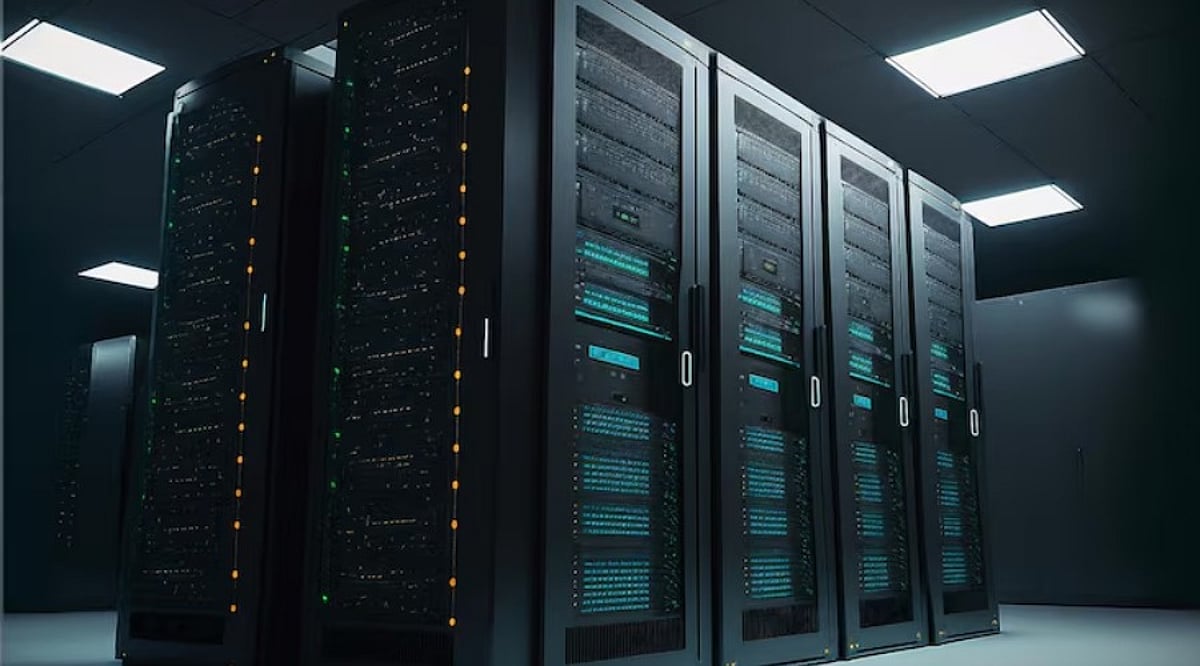
    India’s AI-driven digital transformation is rapidly elevating data centres from supporting infrastructure into a strategic national asset. With cumulative investment commitments exceeding $126 billion, strong government incentives, and surging demand from global hyperscalers, the sector is entering an unprecedented expansion phase.

    Global tech giants including Google, Microsoft, Amazon Web Services (AWS), and domestic operators like AdaniConneX and STT GDC India are aggressively building AI-ready facilities to meet soaring demand for cloud computing and AI workloads. However, long-term success will depend on overcoming significant challenges related to power supply, water usage, land availability, skilled talent, and project execution.

    Market Inflection Point

    According to a July 2026 KPMG report, India’s data centre sector stands at an inflection point where demand visibility, capital inflows, and technology shifts are aligning. The country’s total data centre capacity crossed 1,700 MW in 2025, with 440 MW added—a 160% jump from 2024. Projections indicate another 30% year-on-year growth in 2026, with approximately 500 MW of fresh supply expected. The market’s financial trajectory reflects this pace: IBEF projects the sector will reach $22 billion by 2030 at a 14-15% CAGR, while KPMG identifies a $46 billion opportunity in AI-optimised data centres alone by 2033, growing at a 35.1% CAGR.

    This growth is driven by three simultaneous forces: the explosion in AI workloads, accelerating enterprise cloud adoption, and India’s Digital Personal Data Protection Act, which restricts cross-border data transfers and effectively requires global companies to build physical infrastructure inside the country.

    Hyperscaler Commitments at Unprecedented Scale

    The scale of hyperscaler commitments to India in the past eighteen months is without precedent. Google announced a $15 billion investment in AI data centres in Andhra Pradesh in October 2025. Microsoft followed with a $17.5 billion commitment through 2030, building on an earlier $3 billion program. Amazon Web Services has pledged $35 billion by 2030. Domestically, AdaniConneX has announced $100 billion in renewable-powered hyperscale capacity through 2035, while STT GDC India was recently valued at close to $14 billion.

    India’s attractiveness rests on structural advantages: over 900 million internet users, average monthly wireless data consumption exceeding 25 GB per user, nearly 20% of global AI-related development activities, and software engineers available at roughly $20,000 per year—a fraction of costs in the US, Europe, or Singapore.

    Policy Shift: From Neutral to Active Enabler

    India’s regulatory environment has moved from passive observation to active facilitation. The Union Budget 2026-27 extended a 20-year tax holiday to eligible foreign cloud providers through 2047, along with 25-35% capital incentives for green technology adoption and a 15% safe harbor margin to reduce transfer pricing disputes. The draft National Data Center Policy, when finalized, is expected to streamline land, power, and environmental approvals—historically a primary bottleneck.

    Multiple states have introduced incentive frameworks: Telangana, Maharashtra, Andhra Pradesh, Tamil Nadu, and Uttar Pradesh are leading inflows, while tier-II cities including Ahmedabad, Visakhapatnam, Patna, and Bhopal are seeing growing developer interest driven by lower land costs and 5G rollout.

    The Execution Gap

    Despite momentum, a significant gap exists between announced and operational capacity. Less than 20% of announced capacity from roughly 30 large projects launched between March 2025 and April 2026—collectively adding around 3.5 GW—is currently live. Most large, multi-phase campuses have commissioning timelines extending to 2028 and beyond. Mumbai still accounts for over 50% of operational inventory, and with Chennai, Delhi-NCR, and Bengaluru, these four cities host nearly 90% of tier-I capacity. Hyderabad and Visakhapatnam together account for over 2 GW of planned AI-native capacity, but execution risk remains.

    Sustainability Constraints: Power and Water

    The most consequential constraints are physical. A 100 MW hyperscale facility requires approximately 2 million liters of water per day for cooling, yet 60-80% of Indian data centres face high water stress. Visakhapatnam district, where a 1 GW AI-native campus is planned, has the lowest groundwater availability for industrial use in Andhra Pradesh. On power, AI-ready facilities demand far higher density, often exceeding 50 kW per rack, straining local grid infrastructure. While India has surpassed 500 GW of total installed power capacity and renewables exceed 50% of generation in some periods, coal still supplies around 70% of actual generation. Operators like Nxtra and STT GDC India are already running at 60-63% renewable energy integration, but alignment between renewable capacity additions and data centre locations remains uneven.

    What Must Happen Next

    KPMG’s KG Purushothaman emphasized the need for integrated execution models combining engineering capability, AI readiness, regulatory understanding, and operational accountability. India needs to build delivery infrastructure: grid modernization, water-efficient and liquid-cooling technologies, specialized data centre workforce pipelines, and environmental frameworks that accommodate hyperscale facilities without depleting local resources.

    The workforce dimension is frequently underestimated. India has a world-leading IT workforce but not yet a world-class data centre operations workforce at the scale required. A modern hyperscale campus needs highly specialized mechanical and electrical engineers, HVAC and cooling plant operators, cybersecurity professionals, and power systems specialists—roles not produced in large numbers by current engineering education pipelines.

    The strategic parallel with India’s IT services industry is instructive. Data centres require a different asset base—land, power, water, fiber, and specialized operations—but the underlying logic of structural cost advantage and scale remains similar. Whether India captures 4-5% of global data centre capacity additions between 2026 and 2032, as CBRE projects, will depend less on capital availability and far more on whether physical, human, and regulatory infrastructure can be delivered fast enough to match the ambition.

    Why This Matters

    Artificial intelligence is dramatically increasing demand for computing power, cloud services, and high-performance data centres worldwide. As one of the world’s fastest-growing digital economies, India has an opportunity to become a major global AI infrastructure hub. However, investment announcements alone are not enough. Delivering hyperscale facilities requires reliable electricity, sustainable water management, high-speed connectivity, regulatory clarity, and a skilled workforce. Understanding these opportunities and constraints is essential for technology companies, cloud providers, policymakers, investors, and enterprises planning long-term digital infrastructure strategies.

  • Apple Music and Apple One Subscription Prices Rise in India

    Apple Music and Apple One Subscription Prices Rise in India

    Apple has increased the prices of Apple Music and Apple One subscription plans in India. The new rates are effective immediately for new subscribers, while existing users will see the higher charges applied starting with their next monthly payment. This marks the first price adjustment for Apple’s music streaming service in the country since 2024.

    The Apple Music Individual plan now costs ₹139 per month, up from ₹119. The Student plan has risen from ₹59 to ₹69 per month. The Family plan, which allows up to six family members to enjoy separate accounts with personalized playlists and recommendations, now costs ₹229 per month instead of ₹179.

    Apple has also revised the pricing for its Apple One bundles. The Individual plan now costs ₹195 per month, up from ₹175. The Family plan has increased from ₹365 to ₹445 per month. The Premier plan, which includes the most services, now costs ₹595 per month, compared to the previous ₹499.

    Apple One combines multiple Apple services—including Apple Music, Apple TV+, Apple Arcade, and iCloud storage—into a single subscription. For users who regularly use more than one Apple service, the bundle can still offer cost savings despite the price increases.

    Apple has not provided an official reason for the price hike. However, similar increases have already been implemented in markets such as the United States, the United Kingdom, and parts of Europe. Industry reports suggest that rising music licensing fees and service delivery costs may be contributing factors.

    This subscription price adjustment follows recent price increases on select Mac, MacBook, iPad, Apple TV, and HomePod models in various regions. Apple also raised iPhone prices in Japan. The pattern indicates a broader strategy of increasing costs across both hardware and subscription services.

    Even with the higher prices, Apple One may remain a cost-effective choice for households that use multiple Apple services. The narrower price gap between Apple Music and Apple One could encourage more users to opt for the bundle rather than paying for each service individually.

  • Top Portable Air Conditioners for Compact Spaces in India (2025 Guide)

    Top Portable Air Conditioners for Compact Spaces in India (2025 Guide)

    When the Indian summer heat becomes unbearable, a portable air conditioner offers a flexible and efficient cooling solution for small rooms, apartments, and offices. Unlike bulky window units or expensive split systems, portable ACs can be moved from room to room and require minimal installation. Below, we review the best portable air conditioners for small Indian rooms, highlighting key features to help you stay comfortable without breaking the bank.

    Cruise 1-Ton Portable Air Conditioner

    The Cruise 1-Ton model delivers efficient cooling for compact rooms. It features easy mobility, multiple cooling modes, and simple installation, making it a reliable choice for everyday summer performance.

    Blue Star 1 Ton Portable Air Conditioner

    Blue Star’s portable AC offers quick cooling, user-friendly controls, a sleep mode, and smooth portability. It is well-suited for bedrooms, offices, and studio apartments where space is limited.

    Lloyd 1-Ton Portable Air Conditioner

    Lloyd combines a compact design with effective cooling and dehumidification. Convenient caster wheels allow flexible placement in smaller living spaces without hassle.

    Honeywell Portable Air Conditioner

    Honeywell’s unit features efficient cooling, a built-in dehumidifier, washable filters, and quiet operation. It provides comfortable indoor temperatures even during hot Indian weather conditions.

    Midea Portable Air Conditioner

    Midea delivers balanced cooling performance with digital controls, timer functions, and portable convenience. It is ideal for renters or homes without permanent air conditioning setups.

    Hisense Portable Air Conditioner

    Hisense provides dependable cooling with multiple fan speeds, compact dimensions, easy installation, and smooth movement between rooms whenever required.

    Haier Portable Air Conditioner

    Haier’s model includes energy-efficient operation, intuitive controls, sleep mode, and compact construction, making it perfect for small bedrooms and personal workspaces.

    TCL Portable Air Conditioner

    TCL offers reliable cooling, adjustable airflow, portable convenience, and simple maintenance, helping users stay comfortable indoors during peak summer temperatures.

    Symphony Portable Air Cooler Alternative

    For buyers seeking lower energy consumption, the Symphony portable air cooler is a budget-friendly alternative. It provides portable cooling, easy maintenance, and comfort for compact indoor living spaces.

    Each of these portable air conditioners brings unique strengths to small Indian rooms. Consider your room size, energy efficiency needs, and budget when making a choice. With the right unit, you can beat the heat without sacrificing space or convenience.

  • Top Smartwatches Under Rs. 25,000: Style, Performance, and Battery Life Compared

    Top Smartwatches Under Rs. 25,000: Style, Performance, and Battery Life Compared

    Finding a good smartwatch under Rs. 25,000 is easier than ever. Whether you want Google apps, advanced fitness tracking, or long battery life, this price range has strong options across multiple platforms. Here are the models that stand out for different types of users.

    Smartwatches under Rs. 25,000 now offer a wide range of choices, from full Wear OS devices with Google apps to fitness-focused platforms that prioritize battery life and health tracking. Buyers can choose between productivity features, advanced sports tracking, premium AMOLED displays, long battery life, or stylish everyday designs based on their needs instead of settling for one-size-fits-all devices. Models from Samsung, OnePlus, Garmin, Amazfit, Titan, and Noise each balance software, performance, battery life, and design differently, making the platform and intended use more important than specifications alone.

    Before You Buy

    Start with what matters most. Anyone who wants Google apps, Play Store access, and full notifications should go with Wear OS, though it means charging more often. Garmin and Zepp OS trade a smaller app selection for longer battery life and stronger fitness tracking. Titan and Noise keep prices low by skipping built-in GPS and app stores, which makes them a better fit for everyday use than for serious training. iPhone owners should note that most Wear OS watches work best on Android, and some features may not work as well on iOS.

    Samsung Galaxy Watch FE

    The Galaxy Watch FE is the easiest way into Wear OS at this price. It runs the full platform with a 1.2-inch Super AMOLED screen, NFC for tap-to-pay, and regular Wi-Fi and Bluetooth. The catch is battery life — expect about a day of use, not the multi-day numbers that cheaper watches claim. It sells for around Rs. 12,999, roughly half its launch price.

    Best for: Samsung phone owners who want the full software experience without paying flagship prices.

    OnePlus Watch 2R

    The Watch 2R addresses Wear OS’s battery issue with smarter hardware. A Snapdragon W5 chip runs the main system, while a second, smaller chip handles step counts and heart rate in the background, only waking the full system when needed. This is how it reaches up to 100 hours in Smart Mode and 12 days in Power Saver Mode. It has a 1.43-inch AMOLED display, GPS built for sharper outdoor tracking, and fast charging that fills the battery in about an hour. It’s priced near Rs. 17,999, often lower during sales.

    Best for: Android users who want Wear OS without charging it every single night.

    Garmin Vivoactive 5

    The Vivoactive 5 skips Wear OS altogether, and that’s exactly why it lasts 11 days on a charge while still having a decent AMOLED screen. Its sensor feeds Garmin’s health tools: energy tracking, sleep stages, stress scores, and over 30 sports apps with real GPS, not phone guesswork. It also supports Garmin Pay, though not many Indian banks are on board yet. Price ranges from Rs. 18,999 to Rs. 24,990 depending on the color.

    Best for: Runners and swimmers who want real training data and don’t need a big app store.

    Amazfit Balance 2

    The Balance 2 skips Wear OS too, running its own software built for the outdoors. It has a bright sapphire display, water resistance rated for diving down to 45 meters, and offline maps for over 40,000 golf courses. Battery life reaches 21 days. Next to the Vivoactive 5, it leans more into outdoor and adventure use, while Garmin still wins on training detail. Price sits close to Rs. 24,999.

    Best for: Divers, golfers, and anyone who wants a rugged outdoor watch, not just a notification screen.

    Titan Smart 3

    The Smart 3 drops GPS and app support to keep the price low, and it still feels solid. It has an always-on AMOLED screen, calling support, over 110 sports modes tracked through your phone, and fast charging that adds a day of battery in ten minutes. The price runs from Rs. 5,000 to Rs. 12,000.

    Best for: First-time buyers who want AMOLED and calling without the Wear OS price tag.

    NoiseFit Halo 3

    The Halo 3 goes for looks over specs, shaped like a classic dress watch with metal, leather, and silicone strap options. Its best feature is Noise AI Pro, which handles voice notes, daily briefings, and QR tickets. Like the Titan, it skips GPS and apps. Price ranges from Rs. 4,499 to Rs. 7,999.

    Best for: Buyers who want a watch that looks traditional first, smart second.

    How They Compare

    Matching the Watch to the Buyer: Anyone on Android who wants Google apps and full notifications gets the most out of Samsung. If daily charging is a dealbreaker but Wear OS still matters, OnePlus is the better pick. Runners and swimmers who care about training data more than apps will find Garmin’s battery and sensor accuracy hard to beat. Divers, golfers, and anyone who spends time outdoors get more from Amazfit’s offline maps and dive certification. Budget-conscious first-time buyers get AMOLED and calling from Titan without paying Wear OS prices, and anyone who cares about looks over specs will find Noise’s dress watch design and AI features a rare combination at this price.

    Software support tends to follow the same lines. Samsung and OnePlus, running Wear OS, usually get clearer update commitments over time. Titan and Noise, on the other hand, typically ship with a fixed set of features and get maintenance updates rather than real upgrades. This gap matters more the longer someone plans to keep the watch.

    Final Thought

    Three years ago, a smartwatch under Rs. 25,000 meant picking one flaw to live with: bad battery, weak software, or a design that looked like every other watch on the shelf. Now it means choosing which trade-off works for you. This shift says more about how far this market has come than any single watch on this list.

    FAQs

    1. Which is the best smartwatch under Rs. 25,000 in India? The best smartwatch depends on your needs. Samsung Galaxy Watch FE is ideal for Wear OS users. OnePlus Watch 2R offers excellent battery life with Wear OS, while the Garmin Vivoactive 5 is better for fitness tracking.
    2. Is Wear OS better than Garmin OS or Zepp OS? Wear OS offers Google apps, Play Store access, and richer smartwatch features. Garmin OS and Zepp OS focus more on battery life, health tracking, and sports performance than third-party apps.
    3. Which smartwatch under Rs. 25,000 offers the longest battery life? Among these options, the Amazfit Balance 2 offers up to 21 days of battery life. The Garmin Vivoactive 5 lasts up to 11 days, while the OnePlus Watch 2R can deliver up to 12 days in Power Saver Mode.
    4. Are smartwatches under Rs. 25,000 compatible with iPhones? Most smartwatches support iPhones, but Wear OS models typically provide the best experience with Android devices. Some features, such as replies to notifications and certain apps, may be limited on iOS.
    5. What should I consider before buying a smartwatch under Rs. 25,000? Choose based on your priorities. Wear OS is best for productivity and Google apps. Garmin and Amazfit suit fitness enthusiasts with longer battery life, while Titan and Noise are ideal for everyday use with essential smartwatch features at lower prices.
  • 7 Deep Tech Startups in India Poised for Global Impact in 2026

    7 Deep Tech Startups in India Poised for Global Impact in 2026

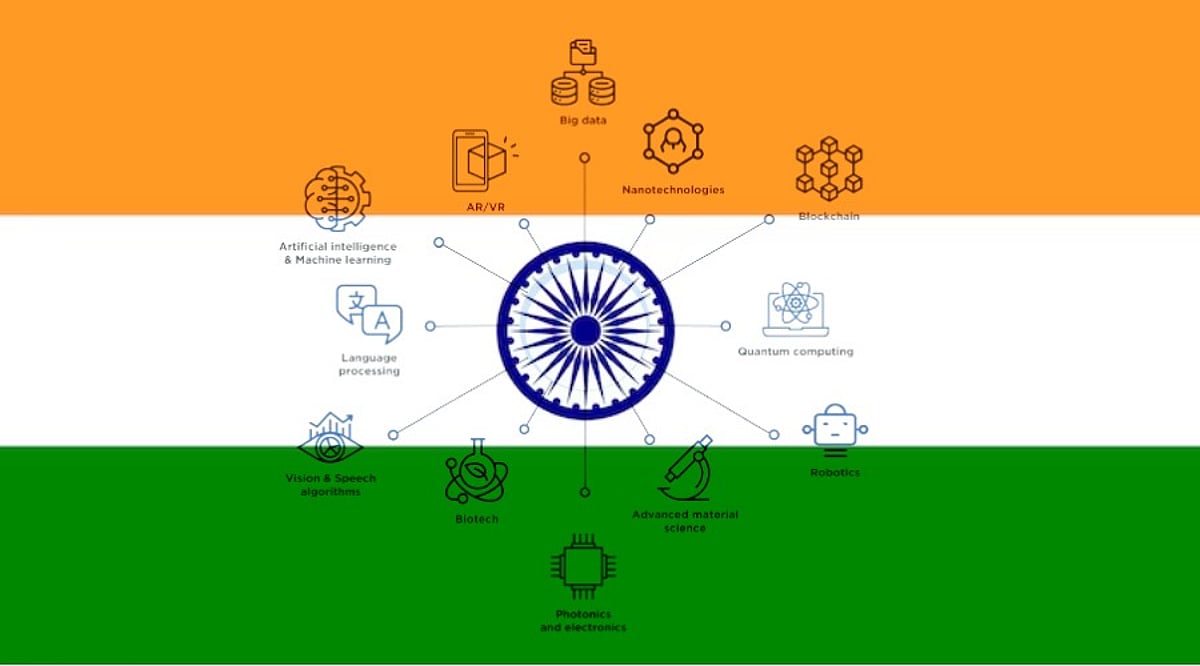
    India’s deep-tech ecosystem is entering a transformative phase as artificial intelligence, space technology, quantum computing, robotics, and advanced manufacturing move from research labs to commercial markets. Backed by rising venture capital investments, government initiatives such as the National Deep Tech Startup Policy discussions and IndiaAI Mission, and growing global demand for frontier technologies, 2026 is shaping up to be a defining year for Indian startups building intellectual property with worldwide impact.

    Leading Deep Tech Companies in India

    Deep-tech ventures are driving innovation through supportive government policies, research institutions, and increased funding. Unlike typical software startups, these companies develop intellectual property in fields like AI, space technology, quantum computing, robotics, and mobility. Here are seven startups to watch in 2026:

    1. Pixxel (Space Technology)

    Founded in 2019 by Awais Ahmed and Kshitij Khandelwal, Bengaluru-based Pixxel is building the world’s largest hyperspectral satellite constellation. Its Earth Observation Platform delivers high-quality imagery for agriculture, climate monitoring, mining, and defense. With global investments and commercial satellite launches, Pixxel has strengthened its international position and advanced analytical capabilities. As demand for geospatial intelligence soars, Pixxel stands out as one of India’s most promising space tech companies in 2026.

    2. Agnikul Cosmos (Space Launch)

    Set up in 2017 by Srinath Ravichandran and Moin SPM, Chennai-based Agnikul Cosmos offers custom-built launch vehicles for small satellites. The company gained worldwide attention by demonstrating a rocket launch using a 3D-printed engine made from a single piece. Supported by institutional and individual investors, Agnikul serves the commercial space sector, research institutions, and defense.

    3. QpiAI (Quantum Computing & AI)

    Founded in 2019 by Dr. Nagendra Nagaraja, QpiAI specializes in using AI and quantum computing to solve complex optimization problems. The company develops quantum computers, software, and AI for enterprise applications in manufacturing, pharma, logistics, and finance. With significant investments and government partnerships, QpiAI is accelerating India’s quantum sector.

    4. Sarvam AI (Generative AI)

    Founded in 2023 by Vivek Raghavan, Pratyush Kumar, and Ankit Jain, Bengaluru-based Sarvam AI focuses on developing sovereign generative AI models tailored for India’s multilingual environment. Its large language models, enterprise AI, and conversational systems support business and government initiatives. Having attracted funding from prominent investors and being selected for the IndiaAI Mission to build sovereign AI, Sarvam AI is poised to become a key player in India’s AI landscape in 2026.

    5. Qure.ai (Healthcare AI)

    Formed in Mumbai in 2016 by Prashant Warier and Pooja Rao, Qure.ai enhances medical imaging using AI. Its diagnostic tools help doctors identify diseases such as tuberculosis, lung conditions, and strokes from radiology images. The company operates in multiple countries, expanding through partnerships, and is one of the most commercially successful Indian healthcare AI firms.

    6. Ati Motors (Autonomous Industrial Robotics)

    Established in 2017 by Saurabh Chandra, Saurabh Agarwal, and Sikander Khan, Bengaluru-based Ati Motors specializes in Autonomous Mobile Robots (AMRs) for material movement in factory floors and warehouses. With enterprise adoption worldwide and additional funding, the company has gained a strong market position. As smart factories become more common, Ati Motors is well-positioned for growth in industrial automation.

    7. Vecmocon Technologies (EV Deep Tech)

    Headquartered in New Delhi and founded in 2016 by Peeyush Asati, Pallav Gupta, and Aman Raj, Vecmocon Technologies provides intelligent electronics, battery management systems, IoT platforms, and vehicle control units for electric vehicles. Serving two-wheelers, three-wheelers, and commercial EVs, the company continues to attract investment amid India’s growing electric mobility push, making it a leading innovator in clean mobility.

    Deep Tech Market Overview

    Rising enterprise adoption, defense requirements, and global demand for frontier technologies are accelerating commercialization. As startups increasingly collaborate with academia, industry, and public institutions, India’s deep-tech ecosystem is expected to expand further. For enterprise AI, Sarvam AI leads the way, while Pixxel and Agnikul Cosmos are reshaping space and defense technologies. Qure.ai continues transforming healthcare diagnostics, Ati Motors strengthens industrial automation, Vecmocon advances clean mobility, and QpiAI represents India’s growing ambitions in quantum computing. Together, these companies showcase the breadth and maturity of India’s rapidly evolving deep-tech ecosystem heading into 2026.

    Frequently Asked Questions

    What are deep tech companies?

    Deep tech companies create breakthrough technologies rooted in scientific research and engineering, including artificial intelligence, robotics, quantum computing, biotechnology, semiconductors, and space systems with strong intellectual property.

    Why is India’s deep tech sector growing rapidly?

    India’s deep tech sector is expanding due to increasing venture capital, government initiatives, research collaboration, skilled talent, and rising enterprise demand for frontier technologies across multiple industries.

    Which Indian company is leading in space technology?

    Pixxel specializes in hyperspectral Earth observation satellites, while Agnikul Cosmos develops customizable launch vehicles, making both companies pioneers in India’s rapidly growing private space industry.

    Which startups are driving AI innovation in India?

    Sarvam AI develops multilingual foundation models for enterprises, while Qure.ai uses artificial intelligence to improve medical imaging, disease detection, and clinical decision-making across healthcare systems worldwide.

    Which deep tech sectors offer the biggest opportunities in 2026?

    Artificial intelligence, quantum computing, space technology, robotics, healthcare AI, clean mobility, and semiconductor innovation are expected to drive investment, commercialization, and global competitiveness throughout India’s deep tech ecosystem in 2026.

  • Apple Back-to-School 2026 in India: Free AirPods & Apple Pencil Pro with Education Discounts

    Apple Back-to-School 2026 in India: Free AirPods & Apple Pencil Pro with Education Discounts

    Apple has officially launched its annual Back-to-School promotion in India, offering eligible students and educators free AirPods or an Apple Pencil Pro with qualifying Mac and iPad purchases. The deal runs from July 16 to August 27, 2026 and can be combined with Apple’s education pricing for extra savings.

    Free AirPods with Eligible MacBooks

    Customers who buy a qualifying MacBook Air or MacBook Pro can choose either AirPods 4 or an AirTag 4-Pack at no extra cost. Those who prefer higher-end audio can upgrade to AirPods 4 with Active Noise Cancellation (ANC) for an additional ₹5,000, or AirPods Pro 3 for an additional ₹13,000. Apple says the offer provides savings of up to ₹12,900 on eligible Mac purchases.

    Education pricing further reduces device costs. The 13-inch MacBook Air with the M5 chip is available at ₹1,37,900 (down from ₹1,49,900), and the 14-inch MacBook Pro M5 is priced at ₹2,27,900 for eligible buyers (down from ₹2,39,900).

    Free Apple Pencil Pro with Select iPads

    Customers purchasing eligible iPad Air or iPad Pro models receive a free Apple Pencil Pro. If they instead choose an AirTag 4-Pack or AirPods 4, an additional ₹2,000 is required. Upgrading to AirPods 4 with ANC costs ₹7,000 extra, and AirPods Pro 3 costs ₹15,000 extra. Apple states the iPad promotion saves up to ₹10,900.

    Who Can Avail the Offer?

    The promotion is open to college students, newly admitted students, parents buying for eligible students, and employees of public and private educational institutions. Eligibility verification is mandatory at checkout via the Apple Education Store, the Apple Store app, or Apple Retail Stores.

    The offer does not apply to the MacBook Neo, iPad mini, standard iPad, or Apple’s desktop Mac lineup. Those devices can still be purchased at education prices but are not eligible for the free accessory program.

    Apple also continues its free engraving program on qualifying accessories through authorized channels.

  • India’s Semicon 2.0 Program to Take Equity Stakes in Chip Startups, Shifting from Grants to Venture-Style Funding

    India’s Semicon 2.0 Program to Take Equity Stakes in Chip Startups, Shifting from Grants to Venture-Style Funding

    The Indian government is preparing to take equity stakes in semiconductor startups under the newly approved Semicon 2.0 program, signaling a major shift in how it supports the country’s chip industry. Instead of relying primarily on one-time grants, the Centre plans to co-invest alongside venture capital (VC) firms, providing funding to promising startups while allowing founders to retain operational control. The move aims to strengthen India’s semiconductor design ecosystem and attract greater private investment into one of the country’s most strategic sectors.

    The policy is part of the broader India Semiconductor Mission (ISM) 2.0, which received Cabinet approval earlier this week with an outlay of Rs. 1.27 lakh crore to expand domestic semiconductor manufacturing, chip design, packaging, research, and supply-chain capabilities.

    From Grants to Venture-Style Funding

    Under the new scheme, eligible semiconductor startups that obtain funding from private venture capital firms would also receive matching investment from the government on an equity basis. Unlike conventional government funding schemes, the government will not seek board representation or management control in these startups.

    The Centre also plans to exit its investments as the companies mature or obtain additional funding, recycling the capital into other semiconductor firms. More mature and larger companies would be supported through royalty payments.

    Semicon 2.0 Expands Beyond Chip Manufacturing

    Semicon 2.0 emphasizes developing every link in the semiconductor value chain, including design, packaging, materials, equipment manufacturing, research, and skilled labor. The Indian government anticipates this will build a robust ecosystem at home, reduce reliance on foreign technology, and position India as a competitive player in the global semiconductor market.

    Speaking at a media interaction on Wednesday, India Semiconductor Mission (ISM) CEO Amitesh Kumar Sinha said, The government will also match the amount brought in by investors. The Centre would invest on the same commercial terms and hold the same class of equity as private investors. He added, We don’t want to interfere in their day-to-day working, clarifying that the government would remain a financial investor without board representation. Detailed operational guidelines will be issued separately.

    Sinha also noted, When the revenue starts flowing, we’ll take back 1.5 times the amount the government has given.

    A Confidence Boost for India’s Startup Ecosystem

    This move reflects an understanding that semiconductor R&D requires patient, long-term investment. Semiconductor companies often take years to become profitable as they develop innovative products. By having the government share risks with VC funds, the program is expected to increase private financing for young enterprises and provide more stable financial conditions during the startup stage. It may also encourage more entrepreneurs to pursue semiconductor development, leveraging India’s large engineering workforce.

    Bigger Than Startup Funding

    Beyond funding individual firms, the policy signals a fundamental shift in India’s industry approach. Rather than simply offering incentives, the Indian government is positioning itself as a long-term ecosystem builder by making equity investments that foster innovation and recycle public money back into the economy.

    If the strategy succeeds, it could create a steady pipeline of domestic semiconductor firms capable of supplying products for industries such as artificial intelligence, electric vehicles, telecommunications, and defense. At a time when global competition for stable chip supplies is intensifying, India is aiming to become not just a manufacturing hub but also an innovation center.

  • India’s Forex Reserves Rise to $675.16 Billion After Weekly Gain

    India’s Forex Reserves Rise to $675.16 Billion After Weekly Gain

    India’s foreign exchange reserves increased for the second consecutive week, rising by $964 million to reach $675.16 billion for the week ending July 10, according to data released by the Reserve Bank of India (RBI). This follows a much larger jump of $7.26 billion in the previous week, signaling a recovery in the country’s external financial position.

    The primary driver of the increase was foreign currency assets, which grew by $930 million to $546.51 billion during the reporting period. These assets, which include major global currencies such as the euro, pound sterling, and Japanese yen, fluctuate in value against the US dollar. Additionally, gold reserves rose by $24 million to $105.23 billion, while Special Drawing Rights (SDRs) with the International Monetary Fund (IMF) increased by $3 million to $18.626 billion. India’s reserve position with the IMF also edged up by $7 million to $4.793 billion.

    The back-to-back weekly gains come after several weeks of decline, which had been driven by RBI’s intervention in the foreign exchange market to stabilize the rupee amid geopolitical tensions in the Middle East. Earlier this year, India’s forex reserves hit a record high of $728.494 billion in late February, but subsequent volatility led to sell-offs by the central bank to curb sharp currency fluctuations.

    The RBI has reiterated that it does not target a specific exchange rate for the rupee but will continue to monitor market conditions and act as needed to ensure stability. Strong forex reserves are crucial for the country to manage import payments, meet external financial obligations, and navigate global economic uncertainties. Although reserves remain below the peak, the latest increase underscores an improving external financial landscape.