Category: Automotive

  • Why ADAS Demands Systems Thinkers, Not Just Engineers: The Rise of Cross-Disciplinary Expertise

    Why ADAS Demands Systems Thinkers, Not Just Engineers: The Rise of Cross-Disciplinary Expertise

    Advanced Driver Assistance Systems (ADAS) are no longer defined by isolated engineering disciplines. Instead, they represent a convergence of mechanical design, electronics, software, sensor technology, and human-centered design. The complexity of modern ADAS—spanning everything from real-time sensor fusion to predictive algorithms—demands professionals who can see the bigger picture while understanding the intricate workings of each component. A purely mechanical or purely software-centric approach often leaves gaps; only a cross-disciplinary, systems-oriented mindset can ensure that all moving parts work in harmony to deliver safe, reliable, and user-friendly solutions.

    Gaurav Baban Pokharkar has made a career in this changing interlinked multilateral scenario. Having started his education in mechanical engineering and after graduating and returning to work in his field of study after becoming a self-taught coder, he has naturally made the shift between old and new fields of discipline. The development of his career can be explained as a calculated growth within the engineering of vehicle structures to roles related to leadership concerning ADAS, in which he has been in charge of the integration of advanced safety systems and their calibration. This career path is motivated by the fact that he has integrated mechanical, software and validation organizations against a common vision that ensures a balance between innovation and practices, regulatory requirements and consumer demands.

    His work exemplifies how systems thinking transforms ADAS development. By automating large-scale data analysis processes through scripting and Linux-based tools, he accelerated validation cycles by nearly 70%, enabling quicker identification of issues and reducing the time to implement corrective measures. This efficiency not only improved engineering turnaround but also directly contributed to cost savings and resource optimization. In another instance, his analytical rigor during on-road testing identified a performance issue that, if overlooked, could have led to production delays and additional development costs. His ability to translate technical findings into actionable, system-wide improvements highlights the real-world value of a multidisciplinary approach in high-stakes automotive programs.

    His technical competence can be measured: fewer rework cycles, more prompt deliveries of calibration files, and increased customer satisfaction are all signs of more than technical skill. They address a sentiment that measures success not on the workability of individual components but rather the workability of the whole system of vehicles in real-world conditions. His ability to anticipate downstream consequences, to get cross-functional teams pulling in the same direction, and to make strategic tradeoffs shows how ADAS development is enhanced by leaders who think in systems, not silos.

    Looking ahead, Gaurav believes that the path forward for ADAS will be shaped by even greater integration of artificial intelligence, computer vision, and edge computing. Yet, he notes that as these technologies advance, so too will the need for holistic oversight that ensures safety, compliance, and reliability remain paramount. His journey reinforces a critical truth in the ADAS arena: innovation is not solely about introducing new technology—it is about orchestrating diverse elements into a cohesive system that consistently serves its purpose in the real world.

  • Top 7 Affordable Automatic Cars Under ₹10 Lakh for First-Time Buyers in 2026

    Top 7 Affordable Automatic Cars Under ₹10 Lakh for First-Time Buyers in 2026

    Buying your first car is exciting, but navigating the options under ₹10 lakh can be overwhelming, especially when you want an automatic transmission for easy city driving. We’ve rounded up the best automatic cars available in 2026 that combine affordability, reliability, and modern features — perfect for newcomers behind the wheel.

    Maruti Suzuki Celerio AMT: Effortless Urban Commuting

    The Maruti Suzuki Celerio AMT remains one of the most budget-friendly automatic cars for first-time buyers. Its compact size, light steering, and fuel-efficient petrol engine make daily commuting stress-free. The Auto Gear Shift transmission delivers smooth operation in city traffic, while low maintenance costs and an extensive service network keep ownership convenient and affordable.

    Hyundai Grand i10 Nios AMT: Premium Comfort Meets Style

    The Hyundai Grand i10 Nios AMT blends stylish design with a refined automatic driving experience. It offers a feature-rich cabin, touchscreen infotainment, wireless smartphone connectivity, rear AC vents, and multiple safety features. Its smooth AMT gearbox and comfortable ride quality make it an excellent choice for beginners seeking convenience without exceeding the ₹10 lakh budget.

    Maruti Suzuki WagonR AMT: Practical Value and Space

    The WagonR AMT continues to attract buyers with its spacious cabin, tall seating position, and excellent fuel economy. The automatic transmission reduces driver fatigue during heavy traffic, while generous headroom and boot space improve practicality. Reliable performance, affordable servicing, and strong resale value make it a dependable first automatic car.

    Tata Tiago AMT: Safety and Features First

    The Tata Tiago AMT stands out with its solid build quality, modern styling, and impressive safety credentials. Equipped with multiple airbags, electronic stability features, and a responsive automatic transmission, it offers confidence to new drivers. Its balanced ride, premium interiors, and competitive pricing make it one of the strongest value-for-money automatic hatchbacks.

    Renault Kwid AMT: SUV-Inspired Design for Young Buyers

    The Renault Kwid AMT offers high ground clearance, compact dimensions, and an easy-to-use automatic transmission suited for urban driving. Its modern digital instrument cluster, touchscreen infotainment system, and efficient petrol engine provide a pleasant ownership experience. Affordable pricing and stylish SUV-inspired looks make it appealing to young first-time buyers.

    Maruti Suzuki S-Presso AMT: Simplicity and Visibility

    The Maruti Suzuki S-Presso AMT features a high driving position that provides excellent road visibility for beginners. Its lightweight controls, efficient petrol engine, and compact footprint help drivers confidently navigate crowded city streets. The automatic gearbox minimizes effort in stop-and-go traffic, while low running costs enhance its appeal as a practical entry-level car.

    Choosing the Right Automatic Car in 2026

    When selecting an automatic car under ₹10 lakh, consider safety ratings, after-sales service, fuel efficiency, features, and long-term ownership costs — not just the price tag. With several reliable automatic hatchbacks available in 2026, first-time buyers can enjoy a comfortable, stress-free driving experience while staying within a practical budget and meeting everyday mobility needs.

  • Top 5 350cc Motorcycles for Long-Distance Riding in 2026

    Top 5 350cc Motorcycles for Long-Distance Riding in 2026

    The 350cc motorcycle segment delivers an ideal balance of performance, comfort, and everyday practicality. In 2026, riders can choose from cruisers, modern classics, and sportier roadsters. These motorcycles offer relaxed highway performance, manageable power, and strong road presence, making them suitable for weekend getaways, touring adventures, and extended journeys across varied road conditions.

    Royal Enfield Meteor 350

    The Royal Enfield Meteor 350 is designed for relaxed long-distance touring. Its cruiser-style ergonomics, comfortable seat, and stable highway performance make extended rides easier. The 349cc engine delivers predictable power and strong low-end torque. It is an excellent choice for riders who prioritize comfort, relaxed cruising, and a dedicated touring-focused experience.

    Honda H’ness CB350

    The Honda H’ness CB350 appeals to riders seeking refinement and comfort on long journeys. Its smooth engine, upright riding position, and premium feel make it suitable for highways and weekend touring. The motorcycle also offers everyday usability, making it a practical option for riders who want one motorcycle for commuting and longer road trips.

    Royal Enfield Classic 350

    The Royal Enfield Classic 350 remains one of the segment’s most versatile motorcycles. Its upright ergonomics, comfortable seat, and stable chassis support long-distance riding. The motorcycle combines timeless styling with modern features and dependable performance. For riders seeking a balance between daily practicality, highway capability, and classic design, the Classic 350 remains a strong choice.

    Honda CB350RS

    The Honda CB350RS brings a sportier character to the 350cc motorcycle category. It combines modern styling with a refined engine and comfortable riding ergonomics. The motorcycle suits riders who want a more contemporary design without sacrificing touring ability. It is particularly suitable for weekend riders seeking a balance between urban agility and highway comfort.

    Jawa 350

    The Jawa 350 is aimed at riders who want retro styling with a stronger performance-oriented character. Its distinctive design and engaging riding experience make it stand out in the segment. While long-distance comfort depends on individual preferences, the motorcycle remains an appealing option for riders who value acceleration, character, and classic motorcycle appeal.

    Which 350cc Motorcycle Should You Choose?

    The Royal Enfield Meteor 350 is the strongest choice for relaxed touring, while the Honda H’ness CB350 prioritizes refinement. The Classic 350 is the best all-rounder, the CB350RS offers a sportier experience, and the Jawa 350 appeals to performance-focused riders. Ultimately, comfort, ergonomics, luggage support, and service access should guide your decision.

  • Top Electric Scooters with the Best Real-World Range in 2026

    Top Electric Scooters with the Best Real-World Range in 2026

    Electric scooters are becoming a popular choice for urban commuters, and range is often the deciding factor. Here are the top models that deliver the longest real-world range, based on actual riding conditions.

    Ola Roadster X+

    The Ola Roadster X+ stands out with one of the longest real-world ranges in its segment. Its large battery pack and efficient power management allow riders to cover long distances with confidence. Multiple riding modes help balance performance and battery life, making it suitable for both city rides and highway stretches.

    Simple One

    Simple One has earned a strong reputation for delivering excellent range under normal riding conditions. The scooter combines a high-capacity battery with an efficient motor to maximize every charge. It also offers quick acceleration, modern connected features, and fast charging, making it a practical choice for everyday commuting.

    Ather Rizta

    Designed for family use, the Ather Rizta offers a comfortable ride along with dependable battery performance. Its advanced battery management system helps improve real-world efficiency, even during stop-and-go traffic. Spacious seating, smart connectivity, and a refined riding experience make it ideal for daily city travel.

    TVS iQube ST

    The TVS iQube ST delivers a balanced mix of comfort, performance, and battery efficiency. It offers a reliable real-world range that easily handles regular office commutes and weekend errands. The scooter also features a premium design, connected technology, and the advantage of TVS’s extensive service network.

    Vida V2 Pro

    Hero’s Vida V2 Pro is designed for riders who want convenience without compromising on range. Its removable battery system makes charging simple, especially for apartment residents. The scooter offers smooth performance, practical riding modes, and enough real-world range to comfortably handle everyday travel and longer city rides.

    Bajaj Chetak 3501

    The Bajaj Chetak 3501 combines timeless styling with modern electric technology. Its efficient battery pack delivers consistent range in real-world conditions while maintaining a smooth and refined ride. Strong build quality, premium finish, and reliable after-sales support make it an attractive option for daily commuters.

    Ultraviolette Tesseract

    The Ultraviolette Tesseract is built for riders who want performance as well as long-distance capability. Its advanced battery technology and aerodynamic design improve overall efficiency during everyday riding. Premium features, powerful acceleration, and impressive real-world range make it a strong contender in the premium electric scooter segment.

  • GM Q2 Earnings Surpass Estimates, Automaker Boosts 2026 Profit Forecast

    GM Q2 Earnings Surpass Estimates, Automaker Boosts 2026 Profit Forecast

    General Motors posted stronger-than-expected second-quarter results on Tuesday and raised several full-year forecasts, supported by higher North American profit, lower warranty costs, and smaller EV losses.

    Revenue increased 1.9% year-over-year to $48.03 billion. Adjusted earnings reached $3.57 per share, topping estimates of around $3.20. Adjusted EBIT rose to $3.94 billion from $3.04 billion in the same period last year.

    GM Raises Full-Year Earnings Guidance

    GM now expects adjusted EBIT of $14 billion to $16 billion for 2026, up from the previous forecast of $13.5 billion to $15.5 billion. The company also lifted its adjusted earnings guidance to between $12 and $14 per share.

    The automaker increased its adjusted automotive free cash flow outlook to $9.5 billion–$11.5 billion, compared with the earlier range of $9 billion–$11 billion. Meanwhile, GM lowered its expected net income attributable to shareholders to between $8.4 billion and $9.8 billion.

    GM based its revised forecast on steady pricing, lower costs, and better EV results. The company expects pricing to rise about 0.5% and EV losses to improve by $1 billion to $1.5 billion compared with 2025.

    Tariff costs remain a factor. GM expects gross tariff costs of $2.5 billion to $3.5 billion, regulatory benefits of $500 million to $700 million, and commodity inflation of $1.5 billion to $2 billion.

    North American Business Drives Profit Growth

    GM’s North American unit posted an 8.6% adjusted EBIT margin, an increase of 2.5 percentage points from the same period last year. Strong demand for pickups and large SUVs supported regional results.

    “Our 8.6% EBIT-adjusted margin in North America was up 2.5 points from a year ago,” said CEO Mary Barra. She added that GM continues to lower warranty costs, reduce EV losses, and improve efficiency.

    The company kept incentives below the industry average at 4.7% of the suggested retail price, versus the industry average of 6.3%. Average transaction prices exceeded $52,000 during the quarter. GM also reduced dealer inventory by 3% year-over-year, keeping it within the target range of 50 to 60 days. GMC Sierra sales rose 5% to a quarterly record of 95,147 vehicles.

    Vehicle Sales Fall as EV Demand Weakens

    GM sold about 715,000 vehicles in the United States during the quarter, a 4.2% decline from a year earlier. The company remained the country’s largest automaker by sales.

    GM attributed part of the decline to discontinued models, including the Cadillac XT4, Cadillac XT6, and Chevrolet Malibu. A weaker EV market, following the expiration of the federal tax credit, also reduced demand.

    Chevrolet Equinox EV sales fell 61.8%, Blazer EV sales dropped 68.1%, and GMC Hummer EV sales declined 56.8%. Still, GM held an estimated 13.5% to 14% share of the US EV market, trailing only Tesla.

    GM reported $4.5 billion in EV-related cash charges through the second quarter, with total EV-related charges reaching $7.2 billion this year. The company has recorded $10.9 billion in EV charges since the second half of 2025.

    CFO Paul Jacobson described consumer demand as “resilient” and noted that GM’s first-half earnings per share were 25% higher than any previous first-half result. However, high interest rates and vehicle prices continue to pressure affordability.

  • Tesla Q2 Deliveries Surge 25% as Robotaxi and Optimus Spending Strains Cash Flow

    Tesla Q2 Deliveries Surge 25% as Robotaxi and Optimus Spending Strains Cash Flow

    Tesla approaches its second-quarter earnings report with strong vehicle deliveries and higher expected revenue. However, rising spending on Robotaxi, Optimus, AI data centers, and Cybercab production could push free cash flow deep into negative territory.

    Wall Street expects Tesla Q2 revenue of $26.21 billion, up 16% from a year earlier. Analysts also forecast adjusted earnings of $0.50 per share and adjusted EBITDA of $4 billion.

    Tesla Q2 Deliveries Support Revenue Growth

    Tesla delivered 480,126 vehicles during the quarter, up 25% from a year earlier. The total also exceeded the Bloomberg consensus estimate of 397,466 vehicles by a wide margin.

    The new Model Y helped improve production after last year’s factory transition reduced output. Tesla also used lower prices across several markets, which supported demand and lifted deliveries.

    Energy storage deployments reached 13.5 gigawatt-hours during the quarter. This figure rose more than 50% from 8.8 gigawatt-hours in the first quarter.

    Regional sales trends moved in different directions. Cox Automotive expects Tesla’s US sales to fall 20% after the federal EV tax credit expired. Meanwhile, European registrations rose sharply, with Greater Europe up nearly 108% in May.

    Deutsche Bank analyst Edison Yu said, “International strength is doing the heavy lifting.” He identified Europe as the main driver, while China also supported results. Tesla also plans to raise production at its Berlin factory during 2026.

    Robotaxi and Optimus Spending Pressures Cash

    Tesla’s stronger deliveries may not prevent a steep drop in free cash flow. Company-compiled analyst estimates point to negative free cash flow of $3.254 billion for the quarter.

    Capital spending could reach $6.7 billion, more than double the level from a year earlier. Tesla generated nearly $5.6 billion in free cash flow during the same quarter last year.

    The company continues to spend on Optimus robot production, AI data centers, and Cybercab manufacturing. These projects require large upfront investment while commercial returns remain limited.

    Morgan Stanley analyst Andrew Percoco said investors still question whether Robotaxi and Optimus can advance fast enough. “As capex more than doubles and free cash flow turns negative,” he wrote. Investors want evidence that spending can build Tesla’s physical AI business.

    Tesla’s long-term valuation depends heavily on growth beyond vehicle sales. Therefore, the earnings call may focus on production timelines, technology progress, and spending plans for these projects.

    Tesla Earnings History Adds Caution

    Tesla shares have fallen about 16% this year as investors weigh stronger deliveries against higher spending. The stock also faces pressure from uncertainty around future earnings growth and cash generation.

    Recent earnings history may also shape expectations. Tesla has missed adjusted earnings-per-share estimates in five of the past eight quarters, according to Bloomberg data.

    The company’s international sales recovery offers support, while weaker US demand adds pressure. High capital spending adds another challenge as Tesla expands several projects at the same time.

    The quarterly update will give investors fresh details on automotive margins, energy revenue, and cash use. Management may also provide new targets for Robotaxi, Optimus, Cybercab, and AI infrastructure spending.

    Investors will compare those updates with delivery growth and regional sales trends. Any change in the full-year spending outlook could affect expectations for Tesla’s near-term cash position over the coming several quarters.

  • AI-Powered Car Shopping: How to Find Your Ideal Vehicle in 2026

    AI-Powered Car Shopping: How to Find Your Ideal Vehicle in 2026

    Buying a car has never been smarter than in 2026, thanks to AI-powered tools that streamline the entire process. From setting a budget to evaluating electric vehicles, artificial intelligence now helps you make informed decisions in minutes rather than days.

    Define Your Budget Instantly

    AI filters thousands of vehicles based on your budget and preferred financing options, showing only the cars you can afford.

    Compare Models Side by Side

    Within seconds, AI compares performance, fuel efficiency, maintenance costs, and total ownership expenses across multiple models.

    Get Personalized Recommendations

    Receive tailored suggestions based on your driving habits, family size, and lifestyle preferences, ensuring the car truly fits your needs.

    Analyze Thousands of Reviews

    AI summarizes customer reviews into easy-to-understand insights, saving you hours of reading.

    Predict Ownership Costs

    Estimate fuel, insurance, maintenance, and depreciation before you buy, so there are no surprises down the road.

    Discover the Best Deals

    AI automatically tracks discounts, dealership offers, and seasonal promotions to help you find the best price.

    Check Safety Ratings

    Compare crash-test results and safety technologies across vehicles, giving you peace of mind.

    Evaluate Electric Vehicles

    AI calculates charging costs, driving range, and long-term savings for EVs, making the switch to electric easier than ever.

  • How BMW’s ConnectedDrive Leverages IoT for Smarter, Safer Vehicles

    How BMW’s ConnectedDrive Leverages IoT for Smarter, Safer Vehicles

    Modern vehicles have evolved far beyond simple transportation. Today’s cars connect to the internet, exchange data with cloud platforms, receive over-the-air updates, and deliver digital services. BMW leads this transformation with its ConnectedDrive ecosystem, which harnesses the Internet of Things (IoT) to create a seamless link between vehicles, cloud servers, smartphones, and traffic systems.

    According to BMW Group, more than 22 million connected BMW vehicles are now linked to the BMW Cloud worldwide. This vast network enables real-time data exchange, predictive maintenance, remote control, intelligent navigation, and personalized features that continuously improve safety, convenience, and driving performance.

    IoT as the Foundation of ConnectedDrive

    Every ConnectedDrive vehicle is equipped with hundreds of smart components—sensors, cameras, GPS modules, telematics units, and onboard computers. These components collect data on engine health, battery condition, tire pressure, brake wear, fuel level, location, weather, and road conditions. The information is securely transmitted to the BMW Cloud via mobile networks.

    The cloud processes millions of data points in seconds, sending actionable insights back to the vehicle. This constant feedback loop allows BMW to enhance performance without replacing physical parts, making each car smarter over time through regular digital improvements.

    Predictive Maintenance Prevents Problems

    One of the key benefits of BMW’s IoT system is predictive maintenance. Sensors continuously monitor brakes, tires, battery, engine, and electronics. When the system detects an unusual pattern, it sends a warning before a minor issue escalates into a costly repair. This early alert helps owners schedule service visits proactively, reducing unexpected breakdowns and improving long-term reliability.

    Over-the-Air Software Updates

    ConnectedDrive enables BMW to deliver software updates directly to compatible vehicles via the internet. These updates enhance navigation, entertainment, security, driver assistance, and overall performance—without requiring a trip to the dealership. The upcoming Neue Klasse platform will further accelerate this capability with an advanced digital architecture.

    Smarter Navigation with Live Traffic Data

    BMW’s IoT-powered navigation system receives real-time data from cloud servers, including traffic jams, road closures, accidents, weather, and parking availability. If conditions change mid-trip, the system instantly recalculates a better route. For electric models, the system also factors in battery level, range, and charging station locations to suggest optimal routes.

    Remote Control via the My BMW App

    The My BMW App extends ConnectedDrive to your smartphone. Users can check battery or fuel levels, locate their car, lock/unlock doors, pre-condition the cabin, manage charging, receive maintenance alerts, and send destinations to the navigation system. All functions rely on seamless IoT connectivity between phone, cloud, and vehicle.

    Personalized Driving Experience

    ConnectedDrive stores individual preferences—seat positions, climate settings, navigation favorites, entertainment choices, and driving modes—in the BMW Cloud. When a driver logs into any compatible BMW with their BMW ID, these settings are automatically restored. The voice assistant also improves over time through cloud-based updates to speech recognition and language understanding.

    Fleet Data Drives Future Innovation

    BMW uses anonymized data from millions of connected vehicles to improve future models. The company analyzes road conditions, traffic patterns, vehicle performance, battery efficiency, and software behavior. This real-world data helps engineers refine navigation, boost energy efficiency, develop safer driver assistance systems, and create better software updates.

    Security First Approach

    With millions of data exchanges daily, BMW prioritizes security. All communication between vehicle and cloud uses encrypted connections and secure authentication. Regular over-the-air updates close newly discovered vulnerabilities, ensuring personal data remains protected throughout the vehicle’s lifespan.

    The Road Ahead: Neue Klasse and Beyond

    BMW plans to launch over 40 new and updated models by 2027, many built on the Neue Klasse platform. This platform will feature more powerful computers, enhanced cloud communication, advanced AI, and improved digital services. ConnectedDrive will deliver faster updates, smarter functions, and better performance. BMW is also expanding partnerships in connected-car technology, autonomous driving, and digital services.

    Final Thoughts

    BMW’s ConnectedDrive ecosystem demonstrates how IoT is revolutionizing the automotive industry. With over 22 million vehicles connected to the BMW Cloud, the brand is a global leader in connected mobility. Features like predictive maintenance, live navigation, remote control, personalization, and over-the-air updates are just the beginning of what IoT can achieve in modern cars.

  • Understanding Car Headlight Types: Halogen, Xenon, LED, and Laser Compared

    Understanding Car Headlight Types: Halogen, Xenon, LED, and Laser Compared

    Introduction

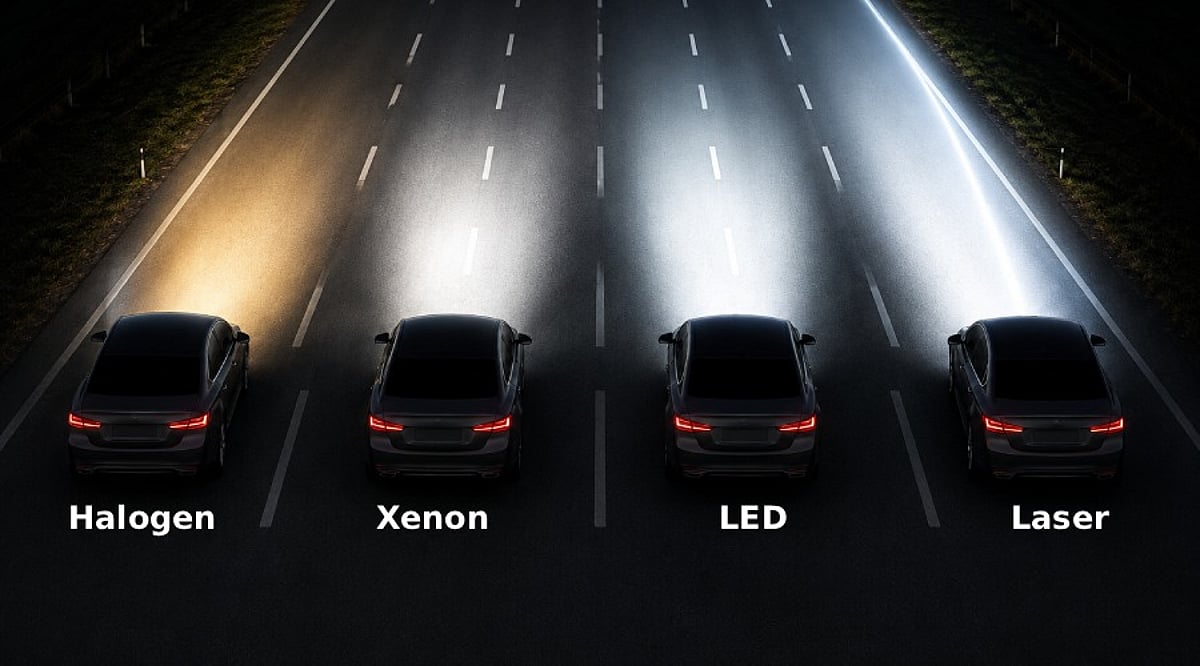
    Car headlights have evolved dramatically over the years. Older vehicles typically came with basic halogen bulbs, but modern cars now offer xenon (HID), LED, and even laser headlights. Each type differs in brightness, lifespan, energy efficiency, and cost. Knowing these differences helps you choose the right car and understand maintenance needs.

    Halogen Headlights

    Halogen is the oldest and most common headlight type, still used in many budget-friendly cars. These bulbs use a thin filament inside a glass bulb filled with halogen gas; when electricity passes through, the filament glows. Halogen lights produce around 1,000–1,500 lumens, emitting a warm yellow or white beam. They work well for city driving but lack the brightness needed for dark highways. Their main drawbacks are short lifespan (500–1,000 hours) and higher energy consumption. However, they remain popular due to their low upfront and replacement costs.

    Xenon (HID) Headlights

    Xenon headlights, also called High-Intensity Discharge (HID) lights, produce light by creating an electric spark inside a bulb filled with xenon gas. This method delivers about 3,000 lumens—roughly twice as bright as halogen. The bright white light improves visibility of road signs, pedestrians, and animals at night. Xenon bulbs last 2,000–3,000 hours, significantly longer than halogen. However, they are more expensive and require a ballast to operate. They also take a few seconds to reach full brightness after being turned on.

    LED Headlights

    Light Emitting Diodes (LEDs) are now the most popular headlight choice for new cars. They use a small semiconductor to produce light, consuming much less energy than halogen or xenon. LED headlights provide instant full brightness and a crisp white light that enhances nighttime visibility. Their lifespan exceeds 20,000 hours, drastically reducing replacement frequency. LEDs are also compact, giving designers more flexibility. The main downside is higher cost, especially if the entire unit needs replacement.

    Laser Headlights

    Laser headlights represent the cutting edge, currently found only in luxury vehicles. Despite the name, they don’t shine lasers directly onto the road. Instead, laser diodes generate energy that passes through a phosphor material, producing a bright white light. These headlights can illuminate the road several hundred meters ahead, making highway driving much safer. They are extremely energy-efficient and compact, but their high manufacturing and repair costs limit them to premium cars.

    Comparison at a Glance

    Type Brightness (Lumens) Lifespan (Hours) Energy Efficiency Cost
    Halogen 1,000–1,500 500–1,000 Low Low
    Xenon (HID) ~3,000 2,000–3,000 Medium Medium
    LED High (varies) 20,000+ High High
    Laser Very high (longest beam) Long Very high Very high

    Latest Innovations in Headlight Technology

    Today’s headlights do more than just light the road. Many new vehicles feature Adaptive Driving Beam (ADB), which automatically adjusts the high beam to avoid dazzling oncoming drivers. Matrix LED headlights consist of many small LED segments that can be individually turned on or off, reducing glare while keeping the road well lit. Digital headlights can project warnings, lane markings, or navigation directions directly onto the pavement. Emerging Micro-LED technology promises even better efficiency and longevity than current LEDs.

    Market Trends

    The automotive lighting market is expanding rapidly. Manufacturers are increasingly swapping halogen for LED systems. Adaptive and laser lights are expected to see massive growth over the next decade, driven by stricter safety regulations, the rise of electric vehicles, and ongoing technological improvements. Halogen remains common in economy cars, but LED has become the global standard for new vehicles.

    Conclusion

    Each headlight type serves a distinct purpose. Halogen is cheap and easy to replace. Xenon offers brighter light and longer life. LED provides the best combination of brightness, efficiency, and longevity (over 20,000 hours). Laser delivers the longest and most powerful beam but at a premium price. As automotive technology advances, headlights will become smarter with ADB, Matrix LED, digital lighting, and Micro-LED, making night driving safer and more comfortable.

    Frequently Asked Questions

    1. Which headlight type is the brightest?

    Laser headlights are the brightest and can light up the road several hundred meters ahead.

    2. Why are LED headlights so popular?

    LED headlights use less electricity, last more than 20,000 hours, and provide bright white light.

    3. Are xenon headlights better than halogen?

    Yes. Xenon headlights are brighter, last longer, and improve visibility at night.

    4. Can halogen headlights be replaced with LED headlights?

    Yes, but compatibility depends on the vehicle. Some cars may need additional parts or approved conversion kits.

    5. What is Matrix LED technology?

    Matrix LED headlights use many small LED sections that adjust automatically to reduce glare while keeping the road well lit.

  • Tesla Stock Poised for 7% Swing as Q2 Earnings Put AI and Robotaxi Plans in Focus

    Tesla Stock Poised for 7% Swing as Q2 Earnings Put AI and Robotaxi Plans in Focus

    Tesla stock enters a key earnings week with options traders preparing for a sharp move. The company will release its second-quarter results after the market closes on Wednesday, July 22, followed by an earnings call at 5:30 p.m. Eastern Time.

    Recent options pricing points to a potential swing of about 7% in either direction by Friday. Based on Thursday’s close, that range could take TSLA stock near $365 or above $416. Shares closed Friday at $380.84, down 2.6%.

    The expected move reflects that traders see room for a strong reaction to the Q2 report, though options pricing does not predict direction. Tesla shares have fallen more than 10% since the start of 2026, and a 7% rise would recover part of those losses, while a similar decline would push the stock further below analyst targets.

    Wall Street remains divided on Tesla’s valuation. Among 11 analysts tracked by Visible Alpha, six rate the stock neutral, four rate it a buy, and one recommends selling. Price targets range from $130 to $600, with a $408 average. Morgan Stanley recently raised its price target to $417 from $415, maintaining an equal-weight rating and expecting a solid quarter. The firm noted that the key investor debate remains whether Robotaxi and Optimus progress can justify an accelerating AI investment cycle.

    For the second quarter, Tesla’s company-compiled consensus calls for revenue of $27.58 billion, up from $22.50 billion a year ago. Analysts expect non-GAAP earnings of $0.55 per share and GAAP earnings of $0.36. Automotive revenue is projected at $20.05 billion, energy storage at $3.77 billion, and services at $3.76 billion. Wall Street anticipates a 19.5% gross margin but also forecasts negative free cash flow of about $3.25 billion and capital spending near $6.70 billion.

    Tesla delivered 480,126 vehicles during the quarter and produced 451,758, with Model 3 and Model Y deliveries reaching 467,762. The company also deployed 13.5 gigawatt-hours of energy storage products.

    Investors are expected to look beyond vehicle sales during the call, as Tesla shifts resources toward autonomous driving, Robotaxi services, the Optimus humanoid robot, energy storage, and other AI-linked projects. Progress on Robotaxi and Optimus could shape the stock reaction, with analysts seeking clearer timelines, spending plans, and commercial targets. The Tesla Semi program may also draw questions, especially after Tesla opened a public Megacharger station in Bloomington, California, and encouraged fleet customers to install chargers at their depots.

    Investors have submitted questions about Semi production, sales estimates, and revenue. While Tesla does not answer every submitted question, the Q2 call will provide the next scheduled update on financial results and the company’s broader growth plans.